Hobbies and interests
Advocacy And Activism
Anthropology
Communications
Education
Exercise And Fitness
Exploring Nature And Being Outside
Government
History
International Relations
Journalism
Kayaking
Marketing
Philosophy
Politics and Political Science
Reading
Research
Video Editing and Production
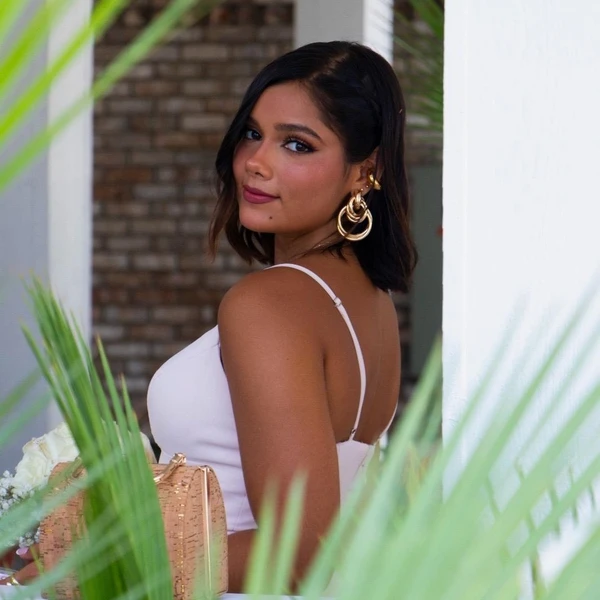
Angely Sanchez
1x
FinalistAngely Sanchez
1x
FinalistBio
I am a Venezuelan immigrant and Political Science student at the State College of Florida, working to rebuild my academic journey after relocating due to the political situation in my country. Before coming to the U.S., I completed two years of university in Venezuela and developed a strong interest in political systems, civic participation, and social change.
I am the co-founder of Summa Venezolana, a volunteer-led initiative that preserves and shares censored or inaccessible Venezuelan historical, political, and cultural materials. Our goal is to provide free, open access to information while helping preserve collective memory. We self-fund our work and are working toward becoming a registered nonprofit in the United States.
My academic goal is to earn my A.A., transfer to a four-year institution, and complete a B.A. in Political Science. Professionally, I hope to work in public policy, advocacy, or community-based organizations, especially serving immigrant and Latino communities. I am passionate about education, cultural preservation, and expanding opportunities for others.
Education
State College of Florida-Manatee-Sarasota
Associate's degree programMajors:
- Anthropology
- Political Science and Government
Miscellaneous
Desired degree level:
Associate's degree program
Graduate schools of interest:
Transfer schools of interest:
Majors of interest:
Career
Dream career field:
Political Organization
Dream career goals:
Audra Dominguez "Be Brave" Scholarship
Adversity has been a constant part of my journey, but each challenge has pushed me to grow and stay committed to the career path I want. What has helped me most is learning how to pause, adapt, and keep moving, even when the situation is completely out of my control.
One of the biggest challenges I faced was leaving Venezuela after completing two years of Political Science. I had finally found a field I loved, a direction that made sense for me, and then everything changed. The political crisis became worse, students were intimidated for speaking out, and access to truthful information was disappearing. Realizing I could no longer continue my education safely was heartbreaking. It felt like my life broke into two pieces—the person I was before leaving, and the person I had to become afterward.
What I did in that moment was simple but difficult: I accepted the reality, but I refused to let it end my goals. I told myself that even if I had to start from zero, I would still finish the journey I began in Venezuela. That decision kept me grounded when everything else felt uncertain.
When I arrived in the United States, I faced a different kind of adversity: starting over in an education system I didn’t understand. None of my previous credits transferred. FAFSA was not available to me. I had to learn English at an academic level. And I had to prove residency before I could even afford to take a full course load. It was overwhelming.
The steps I took were practical: I met with advisors, asked questions, learned the rules, and created a realistic plan. I accepted that progress might be slow, but slow progress is still progress. I focused on building discipline—staying organized, studying consistently, asking for help when needed, and taking responsibility for my growth.
Another challenge has been emotional. Even with family here, restarting my education made me feel out of place at times. I struggled with comparing myself to others my age who were already graduating while I was beginning again.
To handle this, I learned to measure my success differently: not by speed, but by resilience. Not by how perfect everything looks, but by how hard I continue to fight for the future I want.
My work with Summa Venezolana, the volunteer project I co-founded, also helped me stay focused on my purpose. Preserving censored Venezuelan history reminds me why I chose Political Science in the first place. It gives meaning to my experiences and keeps me connected to my roots.
Every adversity has shaped me, but none of them have stopped me. If anything, they’ve made me more determined. I am still pursuing my career in Political Science not in spite of challenges, but because overcoming them has shown me what I’m capable of.
Harvest Scholarship for Women Dreamers
My “pie in the sky” dream—the one that feels both inspiring and slightly out of reach—is to build an independent cultural and political memory institution for Venezuela: a nonprofit organization dedicated to preserving our history, protecting truth, and giving future generations access to the knowledge that was taken from us. I dream of creating a digital and physical archive that rescues censored documents, interviews, historical footage, and cultural materials, and makes them accessible to everyone, regardless of their background or political position. I want to create the kind of institution I desperately needed as a young student in Venezuela, a place where truth cannot be erased.
This dream began long before I knew I would end up living in the United States. When I was studying Political Science in Venezuela, I saw censorship not as a distant concept, but as something that touched daily life. I watched books disappear from libraries. I watched classmates get silenced for speaking honestly. I saw how easily a government, by controlling information, could reshape the identity of a nation. The day I realized how many pieces of history we had already lost, I understood that memory itself is fragile—and that someone has to protect it.
Leaving Venezuela in the middle of crisis did not weaken this dream. If anything, it strengthened it. Immigration made me realize how painful it is to lose not only a country, but the ability to reference your own past. So many Venezuelans abroad carry stories, photos, recordings, and personal archives that never had a home. Our collective memory is scattered across millions of lives, and without preservation, it risks disappearing forever.
Co-founding Summa Venezolana was the first concrete step toward this dream. What began as a small volunteer project—digitizing interviews, rescuing books, sharing historical materials—quickly grew into a mission. Every video uploaded, every article preserved, every message from someone saying “I never saw this before” reminds me why this work matters. But Summa Venezolana is only the beginning. My dream is to turn it into a legally established, well-funded, international nonprofit that collaborates with universities, archives, researchers, and Venezuelan communities across the world.
To get there, I know the path will require education, strategy, and discipline. My first step is completing my A.A. and transferring to a university where I can finish my degree in Political Science. I want to deepen my knowledge of public policy, international relations, and archival systems. I also need to build skills in nonprofit management, grant writing, research methodology, and digital preservation technology. The dream is big, but it is not impossible—just complex, long-term, and requiring a level of leadership I am still learning to grow into.
I will need mentors, collaborations, funding, and a strong community. I will need persistence, especially when the work feels overwhelming or when progress is slow. But every meaningful dream asks us to stretch beyond our comfort zone. Mine asks me to build something bigger than myself—an institution capable of protecting memory, truth, and cultural identity for generations.
My “pie in the sky” dream may feel far away, but it is the one that gives direction to everything I do. It is the dream of giving Venezuela back its voice, one preserved story at a time.
Kim Moon Bae Underrepresented Students Scholarship
My identity as a Venezuelan immigrant and Latina woman has profoundly shaped the path I have taken and the way I navigate opportunities in the United States. Although I come from a family that values education—my mother is a dentist and my sister holds a master’s degree—our academic achievements do not erase the reality that, as immigrants and Latinas, we still belong to an underrepresented minority population whose experiences are often misunderstood or overlooked.
Growing up in Venezuela, I witnessed firsthand how political crisis and censorship can silence people who are not in positions of power. As a Political Science student, I saw universities become places of repression rather than expression. Students were discouraged from protesting, information was tightly controlled, and political discussion carried risks. These experiences taught me what underrepresentation truly feels like: not merely being outnumbered, but being unheard, dismissed, or deliberately excluded from decision-making spaces.
Immigrating to the United States gave me safety and the chance to rebuild my academic life, but it also brought new challenges. Even with family support, adapting to a new language, culture, and education system required starting from zero. As a Latina immigrant, I entered classrooms where few people shared my background or understood the trauma and instability I carried with me. I learned quickly that underrepresentation can exist even in places full of opportunity; it appears in the lack of cultural understanding, the stereotypes, and the subtle assumption that students like me are exceptions rather than part of the norm.
Yet my identity has also become one of my greatest strengths. It fuels my determination to succeed not only for myself, but for the communities I care about. It shapes my understanding of resilience, justice, and the importance of protecting truth. These values are what led me to co-found Summa Venezolana, a volunteer project dedicated to preserving historical, cultural, and political materials that are censored or hidden in Venezuela. Through this work, I realized that representation is not only about being visible—it is also about preserving the stories and voices of people who have been silenced.
My identity will continue to guide my career path. As I pursue Political Science in the United States, I want to work in public policy, advocacy, or community service, where I can help amplify voices that are underrepresented. My background allows me to approach political issues with empathy, cultural understanding, and firsthand knowledge of how oppression affects real people.
Being a Latina immigrant is not a barrier—it is the lens through which I understand purpose, responsibility, and change. It has shaped who I am, and it will shape the impact I hope to have in the world.
Shanique Gravely Scholarship
The event that has had the greatest impact on my life was immigrating to the United States after experiencing years of political crisis and student repression in Venezuela. It was not a single moment, but a turning point that reshaped every part of my identity—my education, my goals, my understanding of freedom, and the way I see my place in the world.
Before coming to the U.S., I completed two years of Political Science in Venezuela. I chose that field because I was fascinated by how systems work and how ordinary people can participate in building better societies. But while studying, I was also living the consequences of a collapsing democracy. I saw students threatened for protesting, universities monitored for dissent, and entire communities silenced through censorship. Even inside classrooms, we felt the pressure of political control shaping what we were allowed to learn, say, or question. The environment made it difficult—sometimes dangerous—to continue growing academically or intellectually.
Leaving Venezuela was not easy, even though I had family waiting for me in the United States. It meant abandoning a life, a degree path, and a country I love deeply. But it also meant choosing safety, stability, and a future with real possibilities. Once in Florida, I had to restart my education completely. Everything felt unfamiliar: the language, the expectations, the academic structure, even the feeling of not knowing where I belonged. Rebuilding from zero forced me to develop resilience, patience, and humility. Every semester taught me something not only about the subjects I studied, but about myself.
This transition dramatically shaped the person I am today. It made me determined to continue the work I began in Venezuela: defending truth, memory, and access to information. This is why I co-founded Summa Venezolana, a volunteer project dedicated to preserving censored historical, cultural, and political materials. Many Venezuelans have been denied access to their own history, and I wanted to contribute to restoring that connection. For me, this work is more than a project—it is a way of honoring where I come from and ensuring our stories survive despite censorship.
Immigrating also strengthened my drive to pursue Political Science in the United States. I now understand politics not only as theory, but as something lived. I know what it means when institutions fail, when voices are repressed, and when people are forced to leave the place they love in order to survive. These experiences give purpose to my studies and shape my long-term goal of working in public policy, advocacy, or a nonprofit space where I can support immigrant and marginalized communities.
Moving to the United States transformed my life in ways I never expected. It broke me, rebuilt me, and pushed me to become someone stronger, more aware, and more committed to justice. It was the hardest event I have ever lived—and the one that gave my life direction.
Arthur and Elana Panos Scholarship
My faith has been the foundation that has carried me through every major change in my life—leaving Venezuela, adapting to a new country, rebuilding my education, and learning to trust a future I could not see. I grew up experiencing political crisis, censorship, and fear, but I also grew up believing that God was present even in the most uncertain moments. My faith became the one constant I could depend on when everything else felt unstable.
When I left Venezuela, I carried more questions than answers. I had completed two years of Political Science, but the political situation made it difficult to feel safe as a student. Many young people—friends, classmates—were silenced, threatened, or discouraged from expressing their beliefs. In those moments, faith became my comfort and my courage. It taught me that fear is temporary, but purpose is permanent. It helped me understand that even if my path changed, my calling did not.
Arriving in the United States was a blessing, but it was also a challenge. Starting over is not easy, especially when you are adapting to a new education system, a new culture, and a new reality. There were moments when the process felt overwhelming. But faith reminded me that I was not walking alone. It helped me stay patient, disciplined, and hopeful. Each step I took—enrolling in college again, building a new academic foundation, learning English at an advanced level—was guided by the belief that God had opened a door for me, and all I had to do was walk through it with commitment.
My faith also inspires the work I do through Summa Venezolana, the volunteer project I co-founded to preserve censored historical and political materials from Venezuela. Faith teaches me the importance of truth, justice, and serving others. For me, helping people access information is a way of protecting dignity and giving communities the tools to understand their past and shape their future.
Looking ahead, I believe my faith will play a meaningful role in my career. I want to work in public policy, immigration advocacy, or community service—fields where compassion, integrity, and humility are essential. Faith helps me see people not as statistics or political topics, but as individuals with value and purpose. It keeps me grounded in empathy, patience, and the desire to uplift others.
In political spaces, it is easy to become discouraged or cynical. But my faith reminds me that change is possible, even if it happens slowly. It helps me stay focused on solutions rather than fear, on service rather than ego, and on the belief that every life deserves respect and opportunity.
God has guided me through every transition, and I trust He will continue guiding me as I build a career dedicated to justice, truth, and community. My faith is not separate from my path—it is the reason I have the strength to follow it.
American Dream Scholarship
My definition of the American Dream began forming long before I ever arrived in the United States. It began the moment I realized that no amount of effort or ambition in Venezuela could protect me from the limitations imposed by political crisis, censorship, and constant instability. I was studying Political Science, participating in student movements, and trying to understand the systems shaping my country. But I was also living the reality of those systems—repression of students, silencing of voices, and an environment where pursuing education felt like an act of resistance.
When I came to the United States, I didn’t come alone. I came to join family—people who wanted a chance at stability and believed that our future could be rewritten somewhere safer. That support made my transition possible, but the process of rebuilding my education was still mine to carry. This is where my definition of the American Dream truly begins: the opportunity to build a life guided by your effort rather than your circumstances.
As I restarted my studies at State College of Florida, I quickly realized that the American Dream is not a promise of success, nor is it a guarantee that life will be easy. It is the possibility of creating your own path, even if you have to begin again from the first step. In Venezuela, I completed two years of Political Science, but political conditions disrupted my academic future. In the United States, I am able to continue that path with safety, purpose, and hope. This freedom—the freedom to learn without fear—is a privilege I never take for granted.
Many describe the American Dream as financial success or upward mobility, but for immigrants like me, it is something deeper. It is the freedom to speak openly, to study the truth without censorship, and to imagine a future defined by hope instead of uncertainty. It is the ability to set goals that are actually possible, and to work toward them with the confidence that your effort will matter.
My American Dream also includes the responsibility to give back. As a co-founder of Summa Venezolana, I help preserve historical, cultural, and political materials that are censored or inaccessible in my home country. For me, this work is a way of honoring the opportunity I have here. Being able to preserve knowledge, amplify truth, and support my community—both in Venezuela and in the U.S.—is part of what makes this dream meaningful.
Ultimately, the American Dream is not about becoming someone new. It is about having the freedom to become who you were always meant to be. It is the chance to rebuild, to grow, and to pursue a life shaped by purpose rather than limitation. For me, the American Dream is the freedom to imagine a future where my education, my voice, and my work in political science can truly make a difference.
And every day that I pursue that future, I am living that dream.
Natalie Joy Poremski Scholarship
My faith has always taught me that every human life carries dignity, purpose, and value, and that we are responsible for protecting life at all its stages—before birth, throughout childhood, in moments of vulnerability, and in the struggles of adulthood. Because of this, I try to live out my faith each day through small but intentional actions: treating others with compassion, defending those who cannot defend themselves, and making choices that uplift human dignity.
For me, being Pro-Life is not only about opposing abortion; it is about embracing a broader ethic of care. It means supporting mothers who face difficult circumstances, protecting families experiencing hardship, and standing with children affected by poverty, violence, and political instability. Coming from Venezuela, where I witnessed repression, social crisis, and the loss of basic rights, I learned that being Pro-Life also includes fighting for justice, access to food and healthcare, and the right to live free from fear. Life is sacred—not only at the moment it begins, but every day after.
My faith has shaped my future goals by giving me a strong sense of responsibility toward others. It influenced my decision to study Political Science, both in Venezuela and now in the United States. I have lived through a system where human life was devalued, where students were repressed, and where many people felt their voices did not matter. These experiences made me determined to pursue a career where I can advocate for policies that protect vulnerable communities, support families, and promote the conditions that allow life to flourish.
Through Summa Venezolana, the volunteer project I co-founded to preserve censored historical and political materials, I learned the importance of giving people access to truth. My faith guides this work as well, because I believe that defending life also means defending the truth that helps people make informed, free decisions. When communities lose access to knowledge, their ability to protect themselves is weakened. My mission is to help restore that access.
With my education, I hope to work in public policy, community advocacy, or a nonprofit space where I can contribute to creating safer, more supportive environments for families and children. I want to promote solutions that reduce the conditions driving women to feel alone or unsupported during pregnancy, and to advocate for protections for children facing poverty, migration, exploitation, or violence. Being Pro-Life means walking with people through their struggles—not just holding a belief, but taking action that strengthens life, hope, and opportunity.
My faith pushes me to work toward a world where every person—born or unborn—has the chance to live with dignity. My education will give me the tools to turn that calling into real change.
Maggie's Way- International Woman’s Scholarship
When I read Maggie Kwiecien’s story, I immediately felt a sense of recognition. Like Maggie, I came to the United States alone, without a support system, a stable path, or the certainty that everything would work out. I left Venezuela at a time of political crisis, economic instability, and repression, carrying with me not only my belongings but the weight of leaving my family, my home, and the life I had started to build. Before immigrating, I completed two years of Political Science, a passion shaped by witnessing student protests, censorship, and the suppression of young voices. My education was interrupted, but my determination was not.
Maggie’s courage in starting over in a new country mirrors the journey I have lived. Arriving in Florida meant facing a new language, a new culture, and a new educational system. Like her, I had no support network waiting for me and no guarantee that I would succeed. But I chose to rebuild. I enrolled at State College of Florida and began reconstructing my academic path course by course, semester by semester. This process taught me resilience, patience, and independence — qualities Maggie embodied throughout her life.
One aspect of Maggie’s legacy that inspires me deeply is her commitment to becoming an expert in anything she set her mind to. I see that same intellectual drive in myself. Growing up in Venezuela, access to information was often restricted or manipulated. Because of this, I developed an early passion for truth, research, and knowledge. This passion eventually led me to co-found Summa Venezolana, a volunteer-led project dedicated to preserving and sharing historical, political, and cultural materials that are often censored or inaccessible to Venezuelans. We digitize archives, conduct interviews, and make information publicly available, because I believe that knowledge is a form of empowerment — and sometimes, survival.
Maggie was bold in her thinking and unafraid of debate. I connect deeply with this. Political Science has taught me to challenge ideas, question assumptions, and seek clarity where confusion benefits those in power. I have lived through a political environment where students who ask questions are silenced, so I consider critical thinking not just an academic skill but a personal responsibility.
Maggie’s love of adventure and her willingness to push her physical limits also inspire me. While I may not be a mountain climber or diver, I have taken emotional and intellectual risks that required equal courage: leaving my country, starting over from nothing, learning a new academic language, and continuing my education despite financial hardship. Each step has been its own climb, and each semester its own summit.
In many ways, Maggie and I share the same core traits: independence, resilience, intellectual bravery, and a deep respect for education. Like her, I am determined to create a life shaped not by fear or circumstance but by curiosity, discipline, and purpose. I aspire to complete my Political Science degree, expand Summa Venezolana, and use my education to advocate for my community and for those who have lost access to their history and their voice.
Maggie’s story reminds me that strength comes not only from achieving great things, but from choosing to move forward even when the path is uncertain. I hope to honor her legacy by continuing to move boldly, bravely, and with unwavering commitment to learning.
Liberation in Inquiry Scholarship
How can a community liberate itself if it no longer has access to its own truth?
Liberation is not a destination; it is a practice—a daily commitment to challenging systems that distort, restrict, and redefine our realities. Yet when we talk about strategies for liberation, we often overlook a fundamental question: How can we secure generational liberation if people are being systematically separated from their historical, political, and cultural truths?
Before immigrating to the United States, I studied Political Science for two years in Venezuela, a country living through profound political crisis. My education did not take place only in classrooms—it took place in the streets, during protests, in student assemblies, and in moments when speaking out carried real consequences. I witnessed firsthand how student voices were repressed, how universities were surveilled, and how political participation was treated as a threat. These experiences taught me something essential: oppression does not begin only with violence or poverty—it begins when a government controls the truth.
Censorship was not theoretical to me; it shaped my life. Books disappeared, historical narratives were rewritten, media outlets were silenced, and entire generations were taught versions of reality designed to maintain power. I saw how this manipulation fractured people’s understanding of their own country and their place within it. Without access to truth, even the most courageous movements lose direction. How can a society fight for liberation when it is denied the knowledge of what it is fighting against?
After immigrating, this question stayed with me. It eventually led me to co-found Summa Venezolana, a volunteer project dedicated to preserving and sharing historical, political, and cultural materials that are censored or difficult to access in Venezuela. We digitize archives, rescue interviews, and make information public—not for profit, but because knowledge should never be a privilege controlled by a state. My work in this project deepened my understanding of liberation: it is not only the act of resisting oppression; it is the act of reclaiming truth.
Liberation requires more than mobilization; it requires memory. If people cannot access their real history, if their past has been edited or erased, they cannot imagine new possibilities for their future. Communities repeat cycles not because they lack strength, but because they lack clarity.
This is why the question matters: What does liberation look like when the truth itself has been taken hostage? And what future are we building if new generations inherit narratives that were crafted to keep them powerless?
As a Political Science student now continuing my education in the United States, I see liberation not as an abstract idea but as an everyday practice of safeguarding truth, challenging harmful narratives, and empowering communities to understand systems rather than simply endure them. A liberated future requires informed citizens, preserved memory, and unrestricted access to knowledge.
If we want liberation that lasts—not just for one generation, but many—we must first ensure that truth remains accessible to all.