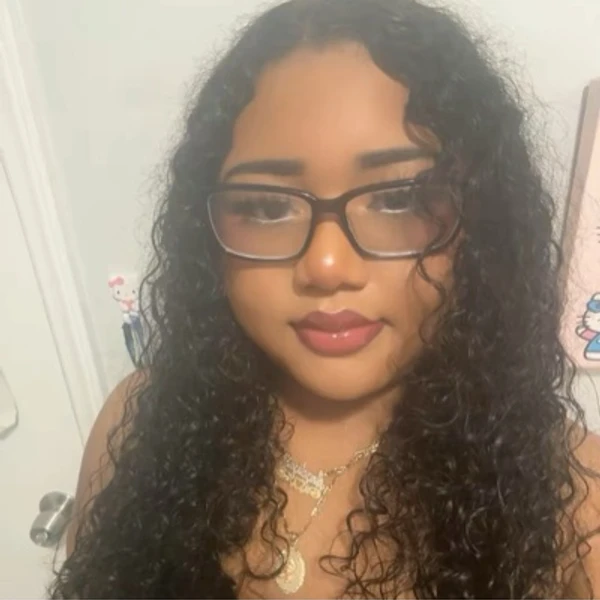
Raleigh, NC
Age
19
Gender
Female
Ethnicity
Hispanic/Latino
Hobbies and interests
Animals
Makeup and Beauty
Coding And Computer Science
Computer Science
Music
Concerts
Cooking
STEM
Latin Dance
Spanish
German
National Honor Society (NHS)
Gaming
Viola
Reading
Reading
Academic
Fantasy
Realistic Fiction
Science Fiction
History
Religion
Young Adult
I read books daily
US CITIZENSHIP
US Citizen
LOW INCOME STUDENT
Yes
FIRST GENERATION STUDENT
Yes
Angelique Penaloza-Gonzalez
1x
Finalist1x
Winner
Angelique Penaloza-Gonzalez
1x
Finalist1x
WinnerBio
Hello! My name is Angelique, I'm a driven and passionate student interested in civil engineering. I'm currently a senior at Wake STEM Early College High School. I love taking any opportunities I can to further my education which I highly value. I have kept a respectable 3,8 GPA and have started a charity club (Offering A Hand) at my school. I enjoy getting other students involved with helping the community by volunteering and donating to the less fortunate in the area. I've also been in the National Honor Society program since my sophomore year. I plan to pursue a career in civil engineering and attend North Carolina State University. I have overcome many challenges that come with being a low-income daughter of immigrant parents and am forever grateful for their sacrifices. I refuse to give up on my path to a better future, I aim to be the first person in my family to continue my education past high school. I want to encourage other Black and Hispanic women to enter the male-dominated STEM fields. I firmly believe equity is important for a progressive future.
Education
Wake Stem Early College High School
High SchoolMiscellaneous
Desired degree level:
Bachelor's degree program
Majors of interest:
- Computational Science
- Civil Engineering
Career
Dream career field:
Computer Software
Dream career goals:
Retail Associate
Ross Stores2023 – Present3 years
Research
Civil Engineering
Constructed Facilities Laboratory — Intern2025 – 2025
Public services
Volunteering
Offering A Hand — Organization founder2022 – Present
Ja-Tek Scholarship Award
I am someone shaped by responsibility, resilience, and service. As the daughter of immigrant parents and a first-generation college student, I learned early how to balance ambition with obligation. Growing up, I often helped care for my siblings, supported my family, and learned how to adapt quickly when life became overwhelming. Those experiences taught me discipline, patience, and the importance of showing up for others even while working toward my own goals.
What defines me most is that I do not wait for opportunities to appear. I try to create them. In high school, I founded the Offering A Hand club to connect students with volunteer opportunities and support underserved communities through clothing, book, and toy drives. That experience showed me how much I value leadership that is rooted in compassion and action.
I am also deeply curious and driven by purpose. My passion for civil engineering comes from wanting to solve real problems and improve people’s lives through safer, stronger infrastructure. Beyond academics or achievements, what makes me who I am is my commitment to growth, my dedication to my community, and my belief that success means using what I learn to make life better for others.
Anderson Engineering Scholarship
I am pursuing engineering because I want a career that allows me to solve real problems and create lasting change in people’s lives. Engineering stands out to me because it combines critical thinking, creativity, and service. I have always been drawn to work that has a practical purpose, and engineering gives me the opportunity to design solutions that improve safety, access, and quality of life for entire communities. As a student of color and a young woman interested in civil engineering, I am especially motivated by the chance to enter a field where greater diversity is still deeply needed. I want to contribute not only my skills, but also my perspective and experiences.
My interest in engineering became much stronger when I had the opportunity to intern at the Constructed Facilities Laboratory at North Carolina State University. During that internship, I assisted with undergraduate research focused on high-strength steel reinforced concrete columns under earthquake simulations. I helped construct test specimens, supported lab tasks, and observed how the columns were tested to better understand how structures behave under seismic forces. This experience gave me a much clearer view of what engineering looks like in practice. I saw that engineering is not just about theory or calculations in a classroom. It is also about testing ideas, improving designs, and developing systems that can protect lives.
What I found especially meaningful about that experience was seeing how hands-on work connects directly to community impact. Watching the specimens being prepared and tested showed me how much thought, detail, and teamwork go into making infrastructure safer and more resilient. It also helped me understand that civil engineering is about much more than construction. It is about creating structures and systems that serve people, especially in moments of vulnerability such as natural disasters. Being part of that process confirmed that engineering is the path I want to pursue.
In addition to my internship, I have developed skills that support my interest in engineering through other experiences. I participated in Science Olympiad, where I collaborated with teammates, solved problems, and applied STEM skills in competitive settings. I also completed coursework in computer science and earned the MTA certification in Introduction to Programming Using Python, which strengthened my technical thinking and problem-solving skills. These experiences helped me become more comfortable approaching complex challenges with patience and curiosity.
My motivation to pursue engineering is also personal. Growing up in a low-income household as the daughter of immigrant parents, I learned early how important safe, stable, and well-designed communities are. I want to use engineering to improve infrastructure in underserved areas, especially where access to safe housing, transportation, and public resources is limited. I believe engineering should serve everyone, not just those with the greatest resources.
My hands-on engineering experience has not been part of a co-op engineering program. However, my internship at North Carolina State University gave me valuable exposure to the field and strengthened my commitment to civil engineering. It showed me that engineering is where my interests, skills, and values align. In the future, I hope to use my education to help build safer, more equitable communities and to serve as an example for other students of color who want to pursue engineering.
Valerie Rabb Academic Scholarship
I am a high school senior, first-generation college student, and the daughter of immigrant parents who taught me the value of hard work, perseverance, and service. Throughout high school, I have balanced academics, work, family responsibilities, and community involvement, all while staying focused on my future goals. I am passionate about civil engineering because I want to solve real-world problems and improve people’s lives through safer, stronger, and more equitable infrastructure. I believe the spaces people live in, travel through, and depend on every day have a major impact on their opportunities and quality of life, and I want to help build systems that serve communities better.
One of the most important parts of who I am is my commitment to giving back. In high school, I founded the Offering A Hand (OAH) club to create more opportunities for students to serve their communities. Through OAH, I organized clothing drives with Note in the Pocket, as well as book and toy drives and donation efforts for individuals experiencing homelessness. I also helped secure a nationally competitive grant to support one of our clothing drives. In addition to OAH, I have volunteered as a tutor for students who needed academic support. These experiences showed me that leadership is not only about organizing projects, but about recognizing a need and being willing to act with compassion and purpose.
I plan to make a positive impact on the world through civil engineering by improving infrastructure in underserved communities. My interest in this field grew even stronger through my internship at North Carolina State University’s Constructed Facilities Laboratory, where I assisted with research on reinforced concrete columns under seismic conditions. That experience showed me that engineering is not just about construction. It is about protecting communities, improving resilience, and using technical knowledge to solve problems that affect people every day. In the future, I hope to contribute to projects that improve access to safe housing, reliable transportation, and public resources, especially in communities that are often overlooked.
One of the greatest adversities I have had to overcome was growing up in a low-income household while taking on major family responsibilities at a young age. Because my parents worked long hours, I often helped care for my younger siblings, supported my older sister, and served as a translator for my family. I also began working while in school, which meant balancing academics, family obligations, and a job all at once. At times, the pressure felt overwhelming, but I overcame it by staying organized, asking for help when I needed it, and reminding myself why my education mattered. Those challenges taught me resilience, discipline, and how to keep moving forward even when life feels difficult.
The adversity I have faced has shaped me into someone who values both achievement and service. It has made me more determined to succeed, not only for myself, but for my family and community. Through my education and future career, I hope to create practical, lasting change and be an example of what can be achieved through perseverance, compassion, and hard work.
STLF Memorial Pay It Forward Scholarship
One of the most meaningful volunteering efforts I organized was through the club I founded at my high school, Offering A Hand (OAH). I created OAH because I noticed that many students wanted to give back to their communities but did not always know where to begin. At the same time, there were people in our area who needed support through clothing, books, toys, and other basic resources. I wanted to create a space where students could turn their willingness to help into real action, while also building a stronger culture of service in our school.
As founder and president of OAH, I organized several service projects, including clothing drives with Note in the Pocket, book and toy drives, and donation efforts for individuals experiencing homelessness. One of the projects I am most proud of was helping lead a clothing drive that was supported by a nationally competitive grant through Chick-fil-A Leadership Academy. This allowed us to expand the project and involve both Wake STEM Early College High School and North Carolina State University. In this role, I planned meetings, coordinated projects, assigned tasks, and encouraged other students to stay involved. I also worked directly on the service efforts by collecting, organizing, and helping distribute donations.
In addition to OAH, I have volunteered as a tutor for students who needed academic support. This experience taught me the importance of patience, encouragement, and meeting people where they are. Whether I was helping a student understand a lesson or organizing a donation drive, I learned that giving back is not always about doing something large or public. Often, it is about showing consistency, care, and a willingness to help in ways that truly matter.
Leadership through service is important because it focuses on others rather than on recognition. A strong leader does not just direct people, they create opportunities for others to contribute, grow, and make a difference. Through OAH, I learned that leadership is most meaningful when it is rooted in compassion and responsibility. It is not about being in charge for the sake of power. It is about recognizing a need, stepping forward, and helping others work toward a shared goal.
This kind of leadership has shaped who I am. Growing up in a low-income household, I understand how much even small acts of support can matter. Because of that, service has always felt personal to me. It is one thing to care about a problem, but it is another to take initiative and do something about it. That is why leadership through service matters so much. It turns compassion into action and allows people to create meaningful change together.
My volunteering experiences have shown me that service can strengthen both individuals and communities. They have also influenced the way I see my future. I hope to continue leading through service in college and in my career, using both my skills and my education to help others. For me, the best kind of leadership is the kind that leaves people better supported, more connected, and more hopeful than before.
Eric W. Larson Memorial STEM Scholarship
As the daughter of immigrant parents, I have grown up with a deep appreciation for sacrifice, perseverance, and education. My family has faced financial hardship for much of my life, and I have seen firsthand how limited resources can affect opportunities, stability, and long-term goals. There were times when financial stress made the future feel uncertain, but those experiences strengthened my determination to build a better path for myself and to honor the sacrifices my parents made to give me opportunities they never had. Their resilience has been one of the greatest influences in my life.
Growing up, I learned very early that responsibility was not something I could avoid. Because my parents often worked long hours to support our family, I had to take on major responsibilities at home from a young age. As the middle child, I often helped care for my two younger siblings and supported my older sister, who struggles with severe social anxiety. I helped with homework, daily routines, and many of the small but important tasks that kept our household functioning. At times, it felt like I had to grow up faster than other people my age. While many students were able to focus only on school, I was learning how to balance schoolwork with family obligations and emotional responsibility. Those experiences were not easy, but they taught me how to be dependable, adaptable, and strong under pressure.
My family’s financial circumstances added another layer of difficulty. We had limited resources and little room for error, so I learned how to be careful and intentional with everything I had. At sixteen, I got my first job and began saving money to buy my own school supplies. Working at that age taught me the value of discipline and self-sufficiency, but it also showed me how much I wanted to do more than just meet my own needs. When I could, I used my earnings to buy my siblings meals, toys, and small experiences that I did not always have growing up. Being able to give them those moments of happiness meant a great deal to me. It made me realize that my goals are not only about personal success, but also about creating comfort, stability, and opportunity for the people I love most.
What has always motivated me is the dream of one day giving my parents twice as much as they have given me. Even through every hardship, they always made my education a priority. Although they were unable to complete middle school because of financial hardship in Mexico, they raised me to believe that education is one of the most powerful tools for change. Their sacrifices transformed education from something important into something deeply personal. For me, pursuing higher education is not only an achievement, but also a responsibility. It is a way to honor everything my parents have done for me and to make their sacrifices meaningful.
Facing financial adversity has taught me to be resourceful, disciplined, and intentional with every opportunity I receive. Rather than allowing my circumstances to define me, I used them as motivation to excel academically and become involved in my school and community. I have maintained a 3.8 GPA and founded Offering A Hand, a service club at my school focused on encouraging students to volunteer and support underserved members of the community. Starting this club showed me that even when resources are limited, people can still create meaningful change through initiative, collaboration, and compassion. These experiences helped me grow into someone who does not wait for solutions, but works to create them.
My leadership and service experiences are especially meaningful to me because they come from a place of understanding. I know what it feels like to need support, to carry responsibility quietly, and to live with the stress that financial hardship can place on a family. That is why I care deeply about giving back. Through Offering A Hand, I wanted to create opportunities for other students to help those in need and to understand the value of service. Service taught me that leadership is not just about organizing others; it is about recognizing a need and being willing to take action.
My passion for civil engineering comes from my desire to solve real problems that affect people’s everyday lives. I am drawn to the field because civil engineering combines creativity, technical skill, and service. Infrastructure shapes the safety, accessibility, and quality of life of entire communities, and I want to be part of designing systems that help people live more securely and equitably. I am especially interested in how engineering can serve communities that are too often overlooked, including families like mine who understand how deeply access and stability can affect a person’s future.
This past summer, I interned at the Constructed Facilities Laboratory at North Carolina State University, where I assisted with research on high-strength steel reinforced concrete columns during earthquakes. I helped build test specimens and observed seismic testing, which showed me how engineering can protect lives and strengthen communities. That experience confirmed for me that civil engineering is not just about building structures, but about designing solutions that can have lasting human impact. It showed me that thoughtful engineering can make communities safer, more resilient, and better prepared for the future. Seeing the connection between technical research and public safety made me even more certain that this is the path I want to pursue.
In the future, I hope to use my work in civil engineering to improve infrastructure in underserved communities, particularly in areas where safety, transportation, and access to resources are often overlooked. I want to contribute to projects that make communities more resilient, sustainable, and equitable. I also hope to serve as a role model for other young women, especially Black and Hispanic women, who may not always see themselves represented in STEM fields. As a first-generation college student hopeful, I want my journey to demonstrate that financial hardship does not have to limit ambition.
Peter and Nan Liubenov Student Scholarship
I see myself as a positive force in society by trying to lead with compassion, responsibility, and action. To me, being a positive influence is not just about having good intentions. It is about recognizing when people need support and being willing to step forward to help. Throughout high school, I have tried to do that in ways that are both practical and meaningful, whether through community service, leadership, work, or the way I support my family.
One of the clearest examples of this is founding the Offering A Hand club at my school. I created the club because I noticed that many students wanted to help their communities but did not always know how to get involved. At the same time, there were people in our area who needed support through clothing, books, toys, and other basic resources. Through Offering A Hand, I organized clothing drives with Note in the Pocket, as well as book and toy drives and donation efforts for individuals experiencing homelessness. This work allowed me to create opportunities for other students to serve while also directly helping members of the community. It showed me that being a positive force often begins with taking initiative and inviting others to be part of something bigger than themselves.
I also see myself as a positive force through the way I approach responsibility. As the daughter of immigrant parents and a first-generation college student, I have taken on many responsibilities at home from a young age. I have helped care for my younger siblings, supported my older sister, and often served as a translator for my family. Those experiences taught me patience, empathy, and how to stay calm under pressure. They also shaped my understanding of service. Sometimes making a difference is not public or visible. Sometimes it means quietly helping others carry burdens they cannot manage alone.
Current social norms have shaped this thinking in important ways. Today, there is often a strong focus on individual success, personal achievement, and competition. While ambition is important, I believe these social norms can sometimes make people overlook the value of community, empathy, and collective responsibility. Growing up in a low-income household and seeing how much people depend on support from others taught me a different perspective. I learned that real success is not just about advancing yourself. It is also about how you use your growth, knowledge, and opportunities to uplift others.
At the same time, social norms around race, gender, and opportunity have made me more aware of the importance of representation and integrity. As a young woman of color pursuing civil engineering, I know that some spaces were not designed with people like me in mind. Rather than letting that discourage me, it motivates me to approach my future with confidence and purpose. I want to challenge limiting expectations by succeeding in STEM and by encouraging others, especially young women of color, to see themselves as leaders and innovators.
In the future, I hope to continue being a positive force by using civil engineering to improve underserved communities through safer and more equitable infrastructure. Whether through service, leadership, or my career, I want my impact to be rooted in integrity, compassion, and a commitment to making life better for others. To me, taking the moral high ground means choosing to lead with empathy even in a world that often rewards individualism. That is the kind of person I hope to remain, and the kind of difference I hope to make.
Della Fleetwood-Sherrod Humanitarian Scholarship
My commitment to community service comes from personal experience and a deep belief that even small acts of compassion can make a meaningful difference. Growing up in a low-income household, I understood early how much support, kindness, and access to resources can matter in a person’s life. Because of that, I have always felt a responsibility to help others in my community, especially those facing challenges that may often go unseen.
One of the most meaningful ways I have served my community was by founding the Offering A Hand (OAH) club at my school. I created OAH because I saw that many students wanted to help others but did not always know how to get involved or where their efforts were needed most. At the same time, there were families and individuals in my community who lacked access to basic necessities such as clothing, books, toys, and other essential items. I wanted to bridge that gap by creating opportunities for students to turn compassion into action.
Through OAH, I organized clothing drives with Note in the Pocket, as well as book and toy drives and donation projects for individuals experiencing homelessness. I also helped lead a clothing drive supported by a nationally competitive grant, through Chick Fil A Leadership Academy which allowed me to expand our impact and involve even more students in service. These experiences were meaningful because they showed me how generosity can bring a community together. Watching my classmates contribute their time and resources reminded me that helping others is not always about one person doing something big. Sometimes it is about many people choosing to care and act together.
My passion for assisting those in need is also reflected in the smaller ways I serve others. I have volunteered as a tutor for students who needed academic support, and I have always tried to use my time and skills to make life easier for the people around me. To me, humanitarianism is not limited to one event or one project. It is a mindset of noticing when others need help and being willing to step forward with compassion, patience, and consistency.
What motivates me most is knowing that service can restore dignity and hope. When someone receives clothing, school supplies, tutoring, or even simply encouragement, it can remind them that they are seen and valued. That matters deeply to me because I know what it feels like to live with financial stress and uncertainty. Helping others allows me to give back in a way that is both personal and purposeful.
In the future, I plan to continue serving my community through both volunteer work and my education. I hope to pursue civil engineering so I can improve infrastructure in underserved communities and help create safer, more equitable environments. No matter what path I take, I want my work to reflect compassion, service, and a commitment to improving the lives of others. For me, community service is not just something I do. It is one of the most important values I carry with me.
StatusGator Women in Tech Scholarship
My interest in technology began in the classroom, but it became real when I saw how creating something with code could solve a problem and communicate an idea. One of the first moments that truly sparked my interest was in my programming course, when I created a digital children’s book from scratch. While many students found coding frustrating, I found it exciting. I enjoyed the process of building something piece by piece, troubleshooting mistakes, and watching my ideas come to life through technology. That experience showed me that technology is not just about computers; it is about problem-solving, creativity, and building tools that can help people.
As I continued learning, my interest in technology grew beyond the classroom. Earning my MTA certification in Introduction to Programming Using Python strengthened my confidence and helped me see myself as someone capable of succeeding in technical spaces. I also developed skills in HTML, CSS, and JavaScript, which showed me how technology can be used in different ways to design, organize, and improve systems. What draws me most to technology is that it constantly evolves and creates new possibilities. There is always something new to learn, improve, or invent.
My experiences have shaped my goals by teaching me that technology can have a direct impact on people’s lives. Although my long-term goal is to pursue civil engineering, technology remains an important part of that path. My internship at North Carolina State University’s Constructed Facilities Laboratory helped me understand how technology and engineering work together to protect communities. There, I assisted with research on high-strength steel reinforced concrete columns under earthquake simulations. I helped build test specimens and observed how research and testing can guide safer infrastructure design. That experience showed me that technology is essential to innovation, whether through modeling, testing, programming, or designing systems that improve public safety.
The challenges I have faced have made me even more determined to pursue opportunities in technology. As a first-generation, low-income student and the daughter of immigrant parents, I often had to figure things out on my own. I balanced school with family responsibilities, work, and helping others at home, which made it difficult at times to fully focus on my own academic and career development. I also know what it feels like to enter spaces where women, especially women of color, are underrepresented. It can be intimidating to pursue technical fields when you do not always see people who look like you in them. However, those challenges have pushed me to work harder, ask questions, and believe in my ability to belong in these spaces.
What excites me most about the future of technology is its potential to solve real-world problems and make systems more efficient, safe, and accessible. I am especially excited by how technology can support innovation in fields like engineering and infrastructure, where better tools and smarter systems can improve entire communities. In the future, I hope to build a career that uses technology to create practical solutions and expand opportunity for others. I also want to encourage more young women, especially Black and Hispanic girls, to see technology as a field where they can lead, create, and make lasting change.
“I Matter” Scholarship
One of the most meaningful ways I have helped someone in need was by founding Offering A Hand (OAH), a service club at my school. I created OAH because I noticed a gap between students who wanted to help their community and the people who needed support. Many students cared about giving back, but they did not always know where to begin or how to make their efforts meaningful. At the same time, there were families and individuals in my community who lacked access to basic necessities such as clothing, books, and other essential items. I wanted to create a space where students could turn compassion into action.
Through OAH, I organized service projects that addressed real needs in the community. One of the most impactful projects I led was a clothing drive in partnership with Note in the Pocket, an organization that provides clothing to children and families in need. To support this project, I applied for and received a nationally competitive $250 grant, through Chick Fil A Leadership Academy. With those funds, I helped organize a clothing drive at both Wake STEM Early College High School and North Carolina State University. I planned the project, spread awareness, encouraged students to participate, and helped coordinate donations.
This experience was especially important to me because I come from a low-income background and understand how much even small forms of support can matter. When a family is facing financial hardship, receiving clothing is not just about getting items to wear. It can provide dignity, relief, and confidence. Knowing that our efforts helped meet a real need in the community made the project feel deeply personal. It reminded me that helping others does not always require something grand. Sometimes it starts with recognizing a need and being willing to take initiative.
What made OAH so meaningful was that it became bigger than just one event. In addition to the clothing drive, I also organized book drives, toy drives, and other donation efforts for underserved members of the community. As president, I managed club activities, planned meetings, assigned tasks to members, and worked to keep students engaged in service. I wanted OAH to be more than just another school club. I wanted it to be a way for students to realize that they have the power to make a difference, even in small ways.
Helping others through OAH taught me that leadership is not just about being in charge. It is about creating opportunities for people to come together and support one another. I learned how to turn an idea into action, how to motivate others, and how to build service projects that had a real purpose. Most importantly, I learned that one act of kindness can grow into something much larger when other people are invited to be part of it.
Founding Offering A Hand showed me that I could make an impact on my community while still being a student. It strengthened my commitment to service and reminded me that the most meaningful way to help someone in need is to make sure they feel seen, supported, and valued.
Finance Your Education No-Essay Scholarship
Our Destiny Our Future Scholarship
Compassion means recognizing when others need support and choosing to act. In my community, I saw that many students wanted to help others but did not always know how to get involved. At the same time, many families and individuals in my area needed clothing, books, toys, and other basic resources. I wanted to help bridge that gap, so I founded Offering A Hand (OAH), a service club at my school dedicated to making community involvement more accessible and impactful.
Through OAH, I created opportunities for students to give back in meaningful ways. I organized clothing drives, book and toy drives, and donation initiatives to support individuals experiencing homelessness and other underserved groups. I also applied for and received a $250 nationally competitive grant, which helped me organize a clothing drive in partnership with Note in the Pocket at North Carolina State University and Wake STEM Early College High School. These efforts provided essential items to people in need while also encouraging students to see how their time and effort could make a real difference. What started as a small idea grew into a community of students united by compassion and service.
My commitment to helping others comes from personal experience. As the daughter of immigrant parents and someone who has faced financial challenges, I understand how much even small acts of support can matter. I know what it means when people are given resources, encouragement, and opportunities they may not otherwise have. That perspective has shaped the way I view service. To me, making an impact on the world begins with noticing where help is needed and doing what you can to respond with empathy and consistency.
In the future, I plan to expand that impact through both service and education. I hope to study civil engineering at North Carolina State University and use that career to improve the lives of others on a larger scale. This past summer, I interned at the Constructed Facilities Laboratory at North Carolina State University, where I assisted with research on high-strength steel reinforced concrete columns during earthquakes. I helped build test specimens and observed how they were tested to better understand structural safety. That experience showed me that civil engineering is not only about construction. It is also about protecting communities, improving public safety, and creating infrastructure that serves people fairly and effectively.
As I continue my education, I want to keep building programs that encourage service and create lasting support for underserved communities. I also hope to inspire other young women, especially Black and Hispanic women, to pursue leadership roles in STEM and use their talents to serve others. My goal is not only to succeed personally, but to use my education and experiences to build stronger, safer, and more compassionate communities. By combining community service, leadership, and engineering, I plan to make an impact by helping ensure that more people have the resources, opportunities, and support they need to thrive.
Younce, Vtipil, Baznik & Banks Scholarship
Justice, to me, means creating access and ensuring that people have the resources and opportunities they need to live with dignity. In my community, I saw a gap between students who wanted to help and the communities that needed support. Many of my peers had the willingness to give back but lacked direction, time, or awareness of how to get involved. I decided to address this disconnect by founding the Offering A Hand (OAH) club at my school.
Through OAH, I created structured opportunities for students to engage in service and make a measurable impact. I organized clothing drives, book and toy drives and donation initiatives for individuals experiencing homelessness. Additionally I applied and received a $250 nationally competitive grant and organized a clothing drive at NCSU and Wake STEM ECHS through The Note In the Pocket. These efforts provided essential items to underserved communities while also empowering students to see themselves as contributors to meaningful change. What began as a small idea quickly grew into a network of motivated students united by a shared purpose.
My drive to lead this initiative comes from personal experience. As the daughter of immigrant parents and someone who has faced financial challenges, I understand how access, or the lack of it, can shape a person’s opportunities. This perspective has fueled my commitment to building equitable systems within my community, starting with something as simple as making it easier for others to help. Through OAH, I’ve seen how small, collective actions can create tangible impact for children, families, and individuals in need.
This experience has also shaped my definition of justice beyond volunteerism. It has inspired my goal of pursuing civil engineering at North Carolina State University, where I hope to design infrastructure that serves all communities equitably. This past summer I interned at the Constructed Facilities Laboratory at North Carolina State University. There, I observed and assisted with several research projects, including once focused on understanding the behavior of high strength steel reinforced concrete columns during earthquakes. I helped build test specimens and observed them being placed on shake tables to simulate seismic activity. I learned that civil engineering is more than construction and it's about protecting communities and improving lives through innovation and problem-solving. Knowing my contributions support research that could guide future engineers gave me a sense of purpose. I would love to continue exploring how infrastructure can be restored and reimagined to create a progressive world. Whether through improving access to safe housing, transportation, or public resources, I want to contribute to systems that uplift underserved populations on a larger scale.
As I continue my education, I plan to expand my impact by creating more sustainable service initiatives and encouraging other students especially Black and Hispanic women to pursue roles in STEM and leadership. I aim to be the first in my family to attend college, not only to build a better future for myself, but to contribute to a more just and inclusive society.
Chi Changemaker Scholarship
Many students want to give back to their communities, yet hesitate because they lack time, resources, or simply a clear starting point. Recognizing this gap at my school, I took the initiative to make service more accessible by founding the Offering A Hand (OAH) club. My goal was to create a space where students could easily engage in meaningful volunteer opportunities and make a tangible impact on the communities around us.
Through OAH, I organized a variety of service projects, including clothing drives in partnership with Note In The Pocket, as well as book and toy drives and donation initiatives supporting individuals experiencing homelessness. These efforts not only provided essential resources to those in need, but also helped students see how their contributions, no matter how small, could collectively create significant change. Watching my peers come together with a shared purpose was one of the most rewarding aspects of this experience.
My motivation to address this issue is deeply personal. Growing up with financial challenges, I understand how meaningful even small acts of generosity can be. I’ve always remembered and appreciated every aid that I have received from the kindness of others. This perspective drove me to build a community rooted in compassion, where students from diverse backgrounds could connect through service. The diversity within OAH became one of its greatest strengths. Each member brought unique experiences and ideas, allowing us to expand our reach and support a wide range of communities, including children, families, individuals experiencing homelessness, and even local animal shelters.
Through this initiative, I learned that empathy begins with listening. When people feel heard, they are more motivated to contribute and uplift others. This insight has shaped not only how I lead, but also how I view community one built on understanding, collaboration, and shared responsibility.
Looking ahead, I hope to continue to work with local organizations, assisting students to volunteer for their communities and passions. I want to continue creating spaces in which people aren’t afraid to share their struggles and ask for help. I believe this help can reach many others going through similar experiences.
Ultimately, I want to continue breaking down the barriers that prevent people from helping others, and inspire more individuals to turn their willingness to help into meaningful action.