Age
18
Gender
Female
Ethnicity
Hispanic/Latino, Asian
Religion
Christian
Church
Church of Christ
Hobbies and interests
Art
Soccer
JROTC
Shooting
Community Service And Volunteering
Cars and Automotive Engineering
Reading
Action
Horror
Mystery
History
I read books multiple times per week
LOW INCOME STUDENT
Yes
Angelina Escobar
1x
Finalist
Angelina Escobar
1x
FinalistBio
I plan to attend Texas Tech University to study criminology with a focus on how investigations are actually carried out in the field. I’m drawn to the analytical side of the work, breaking down evidence, understanding patterns, and building cases that hold up. During college, I will also participate in ROTC and work toward joining the Air Force to develop leadership, and real-world experience under pressure. That combination of education and military training is important to me because it builds both skill and judgment. My long-term goal is to work for the FBI in investigative services, where I can apply what I’ve learned to complex cases that require precision, patience, and accountability.
Education
Amarillo High School
High SchoolMiscellaneous
Desired degree level:
Master's degree program
Majors of interest:
- Criminology
Career
Dream career field:
Law Enforcement
Dream career goals:
Work for Criminal Investigative Services
Helper/Hands on work
Mobile Mechanic2020 – 20233 years
Sports
Soccer
Varsity2025 – 20261 year
Awards
- District Champions
- Bi-District Champions
- All State Award
- All District Award
- Sandie Spirit Award
Sports shooting/Marksmanship
Varsity2024 – Present2 years
Awards
- Sharp Shooter Badge
Soccer
Junior Varsity2024 – 20251 year
Arts
Art club
Painting2022 – 2023
Public services
Volunteering
Salvation Army — My role was a worker or if it was a bigger event to manage the event2022 – 2026Volunteering
Immanuel Baptist Church — It's a food pantry drive through. I collected their information and brought out a box of food according to their needs.2022 – PresentVolunteering
Corvette Club of Amarillo — My job was a worker doing what needed to be done or be managing if we had new people2022 – 2026Volunteering
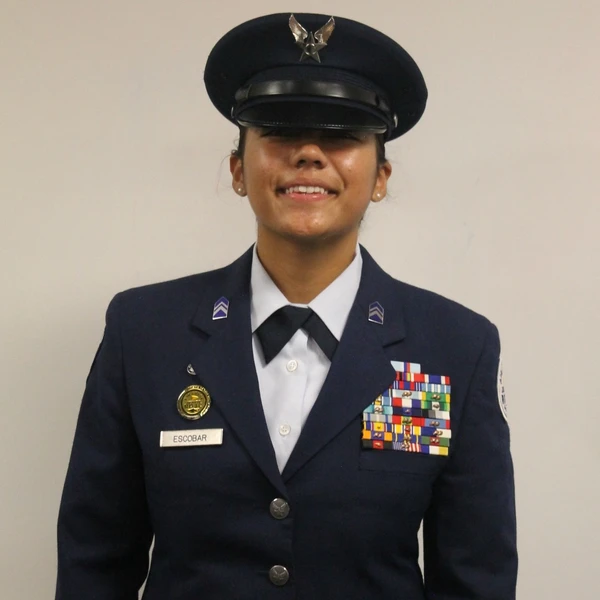
AFJROTC — Staff2022 – Present
Future Interests
Volunteering
Aserina Hill Memorial Scholarship
In Amarillo, Saturdays start early. By 5:00 am, I'm usually at the Emmanuel Baptist food pantry, hauling boxes of canned goods to cars. I grew up in the Texas Panhandle, a place where everyone knows your business, but not everyone knows your struggle. In middle school, I watched from the sidelines. But when I got to Amarillo High, I decided I wanted to be the person people could rely on.
Over the last four years, I've logged more than 300 hours of community service. Through Air Force Junior ROTC, I went from a quiet kid to a team commander who leads drill teams and presents the colors at major city events. This isn't just about wearing a uniform; it taught me how to walk into a room and speak confidently to the Mayor or bank representative. Whether it was setting up rooms at the Salvation Army or organizing a Snack Pack for Kids drive, I learned that leadership is mostly seeing a need and moving toward it without being asked.
I don't do this for my transcript. I do it because, for a long time, volunteering was the only way to get out of the house and see the world. It turned out to be the best thing that ever happened to me. I've learned to not judge people on their worst days. Everyone is dealing with something, and sometimes a clean room or a box of food is the only thing keeping them going.
After graduation, I will be heading to Texas Tech University to study Criminology and join their Air Force ROTC program. My goal is to become an Air Force Officer and eventually an FBI agent. I want to take the "workhorse" mentality I've learned in Amarillo and apply it to a bigger place. I'm ready to start over in a new city and find where the needs are.
If I could start my own charity, I’d call it “The Village.” I grew up in a neighborhood where kids are forced to grow up too fast because their parents are working double shifts just to keep the lights on, often without any outside support.
The Village would operate out of a central building called the “Hub.” The first floor, known as the “Yard,” would be a safe, high-energy space where younger kids can play, create, and just be kids. The second floor, the “Loft,” would offer a quiet, high speed technology space where teens can complete homework and receive tutoring from qualified volunteers.
While kids are safe at the Hub, our mobile team, the “Crew,” would be out in the neighborhood helping families with essential tasks they don’t have time for. Volunteers would mow overgrown lawns to prevent city fines, repair broken fences, plant gardens, and take care of other basic needs.
My mission is simple: to ease the mental and physical load on struggling parents so kids can truly be kids, while strengthening the community as a whole. My life was shaped by people who showed up for me when I was young, and I want The Village to be that same support system for the next generation proving that when a neighborhood works together, no one struggles alone and every child has a real chance to build skills and thrive in this world.
Gomez Family Legacy Scholarship
I used to measure my worth by how quickly I succeeded and most of the time, I felt like I was failing.
When I moved from Canada to Texas, everything in my life changed at once. I walked into a school where I felt like I didn’t belong, being an immigrant, a mixed Hispanic student, and someone from a low-income household. Money had always shaped my reality and what I could do, where I could go, and how others saw me. Over time, it began to shape how I saw myself. I grew frustrated easily, impatient when things didn’t go my way, and unsure of what I was working toward. I wanted success, but I didn’t yet have a reason strong enough to pursue it.
That began to change when I joined Air Force JROTC and met Retired Master Sergeant Marvin Bettag. He became more than an instructor, he became the person who helped me rebuild my mindset. When I was angry or discouraged, he didn’t shut me down or label me as a problem. Instead, he gave me space, then showed me how to respond with discipline and control. For the first time, someone saw my potential even when I couldn’t.
Through JROTC, I found structure and purpose. I became involved in marksmanship, color guard, and leadership roles that pushed me outside of my comfort zone. These experiences taught me how to focus my energy instead of wasting it on frustration. More importantly, they taught me patience. I learned that success is not immediate, it's built over time through consistency and effort. As I began mentoring younger cadets, I realized that leadership is not about expecting perfection, but about guiding others through the same struggles you once faced. That lesson changed how I viewed growth, both in myself and in others.
Today, what motivates me to become successful is no longer just proving others wrong, it is proving to myself that I am capable of building a meaningful life. I am driven by my past, but I am no longer limited by it. My parents sacrificed their comfort, their stability, and their home to give me better opportunities. That sacrifice fuels my determination every day. I want to show them that their decision was not in vain, and that everything they gave up created something greater.
Pursuing an education is essential to that goal because it is the foundation of the future I am working toward. Education may not define who I am, but it will define what I am able to do. I plan to study criminology at Texas Tech University, where I have been accepted into the Honors College. From there, I will participate in Air Force ROTC, serve in the Air Force, and ultimately work as a criminal investigator with the FBI. This career requires more than passion, it requires knowledge, training, and discipline that only higher education can provide. Education will allow me to understand problems at their root and make a real impact in solving them.
I know the path ahead will come with financial challenges, but I am prepared to face them. However, receiving financial support would allow me to focus fully on my education and growth, rather than the stress of how to afford it. It would give me the opportunity to excel, not just get by.
I no longer measure my worth by how quickly I succeed. I measure it by my growth, my resilience, and my commitment to keep moving forward. What motivates me is the person I am becoming and the difference I know I can make through education.
Detective Sergeant Robert Feliciano “IMPACT” Scholarship
Retired Master Sergeant Marvin Bettag,a man who became more than an instructor to me. He became my mentor and my guide, during a time when I felt completely lost.
High school is supposed to be when you figure out who you are and what you want for your future. For me, it was the opposite. I felt stuck, unsure of my direction, and frustrated with myself. I knew I enjoyed hands-on work and helping others, but I had no idea how to turn that into a purpose. I was also struggling internally. I was impatient, easily angered, and overwhelmed when things didn’t go my way. I wanted results immediately, and when I didn’t get them, I shut down.
When I joined Air Force JROTC, I met Master Sergeant Bettag, and that’s when things began to change.
What made him different was not just his discipline or experience, but his understanding. He never dismissed my frustration or punished me for expressing it. Instead, he met me where I was. When I was angry, he didn’t react with anger he gave me space, knowing that was the only way I knew how to communicate at the time. Then, slowly, he showed me there were better ways to handle my emotions.
He guided me toward structure and purpose. He encouraged me to stay busy in meaningful ways through activities like marksmanship, color guard, and leadership within the corps. These weren’t just distractions; they were tools that helped me rebuild myself. Through them, I learned discipline, focus, and how to channel my energy into something productive.
One of the most important lessons I learned was patience not just with myself, but with others. As I began mentoring younger cadets, I realized how easy it is to forget what it feels like not to understand something. Master Sergeant Bettag taught me that true leadership is not about expecting others to immediately perform at your level, but about meeting them where they are and guiding them forward. We were all beginners once, and it’s our responsibility to remember that.
He also taught me the importance of intentionality putting purpose behind everything I do. I learned that if you move through life without intention, your goals remain just ideas. But when you commit fully, even the hardest paths become possible.
Because of his mentorship, I discovered something deeper about myself: I love solving problems. Not just helping people in the moment, but understanding why things happen and how to fix them at the root. That realization shaped my career goals. I now plan to study criminology at Texas Tech University, participate in Air Force ROTC, serve in the Air Force, and ultimately work as a criminal investigator with the FBI.
I know this path will not be easy, but I am no longer afraid of difficulty. I have learned to embrace it.
The qualities I’ve developed patience, discipline, emotional control, and intentional leadership are the same qualities I will bring into law enforcement. I want to be someone who doesn’t judge quickly, but instead seeks to understand. Someone who looks beyond the surface to find the root of a problem. Someone who treats people with fairness, even in difficult situations.
Master Sergeant Bettag didn’t just help me find a career path he helped me find myself. He showed me that growth takes time, that strength comes from control, and that real impact comes from understanding others.
Because of him, I am no longer lost. I have direction, purpose, and the determination to make a difference not just in my own life, but in my community and beyond.
Nasser Seconi Scholarship Fund
I fell in love with soccer before I even understood what it meant to love something. As the youngest of three, I was always trying to keep up with my older siblings. My father, a coach, never lowered the standard for me just because I was younger, he pushed me harder. I spent countless hours training in a secluded old grass field, often exhausted and in tears, but I kept going because I loved the game. I loved the feeling of being strong, of exceeding expectations, and of being known for something I worked so hard to achieve.
At nine years old, that effort paid off when I was recruited into the Vancouver Whitecaps youth program,earlier than either of my siblings. That moment was the peak of my early soccer career. I felt proud, accomplished, and certain I was on the right path. For the first time, I believed all my hard work had truly proven something.
Then everything stopped.
When COVID hit, the fields closed, practices were canceled, and the structure that shaped my life disappeared overnight. Living in a small apartment in a big city, I couldn’t even train properly. Slowly, I lost more than just fitness,I lost discipline, confidence, and my connection to the game. Around the same time, my family moved to Amarillo, Texas, and I entered a period of frustration and disconnection. Soccer faded from my life, and I began to lose sight of who I was without it.
The lowest point came when I decided to return to soccer.
Going into my junior year, I joined a competitive high school program, thinking my past would carry me. Instead, I felt completely unprepared. I was out of shape, slower, and significantly less skilled than I remembered. Every practice felt like proof that I no longer belonged. I was embarrassed, defeated, and close to quitting. Making the junior varsity team barely felt like a blow to everything I once believed about myself.
But that moment forced me to choose to either walk away, or fight for who I used to be.
I chose to fight.
I showed up every day, even when I was tired, frustrated, or doubting myself. I made mistakes constantly, but I stopped being afraid of them. Instead, I learned from them. Little by little, I improved not just as a player, but as a person. I learned patience, intentionality, and how to keep going even when progress felt invisible.
This year, as a senior, I made varsity. That moment meant more than any achievement from my childhood, because this time I had to earn it back. Our team has become district and bi-district champions, and we continue pushing forward. Now, I step onto the field knowing my teammates trust me and that means everything.
Soccer has taught me that success is not immediate and failure is not final. It has shown me the value of discipline, consistency, and believing in yourself even at your lowest. These lessons have shaped me into someone who doesn’t quit when things get hard, but grows because of them.
This scholarship would help me take the next step in both my academic and athletic journey. For a long time, I doubted whether college was financially possible. With this support, I can pursue higher education without the overwhelming burden of financial stress, allowing me to focus on my studies while continuing to chase my goal of playing college soccer.
Soccer gave me my identity, took it away, and taught me how to rebuild it. Now, I’m ready to use everything I’ve learned to build my future.