Hobbies and interests
Reading
Reading
Young Adult
Classics
Social Issues
I read books multiple times per week
angelika picon
1x
Finalistangelika picon
1x
FinalistBio
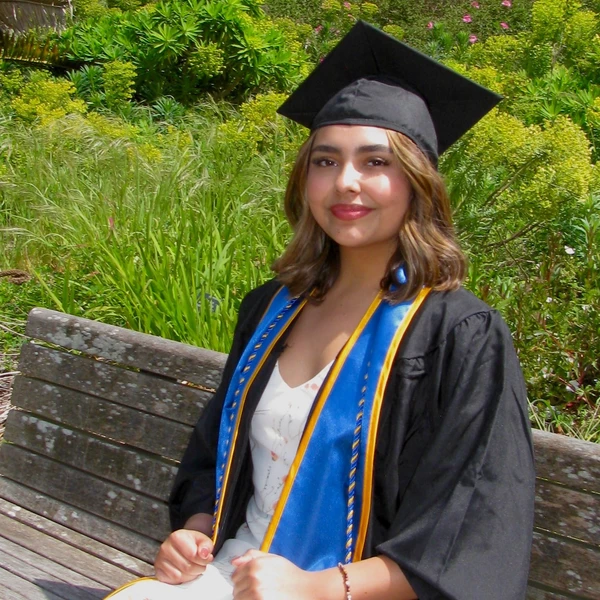
My name is Angelika Picon, and I’m a recent graduate of San Jose State University with a passion for inclusive education. Currently, I work as a Special Education paraeducator at Del Mar High School, where I support students with diverse learning needs. I absolutely love what I do, and my ultimate goal is to become a Special Education teacher. I firmly believe that every student deserves access to a fair, equitable, and supportive educational experience — and I’m committed to making that a reality in my future classroom.
Education
San Jose State University
Bachelor's degree programMajors:
- Education, General
San Jose State University
Bachelor's degree programMajors:
- Special Education and Teaching
Miscellaneous
Desired degree level:
Master's degree program
Graduate schools of interest:
Transfer schools of interest:
Majors of interest:
Career
Dream career field:
Education
Dream career goals:
Special Education Paraeducator
Del Mar High School2022 – Present4 years
Public services
Volunteering
Friends of the Public Library — Book shelver2017 – 2018
Future Interests
Advocacy
Volunteering
Reimagining Education Scholarship
If I could require all K–12 students to take a class, it would be accounting. However, I would ensure the course is designed with equity in mind by incorporating scaffolds such as visual aids and peer collaboration. These supports would make the material more accessible to students with learning disabilities as well as English language learners, ensuring that all students have an equal opportunity to understand and apply financial concepts.
With my current experience as a special education paraeducator, I’ve seen firsthand how students often struggle with basic tasks such as counting change, understanding numbers, or even reading challenging vocabulary like “account” or “finance.” A class that enriches their vocabulary while making these terms familiar through practical, hands-on learning would be incredibly beneficial. For students with learning disabilities, this approach can build confidence, strengthen problem-solving skills, and make learning feel more relevant and empowering. English language learners would also benefit by gaining both academic and functional language skills, helping them to not only grasp financial concepts but also become more comfortable with everyday English.
This class would also foster a sense of independence and real-world readiness. Many students don’t receive financial education at home, as money is often a topic that parents avoid or overlook. If students aren’t taught how to manage money at an early age, they may enter adulthood unprepared—potentially facing avoidable financial hardships. By teaching life skills such as budgeting, saving, and understanding credit, a personal finance class would better prepare students to make informed decisions and navigate adult responsibilities with confidence.
My goal as a future special education teacher is to ensure all the needs of my students are met, and I believe that the tools we often use in special education—such as visual aids, repetition, and hands-on learning—can be beneficial for all students, especially when learning complex topics like personal finance. If we start teaching children as early as kindergarten about numbers, the value of money, and how much things cost, we can begin building a strong foundation. Even as dependents, students would start to develop a sense of financial awareness, feel more comfortable talking about money, and understand its value. As they grow older and begin to enter the workforce, these early lessons would evolve into real conversations about earning money, understanding paychecks, calculating hours worked, and managing income responsibly.
Ultimately, my goal is to equip all students—not just those in special education—with the tools, confidence, and knowledge they need to make smart financial choices and thrive beyond high school.
RonranGlee Special Needs Teacher Literary Scholarship
Professor Harold Bloom once said, “the purpose of teaching is to bring the student to his or her sense of his or her own presence.” To me, this means that teaching goes beyond simply delivering content—it is about helping students recognize their own value, potential, and identity. It’s guiding them to feel confident in who they are and understanding that their presence—what they bring to the world—matters. This is especially vital for students with learning disabilities or those who often feel invisible in traditional classrooms.
My mission as a special education teacher is to support each student in discovering their voice, their confidence, and their ability to succeed. Having worked for three years as a paraeducator at Del Mar High School, primarily with students who have mild to moderate learning disabilities, I’ve seen firsthand how important it is to create a space where students feel safe, understood, and empowered. I encourage them to ask questions, seek help without shame, and persist even when the material or social environment feels challenging.
My passion for this work grew out of my own difficult high school experience. I was bullied and struggled socially, often feeling like I didn’t belong. Returning to high school as an adult with a purpose—to make sure other students do not feel isolated or unseen—has fueled my commitment to education. In my role, I not only provide academic and behavioral support but also advocate for students’ needs by collaborating on IEPs and working closely with families and educators.
Patience, empathy, and building strong relationships are central to how I help students experience their own presence. I understand teenagers are still learning about themselves, so I gently encourage them to stay focused, build their skills, and believe in their own growth. This approach, combined with my academic training—earning a Bachelor’s Degree in Educational and Community Leadership from San Jose State University—equips me to meet diverse learners’ needs through inclusive, individualized instruction.
Furthermore, I believe that making education more just and equitable requires embracing theories that emphasize social and emotional development. Erickson’s theory highlights the importance of students’ readiness for social environments and the crucial role of positive parent-teacher relationships. Bandura teaches us that behavior, personal factors, and environment interact to shape success, underscoring the need for safe, inclusive spaces. Maslow reminds us that students must have their basic and psychological needs met to be motivated and engaged, which depends largely on trusting relationships with teachers.
To enact these principles, I would advocate for improved parent-teacher communication—using translation services, communication apps, and encouraging family involvement—to ensure every student is supported both at home and at school.
Ultimately, my goal is to create classrooms where every student feels seen, respected, and empowered to grow—to truly experience, as Bloom described, a sense of their own presence.