Hobbies and interests
Astrology
Cooking
Crocheting
Candle Making
Reading
Tarot
Writing
Reading
Cultural
Drama
Criticism
Humanities
Adventure
Politics
Social Issues
I read books multiple times per week
Angela Garrett
1x
Finalist1x
WinnerAngela Garrett
1x
Finalist1x
WinnerBio
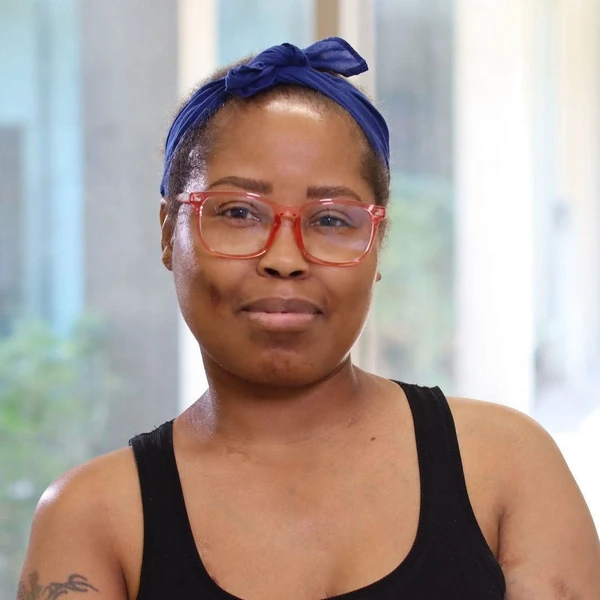
My name is Angela Garrett. I am a dual major in English and Disability and Human Development at the University of Illinois Chicago, an aspiring writer, and pop-culture enthusiast. I aim to build a career in professional writing and publishing, using my skills to inspire and connect with diverse audiences. Also, a 3-year Kidney Transplant recipient.
Education
University of Illinois at Chicago
Bachelor's degree programMajors:
- Liberal Arts and Sciences, General Studies and Humanities
Minors:
- Human Development, Family Studies, and Related Services
City Colleges of Chicago-Harold Washington College
Associate's degree programMajors:
- Design and Applied Arts
Miscellaneous
Desired degree level:
Bachelor's degree program
Graduate schools of interest:
Transfer schools of interest:
Majors of interest:
Career
Dream career field:
Writing and Editing
Dream career goals:
Professional writing for a major online platform.
Writer/Journalist
The Borgen Project2026 – Present3 monthsGen Z Culture Writer
Trill Magazine2025 – 2025
Research
Communication, Journalism, and Related Programs, Other
The Borgen Project — Writer/Journalist2026 – Present
Public services
Advocacy
Teens Against Tobacco Use (T.A.T.U.) — Teen Advocate2002 – 2003
Future Interests
Advocacy
Entrepreneurship
Nabi Nicole Grant Memorial Scholarship
Essay for the Nabi Nicole Grant Memorial Scholarship: Faith Through the Waiting.
Hello, my name is Angela Garrett. For me, spending nineteen years on hemodialysis was more than a medical experience. It was a daily act of endurance that tested my faith in every possible way. I started dialysis as a child, and while my body adjusted to the endless routine of treatments and medications, my spirit often struggled to keep up. The clinic environment was far from comforting. I was surrounded by older patients who sometimes made me feel like an outsider; too young to belong, too fragile to understand. Their words and the heavy silence of that space often left me feeling punished, as though my illness was some divine consequence instead of an obstacle meant to shape me.
But through all the pain and exhaustion, I held onto my faith, even when it was tested to its breaking point. I prayed not only for healing, but for understanding; for strength to accept the unknown. Faith became the one constant in a world that revolved around uncertainty. I didn’t know when or how, but deep down, I trusted that something greater was waiting for me on the other side of suffering.
After nineteen long years, my prayers were answered. In 2022, I received a kidney transplant. It was a moment that renewed my belief in miracles and reminded me that God’s timing, though mysterious, is always right. The transplant didn’t just give me a second chance at life. It reshaped how I saw faith itself. I learned that faith isn’t about never struggling; it’s about trusting through the struggle, believing that the darkness you’re walking through is temporary, even when you can’t yet see the light.
Now, as a student at the University of Illinois Chicago, I carry that same faith into every class, every essay, and every goal I set for myself. I’m pursuing a degree in Professional Writing and Publishing with the dream of becoming a freelance cultural writer—someone who can use their words to give voice to resilience, representation, and hope.
Earning the Nabi Nicole Grant Memorial Scholarship would allow me to continue this path without the heavy burden of financial stress. It would help me stay focused on my education, my health, and my purpose—to live each day as a testament to the faith that carried me through nineteen years of waiting, and to honor the miracle that gave me life again. It would mean so much for me.
Debra S. Jackson New Horizons Scholarship
My life journey has been anything but ordinary. As a child, I was diagnosed with kidney failure, and that diagnosis shaped much of my youth. While many of my peers were focused on after-school activities or making plans for the weekend, I was navigating hospital visits, treatments, and the emotional toll of living with a chronic illness. At times, it felt as though my life was defined by circumstances beyond my control. Yet, over time, I came to see those experiences not just as hardships but as lessons in resilience, perseverance, and hope. They are the reasons I decided to pursue higher education at this stage of my life.
When I received a kidney transplant at age thirty-seven, it gave me a new beginning. I saw it not only as a medical procedure but as a chance to rebuild and redefine my future. Now at 40, such an experience pushed me to commit myself fully to my academic and professional goals at the University of Illinois Chicago. Achieving a higher education became more than just a personal dream—it became a way to honor the gift of life I had been given and to show myself and others that it is never too late to start again.
These experiences have deeply shaped my personal values. I value resilience because I know what it means to persevere through challenges. I value empathy because I have lived through struggles that are not visible to everyone, and I know how important it is to meet others with understanding. And I value education because it is the tool that allows me to turn my experiences into something that can benefit not only myself but others.
My career aspirations reflect these values. As an English major concentrating in Professional Writing and Publishing, I want to become a professional writer whose work empowers, educates, and inspires. Writing has always been my outlet—first as a way to process my own struggles, and now as a way to connect with others. I see writing as a form of service: a way to tell stories that give voice to resilience, to highlight overlooked perspectives, and to encourage readers to see their own strength. In the long term, I hope to build a career where I can mentor and support others who also want to use their voices to make change.
Community service has also been a constant thread in my life. Whether it’s encouraging classmates who doubt their abilities or sharing advice I once received about proving to yourself what you can achieve, I find meaning in helping others recognize their potential. My health journey taught me that no one succeeds alone—we all need support systems. That understanding drives my commitment to serve and uplift others in my community, especially those who may feel discouraged by obstacles in their paths.
The Deborah S. Jackson New Horizons Scholarship would play a crucial role in helping me continue this journey. Financial support would allow me to focus more fully on my studies and professional development while reducing the stress that can sometimes overshadow the learning experience. It would also empower me to take advantage of opportunities—internships, mentorship programs, and community engagement—that will prepare me to make a real impact in my field.
My journey has taught me that new horizons are always possible, no matter where you start. With the support of this scholarship, I can continue moving forward—not only for myself, but for the communities I hope to inspire through my education, my writing, and my resilience.
Candi L. Oree Leadership Scholarship
My name is Angela Garrett, and I am a 40-year-old undergraduate student at the University of Illinois Chicago. Returning to college later in life has been both challenging and transformative, especially as someone living with chronic illness, anxiety, and the lasting effects of trauma. Disability has shaped not only how I move through the world, but how I understand others, build relationships, and imagine my future.
Living with disability taught me early on that strength does not always look like independence or endurance. Sometimes it looks like asking for help, setting boundaries, or simply showing up on days when your body or mind resists you. These experiences reshaped my beliefs about leadership. I no longer see leadership as control or authority, but as care, accountability, and listening. I believe leadership begins when people feel safe enough to be honest about what they need.
Disability also changed how I relate to others. Navigating inaccessible systems and misunderstood symptoms showed me how isolating it can feel to be unseen. That awareness made me more patient, more observant, and more willing to listen without judgment. I have learned to approach relationships with empathy first, knowing that many struggles are invisible. This mindset has allowed me to build deeper connections with classmates, peers, and community members, especially those who also feel marginalized or overlooked.
My leadership experiences come from advocacy, communication, and showing up consistently rather than holding formal titles. As a student majoring in Professional Writing and Publishing with a minor in Disability and Human Development, I often find myself acting as a bridge between people and information. Whether through classroom discussions, collaborative projects, or community based writing, I try to amplify voices that are often ignored. I lead by encouraging thoughtful conversation, asking difficult questions, and creating space for stories that challenge stereotypes.
Outside the classroom, my leadership shows up in my volunteer and writing work. I contribute to causes focused on social justice, humanitarian advocacy as writer/journalist for The Borgen Project, and disability awareness through my Disability and Human Development Classes. I approach this work with the understanding that representation matters. When disabled people see themselves reflected honestly in media and public discourse, it can shift how they understand their own worth. That belief fuels my career aspirations.
My goal is to become a freelance pop culture and cultural commentary writer who centers disabled and underserved perspectives. Disability has shown me how powerful storytelling can be in shaping public understanding. I want my writing to challenge harmful narratives, advocate for accessibility, and remind people that disabled lives are complex, creative, and valuable. I do not want to speak for communities, but to speak alongside them.
The Candi L. Oree Leadership Scholarship represents more than financial support. It recognizes leadership rooted in lived experience, resilience, and service. Receiving this scholarship would allow me to continue my education with greater stability and focus, while affirming that leadership can look like compassion, persistence, and care.
My experiences with disability have shaped who I am and how I lead. They have taught me that meaningful change starts with listening, honesty, and the courage to keep going. I carry those lessons with me as I grow, and I hope to use my education to help create spaces where others feel seen, supported, and empowered.
Compass Scholarship
My name is Angela Garrett. I am a 40-year-old undergraduate currently on the journey toward earning my first bachelor’s degree. For me, education has taught me that community care begins with listening. My college experience at the University of Illinois Chicago has given me the tools to listen more closely, think more critically, and speak more thoughtfully about the issues that affect both me and the communities I come from. That is how I plan to use my education, not as a credential alone, but as a way to show up for others in meaningful ways.
As a student majoring in Professional Writing and Publishing with a minor in Disability and Human Development, I am learning how powerful words can be in shaping public understanding. I want to use writing to support disabled and underserved communities by sharing stories that reflect real experiences rather than stereotypes. Whether through community-based publications, advocacy writing, or accessible educational materials, my goal is to help people feel seen, heard, and informed instead of ignored.
My educational journey is deeply personal. Living with chronic illness, anxiety, and trauma taught me how isolating it can feel to move through systems that were not built with you in mind. Returning to college has helped me make sense of those experiences and turn them into purpose. Each class strengthens my confidence and reminds me that my voice matters. Education has helped me understand that I am not defined by setbacks, but by how I choose to respond to them.
Receiving The Compass Scholarship would allow me to complete my studies with less financial stress, giving me the space to fully engage with my coursework and my community. It would support my goal of graduating and pursuing a career as a freelance pop culture writer, while also serving as a representative for people with disabilities who are often excluded from creative and media spaces.
In the long term, I want my education to help build stronger connections between people and resources. I want to write in ways that encourage understanding, challenge harmful narratives, and create room for healing. My personal goals and community goals are deeply connected. When I grow, I want my community to grow with me. The Compass Scholarship would help keep me moving forward in that direction, grounded in purpose and guided by care.
Alexandra Rowan Voices of Tomorrow Scholarship
The moment I learned I had kidney failure at eleven, the world suddenly felt fragile. I spent long stretches in hospitals, missing school, losing friends, and feeling like my body had betrayed me. On top of that, bullying followed me everywhere. I heard I was “weak,” “too quiet,” or “too different,” and those words began to sink into my bones. Anxiety and PTSD became quiet shadows I carried into adulthood.
Those experiences shaped who I am more than I realized at the time. They forced me to grow up early. They made me hyper aware that life can change in an instant. For a while, I responded by shrinking myself. I tried to stay invisible. I thought silence meant safety.
Writing slowly brought me back to myself.
At first, it was just scribbles in notebooks while I waited for appointments. Then it became poems, memories, and little scenes where I could rewrite fear into courage. Writing let me say things I was too scared to voice out loud. It taught me that my story was not something to hide. It was something I could understand and use.
That is why the Alexandra Rowan Voices of Tomorrow Scholarship speaks so deeply to me. Alexandra Rowan was a gifted young writer whose life ended because of a blood clot linked to hormonal contraception. Learning about her reminded me that health issues, especially for women, are often misunderstood, overlooked, or minimized. Her story opened my eyes not only to awareness around blood clots, but to how urgent it is that we talk honestly about our bodies, our health, and our lives.
The experience of living with chronic illness, anxiety, and trauma changed how I see other people too. When I look at someone, I try to remember I cannot see everything they carry. I am slower to judge. I have learned to ask, “How are you really?” I value kindness more than perfection.
It also changed how I see myself. I used to believe struggle meant failure. Now I see strength in survival. I recognize that vulnerability and courage can exist side by side. Returning to school as an English and creative writing student feels like claiming my voice instead of hiding it.
Writing gives me purpose. It lets me process fear while also building hope. One day, I want my stories, essays, and poems to help others feel less alone. I want to write about resilience, illness, identity, and the quiet bravery that lives inside ordinary lives. I want my words to spark conversations, especially for women navigating health issues and emotional pain in silence.
The Alexandra Rowan Voices of Tomorrow Scholarship represents a bridge between pain and purpose. It honors a life lost too soon and lifts up new voices trying to make meaning out of their experiences. I am grateful for the chance to share mine, and I hope to continue learning, writing, and speaking in a way that honors Alexandra’s legacy of awareness, compassion, and creative expression.
Dr. G. Yvette Pegues Disability Scholarship
My name is Angela Garrett.
Living with a disability does not come with a guidebook. For me, it has been a lifelong process of learning how to move through a world that was not built with my body, mind, or experiences in mind. I have lived with chronic illness since childhood, and over time, I also learned that my brain works differently. PTSD and anxiety have shaped how I process information, interact with others, and respond to stress. These experiences did not just affect my health. They shaped my identity, resilience, and understanding of what it truly means to survive.
Growing up disabled and neurodivergent often meant being misunderstood. I learned early how to mask discomfort, push through exhaustion, and minimize pain so I would not be seen as difficult or unreliable. In school and medical spaces, I was expected to adapt without support, explain myself repeatedly, and prove that I deserved accommodations. That constant self advocacy was exhausting, but it taught me something powerful. When you know what it feels like to be dismissed or overlooked, you learn how important it is to listen with care and intention.
As an adult learner returning to college, my disability experience followed me into the classroom. Managing deadlines while navigating fatigue, anxiety, and medical needs is challenging, but I have learned how to work with my mind instead of against it. I ask for help when I need it. I build routines that respect my limits. Most importantly, I no longer see my disability as something I must hide in order to succeed. It is part of how I think critically, write honestly, and engage deeply with my education.
My academic path allows me to study disability, culture, and social systems as lived realities rather than abstract ideas. Education has given me language for experiences I once believed were personal failures. It has helped me understand how disability intersects with race, class, trauma, and access. I have learned that underserved communities do not need more people speaking for them. They need people who understand these experiences from the inside.
I plan to use my education to support disabled and neurodivergent people, especially those from marginalized communities, through writing, advocacy, and community centered work. I want to challenge the idea that disability is something to overcome rather than something to accommodate, respect, and include. I hope to help create spaces where people feel seen instead of explained away.
The Dr. G. Yvette Pegues Disability Scholarship represents more than financial support. It represents recognition of the strength, insight, and perseverance that disabled students bring into academic spaces. Receiving this scholarship would allow me to continue my education with less financial strain and greater focus on learning, growth, and service.
My disability has shaped how I move through the world, but it has also shaped how deeply I care about making it more just and accessible. Through my education, I am committed to turning lived experience into meaningful change.
Kristinspiration Scholarship
Kristinspiration Scholarship Essay
Education has always been important to me, not because it’s the “traditional” path or something that looks good on paper, but because of what it symbolizes: hope, possibility, and the chance to rewrite your story on your own terms. For someone like me (a Black woman) who grew up juggling chronic health issues, trauma, and financial instability, education isn’t just a milestone. It’s a lifeline. It’s proof that I’m still growing, still fighting, and still building a future that once felt completely out of reach.
My relationship with education hasn’t been simple. When you develop kidney issues as a kid, survive bullying, and learn to manage PTSD and anxiety before you even know what those words really mean, school starts to feel like something that belongs to other people, people who don’t have to worry about medical appointments, emotional exhaustion, or whether the stress will knock them down for days. For years, I carried the belief that maybe I had “missed my chance.”
But the truth is, there’s no such thing. When I finally returned to school as an adult, I realized I wasn’t behind at all, I was exactly where I needed to be. Every struggle, every setback, every moment I doubted myself shaped the lens I learn through now. I don’t just show up to class; I show up with purpose. I show up knowing that education isn’t something I owe to anyone else’s expectations. It’s something I owe to myself.
That’s also why the Kristinspiration Scholarship means so much to me. The name alone (Kristinspiration) captures something I deeply believe in: turning pain into fuel, turning setbacks into motivation, and choosing to keep going even when life has been unkind. Receiving support from a scholarship with that kind of spirit behind it would mean more than just financial help. It would feel like someone looking at my journey and saying, “I see you. Keep going. You matter.”
As for the legacy I hope to leave, I want it to be bigger than degrees or job titles. I want my legacy to be about compassion and visibility. I want people who grew up like me, kids and adults dealing with disability, trauma, racism, or poverty, to look at my path and see proof that they aren’t broken, late, or unworthy. I want them to see that healing and ambition can coexist. That being sensitive is not the same as being weak. That starting over isn’t failure—it’s courage.
In the long run, I want to use my education to advocate for people in marginalized communities, especially disabled and chronically ill people whose experiences are often ignored or misunderstood. I want to bring humanity into conversations that usually lack it. I want to help build systems that don’t just “accommodate” people, but actually value them.
But on a personal level, my legacy starts small: I want to be remembered as someone who never stopped trying. Someone who fought to build a life rooted in meaning, empathy, and resilience. Someone who turned every challenge into a reason to grow instead of a reason to quit.
Education is my way of honoring every version of myself that survived long enough to dream again. It’s my way of creating a future where my story doesn’t end with struggle, it expands into purpose. And that, more than anything, is the legacy I hope to leave behind.
Harvey and Geneva Mabry Second Time Around Scholarship
WinnerHarvey and Geneva Mabry Second Time Around Scholarship Essay
My name is Angela Garrett, and if you had told younger me that I’d one day go back to college in my late thirties, I probably would’ve laughed, rolled my eyes, and changed the subject. Not because I didn’t love learning—I always did—but because life hit hard and early. At eleven, I was dealing with kidney failure. As I got older, I carried the anxiety, PTSD, and emotional aftermath that came with years of health issues and bullying. School was something I wanted, but surviving took priority.
For a long time, my life felt like a series of emergencies followed by long stretches of trying to rebuild. I spent years just trying to feel steady again—emotionally, physically, and financially. And when you’re in that kind of cycle, dreams feel like luxuries you can’t afford.
But somewhere along the way, I realized I wanted more than survival. I wanted purpose. I wanted to understand myself, my community, and the world around me in a deeper way. I wanted to heal the parts of me that had been ignored because everything else had to come first. And most of all, I wanted to use my experiences to help others who feel unheard or unseen.
That’s what inspired me to return to school.
Being an adult learner means I carry my life with me into every classroom—my struggles, my victories, my scars, my humor, my stubborn determination. When we talk about disability, race, trauma, or social justice, it’s not abstract for me. It’s lived experience. And instead of seeing that as a “nontraditional” challenge, I’ve learned to see it as a strength. I’m studying Disability and Human Development because it’s the first time my identity—Black, disabled, resilient—has felt reflected in what I’m learning.
Going back to school hasn’t been glamorous. I don’t have a big financial safety net. Balancing chronic health issues, limited income, and trying to set myself up for a stable future isn’t easy. But every semester reminds me why I came back: I want to build a life where I can advocate for people like me—people who’ve been told to “be grateful,” to stay quiet, to tough it out, to lower their expectations.
Reading about Geneva Mabry’s story genuinely moved me. The fact that she returned to school after two strokes—not out of pride, but out of purpose—reminds me that it’s never too late to choose yourself. It’s never too late to build the life you imagined before everything got in the way. Her determination feels familiar. Her courage feels like something I want to grow into.
Returning to school has given me direction, confidence, and a sense of belonging I didn’t know I needed. I’m not just earning a degree; I’m rebuilding the future I once thought I missed my chance at. I’m learning how to use my voice, not just for myself, but for my community—especially those who are disabled, marginalized, or overlooked.
I’m proud to be a “second time around” student. It means I didn’t give up. It means I chose growth over fear. And it means I’m honoring the legacy of people like Geneva—people who kept going, even when the world gave them every reason not to.
Kim Moon Bae Underrepresented Students Scholarship
My path to higher education has never been simple or predictable, but in many ways, that’s exactly what it means to grow up Black in America. My identity isn’t just something I carry; it shapes every room I walk into, every opportunity I reach for, and every dream I allow myself to imagine. Being Black means living with a quiet awareness that the world sees you before it hears you, and that the assumptions placed on your shoulders start long before you even know to question them.
For me, that awareness began early. As a Black child dealing with kidney failure, medical trauma, and relentless bullying, I learned quickly that my identity could make me a target before I even spoke a word. I faced not only the struggles of illness but also the subtle and not-so-subtle ways society teaches young Black kids that they should shrink themselves to make others comfortable. I internalized messages that told me to be grateful for whatever space I was given, even when that space was small.
But the older I got, the more I understood that shrinking could never protect me. My mental health battles—PTSD and anxiety—were shaped not just by illness, but by the experience of trying to survive in environments where being vulnerable was already seen as a weakness and being Black amplified every scrutiny. Yet it was through these painful moments that I learned something powerful: my identity is not an obstacle. It’s a foundation.
Being Black has taught me resilience that cannot be learned in textbooks. It has shaped my empathy, my creativity, and my determination to carve out a place for myself in spaces that weren’t designed with me in mind. It has given me a perspective that is both deeply personal and profoundly connected to a larger community built on survival, brilliance, and the refusal to give up.
As a first-generation college student, I’m pursuing a degree in Professional Writing & Publishing because my voice matters. Because Black voices matter. I want my work to create space for stories like mine: stories of identity, survival, mental health, and hope. Too often, narratives about Black communities get framed through trauma without acknowledging our complexity, our joy, or our possibilities. I want to disrupt that. I want to write stories that reflect truth but also inspire transformation.
My identity will undoubtedly continue shaping my future. It will continue reminding me that representation is not optional...it's necessary. It will push me to advocate for mental health awareness, especially in communities where stigma still overshadows healing. And it will strengthen my commitment to creating pathways for Black writers, thinkers, and storytellers who deserve to see themselves reflected in the world around them.
The "Kim Moon Bae Underrepresented Students Scholarship" aims to overcome barriers that exist while uplifting the potential that rises beyond them. I see myself as part of that mission—not because my journey has been easy, but because it has made me deeply aware of the importance of opportunity, understanding, and collective empowerment.
I stand where I am today not in spite of my identity, but because of it. Being Black is both the lens through which I understand the world and the fire that keeps me moving forward. My path may be unconventional, but it is shaped by purpose—and I am proud to keep walking it.
Mikey Taylor Memorial Scholarship
For most of my life, I didn’t talk about mental health. It was a taboo subject that felt too unhealthy to handle, let alone something I had to get through. My struggles with PTSD and anxiety began early, shaped by two things no child should have to carry: relentless bullying and the reality of kidney failure. I was only eleven when my world shifted from classrooms and playgrounds to dialysis chairs and fluorescent-lit medical rooms. I became “that sick kid,” a label that followed me everywhere, even outside the hospital, from junior high and high school. My classmates didn’t know what to do with someone different, so they turned their confusion into cruelty. And I carried that cruelty with me long after the school days ended.
Living with a chronic illness my entire life has taught me fear before it taught me confidence. It taught me silence before it taught me strength. I developed PTSD from the medical trauma, the isolation due to bullying, and anxiety became my constant companion...even on good days. For years, I felt like I was stuck watching everyone else live their lives while mine revolved around survival.
But over time, something shifted. I realized that speaking about mental health, naming the pain instead of hiding it, was one of the bravest acts a person can do. A turning point came in my early twenties when I started writing essays as a way to cope. Writing became the one place where I didn’t feel judged or misunderstood. It allowed me to make sense of everything that felt too heavy to say out loud. With every sentence, I reclaimed a piece of myself that trauma tried to take away.
My mental health journey taught me empathy (not the soft, distant kind), but the deep, lived-in empathy that comes from knowing exactly what it feels like to be afraid, isolated, or overwhelmed. It’s shaped how I connect with people. I’m slower to judge, quicker to listen, and more willing to create room for others to be vulnerable. My relationships became stronger once I started valuing openness over perfection. I realized it can be so powerful and so simple to say, “I understand. You’re not alone.”
As a first-generation college student, my journey has also reshaped my academic and career goals. Today, I am majoring in Professional Writing & Publishing because writing is not just something I love—it’s something that saved me. I want to become a cultural and creative nonfiction writer who brings marginalized voices, mental health stories, and narratives about resilience into the spotlight. I believe storytelling can destigmatize mental health more effectively than statistics ever could. Stories humanize. Stories connect. Stories heal.
My dream is to create work that makes someone feel understood the way I once longed to feel understood—to write essays that help others navigate their own pain, their own trauma, and their own hope. I want to use my voice to open conversations that too many people are afraid to start.
The Mikey Taylor Memorial Scholarship honors students who have struggled with their mental health and grown from those struggles. That mission mirrors my own belief: the more attention and compassion we give to those who are hurting, the closer we move toward a world where vulnerability isn’t a weakness but a bridge between us.
My journey has been difficult, but it has also made me stronger, more empathetic, and more determined to build a future where mental health is treated with the understanding and dignity it deserves. And I’m proud to keep moving forward—not despite my experiences, but because of them.
Susie Green Scholarship for Women Pursuing Education
When I think about courage, I don’t picture grand speeches or dramatic moments. For me, courage looked like sitting on my bed, staring at the reality of my life after my second kidney transplant at 37, and deciding I wasn’t going to waste the years I had been given. Two years later, at 39, I walked back into a classroom. That choice wasn’t about checking boxes or chasing some midlife crisis. It was about my family, my health, and refusing to let my life drift without purpose.
My family gave me the courage to return—especially my mother. She was there through hospital stays, recovery, and the quiet moments when fear crept in. Watching her stand by me reminded me that my life mattered not just to me, but to her as well. I wanted to show my family and myself that I could take the gift of a second chance and do something meaningful with it. Going back to school was my way of proving that survival wasn’t enough. I wanted to thrive.
The transplant was a turning point. Before it, my life often felt like it was on pause, dictated by medical appointments and uncertainty. Afterward, I realized I had been given time—and time is too precious to waste. I didn’t want to look back and see only survival. I wanted to see growth, learning, and the pursuit of something bigger than myself. School became that path. It gave me structure, goals, and the chance to build a future not defined by illness.
Like the late Susan Green, returning at 39 wasn’t easy. I worried about being the oldest in the room, about whether I could keep up, about whether I even belonged. But courage isn’t about being fearless—it’s about moving forward despite the doubts. Each assignment I turned in, each class I completed, reminded me that I was capable. My mom’s encouragement echoed in my mind, pushing me to keep going even when exhaustion or insecurity tried to pull me back.
Activism didn’t drive my decision to return to school, but it has become one of the reasons I want to be a writer. Disability activism gives me a voice, a reason to put my thoughts on paper, and a way to connect my personal experiences to broader conversations. Still, the act of returning to school was simpler and more personal: it was about not wasting my life, about honoring my second chance, and about showing my family their faith in me was not misplaced.
The "Susie Green Scholarship for Women Pursuing Education" represents more than financial support. For me, it symbolizes recognition of the courage it takes to start over, to walk back into a classroom after years away, and to believe that education can still reshape a life. My courage came from my family, my transplant, and the determination to live fully. Going back to school was my way of saying: *I am here, and I will not waste this life.*
Dream BIG, Rise HIGHER Scholarship
If you had told me ten—or even five—years ago that I’d be in college, chasing a degree in Professional Writing & Publishing, planning a future as a cultural writer, and actually believing in that future, I would’ve laughed out loud. Not because I didn’t want it, but because for so long, surviving was the only goal I had the energy to imagine. College felt like a luxury. A full, creative life felt like something reserved for other people—people with stable health, steady finances, or years ahead of them. I didn’t think I would ever be one of them.
But education has a way of reshaping not just what you do, but how you see yourself. It gives you language for experiences you once carried without understanding. It gives you direction where there used to be just instinct. And for me, it gave me a sense of purpose after years of feeling like my life was on pause.
Before enrolling at UIC, I spent nineteen years on hemodialysis, starting in childhood. Dialysis isn’t just a treatment—it’s a lifestyle, a schedule that dictates nearly everything you do. Three days a week, four hours a session, surrounded by older patients, medical machines, and the kind of harsh fluorescent lighting that makes everything feel heavier. Being the youngest patient in the room for years tested my faith, my patience, and my understanding of what “normal” life even looked like. There were complications, close calls, disappointments, and seasons where I genuinely thought I wouldn’t make it to adulthood.
But I did. And at age thirty-seven, I received a kidney transplant—something I had prayed for, doubted, lost hope in, and quietly longed for even when I didn’t admit it out loud. That transplant didn’t just save my life; it gave me my life back.
It was after that moment that everything changed. Suddenly, I had choices. Time. A future. And one of the first things I chose was education.
Enrolling at the University of Illinois Chicago was my way of finally stepping into a world I never stopped wanting. My education has done more than teach me writing techniques or help me analyze texts. It’s given me confidence. It’s helped me build an identity outside of illness. And it’s shown me that the very experiences I once saw as burdens are actually the backbone of the voice I bring to the page.
Studying Professional Writing & Publishing has opened a door into the kind of storytelling I want to do—stories rooted in culture, identity, health, resilience, and the everyday experiences that shape who we become. With every class I take, from rhetoric to cultural criticism to digital storytelling, I’m learning how to craft narratives that matter, that help others feel seen, and that challenge the way we talk about marginalized communities.
My professors have pushed me to think bigger. My peers have helped me build confidence. And the process of becoming a writer—of owning my voice—has given me direction I never had before.
Of course, this journey hasn’t been smooth. Being a full-time student over 35 comes with its own challenges. I’m on SSI as my only source of income, and while I’m grateful for it, it doesn’t stretch far. I rely on Illinois MAP and the UIC Opportunity Grant, but I’m no longer eligible for the Pell Grant. With tuition rising and medical expenses that Medicaid doesn’t fully cover—especially dental care and certain specialty services—financial stress is a constant companion.
And because my class schedule is full, I can’t take on an internship yet, which means fewer opportunities to earn money or build the professional foundation I know I need.
But here’s the thing: I’m still here. Still pushing. Still rising.
And that’s why the Dream BIG, Rise HIGHER Scholarship matters so deeply to me. “Dreaming big” isn’t something I’ve always had the freedom to do—but now I can. And this scholarship would give me the stability to actually rise higher instead of just dreaming about it.
In the long term, I hope to become a freelance cultural writer—someone who writes about film, TV, music, fandoms, identity, race, disability, and the messy, beautiful intersections between them. I want to publish essays, work with editors who challenge me, see my words reach people who need them, and tell stories that don’t usually get told with honesty or nuance.
But even beyond career goals, I hope to use my education to pour something meaningful back into the world. I’m a big believer that storytelling can shift culture. It can heal people. It can inspire hope in moments where hope feels impossible. If I can write something that makes one person feel less alone, or more understood, or more powerful in their own story—then I’ve done something worthwhile.
That’s my future. That’s my direction. And it’s rooted in everything I’ve overcome: illness, doubt, medical trauma, financial barriers, and the long journey toward believing that my voice matters.
I’m proud of the woman I’ve become through it all. A woman who lost years to illness but never lost her spark. A woman who found her purpose in writing. A woman who is rebuilding her life one class, one essay, one brave choice at a time.
My education is helping me create a future I once couldn’t imagine. And with the support of the Dream BIG, Rise HIGHER Scholarship, I know that future will be brighter, fuller, and more within reach than ever before.
Harvest Scholarship for Women Dreamers
Harvest Scholarship for Women Dreamers Essay
My “pie in the sky” dream—the one that both inspires me and sometimes feels just out of reach—is to become a nationally recognized cultural writer whose work shifts conversations, amplifies overlooked voices, and reminds people that resilience can be a creative act. I imagine publishing essays that speak to the complexities of identity, disability, survival, and culture. I imagine seeing my name in bylines across major platforms, writing pieces that help others feel seen. I imagine building a career where my voice doesn’t just tell stories, but opens doors for others who never thought their stories mattered.
This dream didn’t appear out of nowhere. It grew out of survival.
I spent nineteen years on hemodialysis—nearly two decades of medical routines, waiting rooms, and a constant awareness that my life was not guaranteed. When you’re that close to the edge for that long, you learn to see stories everywhere: in hospital hallways, in the humor patients use to cope, in the silence that follows bad news, and in the stubborn hope that carries you through treatments you can’t escape.
I started writing essays at age twenty-one because I needed a place to put the pain, the trauma, the confusion, and—unexpectedly—the beauty I found in surviving day to day. Writing gave shape to experiences that once felt overwhelming. It helped me feel human again. And somewhere along the way, it became clear that writing wasn’t just therapy. It was a purpose. It was a calling.
Receiving a kidney transplant at thirty-seven changed my life again. The world suddenly opened, wide and bright, and for the first time, I could imagine a future that wasn’t defined by machines or medical charts. That future felt creative. Expansive. Mine. My dream of becoming a cultural writer crystallized in that moment. I had lived too much, fought too hard, and survived too long not to try.
To reach that dream, I know I need education, community, and opportunity. I’m currently majoring in Professional Writing & Publishing, building the foundation I need to become the writer I envision. At UIC, I’ve strengthened my academic voice, studied narrative craft, and learned how writing can shape public conversation. I’m also building mentorships with professors and advisors who believe in my potential—even on days when self-doubt creeps in.
There are steps I know I’ll need to continue taking:
• Refining my craft through advanced coursework and writing workshops
• Getting published in student journals, local magazines, and online platforms
• Pursuing internships that give me hands-on editorial and writing experience
• Developing a portfolio that reflects my voice, my resilience, and my vision
• Continuing to heal, because the stronger I become emotionally, the stronger my writing becomes
What feels “pie in the sky” isn’t the dream itself, but the path. As a low-income, first-generation adult student living on SSI after years of medical hardship, the biggest barrier is financial stability. When you’re trying to pay for tuition, medical needs, and basic living expenses all at once, dreaming big can feel like a luxury.
That’s why the Harvest Scholarship for Women Dreamers means more than financial support—it represents belief. It represents possibility. It represents the space to dream without the constant fear of falling behind.
My big dream may still feel just out of reach, but every class I take, every essay I write, and every step I take toward healing brings it closer. And with support, dedication, and unshakable hope, I believe I can get there.
Tammurra Hamilton Legacy Scholarship
Why Mental Health and Suicide Prevention Matter Today
Mental health and suicide prevention are two of the most important topics for my generation because they’re no longer things we can afford to ignore. We live in a time when everyone feels pressured to have it all together—academically, emotionally, and financially—while the world around us keeps throwing challenges our way. Social media makes it worse, with its filtered version of reality that leaves so many people silently struggling. Conversations about depression, anxiety, and suicide are finally becoming more open, but the stigma still lingers. That’s why awareness and empathy are not just buzzwords to me—they’re part of how I live my life every day.
My experience with mental health has been shaped by years of physical hardship and emotional endurance. Spending nineteen years on dialysis before receiving my kidney transplant tested every part of me—body, mind, and spirit. There were moments when I felt completely hopeless, wondering if my life would ever move forward. The environment in those clinics wasn’t always uplifting; many of the people around me had given up, and I started to believe I might do the same. But somewhere in that darkness, I found faith. It became the quiet, steady force that pulled me back toward hope. That experience taught me that survival isn’t just physical—it’s emotional and spiritual, too.
Now, as a college student at UIC pursuing my degree in Professional Writing and Publishing, I’ve learned that mental health is not just a private issue—it’s a community one. The stress of coursework, financial strain, and personal expectations can weigh heavily on any student, but especially on those who carry long-term trauma or health challenges. I’ve made it my mission to speak honestly about my own experiences because I know that silence can be deadly. Whether it’s through writing, volunteering, or just checking in on a friend, I believe in creating spaces where people feel seen and supported.
My experience has also influenced the way I build relationships. I’ve learned to surround myself with people who value vulnerability as strength, who know that healing doesn’t happen in isolation. I approach every friendship, mentorship, and classroom interaction with empathy because I understand that everyone is fighting a battle, even if it’s invisible.
Earning the Tammurra Hamilton Legacy Scholarship would mean more than just financial support—it would be a symbol of resilience and purpose. Tammurra Hamilton’s legacy represents compassion, leadership, and the importance of mental well-being, values I try to embody in my own journey. This scholarship would give me the stability to continue my studies while allowing me to advocate for mental health awareness within my community and campus.
In the future, I hope to use my writing to highlight stories of perseverance and healing—especially from those who feel unseen or unheard. Whether through essays, creative nonfiction, or advocacy writing, I want my words to remind people that they matter, that there’s always another chance to start over.
Mental health and suicide prevention matter because they’re about saving lives—often quietly, one honest conversation at a time. My journey has taught me that hope can survive the darkest places, and as long as I have a voice, I’ll keep using it to remind others of that truth.