Hobbies and interests
Reading
Writing
Reading
Mystery
Classics
Literary Fiction
Adult Fiction
Book Club
Historical
Gothic
Horror
I read books daily
Angel Vazquez
1x
FinalistAngel Vazquez
1x
FinalistBio
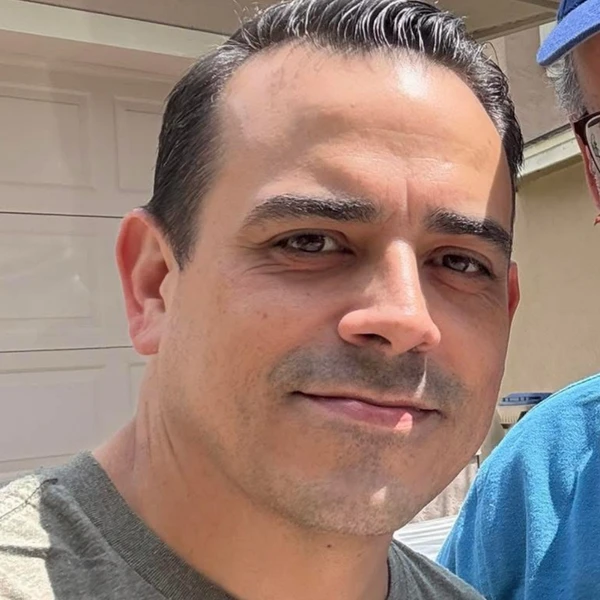
I’m a web developer, husband, and father of two daughters, returning to college to pursue my lifelong passion for literature and writing. After more than two decades in technology — building websites, managing digital marketing campaigns, and helping small businesses grow — I realized that what fulfills me most is connection: the human story behind every voice, every word, every challenge.
In 2018, I survived a heart attack at 37 that required emergency triple bypass surgery. That experience changed my life. With the support of my wife and daughters, I rebuilt my health one step at a time — eventually running more than fifteen half-marathons and completing a full marathon just one year later. My recovery was featured on local news and in Runner’s World magazine, not because of the miles I ran, but because of the purpose I found in them.
Today, I’m pursuing an A.A. in English at Valencia College and plan to transfer to the University of Central Florida to earn my B.A. in English Literature. My goal is to teach, write, and mentor — to help others find their voice and recognize their own capacity for resilience.
Education
Valencia College
Associate's degree programMajors:
- English Language and Literature, General
Herzing University-Winter Park
Associate's degree programMajors:
- Computer Systems Networking and Telecommunications
Miscellaneous
Desired degree level:
Bachelor's degree program
Graduate schools of interest:
Transfer schools of interest:
Majors of interest:
- English Language and Literature, General
Career
Dream career field:
Libraries
Dream career goals:
Front-end Web Developer, Support, Management
Resaleworld.com2008 – Present18 years
Sports
Wrestling
Varsity1994 – 19984 years
Future Interests
Advocacy
Politics
Volunteering
Philanthropy
Entrepreneurship
RonranGlee Literary Scholarship
By Angel D. Vazquez
“Beware of being deceived by appearances. If a nation is groaning under the unendurable yoke of a tyrant, is it weakness to rebel at last and shatter the chains? If a man, shocked to find his house on fire, senses his strength is heightened, so that he can easily carry some burden he could barely lift in calmer moments—or if a man is so enraged by an insult that he takes on six opponents and overcomes them—would you call them weak? Well, my good friend, if such exertions are to be seen as strength, why should the greatest of endeavors be thought the opposite?”
— Johann Wolfgang von Goethe, The Sorrows of Young Werther (1774)
Johann Wolfgang von Goethe’s The Sorrows of Young Werther is often remembered as a novel about heartbreak and despair, but beneath its melancholy lies a radical defense of passion as the essence of strength. In this passage, Goethe dismantles the common assumption that emotion is weakness. He argues instead that emotional intensity—whether born of love, grief, anger, or moral conviction—is a force that heightens our humanity and empowers us to act decisively when reason alone would falter. My central thesis is this: Goethe asserts that emotion, far from being a defect to restrain, is the wellspring of our greatest courage, moral clarity, and creative energy.
The Misunderstood Power of Emotion
Goethe begins with a warning: “Beware of being deceived by appearances.” It is an admonition that speaks not only to his era but to ours. Society often celebrates composure and logic while distrusting passion. To lose control, to cry openly, to rage against injustice—these are seen as signs of weakness or immaturity. Yet Goethe challenges this assumption by comparing emotional outburst to physical exertion under extraordinary conditions. A man may lift what he never could in calmer times; a nation may rise from fear to rebellion when the heart outweighs caution. Passion, in Goethe’s view, is the catalyst for transformation.
The examples he offers are not coincidental. Each scenario is born from crisis: oppression, danger, insult. These are moments when calculation yields paralysis but feeling ignites movement. Reason may acknowledge the tyrant, but only indignation sparks revolt. Reason may note the spreading fire, but only panic drives a man through the smoke to save what matters. Emotion, then, becomes not an obstacle to strength but its very expression—an instinctive surge of energy rooted in love, fear, or justice.
Goethe’s Romantic Philosophy of the Heart
Goethe wrote The Sorrows of Young Werther during the height of the Enlightenment, an age that prized rationality, balance, and restraint. His defense of emotion was therefore revolutionary. It became a cornerstone of Romantic thought, which viewed feeling as a path to truth that reason could not always reach. Werther, Goethe’s tragic protagonist, embodies this belief: he feels deeply, loves intensely, and suffers profoundly. His downfall is not simply his passion but society’s inability to make space for it.
The quoted passage reflects Goethe’s conviction that emotion is not the enemy of reason but its necessary counterpart. He sees vitality in emotional experience—an affirmation that to feel deeply is to live fully. His examples blur the line between moral courage and instinctive action. The rebel who rises against tyranny, the man who rescues his home from flames—both act from emotion, yet their deeds are heroic. The implication is clear: greatness, whether moral or physical, springs from the passionate core of human nature.
The Modern Misreading of Calmness as Strength
Goethe’s words resonate powerfully in the twenty-first century, where emotional restraint is often mistaken for maturity. We are taught from a young age to “keep it together,” to suppress tears and temper, to equate calmness with control. But Goethe reminds us that control without conviction is a hollow virtue. A society that prizes emotional neutrality risks losing empathy, spontaneity, and moral urgency—the very traits that make progress possible.
We see this distortion in contemporary culture: leaders who equate empathy with weakness, workplaces that reward detachment over compassion, and a public discourse that favors statistics over stories. Yet history repeatedly vindicates Goethe’s argument. Every social movement—the abolition of slavery, women’s suffrage, civil rights—was fueled not by cool logic alone but by collective outrage and deep love for humanity. Emotion is the spark that reason refines; together they forge change.
Personal Resonance: From Survival to Purpose
Goethe’s defense of passion feels deeply personal to me. In 2018, I survived a heart attack at thirty-seven and underwent emergency triple-bypass surgery. During recovery, I learned firsthand how emotion can summon strength where logic would surrender. Fear became fuel. Love for my wife and daughters became the force that pushed me through pain, exhaustion, and doubt. Months later, that same passion carried me across the finish line of a marathon—a feat that logic would have deemed impossible so soon after surgery.
That experience changed how I understood strength. It isn’t measured in stillness or composure but in the ability to harness emotion toward purpose. My recovery wasn’t the triumph of reason over feeling; it was feeling channeled into resilience. When Runner’s World later shared my story, it wasn’t a tale of athletic achievement—it was proof of Goethe’s thesis lived out: emotion, when embraced rather than suppressed, can become a transformative power.
The Moral Dimension of Passion
Goethe’s argument extends beyond physical strength to moral courage. The rebel’s uprising against tyranny in his example is not just an act of rage but of conscience. Passion becomes the moral engine that drives resistance to injustice. This idea is timeless. Without moral emotion—anger at oppression, grief at loss, compassion for others—there can be no meaningful ethical action.
In my own life, this understanding shapes my decision to return to college in my forties to study English Literature. My passion for reading and writing is not an escape from life but a means to engage it more fully. Literature, after all, is the written form of emotion distilled through thought. It teaches empathy, patience, and perspective. It reminds us, as Goethe does, that feeling is not the opposite of reason but the foundation of understanding. My goal is to use that awareness to promote literacy among young readers, especially children who see books as distant or dull. To help a child fall in love with reading is to awaken their emotional imagination—the same force Goethe called strength.
The Balance Between Passion and Reason
Still, Goethe does not romanticize unchecked emotion. Werther’s tragic end is a warning about imbalance. Passion without reflection can consume as easily as it creates. The key lies in harmony: emotion must inform reason, and reason must guide emotion. This balance mirrors my own recovery and education. Running, like reading, requires rhythm—discipline shaped by feeling. Both demand a harmony between effort and reflection, instinct and restraint.
Goethe’s insight, then, is not an argument for chaos but for authenticity. To deny emotion is to deny truth. To surrender entirely to it is to lose direction. The challenge—and the art—is to let passion illuminate reason rather than extinguish it.
Relevance for a Fragmented Age
In an era of digital noise and emotional fatigue, Goethe’s words urge us to reclaim the vitality of feeling. The modern world often numbs us: constant information, mediated outrage, curated calm. But genuine emotion—the kind that moves us to act, create, or connect—remains the heartbeat of progress and humanity.
To “beware of being deceived by appearances” is also to resist mistaking apathy for strength. The calm surface of indifference may look composed, but it conceals a deeper weakness: the inability to care. True strength, Goethe reminds us, is not the absence of feeling but the courage to feel deeply and act upon it.
Conclusion: The Courage to Feel
Goethe’s passage from The Sorrows of Young Werther is more than a defense of passion—it is a philosophy of life. He invites us to see emotion not as fragility but as potential energy, the raw material of courage, compassion, and creation. Passion is the fire that tempers our humanity; without it, reason is inert.
For me, this message has become personal truth. My heart, once broken and rebuilt, has become both literal and symbolic proof that emotion is strength. It was love that saved my life, and it is love—expressed now through words, teaching, and service—that gives it meaning.
In a world still tempted to equate stoicism with strength, Goethe’s warning stands: beware of being deceived by appearances. Passion is not our weakness; it is our greatest power.
Community College Matters Scholarship
When I was thirty-seven, I lay in a hospital bed with a failing heart and a surgeon telling me I needed an emergency triple bypass to survive. In that moment, my life divided into two chapters: the years I spent chasing deadlines and paychecks, and everything that came after — when I began chasing meaning.
I had spent over two decades in technology — fixing networks, building websites, and helping small businesses tell their stories online. I enjoyed the work, but I often felt disconnected from the deeper “why” behind it. My heart attack in 2018 forced me to slow down long enough to ask that question for the first time. What mattered wasn’t how many websites I built or lines of code I wrote. What mattered were the people — my wife and two daughters — and the stories that would live on long after me.
Recovery became my classroom. I learned discipline and gratitude step by step, first by walking, then running, until I crossed the finish line of a marathon exactly one year after my surgery. The Runner’s World article that shared my story wasn’t about surviving a heart attack — it was about rediscovering purpose. I realized that the heart, in every sense, needs exercise: physical, emotional, and intellectual.
That realization led me back to education. Now in my forties, I’m pursuing an A.A. in English at Valencia College with plans to earn my B.A. in English Literature at the University of Central Florida. Literature has always been my quiet refuge — the space where empathy and imagination meet. Books taught me to see the world through others’ eyes and to recognize how words can heal, connect, and inspire.
Returning to college at this stage of life isn’t about starting over; it’s about continuing a story that almost ended too soon. My goal is to use my education to foster a love of reading and language in others — especially children. I hope to work in a library or literacy program where I can encourage young readers to see books not as assignments but as adventures, where curiosity becomes confidence. I believe that improving childhood literacy isn’t just about academics — it’s about giving kids the tools to dream beyond their circumstances.
This scholarship would help ease the financial weight of tuition and books, allowing me to focus fully on my coursework while continuing to support my family. But more than that, it would symbolize belief — belief that transformation at forty-something isn’t only possible, it’s necessary. It would help me turn my own second chance into opportunities for others: children discovering their first book, adults finding courage to return to school, and anyone who needs proof that it’s never too late to learn, give, and begin again.
Debra S. Jackson New Horizons Scholarship
When I was thirty-seven, I lay in a hospital bed with a failing heart and a surgeon telling me I needed an emergency triple bypass to survive. In that moment, my life divided into two chapters: the years I spent chasing deadlines and paychecks, and everything that came after — when I began chasing meaning.
I had spent over two decades in technology — fixing networks, building websites, and helping small businesses tell their stories online. I enjoyed the work, but I often felt disconnected from the deeper “why” behind it. My heart attack in 2018 forced me to slow down long enough to ask that question for the first time. What mattered wasn’t how many websites I built or lines of code I wrote. What mattered were the people — my wife and two daughters — and the stories that would live on long after me.
Recovery became my classroom. I learned discipline and gratitude step by step, first by walking, then running, until I crossed the finish line of a marathon exactly one year after my surgery. The Runner’s World article that shared my story wasn’t about surviving a heart attack — it was about rediscovering purpose. I realized that the heart, in every sense, needs exercise: physical, emotional, and intellectual.
That realization led me back to education. Now in my forties, I’m pursuing an A.A. in English at Valencia College with plans to earn my B.A. in English Literature at the University of Central Florida. Literature has always been my quiet refuge — the space where empathy and imagination meet. Books taught me to see the world through others’ eyes and to recognize how words can heal, connect, and inspire.
Returning to college at this stage of life isn’t about starting over; it’s about continuing a story that almost ended too soon. My goal is to use my education to foster a love of reading and language in others — especially children. I hope to work in a library or literacy program where I can encourage young readers to see books not as assignments but as adventures, where curiosity becomes confidence. I believe that improving childhood literacy isn’t just about academics — it’s about giving kids the tools to dream beyond their circumstances.
My journey has reshaped my values. I’ve learned that giving back doesn’t require grand gestures — it starts with sharing your time, your story, and your patience. Whether I’m helping a coworker understand a website, mentoring a student who feels “too old” to start again, or volunteering at local reading events, I see service as the truest expression of gratitude.
This scholarship would help ease the financial weight of tuition and books, allowing me to focus fully on my coursework while continuing to support my family. But more than that, it would symbolize belief — belief that transformation at forty-something isn’t only possible, it’s necessary. It would help me turn my own second chance into opportunities for others: children discovering their first book, adults finding courage to return to school, and anyone who needs proof that it’s never too late to learn, give, and begin again.