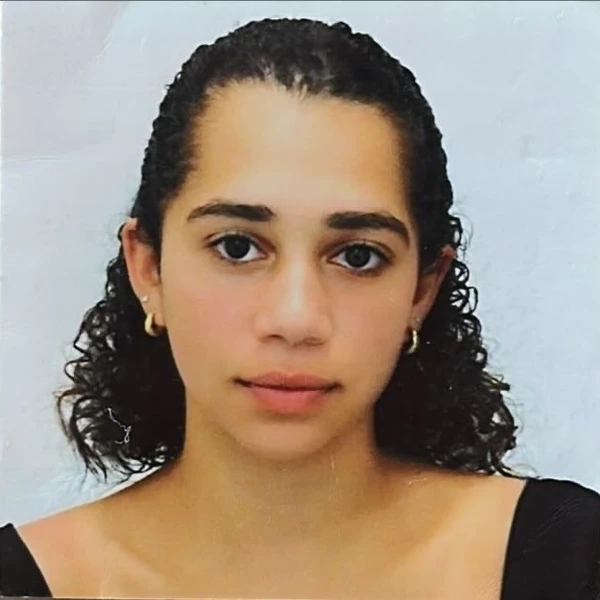
Hobbies and interests
Biomedical Sciences
Biotechnology
Cooking
Baking
Global Health
Nutrition and Health
Reading
Academic
Biography
Health
Cultural
I read books multiple times per week
Angel Sajous
1x
Finalist1x
WinnerAngel Sajous
1x
Finalist1x
WinnerBio
Originally from Haiti and raised in Miami, I am a rising junior at Duke University deeply committed to advancing healthcare access and immigration reform. My personal journey as an immigrant has shaped my passion for medicine—not only as a means of healing individuals, but also as a pathway to advocate for underserved communities. At Duke, I am pursuing a Biology and Global Health co-major to prepare me for a future in medicine, with a particular focus on global health equity and technology. I am especially interested in the intersections between healthcare, social justice, and policy, and I aspire to use my platform to uplift immigrant voices and improve health outcomes for marginalized populations.
Education
Duke University
Bachelor's degree programMajors:
- Public Health
- Biology, General
Miscellaneous
Desired degree level:
Doctoral degree program (PhD, MD, JD, etc.)
Graduate schools of interest:
Transfer schools of interest:
Majors of interest:
- Biology, General
- Public Health
Career
Dream career field:
Medical Practice
Dream career goals:
Physician
Sports
Tennis
Varsity2019 – 20234 years
Research
Health Professions and Related Clinical Sciences, Other
Duke Bass Connections — Analyze social determinants of health for minority groups in Duke's ER post-orthopedic surgery and develop targeted interventions with an interdisciplinary team (physicians, nurses, case managers, IT, etc.)2024 – 2025Microbiological Sciences and Immunology
Duke Chen Lab: Hematological Malignacies and Cellular Therapry Research — Cellular Therapy Resarch Assistant: injecting mice with NT-I7, irradiating them, infecting them with the fungus, and then imaging them to monitor their T cell populations2024 – PresentMental and Social Health Services and Allied Professions
AP Capstone — Lead Researcher: composed literature review, designed and distributed surveys, analyzed data, and compiled results and interpretations into scientific paper2020 – 2021Medicine
Boston Leadership Institute — Learned basic lab and medical practices, including but not limited to cadaver surgeries, suturing, and microscopic data analysis2021 – 2021Neurobiology and Neurosciences
Miami Project to Cure Paralysis, Miller School of Medicine — Neurological Surgery Research Assistant: to pinpoint clinically relevant biomarkers for personalized therapeutic treatments that improve injury severity and functional outcomes for TBI patients.2024 – Present
Public services
Volunteering
Durham Veteran Affairs Medical Center — Companion: including but not limited to having conversation, watching movies, doing arts and crafts, and listening to music or old stories2024 – PresentVolunteering
Sanitas Medical Center — Family Medicine Medical Assistant - observing physicians to drawing blood and performing EKGs2024 – 2024Advocacy
Duke Medical Ethics Journal — Writer, Graphic Designer, and Editor2024 – PresentAdvocacy
Beyond Border — Community Engagement Committee: planning multicultural celebrations, raising awareness about immigrant experiences, and creating a space for immigrant voices to be heard2023 – PresentVolunteering
L'Hopital Bernard Mevs — Abroad Shadowing Intern2022 – 2022Volunteering
Dr. Jhonny Solomon — Plastic Surgery Intern2021 – 2022Volunteering
Refugee Assistance Alliance — ESL Coordinator2024 – PresentVolunteering
Angel's Touch — Founder2021 – 2023Volunteering
Hope4Haiti — Founder2020 – 2023Advocacy
World Relief — I walked alongside refugee families in their first critical weeks in America - picking them up from the airport, getting them settled into housing, and introducing them to the Durham area.2024 – Present
Future Interests
Advocacy
Volunteering
Philanthropy
Entrepreneurship
Future Leaders Scholarship
The first time I saw the kids at Toussaint Louverture Elementary light up over something as simple as new pencils, I realized leadership wasn’t about being the loudest voice in the room, it was about showing up, listening, and serving my community.
I founded Hope4Haiti during my sophomore year of high school, originally to support orphanages back home. Haiti had always been my anchor, the place where I was born, where I lost my father, and where I learned what it meant to survive on grit. Watching the country I loved continue to suffer from political unrest and crumbling infrastructure, I wanted to do something to help. I started small by collecting school supplies, organizing donation drives, and reaching out to family friends still living in Port-au-Prince.
But then reality hit: political instability made it impossible to ship supplies safely. For a minute, I felt like I had failed. But leadership means knowing when to pivot. So I looked around and realized that Little Haiti, just a short drive from where I lived in Miami, was full of kids who needed the same support.
That’s when Hope4Haiti grew into something bigger. We began sponsoring five Title I schools in Little Haiti, hosting annual school supply drives and working directly with administrators to identify gaps. When I heard that Toussaint Louverture Elementary didn’t have a computer lab, I got to work. I applied for grants, hosted fundraisers, and even knocked on small business doors asking for gently used tech. It took months but eventually, we built a fully functioning lab for over 300 students. Watching them explore websites like Duolingo and BrainPop for the first time was surreal. It wasn’t just about access but opportunity.
We didn’t stop there. I collaborated with the yearbook committee at my high school to design the school’s first-ever yearbook. Seeing their faces as they flipped through the pages, pointing to photos, laughing, feeling seen, was one of the proudest moments of my life. I was proud to have given them something that couldn’t be erased or forgotten.
It wasn’t always smooth. Coordinating with school administrators, managing volunteers, and organizing drives while balancing schoolwork wasn’t easy. There were moments I was overwhelmed, burned out, and unsure if it was all going to come together. But I learned how to delegate, how to trust my team, and how to keep going even when things didn’t go to plan. I grew into someone who could move through challenges with purpose and keep people motivated even when we were tired.
That experience transformed how I lead in every part of my life. Whether mentoring refugee students, building out research proposals, or leading group projects in global health, I carry the same mindset: listen first, act with intention, and always center the people you're trying to serve.
As I move into a career in medicine and public health, I plan to take what I’ve learned from Hope4Haiti and apply it on a larger scale. I want to design community-based health programs that aren’t just about treating patients but empowering them. I want to build clinics in Haiti that don’t just provide medicine, but start change deep within the roots of my community. Hope4Haiti started as a simple idea. But in building it, I found my voice, my purpose, and my belief in the kind of leader I want to be. I hope to one lead with heart, humility, and action.
Byte into STEM Scholarship
Growing up in Haiti, where access to healthcare was a luxury, I witnessed firsthand how the lack of emergency medical resources contributed to my father’s death. No ambulances were available to respond to his emergency, and there was no blood in the hospitals to perform a life-saving surgery, illuminating the devastating consequences of systemic healthcare inequities. This personal loss shaped my resolve to pursue medicine, not only to honor his memory but also as a means to address the gaps in healthcare that have profoundly affected families like mine.
Two summers ago, while shadowing a surgeon in one of the only hospitals in Haiti, I observed the overworked staff scrambling to treat the revolving door of patients with insufficient medical supplies. Reflecting on my time interning with a surgeon in Miami, his tools, always sterilized, pristine, and ready to be carefully placed into his hands, I witnessed the glaring gap between the healthcare systems in Haiti and America. Living in a country where an ambulance promptly arrives after a 9-1-1 call and hospitals have the resources to treat life-threatening injuries, I understand the privilege I now have and want to use every opportunity to bridge this gap.
My desire to pursue medicine is both a professional aspiration and profoundly personal quest shaped by my life experiences in both Haiti and America. By integrating cutting-edge technology and cultural understanding into my medical practice, I can better support the emotional and physical well-being of those I serve, becoming a more empathetic and innovative physician.
At Duke, my multidisciplinary education in biology and global health has strengthened my understanding of the intersection between medicine and social equity. Through my global health coursework, I’ve examined the structural forces that shape access to care across different countries and marginalized communities. These courses are foundational in deepening my understanding of how structural and systemic challenges perpetuate healthcare disparities globally - and what it means to deliver equitable healthcare. Similarly, My work in biological sciences has prepared me to explore medicine through the lens of research and innovation. With this, I am excited to test the boundaries of science on a global scale, conducting research to advance healthcare systems through technological innovation.
From developing interventions for social determinants of health in the Duke ER to investigating the different neurological cell death pathways post traumatic brain injuries, I have learnt how research can truly impact impact patients as scientific discovery is bridged with clinical practice. Similarly, being a companion to dementia patients at the Durham Veterans Affair clinic, I understood firsthand how active listening and compassion can play in patient's quality of life. I learned that the heart of medicine is not curing - it's about caring.
As I continue on my journey to medicine, I'm prepared to navigate the emotional complexities of medicine and approach patient care with humility and empathy.
SigaLa Education Scholarship
Growing up in Haiti, where access to healthcare was a privilege and not a right, I witnessed firsthand the devastating consequences of medical inequities. After losing my father to a treatable emergency—when no ambulance came and hospitals lacked the resources to help—I realized that becoming a physician wasn’t just a career aspiration, it was a personal mission. I chose to pursue medicine because I want to become the kind of doctor who delivers the outstanding patient care my father wasn’t able to receive, especially for underserved and immigrant communities who continue to fall through the cracks of our global healthcare systems.
In the short term, I plan to continue building a foundation in biology and global health at Duke University while actively engaging in research and community-based work. Whether analyzing social determinants of health in post-surgical patients at Duke Hospital through Bass Connections or conducting immunology research at the Chen Lab to support immunocompromised cancer patients, I’m committed to blending science with advocacy. I also plan to immerse myself in under-resourced healthcare systems around the world—whether supporting refugees through ESL tutoring and paperwork with the Refugee Assistance Alliance, volunteering in mobile clinics in Honduras, or exploring systemic barriers to reproductive care in Durham. These experiences ground me in the real-world impact of medicine, far beyond the classroom or lab bench.
Long-term, I aspire to become a physician who leverages clinical care, technological innovation, and policy reform to reimagine how we deliver healthcare globally. I hope to build and scale medical technologies that can be implemented in underfunded hospitals, whether in Haiti, Little Haiti in Miami, or refugee camps across the globe. As an underrepresented minority in medicine—a Haitian-American immigrant, a woman of color—I carry with me the experiences of being overlooked, misunderstood, and dismissed in healthcare settings. But those same experiences have strengthened my empathy, sharpened my resilience, and deepened my resolve. I don’t want to just enter the medical field—I want to shape it.
Being underrepresented means often feeling like your story is invisible. But I’ve learned to use that invisibility as fuel—to speak up for patients whose voices are drowned out and to bring lived experience into rooms where decisions are being made. I want to stand as proof that representation matters, that being “different” is not a liability but a lens that enhances patient care. My background enables me to connect with patients across language, culture, and trauma. It also positions me to be a mentor for those who will follow behind me, so they too can believe they belong in medicine.
Financially, this scholarship would be transformative. As a first-generation immigrant student, every dollar toward my education relieves a weight that often feels like it’s pressing down on not just me, but my entire family. It would allow me to focus fully on my academics, my research, and my service work without the constant financial worries. More importantly, it would be an investment in my vision—to build a more equitable, innovative, and compassionate healthcare system.
Medicine, to me, has always been about more than treating disease—it’s about restoring dignity, breaking barriers, and creating a future where no child loses a parent to a lack of resources. With this scholarship, I will take one step closer to that future.
SnapWell Scholarship
My greatest accomplishment was taking control of my health and learning to manage my Polycystic Ovary Syndrome (PCOS) on my own terms. After months of enduring irregular, painful periods and mood swings that left me feeling like a stranger in my own body, I was desperate for answers and solutions that weren’t “get more sleep” or “go on birth control.” Then, I met Dr. Feldman. After countless consults, she truly listened—wholeheartedly hearing my symptoms and treating me with empathy and respect. For the first time, I felt validated. Finally, I could take my life back. Fueled by a diagnosis, I did what I know best: dove into research. I discovered simple yet powerful lifestyle changes I could make to tune into my body’s signals. I discovered that strength training boosted my energy, protein and healthy fat-rich meals stabilized my insulin, and drinking spearmint tea and practicing mindfulness helped lower cortisol, transforming my quality of life. This process required patience, consistency, and a willingness to listen to my body in ways I never had. This experience not only transformed my life but also sparked my passion for women’s health. I am deeply aware of the privilege I had in accessing the resources and support to manage my condition—an opportunity many women do not have. This inequity drives me to become a physician who can bridge that gap, empowering women to understand their bodies, access care, and make informed decisions about their health. Too often, women, especially those with PCOS, feel dismissed and helpless, prescribed birth control as a blanket solution while their symptoms go overlooked or misdiagnosed. My success in managing my PCOS inspires me to empower my future patients with the knowledge and compassion they need to take control of their health. I now volunteer at a low-income health clinic in my community, where I’ve seen firsthand how many patients—particularly immigrants, women of color, and those from minority backgrounds—struggle to find providers who take their concerns seriously. These interactions have deepened my commitment to becoming not just a doctor, but an advocate. I want to lead with the same curiosity and care that helped me reclaim my own well-being. Managing my PCOS wasn’t just about health—it was about agency. That’s what I hope to give every woman I one day treat. What began as a deeply personal challenge has evolved into a lifelong purpose of being the kind of provider that not only heals, but listens.