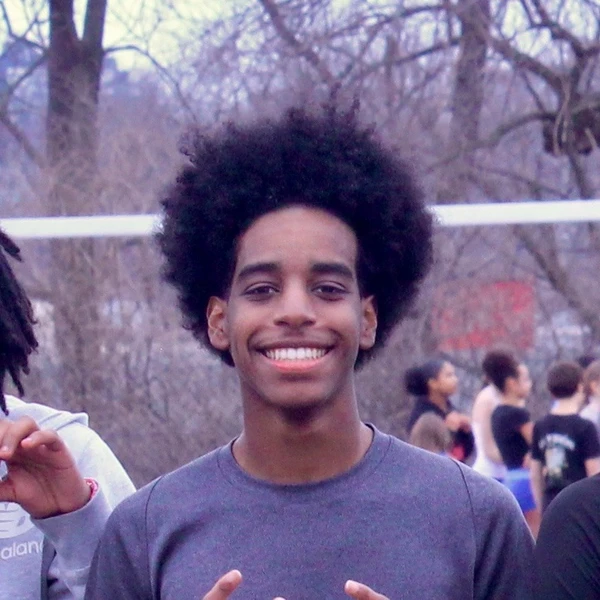
Hobbies and interests
Stocks And Investing
Basketball
Music
Business And Entrepreneurship
Andrew Lippert
1x
Finalist
Andrew Lippert
1x
FinalistBio
I am a Walnut Hills High School senior from Cincinnati with a 29 ACT score and a story shaped by resilience, identity, and growth. I was adopted from Ethiopia in 2008 and raised by a single mother, and in recent years I reconnected with my birth mother—an experience that deepened my understanding of who I am and where I come from.
During high school, my family faced serious challenges when my brother required therapeutic placement due to escalating violence at home. Around the same time, I was diagnosed with ADHD and slow processing speed, which explained academic struggles earlier in my education. With support, therapy, and determination, I continued working consistently while staying engaged in school and community life.
I have held paid jobs for three consecutive years as a camp counselor, caterer, and lifeguard, demonstrating responsibility and work ethic during difficult circumstances. I am also involved in Black Culture Club, yearbook, and Hope Hustlers for the Leukemia & Lymphoma Society.
I plan to pursue higher education with interests in business, investing, and leadership. I am motivated to break cycles, build opportunity, and use my experiences to contribute meaningfully to my college community and beyond.
Education
Walnut Hills High School
High SchoolMiscellaneous
Desired degree level:
Bachelor's degree program
Majors of interest:
- Entrepreneurial and Small Business Operations
- Business, Management, Marketing, and Related Support Services, Other
Career
Dream career field:
Investment Management
Dream career goals:
Summer Camp Counselor
Noize Outreach2023 – 2023Caterer
The Monastery Event Center2024 – 2024Lifeguard
City of Cincinnati2025 – Present1 year
Sports
Track & Field
Varsity2025 – Present1 year
Arts
Cincinnati Childrens Theatre
ActingCasper, Cinderella2017 – 2019
Public services
Volunteering
Friendship United Methodist Church Youth Group — Mission Trip Volunteer2023 – 2023
Future Interests
Advocacy
Philanthropy
Entrepreneurship
Project Prosperity Scholarship
My financial education started when I was ten. My mom raised me alone, worked in contract compliance, and kept us moving forward. Watching her build stability every day showed me you have to create it yourself and nobody is going to hand you a map. Then she gave me $1,000 to invest across five companies. Having real capital on the line taught me early that money is a tool. The actual goal is owning your time.
Most financial literacy taught in schools focuses entirely on defense. Save a small amount, calculate compound interest, wait until you’re 65. That works for some people. But it has almost no connection to how the modern economy actually operates, and it doesn’t teach you how to think about a business or evaluate whether an opportunity is real.
What I actually want to learn and what I think young people need is how to look at a business model, strip away the branding, and see exactly why it makes money. Who’s paying who, and why. When you understand that, you stop being passive. A friend once asked me why I held a specific stock over a competitor. Walking him through the margins, the market position, the downside risk, that conversation did more in twenty minutes than most of what gets taught in a semester. That’s the gap. Most students aren’t uninterested in money, they just haven’t had someone explain it plainly without the academic filter that makes it feel irrelevant to their actual lives.
The other thing schools get wrong is the timeline. Conventional financial education is built around a retirement account you won’t touch for forty years. That framing makes sense for people who never took the wheel. But if you start understanding how businesses generate revenue at fifteen, you have a real advantage by twenty five. Time horizon is more valuable than capital, but that doesn’t mean the thinking should be delayed until you’re an adult.
This fall I’m heading to Ohio University to study business, with a long-term goal in investing. The video I’m submitting is a direct example of how I think financial education should work, breaking down a real financial concept without talking down to anyone and without the corporate language that makes money feel like it belongs to someone else.
Financial education should sound like one person showing another person how something actually works. Not a lecture. Not a brochure. Just the real mechanics, explained clearly, by someone who actually cares whether it lands.
Marie J. Lamerique Scholarship for Aspiring Scholars
My mom raised me alone. She worked in contract compliance, kept the lights on, and kept us moving. I didn’t grow up thinking about stability as a concept. I just watched her build it every day and understood early that it doesn’t come from anywhere else. You have to create it.
Senior year got hard. There was conflict at home I couldn’t predict or fix. Some nights the house felt more like something to survive than somewhere to rest. I had homework, a college decision to make, track practice, and an environment that made focusing on any of it harder. Nothing about it looked dramatic from the outside. It was consistently draining, and carrying that over a long stretch of time takes something out of you.
I kept going anyway. I’d watched my mom do the same thing for years. You don’t get to wait for things to calm down before showing up. You show up in the middle of it. That’s the only version that actually means anything.
I started paying close attention to what was in my control. My attendance was in my control. How I responded when I was frustrated was in my control. Whether I kept working toward my future was in my control. The conflict around me wasn’t, so I stopped spending energy there and put it toward what I could actually affect.
That’s harder to do than it sounds. When you’re 17, tired, and stressed, the easiest move is to react. Let frustration turn into anger. Let distraction become a habit. I got better at not doing that. Better at sitting with discomfort long enough to think clearly before responding. I learned that when losing my composure had a real cost.
My mom helped me see what that looks like at scale. A full-time job, a household, a kid, and everything unexpected that keeps showing up on top of all that. She never made it look easy and she never pretended it was. She just kept going. Watching that for years set a standard I carry with me.
I applied that same standard to how my own mind works. I have a 43-point gap between my reasoning and processing speed. My brain can see the pattern in a business model instantly, but it bottlenecks when I have to execute the details. I could have used that as a reason to fall behind when my home environment got chaotic. Instead, I treated it like a variable I needed to manage. I figured out how to operate with the brain I have.
Going into college, the challenges will look different. Academic pressure, financial realities, learning to operate on my own. But I’ve already built habits that don’t depend on ideal conditions. I study when I’m tired. I show up when it’s hard. I’ve learned to keep moving when there’s no clear answer and no one telling me I’m handling it right.
My goal is to build a career in business and investing and eventually create financial security for my family. That’s specific. It’s personal, and it connects directly to what I watched my mom navigate for years. The circumstances I grew up in gave me a clearer reason for where I’m going.
That specific goal has been there since my mom gave me a thousand dollars to invest when I was ten. I learned then that owning your time is the actual point of money. I'm heading to Ohio University in the fall to study business. My focus is on finding leverage, building enterprise value, and keeping things simple and disciplined. The vehicle might change, but the core interests are the same.
I can’t choose every situation I end up in. I can choose how I respond inside them. Senior year proved that.
David Foster Memorial Scholarship
My junior year English teacher was the first adult in a classroom to tell me that my thinking was worth something. Not my output — my thinking.
That distinction mattered. As a student with ADHD and a slow processing speed, my output has never been fast. I fill out tests late. I sometimes lose the thread of an idea before I can write it down. For most of my school career, teachers saw the gap between what I could produce and what I turned in, and drew conclusions from it. My English teacher drew a different one.
He taught us to argue — really argue, the kind that requires you to sit inside an idea before you defend it. He wasn't interested in quick answers. He would ask a question, then wait. He let the silence get uncomfortable, and then let it get comfortable again. In that space, I learned that thinking slowly wasn't a flaw. It was rigor.
He told me once, after class, that the problem with students who think fast is that they often can't tell the difference between understanding something and just recognizing it. He said I understood things. I had never heard that from a teacher before. I had heard that I needed more time, more support, more accommodations — all true. But I had never heard that the way I process the world was actually something.
That conversation changed how I move through academic spaces. I stopped apologizing for being the last one done. I stopped treating my 504 plan as evidence that I wasn't cut out for hard things. I started to understand that my ADHD was part of how I was built — and like anything structural, it came with trade-offs in both directions. I took longer. But I also went deeper.
That reframe extended beyond the classroom. I grew up as the older brother of a child with autism, watching my family navigate systems that moved fast and didn't wait. Therapists moved on, schools under-resourced, and programs closed before my brother was ready. My teacher's patience modeled something I hadn't named yet: that the pace of understanding matters more than the pace of performance.
Now I'm preparing to study business and entrepreneurship because I want to build systems that don't leave people behind when they need more time, more support, or a different kind of help. I want to ask the same question my teacher asked — but at scale. What do we lose when we design only for the fastest?
David Foster sounds like he was that kind of teacher — the kind who slowed down on purpose. I know what that means to a student who needed it. And I know the effect doesn't end in the classroom.
Sunshine Legall Scholarship
My professional goal sounds simple on paper: build things that work for the people who get left out. But I didn't arrive at that goal through a textbook. I arrived there through my brother.
My younger brother has autism. Growing up with him meant watching a system repeatedly fail our family — schools that didn't know what to do with him, services that required my parents to fight for every inch, and a world of resources that simply assumed he wasn't their problem. Support for siblings like me barely existed. I was supposed to just adjust. And I did. But adjusting taught me something: the people who get left out of a system don't disappear. They just carry the weight quietly.
I was adopted from Ethiopia as an infant and raised in Cincinnati, Ohio. Growing up Black in spaces where that wasn't always the expectation, and as an adoptee in a family that looked different from mine, I developed an early awareness of what it feels like to exist slightly outside the frame. Those experiences — my brother's diagnosis, my own adoption, navigating ADHD and a 504 plan in school — didn't define me as a victim. They gave me a specific kind of clarity about who falls through the cracks and why.
That clarity is now the engine behind my academic and professional goals. I'm pursuing a degree in business and entrepreneurship because I believe the most powerful response to a broken system is to build a better one. I'm not interested in charity as a model. I'm interested in enterprises that are structurally designed to include the people who are usually an afterthought — from the business plan forward, not as a footnote.
In my community, I've worked to give back in the ways available to me: raising awareness about autism at school, participating in community programs in Cincinnati, and being the older sibling who shows up — not just for my brother, but for other families navigating what mine has gone through. I've spoken in spaces where people assumed no one in the room would understand what it means to have a sibling with autism. Showing up in those moments matters, even when it's uncomfortable.
The through-line between my background and my goals is this: I've seen firsthand what it costs when systems aren't built with everyone in mind. The financial cost, the emotional cost, the cost to families and communities who were never consulted when those systems were designed. My goal is to build differently — to ask, from the very beginning, who is this for, and who is this leaving out?
Higher education is the next step in building that capacity. I want to study the mechanics of business so I can disrupt the parts that routinely exclude people who look like me, who have family members like mine, and who are navigating a world that wasn't always designed for them.
This scholarship would allow me to take that step without the weight of financial barriers. I am grateful for the opportunity.
Dylan's Journey Memorial Scholarship
School has never worked the way it was supposed to for me. I have ADHD and slow processing speed. Ideas click fast in my head, but getting them out on paper or keeping up with the pace of class can feel straight impossible. Teachers would see me not finishing assignments or zoning out and assume I was lazy or did not care. I cared. My brain just did not cooperate with how the classroom was set up.
One morning, junior year, I sat staring at an assignment that had been sitting on my desk for three days. I understood the material fine. But every time I tried to start, my brain locked. I had a lifeguard shift in two hours, college apps coming, and the house was tense that morning. I remember thinking quietly, this is not going to work out for me. Not dramatic, just calm, like a door closing. That scared me more than anything because it felt like giving up without even choosing to. So I got up, opened my laptop, and broke the assignment into the smallest possible pieces I could think of. One sentence. Then one more. That is how I learned to move even when everything felt frozen.
That moment changed how I approach everything. I started building real systems around how my brain actually works. I use AI tools to break big tasks into small steps, map out decisions, and re-explain concepts in ways that actually make sense to me. What started as survival turned into something I actually like, figuring out how to engineer my own path instead of forcing myself into a mold that was never built for me. I went from barely getting by to taking AP Computer Science Principles, AP African American Studies, AP Psychology, and Statistics in my senior year.
The gap between my ACT score and my GPA tells the story without me having to explain it. My composite is 29 with a 35 in reading. My GPA is 2.6. That gap is not a lack of intelligence. It is what happens when a kid who thinks differently gets graded by a system built for speed and memorization instead of depth and creativity.
My motivation for college is business and entrepreneurship. I already run a sneaker resale operation on eBay and Facebook Marketplace, sourcing limited Air Jordans, pricing based on demand, and managing buyers and shipping. Nobody taught me. I learned because the process excited me. That same brain that struggled in traditional classrooms built a functioning business by figuring things out differently. I want to take that into college and eventually build things that create real opportunities for people who get overlooked, including kids like me who almost got written off early because the system did not fit them.
This is the mindset I carry now. I keep going despite everything my brain throws at me. I do not wait until things get easier. I build systems that actually work for how I think and refuse to let one hard morning become the whole story.
Big Picture Scholarship
Meet Joe Black is the movie that has had the biggest impact on my life. I stumbled across it one night, looking for something different to watch, and was not ready for how hard it would hit me. On the surface, it is about Death taking human form to experience life before collecting a soul. But underneath that, it is a reminder that the life you have right now, with the people you have right now, is what you need to protect.
The theme that stuck with me is gratitude. Not the surface-level stuff you say at Thanksgiving, but the deep kind where you actually stop and realize how different everything could have been. Bill Parrish, the main character, faces the end of his life, and what hits him is not what he built or what he accomplished. It is whether he truly lived. Whether he was present. Whether the people he loved felt it. That question landed heavily for me.
When I went back to Ethiopia as a teenager and met my birth mother for the first time, I understood gratitude in a way I never had before. Sitting across from her in that small coffee shop in Addis Ababa, seeing the reality of her life, I felt the full weight of what she sacrificed so I could have a different path. Her clothes were worn and stained. The life around her was hard. And I sat there knowing that if she had made a different choice, I would have been on that side of the table instead. That moment did not make me feel superior. It made me feel responsible. It made me feel like I owed something to the life I was given.
Meet Joe Black gave me a framework for that feeling. The movie says life is not guaranteed, and it is not infinite. What you do with it and who you do it with matters more than anything you accumulate. Watching Bill Parrish wrestle with whether he truly honored his time on earth made me think about my mom. She fought breast cancer twice, a lumpectomy and radiation in 2020, then a double mastectomy with reconstruction in 2024. She has been my foundation through everything, and watching her fight for her life while still showing up for our family every single day showed me what it looks like to be fully present even when circumstances are brutal. She does not waste her time. She never has.
Those two women, my birth mother, who gave me up so I could have more, and my adoptive mother, who fought to stay so she could give me everything, taught me the same lesson the movie teaches. Life is a gift. Being awake to it, grateful for it, and using it for something real is the only worthy response.
I am heading to college to study business and entrepreneurship because I want to build things that create opportunities for people who are still waiting for their shot. Meet Joe Black reminded me that the clock is running. My birth mother showed me what it looks like when opportunity never arrives. My mom showed me what it looks like to fight for every day you have. I do not plan to waste mine.
RonranGlee Literary Scholarship
Trevor Noah's passage from Chapter 4 of Born a Crime is not just about language. It is a blueprint for how prejudice actually operates and how to hack it. He grew up in post-apartheid South Africa as the child of a Black Xhosa mother and a white Swiss-German father, a mix that was literally illegal under apartheid. His whole existence was a walking contradiction to the rules society tried to enforce. That background makes what he says about language hit harder: he lived the proof.
Noah starts with a simple but brutal observation: shared language signals sameness, while a language barrier signals difference. This is not casual linguistics. It is a diagnosis of how humans sort each other into "us" and "them." People who look nothing alike but speak the same language feel connected. People who look exactly alike but speak different languages feel like strangers. Identity, in this view, is not fixed. It is perceived. And perception can be manipulated.
What makes this observation radical is that Noah is not describing an edge case. He is describing the default setting of human social behavior. Before we assess someone's character, intelligence, or intent, we assess whether they are like us. Language is the fastest signal we have for that assessment. It precedes a relationship. It precedes trust. It is the first filter, and Noah understood that whoever controls the filter controls the outcome of the interaction.
The real power comes in the second half when he talks about the short-circuit in the racism code. Prejudice runs on autopilot: if someone looks different, treat them as different. But when that person opens their mouth and speaks exactly like you, the program crashes. The brain has no script for it. The visual marker, skin color and features, says "threat" or "other," but the linguistic marker says "same." The contradiction forces a pause, and in that pause, prejudice can lose its grip.
This is where Noah's argument becomes more than social observation. He is identifying a vulnerability in systems of exclusion. Every system built on sorting people into categories depends on reliable markers. Remove a marker or replace it and the system malfunctions. Language is the most accessible marker to replace because it is learned, not inherited. You cannot change your skin color but you can learn a language. Noah recognized this early and acted on it.
What Noah does not say outright, but what the passage screams, is that he weaponized this. As a kid who was Black in white spaces, white in Black spaces, and mixed everywhere else, he had no default belonging. So he learned the languages: Zulu, Xhosa, Sotho, Afrikaans, English, whatever was needed. Each one was a key. Speaking someone's language told them you belonged before they could decide you did not. His mother taught him this early because she knew survival in a divided world depended on it. Language became his most portable form of camouflage and connection.
The subversive core of the passage is this: identity is less about who you are than about how you are perceived, and perception is controllable. Noah is not claiming language erases difference. He is saying it can override how difference is processed. A person can be marked as "other" in every visible way, but if they sound like "us," the exclusion system glitches. That is not assimilation. That is a strategy. It is knowing the code of the system that excludes you and using it to slip through.
For anyone who has ever lived between worlds, between races, cultures, the identity they were born into, and the one they were raised in, this reads less like analysis and more like a field manual. Noah is telling us that belonging is not handed out. It is built, word by word, accent by accent, in a world that already decided where you fit. He did not just survive by speaking multiple languages. He survived by turning language into a tool for rewriting perception. In a society built on fixed boundaries, he proved the boundaries were negotiable if you knew the right words. That is not just clever. That is revolutionary.
Elijah's Helping Hand Scholarship Award
Mental health struggles are often invisible. From the outside, people see someone going to school, working jobs, staying in activities, and assume everything is fine. What they do not see is the constant internal effort it takes just to stay balanced and keep moving forward.
For me, mental health has been tied closely to my ADHD and slow processing speed. School was never straightforward. Ideas would click fast in my head, but getting them out on paper or keeping up with class pace could feel straight impossible. Teachers would see me zoning out or not finishing work and think I was lazy or did not care. I cared a lot. My brain just did not line up with how the classroom was set up. Over time that gap started messing with how I saw myself. When hard effort did not always show up in grades, it was easy to feel like I was falling short or not good enough.
Those feelings turned into periods of discouragement and depression. It is tough to keep believing you are capable when the system keeps telling you otherwise. I started questioning if I was even built for academic success or if I was just wired wrong.
At the same time my family was dealing with its own heavy stuff. My mom, who raised me as a single parent, was fighting breast cancer twice. My brother was going through his own mental health struggles that made the house feel tense and unpredictable. As the oldest I felt like I had to hold everything together even when I was falling apart inside. I did not talk about it. I kept showing up to school, worked my shifts, stayed involved, and kept a face on that said everything was fine. Inside I was running on empty a lot of the time. That silence was its own kind of weight.
But those experiences forced me to face something real: mental health struggles do not mean weakness. They mean you are human.
I started looking for ways to handle it better. I built systems that actually fit how my brain works, using AI tools to break big tasks into small steps, map out decisions, and re-explain concepts in ways that click for me. I also started being more open with people I trusted about what I was actually going through. I started listening differently to friends who seemed off or withdrawn because I knew what it felt like to be struggling without showing it. Being honest about my own dark times made me feel less alone and I think it did the same for others.
My experiences also changed how I see other people. When someone seems distracted, unmotivated, or overwhelmed, I do not assume they are just not trying. I know a lot of people are fighting battles no one sees. That perspective has made me more empathetic and more committed to supporting others who might be struggling.
Elijah's story reminds us how important it is to recognize and support people facing personal battles. Mental health deserves compassion, real conversation, and awareness.
My journey has not been perfect, but it has taught me resilience. The challenges I have faced pushed me to grow stronger, more self-aware, and more determined to build a future where I can create opportunities and support systems for others who feel overlooked or misunderstood. I am not just trying to get through. I am trying to help make sure fewer people have to fight as hard to be seen and supported.
Tawkify Meaningful Connections Scholarship
The most meaningful relationship in my life started before I was even born. It did not become real to me until I was a teenager sitting across from my birth mom in a small coffee shop in Addis Ababa, Ethiopia.
I was adopted from Ethiopia as a baby. For most of my life she was just a concept, not a person with a face or a voice. I knew she had given me up and I spent years wondering why. Was I not enough? Was I too much trouble? During the pandemic when everything went quiet those questions got loud. I started wondering if she was even still alive. When my adoptive mom hired an investigator to find her that was the first real hope I had felt in years.
Meeting her changed everything. Her clothes were worn and stained. There was a smell of urine that hit me before I could stop myself from noticing. My first thought was, thank God I was adopted. The guilt came immediately after. Not because I was judging her, but because I understood in that second how close my life came to looking completely different. She made impossible choices in impossible circumstances so I could have a shot at something better. That moment did not make me feel superior. It made me feel responsible.
She answered every question I had carried for years. She told me about my birth father, his ambition, his death trying to cross a border into another country, why he could not marry her. She told me why she gave me up. It was not because she did not want me. It was because she wanted better for me than she could give. That conversation changed how I see love. Real love is not always being present. Sometimes it is making a sacrifice that costs you everything so someone else can have more.
That relationship has shaped how I build every connection in my life. My adoptive mom raised me alone through two breast cancer diagnoses and never once used it as an excuse to slow down. My Big Brother through Big Brothers Big Sisters stepped in as a male mentor for seven years when I had no father figure. Every meaningful relationship in my life has been defined by people showing up and giving more than they had to. That is the model I carry.
It has shaped my goals too. I want to study business and entrepreneurship and eventually build companies that create opportunities for people from tough starts. The reason is not abstract. It is personal. My birth mom gave up her relationship with me so I could have a life. The least I can do is use that life to create more chances for people who are still waiting for theirs. Every business I build, every person I mentor or invest in, every door I open for someone overlooked is my way of honoring what she did.
Human connection is not just about the relationships that feel good. It is about the ones that cost something. My birth mom and I lost seventeen years together so I could have a future. That relationship, built on sacrifice and love across an ocean and a lifetime of questions, is the one that made me who I am. And it is the reason I will spend my career trying to make sure others get the chances they deserve.
Simon Strong Scholarship
I am a high school senior from Cincinnati, Ohio. I was born in Ethiopia and adopted to the US as a baby. I work two jobs, lifeguarding at Evanston Pool and catering at The Monastery Event Center, run a sneaker resale operation on eBay and Facebook Marketplace, and stay involved in my community through Hope Hustlers fundraising for the Leukemia and Lymphoma Society and church mission trips. I am heading to college to study business and entrepreneurship.
The adversity I want to talk about is something most people never saw. I have ADHD and slow processing speed. Traditional school was genuinely hard for me. Ideas would click fast in my head, but getting them out on paper or keeping up with the class pace could feel straight impossible. Teachers would see me zoning out or not finishing work and assume I was lazy or did not care. I cared. My brain just did not cooperate with how the classroom was set up. My ACT composite is 29 with a 35 in reading, but my GPA is 2.6. That gap is not a lack of intelligence. It is what happens when a kid who thinks differently gets graded on speed and memorization instead of depth and creativity.
One morning junior year I sat staring at an assignment that had been on my desk for three days. I understood the material fine. But every time I tried to start my brain locked. I had a lifeguard shift in two hours, college apps looming, and the house was tense that morning. I remember thinking quietly, this is not going to work out for me. Not dramatic, just calm, like a door closing. That scared me more than anything because it felt like giving up without even choosing to. So I got up, opened my laptop, and broke the assignment into the smallest possible steps. One sentence. Then one more. That is how I learned I could move even when everything felt frozen.
That moment shaped everything. I stopped trying to force myself into a mold that was never built for me and started building systems around how my brain actually works. I use AI tools to break big tasks into small steps, map out decisions, and re-explain concepts in ways that actually click. I went from barely getting by to taking AP Computer Science Principles, AP African American Studies, AP Psychology, and Statistics senior year. The same brain that struggled in traditional classrooms also built a functioning sneaker resale business from nothing by figuring things out differently.
My advice to someone facing the same thing is this: stop trying to fix yourself to fit the system and start building a system that fits you. Your brain is not broken. It is just wired differently. Find the tools, the workarounds, the approaches that actually work for how you think and build from there. The people who told you that you were lazy or distracted were wrong. They just did not understand how you work. You do not need their mold. You need your own system. Build it and refuse to let one hard morning become the whole story.
Our Destiny Our Future Scholarship
I plan to make a positive impact by building businesses and investing in ventures that create real opportunities for people who do not always get them. I want to focus on those who start from behind, adoptees, foster kids, people in recovery, students who get written off early because the system did not fit them. I have seen what one genuine chance can do to change a life path. My own adoption from Ethiopia showed me that firsthand. My birth mom made impossible sacrifices so I could have a shot at something better. When I went back and met her, sitting across from her made it real: my life could have looked completely different. That locked in my purpose. I want to be the one creating those kinds of breaks for others, the way one was created for me.
I have been working toward that mindset through community service since high school. I fundraise with Hope Hustlers for the Leukemia and Lymphoma Society, writing personal letters to family and friends and volunteering at galas to raise money for cancer research and patient support. I stay active in Black Culture Club, where we have real conversations about current events, history, and issues affecting the Black community. Last summer, I went on a church mission trip to inner-city Milwaukee with the Friendship United Methodist youth group. We painted houses, landscaped, and cleaned for low-income families. It was a full week of hands-on work, sleeping in a classroom, long days, but being part of a team giving back showed me something important: showing up for others is always a choice, even when your own life feels heavy. Those experiences taught me that compassion has to turn into action, not just stay a feeling.
In college, I plan to study business with a focus on marketing and entrepreneurship. I will use those skills to build companies that generate real jobs, solve actual problems, and open doors for people from tough backgrounds. I also want to mentor and invest in overlooked founders who have strong ideas but no connections or capital. One person getting a fair shot can change their entire path, and then they can help the next person. That cycle is what I want my career to build and sustain.
Compassion without action is just a feeling. Community service taught me that. Business gives me the tools to scale that action into something bigger, something that creates lasting change and outlasts me. That is the impact I am working toward. I do not want to just talk about opportunity. I want to create it for people who need it most, the same way it was created for me.
Valerie Rabb Academic Scholarship
I am a high school senior from Cincinnati, Ohio. I was born in Ethiopia and adopted to the US as a baby. My single mom raised me and has been my foundation through everything. I work over the summer as a lifeguard, and I also run a sneaker resale side hustle on eBay, sourcing limited Air Jordans, pricing them based on demand, handling buyers, and shipping. In my community, I fundraise with Hope Hustlers for the Leukemia and Lymphoma Society, stay active in Black Culture Club, and do service through church mission trips like the one where we painted and cleaned homes for low-income families. I am heading to college to study business, focusing on marketing and entrepreneurship.
I plan to make a positive impact by building and investing in businesses that create real opportunities for people who do not always get them: adoptees, foster kids, people from tough starts, underserved communities, and kids who get written off early. I have seen firsthand what one opportunity can do to change a life path. My birth mom made impossible sacrifices so I could have a better shot. When I went back to Ethiopia as a teenager and met her, sitting across from her hit me in a way it never had before. I understood how different my life could have been. That moment locked in my purpose. I want to be the one creating those kinds of breaks for others, the way one was created for me. Through business, I can build companies that generate jobs, solve problems, and open doors.
The adversity I have had to overcome came from multiple directions at once. I have ADHD and slow processing speed. Traditional school was genuinely hard. Ideas click fast in my head, but getting them out or keeping up with the pace of class could feel impossible. Teachers sometimes saw me as distracted or unmotivated. I knew I was capable, but the system was not built for how my brain works. My ACT composite is 29 with a 35 in reading, but my GPA is 2.6. That gap is not a lack of intelligence. It is what happens when a kid who thinks differently gets graded on speed and memorization instead of depth and creativity. I overcame it by building my own systems. I use AI tools to break big tasks into smaller steps and re-explain concepts in ways that actually click for me. I went from struggling to taking AP Computer Science Principles, AP African American Studies, AP Psychology, and Statistics senior year.
At the same time, my mom was fighting breast cancer. She was diagnosed in 2020 and went through a lumpectomy and radiation. In 2024 it came back and she had a double mastectomy with reconstruction. She never stopped being our foundation through any of it. After her second surgery, she could not drive for four weeks. I was the oldest and the only one who could, so I took her to every appointment. I handled the drives, kept the house running, and still showed up for school, both jobs, and community activities.
Hope Hustlers showed me that even when your own life is heavy, you can still show up for others. My mom’s strength and my own struggles taught me resilience and purpose. I am not just chasing a degree. I am chasing a way to pay forward the chances I got and create more for others who need them.
Curtis Holloway Memorial Scholarship
The person who has supported me most in my educational journey is my mom. She raised me alone and has worked tirelessly to keep our family stable. She never allowed her circumstances to become an excuse or a reason to slow down. In 2020, she was diagnosed with breast cancer and underwent a lumpectomy followed by radiation. In 2024, the cancer returned, requiring a double mastectomy and reconstruction. Through both diagnoses, surgeries, treatments, and ongoing hormone therapy, she continued to be the steady foundation of our home. She showed up for us every day and expected me to show up for myself.
Growing up in a single-parent household meant many responsibilities fell on her shoulders alone. She carried the full weight of providing financially, emotionally, and practically for our family. Watching her persevere without complaint taught me a deeper understanding of work ethic and determination than any classroom lesson could provide. When school became difficult because of my learning differences and slow processing speed, I refused to quit. Her example showed me that persistence is not optional. It is necessary.
I honor her support by refusing to waste the opportunities she created for me. After her second surgery, I became the only person able to drive, so for four weeks I took her to every follow-up appointment. I managed the logistics around her recovery while maintaining my own responsibilities. I kept my grades improving, worked lifeguard shifts at Evanston Pool, handled catering events at The Monastery Event Center, continued fundraising with Hope Hustlers for the Leukemia and Lymphoma Society, and remained active in Black Culture Club. Each of these steps is my way of showing her that the sacrifices she made are producing results.
I also want to recognize my Big Brother through Big Brothers Big Sisters. He has been a consistent male mentor in my life for seven years. During a time when I had no other male figure present, he taught me practical skills around finance, investing, and long-term thinking. He demonstrated what intentional discipline looks like. His guidance expanded my vision of what is possible and gave me concrete tools for success.
I will build on their support by completing high school strongly, gaining college admission, and studying business with a focus on marketing and entrepreneurship. My goal is to achieve financial stability for my family and eventually create businesses that generate opportunities for others from similar backgrounds. My mom sacrificed everything so I could have a chance. My mentor showed me how to use that chance effectively. I am determined to make both of their investments count.
Growing up in a single-parent household means there is no backup plan. When one person carries the entire load, you learn quickly that you must carry your own weight as well. That reality forced me to become more independent, resourceful, and driven. It was not the easiest path, but it built qualities in me that I would not trade. Their combined support has been instrumental because it gave me both the emotional foundation and the practical tools to move forward with confidence. In a household with only one parent, that consistent belief and guidance made the difference between simply surviving and actively building toward a better future.
Resilient Scholar Award
I am a high school senior from Cincinnati, raised by a single mom who has been my rock through everything. She works hard to keep us going, and when she got breast cancer twice, once in 2020 with a lumpectomy and radiation, then again in 2024 with a double mastectomy and reconstruction, she never let it stop her from being there for me and my siblings. She fought through surgeries, treatments, hormone meds, and all the exhaustion while still holding down the house and making sure we had what we needed. Watching her push through that showed me what real strength looks like. As the oldest and the only one who could drive, I became the one getting her to every appointment after her second surgery for those four weeks she could not. No dad or other adult to tag in. I handled the drives, made sure she was comfortable, timed everything around her energy, and kept the house from falling apart. It was heavy, but it made me feel like I was contributing in a real way.
That time gave me a new understanding of myself. I used to think I was just getting by, dealing with depression and anxiety that would hit hard, slow processing speed that made school feel like an uphill battle, and the pressure of trying to hold things together at home. But driving my mom to those appointments, juggling lifeguard shifts at Evanston Pool, catering nights at Monastery, and still keeping my grades up showed me I could handle more than I thought. I learned I am reliable under pressure. I do not fold when things get tense. I ask questions, adapt, and keep moving even when I am worried or tired. That realization changed how I see myself. I am not just the kid who got adopted from Ethiopia and has a complicated backstory. I am someone who steps up, figures things out, and does not quit when it is hard.
One accomplishment that tied into this was building my sneaker resale operation on eBay and Facebook Marketplace from nothing. Sourcing limited Air Jordans, watching market trends, pricing smart, handling buyers and shipping, and making sure I came out ahead after fees. Nobody taught me. I learned by trial and error because the process genuinely excited me. It proved I could build something on my own and gave me confidence to take the same approach to bigger things, like studying business in college and starting my own venture.
My mom's fight with cancer while raising us alone showed me how much one person's strength can hold a family together. College costs are real, and this scholarship would help ease that burden so I can focus on classes and internships instead of working every spare hour just to cover basics. I want to study marketing and entrepreneurship to create businesses that open doors for people who do not always get them, adoptees, foster kids, and people from tough backgrounds.
This journey has not been smooth, but it has made me tenacious. Drive comes from knowing what is at stake and refusing to let setbacks define you. My mom never gave up on us. I am not giving up on what I can build. That realization, that I can turn hard circumstances into fuel instead of excuses, is what keeps me going.
Dream BIG, Rise HIGHER Scholarship
I sat in that little coffee shop in Ethiopia, finally face to face with my birth mom, and the first thing that popped into my head was, thank God I was adopted.
Her clothes were beat up and stained, and there was this smell of urine that hit me and made me flinch before I could stop it. Guilt came right after. I was not judging her. I was just hit with how different my life would have been if things had not changed. She made impossible choices in impossible circumstances so I could have a real shot. That moment did not make me feel better than her. It made me feel like I owed something. I got the break. Now I have to make it mean something.
Growing up in Cincinnati gave me stuff most kids in her village never get: school, clean water, food, and a family that could actually back me up. But none of that made high school easy. I have dealt with depression and anxiety that would roll in heavy, especially when home felt tense, or school piled on too much. I also have a slow processing speed. Ideas click fast in my head, but getting them out on paper or keeping up with everyone else's pace could feel straight impossible. Teachers would think I was distracted or lazy. I knew I was not. The system just was not built for how my brain works. There were days I seriously wondered if I was even smart enough for college. Depression turned those doubts into something louder. Some mornings, just getting out of bed took everything I had, and nobody really saw it.
One morning, junior year sticks out. I was sitting at my desk staring at an assignment that had been sitting there for three days. I understood the material fine. But every time I tried to start, my brain just locked. I had a lifeguard shift in two hours, college apps looming, and the house was loud and tense that day. I remember thinking quietly, this is not going to work out for me. Not dramatic, just calm, like a door slowly closing. That scared me more than anything because it felt like giving up without even choosing to. So I stood up, opened my laptop, and started breaking the assignment into the tiniest pieces I could think of. One sentence. Then one more. That is how I learned I could move even when everything felt frozen. Not by fixing the whole thing at once, but by refusing to let one bad morning become the whole story.
After that, I started building real workarounds. I messed around with AI tools and simple tech to organize my head. I would prompt it to break big tasks into small steps, list pros and cons for decisions, re-explain stuff in plain words, or map out ideas so they do not just spin. What started as a way to survive turned into something I actually liked, figuring out how to make systems work better for me. I went from feeling stuck to feeling like I could build my own path. That changed how I see everything. I like solving problems, especially for people who think as I do.
That same thing showed up outside school, too. I built a sneaker resale operation on eBay and Facebook Marketplace from nothing. I source limited Air Jordans, watch demand, price smart, deal with buyers, ship, and make sure I come out ahead after fees. Nobody taught me. I learned that the whole process, hunting, timing, negotiating, and seeing profit, actually gets me excited. That proved I am not just someone with ideas. I can execute them. That matters when you want to be an entrepreneur.
That is why I am going to college for business, marketing, and entrepreneurship specifically. One problem I keep circling back to is how traditional school fails kids like me, creative thinkers who process slowly, deal with mental health stuff, or just do not fit the fast memorization mold. A lot of us get written off early as not college material when we just need a different way in. I want to build an AI platform that adapts to how you actually learn. It would figure out your style, visual, step-by-step, and big picture first, and change to fit. Break assignments into small pieces, give multiple explanations, organize thoughts without overwhelming you, and push you toward projects that play to what you are good at. It would not replace teachers. It would give kids who slip through the cracks a real chance to build confidence and actually create.
My struggles showed me that creativity usually comes from friction. When a system does not fit, you can accept it or rebuild it. I chose rebuild. Meeting my birth mom reminded me how lucky I am to even have the shot to try. Depression and slow processing gave me real empathy for anyone who feels like they do not belong. Those things gave me purpose. I do not just want a degree. I want to use education to build tools, businesses, and systems that help overlooked people unlock what they can do.
My path has not been smooth, but every rough part made me think harder about fixing broken systems and helping people. Education is not just shaping what I do. It is shaping who I am becoming, someone who turns obstacles into ideas and ideas into real opportunities for others. I am not done struggling, but I am done staying stuck. I am ready to build.
Richard Neumann Scholarship
I have always seen creativity as more than drawing or music. To me, it is about spotting problems everyone else just deals with and figuring out how to fix them. School never really clicked for me the way it does for some people. I have dealt with depression and a slower processing speed for a long time. Assignments would come in, and while other kids knocked them out quickly, I would be stuck trying to get my thoughts organized. It was not that I did not get the material. I would understand the big picture fast, but turning it into answers or keeping up with the pace felt impossible sometimes. Teachers would call me distracted or unmotivated. That label stung because I knew I was capable. I just needed a different way in.
Instead of giving up or beating myself up, I started building my own workarounds. One of the biggest things I did was use AI tools and simple tech to hack how I plan and think. When everything felt overwhelming, school deadlines, home stuff, college apps, and personal goals, I would get paralyzed. So I experimented. I started prompting AI to break big tasks into small steps, list pros and cons for decisions, outline plans, and re-explain concepts in ways that made sense to me. I built custom workflows: daily priority lists, decision trees for choices, and idea maps so my brain did not spin. It turned something that used to feel like a weakness into a system I control. Now, when I am stuck, I do not just sit there. I pull up my tools, get clarity, and move.
That process changed how I see problems. What used to shut me down now becomes something I can rebuild. I am not just surviving school anymore. I am engineering my way through it. That same mindset is why I am drawn to entrepreneurship. I want to create real solutions for people who think as I do, kids who are smart but get crushed by systems built for speed and memorization, not creativity or depth.
If I had the resources to scale this up, I would build an AI platform made specifically for students who learn and process differently. It would not force everyone into the same box. The AI would figure out how you learn best, visual, step-by-step, big-picture first, whatever, and adapt. It could break assignments into bite-sized pieces, offer multiple explanations for hard concepts, help organize thoughts without overwhelming you, and track progress in a way that actually motivates instead of stresses you out. Most importantly, it would help you lean into your strengths. If you are into building things, starting businesses, designing, or solving real problems, the platform would guide you toward projects that let you do that. Not just finish homework, but actually create, test ideas, and learn by doing.
It would not replace teachers. It would give kids who fall through the cracks a real shot to thrive. Too many creative thinkers get labeled as not college material early because the system does not fit them. I was almost one of them. But when something does not work for you, you can accept it or rebuild it. I chose to rebuild.
That is the mindset I am carrying forward. Turning struggle into systems, problems into tools, and ideas into action. It is why I am hustling toward business in college, because I want to build things that actually help people like me get ahead instead of getting left behind. Creativity is not always pretty. Sometimes it is just refusing to stay stuck.
Learner Mental Health Empowerment for Health Students Scholarship
I want to make a change in my life because I have been through enough to know I do not want to stay stuck in the same patterns. Growing up adopted from Ethiopia gave me a second chance, but it came with its own weight. I dealt with depression and anxiety that hit hard sometimes, especially when things felt overwhelming at home or in school. There were days when getting out of bed or pushing through class took everything I had. At home, things were not always stable. Tension, arguments, and emotional stuff with family, including my brother going through his own struggles, made the house feel heavy. As the oldest, I felt like I had to hold it together, help out, and keep things calm even when I was struggling inside. That pressure built up, but it also made me realize I cannot keep carrying it all silently. I want to break that cycle, build something better for myself, and make sure I do not pass the same stress down.
The steps I have taken are small but consistent. School was tough with learning differences that slowed me down. I could have let frustration win, but I started asking teachers for help, finding ways to understand material instead of just memorizing, and keeping my grades climbing. I got a 504 to get some support, which helped a lot. I work lifeguard shifts at Evanston Pool and catering at Monastery Event Center. Long hours, pressure, and dealing with people force me to stay focused and reliable even when I am tired or stressed. I stay involved in Hope Hustlers fundraising for cancer research, Black Culture Club for real talks on community issues, and the church youth group's mission trips, like the one where we fixed up homes for people who needed it. All that keeps me connected and reminds me there is more than my own headspace. I talk to people about mental health when it comes up. I do not hide that I have had dark times or that home can be hard. I have listened to friends going through stuff, told them it is okay to get help, or just sat with them without judging. Being open about it helps me feel less alone and shows others they can be too.
This scholarship would help by taking some financial pressure off college. Less worry about money means I can focus on classes, internships, and building business skills without having to work every spare hour. That space would let me keep growing, stay involved, and not burn out.
To pay it forward, I plan to use what I learn in business to create real second chances. Once I have my own thing going, maybe a company or investing in startups, I want to hire or mentor people who have had rough starts, like conviction records, recovery, foster and adoptee backgrounds, or mental health struggles. Give them training, a fair shot, and stability. I know one person getting that break can change their path, and then they help the next person. My mom fought breast cancer twice and never stopped being strong for us. That taught me to keep going and support others. Nelson Vecchione believed in giving second chances to build leaders. I want to continue that, create opportunities that ripple out, so one person I help ends up helping someone else. That is the change I am working toward.
Second Chance Scholarship
I want to make a change in my life because I know what it is like to start from behind and still come out stronger. I was born in Ethiopia and adopted to the US as a baby. When my adoptive family took me in, it gave me stability, love, and chances I never would have had otherwise. That contrast made me determined not to waste the chance I was given. I want to turn that second chance into something real, not just for me but so I can help create more for others who need them. My goal is to build a life where I have security, control, and the ability to lift people up. Studying business in college, especially entrepreneurship, is how I plan to do that. I want to start or support businesses that create jobs, solve problems, and give opportunities to people coming from tough spots like adoptees, foster kids, or folks in recovery.
I have already taken steps to get closer to that goal. School was not easy with learning differences that slow down how I process information. Ideas click fast in my head, but getting them out or keeping up in class could frustrate me. I did not quit. I asked better questions, talked to teachers, focused on understanding over memorizing, and pushed through. My grades trended up in junior and senior year. I took financial literacy, government, and planning to understand money and systems. This year, statistics, AP Computer Science Principles, AP African American Studies, and AP Psychology are building the critical thinking I will need for business.
Outside of school, I work two jobs. Lifeguarding at Evanston Pool keeps kids safe and teaches me responsibility under pressure. Catering at The Monastery Event Center means handling long fast nights and dealing with all kinds of people. I also run a sneaker resale operation on eBay and Facebook Marketplace, sourcing limited Air Jordans, pricing based on demand, handling shipping, and turning a profit. Nobody taught me how. I learned by doing. I did the FC Cincinnati High School Business of Sports Program to see how a professional team runs its business side. In the community, I fundraise with Hope Hustlers for the Leukemia and Lymphoma Society, volunteer at galas, and stay involved in Black Culture Club for real conversations on current issues. Church youth group mission trips, like painting and cleaning homes for low-income families, showed me what hands-on giving back actually looks like.
This scholarship will help by easing college costs so I can focus on classes, internships, and testing business ideas without extra financial pressure. Less stress about money means more energy to build skills and networks early.
To pay it forward, I plan to use what I build to create second chances. Once my business is running, I want to hire or mentor people with conviction records, recovery backgrounds, or foster and adoptee histories. Start a program offering training, mentorship, or small investments for overlooked founders. I know one person getting a fair shot can change their whole path, and then they help the next person. My mom fought breast cancer twice and never quit being our rock. That taught me to keep going and to support others through hard times. I want to continue that cycle, give someone the opportunity Nelson Vecchione believed in, and watch it spread.
Jessie Koci Future Entrepreneurs Scholarship
I am a high school senior in Cincinnati and I am planning to study business in college, specifically marketing or entrepreneurship. I chose this because I want to build things from scratch. Not just manage something someone else created, but spot a problem, figure out a solution, put the right people together, and turn it into something real and profitable. That drive came from my adoption story. I was adopted from Ethiopia as a baby, and when I went back there as a teenager to meet my birth mom it hit me how one opportunity, one person stepping in, can completely change a life path. I came home knowing I wanted to be the one creating those opportunities for others. Business is how I plan to do it.
I have not just planned an entrepreneurial career, I have already started one. I run a sneaker resale side hustle on eBay and Facebook Marketplace. I source limited release Air Jordans, watch demand to price them right, deal with buyers, handle shipping, and make sure I come out ahead after fees. Nobody showed me how. I figured it out because I wanted to and the whole process excites me. Hunting deals, timing drops, negotiating, seeing profit actually work. That is what most people miss about entrepreneurship. It is not just money. It is the problem solving, the hustle, and the rush when it clicks. I also did the FC Cincinnati High School Business of Sports Program which showed me how a pro organization runs the business side. Between that and my resale operation I have more real experience than most people my age heading into business school.
I will succeed where others do not because I have had to figure things out without many built-in advantages. I have a 504 for learning differences that slow down how I process information. School has not always been smooth. The traditional setup does not always match how my brain works. But I did not quit. I learned to ask better questions, talk to teachers, focus on understanding over cramming, and push through frustration. That is exactly what entrepreneurship requires. Most people bail when it gets uncomfortable or the first plan fails. I have been practicing not quitting my whole life.
I work two real jobs too. Lifeguarding at Evanston Pool and event catering at The Monastery Event Center. Long shifts, high pressure, and showing up even when tired. That is normal for me now. I stay involved in my community through Hope Hustlers fundraising, Black Culture Club discussions, and church mission trips. All of this while being raised by a single mom who fought breast cancer twice, underwent two surgeries, years of treatment, and never used it as an excuse to slow down. She kept being our rock. That is the example I live by every day.
A successful life, to me, is not just about cash. It is building something that creates real opportunities for people who do not always get them, having the security to take care of my family, and looking back knowing I made the most of the chance I was given. That is what keeps me going. I am just getting started.
Maurice Geyen Business Scholarship
I am a high school senior in Cincinnati, Ohio. I have been grinding to turn my grades around and get ready for college. Junior year, I took financial literacy, government, and planning classes that opened my eyes to how money, decisions, and systems really work. This senior year, I am pushing through AP Computer Science Principles, AP African American Studies, AP Psych, and Statistics — harder classes that force me to think deeper, which I know will pay off in business.
Outside of school, I work two jobs. I am a lifeguard at Evanston Pool with the Cincinnati Recreation Commission, earned my Red Cross certifications, and spend summers keeping kids safe. I also cater at The Monastery Event Center, setting up weddings, serving guests, and handling long, fast nights. Those shifts taught me to stay cool under pressure and show up no matter what.
I am in Black Culture Club, where we talk about current events, Black history, and community issues. I also stayed with Hope Hustlers for the Leukemia and Lymphoma Society, even when it pushed me outside my comfort zone. Writing fundraising letters is not easy when you are introverted, but seeing donations go toward cancer research made it worth it. At Friendship United Methodist youth group, I do service like clothing drives, and last summer went on a mission trip cleaning and improving homes for low-income residents.
I chose business because I like building things from ideas. Marketing and entrepreneurship pull me in. My adoption from Ethiopia is a big reason why. Being adopted showed me that one person stepping in can completely change a life path. That hit me hard, and now I want to create more of those moments through business, whether by starting my own company or investing in ideas that help communities grow.
After college, I want real experience through internships in business development, entrepreneurship, or investing. Long term, I plan to start my own business or back ventures that create jobs and give people better starts, especially those from tough backgrounds.
My adoption shaped everything about how I move through the world. I was born in Ethiopia and came to the United States when I was very young. It did not fully hit me until I went back and met my birth mother. Seeing where my family lived and understanding the sacrifice she made changed my whole perspective. That is not something I take lightly.
That experience drives my ambition. I know what it means to be given a chance you did not earn and to carry the weight of making the most of it. I want to use whatever I build to open doors for others the way doors were opened for me. I am not just going for a degree. I am going for a way to make sure more people get the kind of shot that changed my life.
This scholarship would let me focus on learning and chasing internships instead of stressing about costs. Maurice Geyen built something real and used it to lift others up. That is exactly the kind of legacy I want to build.
Aserina Hill Memorial Scholarship
I am a high school senior from Cincinnati, Ohio. I attend Walnut Hills High School and have been working hard to improve my grades over the last couple of years.
This year, I am taking Statistics, AP Computer Science Principles, AP African American Studies, and AP Psychology. These classes are challenging and are helping me think more critically, which is exactly what I need for what comes next.
Outside of school, I stay busy. I work as a lifeguard with the Cincinnati Recreation Commission at Evanston Pool. I earned my Red Cross certifications and spend summers keeping kids safe in the water. It feels like community service, too, since many families in the area do not have easy access to pools or swim lessons.
I also do catering at The Monastery Event Center, setting up for weddings, serving guests, and handling long nights in a fast-paced environment. That job taught me to stay calm when things get hectic and to work well with all kinds of people.
For extracurriculars, I am in the Black Culture Club, where we discuss current events, history, and issues in the Black community. It is a place where I can listen, share my thoughts, and have real conversations without needing to be the loudest voice in the room.
I also participated in Hope Hustlers for the Leukemia and Lymphoma Society, starting junior year and continuing into senior year. I wrote fundraising letters to family and friends and volunteered at the gala. It was not easy for me, as someone more introverted, but seeing the money we raised go toward cancer research and patient support made it worth it.
I am also part of the Friendship United Methodist Church youth group. We do service projects like clothing drives and childcare for events. One summer, I went on a mission trip where we painted, landscaped, and cleaned homes for low-income residents. The work felt real and meaningful.
After high school, I plan to study business in college, likely marketing or entrepreneurship. Long term, I want to start my own business or work in investing, helping innovative ideas grow, and creating opportunities for people who do not always get them. My adoption from Ethiopia taught me how much one chance can change a life.
If I could start my own charity, its mission would be to support adopted kids, especially international adoptees and their families, with the resources they need to thrive. Many of us deal with questions about identity, cultural disconnection, and financial barriers around things like traveling back to birth countries or accessing therapy to process the adoption experience.
Volunteers would organize low-cost trips back to birth countries for older teens and young adults, run mentorship programs pairing older adoptees with younger ones, and provide grants for cultural classes, language lessons, counseling, or college application support.
I want this charity to be practical and grounded in needs I have personally seen or felt. Starting small and growing through steady effort is how I approach most things. I would carry that spirit into everything I build.
Gregory Flowers Memorial Scholarship
My most proud achievement is my work with Hope Hustlers for the Leukemia and Lymphoma Society. I joined junior year as a fundraising member and kept it going senior year. It was one of the few things in high school I chose to return to not because I had to, but because it genuinely meant something to me.
I am more of an introvert so asking people for money is not my thing. But I made myself write personal letters to family friends and folks from church explaining why the cause matters. I put real thought into each one: who I was writing to, what connection they might have to illness or loss, and how to make the ask feel human instead of transactional. I also volunteered at the gala helping set up and doing whatever they needed. Showing up in person and being part of the energy of the room reminded me that fundraising is not just about dollars. It is about people choosing to care about something beyond themselves.
I am most proud because we actually raised real money. The letters and teamwork helped bring in donations for cancer research and helping patients. Knowing that something I wrote or a conversation I started contributed to that felt more meaningful than any grade or award I have received. For someone who usually stays quiet in groups that felt huge. It was proof that you do not have to be the loudest person in the room to have an impact.
This achievement changed me. It showed me I can make a difference even when I am not the loudest one around. It built my confidence and taught me how good it feels to work for something bigger than myself. It also connects to my own story as an adoptee. I know how much one chance or one act of support can change a whole life. That makes me want to keep creating opportunities for others.
This experience gave me real drive. It is pushing me to step up more as I head to college for business and entrepreneurship. I want to build things that matter and lead teams that are working toward a real purpose, not just a profit. I learned that even if it is uncomfortable at first sticking with it leads to growth. Discomfort is not a reason to stop. It is usually a sign you are doing something worth doing. I am carrying that same energy forward
Bros for Good Scholarship
As someone more introverted, I like small talk or hanging with a few people over big groups. Getting into community stuff hasn't been the easiest. But this year, I have made moves that fit me. I focus on things where I can help without being all out there. In Cincinnati, I have grabbed chances to connect and do some good, starting low-key.
First off, I joined Black Culture Club at school. I am not the one yelling ideas, but I go every time for talks on news history and Black community stuff. This year, I stepped up by helping plan a meeting or two, like picking topics from what I have seen online. It has let me share more through real chats, and I have linked up with folks who get my adoptee background from Ethiopia. Not big deal stuff, but it has boosted how I feel in school groups.
Another thing was sticking with Hope Hustlers for the Leukemia and Lymphoma Society. Started junior year, but in senior year, I kept going with fundraising letters to family and friends, plus volunteering at the gala. As an introvert, I skip the big pitches, but those personal notes worked for me and raised cash for cancer stuff that hits people I know. Cool to team up without the spotlight, and we made a solid dent in donations.
Job-wise, I got into lifeguarding with the Cincinnati Rec Commission at Evanston Pool. It is work, but a community too. Watching over kids in summer and showing basic swim safety to little groups. At first, the crowds and responsibility bugged me, but Red Cross training and shifts got me handling pressure better. Gives back to the neighborhood where not everyone gets pool access.
I have kept up with the Friendship United Methodist youth group, too, through small services like clothing giveaways and kid-watching at events. And last summer's mission trip, painting and cleaning homes for folks who need it, was a full week of teamwork that got me out more.
None of this made me outgoing, but it has taught me to start small works. I am set on business and entrepreneurship for college, but I need help like this scholarship to handle costs without extra jobs dragging me. It has shown I can do well quietly, and I am down to keep it up, maybe tie in something with my Ethiopian side later
Jamie Anderson Scholarship
When I picture my life five years from now, it is a mix of excitement and a little nerves. I will be 23, finally crossing the stage at college graduation with a business degree in hand. Business has always pulled me in because I love the idea of creating something from scratch, but who knows, I might tweak my major along the way if a class sparks something new. Either way, by then I will be itching to launch a startup, maybe with a couple of friends from school who share my mindset, focusing on tech gadgets or an app that solves everyday problems. Nothing too wild at first, just something practical that could grow. I have thought about this a lot, especially how some apps start in dorm rooms and take off, and I want that energy.
To make that happen, I will have been saving and investing wisely. I have already started learning about investments, and in five years, I plan to have maxed out my Roth IRA contributions whenever possible. Compound interest is a quiet powerhouse, and even starting small can add up if you stay consistent. Internships will fill my summers and breaks, possibly at a marketing agency or a startup, so I can figure out what works and what does not. I do not want to jump into the wrong thing blindly. Last year, I shadowed at a small firm, and it opened my eyes to real-world experiences like pitching ideas and handling rejection.
College is not just about grinding nonstop. I plan to stay active, whether through pickup soccer games or hikes to clear my head. Mental health is something I have already had to work on, especially learning when to step back as stress builds. Friends keep me grounded too. We will probably pull all-nighters studying one week and take road trips the next. That balance of setting goals while enjoying the moment matters to me. By 23, I want to feel ready not just on paper, but confident in myself.
Looking ahead to ten years from now at 28, life should feel more stable. Those early investments should have grown into real security, enough to cover major expenses and provide a safety net. Career-wise, I see myself either running that startup or growing it into a real business, or possibly working my way up in a company that aligns with my values. I want work that challenges me and allows room to innovate.
Personally, I want to be in a strong place mentally, supported by routines that stick. Socially, I hope to maintain close friendships while expanding my circle through work and shared interests. Romance may be part of that future as well, building a relationship with someone who understands my drive. Family will always be a priority, and I will make time to stay connected with my parents and siblings.
Long-term success to me is not flashy. It is building something meaningful, staying balanced, and sharing life with people who matter. This scholarship would help reduce financial pressure and allow me to focus on growth. I am committed to hard work, smart risks, and staying true to myself. Five or ten years from now, that is the future I am ready to pursue.
Ethel Hayes Destigmatization of Mental Health Scholarship
During my junior year of high school, I hit a turning point that forced me to confront my mental health in a way I never expected. For the third year in a row, I was cut from the basketball team. At first, it felt like just another disappointment in a sport I loved, but it quickly became something deeper. I began questioning everything about myself: my abilities, my place among my peers, and even my sense of worth. While my friends were moving forward by making teams and building their resumes, I felt stuck, like I was falling behind in a race I did not know how to run. That feeling of inadequacy lingered, turning small setbacks into moments that felt overwhelming.
Over time, I started to pull away from people. I skipped group hangouts, avoided lunch with friends, and spent more time alone in my room. Everything around me felt distant, like I was watching my own life from the outside. Simple tasks became difficult. Getting out of bed, focusing on homework, and even eating felt exhausting. I lost weight without meaning to, and my sleep became unpredictable. Some nights I barely slept at all, replaying mistakes and conversations over and over in my head. It was not a sudden collapse, but a slow erosion of who I thought I was. When I no longer recognized myself, I realized I needed help. One night, after a particularly hard day, I sat down with my mom and admitted that I was not okay. I told her that pretending everything was fine was no longer working and that I needed to talk to a professional.
She took me seriously right away. Within a week, I was sitting in a therapist’s office. At first, the sessions were uncomfortable. I was not used to talking openly about my emotions, especially to someone I had just met. Over time, though, therapy helped me understand patterns in how I thought. I learned how much I had tied my self-worth to external achievements, especially making the basketball team. My therapist challenged me to see setbacks as part of life rather than proof that I was failing as a person. Instead of thinking, “I am a failure because I got cut,” I began to reframe it as, “This is one thing that did not work out, and it does not define me.” I also learned practical tools like journaling and mindfulness. They felt awkward at first, but slowly they started to help. Around the same time, after talking with a doctor, I began taking antidepressants. They did not fix everything overnight, but they helped stabilize my mood enough for me to fully engage in therapy and rebuild daily routines.
By senior year, the changes were noticeable. Instead of dwelling on basketball, I decided to try track. I ended up enjoying the individual nature of the sport, where progress was measured against myself rather than others. I also joined a few clubs, including an environmental group and a debate team, which pushed me to meet new people outside my usual circle. My social life improved as well. I stopped comparing myself to my friends as much, and our relationships became more genuine. I became a better listener and more present, rather than constantly consumed by my own insecurities. Spending time together no longer felt isolating, and I even started initiating plans, something I had rarely done before.
This experience changed how I see success and growth. I used to believe success followed a straight path, where hard work always led directly to achievement and anything off course meant failure. Now, I understand that life is far less linear. Struggling with my mental health taught me that vulnerability is not a weakness, but a necessary step toward strength. Asking for help did not push people away; it brought me closer to them. It also made me more aware of others. I am quicker to notice when someone seems off and more willing to check in. I still set ambitious goals, but I approach them with more balance and self-awareness. Going through this period showed me that growth often comes from difficult moments, and that it is okay not to have everything figured out. What once felt like a breakdown ultimately became the foundation for how I move forward.