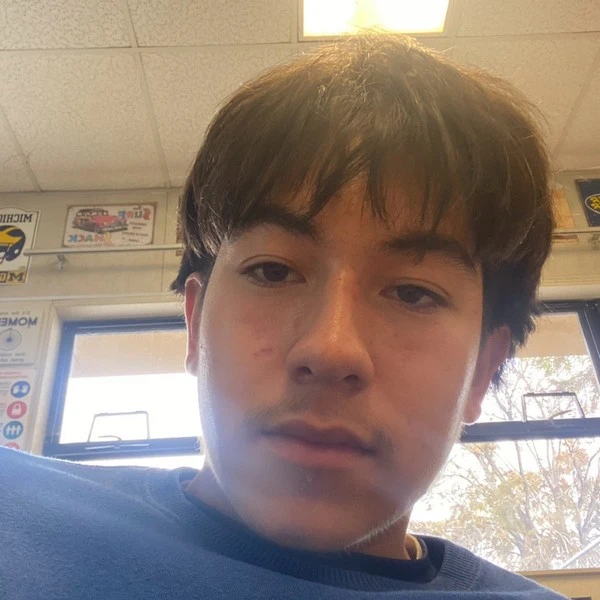
Hobbies and interests
Tennis
Andres Balderas
1x
Finalist
Andres Balderas
1x
FinalistBio
I’m a focused and motivated student working toward a career in law enforcement. Ever since I was young, I’ve felt a strong responsibility to serve and protect my community. My goal is to become a police officer who leads with integrity, compassion, and courage. I’m currently pursuing my education with this mission in mind, and I’m seeking scholarships to help relieve the financial stress on my family as I work hard toward this dream. I’m committed to staying disciplined, leading by example, and making a positive impact wherever I go.
Education
Golden Valley High School
High SchoolMiscellaneous
Desired degree level:
Bachelor's degree program
Majors of interest:
- Homeland Security, Law Enforcement, Firefighting and Related Protective Services, Other
Career
Dream career field:
Automotive
Dream career goals:
Law enforcement
Sports
Tennis
Varsity2021 – Present5 years
Awards
- kcct award
Public services
Volunteering
Interact club — Treasure2020 – Present
MastoKids.org Educational Scholarship
Living with the effects of mast cell disease has changed nearly every aspect of my life. It has disrupted routines, created unexpected challenges, and placed a strain not only on me but also on my family. There have been moments where it felt like everything was flipped upside down—school became harder to manage, friendships faded because others didn’t understand my limitations, and medical care took center stage in ways that often overshadowed “normal” experiences. Yet, in the middle of all this chaos, I’ve discovered unexpected sources of strength and gratitude.
What I am most grateful for is the way this condition has deepened my sense of empathy and given me a new perspective on life. Without mast cell disease, I don’t think I would fully appreciate how much courage it takes to get through each day, or how important small victories can be. Something as simple as making it through a school day without symptoms, attending a family gathering, or finishing an assignment on time feels like a triumph. That mindset has changed me. It’s given me the drive to celebrate progress, no matter how small, and to apply that resilience to my education and my future career.
Another thing I am grateful for is the bond it has created within my family. Mast cell disease brings challenges, but it also brings people together in ways that might not have happened otherwise. My family has become my strongest support system, standing by me through countless appointments, emergencies, and adjustments to daily life. Their sacrifices and encouragement remind me every day that I am not alone, and it motivates me to keep pushing forward. Without this condition, I might never have experienced the level of unconditional support, patience, and love that I now know so deeply.
This journey has also connected me to a larger community of people affected by mast cell diseases and chronic illnesses. Through support groups, medical teams, and advocacy spaces, I’ve met individuals who understand struggles that the outside world rarely sees. These connections have taught me the importance of advocacy, awareness, and compassion. They’ve inspired me to not only fight for my own future but also to use my voice for others who may feel unheard. This is something I never would have encountered without mast cell disease, and I am grateful for it because it has given me purpose beyond myself.
Looking ahead, I plan to carry these lessons into my career and life goals. My ambition is to pursue higher education and a career path where I can make an impact, whether in healthcare, advocacy, or a field where problem-solving and resilience are critical. Mast cell disease has forced me to develop those qualities early—ambition to keep learning, drive to overcome barriers, and a focus on the positive impact I can have on others.
While I would never have chosen this path, I am grateful for the perspective it has given me. Mast cell disease has taught me to value resilience, to cherish family and community, and to find strength in gratitude. It has turned obstacles into opportunities and challenges into motivation. For that, I am thankful—and I will carry those lessons into every step of my future.
Hanif Michael Martin Memorial Scholarship Award
From a young age, I have always been fascinated by how machines work. While most people saw a car as a way to get from one place to another, I saw a complex system of moving parts, each one working in harmony to create motion. That curiosity grew into a passion when I began helping family members with small repairs, whether it was replacing a battery, fixing a flat, or just watching YouTube tutorials to learn the basics of automotive maintenance. Every time I learned something new, I realized how rewarding it felt to not only understand the problem but also to solve it with my own two hands.
I am passionate about pursuing a career in automotive mechanics because it offers the perfect balance of intellectual challenge, creativity, and hands-on work. Unlike many careers that keep people behind a desk, automotive mechanics allows me to actively engage with technology while continuously expanding my knowledge. Cars are constantly evolving, incorporating advanced electronics, computer systems, and sustainable technologies such as hybrid and electric power. I see the automotive industry not just as a career, but as a field where I can grow alongside innovation, adapting to new challenges and becoming a lifelong learner.
Beyond the technical side, I also believe that automotive mechanics has a deep community impact. Transportation is essential to almost every aspect of life—getting to work, caring for family, or pursuing education. When a car breaks down, it doesn’t just cause an inconvenience; it can affect someone’s livelihood. As a mechanic, I will have the ability to provide security and peace of mind to people who rely on their vehicles every day. That sense of responsibility excites me, because it means my work will not only be a job but also a service to my community.
I am also motivated by the opportunities that the trades provide. As someone who comes from an underrepresented background, I understand the importance of representation in every industry. Pursuing automotive technology shows others like me that there is more than one path to success. College doesn’t always have to mean a four-year university with heavy student loans. Technical programs allow students to gain certifications faster, build careers earlier, and develop skills that are always in demand. By following this path, I hope to inspire younger students in my community to consider the trades as a valuable and respectable option.
My ambition is not only to become a certified mechanic but also to eventually specialize in advanced automotive technology, including hybrid and electric vehicles. future of transportation depends on professionals who are prepared to handle the changes of a rapidly advancing industry. I want to be at the forefront of that change, making sure that my skills stay relevant while helping others transition into a more sustainable future.
Hanif Michael Martin’s story is inspiring because it reflects the dedication and determination that I hope to carry in my own journey. Like him, I want to use my training not just to achieve personal success but to build a legacy of service, craftsmanship, and knowledge. This scholarship would help me pursue my education in automotive technology, giving me the foundation I need to turn my passion into a lifelong career.
In the end, my passion for automotive mechanics comes down to three things: ambition to keep learning, drive to overcome challenges, and the impact I want to make in the lives of others. With these values guiding me, I am confident that I will honor both the field of automotive technology and the memory of Hanif Michael Martin by dedicating myself to this career.
Ethel Hayes Destigmatization of Mental Health Scholarship
I used to believe that struggling with mental health meant weakness. For a long time, I kept my anxiety and low moments hidden because I didn’t want anyone to see me as fragile. But over time, carrying that silence taught me something far more important than pretending I was fine ever could: mental health is not a limitation — it’s a teacher.
One of the biggest ways it shaped me is in my goals. When you live with the weight of mental health challenges, you begin to recognize how vital support systems are. I’ve seen firsthand how a single conversation, a small resource, or even one person who understands can make a life-changing difference. That’s why I want to pursue a path where I can advocate for mental health awareness, whether through education, community outreach, or policy. My goals aren’t just about building a career; they’re about building safe spaces where others don’t have to feel as alone as I once did.
It has also reshaped my relationships. In the past, I pushed people away out of fear that they wouldn’t understand me. But the more I’ve opened up, the more I’ve seen that vulnerability doesn’t drive people away — it brings them closer. My relationships now are built on honesty, patience, and compassion. I listen more deeply, check in more often, and value connections not for how “perfect” they look, but for how real they feel. Mental health struggles have made me a better friend, a more empathetic family member, and someone who values presence over perfection.
Finally, my understanding of the world has shifted. Before, I thought everyone was moving through life with ease while I was the one falling behind. Now, I know that so many people carry invisible battles. That realization has changed the way I see others: the stranger who seems distant, the classmate who misses assignments, the coworker who always looks tired — I no longer judge them by the surface. Instead, I wonder what burdens they might be carrying and how small acts of kindness could make their day lighter.
Mental health has not been an easy journey, but it has been a transformative one. It has given me resilience, empathy, and purpose. Most importantly, it has taught me that strength isn’t about never struggling — it’s about learning, growing, and using your experiences to lift others. My hope is to take what I’ve learned and continue spreading awareness so that conversations about mental health are not whispered in the shadows, but spoken with honesty and compassion in the open.
Love Island Fan Scholarship
The best Love Island challenges are the ones that push Islanders out of their comfort zone, mix strategy with humor, and reveal who is truly compatible. That’s why my brand-new challenge is called “Heart Rate Heist.”
The concept is simple but full of twists. Each Islander is given a smartwatch that tracks their heart rate. They are then divided into two teams: “Thieves” and “Guards.” The Thieves’ goal is to steal heartbeats by making their chosen targets’ heart rates spike, while the Guards’ goal is to keep their partner calm and collected.
Here’s how it plays out:
• Each round lasts three minutes. A Thief selects one Islander to target and has free rein to do whatever they think will get that person’s heart racing — a flirtatious compliment, a dramatic confession, a cheeky dance, or even playful banter.
• At the same time, the Guard partner must distract or calm their Islander down — maybe by holding their hand, whispering jokes, or pulling them away to break the tension.
• The smartwatches track everything, and at the end of the round, the Islanders gather to see whose heart rate rose the most and whose stayed steady.
The scoring system keeps it competitive: Thieves earn points for every successful spike, while Guards score if they keep their partner’s pulse low. After several rounds, the team with the most points wins a luxury prize — like a private villa dinner or pool party. But here’s the real twist: at the end, Islanders secretly vote on which Thief and which Guard impressed them the most. That vote determines who gets a personal advantage, like first choice in the next recoupling.
What makes this challenge stand out is that it blends psychology, attraction, and strategy all in one. Islanders can’t fake their reactions because the technology doesn’t lie — if your heart skips a beat, it’s on the screen for everyone to see. It creates tension, exposes hidden crushes, and tests couples’ ability to stay loyal under pressure. And, of course, it gives viewers those hilarious, unforgettable moments that make Love Island iconic.
“Heart Rate Heist” isn’t just a challenge — it’s a mirror of the villa itself. Can love stay calm when temptation walks in, or will sparks (and heart rates) fly no matter what? That’s what makes it the perfect addition to the Love Island playbook.
Tim Dunham Blood Disorder Awareness Scholarship
The first time I truly understood what it meant to live with a blood disorder, it wasn’t in a doctor’s office or from a medical textbook. It was when I noticed how quickly fatigue crept in, how small bruises lingered longer than they should, and how people around me didn’t seem to understand what was happening. That gap between what I felt every day and what others could see became one of the hardest parts of living with a blood disorder.
At first, I didn’t want to talk about it. I felt like people would only see me through the lens of my condition, not as a whole person. But over time, I realized silence creates isolation — not just for me, but for others dealing with the same struggles. Once I opened up, I found that my story helped people understand. Friends became more supportive, family members learned how to help in meaningful ways, and I started to see that awareness isn’t built by statistics alone — it’s built by human experiences.
The impact of this disorder has shaped me in ways I never expected. It taught me resilience, because every day brings a choice: let the condition define me, or live fully despite it. It taught me empathy, because I know what it feels like to carry something invisible and heavy. And it gave me a sense of purpose — to turn my challenges into opportunities for others to feel less alone.
Looking forward, I hope to spread awareness by combining storytelling with education. Stories catch people’s attention, but education ensures the message lasts. I want to volunteer with organizations that support research and patient advocacy, sharing not just my experiences but also resources that help others understand symptoms, treatments, and the importance of early detection. I also hope to use social media as a tool for change. So many people scroll through their feeds unaware of these conditions — what if one post could spark curiosity, empathy, or even action? That’s the kind of ripple effect I want to create.
Ultimately, living with a blood disorder has shown me that awareness is the first step toward progress. The more people know, the more likely they are to support research, donate blood, or simply offer compassion to someone struggling silently. My journey hasn’t been easy, but it has given me the chance to speak up for something bigger than myself. And if my voice can make even one person feel seen, then every challenge I’ve faced has been worth it.
Taylor Swift Fan Scholarship
The performance that will always stay with me is Taylor Swift’s “Long Live” during the final night of her Reputation Stadium Tour. She stood there, not just as a global superstar, but as someone looking out into a sea of people who had chosen to believe in her through every era. When the crowd sang the chorus back to her, the moment felt less like a concert and more like a shared promise — that the stories we carry in music can outlast us.
What moved me most wasn’t just the song itself, but the way Taylor made that massive stadium feel intimate. She wasn’t performing at her fans; she was performing with them. I remember thinking how rare it is for an artist to create something so big yet so personal. She transformed an anthem into a conversation, and I could feel what it meant for thousands of people to hold the same words in their hearts at the same time.
That performance changed the way I think about my own voice. I’m not a musician, but I realized that impact doesn’t come from the size of your platform — it comes from the honesty you put into it. Taylor could have chosen to close with a flashy hit, but instead she chose a song about legacy, about remembering the nights that mattered. It was her way of saying: the real success isn’t the spotlight, it’s the connection.
It inspired me to think differently about my own ambitions. Whether it’s writing, speaking, or even the way I show up for people I care about, I want to build moments that last. I want to carry forward the lesson she gave that night: that when you live with honesty and passion, you leave behind something greater than yourself.
That is why her “Long Live” performance moves me the most — because it wasn’t just about her story. It was about all of ours.
Sloane Stephens Doc & Glo Scholarship
The sound of a tennis ball hitting the strings has always been more than just a sound to me—it’s a feeling of freedom, focus, and possibility. Tennis has been my escape and my passion, the place where I push myself harder than I thought I could and find joy even when I lose. The game has taught me more about life than I ever expected: resilience, patience, and the belief that even on your worst day, you can fight back and still win the next point.
Growing up, I didn’t have everything handed to me. I’ve had to balance school with responsibilities at home, and there were times when I felt like the odds were stacked against me. My GPA isn’t perfect, but every grade on that report card carries a story of long nights, tough choices, and refusing to give up. Just like in tennis, sometimes you’re down 0–40, and you have to fight your way back one swing at a time. That’s how I approach life.
Tennis gave me more than a sport—it gave me a community and a reason to believe in myself. Whether it was practicing serves alone until sunset, cheering for teammates during matches, or coaching younger players who reminded me of myself, I learned that success isn’t just about trophies. It’s about growth and helping others grow too. I dream of using my education and my love for the game to inspire kids who feel like they don’t belong or who think opportunities aren’t meant for them.
When I think about my future, I see myself being more than just a college graduate. I want to be a leader, a mentor, and someone who shows younger students that they can chase their dreams no matter how unlikely they seem. I want to create spaces—whether through sports, youth programs, or education—where kids can feel safe to dream big. Because I know what it feels like to doubt yourself, and I also know how powerful it is when someone believes in you.
This scholarship would mean more to me than just money for school. It represents a chance to prove that hard work and passion can carry you forward even when the path isn’t easy. It would allow me to keep pushing toward my goals without feeling like I have to choose between helping at home and chasing my dreams.
Tennis will always be a part of me, but so will the lessons it taught me: keep swinging, keep believing, and keep lifting up the people around you. That’s the kind of student, athlete, and person I want to be.
When I step on the court, I know that every serve, every rally, every point is a chance to grow. That’s how I look at my life too. And with this scholarship, I’ll be ready to step up, chase my goals, and prove—just like in tennis—that no match is ever truly over until you stop fighting.
Tim Williams Automotive Student Scholarship
Ever since I was a kid, I’ve had a strong curiosity for how things work — especially machines. I wasn’t the type to break things just for fun, but I was definitely the one to take apart my bike, old remotes, or anything mechanical just to see how it all fit together. That curiosity turned into a passion as I got older and started helping friends and family with their cars. What began as helping out with oil changes or brake pads soon became late nights researching engines, figuring out diagnostics, and learning how to make vehicles run smoother and safer. I didn’t grow up with a lot, and because of that, I learned the value of hard work and the importance of fixing what you have instead of replacing it. Being around cars gave me purpose — a sense that I was good at something, and that it mattered to others. That’s why I’m applying for this scholarship — not because I’m looking for an easy way out, but because I’m willing to work for every opportunity that gets me closer to my goal.
I want to become a certified auto mechanic because I believe this profession has more meaning than people realize. Yes, we fix vehicles — but behind every car is a person, a family, or someone who needs their ride to get to work, school, or see loved ones. Mechanics aren’t just working on machines; we’re helping people move forward in their lives. What draws me to this career is not just the technical side — which I genuinely enjoy — but also the trust and responsibility that comes with it. People depend on their cars every day, and I want to be someone they can rely on. I want to be known for doing honest work, for fixing the real issue instead of cutting corners, and for showing up consistently — whether it’s a busy Monday morning or a late-night emergency call.
This scholarship means more to me than just financial help — it represents belief in my future. The cost of tools, training, and certifications adds up quickly, and like many others, I don’t come from a place where money is easily available. But I do come from a place of grit, persistence, and the willingness to do what it takes to succeed. With your support, I can get the training and education I need to become the best version of myself — not just for me, but for my family and community. I plan to attend a reputable technical program, earn my ASE certifications, and eventually open a shop of my own. But I don’t want it to be just another business — I want it to be a place that offers second chances. A place where people like me, who maybe didn’t have the best start, can learn a trade and build something they’re proud of.
In the future, I want to give back by mentoring young people who are interested in the trades but don’t know where to start. I want to create apprenticeship programs and give students the tools, guidance, and confidence to succeed. If someone had done that for me earlier, I could’ve started even sooner — Whether it’s helping someone get back on the road or helping a student get their foot in the door, I want to be part of that impact. This scholarship would not only help fund my education — it would fuel a future filled with purpose, progress, and the promise to always pay it forward.
Sola Family Scholarship
Raised by Strength: Growing Up with a Single Mother
Growing up with a single mother wasn’t always easy, but it shaped me into the person I am today—strong, responsible, and deeply appreciative of the sacrifices that love often requires. My mom has been my rock, my role model, and my motivation. Watching her handle life’s challenges with grace and grit taught me more than any classroom ever could.
My mom raised me on her own, sometimes working multiple jobs just to keep food on the table and the lights on. We didn’t always have a lot, but she made sure we had enough. I saw her stretch every dollar, go without so I could have what I needed, and still find the energy to be present for me at the end of a long day. That kind of love is powerful—and it leaves a lasting impact.
Being raised in a single-parent home meant I had to grow up quickly. I learned how to cook meals when my mom worked late shifts. I helped with bills, ran errands, and took care of responsibilities that most kids my age didn’t have to worry about. At the time, I didn’t always realize how different my life was from others, but now I see those moments as lessons. They taught me independence, time management, and how to push forward even when things felt tough.
Emotionally, my mom showed me what real resilience looks like. She never let hardship define her. When things went wrong, she didn’t complain—she figured it out. Watching her navigate life with so much strength made me want to be strong too. I learned that being tired isn’t a reason to give up, and that even when you’re struggling, you can still show up for the people you love.
There were definitely times when I wished I had more—more money, more support, or just more free time to be a kid. But those same hardships built character. They made me more empathetic. They made me notice when someone else is struggling. They gave me a deeper understanding of what family means—not just the people you’re related to, but the ones who fight for you, love you unconditionally, and never stop believing in your future.
My mom’s sacrifices are the reason I work so hard today. She gave everything she had so I could have a better life, and I carry that with me in everything I do. Whether it’s in school, at work, or in how I treat others, I try to live in a way that honors what she gave me: the gift of opportunity through perseverance.
Now, as I look toward my future, I do so with a mindset shaped by my upbringing. I know success isn’t handed to you—it’s earned through struggle, discipline, and heart. And I plan to carry those values forward, not only to reach my own goals, but to support others just like my mom supported me.
Ojeda Multi-County Youth Scholarship
Growing Up in the Inner City: A Story of Resilience and Growth
Growing up in the inner city wasn’t easy, but it shaped me into someone who knows how to survive, adapt, and keep moving forward no matter what. It meant waking up to sirens instead of alarm clocks, learning to read people’s body language for safety, and understanding the meaning of struggle from an early age. But it also taught me strength, loyalty, and the value of hard work. My story is not just about the hardships—I’ve faced plenty—but about the resilience that comes with them and how those struggles have shaped my character.
One of the hardest parts about growing up in the inner city was the environment itself. I grew up in a neighborhood where poverty wasn’t something you read about—it was everywhere. Abandoned buildings, broken streetlights, and underfunded schools were part of everyday life. There weren’t many role models around, and if you weren’t careful, it was easy to fall into the wrong crowd. Temptation was everywhere—from gangs, to drugs, to dropping out of school. And sadly, many people I grew up with took those paths.
But I always knew I wanted something different. I wanted to break that cycle. One of my biggest challenges was learning how to say “no” when everything around me was saying “yes” to the streets. I had to grow up fast. My family didn’t have a lot of money, and I had to help out from a young age. Whether it was taking care of younger siblings, finding part-time jobs, or learning to budget for groceries, responsibility came early. At times, I felt like I was drowning under pressure, but it forced me to become mature and focused.
School was another challenge. Our classrooms were overcrowded, we didn’t have enough books, and some teachers didn’t even bother learning our names. But I held on tight to education because I saw it as my ticket out. I started staying after school, going to tutoring programs, and joining every free program I could find. I didn’t always have a quiet place to study, but I made it work. Sometimes it meant doing homework on the bus, or using the lights at a fast food place when our power was out. I had to be creative and self-motivated.
One major turning point came when I realized that I couldn’t do it alone. I started asking for help—something that’s hard to do when you grow up being told to “tough it out.” I found mentors through community centers and teachers who actually believed in me. They saw potential in me when I was close to giving up. That belief gave me fuel. Little by little, I started to believe in myself too.
There were days when I felt stuck, overwhelmed, or like I didn’t belong in certain rooms. But I kept going. I used every challenge as motivation. I saw friends lose their way, and I used their stories as reminders to stay on track. I promised myself I’d make it—not just for me, but for my family and for everyone who never got the chance.
Now, looking back, I can say the inner city raised me—but it didn’t break me. I learned how to be strong, how to lead, and how to push forward even when the odds are against me. Every obstacle I’ve faced has taught me a lesson. And while I’m still on my journey, I carry those lessons with me wherever I go.
More than anything, I want to use my experiences to help others. Whether it’s mentoring youth, giving back to my community, or simply proving that where you come from doesn’t define where you’re going—I want to be that example. I didn’t choose the struggles I faced, but I choose what I do with them. And I choose to rise.
Electric Cycle Studio Student Athlete Scholarship
Pushing Beyond the Limits: My Life as a Student-Athlete
Being a student-athlete has shaped me into the person I am today — someone who doesn’t back down from challenges, who shows up even when it’s hard, and who always gives 100% whether on the field or in the classroom. Sports have taught me how to push past limits, lean on my teammates, and stay focused even when life gets overwhelming. But more importantly, being a student-athlete has shown me that success isn’t just measured by wins — it’s measured by effort, heart, and the way you carry yourself when nobody’s watching.
I’ve been playing sports for as long as I can remember, but it wasn’t until high school that I truly understood what it meant to balance athletic commitment with academic responsibility. Waking up early for practice, staying up late to finish homework, and learning how to manage my time forced me to become more disciplined and organized than ever before. There were days when my body was tired and my mind felt stretched, but I kept pushing — because I made a commitment, not just to my team or my coach, but to myself.
Dedication is something that comes naturally to me now. Whether I’m training to improve my skills or studying for a tough exam, I’ve learned that you only get out what you put in. There’s no shortcut to growth. I approach school with the same mindset I bring to my sport: show up, work hard, ask questions, and don’t stop until you’ve done your best. I’ve carried a solid GPA throughout high school while staying active in sports, proving that success isn’t about choosing one path over another — it’s about giving your best to both.
Teamwork is something I’ve come to value deeply. On the field, I’ve learned how to communicate, trust others, and lift up teammates when things don’t go as planned. I’ve also learned how to accept constructive criticism and take responsibility when I make mistakes. These lessons carry into the classroom too. Whether I’m working on a group project or helping a classmate understand something, I know how to be dependable, respectful, and supportive — because a real team doesn’t stop when the game ends.
Most importantly, being a student-athlete has taught me resilience. I’ve faced injuries, tough losses, bad grades, and moments when I wanted to give up. But each time, I chose to bounce back. I chose to work harder, train smarter, and study longer. I’ve learned that setbacks are part of growth, and that strength isn’t just physical — it’s mental, emotional, and built from every moment you refuse to quit.
In the future, I plan to bring these values into everything I do — whether that’s in my career, my community, or my family. I believe being a student-athlete gave me a foundation of grit and discipline that will carry me far beyond high school. This scholarship would help me continue that journey, lifting some of the financial weight off my shoulders so I can stay focused on my goals and keep pushing toward a future I’ve worked hard to earn.
Kalia D. Davis Memorial Scholarship
Building My Future, One Step at a Time
My name is Andres Balderas, and I’m someone who believes that where you start in life doesn’t define where you’ll finish. I come from a hardworking family that has always taught me the value of effort, honesty, and perseverance. We haven’t had much financially, but we’ve always had determination — and that’s something I carry with me every single day.
I’m pursuing a career in the skilled trades because I’ve always been drawn to hands-on work. I’m the kind of person who likes figuring things out, getting under the hood, fixing problems, and seeing the results of my work. Whether it’s in automotive repair, construction, or another skilled trade, I find satisfaction in creating something real — something that helps people in their everyday lives. These are jobs that keep the world running, and I’m proud to be preparing for a future where I can contribute to that.
This scholarship would mean a lot more to me than just financial help — it would be an investment in everything I’ve worked for. I’m committed to going to trade school so I can get certified, gain professional experience, and start building a career I can be proud of. But the reality is that tuition, tools, books, and transportation all add up. I’ve been working part-time to save money and support my goals, but it’s not always enough. This scholarship would ease the financial stress not just for me, but for my family. It would allow me to stay focused on my training and education without having to sacrifice opportunities due to money.
Beyond helping me afford school, this scholarship would push me closer to my dream of giving back. I don’t want to just succeed — I want to bring others with me. One of my goals is to eventually open my own business, whether it’s an auto shop or a construction service. But I don’t just want to run a business — I want it to be a place where young people can learn, grow, and build careers of their own. I want to mentor students, offer internships, and give others the same encouragement I’ve received from the few mentors who believed in me.
I know that success doesn’t come overnight, and I know I have to work for every opportunity. That’s fine with me. I’m used to working hard, staying humble, and never giving up. I’ve faced challenges — from financial stress to moments of self-doubt — but I’ve never let those things stop me. Instead, I’ve used them as motivation.
This scholarship would be more than a financial award. It would be a sign that someone believes in me — and I promise, I won’t waste it. I’ll use it to move forward, keep learning, and eventually give back to others who need the same chance I was given.
Thank you for considering me.
Dustan Biegler Memorial Scholarship
Built to Last: Why I’m Committed to the Trades
When I was younger, I didn’t always know what I wanted to do with my life — but I knew it had to be something real. Something I could see, touch, and be proud of at the end of the day. That’s what drew me to the skilled trades. The moment I picked up a wrench, helped frame a wall, or watched an engine roar back to life after a successful repair, I realized this is where I belong. I’m not chasing a career in construction or the trades just for a paycheck — I’m chasing a purpose.
What I love about construction and the skilled trades is that your work lasts. You build homes, fix engines, pour foundations, install wiring — things people rely on every single day. There’s pride in that. There’s honesty in working with your hands, solving real-world problems, and doing a job that truly matters to your community. The trades aren’t about shortcuts or sitting still — they’re about hard work, focus, and dedication. And that’s what I’m made for.
The person who influenced me most on this path is my uncle. He’s a mechanic and general contractor who never went to college, but he built a life for himself through skill, grit, and integrity. Growing up, I watched him fix everything from trucks to broken fences — not just for money, but for neighbors, friends, and anyone who needed help. He taught me that being “skilled” doesn’t mean having the fanciest tools — it means showing up, staying humble, and always learning. He showed me that the trades are more than just a career — they’re a way to serve.
I’ve been fortunate enough to get hands-on experience already. Whether it’s helping in the garage, working part-time with a local contractor, or learning from online resources and school shop classes, I’ve done everything I can to prepare myself for trade school. I’m hungry to learn more — about safety, precision, modern tools, and industry standards. But I also understand that mastering a trade isn’t just about the technical work — it’s about discipline, teamwork, and having pride in what you build.
My long-term goal is not only to work in construction or automotive repair — I want to own a business one day and give others the same opportunities I’ve been given. I want to train the next generation of tradespeople — especially students who think college is their only option or feel like success is out of reach. I want to show them that the trades are not a backup plan — they’re a powerful, honest, and meaningful career path that this world desperately needs.
To me, making a positive impact means helping others succeed, making neighborhoods safer and stronger, and proving that the trades deserve respect. I’m proud to be entering this field, and I’m ready to work hard, learn everything I can, and build a future that’s not only stable for myself — but life-changing for others.
Anthony McPherson Memorial Automotive Scholarship
The Real Cost of a DUI
Driving under the influence (DUI) isn’t just a mistake—it’s a decision that can shatter lives in an instant. The effects go far beyond a court date or a suspended license. DUIs are a moral failure, a technical breakdown of responsibility, and an emotional wrecking ball that hits families and communities harder than most people realize.
From a moral standpoint, driving under the influence is a violation of trust—not only the trust others put in you to drive responsibly, but also the trust you place in yourself to make safe decisions. When someone chooses to drive while intoxicated, they’re gambling with other people’s lives. One wrong move can end an innocent person’s future. No one deserves to lose a loved one because someone else couldn’t call a cab or hand over the keys. Morally, it’s a selfish choice that puts pride or convenience over the safety of others.
Technically, the dangers of DUI are clear. Alcohol and drugs slow reaction time, blur vision, impair judgment, and reduce coordination—all critical skills needed to drive safely. Even at low blood alcohol levels, the risk of an accident increases dramatically. Modern vehicles may have advanced features like lane assist or automatic braking, but no technology can fully protect against the unpredictable behavior of an impaired driver. That’s why prevention strategies must include both education and engineering.
From a technical standpoint, there are proven strategies that work:
• Ignition interlock devices that prevent a car from starting if the driver is intoxicated.
• Sobriety checkpoints that deter impaired driving in high-risk areas.
• Smartphone apps that help people find a ride home easily and safely.
• Education programs in high schools and workplaces that show real-life consequences through victim stories and crash reenactments.
These technical solutions, however, only go so far without a cultural shift.
The emotional impact of a DUI is something no textbook or graph can fully capture. I’ve known families torn apart because of one drunk driving crash. Friends blaming themselves for not stopping someone. Parents grieving a child. Siblings who grow up with survivor’s guilt. Even for the person who caused the crash, the psychological toll can be lifelong—knowing they ended a life because of one careless choice. These emotional scars last much longer than any jail sentence.
DUIs don’t just affect the person behind the wheel. They ripple out, destroying futures, families, and communities. That’s why prevention needs to be personal. It starts with having the courage to speak up—to take someone’s keys, to call an Uber, or to simply say, “You’re not okay to drive.” One honest moment can save a life.
As someone who hopes to work in a public service or skilled trade role, I believe it’s my responsibility to set an example. Whether I’m in a garage fixing someone’s car or serving my community in uniform, I want to be part of a culture that values life, responsibility, and second chances—but not at the cost of someone else’s safety.
A DUI isn’t just a legal issue—it’s a human tragedy waiting to happen. The best strategy will always be prevention: through education, accountability, and everyday decisions that put people before pride.
Willie Mae Rawls Scholarship
Driven to Make a Difference
My name is Andres Balderas, and I’ve always believed that no matter where you come from, you can create a better future—not just for yourself, but for others too. I come from a working-class background where every dollar was earned through sweat, long hours, and dedication. That’s where I learned the value of hard work, humility, and the importance of giving back. It’s also where I found my passion for the trades—specifically, automotive repair.
From a young age, I was fascinated by how things worked. Cars weren’t just machines to me—they were puzzles waiting to be solved, opportunities to learn, and challenges that made me stronger and more focused. I didn’t grow up with access to a full garage or brand-new tools, but I made the most of what I had. Whether I was helping my uncle with a brake job or watching online tutorials until late at night, I knew this was more than a hobby—it was the foundation for my future.
Through my studies and hands-on training, I plan to become a certified automotive technician and eventually open my own shop. But more than just fixing cars, I want to use my trade as a way to help people—especially in underserved communities like the one I grew up in. I know how stressful it is when a family relies on a car to get to work or school, and it suddenly breaks down with no affordable solution in sight. That’s why part of my long-term vision is to offer low-cost or even free repairs for people in need—single parents, veterans, and low-income families.
But my impact won’t stop at the garage doors. I also want to mentor young people who feel overlooked or unmotivated, especially those who think college is their only option—or worse, that success is out of reach altogether. I want to show them that trades like automotive repair aren’t just jobs—they’re careers with pride, purpose, and power. I plan to partner with schools, youth centers, and local organizations to offer workshops, internships, and a safe space to learn, ask questions, and build confidence.
Making a positive impact means doing more than what’s expected. It means using your skills, your voice, and your position to lift others up. That’s the kind of life I want to build—not one where I succeed alone, but where I help others succeed too. I want to be a business owner who leads with integrity, a technician who never stops learning, and a role model who proves that hard work and heart can take you farther than you ever imagined.
This scholarship would help me continue my training, invest in tools, and stay focused on my goals without placing more financial stress on my family. But more than that, it would be a step toward building something bigger than myself—something that creates real change, one repair, one opportunity, and one person at a time.
Ben Bonner Memorial Scholarship
More Than Just a Trade — A Purpose
I’ve always believed that some people are born to work with their hands. For me, that’s always been true — not just because I enjoy fixing things, but because I find real purpose in it. My passion for automotive repair started in my early teens when I helped my uncle replace the brake pads on his truck. At first, I didn’t know the difference between a socket wrench and a torque wrench. But something about being under the vehicle, solving a problem step-by-step, made me feel focused, capable, and alive. Since then, automotive work has become more than just a hobby — it’s the trade I want to dedicate my life to.
What drives me most is the idea that every repair matters. A car isn’t just a machine — for many people, it’s their way to get to work, provide for their families, and stay connected to the world. If their car breaks down, their whole life can be affected. I want to be the technician people trust — not just to fix their vehicle, but to help them get back on track when life throws a wrench in their plans. That sense of purpose, of being able to make someone’s day better through skilled work, is what keeps me motivated.
I’m also drawn to the trade because it constantly evolves. Cars today are smarter than ever, with complex electronic systems, hybrid engines, and advanced diagnostics. I want to stay on the cutting edge of the industry by earning certifications like ASE, staying updated on new technologies, and gaining real-world experience in a professional shop. I believe that mastering this trade takes a combination of technical skill, patience, and a mindset that never stops learning — and I’m ready for that challenge.
But it’s not just about me. I know that I wouldn’t be where I am without the support of my community — teachers who encouraged me, family who believed in me, and mentors who let me turn a wrench even when I didn’t know what I was doing. That’s why giving back is just as important to me as building a successful career.
One way I plan to give back is by mentoring young people who may not see a clear path forward. I want to open my own automotive shop one day, not just to run a business, but to create opportunities. I’d love to offer internships, apprenticeships, or even free weekend workshops for high school students interested in the trades. A lot of teens feel like college is their only option, but I want to show them that skilled trades are a valuable, honorable path — and that there’s pride in building something with your own hands.
I also hope to offer discounted or free repairs for single parents, veterans, and others in need. Growing up, I saw how stressful it was when car problems popped up and money was tight. If I can relieve some of that stress for someone else, I’ll know I’m doing more than just fixing cars — I’m helping my community thrive.
Automotive repair is more than a trade to me — it’s my calling. And through it, I’m not just building a career. I’m building a future where I can lift others up, one vehicle — and one person — at a time.
Hank Anderson Memorial Scholarship
Under the Hood and in My Heart
Ever since I can remember, I’ve been drawn to anything with an engine. While other kids were playing video games, I was watching YouTube videos about turbochargers, engine swaps, and how to do a proper oil change. I didn’t grow up in a fancy garage or with access to high-end tools — just a small driveway, a basic socket set, and a whole lot of curiosity. That curiosity turned into passion the first time I helped my uncle fix his old Honda Civic. I was only 13, but that day changed everything.
We were replacing a cracked radiator, and I remember how he trusted me enough to hand me the wrench and talk me through the steps. It wasn’t just about the part — it was about understanding how every component worked together. That car may not have been worth much on the market, but to me, it was priceless. It was the start of a lifelong love for mechanics.
From that moment on, I was hooked. I started watching every DIY video I could find, studying how engines breathe, how transmissions shift, and how diagnostics work on both old-school rides and modern vehicles full of sensors and computers. The more I learned, the more I wanted to know. I’d ask to help with oil changes, brake jobs, anything that gave me an excuse to be around tools and torque specs. My family didn’t always have the money to pay for shop repairs, so I started doing things myself. Every successful fix made me feel more confident, more capable — and more certain this was what I wanted to do with my life.
What excites me most about the automotive industry is that it’s always moving forward. We’re not just working on gas engines anymore — we’re talking hybrids, electric vehicles, and smart diagnostics. I love that it’s both physical and technical. You have to get your hands dirty, but you also have to think critically, analyze codes, and stay sharp on constantly evolving systems. It’s the perfect mix of muscle and mind, and I’m all in.
My ultimate goal is to become a certified automotive technician and eventually own my own shop. But not just any shop — I want to create a space where young people can learn, just like I did. Where someone who grew up without a lot of money can get their car fixed by someone who understands. I believe the best mechanics aren’t just skilled — they’re honest, respectful, and proud of what they do.
The person who inspires me most is my uncle. He never had formal training, but he taught himself everything. He showed me that skill isn’t about where you start — it’s about how hard you’re willing to work, how much you care, and how committed you are to learning. He gave me the first wrench I ever held, and I’ve been turning them ever since.
Automotive repair isn’t just something I want to do — it’s who I am. I love the challenge, the precision, the satisfaction of solving problems others can’t. I’m not afraid of long hours or greasy hands — I live for it. Because when I open a hood, I don’t just see parts — I see potential. And I’m ready to chase that potential with everything I’ve got.
RodentPro.com® Animal Advocate Scholarship
Caring for Animals, Protecting the Future
Animal care and welfare play a critical role in conservation efforts. It’s not just about keeping animals alive — it’s about ensuring they live healthy, safe, and natural lives, whether they are in the wild, in rehabilitation centers, or in captivity for conservation breeding programs. When we prioritize the well-being of animals, we create a ripple effect that supports entire ecosystems, protects biodiversity, and fosters deeper respect between humans and the natural world.
At its core, animal welfare in conservation is about more than survival — it’s about quality of life. Animals that are well-cared for are more likely to reproduce successfully, adapt to changing environments, and thrive when released back into the wild. In zoos and sanctuaries, welfare-centered practices like enrichment, proper nutrition, space to roam, and mental stimulation help animals stay physically and psychologically healthy. These animals often serve as ambassadors for their species, helping to educate the public and spark a passion for conservation that leads to funding and action.
Additionally, animal care professionals play a frontline role in conservation. Veterinary teams, wildlife rehabilitators, caretakers, and researchers work together to rescue injured animals, prevent the spread of disease, and monitor endangered populations. In many cases, conservation starts with one animal — a wounded bird nursed back to health, a cub protected from poachers, or a rescued marine mammal being prepared for re-release. These individual success stories often reflect broader victories in protecting species and habitats.
As someone passionate about animal care, I want to be part of that frontline. My goal is to pursue a career in wildlife rehabilitation and animal rescue. I envision working hands-on in rescue centers, helping sick or injured animals recover so they can be returned to their natural environments. I also want to help develop public outreach programs that teach communities how to live in harmony with local wildlife — from preventing habitat destruction to reducing harmful human-animal interactions.
To prepare, I plan to study animal science or veterinary technology with a focus on wildlife care. I also want to volunteer at animal sanctuaries and conservation organizations to gain real-world experience. Eventually, I hope to contribute to larger-scale conservation efforts, such as helping endangered species recover through rehabilitation and reintroduction programs, or working with research teams to monitor wildlife health and habitats.
I believe that animal care isn’t just a career — it’s a responsibility. Every animal we help represents a piece of a much bigger puzzle. Whether it’s protecting a keystone species or giving a second chance to an orphaned animal, every act of care moves us closer to a more balanced, respectful relationship with the planet.
In the end, conservation and compassion go hand in hand. When we treat animals with care and dignity, we strengthen the very ecosystems we all depend on. My goal is to be part of that mission — not just by healing individual animals, but by helping protect the future of life on Earth.
Richard (Dunk) Matthews II Scholarship
Building My Future, One Bolt at a Time
My name is Andres Balderas, and I’m pursuing a career in the automotive trade. I’ve always been drawn to hands-on work — the kind of work where you can see what you’ve accomplished at the end of the day. I grew up helping family members in the garage, learning the basics of tools, engines, and how machines come alive with the right knowledge and care. What started as curiosity turned into a passion, and now I’m turning that passion into a profession.
For me, automotive repair isn’t just about fixing vehicles. It’s about helping people stay on the move, providing peace of mind, and being someone the community can rely on. Whether it’s a single mom needing her car to get to work or a senior citizen needing safe transportation, every repair matters. I want to be the kind of technician who takes pride in doing the job right — not just for the sake of the machine, but for the person who depends on it.
Mastering this trade won’t happen overnight. It takes time, patience, and a hunger to learn. I plan to attend trade school and earn ASE certifications to deepen my understanding of everything from engine diagnostics to hybrid and electric systems. I want to stay ahead of the curve as the industry changes. More importantly, I want to learn from seasoned professionals, work side by side with experienced technicians, and soak up every bit of knowledge I can. I believe true mastery comes from staying humble, working hard, and never thinking you know it all — because in this field, there’s always more to learn.
But my goals go beyond just having a career. I want to give back to the same community that raised me. Growing up, I saw a lot of young people fall through the cracks — not because they didn’t have talent, but because they didn’t have guidance or opportunities. One of my biggest goals is to one day open my own shop and offer internships or training programs for teens interested in the trades. I want to show them that there’s dignity and pride in working with your hands, and that college isn’t the only path to success. The trades are full of opportunity for those willing to work — and I want to be someone who opens that door for others.
I’ve faced challenges along the way. My family has struggled financially, and there were times I thought I’d have to put my dreams on hold. But I kept going. I’ve learned how to be resourceful, how to push through stress, and how to stay focused even when things feel uncertain. Those experiences have made me stronger — and more motivated to succeed.
This scholarship would help me stay on track, focus on my education, and put me one step closer to becoming a certified technician and a community leader. I’m not just trying to build a career — I’m trying to build a future where I can lift others up with me.
I’m ready to get my hands dirty, learn everything I can, and give back in a real, lasting way. I’m not just fixing cars — I’m building a life I can be proud of.
Jay Curry Eternal Garden Scholarship
Throughout my life, the unwavering thread has been a desire to protect — first my younger siblings, then my classmates, and now the wider community I call home. That calling has crystallized into a passion for law enforcement. I am pursuing a career as a police officer not for the uniform or the authority, but for the opportunity to be the person who shows up when others feel most vulnerable, calms the chaos, and restores a sense of safety and trust.
I come from a family where strength was often measured by silence. My mother battled severe depression and anxiety for years, while my father wrestled with alcoholism that at times overshadowed his generous heart. Growing up in a household affected by mental illness and addiction meant learning early how to read a room, de-escalate tension, and advocate for the people I love. These experiences sparked my interest in crisis intervention and have given me a deep empathy for both victims and offenders — an empathy I believe modern policing desperately needs.
That background also fuels my motivation to serve communities that feel unheard. I have volunteered over 250 hours with a local youth outreach program, mentoring teens whose circumstances mirror my own. Watching a student who once skipped class now talk excitedly about college reminds me why compassionate authority matters: it can change a life’s trajectory. I want to bring that same balanced approach to policing — firm when necessary, but always human first.
Academically and technically, I have prepared myself. I maintain a 3.8 GPA while working part-time as a campus safety aide, where I’ve completed certified trainings in first aid, conflict resolution, and mental-health first response. I’m also bilingual in English and Spanish, a skill that allows me to bridge cultural gaps and reduce misunderstandings during high-stress encounters. These qualifications demonstrate not only competence but commitment: I seek every chance to learn because the stakes are people’s lives.
Why might I be more deserving than another applicant? I don’t claim superior merit; rather, my lived experience uniquely aligns with the demands of 21st-century policing. I know what it is like to answer the door to officers on a domestic-disturbance call, to feel both relief that help has arrived and dread about what might happen next. That memory drives me to embody the kind of officer who treats every home with dignity, every individual with patience, and every situation with thoughtful restraint.
Adversity has shaped, but not defined, me. When my father entered rehab, finances crumbled. I took on extra shifts and still graduated high school with honors. The stress triggered my own bout with anxiety, yet therapy and disciplined self-care taught me resilience and the importance of destigmatizing mental-health support — a message I hope to carry into the precinct.
This scholarship would ease the financial strain of the police academy and allow me to focus fully on training, internships, and community-focused research instead of juggling multiple jobs. Investing in me is investing in an officer who has already lived the complexities behind the badge, who meets struggle with determination, and who believes that protecting and serving begins with listening and understanding.
My journey from a household shadowed by addiction and mental illness to a candidate for law enforcement has forged the qualities policing needs most: empathy, cultural fluency, perseverance, and an unshakable commitment to justice that is as compassionate as it is courageous.
Gregory Flowers Memorial Scholarship
The Achievement That Changed Me
The personal achievement I’m most proud of isn’t a trophy, award, or certificate—it’s the moment I refused to give up on myself when it would’ve been easier to walk away. It was the moment I decided to keep showing up, stay focused, and build my future even when life got difficult. That mindset shift changed everything.
For a while, school was something I didn’t take seriously. Like a lot of teenagers, I was distracted, unmotivated, and didn’t see how education connected to the real world. I let my grades slip, skipped assignments, and told myself I’d “figure it out later.” But later came fast. I remember looking at my report card one day and realizing I was falling behind—not just in school, but in life. That moment hit hard.
What I’m proud of isn’t just realizing that something had to change—it’s that I actually changed it. I made the choice to stop blaming the system, stop making excuses, and start putting in the work. I stayed after class for help. I turned in every assignment. I asked questions even when I felt embarrassed. I stopped worrying about being “too cool” to care, and I focused on doing better—for myself.
Eventually, the results followed. My grades improved, my confidence grew, and I started thinking seriously about my future. I realized I didn’t just want a job—I wanted a career. That’s when I set my goal: to work in a field where I could make a real difference, whether that’s automotive repair, public safety, or another hands-on career that requires skill, responsibility, and commitment.
What makes this achievement so important to me is that it wasn’t easy—and it didn’t happen overnight. It took discipline, humility, and consistency. There were times I wanted to quit or go back to old habits, but I didn’t. I kept going because I knew I had something to prove—not to others, but to myself.
This experience taught me that my future is in my control. No matter where I come from or what obstacles I face, I can choose to keep moving forward. That lesson has shaped every part of who I am now. I’ve become more driven, more mature, and more respectful of the opportunities in front of me.
Now, I carry that same mindset into everything I do. Whether it’s learning a new skill, helping others, or preparing for my career, I bring determination, patience, and pride in what I do. I know that success isn’t just about talent—it’s about showing up every day and putting in the work, even when no one’s watching.
That’s the achievement I’m most proud of: choosing to believe in myself, choosing to grow, and refusing to give up when I had every excuse to. It’s not something you can frame on a wall—but it’s something I’ll carry for the rest of my life.
Marvin Bozarth Memorial Scholarship
Since I was a kid, I’ve always been drawn to engines, tools, and how things work. Most people see a car as just a way to get from one place to another—but I see a complex machine built with precision, power, and purpose. What started as curiosity turned into a passion. Today, that passion is driving my goal of building a career in the automotive industry.
What I love most about the automotive world is that it’s never boring. There’s always a new challenge, a different engine problem, or new technology hitting the market. From traditional combustion engines to hybrids and fully electric systems, the automotive industry is constantly evolving—and I want to grow right along with it. I want to be part of a field where learning never stops and where my hands and mind can work together to fix real problems that help real people.
One of the biggest reasons I’m passionate about this career is because it’s hands-on. I don’t want to sit behind a desk all day. I want to move, build, repair, and problem-solve. I want to be able to take something that’s broken, figure out what went wrong, and make it work like new again. There’s a deep satisfaction that comes with fixing a vehicle and knowing that I’ve helped someone get safely back on the road.
Beyond my interest, I believe I bring the right skills and mindset to succeed in this industry. First, I’m a hard worker. I don’t give up when things get tough—I keep going until the job is done. I’m used to pushing myself, learning new things, and staying focused even when a task is frustrating or slow. Whether it’s figuring out a wiring issue or replacing a difficult part, I’m patient, detail-oriented, and determined to get it right.
Second, I’m a strong problem-solver. I like figuring things out, step by step. I think logically and take pride in doing things the correct way. I’m not someone who rushes—I take my time to find the real issue, not just a quick fix. In this industry, I know accuracy matters, and I bring that mindset to every job.
I also bring a positive attitude and a strong sense of teamwork. Whether it’s in a garage, dealership, or classroom, I work well with others. I respect my coworkers, listen when I need to, and ask questions when I don’t know something. I believe that in a shop environment, being reliable and respectful is just as important as turning wrenches.
Lastly, I’m passionate about making this my future. I’m not doing this just because I like cars—I’m doing this because I want to build a real career. I want to earn certifications, keep learning new systems, and eventually be someone others can look to for help and leadership. I know success won’t come overnight, but I’m willing to earn it—one tool, one lesson, one repair at a time.
This industry needs people who care, who stay curious, and who take pride in their work. I believe I’m one of those people—and I’m ready to prove it.
Autel Awarding Excellence Scholarship
From a young age, I’ve always been fascinated by how things work—especially things that move. Cars, trucks, motorcycles—machines with engines seemed to have a heartbeat of their own. While some kids were watching cartoons, I was watching my uncle work under the hood of his ‘92 Chevy, handing him wrenches and listening closely to every explanation. That passion for mechanics has only grown stronger, and today, I’m committed to turning that curiosity into a professional career in automotive repair.
What draws me to automotive repair isn’t just the engines and tools—it’s the ability to solve real-world problems with my hands and mind. Cars are more than just transportation. For many people, their vehicle is essential to their livelihood, whether it’s getting to work, dropping kids off at school, or visiting family. When a car breaks down, it can disrupt a person’s entire life. As an automotive repair technician, I want to be the person who restores that sense of normalcy and independence for people. It’s more than fixing metal—it’s helping people move forward.
I’m also deeply attracted to how this field constantly evolves. Modern cars are rolling computers, and staying ahead means learning everything from traditional engine systems to cutting-edge diagnostics, EV systems, and hybrid technology. That challenge excites me. I want a career that never stands still, and automotive repair demands lifelong learning, adaptability, and precision.
To succeed in this industry, a technician needs more than just technical knowledge. First and foremost, they need problem-solving skills. Every car that rolls into a shop brings a unique challenge. Being able to diagnose accurately and efficiently is critical—not just to fix the problem, but to gain the trust of customers.
Patience is another key trait. Sometimes the issue isn’t obvious. It can take hours to trace a faulty wire or a misfiring cylinder. A good technician doesn’t cut corners—they follow every lead until the job is done right. Rushing can cause more damage than good.
Integrity and honesty are also vital. Customers place their safety and money in our hands. That trust should never be taken for granted. I believe the best technicians are the ones who not only fix the problem but also explain it clearly, give fair estimates, and treat every customer with respect—no matter their background or budget.
Communication may not be the first skill that comes to mind, but it’s essential. Whether it’s working as a team in a busy shop, explaining a complex repair to a customer, or even updating software with a manufacturer, being able to communicate clearly and professionally matters every day.
Lastly, a successful technician must have grit and humility. This job is physically and mentally demanding. Some days will be tough. Mistakes happen. Parts won’t arrive on time. Bolts will break. But the techs who succeed are the ones who learn from every challenge, stay focused, and never stop improving.
I see automotive repair as more than a job—it’s a craft. One that combines technology, human connection, and pride in honest work. With the right training, work ethic, and mindset, I know I can thrive in this field and help others do the same. I’m ready to put in the work, keep learning, and earn my place in the shop—not just as a worker, but as a trusted technician who makes a difference.