Ethnicity
Hispanic/Latino, Caucasian
Hobbies and interests
3D Modeling
Coding And Computer Science
Electric Guitar
Piano
Science Olympiad
FBLA
Aerospace
Football
Soccer
Aerial Silks
Advocacy And Activism
Snowboarding
Basketball
Chess
Astronomy
Ethnic Studies
Education
Cybersecurity
Machine Learning
Skydiving
Spanish
Wrestling
Writing
Welding
Weightlifting
Walking
Reading
Academic
Anthropology
Adventure
Business
Crafts
Education
Science
Leadership
Social Issues
I read books daily
Andres Pena
1x
FinalistAndres Pena
1x
FinalistBio
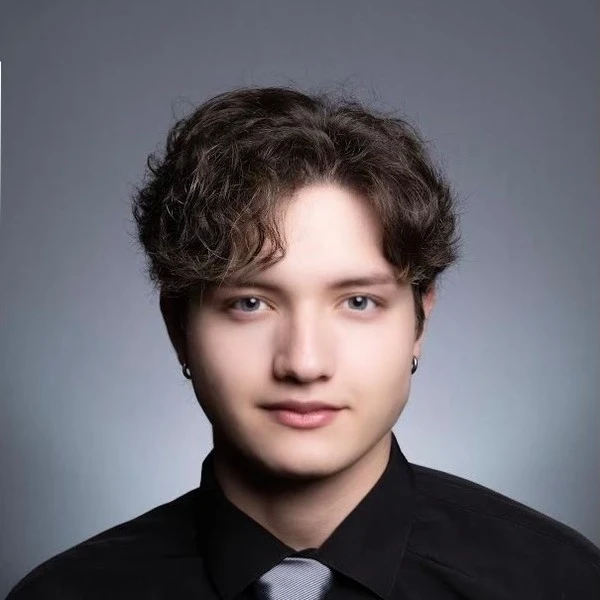
Hi! I’m Andres, an electrical engineering student and independent full-stack developer specializing in microcontrollers, aerospace R&D, and the founder of a nonprofit called SWORT.
Explore a little bit more about me checking selected projects and ongoing work in my portfolio:
https://andrefp-portfolio.vercel.app
Education
Purdue University-Calumet Campus
Bachelor's degree programMajors:
- Electrical and Computer Engineering
- Electromechanical Engineering
Minors:
- Electrical and Power Transmission Installers
- Mechatronics, Robotics, and Automation Engineering
Floral Park Memorial High School
High SchoolMiscellaneous
Desired degree level:
Doctoral degree program (PhD, MD, JD, etc.)
Graduate schools of interest:
Transfer schools of interest:
Majors of interest:
- Aerospace, Aeronautical, and Astronautical/Space Engineering
- Electromechanical Engineering
- Mechanical Engineering
- Electromechanical Technologies/Technicians
- Electrical, Electronics, and Communications Engineering
- Electrical and Computer Engineering
- Engineering Science
- Computer Engineering Technologies/Technicians
- Engineering-Related Fields
- Electrical/Electronics Maintenance and Repair Technologies/Technicians
Career
Dream career field:
Aviation & Aerospace
Dream career goals:
Aerospace R&D
Founder
SWORT LLC2025 – 2025Electrical Engineer
Purdue Space Program2025 – Present1 yearWaiter
Sand Castle2024 – 20251 yearCashier
Umberto's Pizza2023 – 20241 year
Sports
Football
Varsity2023 – 20252 years
Awards
- nassau county championship 2nd place
Research
Electromechanical Engineering
Purdue Space Program — Electrical Engineering2025 – Present
Arts
Floral Park High School
Painting2024 – 2025Purdue Northwest
DesignSolidWorks Projects2025 – 2025
Public services
Volunteering
Local Renewable Energy Organization — Volunteer2022 – 2024
Future Interests
Advocacy
Politics
Volunteering
Philanthropy
Entrepreneurship
Rev. and Mrs. E B Dunbar Scholarship
I learned very early that stability is not something you are given, it is something you build. I immigrated from Colombia with my mother into a single-parent, low-income household where there was no safety net, no inherited knowledge about college, and no room for failure. English was not my first language, and the U.S. education system felt like a maze designed for people who already knew the rules. Every form, every application, and every decision had consequences we couldn’t afford to get wrong.
One of the hardest obstacles wasn’t just financial stress, it was isolation. I watched classmates receive guidance from parents who had been to college, while I had to teach myself how tuition worked, how financial aid worked, and how to even apply. At home, I was helping my mother translate bills, negotiate with offices, and stretch limited income just to keep us stable. While others were building résumés, I was making sure we could stay in school at all.
Instead of letting that reality limit me, it sharpened me. I became obsessed with learning how systems work, not just academically, but practically. That mindset led me to engineering. I realized that technology, especially energy and aerospace systems, is one of the few tools powerful enough to change lives at scale. Reliable power, efficient storage, and resilient infrastructure are what separate thriving communities from struggling ones.
That is why I’m studying electrical and aerospace engineering and building projects like SWORT, a research-driven clean-energy platform focused on high-performance energy systems. My goal is not just to build better technology, but to make serious engineering accessible to people who don’t start with money, connections, or advanced labs. I know what it feels like to have the talent and curiosity but not the access.
In the future, I will use my education to give back to communities like the one that raised me: immigrant, low-income families led by single parents who are doing everything they can to keep their children moving forward. Through SWORT and local partnerships with schools and community organizations, I plan to provide students hands-on exposure to real engineering, solar systems, energy storage, and hardware they can touch and build with, so they don’t have to wait until college to see what’s possible.
I want students who are translating for their parents, working after school, and quietly carrying responsibility far beyond their age to realize that engineering is not out of reach for them. It is a tool they can use to change their families’ futures, just like I am doing now.
Every obstacle I’ve faced has taught me the same lesson: progress is not about waiting for permission. It’s about creating opportunity where none exists. This scholarship wouldn’t just help me continue my education, it would support someone who intends to turn that education into systems, tools, and pathways that make the climb easier for those coming after me.
Bick NYC Public School Graduate Scholarship
Walking into Floral Park Memorial High School, I quickly realized that school wasn’t going to be easy. Classes were challenging, and the workload felt relentless. I often found myself staring at assignments that seemed impossible at first, unsure of how to approach them. But I learned early that progress doesn’t come from waiting, it comes from putting in the work, even when it’s uncomfortable. I stayed after school, asked questions, and kept practicing until I understood, learning to take responsibility for my own growth.
I sought out opportunities that pushed me beyond the classroom. Joining Science Olympiad, Future Business Leaders of America (FBLA), Track, Football and competing in several county and state events, one of the most memorable ones was called "Flight" from science olympiad which taught me how to apply concepts in hands-on ways. I remember my first glider crashing midair, it was frustrating, and I could have given up. Instead, I rebuilt it, tested it, and refined my design until it worked. Winning wasn’t just about the result; it was about proving to myself that persistence, problem-solving, and attention to detail could overcome obstacles.
Leadership became another way to challenge myself. In FBLA and other clubs, I organized projects, mentored teammates, and guided others through challenges I had once faced myself. Balancing rigorous classes, clubs, and part-time jobs required discipline and taught me how to manage my time effectively. Every late night spent studying or preparing a project strengthened my resilience and determination. I learned that setbacks aren’t permanent unless you allow them to be and that effort compounded over time produces meaningful results.
What motivates me to keep going is knowing that hard work translates into progress. Every project completed, problem solved, and competition faced is a step toward the goals I’ve set for myself. I approach challenges methodically, focus on learning from mistakes, and take initiative when opportunities arise. Floral Park Memorial taught me that persistence, creativity, and accountability are more valuable than any shortcut or easy path.
Receiving this scholarship would allow me to focus fully on school and extracurricular programs without being weighed down by financial stress. It would give me the ability to dedicate time to competitions, labs, and personal projects that help me develop skills and help me in college and future opportunities. It would also validate the hard work I’ve invested in myself and my growth.
My experience in NYC public schools hasn’t been easy, but it has shaped who I am: resourceful, determined, and persistent. This scholarship would give me the chance to continue building on that foundation and take the next step in my education with focus, purpose, and momentum.
Hector L. Villarreal Memorial Scholarship
I’ve wanted to be a pilot for as long as I can remember. It started in military school, when I got the chance to participate in an Air Force program. Walking onto the flight line, seeing the planes up close, learning how they worked, it was nothing I had experienced before. I was completely fascinated. That program didn’t just teach me about aviation; it made me realize that this is exactly what I wanted to dedicate my life to.
After that, everything I did in high school revolved around flight. I joined every program or club related to aviation. I leaded Science Olympiad events like Flight, winning several competitions, Those experiences were more than competitions. They were lessons in problem-solving, precision, and applying theory to real-world challenges. They taught me how to think critically under pressure, and they confirmed that working with aircraft, understanding how they move, how they respond, and how to improve them, is where I belong.
That focus carried me into aerospace engineering. I stopped just sketching planes and started building systems that could actually make a difference. Right now, I’m working on supercapacitor-based energy systems to improve aviation power efficiency, collaborating with the Purdue Space Program to test and refine prototypes. Every calculation, every test, every iteration is another step toward the future I’ve been working on since that first Air Force program. Alongside this, I’m planning to earn my private pilot license as soon as my finances allow, so I can combine hands-on flying experience with the technical knowledge I’m developing.
Ultimately, my goal is to become an officer in the Air Force and work toward becoming a test pilot. I don’t see flight as just a career, it’s a path that combines engineering, problem-solving, and discipline. Every project I work on, every hour I dedicate to building skills and knowledge, is preparation for that future. This scholarship would give me the space to focus fully on these projects this semester, save toward my PPL, and continue building momentum toward my long-term goals without being distracted by financial stress.
Aviation has shaped how I approach challenges, how I think, and how I plan. From military school to Science Olympiad, to developing supercapacitors for aircraft energy systems, every step has been deliberate. This scholarship isn’t just financial support, it’s an investment in someone who has already been building toward aviation for years and will continue to push the field forward, combining hands-on flight, engineering innovation, and service.
Sabrina Carpenter Superfan Scholarship
I’ve followed Sabrina Carpenter since Girl Meets World, and what’s always impressed me is how she keeps evolving. As Maya Hart, she wasn’t just funny or smart, she had this way of making you notice her in every scene, like she owned it without trying too hard. That kind of presence stuck with me.
When I got into her music, it hit me the same way. Songs like Please, Please, Please and Espresso aren’t just pop tracks, they tell stories, sometimes small, messy, or awkward things that actually feel familiar. Listening to them made me pay attention to how I approach my own projects: it’s about focus, effort, and pushing your ideas to actually work, not just looking flashy.
The thing that stands out most about Sabrina isn’t just what she does, it’s how she does it. She moves between acting and music without forcing herself into a mold, and she doesn’t rely on hype to get noticed. That’s the kind of example that sticks with me because it shows that building something solid takes work, patience, and confidence in what you’re putting out, even when it’s in front of a ton of people.
Sabrina Carpenter has influenced how I think about growth and creativity. Watching her career, the way she experiments while keeping everything sharp and intentional, has motivated me to take my own ambitions seriously. She’s not just someone I listen to or watch, she’s someone who makes me rethink how I approach what I care about.
Taylor Swift Fan Scholarship
The Taylor Swift performance that sticks with me the most is her 2020 ACM Awards performance of “betty.” What made it so powerful wasn’t a huge stage or lights or a production, it was just her, a guitar, and the song. That simplicity made it feel real, like she wasn’t performing for anyone but telling a story that mattered.
I think what hits hardest is that after being in the spotlight for so long, she could’ve relied on spectacle to get attention, but she didn’t. She trusted the song, her voice, and the story. That level of confidence and honesty is rare, especially for someone who’s constantly being watched and judged. Watching it, I felt like I was experiencing the song, not just watching a performance.
It also shows something important about her career: she’s stayed relevant not by trying to be the loudest or flashiest, but by knowing when to pull back and let the work speak for itself. That moment reminded me that real impact doesn’t always need fireworks. It’s about authenticity and skill—about connecting with people in a way that feels personal.
For me, that performance isn’t just about music. It’s about how someone can stay in the spotlight for years and still be true to themselves. It’s rare to see that kind of confidence, where you don’t need to prove anything because you know what you bring to the table. That’s why this performance sticks—it’s simple, honest, and completely Taylor.
Kim Moon Bae Underrepresented Students Scholarship
I grew up as a Colombian immigrant in a single-parent household, raised by my mother after we came to the United States with limited resources and no safety net. From a young age, I understood that being Latino, low-income, and new to the country meant the path to education would not be structured or forgiving. My mom worked multiple jobs to keep us afloat, often putting her own needs aside so I could stay in school. In our household, opportunity wasn’t something you waited for, it was something you had to force into existence.
Entering the U.S. school system without strong English skills or guidance was isolating. I wasn’t just learning new material; I was learning a new language, culture, and set of unspoken rules that many of my peers took for granted. Outside of school, I took on responsibilities that went beyond my age, translating documents, helping my mother navigate systems she wasn’t familiar with, and finding ways to stretch limited finances by doing free lance projects and working different jobs. While others focused on résumé-building activities, I focused on survival, stability, and staying academically afloat. Those pressures shaped how I approach problems: practically, independently, and with urgency.
As a Latino student pursuing engineering, I’ve become increasingly aware of how underrepresented students like me are in technical and aerospace spaces. The lack of representation isn’t just visual, it shows up in access to mentorship, networks, and confidence. Often, I’ve had to figure things out alone, whether that meant teaching myself technical concepts, finding opportunities without guidance, or proving that I belonged in rooms where people didn’t expect me to be. That reality hasn’t disappeared as I’ve moved forward; it will continue to shape my college experience and professional path.
I plan to use my education in electrical and aerospace engineering to build energy systems and technologies that prioritize resilience, efficiency, and accessibility. My long-term goal is to develop renewable energy, supercapacitor-based systems, and space-related applications while also building organizations that lower barriers for students from underrepresented communities to enter STEM. I don’t just want to create technology, I want to create pathways for everyone I can. That means combining engineering with entrepreneurship and education so students who grow up without resources or mentors can still engage in serious innovation.
My identity as a Latino immigrant will continue to influence how I move through higher education and industry. I will likely always have to navigate spaces where people like me are rare, expectations are unspoken, and mistakes are less tolerated. But that position also gives me perspective. I understand what it means to work without a cushion, to learn without guidance, and to persist without validation. Those experiences drive me to build systems that are not exclusive by default and to support others who are navigating similar barriers.
Receiving this scholarship would directly reduce the financial pressure that has followed me for most of my life and allow me to focus fully on my education and technical development. More importantly, it would be an investment in someone who intends to multiply that support outward—through engineering work, mentorship, and community-focused initiatives. I don’t see my background as something I overcame and left behind. It’s something that continues to shape my goals, my standards, and the impact I intend to make.
Bulkthreads.com's "Let's Aim Higher" Scholarship
I didn’t start building energy systems because it sounded impressive. I started because access was limited. Advanced labs, expensive hardware, and institutional gatekeeping make serious engineering unreachable for students without money, connections, or the “right” background. If I wanted to work on real systems, not just theory, I would have to build them myself.
I’m an electrical engineering student focused on energy systems that prioritize speed, resilience, and independence. My interest isn’t advocacy, it’s hardware that performs under pressure. That mindset led me to start SWORT as a personal engineering project exploring clean energy with limited resources. As my technical experience grew, the project evolved into a legally registered nonprofit with a research-driven mission. Today, SWORT operates as a focused research platform for clean energy systems with applications in aerospace and advanced mobility.
What I’m building is a modular, supercapacitor-based energy storage and power delivery architecture. Unlike traditional batteries, these systems emphasize rapid charge and discharge, high cycle life, and fault tolerance under strict constraints such as thermal limits, mass budgets, and voltage stability. The goal isn’t laboratory perfection, it’s deployable performance. My education directly feeds this work: every circuit, simulation, and design choice is tested against physical reality. When something fails, I fix it.
This work doesn’t happen in isolation. I collaborate and receive technical guidance from engineers affiliated with IEEE and ASME, shaping decisions in power electronics, materials limitations, and system integration. I’m also evaluating these architectures for CubeSat-scale applications through collaboration with the Purdue Space Program, where reliability, efficiency, and mass optimization are non-negotiable.
The impact is practical and shared. For me, this work enforces an early professional standard—failure has consequences, documentation matters, and systems must justify their design. For others, SWORT produces documented designs, test data, and system tradeoffs that allow students and small teams, especially those without institutional backing or access to advanced labs, to engage in serious energy research using real constraints, not classroom abstractions. The result isn’t motivation; it’s usable capability.
This scholarship wouldn't fund an idea. It funds execution, tools, materials, and time to turn engineering education into working systems, while lowering the barrier for others to do the same. That’s how I’m building my future, and how this work scales beyond me.
Sue & James Wong Memorial Scholarship
I grew up in a single-parent household, raised by my mom after immigrating from Colombia. She worked multiple jobs to provide for us, often sacrificing her own needs so I could have a chance at education and stability. I quickly learned that in our family, nothing was handed to you—you had to earn it, fight for it, and create your own opportunities. English wasn’t my first language, and entering the U.S. school system without guidance felt like being thrown into a race I didn’t know how to run.
Finances were tight. There were days when I wasn’t sure if we would have enough for food, transportation, or even basic school supplies. While my classmates could focus on internships or extracurriculars, I had to focus on survival and figuring out how to make the most of limited resources. I learned to balance responsibilities at home with my education, often taking on tasks that weren’t “age-appropriate,” like translating bills, helping my mom navigate systems, or finding ways to pay for necessities. Those challenges forced me to become resourceful, disciplined, and determined to break the cycle of limitation.
Despite these obstacles, I never lost sight of my goals. I want to use my education in electrical and aerospace engineering to develop renewable energy technologies, supercapacitor systems, and space applications that can improve energy access, transportation, and sustainability on Earth and beyond. I also plan to combine technology with entrepreneurship to create companies and foundations that teach and empower underrepresented communities to innovate and pursue STEM careers, giving them the guidance I didn’t have growing up. My dream is to build tools, systems, and educational platforms that provide opportunities to those who lack access to resources or mentorship, helping them overcome the barriers I faced.
Receiving this scholarship would directly allow me to focus on my education instead of constantly juggling financial pressures. It would mean the freedom to fully dedicate myself to learning, innovating, and preparing to make a tangible impact on the world. Growing up with a single parent showed me that success isn’t just about talent, it’s about resilience, responsibility, and the drive to create change. More than anything, it would represent belief in someone who has had to bet on himself repeatedly and who understands the responsibility that comes with being given a chance.
American Dream Scholarship
The American dream, to me, isn’t about owning a house or a fancy car, it’s about having the freedom and opportunity to define your future, no matter the obstacles you start with. For someone like me, who immigrated from Colombia, grew up in a low-income, single-parent household, and navigates life without U.S. citizenship, that dream has always been inseparable from persistence, resilience, and contribution. It’s about taking control of your path, creating opportunities when none exist, and using what you’ve learned to lift others along the way.
I’ve learned firsthand that opportunity doesn’t arrive on its own. There were times when guidance, resources, and support were scarce, and I had to navigate complex systems alone, figuring out how to apply for programs, manage finances, and pursue academic goals with minimal help. That struggle shaped my understanding of success: it’s not measured by privileges or titles, but by the obstacles you overcome and the impact you create. Being undocumented has sharpened that perspective, requiring creativity, focus, and determination at every step.
That drive naturally extends to helping others. I love volunteering and mentoring others because I know how hard it can be to navigate opportunities without guidance, and I don’t want others to face the same obstacles I did. I genuinely enjoy helping peers grow, inspiring curiosity, encouraging critical thinking, and fostering resilience. Beyond sharing technical knowledge, I emphasize systems thinking and interdisciplinary collaboration, helping mentees see how fields connect and how to tackle real-world problems. Leading projects through my own non-profit SWORT LLC and the Purdue Space Program, I’ve learned that mistakes can teach as much as successes, and I aim to pass those lessons forward so others can accelerate their own growth.
For me, the American dream is inseparable from contribution. It isn’t enough to succeed individually; the dream is fulfilled when your efforts create opportunities for others to rise as well. That principle guides how I volunteer, mentor, and build initiatives like SWORT, which focuses on innovation and inspiring young people to engage with technology. Every barrier I’ve faced reinforces the need to work harder, learn faster, and give back, making persistence and impact inseparable in my vision of success.
Ultimately, the American dream is proving that determination and effort can turn limitations into stepping stones, and in the process, that others can do the same. It’s about responsibility, initiative, and the courage to lift those around you while building your own path. For me, mentoring, creating, and contributing aren’t separate from my dream, they are its core.
Lotus Scholarship
Being a first-generation, low-income student from a single-parent household means learning everything the hard way. No one in my family could explain how college works, what questions to ask, or what mistakes to avoid. I had to figure it out on my own, often while feeling behind everyone else.
I immigrated from Colombia and entered the U.S. school system without stability. English wasn’t my first language, finances were tight, and there was constant pressure to not fail because there was no safety net. I learned quickly that if I wanted something, I had to create the path myself. That mindset didn’t come from motivation speeches, it came from necessity.
There were moments when basic things like housing, food, or transportation felt uncertain. I watched classmates focus on opportunities while I calculated costs and consequences. Instead of letting that stop me, I adapted. I learned how to ask for help, stay disciplined when things felt overwhelming, and keep moving even when progress felt slow.
What drives me is the need to build a future that didn’t exist for me growing up. I’m motivated by the idea that effort compounds over time, even when resources are limited. I don’t expect things to be easy, but I expect myself to be consistent, focused, and accountable. Being first-generation taught me that resilience isn’t dramatic, it’s showing up every day and refusing to quit.
This scholarship would relieve financial pressure that constantly competes with my education, especially now that my family can’t support me as much. It would allow me to focus on learning, growing, and building toward long-term goals instead of making short-term survival decisions. More than anything, it would represent belief in someone who has repeatedly had to bet on himself and understands the responsibility that comes with being given a chance.
Imm Astronomy Scholarship
Astronomy demands more than interest; it demands involvement. I learned that not from a textbook, but sitting quietly in an observatory room, watching C++ data appear line by line on a screen. Understanding that early on shaped the way I chose to learn, where I invested my time, and how I prepared myself to contribute meaningfully to the field.
I’m an Electrical Engineering student at Purdue University Northwest, but my education has never been limited to where I’m enrolled. Wanting to stay close to astronomy in a practical way, I regularly drive over an hour each way, often in the evenings after classes, to Northwestern University to attend astronomy sessions. It isn’t something I do for recognition or obligation; it’s simply where I learn best. Being physically present, listening, observing, and asking questions, keeps the field real to me and reinforces that astronomy is something you participate in, not just admire.
That perspective didn’t start in college. My interest in optics began in high school, specifically in Science Olympiad, when I first worked with light, sensors, and basic instrumentation, including photodiodes and simple optical alignment experiments that rarely worked on the first attempt. Seeing how physical systems turn abstract ideas into measurable data changed how I understood astronomy. It became clear that discovery depends as much on engineering discipline as it does on curiosity.
That understanding followed me into organizations like the Purdue Space Program and AIAA, where I’ve seen firsthand how reliable systems, careful design, and attention to detail make exploration possible, from reviewing subsystem interfaces to discussing failure modes and redundancy in design meetings. As I continued along this path, my focus naturally shifted toward aerospace research and development.
Astronomy pushes engineering to its limits; electronics must survive harsh environments, instruments must operate without intervention, and every design decision carries long-term consequences. Rather than being intimidating, that level of responsibility motivates me. I’m drawn to work where precision matters and where progress comes from steady, deliberate effort rather than shortcuts.
This is why I don’t think of astronomy as a distant aspiration. As Carl Sagan said, “Science is more than a body of knowledge; it is a way of thinking.” I think of it as work I’m actively preparing to do. Each experience, whether driving across institutions, spending time in technical organizations, or learning through trial and error, builds toward the same goal: contributing meaningfully to space-based research, where a single overlooked detail can compromise years of planning and data collection.
In ten years, I see myself working in aerospace or space systems engineering, developing the technologies that support astronomical missions. Whether through satellites, observatories, or exploration platforms, I want my role to be behind the systems that enable discovery. I don’t need visibility; I want responsibility. Astronomy advances through people who are willing to take responsibility for the systems that make discovery possible.
This scholarship would relieve financial pressure that constantly competes with my education, especially now that I am in college and my family can’t support me as much as before. It would allow me to focus fully on developing the technical depth and judgment required to take on that responsibility early in my career instead of making short-term survival decisions. More than anything, it would represent belief in someone who has had to bet on himself repeatedly, and who understands the responsibility that comes with being given a chance.
Bick First Generation Scholarship
Being a first-generation student means learning everything the hard way. There was no one in my family who could explain how college works, what questions to ask, or what mistakes to avoid. I had to figure it out on my own, often while feeling like I was already behind everyone else.
I immigrated from Colombia and entered the U.S. school system without stability or clear direction, the only certain thing in my life were my goals. English wasn’t my first language, finances were tight, and there was constant pressure to not fail because there was no safety net. I learned quickly that if I wanted something, I had to be the one to create the path toward it. That mindset didn’t come from motivation speeches—it came from necessity.
There were moments when basic things like housing, food, or transportation felt uncertain. I watched classmates focus on opportunities while I was calculating costs and consequences. Instead of letting that stop me, I adapted. I learned how to ask for help, how to stay disciplined when things felt overwhelming, and how to keep moving even when progress felt slow.
What drives me is the need to build a future that didn’t exist for me growing up. I’m motivated by the idea that effort can compound over time, even when resources are limited. I don’t expect things to be easy, but I expect myself to be consistent, focused, and accountable. Being first-generation taught me that resilience isn’t dramatic—it’s showing up every day and refusing to quit. For me, the only real failure is quitting.
This scholarship would relieve financial pressure that constantly competes with my education, especially now that I am in college and my family can’t support me as much as before. It would allow me to focus on learning, growing, and building toward long-term goals instead of making short-term survival decisions. More than anything, it would represent belief in someone who has had to bet on himself repeatedly, and who understands the responsibility that comes with being given a chance.