Hobbies and interests
Animals
Exercise And Fitness
Badminton
Tennis
Swimming
Community Service And Volunteering
Conservation
Electric Guitar
Music
Martial Arts
Art
Biology
Biochemistry
Chemistry
Reading
Horror
Science Fiction
Thriller
I read books multiple times per month
Andrea Gutierrez
1x
Finalist
Andrea Gutierrez
1x
FinalistBio
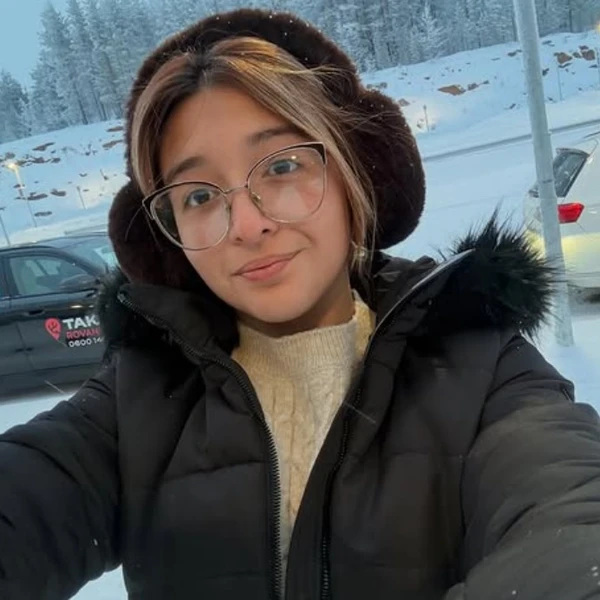
I am a passionate 17-year-old, striving to becoming a wildlife vet and save endangered animals from the wild. I participate in many wildlife conservation programs around Brownsville and constantly gain experience around Texas and other states. I am a global citizen, which helped me see different parts of the world and learn how to help different communities with different needs. I spend my free time learning how to play new songs on my guitar and caring for all my pets I have saved from the streets in different parts of the world. I am always thrilled to learn more about Biology and Chemistry at school and have been granted every National Honors Society in my school to demonstrate my love for education.
Education
Saint Joseph Academy
High SchoolMiscellaneous
Desired degree level:
Doctoral degree program (PhD, MD, JD, etc.)
Majors of interest:
- Veterinary Biomedical and Clinical Sciences
- Agricultural/Animal/Plant/Veterinary Science and Related Fields, Other
- Biological and Biomedical Sciences, Other
Career
Dream career field:
Veterinary
Dream career goals:
Developed leadership and community engagement skills through workshops, seminars, and networking with peers focused on positively impacting local communities.
Hugh O'Brian Youth Program2024 – 2024Engaged with peers across Marist schools, led community-building activities, and strengthened skills in mentorship, faith-based leadership, and service projects.
Marist Youth Gathering2025 – 2025Collaborated with students from other Marist schools to develop leadership skills, lead retreats, facilitate icebreakers and discussions, and strengthen community service initiatives.
Marist Youth Leadership Camp2024 – 2024Gained hands-on experience caring for exotic animals, maintaining habitats, teaching younger students about wildlife conservation, and observing animal behavior.
Teen Program, Gladys Porter Zoo2024 – 20262 yearsSupported marine animal health and welfare through assisting in care routines, observing veterinary procedures, and maintaining clean, safe habitats.
Texas State Aquarium Internship, Corpus Christi, TX2025 – Present1 yearAcademic research, engaged in hands-on veterinary training, animal care exercises, and professional workshops, gaining practical skills and insight into veterinary medicine
Three-week 2 Summer Session (Summer Program), Cornell University, Ithaca, NY2025 – 2025Volunteer
BARCC - Brownsville Aniaml Regulation Care Center2024 – Present2 yearsVolunteer
Boca Chica Animal Hospital2025 – Present1 year
Sports
Tennis
Varsity2023 – Present3 years
Awards
- District
Swimming
Varsity2024 – 20262 years
Awards
- District
Arts
School
Drawing2022 – Present
Public services
Volunteering
TIP OF TEXAS FAMILY OUTREACH — Volunteer2023 – 2025Volunteering
Marist Day of Service - SEA TURTLES INC — Leader2025 – 2025Volunteering
Marist Day of Service - Gladys Porter Zoo — Leader2025 – 2025Volunteering
Down By The Border — Volunteer2022 – PresentAdvocacy
Ovarian & Cancer Awareness Day Event — Volunteer2025 – 2025Volunteering
Good Neighbor Settlement House — Volunteer2023 – PresentAdvocacy
Dog toy Activity- ROTARY INTERACT — Volunteer2023 – 2026Volunteering
Spring Beach Clean Up — Volunteer2025 – 2025Volunteering
Immaculate Conception Cathedral Shelter — Volunteer2024 – 2025Volunteering
"Take Your Pup to Work" Day! — Volunteer2025 – 2025Volunteering
Boca Chica Animal Hospital — Volunteer2025 – PresentVolunteering
BARCC - Brownsville Animal Regulation Care Center — Volunteer2024 – Present
Future Interests
Advocacy
Volunteering
Philanthropy
Entrepreneurship
RodentPro.com® Animal Advocate Scholarship
When people think about conservation, they often picture endangered species roaming distant forests or oceans. While protecting wildlife is certainly a part of conservation, I have come to understand that it begins with something much simpler: compassion for a single animal. Every life we choose to value, whether it belongs to a critically endangered rhinoceros or an aging shelter cat, shapes the future of our relationship with the natural world.
My passion for animal welfare has grown through experiences that taught me that caring for animals extends far beyond medicine. Volunteering at the Gladys Porter Zoo allowed me to observe how the health of individual animals contributes to the survival of entire species. From preparing enrichment activities to assisting with educational events, I witnessed how attentive care reduces stress, encourages natural behaviors, and supports breeding programs essential for conservation. Healthy animals become ambassadors for their species, inspiring visitors to protect habitats they may never see themselves.
Working in a veterinary clinic further transformed my understanding of welfare. I learned that every examination, treatment, and difficult conversation reflected a commitment to preserving not only life, but dignity. One patient, a tuxedo cat named Cow Cow, profoundly changed my perspective. Diagnosed with chronic kidney disease, he eventually reached a point where medicine could no longer cure him. During his final moments, I stayed by his side, offering nothing more than quiet comfort. Although I could not save his life, I realized that animal welfare is not measured solely by recovery. Sometimes it means ensuring that an animal experiences compassion, security, and love until the very end. That lesson continues to shape the veterinarian I aspire to become.
Animal welfare and conservation are inseparable. Wildlife cannot thrive if individual animals suffer from disease, neglect, habitat destruction, or human conflict. Likewise, conservation efforts lose their purpose if they fail to prioritize the well-being of the very creatures they seek to protect. Every rescued sea turtle returned to the ocean, every rehabilitated bird released back into the wild, and every endangered species successfully bred in human care demonstrates that protecting biodiversity begins with exceptional animal care.
As I pursue a career in veterinary medicine, I hope to bridge clinical practice with conservation efforts. I envision working alongside zoos, wildlife rehabilitation centers, and conservation organizations to provide medical care that supports both individual animals and vulnerable populations. I also hope to educate communities about responsible stewardship, because lasting conservation depends not only on scientists and veterinarians, but on a society that recognizes every animal's intrinsic value.
Ultimately, I believe conservation is an act of empathy. By safeguarding the welfare of individual animals, we preserve ecosystems, protect biodiversity, and strengthen humanity's connection to the natural world. Through my career, I hope to ensure that every animal, whether common or endangered, is treated with the compassion and respect that all living beings deserve.
Smith & Moore Uplift Scholarship
There was nothing I understood less than the word community, until I felt it in the quietest moment of my life. In a small shelter in Ho Chi Minh City, I sat outside a closet where a boy had learned to hide from the world. Day after day, I returned, not with solutions, but with presence. On my last day, I reached my hand into the darkness. After a long pause, his small, trembling fingers found mine. In that moment, I understood that community is not built through words or proximity, but through trust, the choice to show up, even when you cannot fix what is broken.
That lesson has followed me into every space I enter, especially in my pursuit of veterinary medicine.
In clinics, zoos, and classrooms, I have seen a different kind of silence, one carried by animals who cannot speak for themselves. At the Gladys Porter Zoo, I worked behind the scenes feeding flamingos, cleaning enclosures, and observing the quiet, relentless dedication it takes to care for living beings. It was not glamorous. It was patient, consistent, and deeply human. Later, at a local animal hospital, that understanding deepened. I assisted during treatments, observed surgeries, and comforted owners whose voices shook as they faced impossible decisions.
One of those moments was with a cat named Cow Cow. I held his paw as the monitor fell silent, staying with him in his final moments when healing was no longer possible. That experience changed me. It forced me to confront a difficult truth: in both medicine and life, you cannot always save what you love. But you can choose to be there, to ease fear, to offer dignity, to make sure no life ends alone.
That is why I am drawn to veterinary medicine as a STEM field. It is not just about science; it is about using knowledge to serve those who cannot advocate for themselves. Through this career, I hope to bridge gaps in communities where access to veterinary care is limited, ensuring that animals, often sources of comfort, protection, and love, receive the care they deserve. By supporting animal health, I am also supporting the people who depend on them, strengthening the fabric of the community itself.
My goals extend beyond local impact. As someone shaped by experiences across different parts of the world, I am committed to wildlife conservation and global veterinary work. I want to protect endangered species and preserve ecosystems that sustain life, ensuring that future generations inherit a world where both animals and humans can thrive.
STEM gives me the tools to act, but community gives my work meaning. It reminds me that impact is not measured solely in cures, but in compassion, in the quiet decision to stay when things are difficult.
Wherever I go, I will carry that boy’s hand in mine. And through veterinary medicine, I will continue to honor that promise: to show up, to serve, and to build a world where no life, human or animal, is left unseen.
Emerging Leaders in STEM Scholarship
I was holding his paw when the room went quiet. The monitor beeped once, then stopped. His name was Cow Cow. He wasn’t my cat, but I knew him like he was. He had been coming to the clinic since I started interning there, and I always sat with him before checkups because of the anxiety he felt each time. On that day, Cow Cow was diagnosed with chronic kidney disease. I was asked to stay with him during his final moments, and I did. I remember his last meow, thin and tired, almost apologetic. I didn’t expect that saying goodbye would teach me as much about veterinary medicine as hours spent in lectures or zoos, but it did.
My interest in veterinary medicine began at the Gladys Porter Zoo, where I volunteered caring for animals behind the scenes. Cleaning enclosures, feeding flamingos, and observing keepers showed me that animal care is not defined by excitement, but by consistency, responsibility, and patience. As someone who has lived in different parts of the world, I became especially drawn to wildlife conservation and global veterinary work. I want to protect endangered species and help create sustainable environments where animals can live without fear of extinction. As Steve Irwin once said, “We don’t own the planet Earth; we belong to it.” That belief continues to shape my goals.
Determined to explore this path further, I attended Cornell’s Pre-College Program in veterinary medicine. There, I studied anatomy, animal behavior, disease, and ethics. The experience challenged me academically but also strengthened my confidence in pursuing a demanding field. I learned to ask questions, think critically, and engage with complex problems—skills I will carry into my future education and career.
Back home, working at a local animal hospital exposed me to the emotional realities of veterinary medicine. I assisted with treatments, observed surgeries, and spoke with pet owners during moments of uncertainty. It was there that I came to understand one of the greatest challenges of this profession: balancing compassion with resilience. Supporting owners through difficult decisions, while remaining steady and professional, required emotional strength I had not fully developed before.
Facing loss has been one of the greatest adversities I have encountered. Witnessing euthanasia, especially Cow Cow’s, forced me to confront the limits of medicine and the weight of responsibility that comes with caring for a life. It was painful to accept that healing does not always mean saving. However, that experience taught me that compassion is not measured by outcomes, but by presence, by showing up even when the outcome is heartbreaking.
Cow Cow’s passing solidified my purpose. I want to become a veterinarian who not only treats animals but also advocates for them and supports the people who love them. Whether through advancing conservation efforts, providing accessible care, or simply being there in moments of loss, I hope to make a meaningful impact on both animals and the communities connected to them.
Ward Green Scholarship for the Arts & Sciences
There was nothing I understood less than the word community. In Ho Chi Minh City, my mum made me join an organization I knew nothing about. We’d take the bus every day after school from the clean, lively streets to broken rubble, a silent witness to the lives of children abandoned by the world. I realized the shelter was a place where neglect and isolation ran deep, and I found myself compelled by it. Through their dark eyes, full of longing, I saw a quiet pain I couldn’t ignore.
Among them was a shy boy who kept to himself in an old closet, a deaf child with a heart condition. After weeks of visiting, I watched him slowly wither away. I began coming outside the organization’s schedule, sitting silently beside the closet. I brought snacks and toys, hoping for even a glimpse of his smile. On my last day before moving, I extended my hand into the creaking darkness, unsure if he would trust me. His small, trembling fingers brushed mine, cold and fragile, like the wings of a bird that had never flown. His eyes filled with tears, and in that moment, his trust felt like a promise, a bond words could not hold.
When I moved to Brownsville, Texas, I carried the weight of that promise with me. The boy passed away soon after I left; no one could heal his heart. I was left with a quiet question: what does it mean to help when you cannot save someone?
That question has shaped what I hope to study: veterinary medicine. While I could not change the outcome for that boy, I realized that care is not only about curing, but about presence, compassion, and advocacy for those who cannot speak for themselves. Animals, like that child, often exist in silence, relying on others to recognize their suffering and act.
Through my work with Down by the Border, supporting children with disabilities, I continued to build that sense of responsibility and connection. I saw how healing extends beyond medicine, it lives in trust, patience, and showing up consistently for others. These are the same values I will carry into veterinary medicine.
As a future veterinarian, I hope to serve communities that lack access to proper animal care, where pets are companions, protectors, and family. By providing accessible treatment, education, and outreach, I want to ensure that both animals and their owners are supported. In doing so, I aim to strengthen not only animal welfare but the wellbeing of the community as a whole.
I have learned that community is forged in moments of trust and vulnerability. Each smile, each handheld, becomes a step towards belonging. The connection I once searched for was never about erasing loneliness; it was about being present in quiet moments of need.
Wherever I go, community will always be that boy’s hand reaching for mine: a bond of trust, care, and responsibility. And through veterinary medicine, I will honor that promise, by giving a voice to those who cannot speak, and by showing up, even when healing begins with something as simple as being there.
Andrea Claire Matason Memorial Scholarship
I was holding his paw when the room went quiet. The monitor beeped once, then stopped. His name was Cow Cow. He wasn’t my cat, but I knew him like he was. He’d been coming to the clinic since I started interning there, and I always sat with him before checkups because of the anxiety he felt each time. On that day, Cow Cow was diagnosed with chronic kidney disease. I was asked to stay with him during his final moments, and I did. I remember his last meow, thin and tired, almost apologetic. I didn’t expect that saying goodbye would teach me just as much about veterinary medicine as hours spent in lectures or zoos, but it did.
I realized I wanted to become a veterinarian while volunteering at the Gladys Porter Zoo. Babysitting flamingoes, cleaning enclosures, feeding exotic animals, and watching keepers interact with them gave me more than admiration– it gave me purpose. I saw what real animal care looked like: not just the exciting parts behind glass, but the tireless work sustaining animals and habitats. Being a global citizen, wildlife veterinary too inspired my drive to travel around the world and help endangered animals seek new homes and habitats where they thrive instead of hiding from those who came at them first. I want to create a world full of conservation. Just like Steve Irwin once said, "We don’t own the planet Earth, we belong to it. And we must share it with our wildlife.”
That experience drove me to Cornell’s Pre-College Program for veterinary medicine. During the three-week course, I learned about anatomy, animal behavior, diseases, ethics, and the many paths veterinary work can take. Each lecture and gross lab left me more captivated, and by the end, I knew my passion for veterinary medicine had solidified. More importantly, I discovered how Cornell fosters curiosity: professors encouraged questions, connected lessons to real-world cases, and showed us how science translates into impact.
Back home, I began working at a local animal hospital, where I saw a more intimate side of the profession. I cleaned cages, observed surgeries, assisted during treatments, and spoke with owners. It was here that I met Cow Cow and his owner, an elderly woman as nervous as her cat. Comforting her while the vet gave updates taught me that being a veterinarian means more than healing animals; it’s also about guiding and supporting people.
Cow Cow’s passing was not the first euthanasia I witnessed, but it was the first that truly impacted me. It was gentle and right, but it hurt. I stayed with him until his owner left, then carefully moved his body to the quieter part of the clinic. That day, I left stronger and more certain. I knew I wanted to show up not just for the easy moments, but for the hardest ones, too.
Dr. Howard Hochman Zoological Scholarship
I was holding his paw when the room went quiet. The monitor beeped once, then stopped. His name was Cow Cow. He wasn’t my cat, but I knew him like he was. He’d been coming to the clinic since I started interning there, and I always sat with him before checkups because of the anxiety he felt each time. On that day, Cow Cow was diagnosed with chronic kidney disease. I was asked to stay with him during his final moments, and I did. I remember his last meow, thin and tired, almost apologetic. I didn’t expect that saying goodbye would teach me just as much about veterinary medicine as hours spent in lectures or zoos, but it did.
I realized I wanted to become a veterinarian while volunteering at the Gladys Porter Zoo. Babysitting flamingoes, cleaning enclosures, feeding exotic animals, and watching keepers interact with them gave me more than admiration– it gave me purpose. I saw what real animal care looked like: not just the exciting parts behind glass, but the tireless work sustaining animals and habitats. Being a global citizen, wildlife veterinary too inspired my drive to travel around the world and help endangered animals seek new homes and habitats where they thrive instead of hiding from those who came at them first. I want to create a world full of conservation. Just like Steve Irwin once said, "We don’t own the planet Earth, we belong to it. And we must share it with our wildlife.”
That experience drove me to Cornell’s Pre-College Program for veterinary medicine. During the three-week course, I learned about anatomy, animal behavior, diseases, ethics, and the many paths veterinary work can take. Each lecture and gross lab left me more captivated, and by the end, I knew my passion for veterinary medicine had solidified. More importantly, I discovered how Cornell fosters curiosity: professors encouraged questions, connected lessons to real-world cases, and showed us how science translates into impact.
Back home, I began working at a local animal hospital, where I saw a more intimate side of the profession. I cleaned cages, observed surgeries, assisted during treatments, and spoke with owners. It was here that I met Cow Cow and his owner, an elderly woman as nervous as her cat. Comforting her while the vet gave updates taught me that being a veterinarian means more than healing animals; it’s also about guiding and supporting people.
Cow Cow’s passing was not the first euthanasia I witnessed, but it was the first that truly impacted me. It was gentle and right, but it hurt. I stayed with him until his owner left, then carefully moved his body to the quieter part of the clinic. That day, I left stronger and more certain. I knew I wanted to show up not just for the easy moments, but for the hardest ones, too.
Pet Pals Pack Compassion Award
I was holding his paw when the room went quiet. The monitor beeped once, then stopped. His name was Cow Cow. He wasn’t my cat, but I knew him like he was. He’d been coming to the clinic since I started interning there, and I always sat with him before checkups because of the anxiety he felt each time. On that day, Cow Cow was diagnosed with chronic kidney disease. I was asked to stay with him during his final moments, and I did. I remember his last meow, thin and tired, almost apologetic. I didn’t expect that saying goodbye would teach me just as much about veterinary medicine as hours spent in lectures or zoos, but it did.
I realized I wanted to become a veterinarian while volunteering at the Gladys Porter Zoo. Babysitting flamingoes, cleaning enclosures, feeding exotic animals, and watching keepers interact with them gave me more than admiration, it gave me purpose. I saw what real animal care looked like: not just the exciting parts behind glass, but the tireless work sustaining animals and habitats.
That experience drove me to Cornell’s Pre-College Program for veterinary medicine. During the three-week course, I learned about anatomy, animal behavior, diseases, ethics, and the many paths veterinary work can take. Each lecture and gross lab left me more captivated, and by the end, I knew my passion for veterinary medicine had solidified. More importantly, I discovered how Cornell fosters curiosity: professors encouraged questions, connected lessons to real-world cases, and showed us how science translates into impact.
Back home, I began working at a local animal hospital, where I saw a more intimate side of the profession. I cleaned cages, observed surgeries, assisted during treatments, and spoke with owners. It was here that I met Cow Cow and his owner, an elderly woman as nervous as her cat. Comforting her while the vet gave updates taught me that being a veterinarian means more than healing animals; it’s also about guiding and supporting people.
Cow Cow’s passing was not the first euthanasia I witnessed, but it was the first that truly impacted me. It was gentle and right, but it hurt. I stayed with him until his owner left, then carefully moved his body to the quieter part of the clinic. That day, I left stronger and more certain. I knew I wanted to show up not just for the easy moments, but for the hardest ones, too.