Washington, DC
Age
34
Gender
Female
Ethnicity
Black/African
Hobbies and interests
Reading
Movies And Film
African American Studies
Animals
Mathematics
US CITIZENSHIP
US Citizen
FIRST GENERATION STUDENT
Yes
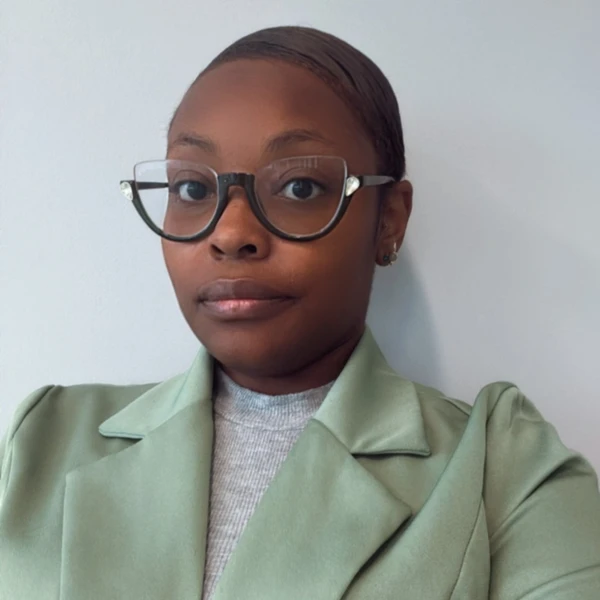
Andrea Wright
1x
FinalistAndrea Wright
1x
FinalistBio
I am a recent Ph.D. graduate in Curriculum & Instruction (Mathematics Education) at UNC Charlotte and a K–8 math educator with experience as a math teacher, interventionist, and coach. My dissertation, Calculating Concerns, examined math anxiety in Black and Brown elementary students, showing how classroom contexts shape confidence and achievement. I’m now wishing to pursue a graduate certification to become an Educational Diagnostician—uniting my research with practice so I can deliver culturally responsive, research-grounded evaluations that reduce misidentification and ensure students receive the services they deserve. I’ve contributed to statewide equity initiatives and secured resources for schools, and I’m committed to transforming assessment systems so every child’s strengths are recognized and supported.
Education
University of North Carolina at Charlotte
Doctoral degree program (PhD, MD, JD, etc.)Majors:
- Curriculum and Instruction
GPA:
3.9
University of North Carolina at Greensboro
Master's degree programMajors:
- Special Education and Teaching
GPA:
3.7
SUNY Buffalo State
Bachelor's degree programMajors:
- Textile Sciences and Engineering
GPA:
3.3
Miscellaneous
Desired degree level:
Master's degree program
Graduate schools of interest:
Transfer schools of interest:
Majors of interest:
Career
Dream career field:
Education
Dream career goals:
Education Diagnostician
Math Interventionist
DCPS2024 – Present2 years
Future Interests
Advocacy
Philanthropy
Bick First Generation Scholarship
Being first-generation means I carry two things at once: deep gratitude for the people who got me this far without a roadmap, and a promise to make the path clearer for those coming next. I grew up knowing college was important but not always knowing how to get there. Financial aid forms felt like a foreign language; I learned to translate by trial, error, and persistence. In classrooms, I sometimes battled imposter syndrome—no one in my family could tell me what a dissertation committee was or how to juggle full-time work with graduate research. I built my own playbook: ask questions even when my voice shakes, find mentors, and turn every closed door into data for my next attempt.
What drives me is simple: talent is universal, opportunity is not. As a K–8 math teacher, interventionist, and coach—and now a Ph.D. candidate in Mathematics Education—I've seen how fear and misidentification can silence children, especially Black and Brown students. My dissertation focuses on math anxiety in elementary students, and I’m pursuing Educational Diagnostician certification so I can pair rigorous, culturally responsive evaluation with practical supports. I want to ensure students are understood accurately and receive the services that help them thrive, not labels that limit them.
I’ve faced challenges that tested my resolve: working multiple roles while studying, paying tuition in installments, and balancing research with family responsibilities. When resources were thin, I wrote grants and built community nights where families learned the same regulation and problem-solving routines I teach students. When I felt alone, I mentored other first-gen educators so none of us had to navigate in the dark. Each obstacle sharpened my purpose: to change systems with precision and heart.
This scholarship would be a bridge, not a finish line. It would help fund my diagnostician coursework and licensure exams, cover materials for mobile assessment days at under-resourced schools, and offset conference costs so I can share tools—plain-language reports, brief screeners, and anxiety-aware routines—that other educators can use immediately. Practically, it would also lighten financial pressure so I can finish strong: more time in classrooms and clinics, less time piecing together extra jobs.
My dream is that a child who whispers “I’m not a math person” learns to say, with evidence, “I am capable,” and that their evaluation reflects the fullness of who they are—their language, community, and strengths. I’m determined to be the diagnostician who sees them clearly and the educator who helps schools respond wisely. This scholarship moves me closer to that future, where my first-gen journey becomes someone else’s open door.
RonranGlee Special Needs Teacher Literary Scholarship
I’m passionate about special education because it’s the place where teaching becomes its most human: we don’t just transmit content—we help students discover voice, value, and agency. When Harold Bloom says, “the purpose of teaching is to bring the student to his or her sense of his or her own presence,” I understand “presence” as a student’s felt knowledge of who they are and how they learn—mind, body, culture, language, interests, and aspirations—paired with the ability to use that self-knowledge in the moment. Presence looks like awareness (“I can name what I need right now”), value (“my identity and language count here”), voice (“I can communicate ideas and advocate for supports”), and agency (“I can choose strategies, set goals, and notice my progress”). In special education, that presence is visible: a student self-initiates an accommodation without shame, leads part of their IEP meeting, requests a different representation during math, or reflects, “Here’s what worked for me.”
My path—as a K–8 math teacher, interventionist, coach, and now a Ph.D. candidate studying math anxiety in Black and Brown children—has taught me that presence grows at the intersection of belonging, access, and precision. I begin with dignity and safety. The details matter: correct name pronunciation, identity artifacts that mirror students’ lives, and predictable warm starts where learners identify an “I can” and an “I need” for the day. In class we celebrate “favorite mistakes,” use inclusive talk stems like “I noticed…” and “Can you show that another way?”, and replace speed contests with sense-making and discussion. These moves lower anxiety and expand participation, especially for students who have learned to equate math with threat.
Evaluation, for me, is strengths-forward and culturally responsive. I pair standardized measures with student work, observation, and family interviews to build a whole-child profile that elevates assets alongside needs. I’m careful to distinguish access issues—gaps in instruction, language supports, or opportunity—from possible disability. That distinction matters deeply for Black and Brown students who are too often misidentified. Reports are written in plain, family-friendly language with concrete next steps, not just labels, because decisions should translate into action that students and teachers can use tomorrow.
Instruction is designed for access from the start. I lean on Universal Design for Learning and explicit strategy teaching so every task has multiple pathways: visual models and manipulatives, oral responses or AAC, frames for writing and sentence stems for discourse. I teach students how to chunk a problem (“first/next/last”), how to use self-talk, and how to select tools like number lines or graphic organizers. Because anxiety can mask ability—especially in math—we build short regulation routines into the day: brief breathing resets before quizzes, micro-breaks, and consistent structures that reduce cognitive load. Communication supports are non-negotiable; whether through devices, visuals, or scripts, students need reliable ways to express thinking. Over time, learners narrate their own strategies, co-create success criteria, and lead parts of their IEP meetings so that voice becomes habit rather than exception.
Executive function and self-advocacy are taught, not assumed. Checklists, timers, color-coded steps, and “help cards” normalize independence and help-seeking. Students set micro-goals (“Today I’ll try two representations”), track progress, and publicly reflect on what helped. In this way, data becomes a mirror rather than a verdict. Families are partners, not spectators. I offer plain-language updates and host “Math & Munchies” evenings where caregivers practice the same regulation and problem-solving routines we use in class. We align the messages students hear at home and school to interrupt the intergenerational transmission of math anxiety that I document in my research.
My mission is simple to say and demanding to do: ensure every learner—especially those historically marginalized—experiences school as a place where their presence is recognized, their needs are met with precision and care, and their strengths open pathways to rigorous learning. I will accomplish this by providing equitable, culturally responsive evaluations that separate disability from differences in instruction or opportunity and that translate into concrete classroom moves; by designing anxiety-aware, universally designed lessons where multiple representations and discourse are baked in; by coaching teachers and supporting families so high-leverage strategies are consistent across settings; by centering student voice through choice, scaffolded self-advocacy, and student-led IEP components; and by using data as a flashlight—to celebrate growth, adjust supports, and build self-efficacy—rather than a hammer.
If you’ll indulge a brief fairy tale: once, in a kingdom called School, the paths to the Castle of Success were guarded by Speedy Knights and Timed Trolls. Many travelers—especially those carrying heavy satchels of worry or speaking in more than one tongue—turned back. I arrived with an empty pack and told the travelers we would build lanterns from what they already carried. Identity became the frame, access the glass, strategy the wick, and voice the flame. With their lanterns lit, the travelers walked the forest together. The Speedy Knights slowed to listen to number talks; the Timed Trolls shrank when met with “first/next/last.” A cold mist of mislabeling rolled in, but accurate, plain-language reports cleared it. At the final gate—Only the Quick May Enter—the light from many lanterns braided into “Growth, Belonging, Agency,” and the gate swung open. Inside, those travelers became guides, helping others build their own lights. That’s the work I love: not carrying students up the mountain, but equipping them to see, to be seen, and to keep choosing forward. That is presence. That is our purpose.
Optional Fairy Tale: Andrea and the Lanterns of Presence
Once upon a time, in a kingdom called School, the Map of Learning had faded. Paths to the Castle of Success were crowded with Speedy Knights and Timed Trolls who terrified travelers—especially those who spoke many tongues or carried heavy satchels of worry. Many children wandered the Number Forest believing they were “not the chosen ones.”
Andrea, a teacher–diagnostician, arrived carrying an empty pack and a quiet promise: “Every traveler deserves a lantern.” She met a group of students at the Forest’s edge. “What do you bring?” she asked.
“I draw what I think,” said one.
“I need breaks,” said another.
“I speak in two languages,” said a third.
“I get stuck,” whispered a fourth.
Andrea smiled. “These are lantern parts.”
They built the first lantern together. The frame was Identity—names learned, stories honored, languages welcomed. The glass was Access—pictures, devices, and tools that helped ideas shine. The wick was Strategy—chunking tasks, breathing steady, choosing representations. The flame was Voice—each child’s words, amplified and protected.
As they walked, the Speedy Knights charged. Andrea raised a sign: Sense-Making Over Speed. The knights slowed, curious, then joined a number talk. When the Timed Trolls leapt out, the children held up their lanterns: “First, next, last,” they chanted, and the trolls shrank to the size of pebbles.
At a fork, a Mist of Mislabeling rolled in, thick and cold. Andrea listened to each child, studied their work, and spoke with their families. “This mist is not who you are,” she said, handing each traveler a Clear Report in plain words. With accurate names for needs—and strengths that led the page—the mist lifted.
Near the Castle, a final gate—Only the Quick May Enter—barred the way. The children placed their lanterns together; the light braided into a beam that spelled out Growth, Belonging, Agency. The gate read the message, clicked open, and swung wide.
Inside, the travelers became Guides, showing new students how to craft lanterns of their own. Andrea left her pack in the hall. It was no longer empty. It held drawings, bilingual poems, checklists, and a small, warm note: “I can do it. I know what helps me. Thank you for seeing me.”
And from then on, in the kingdom called School, presence was not a rumor but a daily light—lit by students, tended by teachers, and bright enough for every path.
A Man Helping Women Helping Women Scholarship
I’m Andrea Wright—a K–8 math educator turned researcher and future Educational Diagnostician. After more than five years teaching and leading intervention and coaching, I’m completing a Ph.D. in Curriculum & Instruction (Mathematics Education) at UNC Charlotte. My dissertation, Calculating Concerns, examines math anxiety in Black and Brown elementary students and how classroom contexts shape their confidence, persistence, and achievement. Across my roles, one truth keeps surfacing: talent is universal, opportunity is not—and too often, inaccurate or culturally narrow assessment closes doors that should remain open.
I plan to change that by bringing diagnostic precision, cultural humility, and research-to-practice tools to the systems that serve children. As an Educational Diagnostician, I will provide equitable, strengths-based evaluations that honor students’ full stories—home language, lived experiences, and ways of showing what they know—while distinguishing between access issues and true learning differences. My aim is to reduce misidentification for Black and Brown students and ensure early, accurate supports through MTSS and special education when appropriate.
My approach blends three commitments:
1) Culturally responsive diagnostics that heal, not harm.
I will implement evaluation protocols that pair standardized measures with authentic artifacts—student work, observations, caregiver interviews—so decisions are anchored in multiple forms of evidence. Reports will be written in family-friendly language with actionable next steps, not just labels. When a student needs services, the plan will include concrete classroom moves (representations, talk routines, visual supports) that teachers can use immediately.
2) Anxiety-aware math instruction.
Because anxiety can mask ability, I will help schools adopt routines that regulate emotion and unlock reasoning: brief breathing resets before quizzes, “first/next/last” chunking, and normalizing “favorite mistakes.” I’ll coach teachers to replace speed culture with sense-making and discourse, and to use data as a flashlight, not a hammer. These shifts—paired with targeted intervention—raise achievement while widening participation in advanced coursework.
3) Community partnership and educator development.
Families are experts on their children. I’ll host multilingual “Math & Munchies” nights where caregivers practice the same strategies students learn and co-design solutions that fit their realities. I will also mentor early-career teachers and diagnosticians—especially educators of color—sharing tools, co-observing lessons, and building confidence with real-world cases. Across my career I’ve secured resources to meet community needs; I will continue to write grants for mobile assessment opportunities so families aren’t burdened by travel or lost wages.
My scholarship will remain pragmatic. I will translate research into free, field-tested resources: brief screeners that flag when difficulty stems from instruction or language rather than disability; progress-monitoring templates that fit within a teacher’s workload; and clear decision guides that elevate student strengths. I plan to publish, present, and consult so that district and state policies reflect the best evidence on culturally responsive evaluation and math learning.
The impact I’m working toward is simple to say and hard to achieve: every child correctly understood, appropriately supported, and treated with dignity. That looks like fewer inappropriate referrals, faster access to services when needed, higher math self-efficacy, and more students from historically marginalized groups thriving in rigorous pathways. It looks like teachers who feel equipped and families who feel seen. My career exists at the intersection of assessment, instruction, and justice—and I intend to keep building bridges so that data and humanity walk hand in hand toward better outcomes for kids.
Dr. Jade Education Scholarship
My dream life is a braid of purpose, family, and community—each strand strengthening the others. I wake before sunrise in a home that doubles as a studio for ideas: books on math education and culturally responsive assessment stacked beside framed notes from former students. I start the day with prayer, a short workout, and a quick look at the schedule for our assessment clinic, which serves Black and Brown children across the DMV with dignifying, research-grounded evaluations. I then get my son ready for school.
Professionally, I lead a small but mighty center for Culturally Responsive Diagnostics housed in partnership with a local university and district. As an Educational Diagnostician and faculty member in mathematics education, I split my time between three commitments: high-quality evaluations that honor students’ full stories; coaching teachers to design instruction that reduces anxiety and increases access; and preparing the next generation of diagnosticians to assess with rigor and humanity. My dissertation on math anxiety evolved into a validated, strengths-based screening tool used statewide to flag support needs without pathologizing culture or language. Districts call us not just for answers, but for a process that feels respectful to families.
Twice a week, I teach—and I still get that spark when a preservice teacher realizes that “not a math person” is a myth. We analyze student work, rehearse instructional talk moves, and study videos from real classrooms. I bring my clinic cases (confidentially and with permission) into class as case studies, so theory and practice shake hands. My research group—teachers, grad students, and community partners—meets for “Method & Munchies,” where we co-design projects with schools instead of for them. We publish, yes, but we also make field-tested tools: multilingual family reports, anxiety-calming routines for test days, and progress-monitoring templates that fit inside a teacher’s real workload.
Community is non-negotiable. Our center hosts monthly “Math & Munchies” nights where caregivers practice the same strategies we teach students: box breathing, “first/next/last” chunking, and celebrating “favorite mistakes.” On Sundays during football season, I reconnect with friends at Girls, Gridiron & Grub—proof that joy and leadership belong in the same life. I mentor young educators of color, help them navigate licensure pathways, and connect them to paid opportunities so that staying in the profession is financially possible.
I steward resources wisely. I write grants that bring mobile assessment clinics to schools with limited access, so families don’t lose wages for appointments across town. I consult on policy to replace deficit-heavy referral systems with equity-centered MTSS structures. I’m often the bridge: translating data into stories that move decision-makers and translating stories into data that drive sustainable change.
Evenings are for family, dinner, and laughter. I protect time to rest, read fiction, and plan a weekend hike. I am present. The life I’m building is not about titles; it’s about outcomes—students correctly identified and supported, teachers confident and equipped, families finally feeling seen.
Living my dream means bringing diagnostic precision, mathematical joy, and cultural humility to every table I sit at. It looks like systems changed, doors opened, and children walking through those doors believing, with evidence, “I am a math person—and I am capable.”
Reimagining Education Scholarship
If I could design a course that every K–12 student must take, it would be called Math for Minds & Lives. After a decade as a K–8 math teacher, interventionist, and coach—and now as a Ph.D. candidate studying math anxiety in Black and Brown elementary students—I’ve learned that *how* students feel about math often determines *what* they can do in math. This class would braid together mathematical sense-making, identity and belonging, and emotional regulation so students build both skill and confidence.
1) Sense-Making Over Speed.
We’d replace race-to-answer culture with rich, low-floor/high-ceiling tasks. Students would compare multiple strategies, model ideas visually, and justify their reasoning to peers. A lesson might end with an “error analysis gallery walk,” where students highlight what a mistake teaches us. Assessment would be portfolio-based—math journals, recordings of small-group discourse, and metacognitive reflections that track growth over time—so persistence and reasoning matter as much as correctness.
2) Identity, Belonging, and Language.
Students learn best when they see themselves and their communities in the work. Units would use local data sets (bus routes, neighborhood gardens, school lunch waste) and culturally relevant contexts. We’d explicitly challenge the myth of the “math person,” teach inclusive talk moves (“I noticed…,” “Can you show that another way?”), and give multilingual learners equitable entry into discourse. Family “Math & Munchies” nights would invite caregivers to experience the tasks and gain strategies to encourage rather than transmit anxiety at home.
3) Tools for Emotional Regulation.
Because anxiety is real, we’d teach in-the-moment strategies: box breathing before quizzes, self-talk scripts, and chunking (“first/next/last”). A rotating “Favorite Mistake” share would normalize productive struggle. As someone pursuing Educational Diagnostician certification, I would also integrate brief, research-based screeners to distinguish access issues (instruction, language, vision/hearing) from potential learning differences, ensuring early, culturally responsive interventions and reducing misidentification for Black and Brown students.
Spiral and Scale.
In primary grades, play-based number sense and visuals anchor instruction. Middle grades focus on proportional reasoning, data literacy, and advocacy (e.g., analyzing school scheduling equity). High school emphasizes financial literacy, statistics for civic life, and capstone projects where older students mentor younger ones. Teachers use an MTSS-aligned progress-monitoring routine—quick checks, reflection rubrics, targeted mini-lessons—to deliver just-in-time support without stigma.
Impact.
I believe this course would measurably reduce math anxiety and increase self-efficacy, especially among students historically marginalized by narrow definitions of “smart.” When classrooms value sense-making over speed, more students persist into advanced courses. When assessment honors growth, students take intellectual risks. When we pair rigorous instruction with culturally responsive diagnostics, we improve the precision of supports and decrease misidentification. Families gain practical tools; teachers gain clearer insight into whether a student needs a new representation, a language scaffold, or a special-education referral.
Ultimately, Math for Minds & Lives unites my research and practice: it cultivates powerful mathematical habits *and* the emotional sturdiness to use them. Changing how students experience math changes what they believe is possible—in school and in life—and that is the transformation I want to lead as an educator and future Educational Diagnostician.