Hobbies and interests
Music
Music Theory
Reading
Agriculture
Theology and Religious Studies
Artificial Intelligence
Astronomy
Aviation
Business And Entrepreneurship
Boy Scouts
Bodybuilding
Church
Choir
Beekeeping
Bible Study
Cooking
Calligraphy
Comedy
Comics
Criminal Justice
Criminology
Piano
Saxophone
Electric Guitar
Guitar
Driving
Culinary Arts
Farming
Finance
Exercise And Fitness
YouTube
Volleyball
Voice Acting
Martial Arts
Gaming
Reading
Religion
I read books daily
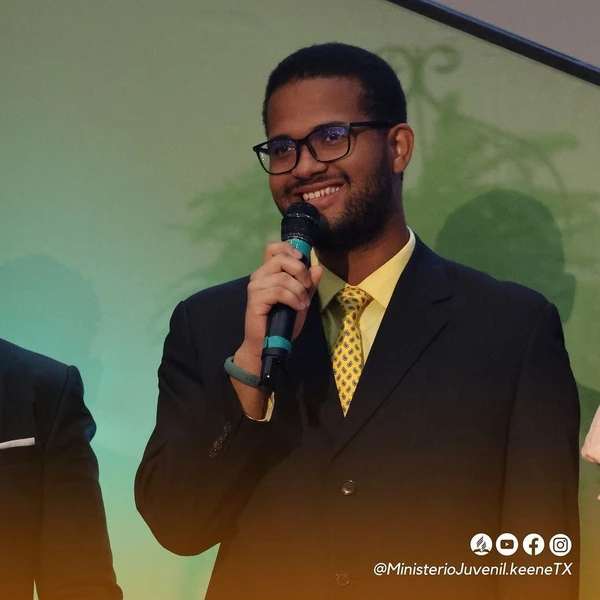
Anderson Vasquez
1x
FinalistAnderson Vasquez
1x
FinalistBio
Hello, I'm Anderson Vasquez and I'm a passionate theology student who loves ministry, community service, and spiritual development. At the core of my identity is a deep-seated desire to serve others through the power of the gospel, whether that's by preaching, mentoring, or doing tangible outreach. I'm also a musician at heart who finds joy and purpose in playing piano and guitar. In addition to serving through music and outreach, I'm also a huge proponent of the power of sound as a means of worship and connection. Whether I'm leading a Bible study, organizing a community event, or writing music, I seek to inspire, uplift, and reflect the love of Christ in all that I do. I live by faith, purpose, and the belief that true leadership is rooted in service.
Education
Southwestern Adventist University
Bachelor's degree programMajors:
- Theological and Ministerial Studies
- Theology and Religious Vocations, Other
Minors:
- Psychology, General
- Religious Music and Worship
Bergen Community College
Associate's degree programMajors:
- Biological and Biomedical Sciences, Other
Miscellaneous
Desired degree level:
Doctoral degree program (PhD, MD, JD, etc.)
Graduate schools of interest:
Transfer schools of interest:
Majors of interest:
- Bible/Biblical Studies
- Theological and Ministerial Studies
- Religious Music and Worship
- Music
Career
Dream career field:
Music
Dream career goals:
Delivery Associate
Amazon2021 – 20243 years
Sports
Baseball
Junior Varsity2012 – 20131 year
Research
Bible/Biblical Studies
School — Seacher2024 – 2024
Arts
Church
Music2012 – Present
Public services
Volunteering
Church — Missionary2012 – Present
Future Interests
Advocacy
Volunteering
Entrepreneurship
Julie Holloway Bryant Memorial Scholarship
My name is Anderson Vasquez and I am a student who loves ministry, music, and leading community. My life so far has been shaped by patience, faith, and a focus to use my gifts to serve others. Education has been a gateway for me to dream, and I do not see graduation as an ending of a journey, but the beginning of a vocation to be a difference maker.
After graduation, I plan to transition into a vocational career in ministry and community development with music being one of my primary tools for influence. I have a specific goal and desire to help people and create hope through preaching, educating, or playing piano or guitar, as well as providing service for people who feel like they are neglected or burdened by a broken world. I also feel the calling to start youth programming as a mentorship to young people in their lives through disciplines of faith, creativity, and discipline. My goal is to combine my love of theology and music to create spaces for a community to experience hope, healing, and communion.
My first language is Spanish, and I learned it at an early age at home. To grow up speaking two languages has been a challenge, but also a great gift. The greatest challenge has been the ability to navigate between two languages in an academic and professional context. It was often uncomfortable to speak when I felt that I would make mistakes or say something that people did not understand. The effort to write essays in English, or to present ideas to an audience required extra energy or intelligence because I was translating ideas that I heard in Spanish, and translating them into English. Each presentation tested my confidence, but it also provided me with motivation to work harder to communicate more effectively.
While understanding two languages has been a challenge, it has also proven to be one of the greatest blessings of my life. Bilingualism has allowed me to connect with more people, to serve communities, to share ideas across cultures, and to facilitate relationships across cultural differences. Spanish maintains my connection to my roots, English has provided access to broader opportunities. Between the two languages, I have access to build bridges, facilitate relationships, and serve in ways that would not be available to me if I could only speak one language.
This scholarship would support me in advancing my education in preparation for my calling. Supporting my education would also support my vision of discovering how to use ministry, music, and leadership to uplift communities and empower beginnings for generations to come. I hope to take what I have learned as a bilingual student and develop it into tools for a positive, legacy impact in the world.
Greg Lockwood Scholarship
The one change I would like to see in this world is more compassion, understanding, and unity among people. I feel as though the world around us can often be divided by anger, misunderstanding, or sometimes even a lack of care towards others. We live in a world where our differences are highlighted rather than celebrated and used as opportunities to learn from and teach others. To me, compassion is the key to not only having a safe community but stronger relationships with the people around us and a world where every person is valued.
To give you some personal background as to why I want to see this change, I have had the unique opportunity to experience and witness both the absence of compassion and how simple the concept of it truly is. However, I also got to see how one simple act of kindness can have an effect that lasts a lifetime. Listening to someone who simply just wants to be heard, encouraging people to live and love in a way that they would not have otherwise, and sharing with people what little you have are just some of the things I have seen that do not require money or power but only a heart that wants to care. For me, the epitome of this kind of love is found in Jesus Christ, who showed me that the true definition of strength is in how we serve others.
As I mentioned earlier, I am passionate about ministry, being a community leader, and playing music. In playing music, I have been able to find that even without words, we can show compassion towards others. Music has the power to bridge any cultural differences between people, to bring comfort to the broken-hearted, and to give people hope when they feel like there is none left. Through ministry, I have seen compassion in action time and time again and realized that it was so much more than just a definition in a dictionary. Compassion is action and can be seen through simply putting food on a family’s table or a young person’s, spending quality time and mentoring a young person, and simply walking alongside someone as they face struggles in their lives.
I do not believe that the world we live in needs more separation between people or any other group. I want to make it my life’s work to create safe spaces and environments for people to not only feel seen, heard, and loved but to also help others find the value they have as individuals. Whether that be through preaching, teaching, or playing the piano and guitar for others, I will do everything I can to use the gifts I have been given to plant seeds of unity and hope in every place I go.
The world I dream of will not happen in a day but begins with each of us. By living compassionately towards those around us, we model for others to do the same. I believe that the ripple effect we create in our communities and from there the world will be greater than we can imagine. This scholarship will only further my education and ability to grow and sharpen the tools God has given me to lead others in the way, life, and hope I have seen through my faith. My prayer is that I leave a legacy not just of my accomplishments but one that inspires future generations to lead with love, serve, and always show compassion towards one another.
Marsha Cottrell Memorial Scholarship for Future Art Therapists
One of the reasons why I became interested in Art Therapy is due to my own creative experience. As a child, I have found that music, drawing, and writing allowed me to express emotions that I didn’t quite have words for. Whether it was playing piano and guitar or doodling in the corner of my notebook, the arts have always been a safe haven for me. I have found relief in creativity—whether it be stress relief, calming down, or reconnecting with myself. Over the years, I began to think, if the arts can heal me, then the arts can do the same for other people. That is what ultimately drew me to the work of art therapy.
The thing that most clearly drew me toward Art Therapy is seeing how many people are hurting. I see trauma, loss, and mental illness around me, and I see people not always knowing how to cope with it. I have learned that therapy is not always enough for everyone. Sometimes words are not enough to convey the weight of grief, fear, or anxiety that a person may feel. But creative expression is what often brings people to what’s going on underneath. The arts are both a voice and a path to restoration.
I hope to one day bring together my passion for the creative arts with my desire to serve my community through art therapy. I see this type of work as a bridge. It would allow me to integrate the creative process and therapy as a way to make real change in people’s lives. I can’t wait to create spaces for people, especially young people, to process their emotions in nontraditional ways. Whether it is through paint, music, or movement, I hope to help people realize that the creative arts can be a way to restore balance in our lives, to build resilience, and to have hope.
I am most passionate about working with youth and families who are facing adversity. I believe art therapy can help prevent negative, self-destructive decisions by giving young people a safe and creative way to process their emotions and situations. In our world today where stress, anxiety, and social isolation is becoming increasingly widespread, I believe art therapy can provide a tool for people to manage their emotions and create a foundation for mental health.
I believe art therapy will give me the opportunity to bring healing to people who are overlooked, broken, and unheard. By taking the techniques of counseling and integrating the creative arts, I hope to lead people on a path of self-discovery and restoration. This scholarship would allow me to be able to pursue the education needed to make that a reality. With your help, I will be able to bring healing, hope, and inspiration to others and show them that art is not only beautiful but life-changing.
Mclean Music Scholarship
To me, music is never simply sound; it is a language that is universal in the way it can bring generations together, cultures together, communities together. The current landscape of music as an art form, as a skill, as a hobby, as a pastime for young people, as a way to build community has great potential. It is more connected than ever before; there are amazing opportunities through music streaming, music on social media, online collaboration. On the other hand, the current landscape is shallow and driven by commercial success and musical fads more than depth, meaning and artistry. I want to join the current landscape by helping to restore a balance between honoring tradition and music history, and embracing innovation. I also want to use music to bring hope, healing, joy and unity.
Blues, Jazz, Gospel, Classical and Bossa Nova have been the musical genres that most influence my worldview and understanding of the world. Blues music teaches me about resilience and the ability to create beauty out of pain. Jazz music is a celebration of creativity, of freedom, of improvisation. Gospel music teaches me that music is a spiritual art form, capable of elevating the soul and inspiring hope. Classical music has given me discipline, structure, artistry, and timeless music. Bossa Nova speaks to a blending of cultures, to the joy of rhythm, of musical borders and barriers being crossed. All of these genres remind me that music is not limited by language, culture, socioeconomic background – it is a gift that we are to share.
There is no one artist that is my favorite, but I am most inspired by musicians and composers who play piano and guitar. Pianists that influence me most are Art Tatum, Oscar Peterson, Antônio Carlos Jobim, and Franz Liszt. They challenge me to mastery of the keys and inspire me to be my best. Guitarists that influence me most are Joe Pass, Wes Montgomery, João Gilberto and Chalmers Alford. They inspire me with the music on the strings and move me with the stories they tell with their artistry. The influence of these artists on me is that they have all left legacies of music that continue to inspire generations. This is a type of impact and influence that I would like to have as well.
In today’s music landscape, I see myself not only performing and sharing music but also teaching and leading in my community. I would like to start programs where young people can learn piano and guitar, be introduced to these genres of music and use music as a tool for development. I would like to see young people use music to keep their minds engaged and not find other less positive ways to engage with the world. I would like to see people use music as an emotional outlet and not turn to harmful behavior.
I can create an impact on others by being true to myself and my love of authentic, meaningful music and sharing that with others. By honoring the past and tradition, and embracing the present and innovation, I can help to add to a music landscape that honors creativity, faith, and community impact above all.
Kalia D. Davis Memorial Scholarship
My name is Anderson Vasquez, and I am a student who is passionate about ministry, community leadership, and music. I am a young man with a background in faith, resilience, and an immense desire to serve those around me. I learned at an early age that to be a leader means to serve and to serve means to listen, encourage, and inspire others to be the best version of themselves. As I grew, I was able to apply gifts and talents in music, playing the piano and guitar. I used these skills to entertain at community events, lead songs at my church, and serve my community at large. I found a calling of serving others through community and ministry and understood that God had called me to a unique life purpose of bridging ministry with mentorship, lifting up, supporting, and empowering those around me.
The education I seek to receive from my studies is my stepping stone into a life of true preparation for this role. I have a vision to become a servant leader, someone who can lead through a quality education and serve with empathy and grace. I desire to be equipped to not only preach or teach but to be the administrator who can write programs and initiatives that can support and uplift the lives of young people, families, and those in need of hope. Whether this is through a path of ministry, music, or community outreach, I want my career to be defined by service and the desire to make an impact.
This scholarship is one of those essential stepping stones to help me to achieve this. As is the case with many students, I find myself facing challenges and financial stress when it comes to affording my education. Costs of tuition, books, and fees can become burdens that distract from learning, taking focus and energy away from further growth and development. With your support and the granting of this scholarship, I can devote greater attention to my studies and the skills and knowledge I am learning that will serve me in the future. This scholarship would also provide relief for my family and remove great stressors that weigh on them.
In addition, this scholarship is not simply a financial investment in my education. This investment has the power to change the communities I hope to serve. Your support would help to continue to move me further in the path of ministry, continue to grow my musical skills as an extension of outreach and empathy, and gain training to lead and make a lasting impact.
Education, to me, is more than personal development, it is preparation for service to a higher calling. With your support, I can take the next step in this service to others, to turn trials into triumphs and use the life God has given me to be a vessel of hope, healing, and growth for others.
Trudgers Fund
Addiction was never something I thought I would have to deal with in my life. When I started, I thought I could just use on and off, if I needed to release some stress and anxiety or felt like being lonely. However, addiction took over me until I was spending my whole time just thinking about it and smoking or getting high. I was neglecting my studies, losing my health and damaging my closest friendships. I know addiction is a process and it takes you over little by little so that one day you do not recognize yourself in the mirror. I found myself in this moment where I just kept destroying myself through shame, humiliation, hopelessness and helplessness.
My life changed the day I realized how much I was hurting my family, my dearest friends and even my mother by my actions. I saw them cry, yell, disapprove and even give up on me. This image and idea about how much pain I was causing my loved ones pushed me into two ways: keep on walking this path and be destroyed by drugs and alcohol or fight for the life I want. With the support of God, some amazing mentors and professionals, I decided to go sober. It was not an easy decision by all means. My body ached and my spirit was torn between guilt and the desire to give up when I first tried to get sober. However, it was one day after another, I started healing, learning and reconstructing the new me.
The power of sobriety and clean living is indescribable. In this process, I have learned the significance of discipline, holding myself accountable for my actions and spending time with people who support my vision. The most important skill that I have been working on, though, is not being afraid to ask for help. It is hard to share your life to a stranger and truly open up about your battle with substances and addiction. However, the more I shared, the more support and comfort I gained. Now, I am blessed with the purpose that I never would have had had I not gone sober. I have earned my own self-respect back and rebuilt broken friendships. I was also able to expand on my passion of serving others.
My education is going to be the powerful key to help others like me. I aim to go on studying ministry and counseling with a Christian and practical approach of supporting others. I have a great vision to open safe spaces in which people can feel at ease to be honest about their addiction and receive professional and spiritual tools for hope and change. With the help of my mentors and my education, I would like to create accessible community outreach programs that involve counseling, support groups, one-on-one mentorship and even music workshops to help people going through addiction. With this experience, I know it will not be easy, but it is not impossible to share my testimony to others who are struggling in hopelessness and helplessness. Addiction used to be who I was; sobriety has now given me a new chance to be who I want to be. I am taking my education and turning my pain into purpose.
Anthony Belliamy Memorial Scholarship for Students in STEAM
My name is Anderson Vasquez. I am the type of person who was never given much in life; I have worked for everything I have earned, and I have used a mixture of perseverance, faith, and love from those around me to grow. One challenge in my life, however, tested me in a way that brought focus to my purpose and helped me find clarity in my career aspirations: ministry, community leadership, and music.
My family has never had much financially, and growing up I did not know this until my single mother moved to the US and started working so that we could have the opportunity. In addition to the economic problems we would run into as a family, a more significant personal challenge presented itself when my family became ill. It was a feeling of weight; watching someone I love fight every day against something they did not cause or choose was heart wrenching. As a young child, I felt helpless and like there was nothing I could do to change this fact about life.
The more difficult part was finding a way to balance home life with school life and my own future. I found it difficult sometimes to get up and go to school in the morning and worry about being in two places at once. I sometimes would feel like giving up or quitting and even thought that going to university and having this career were too far-fetched for me. However, one thing I found I could do was press on. I relied heavily on faith and those around me to encourage me and build me back up when I fell and would also reflect on my mother’s strength. She would work day and night and be my living proof that life was not about not being broken but about deciding to live despite the brokenness.
Some of the lessons that helped me power through the seasons of my life were discipline, perseverance, and vision. I had to develop a schedule to keep on top of my studies, and sometimes this meant putting in hours of time after I would have liked to have gone to sleep. I was blessed to be in a community of teachers and friends who always encouraged me to not forget about my potential. I also had to learn not to dwell on or let bad situations take me down, but rather to use them as fuel and as a reason to work hard, not only for me but for those around me who helped me as well.
This experience also began a development in my calling to ministry and community leadership. I feel like God has called me to a life of service, to be an encourager and to lead others to hope. Ministry in itself to me is not simply about teaching or preaching; it is also about being with people in their life struggles and showing them a side of God and resilience through me. Music also came into play with my ministry call; music has always been a part of my life and is one of the ways I like to connect with people. I hope to use the gift of playing piano and guitar to my community as an extension of ministry: to bring healing, unity, and joy.
My career goal is to live a life of service by merging ministry, community leadership, and music in my work. I would like to lead youth programs and community initiatives to better my home community. I also would like to mentor the younger generations in our area who are often ignored or given up on. I would like to use the tools I have been given through preaching, teaching, and playing music to help others as well.
This challenge has given me many things like resilience, vision, and empathy, and this scholarship would help me not only by providing financial support but also by helping me continue to prepare for my future in ministry, leadership, and music.
Thank you for the time in reading my statement. If given the opportunity, I will work hard to show the reasons you should give this scholarship to me. In the end, I am who I am because of this one challenge, and this challenge has become my greatest teacher; it has shown me who I am, where I want to go, and what I can do with my calling to bring others up with me.
Dr. Samuel Attoh Legacy Scholarship
Legacy, to me, means something more than what we have when our life has ended. To me, it is more important what we do every day to create something of value in terms of values, character, and lessons. A legacy is how we choose to live our life, from the words we say and the things we do, from the examples we set to the impact we make. When I think of legacy, I think of the two people who have most influenced mine: Jesus and my mom.
Jesus has shown me that legacy is built on service, sacrifice, and love. He has demonstrated that true greatness is not about having much but lifting others up and caring for those around you. Jesus has taught me the value of living compassionately, humbly, and with integrity. His life and work have challenged me to think about how I can have an impact on every person that I come across.
Growing up, my mom has been the other most influential person in my life. She gave me life, of course, but she also raised me up through the challenges, the setbacks, and even the tough times. My mother is a woman of resilience, faith, and determination. In the face of hardship and difficulty, she never gave up on me. She never stopped showing me that we could have a better life and that my life had a purpose. In her, I learned that true strength is the courage to keep going when it is hard to find the reasons. Her strength, sacrifices, and vision for our life together have helped to shape my own character and my own journey.
Although I am aware of my family’s struggles, I have been blessed enough to have a balanced upbringing. In my family, I have experienced the life of faith and love, but I also know the challenges and difficulty that come with struggle and sacrifice. These contrasting forces have both motivated me to keep the chain of faith and resilience that I saw in my mother, and to break the cycle of fear, limitation, and doubt that I sometimes witnessed in the life of my family.
When I look to the future, I hope to build a legacy that is a combination of the best of what I have inherited. I hope to bring together the best of what I have learned from Jesus and my mother: the selfless, sacrificial love of Jesus and the drive and determination of my mom. I see myself building on their example and giving back to the world through service, leadership, and mentorship. I want to impact my community by being an example that no matter your background, your struggles, or where you come from in life, you can rise above and have a life of meaning.
Legacy, to me, is all about taking the light that you have been given and shining it ever brighter for others.
Elijah's Helping Hand Scholarship Award
Mental health has been one of the most impactful aspects of my life. Anxiety and depression have been at the forefront of my mind since childhood, but I did not know how to make sense of them initially. I thought I had to be “better” or “stronger,” or that I was the only one who struggled the way I did. As I grew, I learned that mental health is as important as physical health and that both are aspects that should be taken with care and compassion.
The journey has not been easy. There were days when I could not get out of bed and others where I questioned every decision I made. For me, what made a difference was receiving support when I needed it the most. Talking to a counselor and opening up to my closest friends was the first time I was brave enough to face my demons, rather than suppress them. I learned that vulnerability can be a strength and seeking help is an act of courage.
From there, the struggles with mental health sparked my interest and passion for advocacy and awareness. I know that many people share similar stories, but they live with pain silently because of stigmatization or fear of being judged. I have been volunteering for mental health organizations around my community, facilitating mental health education and peer-support sessions, where I could learn to listen and share my own experiences with others and encourage open conversations. Sharing my story, struggles, and accomplishments gave me a sense of meaning, and turned the negative energy into something positive.
Living with and through mental health issues has taught me to be more resilient, empathetic, and has shown me the importance of community. It has also had an impact on my educational pursuits. I am using my struggles and negative experiences as motivation to study harder, work diligently, and to change my future in a way where I can make a difference. I hope to use my education and skills to create safe and supportive spaces, whether through advocacy, mentoring, or career work, where people can feel acknowledged, accepted, and encouraged.
This scholarship will be able to help me to continue my studies as well as help me to give back. Mental health has had an impact on me in many ways, but it has also given me a vision of how I want to live my life: to be a voice of hope for those who need to hear one and to know they are not alone.
Jimmie “DC” Sullivan Memorial Scholarship
Sports have been a guiding force in my life. Whether on the basketball court, soccer field, or track and field, athletics has taught me life skills, kept me out of trouble, and given me hope when times are difficult. I have learned the value of teamwork, discipline, and resilience through sports, and I hope to share those qualities with the next generation through youth sports. I have always found solace and a sense of belonging in sports, and through sports, I met some of my best friends, mentors, and role models.
However, I grew up in a neighborhood where many young people lack access to resources, positive peer influence, and support systems, so I know the importance of creating safe and productive spaces for youth to channel their energy and build positive relationships. I want to give back and provide the same opportunities I had to those who will need them in the future. I believe that young people who are invested in sports are less likely to get into trouble and more likely to develop leadership skills they will use for the rest of their lives.
In short, my goal is to create positive change in my community through youth sports. My dream is to build mentorship programs, character-building opportunities, and community outreach initiatives focused on young athletes. By teaching teamwork, respect, perseverance, and accountability, I hope to help young people not only succeed on the field but also in the classroom and in life. I could organize basketball clinics, soccer leagues, or after-school training programs, for example. By giving children an opportunity to play, learn, and grow, I would be investing in their future and the future of our community.
In addition, I would work with local schools, churches, and organizations to ensure that these programs are accessible to all children, regardless of their financial circumstances. Too many youth sports programs are only accessible to those who can afford them, and I want to change that by making sure every child has a place to play and grow.
Sports have always been more than a hobby to me. They have been a source of hope, inspiration, and community. I want to use that same power to uplift the next generation of young people. If awarded this scholarship, I will use my education and passion for sports to create programs that give children the same life-changing experiences that I had. I don’t want to train just athletes; I want to help shape future leaders and strengthen our community for years to come.
Sandra West ALS Foundation Scholarship
I am the child of a parent who was diagnosed with ALS. My life has been indelibly and negatively affected by this circumstance. Not only has it caused me to witness the decline of my parent’s physical abilities while their mind remained active and engaged, it also necessitated a certain level of maturity and resilience on my part at a young age. I was forced to assume responsibilities that many of my peers were not exposed to and grapple with concepts of mortality and uncertainty far earlier than is typical. As such, I have had to develop a strength of character and sense of responsibility that has served me well in my academic pursuits. I have had to learn to be flexible and adaptable in the face of changing circumstances and to persevere even when the situation at home became overwhelming. I have found solace in my studies and an escape in learning that I am determined to continue. I believe that education will provide me with the tools I need to build a future where I am able to take care of my family and help others who may find themselves in similar situations.
The challenges do not end with the emotional and psychological effects, however. The financial impact that ALS has had on my family has been tremendous. The costs associated with medical care, equipment, and home modifications often exceed our family’s income, leaving very little opportunity to set money aside for educational expenses. Unlike many of my peers, I cannot rely on my parents to provide me with financial assistance. In many ways, I have had to strike a balance between my schooling and working part-time to contribute to our family’s expenses. The reality is that without scholarships such as the one your organization provides, my dream of completing a degree and embarking on a career would be virtually unattainable.
Your scholarship would offer me not just financial relief but the opportunity to fully immerse myself in my studies without the distraction of having to worry about tuition fees, textbooks, or living expenses. It would be an investment in my future and the future I am working so hard to build. A future where I can use the education I have received to give back to others, to support families in crisis, and to live the values my parent’s ALS has taught me.
The experience of having a parent with ALS has given me a unique perspective on the fragility of life but also the power of perseverance. I am committed to continuing my education with the same determination and tenacity I have had to muster since I first saw my parent confronted with this disease. With your help, I know I can achieve my goals and make a difference.
Hines Scholarship
College is a dream come true to me. To walk through the gates of a university campus and know that I have arrived at the starting line of the race is both an honor and a great joy. To be honest, not many of us had the luxury of considering higher education a given growing up. To have been afforded the opportunity to go to college is a blessing and a chance to make a better life for myself and for the people around me.
In my mind, college is the promise of a better tomorrow. It is an opportunity to study what I love to do and make it my profession. It is a place where I will be able to learn more from the diverse set of people I have not had the chance to before. I also see college as a place where hard-working individuals strive, and that idea alone motivates me to work even harder and believe that anything is possible.
So, if I am going to college, I would like to leave something for others to learn and be part of that community. I would like to bring my family up, find a job I love, and create a better life for them by giving back to the community I once called home. I also want to find my passion and my calling and become better each day. College is a stepping stone on the way there, and it is a great place to learn the necessary skills to succeed and make the most of what I know.
The college experience does not start or end in the lecture halls. It also means moving away from home and learning to live and work with a diverse set of people and all the freedoms and responsibilities that come with it. College is a great learning experience and an opportunity to make mistakes and become better for them. College is where I will find the chance to grow, test my character, and become a well-rounded individual with all the tools needed to take on the world.
In conclusion, I go to college for myself and for those around me. I want to be able to be the change I wish to see, and the only way to do that is to work hard and make the most of my chance at college. So, I want to make my family and my community proud, study something I love and share it with the world, and give back to others for the rest of my life.
Simon Strong Scholarship
We all experience adversity at some point in our lives. However, the difference between those who rise above it and those who do not often lies in their mindset and approach. For me, one of the most significant challenges I have faced occurred during my high school years when my family was going through a very difficult financial situation. We were drowning in bills, tension was high, and at times I questioned if my education was even going to be an option. I remember sitting at my desk late one night, with my textbooks in front of me, hearing my mother quietly stressing about rent from the other room. It was at that moment when I realized how much was at stake, not only for my future but for my family’s future as well.
Initially, I felt defeated. School, a job, family – it all felt like it was too much. I had days where I just wanted to throw in the towel and tell myself, ‘college just isn’t in the cards for you.’ But there was something inside of me that was unwilling to give up. I found myself looking back to my ‘why’ – my reason for starting on this journey in the first place. I wanted an education, to open more doors for myself and my family. I prayed, spoke to mentors, and had to remind myself every day that this was temporary, but the reward would be so worth it.
To overcome this adversity, I had to be disciplined with my time and prioritize. Working a part-time job and still maintaining good grades required me to be more organized and tenacious. I also learned to ask for help when needed. I could not do it all on my own – whether it was speaking to teachers, applying for scholarships, or simply just having friends to vent to, I had to be willing to seek support. With each small accomplishment, I grew stronger, using that as evidence that I was capable of rising above.
I am so glad I did not let this experience defeat me. Adversity is not the end of the road; it is an opportunity to grow. I have come out of this stronger and more determined. I am more resilient, patient, and possess the tenacity to keep pushing forward despite obstacles, with a laser-sharp focus on my goals. When facing obstacles now, I try to change my mindset to “What can I learn from this?” rather than “Why is this happening to me?”
If there is one piece of advice I can give to someone in a similar situation, it is this: adversity might slow you down, but it does not have to stop you. Remind yourself of your “why,” find people to surround you with support, and remember that our greatest struggles often prepare us for greater things.
Heather Lynn Scott McDaniel Memorial Scholarship
Growing up, I was not oblivious to the fact that my journey to education would be lined with adversities. However, what I know of struggle is that they make or mar one, and I resolved in my heart that I would let them make me. One of my biggest struggles growing up was having to be born into a low-income family. There were periods when I thought I could not continue with school because of how we lived. I saw how much my family struggled and made numerous sacrifices for me to learn. This made me promise myself that I would not give up on education, no matter how rough the going became. This struggle taught me a lot of things, such as how to work hard with what little we had, to budget my personal money and focus even when the future looked hazy and grim.
Another struggle I encountered along my journey was being forced to be responsible for myself from a very young age. Assisting at home and doing my school work was a difficult transition, but it taught me discipline and endurance. Through it all, I was made to realize that education is not just about me, but about all those who sacrificed for me to learn and a way to give my future children a better life.
I must admit that some days were harder than others. There were days I questioned why I had to go through so much and, at such a young age, and it was tempting to give up. It was in those moments I had to hold on to my faith, resilience, and take stock of all the support from teachers who had belief in me. Their words gave me strength, and I realized that my background and living conditions did not have to dictate my destiny. The challenges helped me to see them as opportunities to be better and stronger.
I have never wavered from my goal to continue with education, because I know it is my responsibility to create a better future not just for myself but for all those around me. One of my greatest aspirations in life is to motivate others who find themselves in the same or similar positions I grew up in. I want to give back to my community by helping children to dream big and not allow their situation in life dictate their futures. I want to use education as a tool to inspire change and as a way to give back by serving. I want to create hope through my story.
The struggles have not made me give up. Rather, they have made me into a better, stronger, and a wiser person. They have given me a story of endurance and a zeal for knowledge which nothing can take away from me. My goal for education is more than a testimony of learning and gaining knowledge. It is a story of the power of faith, persistence, and an indomitable will.
Sloane Stephens Doc & Glo Scholarship
My Background: Challenges and Blessings
I come from a modest background where I was blessed with much and learned much more from the challenges I have experienced. Having lived a life that required hard work and perseverance from a young age, I have developed a strong sense of responsibility and resilience. I believe that every experience, whether good or bad, has shaped me into the individual I am today. I grew up in a family where financial stability was not always guaranteed, and I learned early on the importance of gratitude and making the most of the opportunities presented to me. This has given me a unique perspective on life and has instilled in me a drive to work hard and achieve my goals.
My Passion: A Love for Learning
One of my passions is learning and expanding my knowledge in different fields. I have always been an inquisitive person, and education has been my way of finding answers to the questions that the world presents. My thirst for knowledge was not limited to academics; I have always sought to learn from different experiences and engage in activities that challenge me. Whether it was spending extra hours in the library, seeking mentorship, or participating in community service, I have always looked for opportunities to grow and learn.
Witnessing the sacrifices my family made to provide for our basic needs was a pivotal experience that shaped my perspective on life. It instilled in me a deep sense of gratitude and a drive to give back. I believe that education is a powerful tool that can change lives, and I have always sought to make the most of the opportunities presented to me. My experiences have also made me realize the importance of community and helping others. I have developed a passion for service, and I have been involved in various community service projects throughout my life. Whether it was mentoring younger students, participating in food drives, or volunteering at my church, I have always sought to make a difference in the lives of others.
My Aspirations: Making a Difference
My aspirations for the future are to make a positive impact in the world around me. I have a vision of using my skills, education, and experiences to help others and improve the lives of those around me. I want to be in a position where I can use my knowledge and expertise to make a difference in the lives of others. I believe that everyone has a unique set of talents and gifts, and I want to discover and use mine to their fullest potential. I am open to different opportunities and am committed to putting in the hard work required to achieve my goals.
The Experiences, Passions, and Aspirations that Define Me
The experiences of my background, my passions, and my aspirations have all played a significant role in shaping the person I am today. They have taught me the value of hard work, service, and faith. They have also shown me that no matter where one comes from, it is possible to overcome challenges and achieve one’s dreams. These are the experiences, passions, and aspirations that define me, and I am excited to see where the future will take me.
Kim Beneschott Creative Arts Scholarship
Creativity has been a significant aspect of my life for as long as I can remember. From doodling on the walls of my childhood bedroom to exploring various art forms throughout my adolescence, the act of creating has been my mode of self-expression, therapy, and connection. Over the years, I have delved deeper into the world of art, gradually honing my skills in drawing, painting, and more recently, multimedia projects. I have come to view my creative pursuits as an extension of my identity, a means to not only express myself but also to inspire, connect, and make a positive impact in my community and beyond.
For me, art has been a refuge throughout my life. Whenever I’ve encountered difficult situations or complex emotions, it has been through creating that I’ve found solace and a voice. That is why I believe that art truly is a universal language. It knows no boundaries, whether they are linguistic, cultural, or socioeconomic. Art allows for communication beyond words, and I hope to use my work to articulate ideas, celebrate diversity, and shine a light on issues that are otherwise ignored or overlooked.
In particular, I am interested in using art to raise awareness about social issues and inspire meaningful change. I have undertaken a number of projects that revolve around themes of empowerment, resilience, and faith. Art has the ability to not only create beauty but also to drive social consciousness and inspire empathy when it is intentional and meaningful. In the future, I hope to collaborate with organizations that align with my values in areas such as education, mental health awareness, and community development. I would like to design campaigns, murals, or even creative workshops that can serve to both inspire and empower others with hope.
The evolution of digital media and technology has greatly impacted the way I create and share my work. Through digital art and design, I have been able to amplify my voice, share my creative process, and connect with other like-minded artists and creators from all around the world. Platforms such as Instagram, YouTube, and online art galleries have become valuable tools for exposure and collaboration. I plan to continue to build a strong presence on these platforms to ensure that my work can have both local and global impact.
At the same time, I also hope to use my creative platform to mentor and empower the next generation of young artists. By sharing my journey and expertise, I hope to show aspiring creatives that art can be more than just a hobby—it can be a fulfilling career path and a means for positive change. I would love to help young artists to discover their own voices and passions and guide them in using their work for social impact.
In the long term, I have a few aspirations for my creative pursuits. First and foremost, I hope to eventually open a creative studio where I can work on meaningful projects that tell stories, advocate for justice, and celebrate the beauty of diversity. I also hope to be actively involved in community-based art initiatives. This could take the form of public murals, youth art workshops, or exhibitions that give young people a voice and a chance to discover and hone their talents. Finally, I would love to tie in my love of art with philanthropy by supporting causes that are close to my heart, ensuring that each project not only inspires but also gives back.
Above all, I dream of leaving a legacy where creativity and compassion meet. I want my work to uplift, challenge, and bring people together. I want each brushstroke, each sketch, each digital design to be imbued with the hope of starting a conversation and inspiring transformation.
In a world that can so often feel broken and divided, art can serve as a bridge. It can bring people together, foster understanding, and remind us of our shared humanity. Through my artistic pursuits, I aim not only to tell my own story but to give others the platform and opportunity to tell theirs. To me, that is the most powerful impact art can have, and it is the impact I hope to pursue for the rest of my life.
Sola Family Scholarship
The most significant thing that shaped me in life is having a single mother. Although this situation presented many challenges, it also imbued me with strength, resilience, and a deep appreciation for sacrifice and unconditional love. From a young age, I witnessed my mother work multiple jobs to support our family, often sacrificing her own needs to ensure we had food on the table and a roof over our heads. Her tireless dedication to providing for us instilled in me the value of hard work and the importance of family. However, more than anything, she taught me what it means to persevere in the face of adversity.
Raising me alone, my mother had to make many sacrifices to ensure that we had a comfortable life. Despite working long hours, she always made time for my education, supporting me every step of the way. She often reminded me that education was my ticket to a better life, one filled with opportunities she never had. Her words motivated me to excel in school and to never stop learning. This lesson has stuck with me and has shaped the way I approach my studies today. I know the importance of education and work hard to make my mother proud of me.
One of the most valuable lessons my mother taught me is the importance of responsibility. From a young age, I was given household chores, had to take care of my siblings and even learned to budget small sums of money. These tasks were often challenging, but they instilled in me a sense of responsibility and accountability. These early responsibilities also shaped my work ethic—I know the value of hard work, staying disciplined and not expecting success to come easy.
My mother also taught me resilience. There were many times when money was scarce, and she had to make difficult decisions to provide for us. Yet, she never complained. Instead, she remained positive and taught me to have faith that things would get better. She would remind me that as long as we worked hard and trusted in God’s provision, brighter days were ahead. This lesson has shaped my outlook on life—I now face challenges head-on with determination rather than discouragement.
Growing up with a single mother also shaped my understanding of love and sacrifice. I saw my mother give up so much for us, and in return, I learned to never take her for granted. I learned to appreciate her unconditional love and to support her in any way I could. This understanding of love has shaped my relationships with others. I am compassionate, understanding, and always ready to lend a helping hand.
In conclusion, being raised by a single mother has significantly shaped my character and outlook on life. She taught me to persevere in the face of adversity, to be responsible, and to value education. Her sacrifices and strength have also made me more compassionate and understanding of the struggles of others. I am grateful to have her as my mother, and her influence will continue to guide me as I navigate life’s many challenges.
Taylor Swift Fan Scholarship
Taylor Swift’s performances have never ceased to amaze me with their beauty, depth, and pure talent. In my opinion, every one of her performances is special and memorable in its own right. However, if I had to single out one, it would be her rendition of “All Too Well (10 Minute Version)” during the 2021 Saturday Night Live episode.
What touched me most about this performance was Taylor’s vulnerability and authenticity. Stripped down on stage, just with her guitar and her voice, she poured her heart into the lyrics, allowing the audience to feel every emotion. I was deeply moved by her willingness to revisit one of her most personal songs and share it with the world once again. It was a true testament to her courage as an artist and as a woman.
Moreover, her performance of “All Too Well” also demonstrated her growth as an artist over the years. Released nearly a decade prior, “All Too Well” was a song that she wrote when she was in her early twenties, still relatively young and naive. However, as she sang it on stage in 2021, there was a maturity and depth to her voice and performance that showed how far she had come. It was a reminder that we all have the power to grow and evolve over time.
What made this performance so special for me, though, was how it reminded me of the universality of her music. Taylor’s heartbreak may have been personal, but the emotions she sang about were ones that all of us can relate to. As I watched her perform, I felt like she was not only singing about her own experiences but also carrying the heartbreak of all of her fans in that moment. That kind of connection is rare and truly remarkable.
In conclusion, Taylor Swift’s performance of “All Too Well (10 Minute Version)” at the 2021 SNL episode will always hold a special place in my heart. It was a powerful reminder of the impact that music can have on our lives and the way in which it can help us connect with others on a deep and emotional level. It was a performance that not only showcased her incredible talent but also her strength and resilience as a person.
Robert F. Lawson Fund for Careers that Care
It’s important for everyone to feel that they matter, that someone is looking out for them and that someone genuinely cares. There have been far too many times in my life where I have met people who are crying out for attention, help, and spiritual guidance, and I want to be that person for them.
My name is Anderson Vasquez, and I am a community-minded, faithful, and service-driven person. I come from a family that has always valued the community over the individual, and instilled in me a love for hard work. While I have faced many obstacles in my life, they have only given me more reason to live it with purpose. I felt like God was calling me to service from a very young age, through simple acts like comforting people, volunteering, or leading projects that would make their lives better.
I decided to get a theology and pastoral ministry degree because I knew that I could have the most impact on the world if I helped change people’s hearts. My plan was to not only preach the word but to connect people with opportunities to improve their lives. I hoped to eventually work in a position that would allow me to use my pastoral role to reach every part of my community, whether it was through community outreach, youth mentorship, or working with local organizations.
I wanted to help start programs that could provide long-lasting benefits, as well as meeting people’s more immediate needs. This meant setting up youth mentorship programs to give children the leadership skills, confidence, and moral compass they need. It also meant helping to open community centers where people can receive counseling, education, and job training to get their lives back on track. These initiatives will always be based on principles of compassion, dignity, and inclusivity so that every person can feel like they are being valued and treated with respect.
On a larger scale, I wanted to work on creating a new generation of people who would view serving as a privilege rather than an obligation. I strongly believe that one of the most impactful things we can do is to invest in the next generation, as they are the leaders of tomorrow. I have always felt that our role as adults is to plant the seeds so that others may take action after us.
Helping others means being adaptable and constantly growing to meet the needs of a changing world. I plan to do this by continuing to study, collaborate, and finding new and creative ways to serve. My career might lead me in any number of directions, but I would like it to be defined by the number of lives I touch and the amount of hope I have given. I hope to use public speaking, community organizing, and direct mentorship to spread messages of faith and compassion and to truly help make a difference.
In short, my goal is to help make the world a better place by serving, empowering, and guiding others. Through faith, education, and a heart for service, I intend to make this a reality one person at a time.
Ward Green Scholarship for the Arts & Sciences
I am studying theology and pastoral ministry. This is a subject which is both a passion and a calling for me in life. The reason I chose this particular subject is that I have a sincere heart and desire to serve God by serving man in many ways. To seek to care for his people, not only from a spiritual or theological perspective but also in terms of their emotional, educational and social wellbeing. In order to enable me to do this, I will seek to acquire a deep, rich and educated understanding of Scripture, of practical ministry, of the skills to lead, counsel and encourage men, women and children from all walks of life.
Theology should never be only an academic exercise in as much as it has very practical applications to real-life problems and issues. I hope to learn to communicate the good news of the gospel of Jesus Christ in such a way that men and women can be discipled and enabled to grow in the grace and knowledge of our Lord. As well as being able to reach out and provide real-life counsel to those who may be in crisis or in need of support.
I also believe that theology and ministry have a key role in community development. I will seek to learn how to engage and use faith-based interventions to impact issues like poverty, underdevelopment and fractured family structures. In short, I will look for ways to practically and positively transform my local community and the lives of those who reside in it.
In my vision for the future, one of the key ways I will use my education is to help to strengthen my local community. This will involve working to develop and establish community programs and initiatives, which are designed to directly impact the daily lives of those who live around me. These might include mentorship initiatives for young people, support for single-parent families, financial literacy programs and much more.
I will also aim to design and lead community outreach projects such as after-school tutoring and homework help, food distribution, and mental health support programs. All of these initiatives will be built on a foundation of compassion, biblical understanding and practical skill.
I also hope to build stronger bridges between the Church and the wider community in which I live. Too often, faith-based organizations work in isolation but by joining with schools, non-profits, local business and other civic institutions, I know that a community of support can be built up. One that cares for people’s physical needs as well as their spiritual needs. To this end, I hope to use my education to lead in the establishment of programs and initiatives that are not only well-organized, but are also impactful and sustainable.
In the long-term, I also hope to not only pastor and serve a local church, but to multiply and train future leaders who will then take the lessons and ministry on to other communities in different locations. This will be my primary aim and target, that is, to multiply the impact of my education and of my ministry.
Ultimately, my education in theology and pastoral ministry will not be for personal benefit only. I will use it as a tool to lift up, encourage, transform and impact others. With God’s grace, I will use every skill, every lesson and every insight I gain, to bring hope, healing and positive change to my community.
Armstrong Family Legacy Scholarship for Future Ministry Leaders
I believe that God is calling me into the ministry from a very young age. It is something that has been deeply rooted in my heart for as long as I can remember. Through my faith, I have developed a set of values, goals, and principles that have guided me and helped me to shape who I am today. I have seen firsthand the power of ministry to change lives. It’s not just about preaching the gospel; it’s about walking alongside people in their struggles and joys, doubts and victories. I want to be a part of that because I believe that God has given me the heart, the strength, and the determination to make a difference in the lives of individuals and communities.
Ministry has always been a part of my life in one way or another. Growing up in the church, I have seen the transformative power of the gospel in people’s lives. I have also had the privilege of serving under some amazing leaders who have modeled what it means to be faithful stewards of God’s word and His people. I have felt a pull towards the work of ministry as I have experienced God’s grace and love in my own life. I want to be a part of that cycle of grace, sharing the love of Christ with others. I see ministry as a holistic work that addresses not only spiritual needs but emotional and practical ones as well. It is about reflecting Christ’s love in action and meeting people where they are.
I want to see people come to a saving knowledge of Jesus Christ and develop a deeper relationship with Him. I also want to equip them to live out their faith in their families, workplaces, and communities. I want to build a ministry that is biblically sound, Spirit-led, and culturally relevant. One that reaches both the churched and the unchurched and has a significant impact on the world around us. I want to not only preach sermons but disciple believers, train future leaders, and create a community where people feel seen, heard, and valued. A community where people are empowered to serve and make a difference in the lives of others.
I feel that after seminary, my next step is pastoral ministry in a local church. I would like to serve in a congregation that is passionate about outreach and discipleship and has a strong sense of community. I also want to develop programs that mentor young people, strengthen families, and engage with social issues from a biblical perspective. In the long term, I also hope to be involved in planting new churches or revitalizing struggling ones. I want to help ensure that more people have access to a loving and vibrant faith community.
Pursuing ministry is about obedience to God’s call on my life. It’s about being a faithful servant, a shepherd to His people, and a witness to His grace in the world. I believe that with prayer, hard work, and the guidance of the Holy Spirit, this calling will not only be personally fulfilling but will also bear eternal fruit for His kingdom.
Zedikiah Randolph Memorial Scholarship
Hello, my name is Anderson Vasquez and I am a theology student. I’ve chosen to study theology because I enjoy doing ministry, and I also enjoy teaching others about music. I would describe myself as a community person, somebody that can help and find solutions to people’s everyday life challenges. I believe that in ministry, you can have a significant impact on people’s lives not only spiritually but emotionally, financially, socially, or in other areas. I want to serve others by being able to teach, by being pastoral and by being creative in my approaches and programs. I want to offer opportunities to the places where people live by offering pastoral ministry and teaching that can have a great impact on their lives.
In the United States, there are not a lot of minorities in theology graduate programs and in ministry preparation programs. Being a Latino theology student, there is an even smaller population that goes into the field of theology and ministry work. It would not only be for me being there; it’s also for others so that I can open a pathway for more students that look like me and are also doing theology so that they can also step into their ministry and have the courage to do it.
I have chosen to study theology because of my life experiences; when I was young, I was a part of a single-parent household. The mother of my family was a part of a church that allowed her to have pastoral guidance and community programs that were there in times that we needed. She was able to find that strength when she was going through a rough time and with that, she was able to build a family community where people felt loved, valued, and cared for. I felt that my life was not the same as others and seeing that the difference in my family was the community and the leadership there made me want to put a part of my life into the community to help others find that, as well.
I hope to use community involvement to bring about change to others and to the community in which I live. I plan on doing this by having a program for the youth, music and arts in ministry and also other needs-based programs that I could provide to the people to help other areas that not only deal with spiritual needs, but others that they could find as opportunities to be strengthened. An example is how I will have the chance to also mentor others as a youth pastor through financial literacy, mental health workshops and other things in addition to teaching from the pulpit.
In this field, my representation as a minority or not a large population in the theological sphere would create a difference because people would see others that look like them. I am hoping to also give an opportunity to youth that are not confident to come into a space or a career that they know they are meant to do or a ministry or leadership but have no confidence or have never seen others that look like them do it. I can not only be a mentor and reach out to individuals who are interested in my line of work but also encourage them to invite them to experience ministry with me and see if that is their calling.
Barreir Opportunity Scholarship
I was raised by a single parent mother who worked multiple jobs to make ends meet for the family. I have no memories of having two parents actively involved in raising me. Life was difficult at times as my mom would have to make tough decisions whether to pay a bill or buy extra groceries. My mother, with the help of her Christian faith, taught me to be strong, work hard, and never lose my gratitude for what we did have.
My childhood was filled with love, but also with responsibility. I had chores to do, young siblings or cousins to care for, and had to figure out ways to make do with less to meet the needs of the family. While most children at my age could go to school, do homework, and play with friends, I often had to find time to help at home. These sacrifices taught me time management, discipline, and the value of hard work and perseverance, all of which I have taken with me to this day.
One lesson that my mom consistently impressed upon me was that our circumstances do not define us; our response to them does. She pushed me to excel in school, not only so I could get a good job but also so I could become a person of value who could positively impact the lives of others. This made me appreciate her selflessness and sacrifices, and I am inspired to help others facing hardship, especially families with little income who have to do much with less.
I was also able to see how a community can support one another. I had many friends, teachers, church members, and neighbors who stepped in to help out by tutoring me in school, giving our family a hand with groceries, or just listening to my problems and providing advice. I could see that many people had a genuine love and care for me that went beyond just surface-level relationships. This gave me a greater appreciation for the power of community and the desire to be that support for others.
Growing up in a single-parent household has left me with the drive to work hard and achieve all that I can. I plan to get a higher education so I can obtain a career that will allow me to do this, but also so I can help others like my mom helped me. I want to create programs within my community that offer mentorship, educational resources, and skills training to help youth and young adults to grow their capacity to create a better life for themselves and their families and break the cycle of poverty and lack of opportunity.
My upbringing was hard in many ways, but it made me who I am today: a person who is strong-willed, kind, and determined to help others. My mother’s lessons are with me at all times and guide me in all I do, for I know she sacrificed so much for me and my siblings to have a chance at a good life. I want to honor her in all I do by not only making a life for myself but for others too.
Healing Self and Community Scholarship
I'd start a digital platform that serves as a hub for mental health resources, peer support communities, and affordable access to licensed professionals. By leveraging sponsorships and partnerships, the platform could provide free resources, subsidized therapy sessions, and access to a network of providers. Integrating technology with community outreach, I'd ensure individuals can access care from the comfort of their homes, regardless of location or financial constraints. The platform would feature self-help tools, crisis chat support, and culturally sensitive content to reach diverse populations. My aim is to dismantle stigma, reduce barriers to entry, and make mental health support as accessible as a phone call or a click—ensuring no one is left without the support they deserve.
Cybersecurity for Your Community Scholarship
If we were sitting across from each other over coffee, I would tell you that my passion lies in empowering local communities with cybersecurity skills and resources. By providing accessible education and practical solutions, I aim to protect small businesses, schools, and community organizations from cyber threats that are all too common yet often overlooked. I envision a future where every person in my community can confidently navigate the digital world, safe in the knowledge that their data, identity, and livelihoods are secure.
Cybersecurity is one of the most pressing issues facing society today. The online world has become a new battleground for crime and exploitation, with attacks ranging from phishing scams targeting the elderly to ransomware holding small businesses hostage. By addressing cybersecurity at the community level, I can bridge the gap between high-level security knowledge and the everyday user, providing workshops, resources, and personalized guidance to help people protect themselves. Many in my community want to improve their digital safety but lack the expertise or resources to take action—this is where I can make a real difference.
One way I plan to achieve this is by teaching high school and college students about cyber hygiene, safe social media habits, and identity theft prevention. By starting young, we can instill a culture of security awareness that will benefit individuals throughout their lives. Additionally, I want to work with local nonprofits to create “cyber volunteer” teams—groups of community members trained to assist others in setting up secure networks, managing passwords, and identifying scams.
Technology should serve people, not alienate or intimidate them. One of the reasons cybersecurity is often perceived as out of reach for the average person is its complexity and reliance on jargon and expensive solutions. I want to change that by demystifying concepts, using plain language, and showing people that small steps—like turning on two-factor authentication or keeping software up to date—can make a big difference.
A scholarship would enable me to pursue formal training and certifications in cybersecurity, providing the technical foundation I need to support my community on a broader scale. With this knowledge, I can not only help people respond to current threats but also prepare them for the digital challenges of the future.
In conclusion, cybersecurity is not just about protecting information—it’s about protecting people. Over coffee, I would tell you that my mission is simple: to make safety in the digital world a shared strength in my community, one person at a time.
Wicked Fan Scholarship
The way Wicked resonates for me is not just because it is a Broadway musical, but also because it is a story of friendship, identity, and daring to be different. The first time I watched the show, the music and spectacle were mesmerizing, but what stayed with me long after the performance was the message. Wicked is a story about two people who are worlds apart but whose lives become irrevocably linked.
The central theme of Wicked, that there are always two sides to every story, has struck a chord with me on a personal level. As a child, I often felt different because of where I came from and the things I enjoyed. Elphaba’s story, in particular, was relatable to me. I, too, felt like I wanted to do good in the world but was often misunderstood or underestimated by others. Elphaba’s resilience and her refusal to compromise her values, even at the cost of her social standing, have been an inspiration to me.
The music in Wicked has also played a significant role in my appreciation of the show. The songs “Defying Gravity” and “For Good” have become personal anthems for me. “Defying Gravity” always lifts my spirits and makes me want to break free from whatever is holding me back. Whether it’s the expectations of society, financial constraints, or my own self-doubt, that song has been a reminder to reach for the sky. “For Good” is a beautiful reminder of the impact that relationships have on our lives. Those lyrics about the indelible mark we leave on each other’s hearts speak to me deeply, and they always make me want to be better and serve others.
I am also drawn to Wicked because it has shaped how I think about leadership and community. Glinda and Elphaba’s different leadership styles, one using charm and popularity, the other conviction and integrity, have shown me that there is no one right way to lead. This has encouraged me to value different approaches to leadership and to see how individuals can contribute positively in their unique ways.
Above all, I am a fan of Wicked because it reminds us that there are no simple answers or clear-cut heroes and villains. The story of Elphaba and Glinda teaches us that there is often more to people’s actions and motivations than meets the eye, and it is our empathy that can bridge that gap.
In summary, I am a fan of Wicked because it is more than a musical—it is a message about friendship, identity, and daring to be different that has had a profound impact on me on a personal level. From the story’s theme to the music and lessons on leadership, Wicked has had a lasting influence on how I live my life.
GUTS- Olivia Rodrigo Fan Scholarship
My favorite Olivia Rodrigo lyric that really takes me back to my days as a teenager is: “It feels like all you have is the memory of him.” I love this lyric for a few reasons; the feelings it evokes and the personal connection it stirs.
Adolescence is filled with moments and relationships that hold you for a time, but eventually leave behind just a wistful memory. To put it bluntly, Olivia Rodrigo’s lyric about the painful, wistful feeling of clinging to those memories really gets at the experience of adolescence.
Teenagers do this, in my experience; we hold on to people and things that we have moved on from. We make ourselves miserable by repeating memories to the point that they feel like a suitable substitute for living in the moment. As teenagers, we haven’t developed a very strong sense of self, so the opinions of other people disproportionately impact how we view ourselves.
I guess it was a sweet and sour time, full of all those firsts. As teenagers, you have your first heartbreak and your first major period of self-reliance. It’s both an exhilarating and a daunting time, as this lyric about reminiscing over relationships reminds me.
Part of the emotional development of being a teenager comes from dealing with all those first big blows. Heartbreak and other emotional challenges are valuable precisely because they can break your heart.
Allowing ourselves to be vulnerable and to feel wholeheartedly is one of the most difficult things to learn how to do. Allowing yourself to love and to be hurt leaves you open to both experiences.
It’s a trial by emotional fire, but a memory of what you’ve left behind is what sustains you through it. I suppose in that way, memories are both a blessing and a curse. It’s a period of time during which you may feel like you’re at sea in terms of who you are.
You come to terms with the fact that growth entails letting go, that the measure of your value as a person is not dependent on the preservation of your existing relationships. The memories of those we have let go can keep us afloat while we grieve and acclimate to the loss.
It was also the combination of her delicate vocal with her lyrics that moved me. In one of her interviews, she said that the album was the soundtrack for all the issues we would go through at this age.
It’s as if she condensed all of my emotional labor at that time into a lyrical potpourri. A perfect illustration of our common experiences as adolescents. Her lyric recollections of past relationships are comparable to your own.
Her voice calls to mind the many hours I spent journaling in the dark of night to myself; when you don’t have the words, you should always write instead of speak.
Olivia Rodrigo seems to capture some of that intensity of adolescence by allowing her emotions to show through her voice. She’s also not afraid to make a song that aches with nostalgia or regret.
Nostalgia has its uses, but it’s not healthy to remain mired in it. You may live in the present while taking a trip down memory lane, but you cannot dwell there. You’ll be alright, you’ll be more than alright, but you’ll have to let go. There’s so much potential in you, and no one can fully appreciate it but you. So please, start loving yourself now, and never stop, because that’s the only way you can get through.
Sabrina Carpenter Superfan Scholarship
I think I became a fan of Sabrina because of her talent, authenticity, and artistry. I felt like I was familiar with her but had never met her in real life. From the start of her acting career and transition into a singer-songwriter, she has shown that she puts time into her craft as well as growth as an artist. In my opinion, she sets herself apart because she doesn’t take music for granted. She uses her voice to share emotions whether she is being vulnerable, funny, or just exuding confidence.
Sabrina has influenced me to not be afraid to do different things that I love. She is an actress, a musician, and a host. On top of that, she is on magazines or the red carpet when she isn’t on stage. As someone who loves music and is in ministry, I feel as though those two aspects of my personality don’t go hand in hand with one career. Sabrina has shown me that there can be a way to blend or manage different sides of my personality and use them all as strengths.
In addition, she is a very good songwriter. Songs like “Because I Liked a Boy” and “Feather” tell a story with a heart of honesty and great melodies that I will never forget. She also often has the courage to be vulnerable about subjects like her self-worth, independence, and strength when the world may be trying to tear her down. Listening to these songs helped me when I was going through a hard time.
Another reason why Sabrina has made an impact on me is because she is not afraid to be herself or change. She doesn’t get stuck in one genre or sound. This has inspired me to not be afraid of growth or change in my own creative expression. Whether that means I am at the piano, learning a music technology skill, or writing a song for a church show, I find a way to tap into that mindset.
Sabrina’s career has also taught me about the power of perseverance. She has had her share of haters and controversies as a public figure, but she still performs, releases music, and connects with fans. I try to apply this to my life in that even if I get pushed back, it is not an excuse to give up but to keep going and learn.
D. Cox Music Technology Scholarship
The first spark of my passion for music pre-dates the day I laid eyes on a piece of audio equipment. As a child growing up in a low-income, single-parent household, I found solace in the sounds of piano chords and guitar strums. Music became my language, a way to express my heart, and to make sense of the emotions and experiences in my world. I can remember realizing music would not only be a part of my life, but that I wanted to make a career out of it. This was solidified when I first heard of music technology as a career path. It married my two largest interests of creativity and innovation.
The biggest thing that inspires me about music technology is the intersection of artistry and science. It is not simply recording a track, but crafting an experience through emotion, sound design, and the use of technology to connect with people all over the world. I knew it was the right field for me the first time I sat in front of a mixing console. The church I grew up at was hosting an event and I was asked to help out with the audio levels for the worship team. As I worked with the team to adjust levels, I remember being mesmerized at how the little adjustments completely changed the feel of the room. In that moment, I knew music technology would be the way I could amplify my impact, not just volume.
The road to where I am today has not been without its bumps. With no family who owned an audio setup and expensive gear, or even formal training at the start, I had to teach myself through free online tutorials, borrowed instruments and entry-level software. I recall many times trying to work on a project with my entry-level laptop that could not run certain software. Or feeling discouraged at times in the depth of the learning curve of more advanced features. But I was not going to let that get me down or defined. I had to learn to improvise and work with the equipment available to me, and found opportunities to practice and apply through church and my high school.
My love for both music and technology has set my journey on one of persistence and purpose. I have transitioned from playing with basic recording software to creating full arrangements, from timidly playing guitar by myself to confidently leading worship as I run the live sound. Every step has only affirmed this is more than just a career field to me, it is a calling.
I view music technology as a tool to serve, inspire and innovate. Whether that is through producing songs that can share powerful stories, crafting an immersive experience with audio for live events, or mentoring future generations of creatives. I know that I can use my gifts and abilities through proper education and resources to take this passion and form it into a profession that not only fulfills me, but can also be a blessing to those around me.
TOMORROW X TOGETHER (TXT) MOA Scholarship
Hello, my name is Anderson Vasquez and I am a theology student with a passion for ministry, music, and community work. I was raised in a low-income, single-parent family and developed a strong work ethic, faith, and determination at a young age. My career goal is to become a pastor, counselor, and mentor who can bring healing, guidance, and hope to those who are marginalized, lost, or broken. I want to help others and provide them with support, acceptance, and motivation. I plan to reach this goal by graduating with a degree in theology, serving in my church and community, and using music to connect with people and communicate my message.
Financing my education is one of the most significant obstacles I face. I work part-time to assist with tuition, books, and living costs, but it is difficult to balance work, school, and ministry. In this situation, receiving a scholarship like this would have a profound impact on me. It would ease a significant financial burden and allow me to focus more time and energy on my studies, music, and leadership skills.
I became a MOA because TXT’s music and message spoke to me during a difficult period in my life. Their songs and words were a source of strength and encouragement for me when I felt hopeless and lost. I believe that TXT is unique among many other groups because they combine artistry and authenticity. The music they produce and the emotions they convey in their songs feel genuine and relatable. Their lyrics often deal with real-life emotions such as loneliness, self-doubt, perseverance, and other struggles. The group has taught me that music can be both an expression of emotions and a tool for communication and connection. While I like the group as a whole, Yeonjun is my favorite member so far. He has impressed me with his determination, work ethic, skill, versatility, and humility. His example encourages me to never become complacent with my talent and always put in the work.
One of my favorite TXT songs is Blue Hour because the music and the lyrics leave me with a bittersweet feeling. The upbeat and bright sound contrasts the feeling of nostalgia the song has, and it reminds me that even when life is uncertain or hard, there is beauty to be found in the moment. This concept also teaches me to be more grateful in my daily life, even when things feel overwhelming or in the future seems out of reach.
TXT has also inspired me in my career goals by reminding me of how much music can encourage and heal others. This group inspires me to combine music with my ministry and community work to inspire and help those around me. I have seen in my own church how a simple song can help a grieving family member find peace, comfort a struggling student, or break down barriers between people of different races, cultures, and beliefs. I would like to use music in the same way—as a tool for ministry, mentorship, and mental health advocacy.
In the future, I plan to use this training and experience to design programs that integrate faith, arts, and emotional support for youth. I want to help young people discover their value, foster their passions and talents, and find a purpose they can believe in, inspired by part of TXT’s message.
I hope this scholarship will give me the next push in that direction—finishing my education strong, with less financial burden and stress, and getting ready to make a positive impact in my community and beyond.
Sunflower Seeds Scholarship
Russia’s war in Ukraine has affected the world in many ways, and although I am not Ukrainian, the war has also affected me on a personal, emotional, and spiritual level. To see the pain of innocent families who have lost their homes, their sense of safety, and in some cases, even their lives has sparked a deeper desire in me to respond to this suffering. My heart is more open to empathy, responsibility, and action than it was before. I am resolved to use my education and calling to serve broken people.
The war has resulted in global unrest, inflation, and emotional heaviness that extends far beyond Ukraine. Even in my local community, the rising costs of goods, fear and anxiety, and political unrest have burdened low-income families like mine. Resources are spread more thinly, fewer opportunities are available, and many are living in a quiet dread of the future. As a first-generation college student who is also from a single-parent home and already experiencing economic hardship, the effects of global turmoil are one more weight that I carry.
However, it also gives me fuel.
I am pursuing my bachelor’s in theology because I want to help the world have more faith-filled, compassionate leaders. It is especially important to have these during times of crisis. I want to be a pastor, counselor, and community leader that brings healing, peace, and hope to people who are victims of trauma, war, and hardship. I want to impact not only my local community but the global community as well. I want to bring aid, spiritual care, and emotional support to those who have lost everything.
Education is one of the most significant ways to get there. When I finish my education and serve with the theological training and resources I need, I will be able to respond to people who are in pain with greater knowledge, character, and leadership skills. Financial assistance would free up even more time and energy to focus on school, ministry training, and serving others without being weighed down by economic struggles.
War in Ukraine has shown me how quickly peace can be shattered—and how much the world needs people who will rebuild what’s been broken. I want to be one of those people. Through education, I believe I can lead more people to faith, hope, and restoration than I could without it. This scholarship would multiply hope in every life that I am called to touch.
Lost Dreams Awaken Scholarship
To me, Recovery means restoration. Whether mentally, emotionally, physically or spiritually. Recovery is not the erasure of pain or struggle but the continued pursuit of being well. Recovery is not simply going back to how you were before the pain; it's often going forward with the new strength, wisdom, and compassion earned in your journey through darkness. Recovery is not a place, but a journey. It's the bravery to sit with pain, the humility to ask for help, and the faith to trust that healing is possible. It means showing up every day, even when you're not feeling up to it and focusing on progress not perfection. Recovery is a reminder that brokenness is not the end of the story; it's often the beginning of transformation, growth, and deeper purpose.
Diane Amendt Memorial Scholarship for the Arts
Arts education became one of the most impactful aspects of my childhood and adolescence. Growing up in a single-parent, low-income household, I didn’t always have access to the expensive instruments, private lessons, and formal programs that many students have. However, one thing I did have in abundance was the need to express myself—and the arts, particularly music, was the language my soul spoke when words failed.
Piano and guitar lessons were life-changing for me. Not only did I learn to play the instruments themselves, but I also found my voice, gained confidence, and learned the discipline to continue growing in my craft even when it was difficult. Playing music became a form of worship and emotional release for me. It calmed my soul in times of turmoil and helped me remember that beauty can be created from ashes.
The person who influenced me the most to pursue my craft was my mother. She worked multiple jobs to provide for our family, and even though we never had the resources for formal training, she never stopped encouraging me to practice and improve. She would tell me that music was a gift from God and that I had an obligation to steward that talent. Her faith in me inspired me to learn how to teach myself, watch online tutorials, practice into the late hours of the night, and finally play in front of people with confidence. Her sacrifices and love for me were the foundation for my growth as a musician.
Beyond my mom, various mentors along the way (music teachers, church leaders, and elder musicians) challenged me to grow. They provided opportunities for me to play in youth groups, lead worship, and accompany services. They didn’t just teach me to play the music better—they taught me to use music as ministry, as a way to connect, inspire, and heal.
Arts education has allowed me to pursue a career path that unites creativity, faith, and service. I am currently in college studying theology and I plan to use music in my future ministry, whether that be leading worship, mentoring younger musicians, or using the arts as a means of restoration in underserved communities.
Art has not only helped form my identity, it has given me direction. It’s a constant reminder that even in times of limited resources, passion, faith, and perseverance can go a long way. Music taught me how to serve, how to lead, and how to dream. And for that, I will always be thankful.
Christian J. Vazquez - Acts 20:35 Scholarship
I am a theology student called to ministry, music, and community service, and my name is Anderson Vasquez. I am the son of a single mother, and we grew up low-income. I know the value of hard work, sacrifice, and faith because I’ve had to learn it young. I am not here to use a degree to get some kind of prestige or make a lot of money—I’m here because I believe God has called me to use a degree to serve others. You, sir, are giving a scholarship to a young man trying to walk in obedience to his calling and a God who made that calling possible in the first place.
I deserve this scholarship not because I have been perfect, but because I have had purpose. My life has not been the easiest of stories, but it is one I would not trade for the world because I know the person I have become because of it. I have persevered through financial hardship, academic stress, and personal loss, and have remained committed to my faith and my goals through it all. I have juggled jobs, church leadership, school work, and family life—not because it has been easy but because I know what I am working toward is worth it.
God has been the center of my life through every season. I have learned to pray through pain, to trust in silence, and to serve with joy when life has felt heavy. I have studied theology and am building a relationship with Christ that allows me to read and study Scripture without ceasing. I see God’s grace, power, and provision every day, and I want to be a vessel He can use to show it to others. I know I have the calling, and with this scholarship, I can continue to pursue the education, spiritual growth, and mentorship necessary to be it.
You, sir, are providing me with a stepping stone in my life that will do more than I can say. Not only would this scholarship take a significant burden off of me, allowing me to focus more on school, but it would also give me more time in the places I need to be most: prayer, ministry, and service. I play the piano and the guitar, and use music to lead worship at my church and school. I would use my musical gifts to minister to others locally and internationally, and this scholarship would go a long way in helping me purchase equipment and training that will allow me to further hone those gifts.
In many ways, I am already out in the world doing what I can with what I have. I have seen brokenness first hand and have been interested in using my life to do something about it. Poverty, fatherlessness, and emotional trauma are realities that have changed the trajectory of so many young lives—and mine included. I have not only seen what those things can do, but I have lived them. I have seen that the opposite of that reality is also true: Mentorship and faith and community and love can heal brokenness. That’s the vision I want to invest in. I want to create safe spaces for youth to grow spiritually and emotionally, to be loved, to be seen, and to be reminded that they have a purpose. I want to help launch programs that provide ministry, mentorship, faith-based mental health support, music education, and leadership training for young people, especially in lower-income areas where it feels like hope is most scarce.
In some ways, I have already started that journey. I lead youth Bible studies, I mentor other students, I volunteer at church events, and I give talks to my peers on the topics of identity, faith, and perseverance. I am actively building the foundation I believe God has called me to, and like any foundation, it needs support—that is what this scholarship is.
By providing me this scholarship, you are not just supporting one young student; you are investing in a future pastor, mentor, musician, and community leader. You are helping me take a message of hope into places that need to hear it. You are helping me finish strong. You are giving me the gift of clarity and confidence as I step into the next phase of my life and the life I believe God has for me.
If given this opportunity, I would not take your support lightly and would do my best to steward your gift with integrity, gratitude, and purpose. This is more than just a blessing—it is a breakthrough. This is not just a life-changing opportunity for me but for the people I will encounter because of it and the community I came from.
Thank you for taking the time to consider my story. I will do everything in my power to honor you and your generosity if given this scholarship—not just through excelling in school but through multiplying your blessing in the lives of others by the life I live.
Cariloop’s Caregiver Scholarship
Caregiving is not something I have had a “title” for. It has been a part of my identity that’s always been present, just not something I have ever had to announce. Being the first-born child of a single-mother household and being raised in a low-income family means that caregiving has been an integral part of who I am. I have been a caregiver for both the emotional and physical needs of my family, focusing on my mother and younger siblings by providing support through financial stress, health issues, and emotional distress. My experience may not have always fit the definition of caregiving but it has still required the same heart of compassion, service, and personal sacrifice.
Growing up, my mother has experienced health issues that have led to complications in her daily life. On days where she is feeling the strain of her illness, she struggles with being able to perform daily tasks by herself. In these times, I help to prepare meals, help her with medications, drive her to appointments, interpret documents/important conversations (as English is her second language), and take care of my younger siblings. Beyond the physical aspects, I have often been an emotional crutch for her. On the days where her burden seems too heavy, I have been there to offer support and encouragement, share in prayer and offer physical reminders that she is strong, even on the days where it may not feel like it.
Caregiving, for me, has often meant setting my own needs aside or at least choosing to sacrifice my own comfort to provide for others. It has been sacrificing sleep in order to take care of a sibling or having to postpone my plans to help around the house. Other times, it has been being creative and learning how to balance schoolwork with emotions running high at home. I would not change my experience as a caregiver for anything, however. It has molded me into a more empathetic person, a more responsible person, and a person that is spiritually centered.
My journey as a caregiver has not only defined who I am—it has defined my purpose. I am currently studying theology with the end goal of becoming a pastor, counselor, and leader in my community. I believe caregiving is where true leadership begins: in the simple tasks, in the unseen, sacrificial love, in the unseen moments where character is built and callings are confirmed. Watching my mother live through pain, illness, and disappointment with grace and dignity has challenged me to live a life of purpose and resilience. Her strength and care for others in spite of everything she has been through inspires me daily. Serving my family, through both the hard and easy times, has taught me the power in small gestures and the impact a person can make when they care for others. I want to take what I have learned in caregiving and continue to apply that mentality to my service for others—especially to those that have been unseen or feel overlooked.
In my future ministry, I hope to create safe spaces for people to receive emotional, mental, and spiritual healing. I aim to use my experience and education to provide counseling and mentorship to young people coming from difficult upbringings, to start caregiver support programs, and to use my gifting in music as a tool of healing and restoration. My caregiving experience has shown me that love is most powerful when it serves, and I want to build a life of service through my work.
This scholarship, more than a monetary gift, is an investment in the path I have been called to. As a low-income family, college tuition has always been one of the biggest costs to overcome. I work a part-time job while in school, and I know that every dollar counts. Having this scholarship would help to ease that burden and allow me to fully invest in my education, my training for ministry, and my responsibilities as a caregiver at home. It would give me the support I need to continue my schooling with excellence, to graduate with a lighter debt load, and to enter into the world better equipped to serve others.
Caregiving has taught me to be selfless, resilient, and centered on purpose. It has paved my academic journey, has shaped my personal identity, and has confirmed my calling to spend my life helping others. With the aid of this scholarship, I will be able to continue that journey, eager to put compassion into action and caregiving into a lifetime mission of love.
Liz & Wayne Matson Jr. Caregiver Scholarship
Caregiving was one of the most humbling yet life-giving experiences of my life. It had no title, no salary, no form. It was service born out of love, need, and responsibility—moments of giving that not only influenced my goals but also my character and identity.
Taking care of a loved one with physical and mental health issues taught me patience, empathy, and sacrifice. Balancing schoolwork, ministry involvement, and music practice on the outside with caring for this person on the inside, I felt stretched thin, emotionally worn out, and invisible at times. Yet, in those moments, I found a hidden strength—not to be perfect, but to be present.
Caregiving made me a better listener, a gentler server. I grew more attuned to people’s emotional pains behind physical symptoms, more sensitive to the unspoken wounds people carry, and more eager to help even when not asked. This experience continues to define my identity as a servant leader—one who doesn’t only lead from a platform, but walks beside others in their battles.
Caregiving has also given me clarity on my goals. As a theology student, I felt a pull toward ministry before caregiving, but the latter added depth to that calling. I no longer want to simply be a preacher of sermons—I long to create healing spaces where people can find solace, integration of faith with emotional and mental health, and community with those who understand. I want to be a pastor and counselor, helping others process their struggles with a spiritual and psychological lens. I want to empower families with spiritual fortitude and practical resources, especially those navigating the challenges of caring for a loved one with illness, old age, or invisible struggles.
Caregiving also showed me that leadership is not always about being in the spotlight; it’s often in the quiet, behind-the-scenes, thankless work, where no one’s watching. Leadership can be found in cooking for someone who is ill, praying over them while they’re asleep, or sitting with them in silence. This experience has formed how I now seek to serve people—not from a position of status or privilege, but from a place of the heart.
I now disciple and minister to others with the heart of a caregiver: with love, compassion, and full presence. I play music, teach, and share my story to lift up the weary and let them know that they are not alone.
My caregiving journey wasn’t easy, but it was sacred. It has formed me, defined what I value and what I long to do with my life. It has taught me that the greatest difference we make is often in the simplest acts of love. With love, I will serve, lead, and build a future that cares for and lifts up others—one person, one heart at a time.
Elizabeth Schalk Memorial Scholarship
Hey, I’m Anderson Vasquez. I’m a theology student, musician, and a wannabe pastor. If I had to tell you about myself, I would definitely use those titles and goals and talk a lot about ministry, healing, and serving other people. However, if I were being completely honest, there is a bit of a story behind me. A story that, more than my family or my faith, was shaped by mental illness.
For me, mental illness has never been personal in terms of being diagnosed or experiencing it myself. For me, mental illness has been seen in one of the people I love the most. The experience of being so close to a family member with depression and anxiety opened my eyes to the reality that sometimes people hurt in ways we can’t see and there’s nothing we can do. I spent days with a person I love in silence, in tears, in emotional distance and confusion. As a kid, there were times I didn’t understand what was going on. I just knew someone who I looked up to and loved was hurting in a way I didn’t know how to fix. And while that helpless feeling was painful, it taught me one of the most important lessons of my life which is to be present.
Slowly, I learned that mental illness doesn’t make someone weak, it makes them human. And while my faith and counseling and family love and support played a big role in his healing, the experience of mental illness has forever changed me. It’s given me a heart for people that hurt and are misunderstood. It’s made me more sensitive, more patient, and more ready to listen when someone is in pain. But most of all, mental illness in my family has given me purpose.
As a student in the process of training for ministry, I want to be a voice of hope and healing. I want to build churches and communities that don’t stigmatize mental health struggles but people that are going through them. I believe the church should be a safe place where people can bring their pain instead of having to hide it. Whether that be through sermons, youth mentorship, worship music, or just showing up and being present, I want to help people know that they are not alone.
The walk has also influenced the way I lead and the way I love others. I check up on my peers, I offer prayer and words of encouragement, I have difficult conversations about emotional health in faith based environments. I’ve opened up discussions about mental health and the reality of how it’s affected families and broken people. Especially in Latino circles, mental illness is one of those topics where people choose not to speak. However, through my experience, I know first hand that we have to talk about it.
Mental illness has touched my family and it has awoken a calling inside of me. A calling to walk with the broken, to uplift the weary, and to create space for others to heal. It didn’t destroy my family, it refined us and I carry that with me through everything I do and am determined to be a light for others going through the darkness.
Learner Mental Health Empowerment for Health Students Scholarship
Mental health is not an elective—it’s a prerequisite. I’ve learned this as a student. Success in school, work, relationships, and leadership doesn’t start with intelligence or skill—success starts with a healthy and balanced mind. For me, mental health is personal. It’s something I’ve struggled with in private, and something I’ve watched others fight with in public. That’s why it’s not just important—it’s essential. As a theology student and future leader, I’ve committed to not only taking care of my own mental health, but speaking up and reaching out for those around me.
Like most people I know, I’ve experienced seasons of anxiety, burnout, and emotional fatigue. These struggles especially intensified as I tried to juggle school, church, family expectations, and my personal goals. At first, I thought working through stress and pushing through “tough times” was a strength. But the harder I tried to ignore mental health, the more exhausted and isolated I became. It took prayer, journaling, and talking to trusted mentors to realize that emotional honesty is a gift. I learned that self-care for your mind is not selfish, it’s wise. I’ve since made regular rest, reflection, and mental boundaries a part of my daily rhythm.
But I also believe that healing should always lead to advocacy. In school and church, I work to be an advocate for mental health by creating safe and supportive spaces for others. I regularly check in with friends and classmates who are overwhelmed or disengaged. I give encouragement, share resources, and most importantly—a listening ear and non-judgment. I’ve also led youth Bible studies and devotionals that address topics like anxiety, identity, and peace, helping other young people see that faith and mental health are not enemies, but allies.
In church, I try to bring emotional healing through my roles in music and ministry. Worship can be a powerful tool for calming the mind and restoring the heart, so I treat every opportunity to lead as a chance to uplift souls fighting unseen battles. Whether playing piano, sharing a message, or mentoring others, I remind people that they are not alone—and that seeking help is a strength, not a weakness.
In the future, I hope to integrate ministry and mental health care in my work. I’d love to develop youth and family programs that specifically address emotional well-being, build resilience, and promote healing through faith, counseling, and community care.
Mental health matters because people matter. As a student, leader, and future pastor, I want to be a voice that breaks stigma, brings healing, and reminds others that their mind is worth protecting—because they are worth protecting.
Pro-Life Advocates Scholarship
My pro-life stance comes first from personal experience, as well as from my Christian faith and reverence for the sanctity of all human life. I was raised in a low-income, single-mother family, where I learned at an early age what it takes to choose life in the face of hardship. My mom could have easily walked away when she realized what life with a small child entailed, but she didn’t. She chose to give me life and then pour into me as a mother—lifting me up, loving me, and teaching me about Jesus. Her choice and sacrifice set me on the course I’m on today, and I’m committed to fighting for the unborn and for women in crisis, just as she fought for me.
As a theology student training for ministry, I’ve learned that human life is precious from conception to natural death. All humans—from the unborn and disabled to the poor, elderly, and suffering—were made in God’s image (Genesis 1:27) and are of infinite worth. A pro-life stance affirms these facts and takes a stand to defend life. It means both speaking against abortion and working to create a culture where life is wanted, where it’s supported and celebrated.
In my experiences serving in ministry and my community, I’ve had opportunities to live out my pro-life stance in tangible ways. I’ve volunteered with pregnancy resource centers, providing expectant mothers in crisis with counseling, baby supplies, and emotional support. I’ve helped my church organize donation drives for diapers, formula, and maternity care items to meet the needs of families in our community. I’ve joined peaceful prayer vigils outside abortion clinics, not to protest with signs, but to pray compassionately for the mothers, fathers, unborn children, and clinic workers who are hurting.
I also use my gifts as a musician and leader to serve the life cause. Whether I’m leading worship, mentoring kids, or speaking at youth events, I share that each person is made on purpose, and no life is an accident. I speak on topics related to life, encouraging others to be voice for the voiceless and to love on people who are fearful, ashamed, or living with regret. I believe that being pro-life isn’t a political stance, it’s a people stance. It’s all about showing mercy, not judgment.
In the future, I want to continue using my ministry to offer women real choices, to educate our youth on the value of life and love, and to build resources that promote healing for those impacted by abortion. I hope to empower women and create a consistent, Christ-honoring ethic of life that uplifts the unborn, the poor, the marginalized, the vulnerable, and the hurting.
The pro-life message is deeply personal to me. I am alive today because someone chose life. And with that gift, I choose to stand for life myself, with compassion, truth, and hope.
Johnna's Legacy Memorial Scholarship
The chronic medical condition in my life… has changed me in ways I would never have anticipated. I’ve learned what it’s like to face the fragility of our bodies and the uncertainty of the future. I’ve seen what the human spirit can endure, and I’ve witnessed what prayer, love, and perseverance can overcome.
(There is a diagnosis that I have elected not to disclose but know that it has been a very present reality in my life. It is a piece of who I am, and I want to be able to share and explain, but I know that I cannot label who I am by the things that have challenged me.) In life, there are days where my physical, mental, or emotional limitations are more pronounced. There are times when my plans are altered, my energy is depleted, and my emotions are short. But in every season of difficulty that I have encountered, I have also found something more powerful than my pain. I have found purpose.
In my life, challenges have not limited me from doing what I love to do or even altered my dreams. Instead, it has only served to clarify my goals to live a life of purpose, to serve others with love and grace, and to reach up and pull others who may feel limited, broken, or overwhelmed to rise up and remember they are made for more.
I am driven to press forward and share the hope and healing that I have encountered because I have experienced the power that my testimony can be for others. My faith, my music, and simply my presence have been sources of peace to people in their greatest times of trial and hardship. Whether I am playing piano or guitar at worship, mentoring young leaders, or leading in my church and school community, I know that my scars are not marks of defeat—they are marks of survival.
My experiences have given me a greater capacity for empathy and compassion, and I use it by listening more, speaking with more kindness and gentleness, leading with more humility, and serving with a greater understanding that the hardships of others are not always visible, and love is one of the most powerful forces in the world. That is why I have decided to major in theology and go into ministry and community leadership so that I can create spaces where people can heal, build their faith, and practice mental wellness without shame.
In the future, I plan to build youth programs that integrate the Word of God with the strengthening of emotional and mental fortitude, in safe places where people who are limited, broken, or overwhelmed are not just served but surrounded with reminders that they are loved, capable, and treasured. I want to create ministries that worship, speak, and live out to the whole person: mind, body, and soul.
The chronic condition in my life has not shattered my future, it has sanctified it. It has taught me patience, rooted me in the present, and driven me to make an impact. I wear my limitations not as shackles but as chisels to shape who I am becoming. I am not here in spite of my challenges, I am here because of them, and I plan to use every single one of them to help others to rise, to heal, and to believe again.
Charlene K. Howard Chogo Scholarship
My name is Anderson Vasquez and I am a student, musician, and future pastor. I was born in the Dominican Republic and raised by a single mother. The values I was taught while growing up in poverty and scarcity are perseverance, humility, and faith. These values of perseverance, humility, and faith are the exact values that I will carry into my future career, a career of purpose and service to others. Currently, I am continuing my journey in serving my community by continuing my studies of theology and ministry at both a university and seminary setting.
Ever since I was a child I knew I was called into ministry. I knew that the best way to change the world was to change people’s lives and you change a person’s life by meeting them where they are. I found purpose by singing people into worship, counseling them through their problems, teaching them the word, and simply being there to help those around me. Today, I continue this journey in ministry by honing my skills in theology, counseling, and public speaking, as well as my gifts of piano and guitar playing, so that I can use all the gifts I have been blessed with to encourage and help people into wholeness and into Christ.
In the future, I would like to serve as a pastor and community leader by building a ministry that is a point of intersection for faith, mental health, and education, specifically as it pertains to youth and music. I would love to build a ministry that could help youth in underserved areas by giving them mentors, spiritual direction, a place to find emotional and mental support, and a place to explore their musical and artistic interests. In the same way, I want to lead in community and international missions to give people the tools and encouragement they need to break the cycle of poverty, trauma, or fear.
What I am most looking forward to as a career is not only being able to preach and counsel from the pulpit, but to lead by example and model what it means to truly be compassionate, wise, and doers of the word. I would love to be the kind of leader that truly listens, speaks truth in love, and is never done learning. I see a lot of brokenness and uncertainty in the world, but I have also seen that one person with the right heart and vision can still make a huge impact in this world.
I do not view my future career as a job, I view it as a calling. Every sermon I write, every song I sing, and every person I encounter is an opportunity to plant seeds of hope and restoration. This scholarship will allow me to continue this journey of building a life that is lived to lift others up. In the end, I simply want to be a light in the dark corners of this world and help people find the purpose and peace that I found in Christ.
Priscilla Shireen Luke Scholarship
Giving back has never been a hobby or an afterthought for me—it’s who I am. I was raised in a low-income, single-parent home, where I learned early on how important community and compassion are. I discovered at a young age that the best way to change the world isn’t just talking about it, but by showing up to serve other people every chance you get. I now give back through ministry, mentorship, and music—and I hope to continue broadening those efforts for the rest of my life.
I currently serve in many capacities within my church and school community. As a theology student, I co-lead youth Bible studies, help out with worship, and volunteer with outreach events that provide food, clothes, and prayer for families in need. I also use my skills in piano and guitar to lead worship and encourage people through music. I have found that sometimes a song or a sermon, offered in humility and love, can reach people’s hearts in ways that mere words cannot. I also mentor and encourage younger students as they work through spiritual, emotional, and academic hardships. I pay special attention to students who also come from low-income, under-resourced families.
I also participate in community clean-ups, food drives, and local youth programs in my neighborhood. They’ve helped me see that no good deed is too small to make an impact. They also have reminded me that service isn’t something you occasionally schedule in your calendar; it is a way of life, motivated by love and humility.
In the future, I hope to expand my impact by developing ministries that combine my interests in faith, education, and mental health. I dream of opening a center that provides spiritual, emotional, and creative outlets for young people, including Bible studies, counseling, and music/theatre programs. I also hope to travel and preach/teach in underserved communities both here in the U.S. and around the world—providing both hope and tangible tools for transformation.
Long-term, I want to become a pastor, counselor, and community leader who encourages and uplifts people. I hope to reach the forgotten and downtrodden in particular, and use my gifts and voice to be a bridge of encouragement, healing, and empowerment.
In this often-divided and discouraged world, I believe in the power of service to restore hope. Giving back isn’t just what I do—it’s who I am, and who I’m committed to becoming. With God’s help, and with support from scholarships like this, I want to build a life that lifts people up—and in doing so, change the world one heart at a time.
Pereira Art & Technology Scholarship
Growing up in a low-income household taught me more than any book could. We were poor in many ways, but rich in faith, grit, and silent resilience. My mother was a single parent who worked multiple jobs to keep a roof over our heads and food on the table. There were days I came home to find dinner as basic as a peanut butter and jelly sandwich and the refrigerator door bare—and I’d watch my mother cry as she tallied the bills on the kitchen counter. But she never quit. Never. That’s how I learned grit and strength.
Our situation also made me grow up early. I learned sacrifice from a young age. Sharing what little we had. Denying my wants and being grateful for our needs. Working for things even without a promise of immediate reward. There were days I sat at the dinner table asking, “why us? Why can’t we have more?” But there were other days I grew more mature, and I realized God knew what He was doing. He wanted me to learn lessons I could only learn at this level. I didn’t deserve or need anything. I had to work for everything. That perspective cultivated tenacity, humility, and gratitude in me.
I also gained a great appreciation for education early in life. I understood that going to school was not a choice or an option but a key. A key to a better future. To a life where I could not just provide for myself but my mother, family, and community. Because of this, I chose to study theology. I want to be a pastor, counselor, and mentor to others. Someone who can authentically serve people with the same love, kindness, and strength I experienced from my mother. I want to reach people who feel unseen, like their skin color and financial status make them less deserving than others. I want to tell them they are not alone and that their background does not determine their future.
Being low-income also helped me to see the beauty in community and fellowship. The way neighbors would share food, church members would bring school supplies, and complete strangers would show compassion and care. I want to create ministries that are not only filled with purpose but service. I would like to develop community programs to mentor underserved youth and share resources in music education and mental health awareness.
The values I carry with me today are direct results of my financial struggle. Faith, service, perseverance, and empathy are gifts of hardship. I don’t see my background as a hindrance but instead the fertile ground where my purpose was sown. The pain birthed vision and the lack bred creativity.
Today, I stand tall because the journey hasn’t been easy but it’s been honest. And with the proper education and opportunity, I will continue to turn my past into power not only for myself but all those God calls me to serve.
College Connect Resilience Award
Strength to me is not having the weight of the world on your shoulders while everyone can only see the smile on your face. It’s that silent muscle and everyday effort of not giving up in your daily battle that you move through each day with. Although I do not have an illness, I live with a chronic condition that most people around me would never know about.
I am a second generation college student finding my way through a system I was not raised in, while the dreams and expectations of my parents and community rest on my shoulders. This too is a chronic condition, one that would not be found in a medical chart but instead lives in the daily tension of trying to be successful with little resources, little guidance, and the weight of the world upon you to “succeed” for the ones who came before you and the ones who come after you.
One example of a time when I really had to pull from deep down and be resilient was when I was in my second semester of college. During this time, I was met with tuition deadlines coming at a time where my family was in a financial bind. I was presented with two options: pause school or find a way. I prayed and fasted and counseled. I applied for emergency financial aid, worked extra hours, and reached out to mentors in my life. Because of God’s grace and my own will, I was able to remain enrolled. From this experience I learned that resilience isn’t just pushing through adversity, but rather using creativity to come up on top.
Living with this “chronic pressure” has developed me to be a more driven, empathetic, and visionary leader. I do not lead from a place of comfort, but of empathy. I know what it feels like to quietly struggle and yet continue on anyway. Whether I am mentoring young students at my college, leading the youth ministry in my church, or helping others through educational difficulties, I lead with the mentality: We don’t quit—we adapt, we grow, and we rise.
Faith is a large part of my resilience. I believe that God does not put pain in our lives that is not used for some sort of purpose. As for my vision for the future, I hope to continue to be a leader and a counselor and an educator for others, especially for those who may feel unseen or overwhelmed by the constant challenges of life.
Strength isn’t about being without weakness, but about being without faithfulness. It’s about taking the pressure of the world upon us and creating something beautiful out of it. As a college student who encounters constant struggles, I am not just making it by. I am building a life of purpose, impact, and hope.
Barbara Cain Literary Scholarship
Books have always been more than words on a page to me. They have been mentors, mirrors, and maps. They have taught me how to think, how to feel, and how to live. Theology, philosophy, biographies, and fiction—they have all shaped my identity, challenged my assumptions, and set my future goals.
One of the most influential books I’ve read is Mere Christianity by C.S. Lewis. The way he writes about the Christian faith with such clarity, logic, and humility impacted me. Not just his arguments for the faith, but the way he wrote with respect, honesty, and love for the truth. That book taught me that true conviction does not require arrogance, and true faith must be ready to ask questions. It inspired me to study theology not as a system of answers but as a lifelong pursuit of knowing God and knowing humanity. It also taught me to speak the truth in love, which I carry into every conversation, sermon, or Bible study I lead.
Another book that changed my perspective was Man’s Search for Meaning by Viktor Frankl. Reading his account of surviving the Holocaust and finding meaning in the midst of suffering was powerful. He wrote, “Those who have a ‘why’ to live, can bear almost any ‘how.’” I still look to that quote when I’m in a tough season. It reminded me that ministry is not about having all the answers, but being with people in their pain. It confirmed my desire to become a pastor who does not just preach hope, but helps others find it.
Books like Meditations by Marcus Aurelius and the Book of Proverbs have taught me the value of discipline, integrity, and inner peace. They are a reminder that true wisdom is not about trying to appear smart but learning how to live well. They have helped me see that leadership is about self-control and servanthood, not status or ambition.
Even fiction has had a role. Reading books like To Kill a Mockingbird opened my heart to the power of justice and empathy. Stories have a way of opening windows into the lives of others and teaching me to lead with compassion and humility in the real world.
These books, and many others, have not just shaped my goals—they have helped me build a life of purpose. They have led me toward ministry, mentorship, and writing. I want to teach, counsel, and create resources that help others grow spiritually and emotionally. Books gave me direction when I needed it most—and now I want to be someone who passes that torch to others.
RonranGlee Literary Scholarship
Marcus Aurelius, Meditations, Book 4, Paragraph 3:
“Do not waste what remains of your life in speculating about your neighbors, unless with a view to some mutual benefit. Suppose you are often forgetting what the mind is, and what its purpose is. Do not allow your mind to be enslaved by selfish passions or tossed about by circumstances. It must be centered, grounded, and understand its power—to rise above what is not in its control, and to make right use of what is.”
Marcus Aurelius, the Roman emperor and Stoic philosopher, opens with a command: “Do not waste what remains of your life in speculating about your neighbors.” In his concise, almost stern, directive, Marcus Aurelius—a Stoic par excellence—addresses not the wrongdoings of others, but the very soul of the self: what Marcus is really saying is this, “Do not lose your life. It is in here that the war is waged.”
I argue that, far from being a mere exhortation against idle gossip, this passage is an invitation to an inner revolution, in which Aurelius is not merely encouraging self-awareness, but demanding self-mastery. This stoic emperor is speaking directly to my spirit, commanding my restless heart: let go of the reins. As Aurelius reminds me—and all of us—it is the life of the mind which is sovereign over all that we encounter in life, and nothing has more value than the virtue in a disciplined mind.
Marcus begins with a call to action. “Do not waste what remains of your life in speculating about your neighbors.” While this sentence might evoke a picture of a stern taskmaster reprimanding the idle gossiping of his subjects, a closer look will reveal that the force of the words is in the word waste. Aurelius is not simply exhorting against idle curiosity here—he is making a philosophical point about the very price of life. Time is a sacred currency for the Stoic, and the time we spend deliberating about the possible failings, foibles, or fortunes of others is time taken directly from the life we give ourselves. Each moment of judgment we spend is another moment of life given over to distraction. “What remains of your life” is one of those key phrases that stabs at the Stoic consciousness: the Stoic lives with the knowledge that their time is limited, and that “what remains” could end at any moment. Time is a gift, and the gift of time is never given for the idling. To worry about the lives of others when our own life is at stake is to ignore the gift.
But Marcus is not merely telling us to “mind our own business.” He qualifies his demand with a clause, “unless with a view to some mutual benefit.” In an instant, the instruction becomes not a passive withdrawal, but an active service. The Stoic is not out to be their own island—they are on the other to serve. If a Stoic has to pay attention to the neighbor, then let it be to lift each other up in growth, or compassion, or shared virtue. In this way, Marcus Aurelius demarcates the line between judgment and justice, between idle voyeurism and intentional love.
He then turns inwards. “Suppose you are often forgetting what the mind is, and what its purpose is.” The language moves from external behavior into the realm of internal attitude. To forget what the mind is is to not only miss the virtue of others, but to be in danger of missing the self. In a world that is always vying for our attention—toxic distractions, anxiety, social comparison, superficial pop psychology—we are in grave danger of forgetting that the mind is not a sponge for opinion but a furnace for reason. The purpose of the mind, like the purpose of the Stoic, is not passive reaction, but active virtue. To forget either of these is to find oneself in a cell of one’s own skin.
This is exactly why the next sentence is so powerfully stated: “Do not allow your mind to be enslaved by selfish passions or tossed about by circumstances.” The language of slavery is not incidental. The passions (unchecked emotions, cravings, egos) are never merely “feelings.” They are masters, and if you allow them to reign then you are no better than a slave to the moment. Likewise, to be tossed about by circumstances, that which is outside our control (how much people love us or hate us, what the “world” throws at us, what little control we think we have) is to be a rudderless ship with no anchor. Marcus Aurelius is not calling for inner peace in order to make us cold and unemotional automatons. He is calling for inner stillness because he knows that a reactive life is a wasted life.
The answer is in the final lines. “It must be centered, grounded, and understand its power—to rise above what is not in its control, and to make right use of what is.” The Stoic mind is not indifferent, it is intentional. It is centered in clarity, grounded in truth, and aware of its unique power, the power of choice. Stoicism is ultimately not about powerlessness—it is about the power of the human mind: a mind which can never be taken from us and can never be taken over. We can control little in this world, but we can always control how we respond, how we love, how we live. This is not resignation, this is the key to real freedom. No matter how loud or turbulent the world might become, we can always choose for the mind to be at rest.
I love this passage because it is so timely. We live in an age of distraction—cell phones, social media, political fragmentation, economic uncertainty, and personal anxiety. It is so easy for our eyes to wander, for our attention to flit around to everything but the one place where it should be: inside. We look for our approval in distraction, our validation in control over things that were never meant for us to control. Marcus Aurelius simply reminds us that real strength is in the inner life, and real mastery is the mastery of the self.
Studying theology at UTS is such an important step in this internal struggle for me. As a theology student, questions of identity, purpose, and suffering are at the forefront of my mind. In all of these issues, I have come to realize the greatest and most necessary spiritual work begins within. Before I can take the step to lead others in faith or in ministry, I must first take the difficult step of being the master of my own thoughts. I must live my life with compassion, discipline, and clarity. As much as Marcus Aurelius, I must rule in such a way that I do not waste what remains of my life, and in such a way that I do not let my mind be enslaved by fear or ego, but grounded in something eternal.
In the end, this passage from Meditations is not just another piece of ancient parchment. It is a mirror. It holds up a light and forces us to ask ourselves: where does my mind live? In envy, or in purpose? In noise, or in truth? Marcus Aurelius is not just offering wisdom, he is offering a warning: you only get one life—don’t give it away to anything that doesn’t build virtue within.
Bulkthreads.com's "Let's Aim Higher" Scholarship
I’m not looking to build something you can touch with your hands—but something you can feel in your heart, your spirit, and in your community. I want to build a ministry of healing and hope—a Christ-centered place for people of all backgrounds (especially young people) to grow emotionally, spiritually, and mentally.
As a theology student and aspiring pastor, my dream is to build more than a church—I want to build a movement. A movement of young people who know they have a purpose. A place where we don’t shy away from the hard conversations about faith and mental health. A space where music, mentorship, outreach, and biblical truth intersect to bring people out of darkness and into the light.
This vision was born from my own experience. I’ve felt what it’s like to wrestle with self-doubt, burnout, and emotional pressure while appearing strong for everyone else. But I also experienced what it was like to heal. With the support of mentors, prayer, and learning how to take care of my own mental and emotional health, I was brought out of darkness and into light. Now I want to give that same hope to others.
I plan on using my passion for theology, music (piano and guitar), and leadership to build something long-lasting. I hope to develop youth mentorship programs, counseling resources for underserved communities, and lead worship that brings healing to the soul—not just entertainment. I want to write devotionals, plan retreats, and open a space that young people in my community can call family.
This will make a positive impact both on me and on my community. For me, it will give me a sense of mission bigger than myself. It will help keep me grounded and purpose-driven. For my community, it will bring light into people’s lives where there may be darkness. It will provide direction for those who are lost or confused. It will offer a connection for those who feel alone.
Ultimately, I want to build a life that builds others—one heart, one soul, and one step at a time. I believe with God’s help and the right support, this dream can become a reality. And it can become a foundation for generations to come.
ADHDAdvisor Scholarship for Health Students
As someone who has struggled personally with anxiety, burnout, and emotional fatigue, I have a heart for mental health and a desire to help others bear their own cross. I’ve intentionally taken on the struggles of others in my community and on my campus through mentorship, listening, and spiritual guidance.
I frequently check in on my classmates and church members who appear to be isolated, overwhelmed, or withdrawn. In many cases, simply being a judgment-free person for them to vent to is impactful. I’ve sat up late at night with fellow students sobbing, prayed with lost youth, and walked alongside friends in their healing process. I don’t aim to be their answer—I just aim to be present for them. I’ve also hosted healing-focused Bible studies and worship nights with messages of peace, restoration, and emotional resilience for my peers, to offer a place for rest and refreshing.
Theologically, I hope to take this a step further by using my studies and eventual career as a minister to serve others on a wider scale. I want to be a pastor who pastors well—with empathy, presence, and an ear to listen. I hope to preach truth, but also sit in silence with the hurting. I also plan to get training in counseling to better offer professional support to those struggling with anxiety, depression, and trauma within the church.
I hope to work to de-stigmatize mental health and heal its wounds within the church and use my calling to create safe ministries where healing is an essential part of discipleship. By walking with compassion, intentional presence, and Christ-focused care, I hope to lead others to peace and to remind them they are not alone.
Ethel Hayes Destigmatization of Mental Health Scholarship
Mental health can be a difficult thing to talk about, especially in faith-based or culturally traditional spaces. However, it is also one of the greatest defining factors of my personal development. The complex challenges of my mental health have shaped not only how I view myself but also the way I approach my goals, relationships, and understanding of the world.
As a child, I was often told to “be strong,” “be put together,” or “stay on top of it spiritually.” I was one of the first in my family to receive a degree in theology (thanks, mom, for being a single parent and doing it all! ), so I felt it was my duty not only to be excellent but to show up for everyone who had sacrificed for me. I wanted to honor God and my family by being someone others could look up to. The reality, though, is that, as an adolescent and young adult, I found myself constantly overcommitted. Battling anxiety, burnout, and imposter syndrome was my secret double life while I was preaching or teaching people to “seek God.” The more I pushed myself to be a better servant, student, and leader, the more emotionally exhausted I got. I was a fake-it-till-you-make-it kind of girl until I realized no amount of prayer or hard work would suddenly make my mental health “snap into place.”
It wasn’t until I hit rock bottom in the middle of my second semester in college that I realized the importance of mental health. I was in a dark place—spiritually, emotionally, and academically. I was several weeks behind in school, spiritually dry, and the mountain of ministry I was carrying on my back had worn me down. I remember one day telling a mentor I was struggling, and he didn’t shame me for it. In fact, he did the opposite. He listened to me. He called me out. He told me I needed to find help, set better boundaries, and start taking care of my mind and body as I had my spirit. And you know what? I was grateful.
Since that moment in college, I’ve come to learn that mental health is not independent of our spiritual and physical state. And this simple truth has led to an evolution of my life goals. I still have the same core dreams of being a pastor, musician, and community leader. I still want to travel, change lives, and reach people through music and preaching. But in addition to that, I have another overarching goal as a leader, and it’s to speak up about mental health within the faith community. To build safe spaces for people to heal, not to be judged, and to find power in their vulnerability. To preach, mentor, and write on the topic. To use music as a form of therapy and advocacy. To see my career in counseling as an opportunity to destigmatize the idea that you can love God and still need to seek help. You can serve others and still need rest. You can fight your personal demons and be healed.
Not only have my life goals shifted because of this, but my relationships have too. I am more empathetic, patient, and willing to listen without trying to find an immediate solution for someone else’s problems. I have learned that sometimes people don’t need an answer—they just need to know you’re there. My friendships are built on honesty and transparency. I try to be a better leader by leading not from a place of performance but from a place of authenticity.
The reality is that mental health has also changed the way I see the world. I don’t just see actions; I see intentions. I see the pain behind someone’s anger, the trauma behind someone’s silence, and the strength it takes for someone to simply pick themselves up and keep going. I see a hurting world and a desperate need for compassionate, informed leaders. That is the kind of leader I want to be.
Mental health broke me down, but it also built me up. Now, I want to help build others.
SnapWell Scholarship
For me, one of the most important lessons to learn as I continue this journey is the importance of placing my mental, emotional, and physical health first. One pivotal moment in my life that involved me placing my health first was during my first year of college. I was a theology student, and I was involved with church leadership, music, and outreach in the community. I was at a point in my life where I wanted to “do it all.” I wanted to go hard in school and spend every extra minute helping others. I wanted to lead worship and have an open door for anyone who needed to talk. I kept pushing myself until I could push no more.
I reached a place of extreme burnout. I was tired, anxious, and out of touch with God. I was not sleeping, my focus in school was wavering, and music, which was my safe place, began to feel like a chore instead of the refuge I knew it could be. It was at that moment that I realized I needed to prioritize my mental and emotional health.
Prioritizing my mental and emotional health looked like setting healthy boundaries for the first time in my life. I had to step back from a few roles that I was in. I sought the help of a campus counselor. I rearranged my schedule so that I had enough time to rest, pray, play music, and read. I also started to exercise, journal, and be with friends who loved me enough to allow me to heal. I began to realize the importance of silence, of solitude, of self-care, and of refreshment in the Lord.
The more I learned from that season of my life, the more I realized that this experience had made me a stronger, wiser, and more grounded person. I understood the concept of holistic health; that you cannot just focus on your education and neglect your spirit, soul, and body. I realized that it was okay to say no to things to take care of my peace. I also realized that asking for help was not a sign of weakness, but of wisdom. I began to see success in a different light: it was not merely about doing well in your endeavors, but doing those things in alignment with your purpose, your values, and your well-being.
This life lesson has had a significant impact on how I view my future. As I continue on in my theological studies, I am committed to developing patterns of balance and self-care in my life. I am building habits that keep me grounded and healthy. I make sure to schedule quiet time with God, to protect my mind from overload, and to take regular inventory of where I’m at. I also want to bring this message of self-care into my future service. I desire to help others see the importance of prioritizing their whole selves. After all, if we are not taking care of who we are, what are we giving ourselves to?
Learner Online Learning Innovator Scholarship for Veterans
I am a self-motivated, curious learner who is passionate about education that extends outside the classroom. There are so many wonderful resources available in the digital age for students to learn and engage deeply in the areas they care about most, and this is especially true for students like myself. I have found tools such as Udemy, YouTube, Bible study apps, academic databases, and many more platforms have become highly influential in broadening my knowledge, deepening practical skills, and applying the concepts I learn in my studies as well as in my real-life experiences.
I am currently a theology student and use Udemy to further my studies in everything from biblical Greek and Hebrew, to public speaking and counseling principles. One of the main things that I appreciate about Udemy is the structure and access to high quality information. Classes are in video format, taught by professionals in the industry, and usually broken down into smaller, bite-sized chunks that make the subjects easy and interesting to learn. I have taken classes on preaching, emotional intelligence, and leadership skills that have allowed me to improve the quality of service I offer others both in my church and my academic experiences. For instance, I used to be absolutely terrified of public speaking, so one of my goals was to be able to effectively present a sermon in front of a crowd of 100+ young people without breaking a sweat. By taking a communication skills class on Udemy, I felt much more equipped to tackle that task and the experience has led to me to be much more confident in future opportunities like this.
YouTube is another platform I frequently turn to for education and learning outside of school. Whether I’m engaging in theological debates on church history and doctrine, watching a tutorial video on how to play worship songs on guitar, or being inspired by lectures from pastors and scholars in the field, YouTube has provided me access to an endless array of interesting perspectives that have taught me so much during my time away from school.
Of course, I also use a variety of Bible study tools such as Blue Letter Bible and Bible Gateway to compare and contrast translations and commentaries as well as look up word studies and deeper meanings within the Scriptures. These tools have led to me to be a much stronger sermon preparation teacher as well as developed a much deeper knowledge of Scripture which I can apply to Bible studies, my personal devotional life, and even teachings with youth groups at my church.
The key take-away from learning with the tools I use as a theology student is that I’ve learned how to apply what I study. I have been able to take the concepts I learn about, whether that be counseling principles to use on a friend in need, leadership strategies to make my church events run smoother, or musical principles to lead worship on a Sunday morning, and be able to use those tools in the real world.
Technology has allowed me to become a student for life. I can now freely explore new ideas, deepen my knowledge and faith, and continue to work on relevant and practical skills that can be applied directly to my life and community at any time and any place. These platforms have given me the freedom to pursue excellence in my industry and the tools I need to be an effective influence in my community with clarity, purpose, and love.
Michael Rudometkin Memorial Scholarship
To me, selflessness is not about heroic acts—it’s choosing to put others before myself every day, whether anyone is looking or not. It’s being there for people when they need me, not because I expect something in return, but simply because it’s the right thing to do. I practice selflessness in both my church life and personal life through intentional acts of service, compassion, and sacrifice.
One way I showed selflessness was when our church had a winter outreach event where we made care packages for the homeless in our city. There were a lot of volunteers who were willing to help assemble the packages in the church, but not many who were willing to deliver them on foot in the cold. I volunteered to go because I wanted to serve more than I wanted to stay warm.
One of the people I met that day was a man named Samuel who had been on the streets for months after losing his job and home. He had become depressed and had lost all hope. Many people gave him food and a blanket, but I stayed behind to talk with him, listen to his story, and pray with him. I learned from him that sometimes all a person needs is to be seen and heard. What Samuel needed was not material things, but time and presence.
Another occasion where I was able to be selfless was with a fellow student at my university. They were going through a really difficult time with depression and academic burnout. I noticed that they had changed, isolating themselves from their friends and falling behind in class. I reached out privately and offered to study with them, take notes together, and just be there when they wanted to talk. We spent several evenings in the library catching up on schoolwork, but more importantly, rebuilding trust and confidence. They told me later that my support was one of the main things that helped them through one of the worst times of their life. That experience reminded me that being selfless can also mean recognizing the silent suffering people endure and responding with empathy.
These experiences of service have deeply impacted my life and ministry and continue to do so. As a future pastor and community leader, I want to maintain this mindset of selflessness, not just occasionally, but as a way of life. Whether it’s through my work in ministry, mentoring, or simply everyday acts of kindness, I know true leadership comes from a heart that is willing to serve.
Selflessness is not about being a hero; it’s about being available, compassionate, and consistent. I am working to be the kind of person who shows up, sacrifices comfort, and gives without expecting anything in return or recognition. Because in the end, it is not what I do for myself that defines me, but what I do for others that leaves a legacy.
Ross Mitchell Memorial Scholarship
Since childhood, I have always had an innate love for learning. It was never about chasing grades or accolades, but rather a pure joy of opening my mind to new ideas, asking questions, and developing in knowledge. Whether in school, church, or everyday life, I have always embraced education as my means of transformation, reflection, and purpose.
Studying theology has deepened this understanding of education for me. I have come to see knowledge as a form of formation. It is not just information, but a process that shapes us, changes us, and gives us perspective and wisdom to better serve others. As I study Scripture and learn from my professors, I see more and more about the human condition: our need for justice and mercy, our brokenness and need for forgiveness, and the grace that can bring healing to brokenness. I am learning how to think critically and listen compassionately, how to communicate truth with humility and courage, and how to see the world around me through the lens of God’s Word. Each class, each book, and each discussion with classmates and professors helps form my mind and worldview as a student of theology and as a future leader.
One of the most significant events that shaped my understanding of education happened during a class on world religions. Growing up in a Christian household, my faith had always been the center of my identity and learning. But in this class, I was challenged to learn about other belief systems with respect, empathy, and understanding. It did not weaken my faith; in fact, it strengthened my conviction in Christ by teaching me how to dialogue with others, listen to different perspectives, and build bridges instead of walls. That was a turning point for me that reminded me that true learning is about expanding your heart as much as your mind.
Outside of the classroom, my curiosity has also led me to music, community outreach, and mentorship. I taught myself the basics of piano and guitar, not to perform but because I believe that music is a universal language that can speak when words cannot. I have also led Bible studies and youth workshops in my church, where I experienced first-hand how teaching others deepens your own understanding and gives you a sense of responsibility for what you learn.
The reason I love learning is that it has given me direction. I do not see education as a box to check off or a hurdle to clear. Instead, I see it as a lifelong calling. In the future, I hope to pursue advanced degrees in theology or counseling to serve my community as a pastor, educator, and advocate. I want to keep asking hard questions, seeking wisdom, and using my education to help uplift others, especially those facing hardship, disadvantage, or spiritual confusion.
Learning has taught me patience, humility, and hope. It has shown me that growth is always possible and that every question is an opportunity to go deeper. My passion for learning will continue guiding me, not just in my career choices but in how I serve, lead, and love others with truth and understanding.
Jimmy Cardenas Community Leader Scholarship
I've learned that it takes more to persevere than it does to succeed. In fact, the only time I’ve known defeat is when I failed to pick myself back up after a loss. The first truly defining trial of my life was during my freshman year of college when I encountered an academic and spiritual slump that nearly robbed me of my aspirations.
As a first-generation college student from a single mother family with limited financial means, life at college was especially hard to adjust to. I was working a 20-hour per week job on top of full course-load, as well as holding leadership positions in my church community all while being a newly independent young adult with no true safety net. There were nights where I was sure I was in the wrong place, or days where I was so overwhelmed by my fatigue and self-doubt that I considered giving up.
But I did not give up.
I had to fall back on my faith, discipline, and lessons from my mother about getting back up. I had to restructure my calendar, reach out to my mentors for guidance, keep my prayer life steady, and remember my purpose for the grind in the first place: to be the first person in my family to obtain a degree, to lead by example, and to serve my community with intentionality. Not only did my grade-point improve, but I was also strengthened in my confidence, discipline, and character.
I also learned what kind of leader I was called to be. The kind of leader I respect and follow has very little to do with title, and everything to do with responsibility, service, and consistency in encouragement and accountability. I have shown up and led this way by mentoring younger students in my church, leading youth worship services, organizing outreach events, and offering a listening ear and guidance to friends in school who were also struggling as I was.
I remember one time organizing a student-led night of prayer and worship on campus. Finals were approaching, and many were burnt out or on the edge of giving up, so I asked a group of students to come and lead worship, testimonies, and create a space to encourage one another. More people showed up than I expected, and many have told me since how the time helped them recharge and recenter to know that they were not alone.
This is what leadership is: showing up for people, lifting them up, and pressing on through the difficult times. I have overcome challenges not because I was perfect, but because I was persistent. And now, I want to use everything I've overcome to uplift, fortify with faith, and instill with purpose.
Artense Lenell Sam Scholarship
Hello, my name is Anderson Vasquez. I am an aspiring theology student, driven by the call to serve God and people through ministry, mentorship, and music. I was born in the Dominican Republic and raised in a single-parent household where I have been taught to persevere despite struggles and lack of resources. Being one of seven children, I have learned first-hand the power of faith, community, and hope in building my identity and character. It is this deep well of personal experience and reflection that inspires me to strive for my life’s mission: to become a spiritual leader who can serve as a healer, purpose-giver, and unifier to the communities I encounter.
My future career goal is to be a pastor and community leader with a focus on youth ministry and education. I am currently pursuing a degree in theology because I believe that true change begins from the inside out—when individuals discover hope, healing, and purpose in Christ. Ministry is more than a calling to the pulpit for me, but a calling to walk with people through the darkest valleys and the highest mountains of their lives. To me, it means both celebrating with people and holding their hands in moments of tragedy and despair. I see the role of the spiritual leader as someone who equips and mobilizes people to grow in every aspect of their being—spiritually, emotionally, and intellectually.
In addition to pastoral and mentorship roles, I also aim to incorporate music into my work. I am currently self-teaching myself piano and guitar, and have witnessed the unique power of music to reach the deepest chambers of people’s hearts. I would like to not only use music for worship services and community events but for outreach programs and initiatives in mental health and youth development. In my work with young people, I envision starting after-school programs, choirs, and open-mic sessions as an outlet for self-expression and healing from trauma. I want young people to discover their God-given identity and purpose and cultivate their God-given gifts.
The community is where I feel most at home, and it is where I hope to make the most impact through both mentorship and youth-focused programs and initiatives. From youth Bible studies and mentorship circles to free music workshops and local outreach events with food, prayer, and resources for families in need, I am committed to being present—both as a spiritual leader and a friend, guide, and advocate for those who have been cast aside.
In closing, I think the most important quality of a leader is to put faith into action. To be a vessel for change, for healing, for life, in the community that God has entrusted to us. With your support, I will be one step closer to that vision—one step closer to becoming the kind of leader my community needs.
Iliana Arie Scholarship
I’m Anderson Vasquez, a theology student, musician, and first-generation college student with a heart for ministry and service. I grew up in a single-mother household and while that fact had its challenges, it also became one of the greatest blessings of my life. My mom’s strength, sacrifice, and unwavering faith became the cornerstone for all my dreams.
I was raised without a father figure, and I learned to grow up fast. I remember when my mother worked long hours—sometimes two jobs just to pay the bills. There were times when the electric or water was cut off because there was no food in the pantry and little hope in sight. But she never gave up. She taught me to approach each day with grit and prayer, and her example taught me that resilience isn’t about having all the resources—it’s about making the most of what you have with strength and grace.
I modeled my perseverance after hers. I studied harder when I failed at school. I reached for God when I felt alone. When I saw injustice or a need in the community, I felt compelled to serve. Being raised by a single mother didn’t just influence my situation; it forged my character. I learned humility, hard work, and empathy. I learned to listen before I speak, to serve before I lead, and to pray before I move.
Today I’m studying theology because I want to have a positive and lasting impact on people’s lives, spiritually, emotionally, and practically. I plan to become a pastor, counselor, and community leader, particularly for youth coming from broken homes, faith crises, or poverty. I want to build safe spaces where people know they are heard, seen, and loved because I know what it feels like to feel invisible.
Through mentorship, music, and ministry, I hope to lift people up the way my mother lifted me with her faith, sacrifice, and unconditional love. I believe the world is changed not just by big gestures, but by daily acts of compassion, truth, and service.
Being raised by a single mother changed me—but it didn’t define me or stop me. It lit a fire inside me to rise, to serve, and to lead with my whole heart. I carry her strength, her story, and her hope with me into every space I enter. And with God’s help, I aim to be a light to others just as she has been to me.
Love Island Fan Scholarship
I would create a completely original, relationship-oriented challenge called the “Heart Signal Relay”. This challenge would be a blend of teamwork, communication, and chemistry set against the vibrant backdrop of Love Island. Here’s a detailed breakdown of the challenge:
The Heart Signal Relay is structured in three stages, each designed to test a couple’s compatibility on multiple levels: physical coordination, knowledge of each other, and unspoken understanding. The first stage is the Obstacle Course of Love. This is a colorful, themed obstacle course where one partner is blindfolded and must navigate the course based on instructions from their partner. Obstacles might include “Jump the Red Flags,” “Crawl through Commitment Tunnels,” and a slippery “Trust Zone”. This segment emphasizes communication under pressure.
Upon completion of the obstacle course, couples proceed to the second stage, the Heart-to-Heart Puzzle. This is a giant board with puzzle pieces shaped like hearts. Each heart has a question that the couple must answer together, such as “What’s my favorite childhood memory?” or “Name one relationship deal-breaker I have?” For each wrong answer, 10 seconds are added to their overall time, creating a fun yet competitive edge.
The third and final stage is the Silent Signal Round. In this round, one partner wears noise-canceling headphones, and the other must pantomime a romantic phrase such as “I love you,” “You make me laugh,” or “Let’s build a future together.” The other partner must guess the phrase correctly. This stage tests the couple’s non-verbal communication skills and emotional connection.
The couple with the best overall time wins the round, earning a reward like a private romantic dinner, a late-night pool party, or exclusive couple’s time away from the villa. The other Islanders get to watch and provide commentary, banter, or perhaps even a little jealousy, which is always fun for the show’s social dynamic.
What I love about the “Heart Signal Relay” is its multifaceted approach to testing couples. It’s not just about speed but understanding, trust, and chemistry. It also encourages vulnerability in a fun and supportive environment, giving the audience deeper insights into each couple’s dynamic.
Incorporating this challenge into Love Island would add both depth and entertainment value to the show. It’s competitive, sure, but it also celebrates the power of connection, highlighting that love is as much about emotional understanding as it is about fireworks.
Brett Brakel Memorial Scholarship
The field became a metaphor for life in so many ways, teaching me to swing with purpose, persevere through every struggle, and love like there’s no tomorrow. Baseball, more than a sport, became a spiritual refuge and a guide to life’s greatest lessons. These values from the field have taken root and continue to blossom in my life, especially in my academic and future career plans.
First and foremost, baseball taught me the importance of perseverance. I remember one season when everything seemed to go wrong. My batting average was low, my confidence was shaken, and I began to question my place on the team. However, I also remember the day my coach pulled me aside and said, “Champions aren’t made when everything goes right. They’re made when they keep showing up after everything goes wrong.” These words changed my perspective. I realized that setbacks aren’t the end; they’re opportunities for growth. I began to put in extra work, stay after practice to review my plays, and most importantly, learn to keep my head high no matter the outcome. That mindset has stayed with me, and now it drives my academic journey and future career plans.
Mentorship was another cornerstone of my development on the field. From coaches who used life lessons in between drills to older teammates who led by example, I learned the power of having a support system and encouragement. They invested so much in me, and that motivated me to do the same for others. Today, I volunteer as a youth mentor and assistant coach, eager to provide the same guidance that was so pivotal for me. Being part of someone’s growth journey—both on and off the field—is one of the most fulfilling experiences I’ve ever had.
Lastly, I found a sense of family in the community that sprouted around our team. We celebrated victories together, struggled through losses, and supported each other through life. I witnessed firsthand how sports could unite people from all walks of life under a common purpose. That experience instilled in me a desire to build strong, uplifting communities wherever I go, whether it’s through ministry, youth outreach, or education.
The field taught me to be someone who would build others up, not tear them down. The desire to be a servant and to serve others is what shapes my future plans. I wish to be a leader who encourages, a mentor who listens, and a steadfast servant who remains faithful in the face of adversity. The field shaped me – and now, it’s my turn to help shape the world around me.
Pamela Branchini Memorial Scholarship
Collaboration is at the heart of my vocation in ministry and music. In the communities I hope to serve, music is often the shared language. But it takes many people to make one song, to orchestrate a worship service, or to lead an outreach event. In my work, as in the body of Christ, every voice is different, every role distinct, but all working in concert toward one goal. I’ve found this to be true not only in execution but in preparation: over the years, I’ve found the most beautiful moments are the ones that often happen backstage—sharing rehearsal space, planning together, lifting each other up in prayer.
One such moment happened in a youth conference in my hometown. I was working with vocalists and guitarists, audio-visual team members, and others who came together to lead worship. We all had our specific areas of expertise, but at the heart of our collaboration was one mission: to point others to God in worship. The thing I remember most, however, was not the songs we played, but the way we grew spiritually, praying together before each session, encouraging one another and listening to each other’s ideas. In that moment, I was reminded that true collaboration in ministry begins with the hearts being in the right place, before hands ever touch a guitar or piano.
As a theology student, I have many opportunities to engage in this form of collaboration. I help lead campus worship nights, where I plan and organize the musical service with a team. I study the word with a small group, and I learn to lead sermons from my pastors and mentors. Through all these, I have learned how ministry truly happens in community—by sharing ideas, helping each other to shoulder burdens, and rejoicing in each other’s triumphs. I have learned to listen better and to keep an open mind. I have learned to value the mission above personal accolades.
In the future, I hope to lead choirs and worship teams, plan outreach events and youth programs where collaboration is the foundation. I pray to continue making space for people to build deep relationships with God and each other in prayer, song, and community. I believe that the work we do to prepare behind the scenes has the capacity to transform not just the performance, but all who participate.
In my work, collaboration is worship. It is a reminder of God’s divine intention for us to serve and create not in isolation but in community. I believe that God has gifted each of us differently and called each of us to use our gifts in ministry. When we work with each other in that way, as parts of the same body, our individual talents are multiplied and magnified. I want my ministry and my music to reflect that same harmony—many voices, one mission, and love at the center.