Hobbies and interests
Community Service And Volunteering
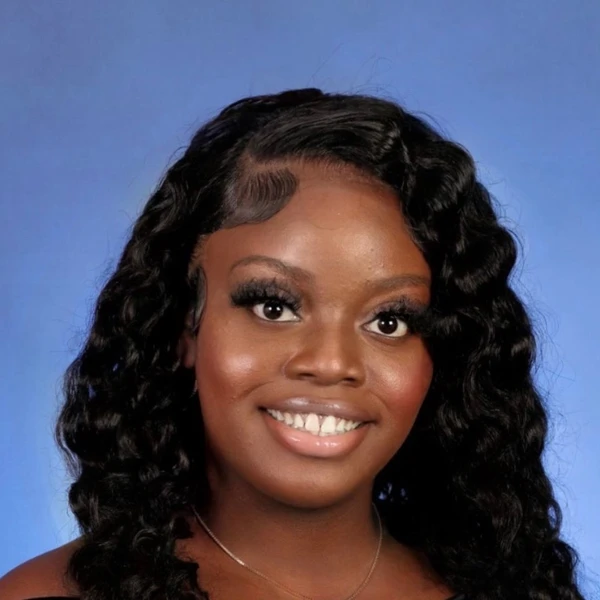
Anaya Brutus
1x
FinalistAnaya Brutus
1x
FinalistBio
Anaya Brutus
Miami Gardens, FL
anayabrutus@gmail.com | (786) 803-4755
I’m a dedicated graduate of Law Enforcement Officers Memorial High School with a strong passion for criminology and a goal of becoming a homicide detective. I plan to major in criminology and minor in psychology to better understand criminal behavior and serve my community. I’ve completed a police department internship through the Police Explorers program and earned certifications in CPR and 911 dispatch. Currently, I work at Publix and volunteer at a local summer camp resource room, where I continue to develop leadership, communication, and teamwork skills. My long-term goal is to apply to the City of Miami Police Department and eventually the FBI Academy.
Education
Barry University
Bachelor's degree programMajors:
- Criminology
Miscellaneous
Desired degree level:
Master's degree program
Graduate schools of interest:
Transfer schools of interest:
Majors of interest:
Career
Dream career field:
police
Dream career goals:
Cashier
Publix2023 – Present3 years
Sports
Cheerleading
Junior Varsity2023 – 20252 years
Public services
Volunteering
Summer camp — Counselor2024 – 2024
Patrick Roberts Scholarship for Aspiring Criminal Justice Professionals
Absolutely, Anaya. I’ve revised the essay to include your goal of creating an organization for families affected by gun violence, while keeping it at approximately 530 words and keeping everything else personalized to your story:
⸻
Essay Response (530 Words)
One major issue facing the criminal justice system today is the broken relationship between law enforcement and the communities they are supposed to protect—particularly Black and Brown communities. This lack of trust stems from years of systemic racism, excessive force, and a failure to treat all people with fairness and respect. Growing up in Miami Gardens, I’ve seen this divide firsthand. Gun violence has taken the lives of people close to me—classmates, family friends, and neighbors. These losses not only created trauma but a deep sense of mistrust in a system that often feels like it’s not built to protect us.
This reality is what fuels my passion to pursue a degree in criminology and become a homicide detective. I want to represent something different in law enforcement: someone who leads with empathy, who understands the pain behind the statistics, and who works to rebuild the trust between communities and the justice system. I believe in trauma-informed policing—approaching every situation with compassion, cultural awareness, and the understanding that healing must be part of justice.
My personal experiences with mental health have only strengthened these beliefs. I’ve struggled with anxiety and emotional challenges, especially after witnessing the impact of violence and living through a toxic relationship between my mother and stepfather. Watching her fight to stay strong for me while dealing with her own pain made me realize how important emotional support and healing really are—especially in communities that face ongoing trauma. I want to be someone who helps others not only find justice, but peace.
Since February 2023, I’ve worked at Publix, where I’ve learned how to deal with people from all walks of life, stay calm under pressure, and handle difficult situations with professionalism. Though it isn’t directly connected to criminal justice, this experience has helped me build the communication and interpersonal skills I’ll need as a future investigator. I’ve also been involved in youth mentorship and am always willing to speak out about issues like mental health and community violence.
Looking ahead, I want to take my impact even further by creating a nonprofit organization for families who’ve lost loved ones to gun violence. The goal would be to provide emotional support, financial assistance, counseling, and a safe space to grieve and heal. Too many families are left to suffer in silence, with no resources or community to fall back on. I want to help fill that gap and ensure no one feels alone after such a devastating loss.
These experiences—both personal and professional—are shaping me into someone who doesn’t just want to work in the justice system, but help reform it. I believe in standing up for those whose voices are often ignored. I believe in being part of the solution, not just identifying the problems. And I believe that with the right mix of compassion, courage, and commitment, we can create safer, stronger communities—one case, one family, and one voice at a time.
Erase.com Scholarship
Reading The Hate U Give by Angie Thomas opened my eyes in a way no other book had. It made me feel seen. Starr Carter’s story—struggling to find her voice after witnessing police brutality in her community—mirrored so much of what I’ve lived through growing up in a neighborhood deeply affected by gun violence and systemic injustice. The book taught me that silence helps no one and that using your voice, even when it shakes, can spark real change. It also showed me that the pain we grow up around doesn’t have to define us—it can motivate us to be the change we never got to see.
Because of that book and my own experiences, I decided to pursue a career in criminology. I want to become a homicide detective—not just to solve crimes, but to bring justice and peace to communities like mine that have been ignored or misjudged for far too long. I want to represent something different in law enforcement: someone who understands, who listens, and who serves with empathy. Starr’s story helped shape that goal, reminding me that one person standing in truth can challenge entire systems.
My journey with mental health has also deeply shaped my outlook on life. I’ve battled anxiety and moments of depression, especially while dealing with personal loss and trauma from the violence around me. I’ve also seen firsthand how mental health can silently destroy families—watching my mom struggle in an unhealthy relationship, trying to be strong while dealing with her own emotional wounds. These experiences taught me how important it is to treat mental health seriously, especially in communities of color where stigma often prevents people from seeking help.
Because of what I’ve been through, I try to approach every relationship—with friends, family, or strangers—with patience, compassion, and understanding. I believe mental health and emotional safety are just as important as physical safety, and I hope to advocate for trauma-informed practices in my future career. I want to change how law enforcement responds to people in crisis, to create space for healing, and to prevent the kind of tragedies that too often go ignored.
Right now, I’m working to make a difference by mentoring younger teens and speaking openly about the importance of mental health and self-advocacy. I want others to know they aren’t alone, and that where you come from doesn’t have to limit where you can go. Through my future in criminology, I plan to challenge injustice from the inside out, using my background not as a weakness but as a strength.
My goal is to be a force for fairness, peace, and change—one case, one voice, and one community at a time.
Linda Hicks Memorial Scholarship
Domestic violence isn’t just something I’ve heard about or seen on the news—it’s something that shaped my life from a young age. My stepfather came into my life when I was just three years old. At the time, he was the only father figure I really knew outside of my uncles. In many ways, I grew up thinking of him as my dad. He was there for birthdays, school events, and holidays. But behind closed doors, the relationship he had with my mother was deeply harmful. Their relationship was filled with emotional abuse, manipulation, and controlling behavior that slowly chipped away at my mom’s spirit. As I got older, I began to notice more. The arguing. The tension. The way my mom had to walk on eggshells just to keep the peace. And even when there wasn’t yelling, the silence was heavy enough to feel like another kind of violence.
Their relationship didn’t end until I was in middle school, which meant for most of my childhood, I lived in a household where love was complicated by fear, and security came with conditions. I remember feeling confused—how could someone who helped raise me also be the cause of so much pain in our home? Watching my mother struggle to hold everything together while silently enduring so much opened my eyes to the realities many African American women face. Culturally, we’re often taught to stay silent, to “stay strong,” and to keep family matters inside the home. But silence doesn’t protect us—it isolates us.
My mother is one of the strongest women I know, but strength shouldn’t have to come from surviving pain. Her experience—and mine—pushed me to want more for myself, and for other women and families who go through similar things. That’s why I’ve chosen to pursue higher education in criminology, with plans to minor in psychology. I want to become a homicide detective and one day work with the FBI. But more importantly, I want to use my career to be a voice for people who are often ignored—especially Black women, who are underrepresented, under-protected, and underserved in both law enforcement and mental health care systems.
With the education I’m working toward, I want to help build stronger systems of care—ones that communicate better, respond faster, and treat survivors with compassion. I want to create pathways that connect law enforcement with trauma-informed support services and mental health professionals, so that victims aren’t just seen as case files, but as human beings. I also believe in community outreach—educating young girls about healthy relationships, consent, and emotional safety early on, before they get trapped in cycles of violence.
If someone had stepped in earlier—if there had been better coordination, better understanding, better support—maybe things could’ve been different for my mom. Maybe we both could’ve healed sooner. That thought stays with me and motivates me every day. I’m choosing to use my pain as a purpose. I want to make sure that no other little girl has to grow up watching the person who loves her most be hurt behind closed doors.
By improving how we care, communicate, and coordinate with those impacted by domestic violence and substance abuse, I believe we can change the outcomes—one woman, one family, one community at a time.
Augustin Gonzalez Memorial Scholarship
Growing up in a neighborhood surrounded by gun violence shaped my outlook on life at a very early age. I watched as close friends, classmates, and loved ones became victims of senseless acts—some injured, some arrested, and others tragically taken too soon. Living in that environment, it was impossible to ignore the pain that so many families, including my own, carried on a daily basis. Those experiences sparked a fire in me to make a real change, not just for myself but for the communities like mine that continue to suffer in silence.
During my sophomore year of high school, I experienced a personal tragedy that made my mission even clearer. My baby cousin passed away unexpectedly due to a seizure. That loss broke me in ways I still can’t fully describe, but it also opened my eyes to the fragility of life. From that moment forward, I promised myself that I would live with purpose. I decided I wouldn’t just survive my circumstances—I would rise above them and dedicate my life to creating the kind of impact that could prevent others from feeling the pain I’ve felt.
That is why I want to become a police officer, with the goal of eventually becoming a homicide detective. I want to be a part of the solution, solving the very crimes that have hurt so many people in my life. I want to give victims’ families the answers they deserve and bring justice to those who feel forgotten. My passion for justice runs deep, and I believe true change starts from within the system. I want to be the kind of officer who serves with empathy, integrity, and strength—someone the community can trust and rely on.
I plan to major in criminology and minor in psychology to gain a deeper understanding of the causes of criminal behavior and how to better respond to it. My long-term dream is to join the City of Miami Police Department, where I can serve the very neighborhoods that raised me. From there, I hope to one day apply to the FBI Academy and take my mission even further on a national level.
I’m not just pursuing a career—I’m pursuing a purpose. I want to be a voice for the voiceless, a protector for those who feel unsafe, and a representative of change in a system that too often fails the communities it’s meant to serve. My journey is fueled by real-life pain, but also by hope—hope that one day, young people growing up in neighborhoods like mine won’t have to witness the violence I saw or feel the losses I’ve endured. This scholarship would not only help fund my education, but also empower me to follow through on the promise I made to myself after losing my cousin: to live for a reason, and to make a difference. With your support, I will continue striving toward becoming the kind of law enforcement professional who uplifts, listens, and protects with purpose and compassion. Thank you for believing in students like me—students who are not defined by where they come from, but by where they are determined to go.