Hobbies and interests
Speech and Debate
Writing
Research
Mental Health
Psychology
Neuroscience
Social Work
Counseling And Therapy
Reading
Academic
Criticism
Health
Novels
Psychology
I read books daily
Ananya Devkirti
1x
FinalistAnanya Devkirti
1x
FinalistBio
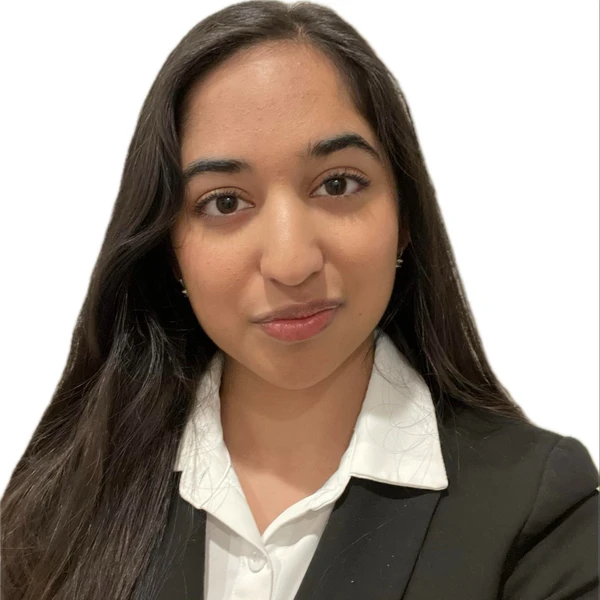
Hi everyone! I’m a senior at Sage Hill School with a deep passion for teen mental health, neuroscience, and expanding healthcare access to rural and underserved communities.
Spending summers in my grandmother’s rural village in Nepal sparked my commitment to service early on. I began volunteering with the local childcare program, facilitating wellness and confidence-building discussions with young girls. There, I saw firsthand how systemic issues like gender stigma, caste discrimination, and poverty eroded self-esteem. These experiences inspired my dedication to empowering youth and fueled my interest in mental health advocacy.
At school, I lead several initiatives aimed at promoting mental health awareness and scientific exploration. I serve as President of both the BrainSTEM Initiative (a district-wide wellness program) and the speech and debate team. Beyond campus, I’ve contributed to academic research as a lab assistant at the University of California, Irvine, and the University of California, Santa Cruz, focusing on adolescent addiction and mental health. I've also founded Mind Matters, a global mental health magazine and serve as the Director of Judging of the Orange County Debate League, a nonprofit hosting monthly debate tournaments.
Education
Sage Hill School
High SchoolMiscellaneous
Desired degree level:
Bachelor's degree program
Majors of interest:
- Public Health
- Neurobiology and Neurosciences
- Cognitive Science
- Public Policy Analysis
- Psychology, General
- Social Work
- Computer Science
Test scores:
35
ACT
Career
Dream career field:
Medicine
Dream career goals:
Advocating for mental health accessibility and suicide prevention as a public health official.
Paid Assistant Instructor & Debate Coach - Coached 70+ students over three classes to #1 squad placement at 3 tournaments including Princeton Invitational; developed curriculum & drills; managed parent communication.
New England Debate Academy2023 – Present3 years
Sports
Dancing
Club2019 – Present7 years
Research
Human Computer Interaction
University of California Santa Cruz Science Internship Program (9% acceptance rate) — Developed multi-user AI chatbot; Wrote a 25pg paper published in International Design & Children, a peer-reviewed conference hosted by the world's premier computing society (Association for Computing Machinery); Worked with neurodivergent children.2025 – PresentNeurobiology and Neurosciences
University of California Irvine Lotfipour Addiction Lab — Investigated adolescent stress; Wrote a 30pg paper presented in a UC Irvine conference & published in peer-reviewed UCI journal; Conducted brain chemical tests (HPLC-ECD) to detect neurotransmitters; Prepped for rat surgeries; Spoke @ weekly lab meetings2024 – 2025Neurobiology and Neurosciences
Southern California Academy of Sciences Research Training Program (1/22 selected from California) — Selected as top project presenting at Southern California Academy of Sciences Annual Bulletin, earning chance to present at 2026 American Association for Advancement of Science Annual Meeting2025 – 2026
Public services
Volunteering
The BrainSTEM Initiative — Co-President & Grant Writer: Partner with 3 schools across Orange County teaching 200+ middle school students wellness & neuroscience curriculum; hosted brain dissections funded by UC Irvine.2023 – PresentAdvocacy
University of California Irvine Center for Addiction Neuroscience — Podcast Outreach Lead & Co-Host: Co-scripted and promoted an addiction podcast to the UC Irvine School of Emergency Medicine & 15 local schools.2025 – PresentPublic Service (Politics)
Orange County Debate League: Hosts monthly CA-wide events (80k annual budget, 43 school partners, 500+ attendees/tournament) — Youngest Member of Board of Directors & Director of Judging: Train/manage 510 judges; ran 11 500-attendee tournaments w/40 school partners; developed 1st judge committee & initiatives improving judge consistency2024 – PresentVolunteering
Yellow Tulip Project (YTP) — Ambassador & Creative Writer: Co-led AAPI/Nepalese mental health campaign; Selected for 2025 Ambassador Spotlight for mental health work.2024 – PresentVolunteering
Lion's Heart Teen Volunteers and Leaders — Teen Advisory Board Member: Represented 10k national members at monthly Board of Directors meetings; Co-led website and mobile app redesign; Earned Congressional Gold Medal.2022 – PresentAdvocacy
Mind Matters Mental Health Magazine — Founder & Editor-in-Chief: : Lead team of 1450 from 68 countries and 27 US States; 1.1M+ views/month; Earned 2 Scholastic Gold Key awards (top 5%) and 5 Scholastic honorable mention awards (top 15-20%) for creative writing excellence.2022 – Present
Future Interests
Advocacy
Politics
Volunteering
Philanthropy
Entrepreneurship
No Essay Scholarship by Sallie
Immigrant Daughters in STEM Scholarship
The girl refused to meet my eyes.
She sat in the corner, draped in fabric despite the stifling summer heat. She fidgeted, tugging her sleeves and scratching her arms. I offered her water and a smile, hoping to ease her anxiety, but she turned away.
“Sanchai chha?” (Are you well?), I asked in Nepali. The question slightly uncoiled her hunched posture. Finally, she rolled up her sleeve, revealing how ringworm, a skin infection, had ravaged her forearm. I made sure not to flinch.
The health worker later explained how skin conditions were associated with poverty, uncleanliness, and the lowest rung of Nepal's rigid caste system: “untouchables.” This stigma caused the girl to withdraw into herself.
I was thirteen then, visiting my grandmother's rural village in Dhulikhel, Nepal. That morning, I wandered into a crowded but unassuming building. An overwhelmed medical worker asked if I could help.
The makeshift clinic was sweltering and little more than a shabby room managed by a village resident with several months of training. That summer, I sat cross legged on the dusty floor, organizing limited medical supplies and managing patients. The image of the young girl never left my mind. Though she returned throughout the summer and my next two summers in the village, she remained withdrawn.
Initially, I felt defeated, foolish to believe my words of encouragement could dismantle generations of ingrained societal stigma. However, these feelings eventually transformed into a deeper resolve to make lasting change, both personally and externally. The girl’s shame also reminded me of a stigma I had ignored my entire life: my father's depression.
As an only child, I came home to an empty and messy house. I returned from school to find my father still in bed, the house silent except for the sound of my backpack hitting the floor. I stood in the doorway calculating what needed to be done for dinner, whether someone had finished the laundry, and how to keep everything together while my mom worked late and far away to support our household. In the face of my responsibilities, I prioritized his needs over my own.
It has taken me years to identify the stigma I carried, which led me to suppress my own
emotions. Like the girl in that clinic, I let shame silence me. I tried to make myself untouchable, withdrawing from my friends and building walls around myself. I needed to give myself grace to speak up. Slowly, I began making space for my needs, talking more openly with friends, and letting go of the responsibility I felt for my father's depression.
In search of an outlet for my voice, I turned to writing. I created Mind Matters, an adolescent mental health magazine, where I published articles on the topics I had spent years avoiding. Through writing, I began to redefine the word untouchable as my own determination to break the silence surrounding mental health labels. I'm still learning, but I now understand that overcoming stigma is not a single breakthrough but a lifelong process.
Mind Matters grew to publish hundreds of teen writers globally, breaking the silence of stigma. Those conversations led me to Capitol Hill, where I spoke to Congressmen Dave Min and Alex Padilla, sharing our contributors’ stories and advocating for expanded youth mental health resources.
The girl in the clinic, her back hunched with shame, was a reflection I didn't recognize at thirteen. Her silence mirrored the years I spent suppressing my emotions. Now, as someone who has found her voice, I aim to combine research and advocacy to dismantle the barriers that silence people.
Chi Changemaker Scholarship
I jumped over puddles, inhaling the earthy scent of soil as I rushed to the building on the edge of my grandmother's remote mountain village in Dhulikel, Nepal. After learning this dilapidated structure was the town's clinic, led by a village resident with minimal training, I spent three summers organizing its limited supplies and handling patients. There, I witnessed how Nepal’s caste system, which marked many as "untouchable," caused them to carry deep-rooted stigma and shame surrounding their health conditions.
This shame mirrored my family's silence surrounding my father's depression. As an only child, I often returned from school to find him in bed, curtains drawn and dishes piled in the sink. I would mentally catalogue the chores needed to shield my mother from this disarray before she returned from work. Like the patients in Nepal, we didn’t speak about our struggles.
In search of an outlet for my voice, I turned to writing. I gradually transformed my disorganized personal blog into Mind Matters, an international adolescent mental health magazine, where I published articles on the topics I had spent years avoiding. Through writing, I began to redefine words like untouchable and invisible as my own determination to break the silence surrounding mental health labels. I'm still learning, but I now understand that overcoming stigma is not a single breakthrough but a lifelong process.
Mind Matters has now published 1400+ teen writers from 68+ countries and 32+ US States, breaking the silence of stigma. The magazine was awarded the Applied Arts Magazine Award for Excellence in Design and over $5,500 in grant funding from 3 foundations to fund website and printing costs.
While reviewing submissions to Mind Matters, I was inspired by stories of courage and resilience, leading me to deepen my advocacy. My efforts led me to Capitol Hill where I interviewed congressmembers Dave Min and Alex Padilla, sharing our contributors’ stories and advocating for expanded youth mental health resources. I aim to continue expanding our impact by publishing a guide for mental health and families that I co-authored with Congresswoman Marie Newman.
Looking towards my future, I aim to pursue a career in public health, where I’ll continue advocating for mental health resources and initiatives reducing inequalities for rural and underserved populations. As someone who has found her voice, becoming a Chi Changemaker would aid me in utilizing advocacy to dismantle the barriers that silence people.
Dan Leahy Scholarship Fund
I press the flat of my knife against a cardamom pod, relishing in the satisfying crack as it splits in two. My technique is nearly perfect, second only to my grandfather, who taught it to me.
Brewing Chiya (Nepali chai) with ginger, lemongrass, and black tea has been a daily ritual since I spent my summers in my grandfather's rural Illinois home as a child. Over steaming cups of tea, I met a version of my grandfather I hadn't known before: the town's only doctor, who treated patients regardless of ability to pay, hosted free health seminars, and fought to bring care to those overlooked by the healthcare system. His example inspired me to pursue higher education with the goal of becoming a public health official, where I aim to reduce inequalities in rural and underserved communities.
My grandfather’s bravery also inspired me to step out of my comfort zone and join my middle school's debate team. As a shy student, I saw debate as a way to find my voice and engage with issues affecting my community. I quickly fell in love with the intellectual rigor and public speaking skills it demanded. But as I advanced through the league, I witnessed firsthand how the tournaments could create a toxic culture, a breeding ground for racism and bullying between students from different cultural backgrounds.
In my junior year of high school, I campaigned and was elected as the head judge and a Board Member of the Orange County Debate League, the league I debated under and a nonprofit hosting tournaments for students at over 40 schools across California without access to traditional debate programs. I became the only teenage member in a room of adults. If my grandfather could serve as the only doctor in his town, then surely I could assume this role as the lone teen on the board, bringing with me his commitment advocacy.
While scrolling through Instagram one day, I encountered a post using the league’s name and branding showcasing a young girl in a hijab who had joined from a local Islamic center. Her smiling face was scribbled over in black ink with Islamophobic comments criticizing her attire and intelligence. I decided to take a stand, guided by the lesson my grandfather taught me to support others who couldn’t always speak for themselves.
After I reported the account, some board members thought that the issue would resolve itself. I firmly believed otherwise; allowing the culture of bullying to continue was against our principles of cultural awareness and compassion. In a board meeting, I outlined my proposal for an anti-bullying initiative, citing the recent Instagram incident and examples from my own experience. Some pushed back, stating that the league didn’t have the bandwidth to launch new programs.
Eventually, the board implemented a revised version of my initiative: adding “respect” to our mission statement, training judges to speak against unacceptable behavior, creating a grievance process investigating such instances, and hosting speeches to 500+ on the importance of our values.
This experience led me to not only gain the confidence to push for change in the face of resistance, but also to value how my own perspective can be a force for advocacy when others need someone to stand up for them. As I look towards my future and a career in public health, I aim to use both the lessons I’ve learned from my grandfather and my experiences with the debate league to reduce inequalities and continue upholding my values of fostering respect, understanding, and compassion.
Elijah's Helping Hand Scholarship Award
The girl refused to meet my eyes.
She sat in the corner, draped in fabric despite the stifling summer heat. She fidgeted, tugging her sleeves and scratching her arms. I offered her water and a smile, hoping to ease her anxiety, but she turned away.
“Sanchai chha?” (Are you well?), I asked in Nepali. The question slightly uncoiled her hunched posture. Finally, she rolled up her sleeve, revealing how ringworm, a skin infection, had ravaged her forearm. I made sure not to flinch.
The health worker later explained how skin conditions were associated with poverty, uncleanliness, and the lowest rung of Nepal's rigid caste system: “untouchables.” This stigma caused the girl to withdraw into herself.
I was thirteen then, visiting my grandmother's rural village in Dhulikhel, Nepal. That morning, I wandered into a crowded but unassuming building. An overwhelmed medical worker asked if I could help.
The makeshift clinic was sweltering and little more than a shabby room managed by a village resident with several months of training. That summer, I sat cross legged on the dusty floor, organizing limited medical supplies and managing patients. The image of the young girl never left my mind. Though she returned throughout the summer and my next two summers in the village, she remained withdrawn.
Initially, I felt defeated, foolish to believe my words of encouragement could dismantle generations of ingrained societal stigma. However, these feelings eventually transformed into a deeper resolve to make lasting change, both personally and externally. The girl’s shame also reminded me of a stigma I had ignored my entire life: my father's depression.
As an only child, I came home to an empty and messy house. I returned from school to find my father still in bed, the house silent except for the sound of my backpack hitting the floor. I stood in the doorway calculating what needed to be done for dinner, whether someone had finished the laundry, and how to keep everything together while my mom worked late and far away to support our household. In the face of my responsibilities, I prioritized his needs over my own.
It has taken me years to identify the stigma I carried, which led me to suppress my own emotions. Like the girl in that clinic, I let shame silence me. I tried to make myself untouchable, withdrawing from my friends and building walls around myself. I needed to give myself grace to speak up. Slowly, I began making space for my needs, talking more openly with friends, and letting go of the responsibility I felt for my father's depression.
In search of an outlet for my voice, I turned to writing. I created Mind Matters, an adolescent mental health magazine, where I published articles on the topics I had spent years avoiding. Through writing, I began to redefine the word untouchable as my own determination to break the silence surrounding mental health labels. I'm still learning, but I now understand that overcoming stigma is not a single breakthrough but a lifelong process.
Mind Matters grew to publish hundreds of teen writers globally, breaking the silence of stigma. Those conversations led me to Capitol Hill, where I spoke to Congressmen Dave Min and Alex Padilla, sharing our contributors’ stories and advocating for expanded youth mental health resources.
The girl in the clinic, her back hunched with shame, was a reflection I didn't recognize at thirteen. Her silence mirrored the years I spent suppressing my emotions. Now, as someone who has found her voice, I aim to combine research and advocacy to dismantle the barriers that silence people.
Learner Mental Health Empowerment for Health Students Scholarship
The girl refused to meet my eyes.
She sat in the corner, draped in fabric despite the stifling summer heat. She fidgeted, tugging her sleeves and scratching her arms. I offered her water and a smile, hoping to ease her anxiety, but she turned away.
“Sanchai chha?” (Are you well?), I asked in Nepali. The question slightly uncoiled her hunched posture. Finally, she rolled up her sleeve, revealing how ringworm, a skin infection, had ravaged her forearm. I made sure not to flinch.
The health worker later explained how skin conditions were associated with poverty, uncleanliness, and the lowest rung of Nepal's rigid caste system: “untouchables.” This stigma caused the girl to withdraw into herself.
I was thirteen then, visiting my grandmother's rural village in Dhulikhel, Nepal. That morning, I wandered into a crowded but unassuming building. An overwhelmed medical worker asked if I could help.
The makeshift clinic was sweltering and little more than a shabby room managed by a village resident with several months of training. That summer, I sat cross legged on the dusty floor, organizing limited medical supplies and managing patients. The image of the young girl never left my mind. Though she returned throughout the summer and my next two summers in the village, she remained withdrawn.
Initially, I felt defeated, foolish to believe my words of encouragement could dismantle generations of ingrained societal stigma. However, these feelings eventually transformed into a deeper resolve to make lasting change, both personally and externally. The girl’s shame also reminded me of a stigma I had ignored my entire life: my father's depression.
As an only child, I came home to an empty and messy house. I returned from school to find my father still in bed, the house silent except for the sound of my backpack hitting the floor. I stood in the doorway calculating what needed to be done for dinner, whether someone had finished the laundry, and how to keep everything together while my mom worked late and far away to support our household. In the face of my responsibilities, I prioritized his needs over my own.
It has taken me years to identify the stigma I carried, which led me to suppress my own emotions. Like the girl in that clinic, I let shame silence me. I tried to make myself untouchable, withdrawing from my friends and building walls around myself. I needed to give myself grace to speak up. Slowly, I began making space for my needs, talking more openly with friends, and letting go of the responsibility I felt for my father's depression.
In search of an outlet for my voice, I turned to writing. I created Mind Matters, an adolescent mental health magazine, where I published articles on the topics I had spent years avoiding. Through writing, I began to redefine the word untouchable as my own determination to break the silence surrounding mental health labels. I'm still learning, but I now understand that overcoming stigma is not a single breakthrough but a lifelong process.
Mind Matters grew to publish hundreds of teen writers globally, breaking the silence of stigma. Those conversations led me to Capitol Hill, where I spoke to Congressmen Dave Min and Alex Padilla, sharing our contributors’ stories and advocating for expanded youth mental health resources.
The girl in the clinic, her back hunched with shame, was a reflection I didn't recognize at thirteen. Her silence mirrored the years I spent suppressing my emotions. Now, as someone who has found her voice, I aim to combine research and advocacy to dismantle the barriers that silence people.
Ethel Hayes Destigmatization of Mental Health Scholarship
The girl refused to meet my eyes.
She sat in the corner, draped head-to-toe in swaths of fabric despite the stifling summer heat. She fidgeted constantly, tugging at her sleeves and scratching her arms. In a room full of people, she seemed isolated. I offered her a tin of water and a smile, hoping to ease her anxiety, but she turned away.
“Sanchai chha?” (Are you well?), I asked in Nepali. The question slightly uncoiled her hunched posture. After a few hesitant exchanges, she rolled up her sleeve, revealing how ringworm, a skin infection, had ravaged her forearm. I made sure not to flinch.
Later that day, the health worker explained how skin conditions were often associated with poverty, uncleanliness, and the lowest rung of Nepal's rigid caste system: Dalits or “untouchables.” This stigma caused the girl to withdraw into herself.
I was thirteen then, only a few years older than she was, visiting my grandmother's rural village of Dhulikhel, Nepal. On that restless morning, I wandered into an unassuming building that had gathered a crowd. An overwhelmed medical worker asked if I could help.
The makeshift clinic was sweltering and little more than a shabby room managed by a village resident with a few months of training. That summer, I would spend long days sitting cross legged on the clinic's dusty floor, organizing its limited medical supplies, managing patients, and taking vitals. The image of the young girl never left my mind. Though she returned throughout the summer and even during my next two summers working in the village, she remained withdrawn.
Initially, I felt defeated. I was foolish to believe that my few words of encouragement could dismantle generations of ingrained societal stigma. However, these feelings eventually transformed into a deeper resolve to make lasting change, both personally and externally. The girl’s shame also reminded me of a stigma I had ignored my entire life: my father's depression.
As an only child, I came home every day to an empty and messy house. I sometimes returned from school to find my father still in bed at four in the evening, the house silent except for the sound of my backpack hitting the floor. I stood in the doorway calculating what needed to be done for dinner, whether someone had finished the laundry, and how to keep everything together while my mom worked late and far away to support our household. In the face of my responsibilities, I often prioritized his needs over my own.
It has taken me years to identify the stigma I carried, which led me to suppress my own emotions. Like the girl in that clinic, I had let shame silence me. I had tried to make myself untouchable, withdrawing from my friends and building walls around myself. I needed to give myself grace to speak up and find my voice. Slowly, I began making space for my needs, talking more openly with friends, and letting go of the responsibility I felt for my father's depression.
In search of an outlet for my voice, I turned to writing. I gradually transformed what began as my disorganized personal blog into Mind Matters, an international magazine about adolescent mental health, where I published articles on the very topics I had spent years avoiding. Through writing, I began to redefine the word untouchable as my own determination to break the silence surrounding mental health labels. I'm still learning, but I now understand that overcoming stigma is not a single breakthrough but a lifelong process.
Mind Matters grew to publish hundreds of teen writers globally, breaking the silence of stigma. Those conversations led me to Capitol Hill, where I spoke to Congressmen Dave Min and Alex Padilla to share our contributors’ stories and advocate for expanded youth mental health resources.
The girl in the corner of that sweltering clinic, her back hunched over with shame, was a reflection I didn't recognize at thirteen. Her silence mirrored the years I spent suppressing my own emotions. Now, as someone who has found her voice, I aim to pursue medicine as a physician who combines clinical care with advocacy to dismantle the barriers that silence people.
Stewart Family Legacy Scholarship
I jumped over puddles, inhaling the earthy scent of damp soil as I rushed to the building on the edge of my grandmother's remote mountain village in Dhulikel, Nepal. After learning this dilapidated structure was the town's clinic, led only by a village resident with minimal training, I spent three summers sitting cross-legged on the clinic’s dusty floor, organizing its limited supplies and assisting patients. There, I witnessed how Nepal’s caste system, which marked many of these patients as "untouchable," caused them to carry deep-rooted stigma and shame surrounding their health conditions.
While assisting patients, the healthcare worker showed me the importance of servant leadership, the principle of using one’s position as a leader to uplift and serve others. Watching patients hesitate to ask for help because of stigma made me realize that access to care is shaped just as much by social barriers as it is by physical ones. As a high school student pursuing higher education, this experience solidified my commitment to servant leadership and inspired my goal of developing health interventions for vulnerable populations, particularly adolescents and rural communities with limited access to preventive care.
My desire to improve healthcare accessibility solidified in my position as a lab assistant and later as a podcast co-host for the University of California Irvine’s Lotfipour Addiction Neurobiology Lab. In addition to developing my scientific knowledge of neuroscience through conducting chemical HPLC-ECD tests and presenting at a UC Irvine School of Medicine Symposium, my leadership experience as the podcast co-host inspired my plans for the future.
While working on the podcast, I collaborated with the lab’s principal investigator and undergraduate researchers to translate complex scientific literature into accessible scripts. Through this work, I learned how smoking can permanently rewire the adolescent brain, which underscored the urgent need for effective public health communication. Our podcast addressed both the science behind addiction and the invisible stigmas surrounding mental health and substance use disorders that prevent individuals from seeking care.
My podcast experience showed me how leadership and science work together to shape our future. Science has equipped me with the technical foundation to pursue public health, while leadership has informed me of the stigmas continually serving as a barrier to treatment access. In the interdisciplinary field of public health, I aim to unite leadership and science to advocate for vulnerable populations, reduce health disparities, and confront stigmas that prevent individuals from seeking care.