
Hobbies and interests
Advocacy And Activism
Anime
Architecture
Art History
Art
Community Service And Volunteering
Amy Jacques
1x
Finalist1x
Winner
Amy Jacques
1x
Finalist1x
WinnerBio
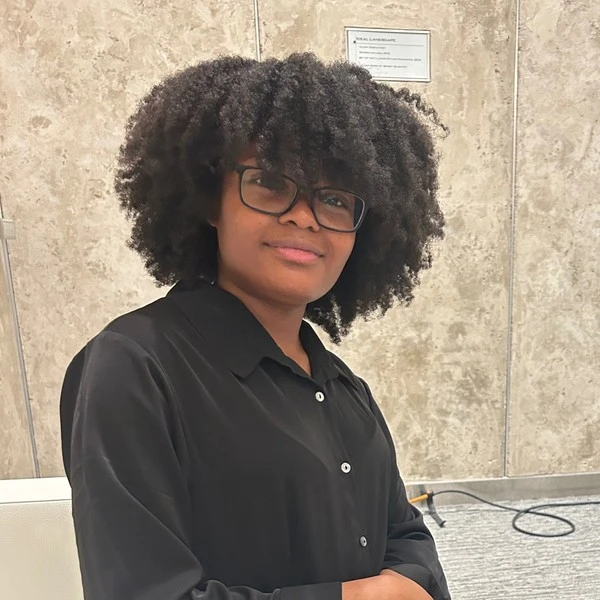
Hello! My name is Amy. I am an 18yr old junior in college studying at New York University. I am majoring in Neural Science with a minor in Art History. I graduated a year early from high school in May of 2024, then graduated from Community College in December of 2024. I then transferred to NYU last year. I am a first-generation child of immigrants who also happens to have sickle cell disease. Because of my condition I have learned to see the world and others with more compassion and empathy, because as someone with an invisible disability, you never know what somebody is going through. I feel my different perspective is valuable, and will use my voice advocate for others. Thank you, and I can’t wait to see where life takes me. ☺️🙏
Education
New York University
Bachelor's degree programMajors:
- Visual and Performing Arts, Other
Valencia College
Associate's degree programMajors:
- Liberal Arts and Sciences, General Studies and Humanities
Miscellaneous
Desired degree level:
Master's degree program
Graduate schools of interest:
Transfer schools of interest:
Majors of interest:
Career
Dream career field:
Arts
Dream career goals:
Public services
Volunteering
Whisker Town Cats — Foster of Cats and Kittens2023 – 2023
Our Destiny Our Future Scholarship
I plan to make a positive impact on the world by combining my education, personal experiences, and commitment to service in ways that improve both healthcare understanding and access for underserved communities. As an undergraduate student pursuing a degree in neural science with a minor in art history, I am preparing for a future where I can contribute to scientific research while also remaining grounded in human experience and empathy.
One of the most important influences on my goals is my experience living with sickle cell disease. Managing a chronic illness has given me firsthand insight into how deeply healthcare systems affect quality of life. I have experienced moments where I felt understood and supported, as well as moments where my symptoms were not fully taken seriously. These experiences have shown me how important it is for patients to feel heard, especially those with conditions that are not always visible or widely understood. Because of this, I want to help improve both the scientific understanding of chronic illness and the way patients are treated in healthcare spaces.
My plan to make a positive impact is rooted in both research and advocacy. In the field of neuroscience, I hope to contribute to studies that explore the brain, pain, and chronic illness, particularly in relation to conditions that disproportionately affect underrepresented communities. I am especially interested in how biological and environmental factors interact to shape health outcomes. Through this work, I hope to help close gaps in knowledge that often lead to unequal treatment and misunderstanding.
In addition to research, I also plan to remain actively involved in service. Volunteering has taught me that meaningful impact often begins at the community level. Whether through mentoring students, supporting health awareness initiatives, or helping others navigate academic and healthcare systems, I have seen how small acts of support can create lasting change in someone’s life. I want to continue building on that by making information and resources more accessible to people who may not otherwise have guidance.
Another way I hope to make an impact is by using creativity as a tool for connection. Through art, I have learned how expression can help people process emotions and feel less alone. I have seen how visual storytelling can communicate experiences that are difficult to put into words, especially around topics like illness, identity, and resilience. I want to continue using this perspective to help bridge gaps between science and lived experience.
Ultimately, my goal is to create impact through both knowledge and compassion. I want to contribute to a world where healthcare is more equitable, where patients are treated with dignity, and where underserved communities are not overlooked in research or care. I understand that I may not be able to change everything at once, but I believe that consistent effort, empathy, and dedication to service can create meaningful progress over time.
Kristinspiration Scholarship
Education has always represented more than academic success to me. As a first-generation female college student, it represents possibility. It represents the ability to step into spaces that my family did not have access to and to build something that expands beyond my own circumstances. Growing up in a household where higher education was deeply valued but not personally experienced, I learned early that education carries both opportunity and responsibility. It is not only a personal achievement, but a chance to open doors for those who come after me.
My parents worked hard to instill in me the importance of education, even while navigating financial challenges and unfamiliar systems themselves. Because they did not attend college, I often had to figure out academic pathways, financial aid processes, and long-term planning on my own. This lack of a roadmap was sometimes overwhelming, but it also taught me independence and resilience. I learned how to seek answers, advocate for myself, and continue moving forward even when I felt uncertain.
Education is especially important to me because it has given structure and direction to my goals. I am currently pursuing a degree in neural science with a minor in art history, and I hope to use my education to contribute to fields that address both scientific understanding and human experience. Living with sickle cell disease has shown me how deeply health conditions can affect every part of a person’s life, from physical well-being to emotional resilience and academic performance. It has also shown me how important it is for people to feel seen and understood in medical and academic spaces.
Because of these experiences, I hope to build a legacy rooted in access, empathy, and opportunity. I want to use my education not only for personal advancement, but to help others who come from similar backgrounds feel less alone in their journeys. I understand what it feels like to navigate systems without guidance, and I want to be someone who helps make those systems more accessible for future students.
The legacy I hope to leave is one of opening doors rather than simply walking through them. I want to contribute to a future where being first-generation is not seen as a disadvantage, but as a powerful perspective. I hope to mentor and support younger students who may feel uncertain about college, especially those who are the first in their families to pursue higher education.
Ultimately, education is important to me because it is transformative. It has the power to change not only individual lives, but entire family histories. My goal is to honor my family’s sacrifices by using my education to create opportunities, support others, and build a legacy that reflects resilience, growth, and lasting impact for future generations.
WCEJ Thornton Foundation Low-Income Scholarship
Attending higher education is not just a personal milestone for me, it is the foundation of the future I am working toward. As a low-income student and first-generation college student from a Haitian immigrant family, higher education represents more than academic growth. It represents opportunity, stability, and the ability to break cycles of limitation that have shaped my family’s experience for generations.
I grew up watching my parents work hard to build a life in the United States after coming from Haiti, often without access to the same educational opportunities I am now pursuing. Because of that, I learned early that education is not something to take for granted. However, I also learned that access to education is not equal. Financial barriers, lack of guidance, and systemic inequality often determine whether students are able to pursue higher education or are forced to take other paths out of necessity.
For me, attending college is the key that allows me to pursue my long-term goal of working in neuroscience and mental health-related fields. I am especially interested in understanding how the brain, chronic illness, and mental health intersect, particularly in underserved communities. Living with sickle cell disease has given me firsthand insight into how deeply health conditions can affect not only the body, but also a person’s emotional and academic life. It has also shown me how important it is for healthcare systems to be both scientifically strong and human-centered.
Higher education will provide me with the knowledge, training, and research opportunities necessary to contribute meaningfully to this field. Through my studies in neural science, I hope to gain a deeper understanding of neurological conditions and mental health challenges, and use that knowledge to help improve care and accessibility for patients who are often overlooked.
Beyond my career goals, I also plan to create a positive impact through service and advocacy. I understand what it feels like to navigate systems without guidance, so I try to be a source of support for others in similar situations. Whether it is helping peers understand college processes, sharing resources, or simply offering encouragement, I believe small acts of guidance can make a meaningful difference.
In the future, I want to expand that impact by contributing to research and community-focused work that improves healthcare outcomes for low-income and underserved populations. I also hope to mentor students who, like me, are first-generation and may feel uncertain about their place in higher education. I want them to know that their background is not a limitation, but a source of strength and perspective.
Ultimately, higher education is the bridge between where I am now and the future I want to build. It will equip me not only with academic knowledge, but also with the tools to create change. My goal is to use my education to contribute to a more equitable healthcare system, to uplift my community, and to ensure that others facing similar barriers feel seen, supported, and empowered to pursue their own goals.
Lippey Family Scholarship
One of the greatest challenges I have faced was learning how to live with sickle cell disease while still believing in my own future. Chronic illness can affect more than the body, it can shape confidence, routines, and the way you see yourself. For a long time, I saw my condition mainly through limitation: missed opportunities, physical pain, and the unpredictability of never knowing when I might feel unwell. Over time, however, that challenge became one of the greatest sources of my personal growth.
Growing up, I often felt different from others my age. While many people could move through life without thinking about their health, I had to consider things like fatigue, pain episodes, and medical appointments. There were times when I felt frustrated that I had responsibilities and obstacles others did not seem to carry. It was difficult watching life continue normally around me while I had to slow down.
One of the hardest parts of this challenge was the mental toll it created. Living with something ongoing can make it easy to feel discouraged or defined by circumstances you did not choose. I had moments where I questioned whether I would be able to keep up academically or reach the goals I had for myself. It sometimes felt easier to lower my expectations than to risk disappointment.
What changed me most was realizing that I could not control every challenge, but I could control how I responded to it. Instead of seeing resilience as something dramatic, I began to understand it as consistency. It was choosing to continue my education even when things were difficult. It was learning to ask for help when I needed it rather than struggling in silence. It was refusing to let one difficult day convince me that my future was small.
Through this process, I became more disciplined and self-aware. I learned how to manage my time carefully, appreciate periods of stability, and remain focused on long-term goals even when short-term obstacles appeared. I also developed a deeper sense of empathy. Experiencing invisible challenges taught me that many people carry burdens others cannot see, and that compassion matters more than assumptions.
This growth has shaped the person I am today. I am now pursuing a degree in neural science because I want to contribute to fields that improve quality of life for others facing health challenges. My experiences have given me a strong interest in the relationship between physical health, mental health, and access to care. They have also made me determined to help create systems where people feel heard and supported.
Most importantly, this challenge taught me that strength is not the absence of struggle. Strength is continuing despite struggle. It is adapting, learning, and believing in yourself even when circumstances are uncertain.
If I had never faced this challenge, I might have had an easier path, but I would not have gained the resilience, perspective, and purpose that now guide my life. What once felt like something holding me back ultimately became something that helped me grow forward.