
Hobbies and interests
Dance
Singing
Hiking And Backpacking
Dog Training
Education
Reading
Adventure
Adult Fiction
Biography
Christianity
Drama
How-To
Health
I read books multiple times per month
Amy Drabic
1x
Finalist
Amy Drabic
1x
FinalistBio
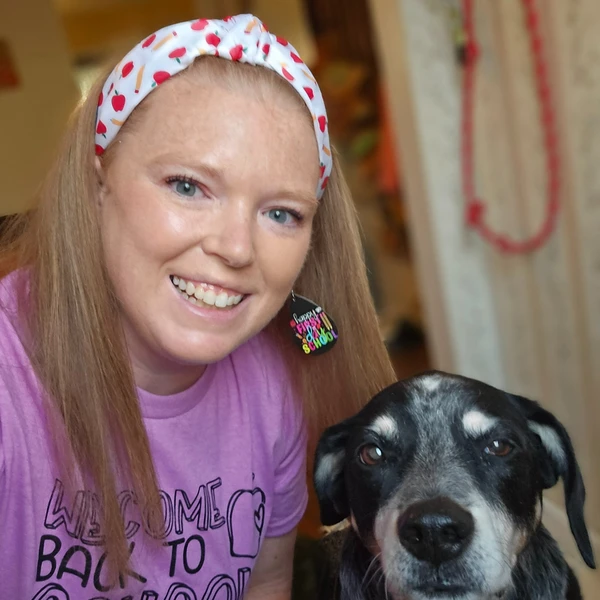
Hi there! Thank you for checking out my profile. My name is Amy and I am a second-grade special education teacher in Pennsylvania. Every day I get to work with some of the most resilient and inspiring kids, and it's a job I genuinely love. I am currently going back to school to pursue my doctoral degree because, apparently, I enjoy a challenge!
At home, I am happily married and share my life with my sweet dog, Sadie, who keeps me on my toes. Outside of the classroom, you can usually find me on a hiking trail, relaxing at the beach, curled up with a good book, or camping under the stars. I also volunteer weekly at a local animal shelter, walking dogs, which is one of the highlights of my week. There is nothing quite like giving a shelter pup a little extra love and exercise. Spending quality time with friends and family is also really important to me, and I try to make the most of every moment with the people I care about.
I am passionate about lifelong learning, both in and out of the classroom, and I am so grateful for the opportunity to further my education and grow as an educator. I pay for my tuition entirely out of pocket while working full-time as a teacher, so every bit of scholarship support makes a real difference and is so deeply appreciated. Thank you for taking the time to learn a little about me!
Education
Kutztown University of Pennsylvania
Doctoral degree program (PhD, MD, JD, etc.)Majors:
- Special Education and Teaching
- Education, General
Minors:
- Education, Other
Cedar Crest College
Master's degree programMajors:
- Special Education and Teaching
Arcadia University
Bachelor's degree programMajors:
- Special Education and Teaching
Minors:
- Education, General
Miscellaneous
Desired degree level:
Doctoral degree program (PhD, MD, JD, etc.)
Graduate schools of interest:
Transfer schools of interest:
Majors of interest:
- Special Education and Teaching
Career
Dream career field:
Education
Dream career goals:
Special Education Teacher
Parkland School District2024 – Present2 yearsSpecial Education Teacher
Allentown School District2017 – 20247 years
Sports
Dancing
Intramural2006 – 20159 years
Artistic Gymnastics
Club1991 – 200413 years
Research
Special Education and Teaching
Allentown School District — Researcher2021 – 2023
Arts
Arcadia University
Danceannual shows2011 – 2014
Public services
Volunteering
The Sanctuary of Haafsville — Dog Walker2023 – Present
Future Interests
Advocacy
Volunteering
Charles B. Brazelton Memorial Scholarship
The Girl with the Red Hair
There is a particular kind of visibility that nobody asks for. From the time I was old enough to walk into a room, I understood that I would be noticed, but not because of anything I had done, but simply because of the way I looked. Bright copper-red hair, a frame that clothes seemed to hang off of rather than fit, and a complexion so fair that sunscreen became a personality trait. I was, in the most literal sense, hard to miss.
The comments started early. "Does it hurt to be that skinny?" strangers would ask my mother, as though I wasn't standing right there. At school, kids called me "Carrot Top" and "Beanpole" in the same breath, a strange combination that always made me feel like a carnival exhibit rather than a classmate. Teachers would sometimes say things they thought were compliments, such as, "You're so unique!" Teachers said that with that particular tone, which really means you are strange, and I don't know what to do with you.
For a long time, I tried to disappear. I wore darker colors to mute the brightness of my hair. I hunched my shoulders to seem smaller. I sat in the back of rooms and hoped nobody would call on me, because being called on meant standing up, and standing up meant being looked at, and being looked at meant someone might say something.
The turning point came in college, in the most unexpected way. Through a college program, I was cast as Ariel at Walt Disney World. The job required exactly the things I had spent my whole life trying to hide: the red hair, the slight build, the way I seemed to take up a slightly different kind of space than everyone else. For the first time, those features weren't liabilities but qualifications. Children would run toward me with a kind of joy that was almost overwhelming, and I realized that what I had always seen as a burden was, to them, pure magic. I wasn't the awkward girl anymore. I was their favorite princess.
That experience rewired something in me. I stopped fighting my appearance and started living more fully inside it. On weekends, I lace up my hiking boots and head for the trails, my red hair bright against the tree line, my light frame carrying me over ridgelines with a kind of ease I used to take for granted. At the beach, I've made peace with the fact that I will always be the palest person there and also, somehow, the one who looks most at home near the water. Every week, I volunteer at a local animal shelter, walking dogs who are scared or overlooked or just in need of someone patient enough to slow down with them. There is something I recognize in those animals; the ones who are a little too much, a little too loud, a little too visible. I know how to sit with them in that feeling.
The girl who once hunched her shoulders and hid in the back of every room went on to be a Disney princess, to crest mountain trails, to kneel in the grass with a nervous shelter dog until it finally trusted her enough to walk beside her. That red hair led the way every time.
The visibility I never asked for turned out to be a gift I didn't know I needed.
Sandy Jenkins Excellence in Early Childhood Education Scholarship
Some people spend years searching for their calling. I found mine the summer I was a teenager, standing in the doorway of a room full of adults with special needs, watching my aunt work. She moved through that space with patience, warmth, and an unmistakable sense of purpose. In that moment, something clicked for me. I did not simply admire what she did. I knew, with a certainty I had never felt before, that I was meant to do something like it. That day planted a seed that has grown into a career, a passion, and now, a commitment to doctoral-level research dedicated to helping children thrive.
Today, I am a second-grade special education teacher, and I can say without hesitation that I absolutely love my job. Every morning I walk into my classroom, I am reminded of why I chose this path. My students face unique challenges, and it is my privilege to meet them where they are. I choose to see beyond their diagnoses and discover what lights them up, what makes them laugh, and what helps them grow. Special education is not simply about academic instruction; it is about nurturing the whole child. That belief is at the core of everything I do.
That belief is also what is driving me back to school to pursue my doctorate. I want to contribute something meaningful and lasting to the field, not just in my own classroom, but for educators and children everywhere. My research focuses on a question I encounter every day: how can we help young children manage their emotions in ways that set them up for long-term success? Specifically, I am investigating the impact of implementing a daily social-emotional learning morning meeting in early childhood classrooms.
Social-emotional learning, or SEL, is not a new concept, but its consistent, structured application in the early grades remains ripe for deeper study. I believe that when children are given a dedicated, safe space each morning to recognize and express their feelings, they develop the self-regulation skills that make learning possible. A child who cannot manage frustration, anxiety, or sadness is a child whose academic potential goes untapped. Morning meetings rooted in SEL give children the tools to understand themselves. I have been implementing daily morning meetings in my classroom over the past few years and truly see a difference in my students as the year progresses.
My aunt never told me to become a teacher. She simply showed me what it looked like to show up fully for people who needed someone in their corner. That lesson has guided every decision in my career. Now, as I pursue my doctorate, I carry that same spirit into my research. I love showing up for the children every day.
Early childhood education is not just a profession I chose. It is a purpose I was given the day I walked into my aunt's workplace and saw, for the first time, what it means to change someone's world.
Manuela Calles Scholarship for Women
At the heart of everything I do is a fundamental belief: every child deserves to feel seen, heard, and emotionally safe before they can truly learn. This value has shaped my journey as a special education teacher and now drives my pursuit of a doctoral degree in mental health. It is not simply a professional philosophy but a conviction I carry into my classroom every single day.
Working with students with special needs has taught me that academic progress and emotional well-being are inseparable. Early in my teaching career, I recognized that many of my students arrived at school carrying burdens that no child should have to manage alone. Some of those feelings included anxiety, trauma, dysregulation, and a profound need for connection. In response, I implemented a daily Social-Emotional Learning (SEL) meeting in my classroom. Each morning, my students gather to share, reflect, identify their emotions, and build the coping strategies they need to navigate their day. The results have been remarkable. I have witnessed students who once struggled with frequent behavioral incidents grow into self-aware, emotionally resilient learners.
This experience ignited a deeper question in me: What if this worked for every second-grade student, not just mine?
That question is the foundation of my doctoral research. My study will examine the impact of implementing school-wide SEL meetings across an entire second-grade team. By expanding this practice beyond my individual classroom, I aim to investigate whether consistent, team-delivered SEL meetings meaningfully improve student behavior data and strengthen children's ability to identify and regulate their emotions. Second grade is a pivotal developmental window. Children at this age are forming their understanding of themselves and their relationships with others. Equipping them with emotional language and regulation tools at this stage can create ripple effects that last a lifetime.
My values of equity, compassion, and evidence-based practice will guide every phase of this work. I believe that social-emotional support should not be a privilege limited to students with IEPs or those in specialized classrooms. It should be a universal right, woven into the fabric of every child's school day. My research is rooted in this belief. By generating data that speaks to administrators, educators, and policymakers, I hope to make a compelling case for systemic change.
Looking ahead, I envision a future where my research contributes to school-wide mental health frameworks, informs teacher training programs, and ultimately reduces the number of children who fall through the cracks simply because their emotional needs go unaddressed. I want to bridge the gap between clinical mental health knowledge and everyday classroom practice. I want to use my doctoral platform to amplify the voices of the students who need it most.
I am not just studying mental health. I am living it, teaching it, and committed to transforming how our schools nurture the whole child.
Dr. Connie M. Reece Future Teacher Scholarship
I am currently a special education teacher and absolutely love my job. My journey to becoming a teacher was not paved by a single moment of inspiration, but rather shaped by the extraordinary people in my life who showed me, through their actions, what it truly means to serve others with love, patience, and purpose. At the center of it all was my mother.
Growing up, I had a front-row seat to something truly special. My mother was both a preschool teacher and a Sunday school teacher, and watching her work was like watching someone operate in their element. Every single day, she showed up for her students with an abundance of kindness, patience, and warmth that seemed effortless, though I know now how much intention and heart went into it. She had a gift for making every child feel seen, valued, and capable. As a little girl watching her, I didn't just admire her — I wanted to be her. Seeing her in her element inspired me to pursue a career in education.
When I entered college to pursue my teaching certification, I was energized and focused on that goal. Then, life shifted in a way I never could have anticipated. My sister was diagnosed with brain cancer. The road that followed was long and incredibly difficult, filled with surgeries, fear, and uncertainty. My mother, ever the selfless caregiver she had always been, made the heartbreaking decision to leave her teaching career so she could be fully present for my sister during her treatment and recovery. Watching my mother sacrifice the career she loved out of devotion to our family only deepened my respect for her. It also clarified something important for me, which was her spirit of giving. It was that instinct to show up completely for the people who need you, which is exactly what I wanted to carry into my own classroom. Luckily, my sister has made a full recovery and just graduated from college to be a financial advisor and help students find scholarships to attend college. She was the one who actually inspired me to join "Bold" and to look for scholarships to help with the financial stress of returning to school for my doctorate.
My aunt was another profound influence on the person and educator I have become. She dedicated her life to working with adults with Down syndrome, and she brought to that work the same kind of genuine compassion and commitment that my mother brought to her classroom. I went to work with my aunt for the summer when I was 15. Watching my aunt, I saw someone who understood that every person, regardless of ability, deserves dignity, joy, and the opportunity to grow. She believed in her clients deeply and advocated for them fiercely. Tragically, I lost my aunt to suicide in 2013, and her passing left a mark on our family that words cannot fully capture. But her legacy has never left me. Her passion for serving people with disabilities planted a seed in my heart that grew into my own professional path. I carry her with me in the work I do every day, and I think of her often as a reminder of why this work matters so deeply.
Today, I am a second-grade special education teacher, and I can say wholeheartedly that I love my job. Every morning, I walk into my classroom knowing that the children I serve carry their own stories, their own challenges, and their own incredible potential. My role is not simply to teach academics, but create a space where my students feel safe, supported, and believed in. Special education requires patience, creativity, and an unwavering belief that progress looks different for every child. I embrace that fully because I was taught by example that meeting people where they are and loving them there is the most powerful thing you can do.
As I continue to grow in my career, I am committed to carrying these lessons forward. I hope to mentor newer teachers who may feel overwhelmed by the demands of special education, reminding them that the small moments of connection matter more than we sometimes realize. I want to be an advocate for my students and their families, ensuring they always feel like partners in the educational journey rather than bystanders. I want to model for my students, every single day, the same qualities I was fortunate enough to witness growing up: kindness, patience, resilience, and the belief that every person has something meaningful to offer the world.
My mother gave up her classroom so she could care for our family, but the classroom never left her, and it never left me either. My aunt gave everything she had to people who needed someone in their corner. I became a teacher because of women like them, and I plan to spend my career making sure that their inspiration lives on in every student I have the privilege of teaching.
Jules Ehlers-Danlos Syndrome Resilience Scholarship
When I was fourteen years old, gymnastics was not just a sport—it was my entire identity. I had spent years training, competing, and building my life around the discipline and joy that came with it. Then, in a single moment, everything changed. I broke my back during gymnastics and underwent two surgeries to repair the damage. Just like that, the dream I had devoted myself to was over.
The physical recovery was grueling, but the emotional aftermath was something no surgery could fix. I had lost the thing that gave my life direction and meaning. For years, I have struggled with chronic back pain that followed me into every classroom, every activity, and every quiet moment. Living with the long-term effects of those injuries—pain that flares without warning, physical limitations that others cannot see—taught me early what it means to navigate the world inside a body that does not always cooperate. That experience has shaped not only how I move through life, but how I understand and advocate for others who face invisible challenges every day.
For a few years after my injury, I felt adrift. I had no clear sense of who I was without gymnastics, and the chronic pain made it difficult to invest fully in school or imagine a future I was excited about. It was not until I was seventeen that something shifted. Through an experience working with special education students, I discovered a passion I had never anticipated: teaching. Something clicked into place. I saw in those students a kind of resilience I recognized—people navigating a world that was not always built for them, working harder than others might ever know just to show up and try. I understood that. I wanted to be the person in their corner.
That discovery set the course for everything that followed. I became a second-grade special education teacher, and I am now pursuing my Doctorate in Transformational Teaching and Learning. My research focuses on implementing Social Emotional Learning programs in elementary classrooms to support student behavior and well-being—work that is deeply informed by my own experience of loss, pain, and the long road back to purpose. I know what it feels like to struggle in ways that are not always visible to others. That knowledge makes me a better teacher, a more empathetic researcher, and a fiercer advocate for every child who needs someone to believe in them.
Managing chronic pain while teaching full time and completing doctoral coursework is not easy. There are days when my body makes the work harder than it should be. But I have never once considered walking away, because I know what it feels like to lose something you love—and I know how much it matters to find something worth fighting for. Teaching is that thing for me.
Receiving this scholarship would mean more than financial support—it would be a recognition that the path I have walked, with all of its pain and detours, has led somewhere meaningful. It would allow me to focus more fully on my research and my students without the added weight of financial strain. And it would reinforce something I try to show my students every day: that where you start, or what you lose along the way, does not determine where you end up. Resilience does.
Christian Fitness Association General Scholarship
Question 1: Why Should We Consider You for This Scholarship?
Teaching is not simply a profession I chose—it is a calling I pursue every single day. As a second-grade special education teacher working toward my Doctorate in Transformational Teaching and Learning, I have dedicated both my career and my studies to ensuring that every child, regardless of ability or background, has the opportunity to thrive. My students are among the most vulnerable learners in our schools, and they deserve educators who show up prepared, passionate, and constantly growing. I believe this scholarship would support someone who is not just pursuing a degree, but working to change the way educators approach learning from the ground up.
My doctoral research centers on implementing a Social Emotional Learning (SEL) program in elementary classrooms to improve student behavior and overall well-being. I chose this focus because, in my own classroom, I witness daily how deeply a child’s emotional state shapes their capacity to learn. When students feel emotionally safe and regulated, they engage more fully, connect more readily with peers, and are far better positioned to grow academically. Too often, challenging behaviors are treated as discipline problems when they are really communication—a child telling us they do not feel safe, seen, or capable. My research seeks to shift that narrative. My goal is to develop a practical, evidence-based SEL framework that classroom teachers can realistically implement—work I plan to complete by 2028 and that I hope will reach far beyond my own school walls.
My commitment to service extends well beyond the classroom. Each week, I volunteer at a local animal shelter walking dogs, and every Sunday I take part in the Pawsability program, where students with special needs visit to interact with the animals and complete crafts. What I have observed in that program reinforces everything I believe about learning: when children feel safe, joyful, and connected, remarkable things happen. A student who may seem unreachable in a traditional setting can blossom in the right environment. Pawsability reminds me, every week, why environment and emotional connection matter so much—and why my research is worth pursuing. I also volunteer at my church with the middle school students. Its such a blessing watching them grow in their faith.
I am a teacher, a researcher, and a committed community volunteer. I bring academic purpose, lived professional experience, and genuine heart to everything I do. Investing in my education is an investment that flows directly back to children—the second graders in my classroom, the special needs students I see every Sunday at Pawsability, and the future teachers who may one day use the SEL framework I am building. This scholarship would allow me to keep showing up fully for my students, my research, and the broader community I am honored to serve.
Question 2: Tell Us About a Challenge You Faced During School and How You Overcame It
Pursuing a doctorate is demanding under any circumstances. Doing so while your family is in crisis requires a different kind of strength entirely.
During my masters program, my brother was diagnosed with leukemia. The impact on our family was immediate and profound. My mother, who had been working to help support our household, had to leave her job in order to care for him. Almost overnight, the financial stability our family had built shifted beneath us. I was faced with a painful question: could I realistically continue my education while my family was struggling in ways that felt so much more urgent than coursework or research timelines?
The financial burden was real and constant. Tuition, program materials, and the time demands of graduate school all felt heavier against the backdrop of what my family was navigating. My mother had been a source of financial support for our household, and her absence from the workforce created a gap that affected all of us. There were evenings I sat with my laptop open, exhausted and torn between study and simply being present for the people I love most. There were moments I wondered whether I should pause my program, take on more work, or find some other way to help carry the load. I will not pretend it was easy, because it was not.
But I made the decision to keep going—not in spite of what my family was enduring, but because of it. Watching my brother face his diagnosis with courage, and watching my mother pour herself into caring for him without complaint, taught me that perseverance is not just an academic virtue. It is a value modeled by the people around me every day. I leaned on my professors and support network, became more disciplined with my time, and reminded myself that completing this degree was one of the most meaningful things I could do—for my students, my family, and myself.
That experience also shaped my research in ways I did not anticipate. I came to understand, on a personal level, how financial stress and family instability affect a person’s ability to focus, regulate, and persist. That understanding lives in my SEL research now. When I study how trauma and stress impact young learners, I am not working from a purely theoretical place—I have lived a version of it. It has made me a more empathetic teacher, a more grounded researcher, and a stronger advocate for the children in my classroom who carry their own invisible burdens.
I share this story not to ask for sympathy, but to show who I am when things get hard. My brother’s fight, my mother’s sacrifice, and the financial strain our family endured did not break me—they clarified my purpose. I do not walk away when the path becomes difficult. I am still here—still teaching, still researching, still showing up every day for the students who need me and the work that drives me. That is the student, and the person, you would be investing in.
Bulkthreads.com's "Let's Aim Higher" Scholarship
What I want to build is a comprehensive social-emotional learning program that extends beyond my classroom and my school to reach every student in my entire district. This isn't just a professional goal, but it's a commitment to transforming how we educate children by recognizing that mental health and academic success are inseparable.
Currently, I implement a 15-minute morning meeting each day in my second-grade special education classroom, where we focus on identifying emotions, developing coping strategies, and building community. The transformation I've witnessed is amazinf. Students who once struggled with emotional regulation now have tools to manage their feelings. Children who felt isolated have developed meaningful connections.
My dissertation research serves as the foundation for this district-wide program. I'm gathering evidence demonstrating how social-emotional learning interventions impact not just individual students but entire school cultures. I'm documenting outcomes, refining strategies, and developing a replicable framework that can be implemented across different grade levels and school settings.
Building this program district-wide means creating professional development for teachers, developing age-appropriate curricula from kindergarten through high school, and working with administrators to embed SEL into school policies and daily schedules. It means training educators to recognize trauma, understand emotional development, and create classrooms where every child feels valued. It means shifting our collective mindset from viewing mental health as a separate issue to understanding it as the foundation of all learning.
The positive impact on my community will be transformative. When every student in our district receives consistent social-emotional support, we'll see reduced behavioral incidents, improved academic outcomes, and stronger school communities. We'll equip children with skills they'll carry throughout their lives, including self-awareness, emotional regulation, empathy, and resilience.
For families, a district-wide SEL program means knowing their children are supported holistically, not just academically. For teachers, it means having the training and resources to address the whole child. For our community, it means raising a generation of young people who can navigate challenges, build healthy relationships, and contribute positively to society.
Building this program is my way of multiplying the impact I see in my classroom every morning. Fifteen minutes with twenty students becomes fifteen minutes with thousands of students. One classroom's transformation becomes a community's future. This is the future I want to build. One where every child's mental health is valued, supported, and nurtured as the essential foundation for all they will become.
Learner Mental Health Empowerment for Health Students Scholarship
As a doctoral student pursuing my degree in Transformational Teaching and Learning, mental health is not just an academic interest, but it is the lens through which I view education itself. My journey as a student has taught me that growth and emotional well-being are inseparable. When I'm overwhelmed, stressed, or emotionally drained, my ability to engage with complex research, synthesize new ideas, and contribute meaningfully to scholarly discussions diminishes.
Mental health is important to me as a student because I've experienced how it directly impacts my students. I am a second-grade special education teacher, and balancing a full-time teaching career with doctoral coursework requires not just time management, but emotional resilience and self-awareness. I've had to develop strategies for managing stress, setting boundaries, and recognizing when I need support.
My advocacy for mental health happens across multiple communities, starting in my second-grade special education classroom. Every morning, I set aside 15 minutes for social-emotional learning during morning meetings. During this time, my students and I practice identifying emotions, developing coping strategies, and building a supportive classroom community. I advocate for mental health by modeling vulnerability such as sharing when I feel frustrated or anxious and demonstrating healthy ways to manage those feelings. I teach my students that all emotions are valid and that asking for help is a sign of strength, not weakness.
Beyond my classroom, I advocate for mental health throughout my entire school community. I am currently implementing a comprehensive social-emotional learning program as part of my dissertation research. This involves training fellow teachers, presenting to administrators about the connection between mental health and academic achievement, and sharing data that demonstrates the positive impact of SEL interventions.
I also advocate for mental health by partnering with families. Many parents initially feel hesitant or even defensive when their child struggles emotionally. I create a safe space for these conversations, normalize mental health discussions, and I provide resources. I've connected families to community mental health services, shared strategies they can use at home, and celebrated the progress their children make in developing emotional regulation skills.
My advocacy also extends to my weekly volunteer work as shift lead at a local animal shelter, where I co-lead the Pawsability program. Each month, we welcome special needs children to complete crafts and interact with therapy dogs. This program recognizes that mental health support takes many forms, and sometimes, the unconditional acceptance of an animal can help a child feel safe enough to open up and connect with others.
As a doctoral student, I'm also advocating through research. My dissertation will provide evidence-based support for integrating mental health interventions into schools. I'm gathering data, analyzing outcomes, and preparing to share findings that can influence policy and practice beyond my own school.
Mental health matters to me as a student because I know that learning cannot happen without emotional safety and well-being. My advocacy is my way of ensuring that every student has access to mental health support. When we prioritize mental health, we unlock human potential. That's worth advocating for every single day.
Autumn Davis Memorial Scholarship
As a second-grade special education teacher, I have witnessed firsthand the connection between mental health and learning. Every day, I see how a child's emotional well-being directly impacts their ability to engage, grow, and learn.
My experience with mental health in education began in my classroom, where I noticed that traditional academic interventions alone weren't enough to help my students thrive. Children carrying anxiety, trauma, or emotional dysregulation couldn't access their full learning potential, no matter how skilled my teaching was. This realization led me to implement a 15-minute morning meeting each day focused on social-emotional learning. In these brief but powerful sessions, we practice identifying emotions, developing coping strategies, building empathy, and creating a safe community where every child feels seen and valued.
The transformation has been remarkable. Students who previously struggled with outbursts now have tools to self-regulate. These daily morning meetings have proven that when we prioritize mental health, academic achievement follows naturally.
This success in my classroom has inspired me to pursue my Doctorate with a dissertation focused on student mental health. I am working to implement a social-emotional learning program throughout my entire school. My research will examine how systematic SEL interventions impact not only individual students but also entire school cultures. I believe that mental health support shouldn't be an add-on or an afterthought but should be woven into the fabric of education itself.
Looking ahead, my career aspiration is to become a leader in integrating mental health supports into educational systems. Upon completing my doctorate, I plan to train other educators in implementing effective social-emotional learning programs. I want to work with school districts to develop policies that put in time for SEL and provide ongoing professional development for teachers.
Beyond individual schools, I envision contributing to broader conversations about children's mental health through research, writing, and advocacy. The mental health crisis among young people is growing, and schools are on the front lines. We need educators who understand child development, trauma, and emotional regulation.
My positive impact on the world begins in my second-grade special education classroom, where 15 minutes each morning is changing lives. Through my dissertation research, I'm gathering evidence to show other schools what's possible.
Every child deserves to feel emotionally safe, understood, and equipped to handle life's challenges. That's the world I'm working to create, one morning meeting, one research finding, one trained educator at a time.
Going back to school has been a financial challenge. Receiving this scholarship would help me focus more on my disseration and schoolwork, and spend less time finding after-school tutoring jobs.
Strong Leaders of Tomorrow Scholarship
As a second-grade special education teacher, leadership is not just a role I hold—it is the foundation of everything I do. For fourteen years, I have had the privilege of advocating for students who need someone to believe in their potential, and I absolutely love my job. Every day, I work to empower my students to see beyond their challenges and embrace the truth that they can achieve any dream they set their hearts on.
Leadership in special education means being a voice for those who are still finding theirs. I lead by example, showing my students that persistence, creativity, and compassion can overcome any obstacle. When a child struggles with reading, I don't just teach phonics—I teach resilience. When a student feels frustrated by what comes easily to their peers, I remind them that their journey is unique and their progress is powerful. I've learned that true leadership isn't about having all the answers; it's about creating an environment where students feel safe to ask questions, make mistakes, and grow.
My leadership extends beyond the classroom. I collaborate with parents, therapists, and administrators to ensure each child receives individualized support. I've spearheaded curriculum modifications, advocated for assistive technology, and mentored new special education teachers.
My commitment to advocacy also drives my weekly volunteer work at a local animal shelter, where I serve as shift lead, training new volunteers with the same patience I bring to my classroom. Most meaningfully, I co-lead a program at the shelter called "Pawsability" alongside another dedicated leader. Each month, we welcome special needs children to complete crafts and interact with our shelter dogs. Watching these children light up as they play with the animals is such an amazing thing to witness.
Recognizing that great leaders never stop learning, I am currently pursuing my Doctorate in Transformational Teaching and Learning. This program has deepened my understanding of what it means to lead with purpose and vision. I'm learning how to inspire change not just in my classroom, but throughout entire school communities. My doctoral studies equip me with research-based strategies that I immediately apply to my teaching practice.
Each course reinforces what I've always believed: leadership is about transformation. It's about seeing potential where others see limitations and creating pathways for success. Looking ahead, I envision using my doctorate to train other educators in trauma-informed practices, Universal Design for Learning, and culturally responsive teaching. My disseration is focusing on Social Emotional learning in the classroom and I hope to make this a program my entire district will one day use.
Leadership, for me, is a calling. It's one that I pursue with passion, purpose, and an unwavering commitment to making a difference in the lives of children who need champions. Every day, I strive to be the leader my students need me to be, and I am learning more and more each day.
Special Needs Advocacy Inc. Kathleen Lehman Memorial Scholarship
As a second grade special education teacher, I have the privilege of working with students who have learning disabilities, autism, and behavioral needs. Every day, I witness the incredible potential in each of my students, and I'm committed to helping them unlock it. Working with the "littles" is part of my passion. I really enjoy helping my students learn how to love being in school.
My passion for special education stems from a deep belief that every child deserves an education tailored to their unique strengths and challenges. In my classroom, I create individualized learning plans that meet students where they are and help them build both academic skills and confidence. I've seen firsthand how the right support at an early age can transform a child's entire educational trajectory.
My commitment to serving students with special needs extends beyond the classroom. Twice a month, I volunteer with a program called "Pawsability" at my local dog shelter. This program brings children with special needs to the shelter where they can play with the dogs and participate in hands-on crafts. Watching these kids light up as they interact with the animals reinforces why I do this work—they thrive when given opportunities to connect, create, and simply be themselves in a supportive environment. This program combines two of my passions: helping students with special needs and supporting rescue animals.
To deepen my impact, I am currently pursuing my doctorate in Transformational Teaching and Learning. This advanced study is enhancing my ability to implement innovative, research-based strategies that truly transform how my students learn and grow. Rather than leaving the classroom for administration, I'm choosing to stay where I believe I can make the greatest difference—directly working with students who need dedicated advocates every single day.
My plan for creating positive social impact extends beyond my own classroom. I want to serve as a mentor and resource for other special education teachers, sharing evidence-based practices and strategies that work. By staying in the classroom while earning my doctorate, I'm bridging the gap between educational research and real-world application, ensuring that the latest best practices reach the students who need them most.
Teaching special education isn't just my career—it's my calling. Whether I'm in my classroom during the week or volunteering with Pawsability on weekends, I'm dedicated to being a lifelong learner and advocate for students with special needs, creating transformational experiences that help them become confident, capable individuals who reach their full potential.
RonranGlee Special Needs Teacher Literary Scholarship
I'm passionate about special education because I love building relationships with my students and being their advocate. There's nothing better than watching them work toward their IEP goals and celebrating when they succeed. After 11 years in a second grade special education classroom, what keeps me going is my team - my paras, the collaboration, and most importantly, the kids themselves. I love getting to know new students each year and figuring out what makes them tick. And honestly, one of the most rewarding parts of this job is when former students come back to visit years later and tell me how I helped them. Those moments remind me why I do this work. Every child deserves someone in their corner who believes in them, and I'm honored to be that person for my students.
To me, Professor Bloom's statement about bringing students to "a sense of their own presence" means helping them recognize who they are - their strengths, their voice, and their value. In special education, this is huge. So many of my students have been told what they can't do or have struggled to communicate their needs. My mission is to help them discover what they CAN do and give them the tools to advocate for themselves.
In my classroom, this looks different for every student. For one child, it might be the first time they use their communication device to make a choice instead of letting someone else decide for them. For another, it's recognizing they're good at math even if reading is hard. I accomplish this by celebrating their progress, no matter how small, and by creating a space where they feel safe to try, fail, and try again. When a student meets an IEP goal they've been working toward for months, they're not just learning a skill - they're learning that they're capable. That's their presence. That's them realizing, "I can do this. I matter." And that's what keeps me coming back every single day.
Being a special education teacher is my calling. I love working with the littles (second or third grade). When my students smile because they met their goal or did well on a test is the joy of my day. I love my students WANT to come to school each day and LOVE coming to school each day. Working with these kids truly makes me happy and I love being in the position I am currently in.
Champions for Intellectual Disability Scholarship
I was fifteen years old when my Aunt Trish invited me to spend a day at her workplace, a program serving adults with Down syndrome. I expected to observe from the sidelines, perhaps help with simple tasks, and leave with a general sense of having done something nice. Instead, I left with a calling that has shaped every decision I've made since.
That day, I witnessed something extraordinary. I watched my aunt facilitate a cooking class where adults with Down syndrome worked together to prepare a meal, problem-solving, collaborating, and taking genuine pride in their accomplishments. I saw the way she spoke to each person—not with pity or condescension, but with respect, high expectations, and authentic joy in their presence. One man named Robert showed me the apartment skills checklist he was working toward, explaining his goal of living independently. His determination, his dreams, and his absolute refusal to be defined by limitations struck me profoundly. In that moment, at fifteen years old, I knew with absolute certainty what I was meant to do with my life. I was meant to work with students with disabilities.
This calling became even more personal as I watched my own family navigate the challenges of supporting my brother through his battle with leukemia. While his condition is different from intellectual disabilities, the experience has given me an intimate understanding of what it means to be a caregiver and advocate. I've seen my brother struggle daily—physically, emotionally, and socially. I've watched my parents support him financially and emotionally, coordinating care, fighting for services, and maintaining hope even on the hardest days. Our entire family has rallied around him, and through this experience, I've learned that disability—in any form—doesn't just affect one person; it affects entire families and communities.
My brother's journey taught me about resilience, but it also taught me about gaps in support systems. I've witnessed firsthand how medical challenges can impact social-emotional development, how isolation can compound difficulties, and how critical it is to have educators and professionals who understand the whole person, not just their diagnosis or IEP goals. These experiences at home have made me a better special education teacher because I don't just see my students—I see their families, their daily struggles, and their need for professionals who truly care.
Throughout my career in special education, I have remained committed to the intellectual disability community that first inspired me at fifteen. I've worked to create classrooms where students feel valued, capable, and hopeful about their futures. I've advocated for inclusive practices and meaningful accommodations. And through my volunteer work with Pawsability, I've created opportunities for students with special needs to experience success, connection, and purpose.
But I know I can do more. Pursuing my doctorate in special education is my way of expanding my impact beyond my classroom walls. My specific focus on social-emotional learning stems directly from what I've observed both professionally and personally: academic skills matter, but social-emotional competence determines quality of life. Students with intellectual disabilities need educators who understand how to build their confidence, help them navigate social situations, teach self-advocacy, and support their mental health. Too often, these critical skills are overlooked in favor of purely academic goals.
With my doctorate, I hope to contribute to teacher training programs that equip educators with research-based strategies for supporting the social-emotional development of students with intellectual disabilities.
Ed and Aline Patane Kind, Compassion, Joy and Generosity Memorial Scholarship
My volunteer work began in what seemed like a simple place: walking shelter dogs who needed exercise and human connection.
What I discovered there transformed not only how I serve my community but also how I understand the power of unconditional acceptance—a lesson that would eventually bridge my two greatest passions: animals and special education.
At the animal shelter, I witnessed something amazing in those early morning walks. Dogs who had been abandoned, neglected, or surrendered would light up at the sight of a leash, ready to trust again despite their past. They didn't judge, didn't hold grudges, and didn't care about anyone's limitations. A current dog we have named Dutch was chained up outside for three years. But anyone he sees me, he lights up and can't wait for more belly rubs.
As a special education teacher, I couldn't help but see the parallel: many of my students had also experienced rejection or frustration in traditional settings, yet they too showed up each day ready to try again. This realization led me to one of the most meaningful volunteer experiences of my life: "Pawsability," a program that brings students with special needs together with shelter dogs for play sessions and craft activities. When I learned about this program, I knew immediately that I had to be involved. Here was an opportunity to combine my expertise in special education with my love for animals, creating a space where both could heal and grow together.
The impact of Pawsability extends far beyond what I could have imagined. I've watched nonverbal students find their voices as they excitedly call a dog's name. The dogs seem to be drawn to these kiddos who have a passion for animals. I've seen children who struggle with social interactions naturally practice turn-taking while throwing tennis balls and holding the leash with another adult. Students who face sensory challenges learn to regulate themselves through the calming presence of a dog resting beside them during craft time. Each month, I help pick out a themed craft based on the time of year or a holiday that is coming up soon.
One of my favorite moments during a normal Sunday morning was when a student who rarely engaged in school activities spent an entire session patiently teaching a shelter dog to sit, his face radiating pride with each small success. In that moment, he wasn't defined by his IEP goals or his disabilities—he was simply a young person making a difference in an animal's life. His parents couldn't be prouder and you can see that on their faces.
As I return to school, I want to continue my commitment to the shelter, but my finances are struggling with tuition, and I might have to cut back on my hours to take on a weekend job. I am hoping for this scholarship as any financial assistance would be a huge asset to not only the dogs at the shelter who count on me weekly but the students who also count on me every Sunday morning.
Susie Green Scholarship for Women Pursuing Education
Finding the Courage to Pursue My Doctorate in Special Education
For ten years, I told myself "someday." Someday, when finances were more stable. Someday, when I had more time. Someday, when the timing was perfect. But as I stood in my classroom each day, working with students who needed specialized support and watching families navigate a system that didn't always serve them well, I realized that "someday" needed to become today.
The decision to pursue my doctorate in special education after a decade away from school required the courage I didn't know I possessed. As a full-time teacher already stretched thin, adding tutoring hours after school to make ends meet, the logical choice would have been to maintain the status quo. The financial burden of graduate school weighed heavily on my mind. The fear of failing after so many years away from academic writing and research kept me awake at night. Yet something stronger than fear began to take root: the unwavering belief that I could do more for the students and families who depend on educators like me.
My husband James was the first to see what I couldn't see in myself. When I voiced my doubts—about money, about time, about whether I was still capable of doctoral-level work—he reminded me of the teacher who stays late to modify lessons, who researches new interventions on weekends, who refuses to give up on any student. "You're already doing the work of a doctoral candidate," he told me. "Now go make it official." His faith, along with the support of my family, gave me permission to believe in a dream I had nearly abandoned.
But it was my students who truly gave me courage. Every IEP meeting where I wished I had deeper expertise to advocate for better services. Every moment I witnessed a child struggle because our systems weren't designed with their needs in mind. Every family who looked to me for answers I wasn't yet equipped to provide. These experiences transformed my fear into fuel. I realized that staying comfortable meant staying limited in my ability to create meaningful change in special education.
This doctorate represents more than a personal achievement. It is my pathway to becoming a more effective advocate, researcher, and leader in the field of special education. I want to contribute to the knowledge base that shapes policy and practice. I want to train future educators with evidence-based strategies that actually work. I want to bridge the gap between research and classroom implementation so that every teacher has access to the tools I've spent years seeking on my own.
The courage to return to school came from understanding that my story—a working teacher balancing financial constraints, family responsibilities, and professional growth—is not a barrier to success but the very reason my perspective is needed in higher education. The challenges I face are the same challenges countless educators face, and my research will be grounded in that reality.
I am no longer waiting for the perfect moment. I am creating it, one class at a time, one assignment at a time, one step closer to the expert I want to become. With the support of my husband, my family, and this scholarship, I am proving to myself and to my students that it is never too late to pursue a dream that serves something greater than ourselves.
The courage to go back wasn't found in the absence of fear—it was found in the decision that my purpose was greater than my doubt.
Priscilla Shireen Luke Scholarship
My name is Amy and I am a special education teacher. I have been a teacher for 15 years and absolutely love what I do. I currently give back to my community through my work as a special education teacher and through several volunteer roles. I volunteer at a local animal shelter, where I walk dogs and help support their daily care. I also participate in a program called Pawsability, which allows me to combine my love for teaching with my passion for helping animals. Through this program, I bring students with special needs to the shelter so they can play with the dogs, learn responsibility, and participate in fun craft activities. These experiences help my students build confidence, social skills, and meaningful connections outside the classroom. Any student can participate in this program, but we generally have the same 10 students. These kids have a love for animals and truly enjoy coming to the shelter. They love playing with the animals and love learning how to care for them.
In the future, I plan to expand my impact by using my doctoral studies in Transformational Teaching and Learning to advocate for more inclusive, proactive, and supportive educational practices. My goal is to help create classrooms where all students—especially those with IEPs—feel understood, valued, and successful. I am going to complete my research on using Social Emotional Learning (SEL) in the classroom as a daily tool to help students regulate their emotions and participate in a daily dose of self-care.
I hope to share my knowledge with other teachers, strengthen community partnerships like Pawsability, and develop programs that provide students with hands-on, real-world learning experiences. Through both my career and my volunteer work, I am committed to positively shaping the lives of children, families, and my community for years to come.
Receiving this scholarship would allow me to continue my education and expand my ability to give back, helping even more students and communities thrive. The financial aspect of going back to school has been a struggle. I am currently tutoring after school to help offset the cost of returning to school. Receiving any sort of scholarship funding would greatly help. Any financial support with help me continue to focus on my students and volunteering during my free time. It would be an investment in not only my future but in the positive impact I can create in the world.
Learner Math Lover Scholarship
As a special education teacher, math is such a fun subject for me and my students. I love teaching my students new ways to add and subtract but also I enjoy making it fun for them. Being a special education teacher, all my students learn in new ways. Each year I get students that might need to draw pictures or use manipulatives and I love teaching them whatever way works for them. I love seeing the smiles on my students' faces when they solve a problem and can continue to solve the same type of problem day after day. I love instilling a love of learning into my students but also a love of math. Math can be challenging for any student, but when they have the "Aha" moment, it just makes me job so much better. I love math because it is clear, predictable, and fair. For so many of my students, the world feels confusing — social rules shift, expectations change, and emotions get big. But math gives structure.
Math is logic. Math has steps. Math has patterns. Math gives the brain something solid to hold onto and in special education, that matters.
I love math because: Math lets me break big ideas into tiny steps my students can actually access. Math builds confidence quickly — success is visible (“I solved it!”). Math lets you celebrate growth, not perfection.
Math can be taught through hands-on practice and visuals — not just words.
Math is a place where every student can shine in their own way — even if they struggle in reading or writing.
Begin Again Foundation Scholarship
When my brother was diagnosed with leukemia in 2017, my family’s world was turned upside down. Hospital visits, medical procedures, and the constant weight of uncertainty became part of our daily lives. In 2017 I got married to my amazing husband. Due to my brother having leukemia, was unable to attend the wedding. That was one of the toughest parts of his diagnosis. But the most frightening moment came when he developed sepsis, a life-threatening complication that pushed him to the edge. Watching him battle both leukemia and sepsis was heartbreaking, but it also revealed an incredible strength within him. Every small victory — the first steps he took after weeks of weakness, the gradual return of his laughter — became a reminder of the resilience that lives within the human spirit.
Witnessing my brother’s struggle taught me lessons that extend far beyond my family. His journey showed me that resilience is not the absence of hardship, but the ability to rise after being brought to one’s lowest point. That lesson has shaped who I am as both a person and a professional. As a teacher, I carry those same values into my classroom every day. Working with students who face challenges, whether academic, emotional, or personal, I am reminded that perseverance and support can transform obstacles into growth.
Now, as I pursue my doctorate, I am motivated by the same resilience I saw in my brother. My goal is to deepen my knowledge and expertise in special education so that I can better serve both students and teachers. His fight for life inspires my own pursuit of education — not just for personal achievement, but to create meaningful change for others. His courage in the face of illness continues to remind me that progress is built through patience, determination, and unwavering hope.
My brother’s story is not only one of illness, but of strength and perseverance. His experience has shaped the way I see my students, my role as an educator, and my vision for the future. As I continue my doctoral journey, I carry his lessons with me, determined to honor his resilience by making a lasting impact in education. He is doing better now and he wrote an amazing bestselling book about his journey and his experience. He still battles with GVHD which is a side effect from having leukemia. But he still has an amazing outlook on life and always looks onto the bright side of things. He is such a hero of mine and I look up to him more and more each day.
Jean Ramirez Scholarship
Losing my aunt to suicide changed everything I thought I knew about grief. At first, there was shock — a raw, surreal disbelief that someone I loved could be gone in such a sudden, painful way. That shock made space for so many confusing emotions: anger, guilt, deep sadness, and questions that felt like they would never be answered. I learned quickly that grief after suicide does not follow a neat schedule. It arrives in waves and in unexpected moments — a song on the radio, a holiday, or the smell of her perfume — and sometimes it feels like those waves will never stop.
One of the hardest parts was the isolation. People wanted to offer comfort, but many didn’t know what to say and some said the wrong things. I felt judged, or like I had to defend my aunt and the complexity of her life. There was also the quiet replaying of “what ifs” — questions about missed signs, things I could have said or done differently.
Another challenge was navigating family dynamics — everyone grieves differently and tension can arise when people blame, shut down, or avoid talking. That sometimes felt like a second grief layered on top of the first.
Grief is messy and personal. There’s no right way to grieve. Allowing myself small permissions — to cry, to laugh, to be angry — helped me be honest about what I felt instead of bottling it up. I also learned that guilt doesn’t equal responsibility. I eventually understood that feeling guilty is a natural human response, but those feelings are not proof that I caused what happened. Suicide is the product of complex and often hidden pain.
Honoring my aunts memory can be healing. Remembering my aunt as she was — her quirks, her laugh, the things she loved — helped me keep her with me in a kinder, truer way than replaying the circumstances of her death.
I found hope in community. Joining a bereavement group put me in a room with people who understood the specific, complicated grief of suicide loss. Hearing their stories and sharing mine created solidarity — the kind that heals because it says, “You are not alone.”
I try to carry my aunt’s memory into my life in ways that feel meaningful. She is always a light that will be in my life and her memory will never fade.
Rebecca Lynn Seto Memorial Scholarship
My name is Amy, and I am a special education teacher in Pennsylvania. For the past ten years, I have had the privilege of working with students with special needs, and I truly love what I do. Teaching has been both a calling and a joy for me, and it has inspired me to continue growing in my profession. I am now pursuing my doctorate so that I can deepen my knowledge and expertise, with the ultimate goal of better serving my students and their families.
If I had the opportunity to teach a student like Rebecca, I would begin the way I do with all of my students—by meeting with their families. Families play such a vital role in a child’s education, and I believe it is essential to build open and honest communication from the start. I want parents and guardians to know that I am there to support them in any way I can, and to partner with them in their child’s learning journey. I send home preference surveys at the beginning of each school year so that families can share their child’s interests, strengths, and needs. Understanding what students love—whether it’s a favorite toy, food, or activity—helps me connect with them on a personal level and create an environment where they feel valued and understood.
In my career, I have worked in very different school settings, from schools with high poverty rates where family involvement was limited, to my current school where parents are highly engaged. These experiences have shown me the profound impact family support has on a child’s success. I feel incredibly grateful to now work with families who are deeply invested in their child’s education, and I strive to strengthen that partnership by providing resources and activities that extend learning beyond the classroom.
Another method I rely on is the use of communication devices, often referred to as “talkers,” for students who are nonverbal. I currently work with two students who use these devices, and I have witnessed the incredible difference it makes in their lives. Before learning to use their talkers, the frustration they experienced from being unable to communicate was overwhelming. But once they gained this tool, their world opened up—they could finally express themselves, share their thoughts, and connect with those around them. Seeing that transformation reinforces my commitment to finding every possible way to give students a voice.
Finally, I believe strongly in inclusion. Whenever possible, I integrate my special education students into general education classrooms. This not only gives students with disabilities opportunities to learn alongside their peers, but it also allows their classmates to build friendships, ask questions, and learn acceptance and empathy. I have seen how inclusion benefits everyone—it creates a stronger, more compassionate school community.
While I am deeply committed to my work, pursuing my doctorate is a significant financial undertaking. I am personally covering half of the cost, which is a considerable expense. I am only at the beginning of this journey, but I have already gained so much and am excited about the future. Financial support from this scholarship would mean the world to me. It would help alleviate the burden of taking on a second job, allowing me to devote my time and energy to my students and to advancing my studies.
Thank you for considering my application. Teaching students with special needs has been one of the greatest privileges of my life, and with your support, I hope to continue growing as an educator who can make an even greater impact.
Sloane Stephens Doc & Glo Scholarship
I’ve always been someone who believes in resilience — and that comes from my own journey. I grew up in South Jersey and come from a large family. I grew up with an older brother who is 18 months older than me and a younger brother who is 20 months younger than me. When I was 10, my mom made my dreams come true by "giving" me a little sister. My parents did not have a lot of money, but we were well taken care of. When I was 14, my parents adopted my brother Tom who was struggling with a mom on drugs and a dad in and out of jail. He was my little sister's best friend and he is still a huge part of our family.
I was 2 years old when I started gymnastics, and my parents knew pretty early on that this was going to be something that I was great at. In 2004, I started trying out for the 2004 Olympics and was heading to the Olympic Trials. 2 months before the trials, I broke my back in a gymnastics accident. I had two surgeries, including a spinal fusion, and the recovery was long and challenging. I missed most of my high school experiences but truly could not have survived without my supportive group of friends and family. But that experience taught me grit, patience, and how powerful it is to have people believe in you when you’re struggling. Those lessons have stayed with me and shape the way I connect with my students today.
I went down to Florida for college, chasing both my education and my independence. It was there that I realized my heart was in special education. I’ve now been teaching in the field for 12 years, and I can’t imagine doing anything else. My work centers around helping students — many with learning support needs or Autism — see their own strengths, build confidence, and achieve goals they once thought were out of reach.
I’m passionate about being a voice for my students and creating a space where they feel capable, valued, and celebrated. For me, teaching is about more than academics — it’s about relationships, trust, and giving every child the chance to thrive no matter their background or challenges.
Looking ahead, I want to continue growing as a leader and advocate in special education, making an impact not only in my own classroom but in the broader school community. My journey has shown me that setbacks can become stepping stones, and I want my students to leave my classroom believing the same thing about themselves.
RonranGlee Special Needs Teacher Literary Scholarship
I’m a second-grade special education teacher, working mainly with learning support and Autistic students. I’m passionate about this work because I believe every child deserves to feel capable, valued, and successful — no matter what challenges they face. Many of my students have difficult backgrounds, whether that’s having a parent in jail, lacking support at home, or facing daily struggles that most people never see. School can feel overwhelming for them, and I love being the person who removes those barriers and makes learning a place they want to be.
For me, it’s not just about academics. It’s about helping my students discover their strengths, build confidence, and develop skills they can carry for the rest of their lives. There’s nothing better than seeing a student light up because they’re proud of themselves — especially when it’s for something they once thought they couldn’t do. This year, I was able to loop with my students, and I was truly able to see the progress they made in a 2-year span. Many of my students were starting to read books and write full sentences, which is a HUGE boost of confidence for them. My students are in the learning support classroom with me for most of the day, but they do spend time in the regular education classroom as well. I want my students to have confidence so they don't feel "left out" when they are integrated into the main classroom.
Another big thing I love about being a special education teacher is that I treasure the relationships I build with my students and their families. I see myself not only as a teacher, but also as an advocate, making sure their voices are heard and their needs are met. Special education allows me to blend creativity, compassion, and problem-solving every single day, and that’s what keeps me motivated.
I love being able to help my students feel successful and help them develop a love for learning and a love for coming to school. I enjoy creating a welcoming and cozy atmosphere in my classroom. I want my students to love coming to school each day. This is a huge reason why I love teaching Special Education. The truth is, in special education, you don’t just “teach content” — you truly get to know your students’ stories, struggles, and strengths. And in doing so, you help shift the culture toward acceptance and inclusion, not only for them, but for the whole school community.
Reimagining Education Scholarship
If I could create a class that all K–12 students were required to take, it would focus on social-emotional learning and essential life skills. This course would be taught every year, adapted to each grade level, and centered around several core areas.
The first area would involve social-emotional development. Students would learn how to identify and manage their emotions, as well as develop coping strategies for stress, anxiety, and anger. The class would also include mindfulness practices, self-reflection, empathy, and relationship-building. A key focus would be on active listening, effective communication, conflict resolution, and peer mediation. Additionally, students would be taught to respect individual differences and work toward building inclusive and supportive communities. Decision-making and problem-solving skills would also be emphasized, helping students learn how to make thoughtful, responsible choices.
The second component would address basic life skills. For younger students in elementary school, this would include lessons on time management, organization, and healthy habits such as nutrition, sleep, and digital boundaries. For older students, especially in middle and high school, the class would incorporate financial literacy—covering topics like budgeting, saving, and managing credit.
I believe this class is essential because it would significantly improve students' mental health. By gaining tools to manage emotional challenges early on, students would develop greater resilience and experience fewer behavioral issues. Mental health is a major concern in today’s society, and teaching children how to manage their emotions from a young age would better prepare them for future challenges.
Another benefit of this class is the development of stronger interpersonal relationships. With a focus on empathy and communication, both classrooms and communities would become more inclusive and respectful. I also believe it would positively impact academic performance. Students who can regulate their emotions and make responsible decisions are more likely to stay focused and motivated in school.
As a current special education teacher, I see firsthand how vital these skills are. Many of my students need direct instruction in social and life skills, yet there is often no dedicated time in the school day to address them. I try to incorporate 15–20 minutes daily to teach these skills, but if students had 45 minutes to an hour each day, it would make a lasting impact both in school and at home.
Ultimately, this type of class would prepare students not only academically, but also personally and socially. They would graduate with real-world readiness and the tools to navigate life with confidence and compassion.
In short, this class would help raise not just smarter students, but kinder, more balanced human beings—something the world could always use more of.