
Hobbies and interests
Golf
Karate
Fencing
Mock Trial
Law
Psychology
Clinical Psychology
Foreign Languages
Reading
Psychology
Law
Amna Sami
1x
Finalist
Amna Sami
1x
FinalistBio
High school senior with a strong background in advocacy, leadership, and community engagement. Passionate about integrating psychology into the legal field and committed to gaining hands-on experience to advocate for individuals navigating the justice system.
Education
University of Houston
Bachelor's degree programMajors:
- Psychology, General
Minors:
- Law
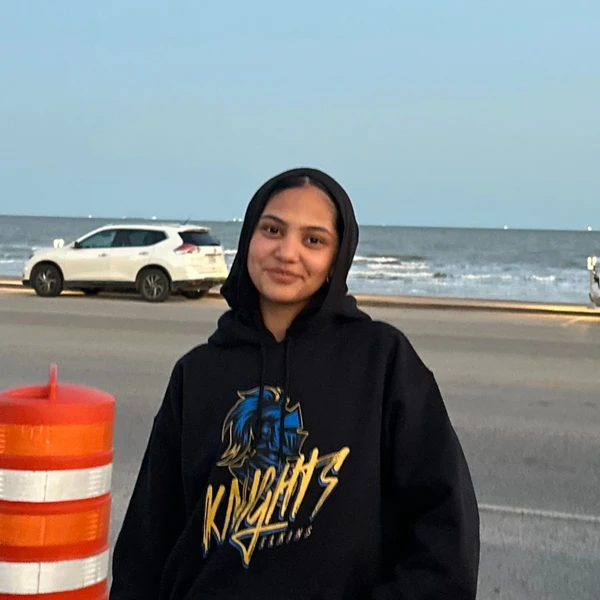
Elkins High School
High SchoolMiscellaneous
Desired degree level:
Bachelor's degree program
Graduate schools of interest:
Transfer schools of interest:
Majors of interest:
- Psychology, General
- Law
- Criminology
- History and Political Science
- Political Science and Government
Career
Dream career field:
- Law Practice
Dream career goals:
Legal intern
Fort Bend County Youth Employment Program | Justice of the Peace, Precinct 32025 – 2025Assistant
The Cornor Law Firm2026 – Present8 months
Sports
Fencing
Club2017 – 20247 years
Taekwondo
Club2020 – 20244 years
Golf
Junior Varsity2023 – 20252 years
Public services
Advocacy
Fort Bend Independent School District Student Voices Advisory Network — Student Lead for Elkins High School2024 – PresentVolunteering
Fort Bend County Fair Association — Volunteer2024 – 2025Advocacy
Elkins Sociedad Honoraria Hispánica — Public Relations Officer2025 – PresentAdvocacy
Fort Bend County Youth Leadership Program — Youth Leader | Animal Welfare Advocate2024 – 2024Public Service (Politics)
Judge Sonia Rash's Campaign Volunteer Group — Campaign Volunteer2025 – Present
Future Interests
Advocacy
Politics
Volunteering
Philanthropy
Bulkthreads.com's "Let's Aim Higher" Scholarship
While most children woke up early to indulge in an extra five minutes of theme songs and animations, my living room echoed the opening music of breaking news. By tuning into these broadcasts, I became intrigued by the developments in court trials and policy changes. Over the years, the news encouraged me to consider the backstories of the “headlines”; behind every verdict stands a person directly affected by the outcome. I began to notice a pattern: countless individuals, especially juveniles, in the justice system struggle with their mental health and inadequate access to treatment.
In 2020, the National Institute of Health reported that 70% of incarcerated youth were living with mental health disorders. As an AP Psychology student passionate about mental health and criminal justice, this statistic inspired me to advocate for juveniles by bridging the gap between psychology and law.
During my internship at Fort Bend County Justice of the Peace, Precinct 3, I had the opportunity to visit a juvenile detention center. While touring the facility, I noticed motivational drawings lining the walls, created by juveniles to creatively express their emotions. Towards the end of the tour, what had begun as an interest transformed into my career goal: supporting juveniles' mental health while guiding them through the court system and providing them the tools they need to live a successful life.
This fall, I plan on attending The University of Houston’s Honors College. This will allow me to build strong foundational skills in developmental and forensic psychology. I look forward to working alongside Dr. Jessica Church-Lang, whose Developmental Cognitive Neuroscience Lab impressively emphasizes brain network development and behavioral control in youth. Through courses such as Forensic Psychology and Adolescent Development, I am confident that I will be able to deliver justice to those who need it most by understanding human thought processes and cognitive behavior.
As I begin my college career, I now have the opportunity to explore the complexities of the human brain and prepare for a future in law where I can make a meaningful impact on my community. The Bulkthreads.com's "Let's Aim Higher" Scholarship will provide me with the freedom to take on challenges, try new ideas, and push myself further. It lets me focus on building the skills, curiosity, and perspective I need to make a difference in my field. With this support, I can fully dedicate myself to learning, growing, and shaping the future I hope to create.
Richard Neumann Scholarship
While most children woke up early to indulge in an extra five minutes of theme songs and animations, my living room echoed the opening music of breaking news. By tuning into these broadcasts, I became intrigued by the developments in court trials and policy changes. Over the years, the news encouraged me to consider the backstories of the “headlines”; behind every verdict stands a person directly affected by the outcome. I began to notice a pattern: countless individuals, especially juveniles, in the justice system struggle with their mental health and inadequate access to treatment.
In 2020, the National Institute of Health reported that 70% of incarcerated youth were living with mental health disorders. As an AP Psychology student passionate about mental health and criminal justice, this statistic inspired me to advocate for juveniles by bridging the gap between psychology and law.
During my internship at Fort Bend County Justice of the Peace, Precinct 3, I had the opportunity to visit a juvenile detention center. While touring the facility, I noticed motivational drawings lining the walls, created by juveniles to creatively express their emotions. Towards the end of the tour, what had begun as an interest transformed into my career goal: supporting juveniles' mental health while guiding them through the court system and providing them the tools they need to live a successful life.
This fall, I plan on attending The University of Houston’s Honors College. This will allow me to build strong foundational skills in developmental and forensic psychology. I look forward to working alongside Dr. Jessica Church-Lang, whose Developmental Cognitive Neuroscience Lab impressively emphasizes brain network development and behavioral control in youth. Through courses such as Forensic Psychology and Adolescent Development, I am confident that I will be able to deliver justice to those who need it most by understanding human thought processes and cognitive behavior.
As I begin my college career, I now have the opportunity to explore the complexities of the human brain and prepare for a future in law where I can make a meaningful impact on my community. The Richard Neumann Scholarship will give me the freedom to take on challenges, try new ideas, and push myself further. It lets me focus on building the skills, curiosity, and perspective I need to make a difference in my field. With this support, I can fully dedicate myself to learning, growing, and shaping the future I hope to create.
Stephan L. Wolley Memorial Scholarship
Sixteen missing golf balls, eleven awkwardly bent golf tees, and what felt like a billion practice shots. Three swings into the near future, and I would finally walk off the green with “par” written down on my score card for the first time in six holes. After weeks as a freshman on my high school’s golf team, I had flooded the practice range with discouragement and more missed shots than I could count. After endlessly switching my grip and shifting my stance, I expected to see a breakthrough in my game. Yet, each ball path was a carbon copy of the others.
The first time I ever swung a golf club, I surmised that the perfect swing solely relied on strength, agility, and precision. It was not until I accepted my fate of maxing out the next hole that I hit straight down the fairway and landed only a club length from the flag: the method to a truly perfect swing is mastering your mindset. As I began to familiarize myself with the golf course, I focused less on the game and more on the mind behind it. Every time I slowed down and focused on the ball, I noticed that I hit straighter, further, and more confidently.
Through golf, I learned how the human brain processes stimuli and external information; I wanted to learn more about how humans think, behave, and perceive. My fascination with the human mind kept me up at night, reading articles about sports psychology and how stress can poorly affect athlete performance by blurring decision making in the brain’s prefrontal cortex. Each practice, I kept my research findings in the back of my mind before each shot. Every time, the ball dropped perfectly into the cup, and I noticed how I was able to remain calmer during high-pressure points in my game. Notably, these lessons of regulation had carried their way over from the fairway to my everyday life: in the classroom, during meetings, and other extracurriculars.
Practice after practice, I discovered that golf was not only my introduction to my favorite sport, but also what sparked my passion for psychology and the study of the human mind. With the help of my AP Psychology class, I started thinking of brain structures as a regular part of my game. For example, how the medulla takes charge of heart rate and breathing when teeing up, or how the thalamus allows you to combine all sensory information when analyzing which direction to aim. What once was a struggle between a tiny, white ball and a flag placed 250 yards into the horizon turned into a life-lesson of resilience and interest.
Golf is a parallel to life. No matter what, the ball must always be played as it lies; although it is not always possible to change a disadvantageous situation, it is always possible to change the approach. Once I had embraced this advice, I was not only able to consistently hear the “clink” between my ball and the flag’s cup, but also found my interest in the study of the human mind and behavior. This mindset has shaped how I approach challenges and set backs, both on the fairway and in the classroom. By showing up to practice at the course, I learned that even if I miss over and over again, there will always be another hole waiting for me: another opportunity to succeed.
Jeannine Schroeder Women in Public Service Memorial Scholarship
While most children woke up early to indulge in an extra five minutes of theme songs and animations, my living room echoed the opening music of breaking news. By tuning into these broadcasts, I became intrigued by the developments in court trials and policy changes. Over the years, the news encouraged me to consider the backstories of the “headlines”; behind every verdict stands a person directly affected by the outcome. I began to notice a pattern: countless individuals, especially juveniles, in the justice system struggle with their mental health and inadequate access to treatment.
In 2020, the National Institute of Health reported that 70% of incarcerated youth were living with mental health disorders. As an AP Psychology student passionate about mental health and criminal justice, this statistic inspired me to advocate for juveniles by bridging the gap between psychology and law.
During my internship at Fort Bend County Justice of the Peace, Precinct 3, I had the opportunity to visit a juvenile detention center. While touring the facility, I noticed motivational drawings lining the walls, created by juveniles to creatively express their emotions. Towards the end of the tour, what had begun as an interest transformed into my career goal: supporting juveniles' mental health while guiding them through the court system and providing them the tools they need to live a successful life.
This fall, I plan on attending The University of Houston’s Honors College. This will allow me to build strong foundational skills in developmental and forensic psychology. I look forward to working alongside Dr. Jessica Church-Lang, whose Developmental Cognitive Neuroscience Lab impressively emphasizes brain network development and behavioral control in youth. Through courses such as Forensic Psychology and Adolescent Development, I am confident that I will be able to deliver justice to those who need it most by understanding human thought processes and cognitive behavior.
As I begin my college career, I now have the opportunity to explore the complexities of the human brain and prepare for a future in law where I can make a meaningful impact on my community. The Jeannine Schroeder Women in Public Service Memorial Scholarship will provide me with the freedom to take on challenges, try new ideas, and push myself further. It lets me focus on building the skills, curiosity, and perspective I need to make a difference in my field. With this support, I can fully dedicate myself to learning, growing, and shaping the future I hope to create.
Brian J Boley Memorial Scholarship
While most children woke up early to indulge in an extra five minutes of theme songs and animations, my living room echoed the opening music of breaking news. By tuning into these broadcasts, I became intrigued by the developments in court trials and policy changes. Over the years, the news encouraged me to consider the backstories of the “headlines”; behind every verdict stands a person directly affected by the outcome. I began to notice a pattern: countless individuals, especially juveniles, in the justice system struggle with their mental health and inadequate access to treatment.
In 2020, the National Institute of Health reported that 70% of incarcerated youth were living with mental health disorders. As an AP Psychology student passionate about mental health and criminal justice, this statistic inspired me to advocate for juveniles by bridging the gap between psychology and law.
During my internship at Fort Bend County Justice of the Peace, Precinct 3, I had the opportunity to visit a juvenile detention center. While touring the facility, I noticed motivational drawings lining the walls, created by juveniles to creatively express their emotions. Towards the end of the tour, what had begun as an interest transformed into my career goal: supporting juveniles' mental health while guiding them through the court system and providing them the tools they need to live a successful life.
This fall, I plan on attending The University of Houston’s Honors College. This will allow me to build strong foundational skills in developmental and forensic psychology. I look forward to working alongside Dr. Jessica Church-Lang, whose Developmental Cognitive Neuroscience Lab impressively emphasizes brain network development and behavioral control in youth. Through courses such as Forensic Psychology and Adolescent Development, I am confident that I will be able to deliver justice to those who need it most by understanding human thought processes and cognitive behavior.
As I begin my college career, I now have the opportunity to explore the complexities of the human brain and prepare for a future in law where I can make a meaningful impact on my community. The Brian J Boley Memorial Scholarship will provide me with the freedom to take on challenges, try new ideas, and push myself further. It lets me focus on building the skills, curiosity, and perspective I need to make a difference in my field. With this support, I can fully dedicate myself to learning, growing, and shaping the future I hope to create.
Jimmy Cardenas Community Leader Scholarship
Sixteen missing golf balls, eleven awkwardly bent golf tees, and what felt like a billion practice shots. Three swings into the near future, and I would finally walk off the green with “par” written down on my score card for the first time in six holes. After weeks as a freshman on my high school’s golf team, I had flooded the practice range with discouragement and more missed shots than I could count. After endlessly switching my grip and shifting my stance, I expected to see a breakthrough in my game. Yet, each ball path was a carbon copy of the others.
The first time I ever swung a golf club, I surmised that the perfect swing solely relied on strength, agility, and precision. It was not until I accepted my fate of maxing out the next hole that I hit straight down the fairway and landed only a club length from the flag: the method to a truly perfect swing is mastering your mindset. As I began to familiarize myself with the golf course, I focused less on the game and more on the mind behind it. Every time I slowed down and focused on the ball, I noticed that I hit straighter, further, and more confidently.
Through golf, I learned how the human brain processes stimuli and external information; I wanted to learn more about how humans think, behave, and perceive. My fascination with the human mind kept me up at night, reading articles about sports psychology and how stress can poorly affect athlete performance by blurring decision making in the brain’s prefrontal cortex. Each practice, I kept my research findings in the back of my mind before each shot. Every time, the ball dropped perfectly into the cup, and I noticed how I was able to remain calmer during high-pressure points in my game. Notably, these lessons of regulation had carried their way over from the fairway to my everyday life: in the classroom, during meetings, and other extracurriculars.
Practice after practice, I discovered that golf was not only my introduction to my favorite sport, but also what sparked my passion for psychology and the study of the human mind. With the help of my AP Psychology class, I started thinking of brain structures as a regular part of my game. For example, how the medulla takes charge of heart rate and breathing when teeing up, or how the thalamus allows you to combine all sensory information when analyzing which direction to aim. What once was a struggle between a tiny, white ball and a flag placed 250 yards into the horizon turned into a life-lesson of resilience and interest.
Golf is a parallel to life. No matter what, the ball must always be played as it lies; although it is not always possible to change a disadvantageous situation, it is always possible to change the approach. Once I had embraced this advice, I was not only able to consistently hear the “clink” between my ball and the flag’s cup, but also found my interest in the study of the human mind and behavior. This mindset has shaped how I approach challenges and set backs, both on the fairway and in the classroom. By showing up to practice at the course, I learned that even if I miss over and over again, there will always be another hole waiting for me: another opportunity to succeed.
Charles B. Brazelton Memorial Scholarship
While most children woke up early to indulge in an extra five minutes of theme songs and animations, my living room echoed the opening music of breaking news. Little did I know, even in the third grade, that this "awkward" habit would become the foundation of my career goals. By tuning into these broadcasts, I became intrigued by the developments in court trials and policy changes. Over the years, the news encouraged me to consider the backstories of the “headlines”; behind every verdict stands a person directly affected by the outcome. I began to notice a pattern: countless individuals, especially juveniles, in the justice system struggle with their mental health and inadequate access to treatment.
In 2020, the National Institute of Health reported that 70% of incarcerated youth were living with mental health disorders. As an AP Psychology student passionate about mental health and criminal justice, this statistic inspired me to advocate for juveniles by bridging the gap between psychology and law.
During my internship at Fort Bend County Justice of the Peace, Precinct 3, I had the opportunity to visit a juvenile detention center. While touring the facility, I noticed motivational drawings lining the walls, created by juveniles to creatively express their emotions. Towards the end of the tour, what had begun as an interest transformed into my career goal: supporting juveniles' mental health while guiding them through the court system and providing them the tools they need to live a successful life.
This fall, I plan on attending The University of Houston’s Honors College. This will allow me to build strong foundational skills in developmental and forensic psychology. I look forward to working alongside Dr. Jessica Church-Lang, whose Developmental Cognitive Neuroscience Lab impressively emphasizes brain network development and behavioral control in youth. Through courses such as Forensic Psychology and Adolescent Development, I am confident that I will be able to deliver justice to those who need it most by understanding human thought processes and cognitive behavior.
As I begin my college career, I now have the opportunity to explore the complexities of the human brain and prepare for a future in law where I can make a meaningful impact on my community. The Charles B. Brazelton Memorial Scholarship gives me the freedom to take on challenges, try new ideas, and push myself further. It lets me focus on building the skills, curiosity, and perspective I need to make a difference in my field. With this support, I can fully dedicate myself to learning, growing, and shaping the future I hope to create.
Hue Ta Asian American Scholarship
While most children woke up early to indulge in an extra five minutes of theme songs and animations, my living room echoed the opening music of breaking news. By tuning into these broadcasts, I became intrigued by the developments in court trials and policy changes. Over the years, the news encouraged me to consider the backstories of the “headlines”; behind every verdict stands a person directly affected by the outcome. I began to notice a pattern: countless individuals, especially juveniles, in the justice system struggle with their mental health and inadequate access to treatment.
In 2020, the National Institute of Health reported that 70% of incarcerated youth were living with mental health disorders. As an AP Psychology student passionate about mental health and criminal justice, this statistic inspired me to advocate for juveniles by bridging the gap between psychology and law.
During my internship at Fort Bend County Justice of the Peace, Precinct 3, I had the opportunity to visit a juvenile detention center. While touring the facility, I noticed motivational drawings lining the walls, created by juveniles to creatively express their emotions. Towards the end of the tour, what had begun as an interest transformed into my career goal: supporting juveniles' mental health while guiding them through the court system and providing them the tools they need to live a successful life.
Mental health and disability advocacy are especially important in the Asian American community due to stigma. In environments where mental health is stigmatized, many individuals struggle in silence with invisible disabilities and mental health challenges. Advocacy is the only way to break this cycle. By speaking up for others, we can start building support systems that recognize and serve our society’s needs.
This fall, I plan on attending The University of Houston’s Honors College. This will allow me to build strong foundational skills in developmental and forensic psychology. I look forward to working alongside Dr. Jessica Church-Lang, whose Developmental Cognitive Neuroscience Lab impressively emphasizes brain network development and behavioral control in youth. Through courses such as Forensic Psychology and Adolescent Development, I am confident that I will be able to deliver justice to those who need it most by understanding human thought processes and cognitive behavior.
As I begin my college career, I now have the opportunity to explore the complexities of the human brain and prepare for a future in law where I can make a meaningful impact on my community. The Hue Ta Asian American Scholarship will give me the freedom to take on challenges, try new ideas, and push myself further. It lets me focus on building the skills, curiosity, and perspective I need to make a difference in my field. With this support, I can fully dedicate myself to learning, growing, and shaping the future I hope to create.
Jake Thomas Williams Memorial Scholarship
While most children woke up early to indulge in an extra five minutes of theme songs and animations, my living room echoed the opening music of breaking news. By tuning into these broadcasts, I became intrigued by the developments in court trials and policy changes. Over the years, the news encouraged me to consider the backstories of the “headlines”; behind every verdict stands a person directly affected by the outcome. I began to notice a pattern: countless individuals, especially juveniles, in the justice system struggle with their mental health and inadequate access to treatment.
In 2020, the National Institute of Health reported that 70% of incarcerated youth were living with mental health disorders. As an AP Psychology student passionate about mental health and criminal justice, this statistic inspired me to advocate for juveniles by bridging the gap between psychology and law.
During my internship at Fort Bend County Justice of the Peace, Precinct 3, I had the opportunity to visit a juvenile detention center. While touring the facility, I noticed motivational drawings lining the walls, created by juveniles to creatively express their emotions. Towards the end of the tour, what had begun as an interest transformed into my career goal: supporting juveniles' mental health while guiding them through the court system and providing them the tools they need to live a successful life.
This fall, I plan on attending The University of Houston’s Honors College. This will allow me to build strong foundational skills in developmental and forensic psychology. I look forward to working alongside Dr. Jessica Church-Lang, whose Developmental Cognitive Neuroscience Lab impressively emphasizes brain network development and behavioral control in youth. Through courses such as Forensic Psychology and Adolescent Development, I am confident that I will be able to deliver justice to those who need it most by understanding human thought processes and cognitive behavior.
As I begin my college career, I now have the opportunity to explore the complexities of the human brain and prepare for a future in law where I can make a meaningful impact on my community. The Jake Thomas Williams Memorial Scholarship will give me the freedom to take on challenges, try new ideas, and push myself further. It lets me focus on building the skills, curiosity, and perspective I need to make a difference in my field. With this support, I can fully dedicate myself to learning, growing, and shaping the future I hope to create.
Hines Scholarship
While most children woke up early to indulge in an extra five minutes of theme songs and animations, my living room echoed the opening music of breaking news. By tuning into these broadcasts, I became intrigued by the developments in court trials and policy changes. Over the years, the news encouraged me to consider the backstories of the “headlines.” Behind every verdict stands a person directly affected by the outcome. I began to notice a pattern: countless individuals, especially juveniles, in the justice system struggle with their mental health and inadequate access to treatment.
In 2020, the National Institute of Health reported that approximately 70% of incarcerated youth were living with mental health disorders. As an AP Psychology student passionate about mental health and criminal justice, this statistic inspired me to advocate for juveniles by bridging the gap between psychology and law.
During my internship at Fort Bend County Justice of the Peace, Precinct 3, I had the opportunity to visit a juvenile detention center. While touring the facility, I noticed motivational drawings lining the walls, created by juveniles to creatively express their emotions. Towards the end of the tour, what had begun as an interest transformed into my career goal: supporting juveniles' mental health while guiding them through the court system and providing them the tools they need to live a successful life.
This fall, I plan on attending The University of Houston’s Honors College. This will allow me to build strong foundational skills in developmental and forensic psychology. I look forward to working alongside researchers, such as Dr. Jessica Church-Lang, whose Developmental Cognitive Neuroscience Lab emphasizes brain network development and behavioral control in youth. Through courses such as Forensic Psychology and Adolescent Development, I am confident that I will be able to deliver justice to those who need it most by understanding human thought processes and cognitive behavior.
As I begin my college career, I now have the opportunity to gain the education needed to serve my community by applying my knowledge of human behavior to advocate for those who rely on the justice system. By earning the Hines Scholarship, I will have the financial freedom to explore psychology and law through real experiences, such as internships and volunteer work. This investment in my education will allow me to focus on developing the skills and perspective that I need to make a meaningful impact as a future defense attorney.
Ryan T. Herich Memorial Scholarship
While most children woke up early to indulge in an extra five minutes of theme songs and animations, my living room echoed the opening music of breaking news. By tuning into these broadcasts, I became intrigued by the developments in court trials and policy changes. Over the years, the news encouraged me to consider the backstories of the “headlines”; behind every verdict stands a person directly affected by the outcome. I began to notice a pattern: countless individuals, especially juveniles, in the justice system struggle with their mental health and inadequate access to treatment.
In 2020, the National Institute of Health reported that 70% of incarcerated youth were living with mental health disorders. As an AP Psychology student passionate about mental health and criminal justice, this statistic inspired me to advocate for juveniles by bridging the gap between psychology and law.
During my internship at Fort Bend County Justice of the Peace, Precinct 3, I had the opportunity to visit a juvenile detention center. While touring the facility, I noticed motivational drawings lining the walls, created by juveniles to creatively express their emotions. Towards the end of the tour, what had begun as an interest transformed into my career goal: supporting juveniles' mental health while guiding them through the court system and providing them the tools they need to live a successful life.
This fall, I plan on attending The University of Houston’s Honors College. This will allow me to build strong foundational skills in developmental and forensic psychology. I look forward to working alongside Dr. Jessica Church-Lang, whose Developmental Cognitive Neuroscience Lab impressively emphasizes brain network development and behavioral control in youth. Through courses such as Forensic Psychology and Adolescent Development, I am confident that I will be able to deliver justice to those who need it most by understanding human thought processes and cognitive behavior.
As I begin my college career, I now have the opportunity to gain the education needed to serve my community by applying my knowledge of human behavior to advocate for those who rely on the justice system. By earning the Ryan T. Herich Memorial Scholarship, I will have the financial freedom to explore psychology and law through real experiences, such as internships and volunteer work. This investment in my education will allow me to focus on developing the skills and perspective that I need to make a meaningful impact as a future defense attorney.
Julie Adams Memorial Scholarship – Women in STEM
Sixteen missing golf balls, eleven awkwardly bent golf tees, and what felt like a million practice shots. Three swings into the near future, and I would finally walk off the green with “par” written down on my scorecard for the first time in six holes. As a freshman on my high school’s golf team, I flooded the practice range with discouragement and more missed shots than I could possibly count. After endlessly switching my grip and shifting my stance, I expected to see a breakthrough in my game. Yet, each ball path was a carbon copy of the one before it.
The first time I ever swung a golf club, I surmised that the perfect swing solely relied on strength, agility, and precision. It was not until a tournament at Greatwood Golf Club where I finally accepted my fate of maxing out the next hole. In that moment, I hit the golf ball straight down the fairway and landed only a club’s length away from the flag: the method to a truly perfect golf swing was mastering the mindset. As I began to familiarize myself with the golf course, I focused less on the game, and more on the brain behind it. By quieting my mind and focusing on the ball, I noticed that I hit steadier, straighter, and further.
Through golf, I learned how the human brain processes stimuli and external information; I wanted to learn more about how humans think, behave, and perceive. My fascination with the human brain kept me up at night, reading articles about sports psychology and how stress can poorly affect an athlete’s performance by blurring decision making in the brain’s prefrontal cortex. Expanding my knowledge through research was one thing; however, I wanted to see how those same theories could apply outside of athletics.
My curiosity led me to observe these concepts through an internship at Fort Bend County Justice of the Peace, Precinct 3. That is when my interest in psychology crossed the bounds of just sports psychology, leading me to discover the field of forensic psychology: applying psychological research to the legal field. My fascination with the human mind intersected with my career goal of becoming a criminal defense attorney. It was captivating to see how human behavior could be used to determine witness credibility, evaluate the reliability of evidence, and most importantly, allow the justice system to be accessible for those who rely on it. I realized the same skills which I had developed on the golf course, analytical reasoning, personal ethics, and emotional control, were just as valuable in the legal field.
Whether it was preparing for an upcoming golf tournament or analyzing a mock trial casebook, my AP Psychology class became a bridge between research and daily life. I began thinking of brain structures as a regular part of my everyday experiences: how the medulla controls heart rate and breathing while teeing up for a shot, or how the frontal lobe enables higher-order thinking and decision making when forming arguments against an opposing counsel. What once was a struggle between a tiny, white ball and a flag placed 250 yards into the horizon turned into a life-lesson of resilience, curiosity, and critical thinking.
As I begin my college career, I now have the opportunity to explore the complexities of the human brain and prepare for a future in law where I can make a meaningful impact on my community. The Julie Adams Memorial Scholarship will give me the freedom to take on challenges, try new ideas, and push myself further. It lets me focus on building the skills, curiosity, and perspective I need to make a difference in my field. With this support, I can fully dedicate myself to learning, growing, and shaping the future I hope to create.
Golf is a parallel to life. The ball must always be played as it lies; although it is not always possible to change a disadvantageous situation, it is always possible to change the approach. Once I had embraced this lesson, I was not only able to consistently hear the satisfying “clink” between my ball and the flag’s cup, but also found my interest in the study of the human mind and behavior. This mindset has shaped how I approach challenges and set backs, both on and off of the fairway. By showing up to practice at the course, I learned that even if I miss over and over again, there will always be another hole waiting for me: another opportunity to succeed.
East Harris County Impact Scholarship
Admiring the dome of the Texas State Capitol, I watched as sunlight bounced off the marble walls onto the terrazzo flooring, pausing to reflect on the experiences which had brought me here. A few weeks prior, a single subject line lit up my inbox: “Congratulations on Being Promoted to Lead at Fort Bend ISD’s Student Voices Advisory Network!”
Since my freshman year, I have represented the voices of over 5,000 of my fellow high school students through Fort Bend ISD’s Student Voices: a program empowering students to voice their perspectives directly with district leaders, influence decision making, and strengthen their leadership skills. My promotion to Lead meant empowering others to pursue their own leadership journey. Standing inside the Capitol for Austin Advocacy Day, where generations of remarkable leaders had stood before me, I felt the significance of my new role.
Through Voices, I have gained a platform to advocate for my peers in spaces where key decisions are made. At Austin Advocacy Day, I spoke with Texas State Representatives on redefining ballot language to improve comprehension for young voters. In addition, I advocated for adjustments to House Bill 114, enabling school districts to implement rehabilitation programs focused on drug prevention, rather than punishment. From there, I was given the opportunity to present these initiatives to thousands of school board members across Texas at TASB (Texas Association of School Boards) Governance Camp in Galveston, Texas.
Voices stands as one of my proudest leadership experiences, giving me the responsibility to represent the voices of those who often go unheard. This August, I plan on attending The University of Houston’s Honors College. I look forward to joining Student Governance Organizations to support diverse perspectives and build inclusive environments. By using the skills which I developed through Voices, I am excited to continue to listen, and elevate the perspectives of my peers at UH.
Forever90 Scholarship
While most children woke up early to indulge in an extra five minutes of theme songs and animations, my living room echoed with the opening music of breaking news. By tuning into these broadcasts, I became intrigued by the developments in court trials and policy changes. Over the years, the news encouraged me to consider the backstories of the “headlines”; behind every verdict stands a person directly affected by the outcome. I began to notice a pattern: countless individuals, especially juveniles, in the justice system struggle with their mental health and inadequate access to treatment.
In 2020, the National Institute of Health reported that 70% of incarcerated youth were living with mental health disorders. As an AP Psychology student passionate about mental health and criminal justice, this statistic inspired me to advocate for juveniles by bridging the gap between psychology and law.
During my internship at Fort Bend County Justice of the Peace, Precinct 3, I had the opportunity to visit a juvenile detention center. While touring the facility, I noticed motivational drawings lining the walls, created by juveniles to creatively express their emotions. Towards the end of the tour, what had begun as an interest transformed into my career goal: supporting juveniles' mental health while guiding them through the court system and providing them the tools they need to live a successful life.
This fall, I plan on attending The University of Houston’s Honors College. This will allow me to build strong foundational skills in developmental and forensic psychology. I look forward to working alongside Dr. Jessica Church-Lang, whose Developmental Cognitive Neuroscience Lab impressively emphasizes brain network development and behavioral control in youth. Through courses such as Forensic Psychology and Adolescent Development, I am confident that I will be able to deliver justice to those who need it most by understanding human thought processes and cognitive behavior.
As I begin my college career, I now have the opportunity to gain the education needed to serve my community by applying my knowledge of human behavior to advocate for those who rely on the justice system. By earning the Forever 90 Scholarship, I will have the financial freedom to explore psychology and law through real experiences, such as internships and volunteer work. This investment in my education will allow me to focus on developing the skills and perspective that I need to make a meaningful impact as a future defense attorney.
Peter and Nan Liubenov Student Scholarship
While most children woke up early to indulge in an extra five minutes of theme songs and animations, my living room echoed the opening music of breaking news. By tuning into these broadcasts, I became intrigued by the developments in court trials and policy changes. Over the years, the news encouraged me to consider the backstories of the “headlines”; behind every verdict stands a person directly affected by the outcome. I began to notice a pattern: countless individuals, especially juveniles, in the justice system struggle with their mental health and inadequate access to treatment.
In 2020, the National Institute of Health reported that 70% of incarcerated youth were living with mental health disorders. As an AP Psychology student passionate about mental health and criminal justice, this statistic inspired me to advocate for juveniles by bridging the gap between psychology and law.
During my internship at Fort Bend County Justice of the Peace, Precinct 3, I had the opportunity to visit a juvenile detention center. While touring the facility, I noticed motivational drawings lining the walls, created by juveniles to creatively express their emotions. Towards the end of the tour, what had begun as an interest transformed into my career goal: supporting juveniles' mental health while guiding them through the court system and providing them the tools they need to live a successful life.
This fall, I plan on attending The University of Houston’s Honors College. This will allow me to build strong foundational skills in developmental and forensic psychology. I look forward to working alongside Dr. Jessica Church-Lang, whose Developmental Cognitive Neuroscience Lab impressively emphasizes brain network development and behavioral control in youth. Through courses such as Forensic Psychology and Adolescent Development, I am confident that I will be able to deliver justice to those who need it most by understanding human thought processes and cognitive behavior.
As I begin my college career, I now have the opportunity to gain the education needed to serve my community by applying my knowledge of human behavior to advocate for those who rely on the justice system. By earning the Peter and Nan Liubenov Student Scholarship, I will have the financial freedom to explore psychology and law through real experiences, such as internships and volunteer work. This investment in my education will allow me to focus on developing the skills and perspective that I need to make a meaningful impact as a future defense attorney.
Matthew Hoover Memorial Scholarship
Sixteen missing golf balls, eleven awkwardly bent golf tees, and what felt like a billion practice shots. Three swings into the near future, and I would finally walk off the green with “par” written down on my score card for the first time in six holes. After weeks as a freshman on my high school’s golf team, I had flooded the practice range with discouragement and more missed shots than I could count. After endlessly switching my grip and shifting my stance, I expected to see a breakthrough in my game. Yet, each ball path was a carbon copy of the others.
The first time I ever swung a golf club, I surmised that the perfect swing solely relied on strength, agility, and precision. It was not until I accepted my fate of maxing out the next hole that I hit straight down the fairway and landed only a club length from the flag: the method to a truly perfect swing is mastering your mindset. As I began to familiarize myself with the golf course, I focused less on the game and more on the mind behind it. Every time I slowed down and focused on the ball, I noticed that I hit straighter, further, and more confidently.
Through golf, I learned how the human brain processes stimuli and external information; I wanted to learn more about how humans think, behave, and perceive. My fascination with the human mind kept me up at night, reading articles about sports psychology and how stress can poorly affect athlete performance by blurring decision making in the brain’s prefrontal cortex. Each practice, I kept my research findings in the back of my mind before each shot. Every time, the ball dropped perfectly into the cup, and I noticed how I was able to remain calmer during high-pressure points in my game. Notably, these lessons of regulation had carried their way over from the fairway to my everyday life: in the classroom, during meetings, and other extracurriculars.
Practice after practice, I discovered that golf was not only my introduction to my favorite sport, but also what sparked my passion for psychology and the study of the human mind. With the help of my AP Psychology class, I started thinking of brain structures as a regular part of my game. For example, how the medulla takes charge of heart rate and breathing when teeing up, or how the thalamus allows you to combine all sensory information when analyzing which direction to aim. What once was a struggle between a tiny, white ball and a flag placed 250 yards into the horizon turned into a life-lesson of resilience and interest.
Golf is a parallel to life. No matter what, the ball must always be played as it lies; although it is not always possible to change a disadvantageous situation, it is always possible to change the approach. Once I had embraced this advice, I was not only able to consistently hear the “clink” between my ball and the flag’s cup, but also found my interest in the study of the human mind and behavior. This mindset has shaped how I approach challenges and set backs, both on the fairway and in the classroom. By showing up to practice at the course, I learned that even if I miss over and over again, there will always be another hole waiting for me: another opportunity to succeed.
Hulede Collegiate Golf Scholarship
Sixteen missing golf balls, eleven awkwardly bent golf tees, and what felt like a billion practice shots. Three swings into the near future, and I would finally walk off the green with “par” written down on my score card for the first time in six holes. After weeks as a freshman on my high school’s golf team, I had flooded the practice range with discouragement and more missed shots than I could count. After endlessly switching my grip and shifting my stance, I expected to see a breakthrough in my game. Yet, each ball path was a carbon copy of the others.
The first time I ever swung a golf club, I surmised that the perfect swing solely relied on strength, agility, and precision. It was not until I accepted my fate of maxing out the next hole that I hit straight down the fairway and landed only a club length from the flag: the method to a truly perfect swing is mastering your mindset. As I began to familiarize myself with the golf course, I focused less on the game and more on the mind behind it. Every time I slowed down and focused on the ball, I noticed that I hit straighter, further, and more confidently.
Through golf, I learned how the human brain processes stimuli and external information; I wanted to learn more about how humans think, behave, and perceive. My fascination with the human mind kept me up at night, reading articles about sports psychology and how stress can poorly affect athlete performance by blurring decision making in the brain’s prefrontal cortex. Each practice, I kept my research findings in the back of my mind before each shot. Every time, the ball dropped perfectly into the cup, and I noticed how I was able to remain calmer during high-pressure points in my game. Notably, these lessons of regulation had carried their way over from the fairway to my everyday life: in the classroom, during meetings, and other extracurriculars.
Practice after practice, I discovered that golf was not only my introduction to my favorite sport, but also what sparked my passion for psychology and the study of the human mind. With the help of my AP Psychology class, I started thinking of brain structures as a regular part of my game. For example, how the medulla takes charge of heart rate and breathing when teeing up, or how the thalamus allows you to combine all sensory information when analyzing which direction to aim. What once was a struggle between a tiny, white ball and a flag placed 250 yards into the horizon turned into a life-lesson of resilience and interest.
This fall, I plan on attending The University of Houston’s Honors College, allowing me to build strong foundational skills in developmental and forensic psychology. As I begin my college career, I now have the opportunity to gain the education needed to serve my community by applying my knowledge of human behavior to advocate for those who rely on the justice system. By earning the Hulede Collegiate Golf Scholarship, I will have the financial freedom to explore psychology and law through real experiences, such as internships and volunteer work. This investment in my education will allow me to focus on developing the skills and perspective that I need to make a meaningful impact as a future defense attorney.
Golf is a parallel to life. No matter what, the ball must always be played as it lies; although it is not always possible to change a disadvantageous situation, it is always possible to change the approach. Once I had embraced this advice, I was not only able to consistently hear the “clink” between my ball and the flag’s cup, but also found my interest in the study of the human mind and behavior. This mindset has shaped how I approach challenges and set backs, both on the fairway and in the classroom. By showing up to practice at the course, I learned that even if I miss over and over again, there will always be another hole waiting for me: another opportunity to succeed.
Ethel Hayes Destigmatization of Mental Health Scholarship
While most children woke up early to indulge in an extra five minutes of theme songs and animations, my living room echoed the opening music of breaking news. By tuning into these broadcasts, I became intrigued by the developments in court trials and policy changes. Over the years, the news encouraged me to consider the backstories of the “headlines”; behind every verdict stands a person directly affected by the outcome. I began to notice a pattern: countless individuals, especially juveniles, in the justice system struggle with their mental health and inadequate access to treatment.
In 2020, the National Institute of Health reported that 70% of incarcerated youth were living with mental health disorders. As an AP Psychology student passionate about mental health and criminal justice, this statistic inspired me to advocate for juveniles by bridging the gap between psychology and law.
During my internship at Fort Bend County Justice of the Peace, Precinct 3, I had the opportunity to visit a juvenile detention center. While touring the facility, I noticed motivational drawings lining the walls, created by juveniles to creatively express their emotions. Towards the end of the tour, what had begun as an interest transformed into my career goal: supporting juveniles' mental health while guiding them through the court system and providing them the tools they need to live a successful life.
As I begin my college career, I now have the opportunity to gain the education needed to serve my community by applying my knowledge of human behavior to advocate for those who rely on the justice system. By earning the Ethel Hayes Destigmatization of Mental Health Scholarship, I will have the financial freedom to explore psychology and law through real experiences, such as internships and volunteer work. This investment in my education will allow me to focus on developing the skills and perspective that I need to make a meaningful impact as a future defense attorney.
This fall, I plan on attending The University of Houston’s Honors College. This will allow me to build strong foundational skills in developmental and forensic psychology. I look forward to working alongside Dr. Jessica Church-Lang, whose Developmental Cognitive Neuroscience Lab impressively emphasizes brain network development and behavioral control in youth. Through courses such as Forensic Psychology and Adolescent Development, I am confident that I will be able to deliver justice to those who need it most by understanding human thought processes and cognitive behavior.
Valerie Rabb Academic Scholarship
Sixteen missing golf balls, eleven awkwardly bent golf tees, and what felt like a billion practice shots. Three swings into the near future, and I would finally walk off the green with “par” written down on my score card for the first time in six holes. After weeks as a freshman on my high school’s golf team, I had flooded the practice range with discouragement and more missed shots than I could count. After endlessly switching my grip and shifting my stance, I expected to see a breakthrough in my game. Yet, each ball path was a carbon copy of the others.
The first time I ever swung a golf club, I surmised that the perfect swing solely relied on strength, agility, and precision. It was not until I accepted my fate of maxing out the next hole that I hit straight down the fairway and landed only a club length from the flag: the method to a truly perfect swing is mastering your mindset. As I began to familiarize myself with the golf course, I focused less on the game and more on the mind behind it. Every time I slowed down and focused on the ball, I noticed that I hit straighter, further, and more confidently.
Through golf, I learned how the human brain processes stimuli and external information; I wanted to learn more about how humans think, behave, and perceive. My fascination with the human mind kept me up at night, reading articles about sports psychology and how stress can poorly affect athlete performance by blurring decision making in the brain’s prefrontal cortex. Each practice, I kept my research findings in the back of my mind before each shot. Every time, the ball dropped perfectly into the cup, and I noticed how I was able to remain calmer during high-pressure points in my game. Notably, these lessons of regulation had carried their way over from the fairway to my everyday life: in the classroom, during meetings, and other extracurriculars.
Practice after practice, I discovered that golf was not only my introduction to my favorite sport, but also what sparked my passion for psychology and the study of the human mind. With the help of my AP Psychology class, I started thinking of brain structures as a regular part of my game. For example, how the medulla takes charge of heart rate and breathing when teeing up, or how the thalamus allows you to combine all sensory information when analyzing which direction to aim. What once was a struggle between a tiny, white ball and a flag placed 250 yards into the horizon turned into a life-lesson of resilience and interest.
Golf is a parallel to life. No matter what, the ball must always be played as it lies; although it is not always possible to change a disadvantageous situation, it is always possible to change the approach. Once I had embraced this advice, I was not only able to consistently hear the “clink” between my ball and the flag’s cup, but also found my interest in the study of the human mind and behavior. This mindset has shaped how I approach challenges and set backs, both on the fairway and in the classroom. By showing up to practice at the course, I learned that even if I miss over and over again, there will always be another hole waiting for me: another opportunity to succeed.
Simon Strong Scholarship
Sixteen missing golf balls, eleven awkwardly bent golf tees, and what felt like a billion practice shots. Three swings into the near future, and I would finally walk off the green with “par” written down on my score card for the first time in six holes. After weeks as a freshman on my high school’s golf team, I had flooded the practice range with discouragement and more missed shots than I could count. After endlessly switching my grip and shifting my stance, I expected to see a breakthrough in my game. Yet, each ball path was a carbon copy of the others.
The first time I ever swung a golf club, I surmised that the perfect swing solely relied on strength, agility, and precision. It was not until I accepted my fate of maxing out the next hole that I hit straight down the fairway and landed only a club length from the flag: the method to a truly perfect swing is mastering your mindset. As I began to familiarize myself with the golf course, I focused less on the game and more on the mind behind it. Every time I slowed down and focused on the ball, I noticed that I hit straighter, further, and more confidently.
Through golf, I learned how the human brain processes stimuli and external information; I wanted to learn more about how humans think, behave, and perceive. My fascination with the human mind kept me up at night, reading articles about sports psychology and how stress can poorly affect athlete performance by blurring decision making in the brain’s prefrontal cortex. Each practice, I kept my research findings in the back of my mind before each shot. Every time, the ball dropped perfectly into the cup, and I noticed how I was able to remain calmer during high-pressure points in my game. Notably, these lessons of regulation had carried their way over from the fairway to my everyday life: in the classroom, during meetings, and other extracurriculars.
Practice after practice, I discovered that golf was not only my introduction to my favorite sport, but also what sparked my passion for psychology and the study of the human mind. With the help of my AP Psychology class, I started thinking of brain structures as a regular part of my game. For example, how the medulla takes charge of heart rate and breathing when teeing up, or how the thalamus allows you to combine all sensory information when analyzing which direction to aim. What once was a struggle between a tiny, white ball and a flag placed 250 yards into the horizon turned into a life-lesson of resilience and interest.
Golf is a parallel to life. No matter what, the ball must always be played as it lies; although it is not always possible to change a disadvantageous situation, it is always possible to change the approach. Once I had embraced this advice, I was not only able to consistently hear the “clink” between my ball and the flag’s cup, but also found my interest in the study of the human mind and behavior. This mindset has shaped how I approach challenges and set backs, both on the fairway and in the classroom. By showing up to practice at the course, I learned that even if I miss over and over again, there will always be another hole waiting for me: another opportunity to succeed.
Sunshine Legall Scholarship
While most children woke up early to indulge in an extra five minutes of theme songs and animations, my living room echoed the opening music of breaking news. By tuning into these broadcasts, I became intrigued by the developments in court trials and policy changes. Over the years, the news encouraged me to consider the backstories of the “headlines”; behind every verdict stands a person directly affected by the outcome. I began to notice a pattern: countless individuals, especially juveniles, in the justice system struggle with their mental health and inadequate access to treatment.
In 2020, the National Institute of Health reported that 70% of incarcerated youth were living with mental health disorders. As an AP Psychology student passionate about mental health and criminal justice, this statistic inspired me to advocate for juveniles by bridging the gap between psychology and law.
During my internship at Fort Bend County Justice of the Peace, Precinct 3, I had the opportunity to visit a juvenile detention center. While touring the facility, I noticed motivational drawings lining the walls, created by juveniles to creatively express their emotions. Towards the end of the tour, what had begun as an interest transformed into my career goal: supporting juveniles' mental health while guiding them through the court system and providing them the tools they need to live a successful life.
As I begin my college career, I now have the opportunity to gain the education needed to serve my community by applying my knowledge of human behavior to advocate for those who rely on the justice system. By earning the Sunshine Legall Scholarship, I will have the financial freedom to explore psychology and law through real experiences, such as internships and volunteer work. This investment in my education will allow me to focus on developing the skills and perspective that I need to make a meaningful impact as a future defense attorney.
This fall, I am excited to attend The University of Houston’s Honors College. This will allow me to build strong foundational skills in developmental and forensic psychology. I look forward to working alongside Dr. Jessica Church-Lang, whose Developmental Cognitive Neuroscience Lab impressively emphasizes brain network development and behavioral control in youth. Through courses such as Forensic Psychology and Adolescent Development, I am confident that I will be able to deliver justice to those who need it most by understanding human thought processes and cognitive behavior.
Kalia D. Davis Memorial Scholarship
While most children woke up early to indulge in an extra five minutes of theme songs and animations, my living room echoed the opening music of breaking news. By tuning into these broadcasts, I became intrigued by the developments in court trials and policy changes. Over the years, the news encouraged me to consider the backstories of the “headlines”; behind every verdict stands a person directly affected by the outcome. I began to notice a pattern: countless individuals, especially juveniles, in the justice system struggle with their mental health and inadequate access to treatment.
In 2020, the National Institute of Health reported that 70% of incarcerated youth were living with mental health disorders. As an AP Psychology student passionate about mental health and criminal justice, this statistic inspired me to advocate for juveniles by bridging the gap between psychology and law.
During my internship at Fort Bend County Justice of the Peace, Precinct 3, I had the opportunity to visit a juvenile detention center. While touring the facility, I noticed motivational drawings lining the walls, created by juveniles to creatively express their emotions. Towards the end of the tour, what had begun as an interest transformed into my career goal: supporting juveniles' mental health while guiding them through the court system and providing them the tools they need to live a successful life.
As I begin my college career, I now have the opportunity to gain the education needed to serve my community by applying my knowledge of human behavior to advocate for those who rely on the justice system. By earning the Kalia D. Davis Memorial Scholarship, I will have the financial freedom to explore psychology and law through real experiences, such as internships and volunteer work. This investment in my education will allow me to focus on developing the skills and perspective that I need to make a meaningful impact as a future defense attorney.
This fall, I plan on attending The University of Houston’s Honors College. This will allow me to build strong foundational skills in developmental and forensic psychology. I look forward to working alongside Dr. Jessica Church-Lang, whose Developmental Cognitive Neuroscience Lab impressively emphasizes brain network development and behavioral control in youth. Through courses such as Forensic Psychology and Adolescent Development, I am confident that I will be able to deliver justice to those who need it most by understanding human thought processes and cognitive behavior.
Learner Mental Health Empowerment for Health Students Scholarship
While most children woke up early to indulge in an extra five minutes of theme songs and animations, my living room echoed the opening music of breaking news. By tuning into these broadcasts, I became intrigued by the developments in court trials and policy changes. Over the years, the news encouraged me to consider the backstories of the “headlines”; behind every verdict stands a person directly affected by the outcome. I began to notice a pattern: countless individuals, especially juveniles, in the justice system struggle with their mental health and inadequate access to treatment.
In 2020, the National Institute of Health reported that 70% of incarcerated youth were living with mental health disorders. As an AP Psychology student passionate about mental health and criminal justice, this statistic inspired me to advocate for juveniles by bridging the gap between psychology and law.
During my internship at Fort Bend County Justice of the Peace, Precinct 3, I had the opportunity to visit a juvenile detention center. While touring the facility, I noticed motivational drawings lining the walls, created by juveniles to creatively express their emotions. Towards the end of the tour, what had begun as an interest transformed into my career goal: supporting juveniles' mental health while guiding them through the court system and providing them the tools they need to live a successful life.
As I begin my college career, I now have the opportunity to gain the education needed to serve my community by applying my knowledge of human behavior to advocate for those who rely on the justice system. By earning the Learner Mental Health Empowerment for Health Students Scholarship, I will have the financial freedom to explore psychology and law through real experiences, such as internships and volunteer work. This investment in my education will allow me to focus on developing the skills and perspective that I need to make a meaningful impact as a future defense attorney.
This fall, I plan on attending The University of Houston’s Honors College. This will allow me to build strong foundational skills in developmental and forensic psychology. I look forward to working alongside Dr. Jessica Church-Lang, whose Developmental Cognitive Neuroscience Lab impressively emphasizes brain network development and behavioral control in youth. Through courses such as Forensic Psychology and Adolescent Development, I am confident that I will be able to deliver justice to those who need it most by understanding human thought processes and cognitive behavior.
Our Destiny Our Future Scholarship
While most children woke up early to indulge in an extra five minutes of theme songs and animations, my living room echoed the opening music of breaking news. By tuning into these broadcasts, I became intrigued by the developments in court trials and policy changes. Over the years, the news encouraged me to consider the backstories of the “headlines”; behind every verdict stands a person directly affected by the outcome. I began to notice a pattern: countless individuals, especially juveniles, in the justice system struggle with their mental health and inadequate access to treatment.
In 2020, the National Institute of Health reported that 70% of incarcerated youth were living with mental health disorders. As an AP Psychology student passionate about mental health and criminal justice, this statistic inspired me to advocate for juveniles by bridging the gap between psychology and law.
During my internship at Fort Bend County Justice of the Peace, Precinct 3, I had the opportunity to visit a juvenile detention center. While touring the facility, I noticed motivational drawings lining the walls, created by juveniles to creatively express their emotions. Towards the end of the tour, what had begun as an interest transformed into my career goal: supporting juveniles' mental health while guiding them through the court system and providing them the tools they need to live a successful life.
As I begin my college career, I now have the opportunity to gain the education needed to serve my community by applying my knowledge of human behavior to advocate for those who rely on the justice system. By earning the Our Destiny Our Future Scholarship, I will have the financial freedom to explore psychology and law through real experiences, such as internships and volunteer work. This investment in my education will allow me to focus on developing the skills and perspective that I need to make a meaningful impact as a future defense attorney.
This fall, I plan on attending The University of Houston’s Honors College. This will allow me to build strong foundational skills in developmental and forensic psychology. I look forward to working alongside Dr. Jessica Church-Lang, whose Developmental Cognitive Neuroscience Lab impressively emphasizes brain network development and behavioral control in youth. Through courses such as Forensic Psychology and Adolescent Development, I am confident that I will be able to deliver justice to those who need it most by understanding human thought processes and cognitive behavior.
Mark Caldwell Memorial STEM/STEAM Scholarship
Sixteen missing golf balls, eleven awkwardly bent golf tees, and what felt like a billion practice shots. Three swings into the near future, and I would finally walk off the green with “par” written down on my score card for the first time in six holes. After weeks as a freshman on my high school’s golf team, I had flooded the practice range with discouragement and more missed shots than I could count. After endlessly switching my grip and shifting my stance, I expected to see a breakthrough in my game. Yet, each ball path was a carbon copy of the others.
The first time I ever swung a golf club, I surmised that the perfect swing solely relied on strength, agility, and precision. It was not until I accepted my fate of maxing out the next hole that I hit straight down the fairway and landed only a club length from the flag: the method to a truly perfect swing is mastering your mindset. As I began to familiarize myself with the golf course, I focused less on the game and more on the mind behind it. Every time I slowed down and focused on the ball, I noticed that I hit straighter, further, and more confidently.
Through golf, I learned how the human brain processes stimuli and external information; I wanted to learn more about how humans think, behave, and perceive. My fascination with the human mind kept me up at night, reading articles about sports psychology and how stress can poorly affect athlete performance by blurring decision making in the brain’s prefrontal cortex. Each practice, I kept my research findings in the back of my mind before each shot. Every time, the ball dropped perfectly into the cup, and I noticed how I was able to remain calmer during high-pressure points in my game. Notably, these lessons of regulation had carried their way over from the fairway to my everyday life: in the classroom, during meetings, and other extracurriculars.
Practice after practice, I discovered that golf was not only my introduction to my favorite sport, but also what sparked my passion for psychology and the study of the human mind. With the help of my AP Psychology class, I started thinking of brain structures as a regular part of my game. For example, how the medulla takes charge of heart rate and breathing when teeing up, or how the thalamus allows you to combine all sensory information when analyzing which direction to aim. What once was a struggle between a tiny, white ball and a flag placed 250 yards into the horizon turned into a life-lesson of resilience and interest.
Golf is a parallel to life. No matter what, the ball must always be played as it lies; although it is not always possible to change a disadvantageous situation, it is always possible to change the approach. Once I had embraced this advice, I was not only able to consistently hear the “clink” between my ball and the flag’s cup, but also found my interest in the study of the human mind and behavior. This mindset has shaped how I approach challenges and set backs, both on the fairway and in the classroom. By showing up to practice at the course, I learned that even if I miss over and over again, there will always be another hole waiting for me: another opportunity to succeed.
Dream BIG, Rise HIGHER Scholarship
Sixteen missing golf balls, eleven awkwardly bent golf tees, and what felt like a million practice shots. Three swings into the near future, and I would finally walk off the green with “par” written down on my scorecard for the first time in six holes. As a freshman on my high school’s golf team, I flooded the practice range with discouragement and more missed shots than I could possibly count. After endlessly switching my grip and shifting my stance, I expected to see a breakthrough in my game. Yet, each ball path was a carbon copy of the one before it.
The first time I ever swung a golf club, I surmised that the perfect swing solely relied on strength, agility, and precision. It was not until a tournament at Greatwood Golf Club where I finally accepted my fate of maxing out the next hole. In that moment, I hit the golf ball straight down the fairway and landed only a club’s length away from the flag: the method to a truly perfect golf swing was mastering the mindset. As I began to familiarize myself with the golf course, I focused less on the game, and more on the brain behind it. By quieting my mind and focusing on the ball, I noticed that I hit steadier, straighter, and further.
Through golf, I learned how the human brain processes stimuli and external information; I wanted to learn more about how humans think, behave, and perceive. My fascination with the human brain kept me up at night, reading articles about sports psychology and how stress can poorly affect an athlete’s performance by blurring decision making in the brain’s prefrontal cortex. Expanding my knowledge through research was one thing; however, I wanted to see how those same theories could apply outside of athletics.
My curiosity led me to observe these concepts through an internship at Fort Bend County Justice of the Peace, Precinct 3. That is when my interest in psychology crossed the bounds of just sports psychology, leading me to discover the field of forensic psychology: applying psychological research to the legal field. My fascination with the human mind intersected with my career goal of becoming a criminal defense attorney. It was captivating to see how human behavior could be used to determine witness credibility, evaluate the reliability of evidence, and most importantly, allow the justice system to be accessible for those who rely on it. I realized the same skills which I had developed on the golf course, analytical reasoning, personal ethics, and emotional control, were just as valuable in the legal field.
Whether it was preparing for an upcoming golf tournament or analyzing a mock trial casebook, my AP Psychology class became a bridge between research and daily life. I began thinking of brain structures as a regular part of my everyday experiences: how the medulla controls heart rate and breathing while teeing up for a shot, or how the frontal lobe enables higher-order thinking and decision making when forming arguments against an opposing counsel. What once was a struggle between a tiny, white ball and a flag placed 250 yards into the horizon turned into a life-lesson of resilience, curiosity, and critical thinking.
Golf is a parallel to life. The ball must always be played as it lies; although it is not always possible to change a disadvantageous situation, it is always possible to change the approach. Once I had embraced this lesson, I was not only able to consistently hear the satisfying “clink” between my ball and the flag’s cup, but also found my interest in the study of the human mind and behavior. This mindset has shaped how I approach challenges and set backs, both on and off of the fairway. By showing up to practice at the course, I learned that even if I miss over and over again, there will always be another hole waiting for me: another opportunity to succeed.
As I begin my college career, I now have the opportunity to explore the complexities of the human brain and prepare for a future in law where I can make a meaningful impact on my community. The Dream BIG, Rise HIGHER Scholarship gives me the freedom to take on challenges, try new ideas, and push myself further. It lets me focus on building the skills, curiosity, and perspective I need to make a difference in my field. With this support, I can fully dedicate myself to learning, growing, and shaping the future I hope to create.
PrimePutt Putting Mat Scholarship for Women Golfers
Sixteen missing golf balls, eleven awkwardly bent golf tees, and what felt like a billion practice shots. Three swings into the near future, and I would finally walk off the green with “par” written down on my score card for the first time in six holes. After weeks as a freshman on my high school’s golf team, I had flooded the practice range with discouragement and more missed shots than I could count. After endlessly switching my grip and shifting my stance, I expected to see a breakthrough in my game. Yet, each ball path was a carbon copy of the others.
The first time I ever swung a golf club, I surmised that the perfect swing solely relied on strength, agility, and precision. It was not until I accepted my fate of maxing out the next hole that I hit straight down the fairway and landed only a club length from the flag: the method to a truly perfect swing is mastering your mindset. As I began to familiarize myself with the golf course, I focused less on the game and more on the mind behind it. Every time I slowed down and focused on the ball, I noticed that I hit straighter, further, and more confidently.
Through golf, I learned how the human brain processes stimuli and external information; I wanted to learn more about how humans think, behave, and perceive. My fascination with the human mind kept me up at night, reading articles about sports psychology and how stress can poorly affect athlete performance by blurring decision making in the brain’s prefrontal cortex. Each practice, I kept my research findings in the back of my mind before each shot. Every time, the ball dropped perfectly into the cup, and I noticed how I was able to remain calmer during high-pressure points in my game. Notably, these lessons of regulation had carried their way over from the fairway to my everyday life: in the classroom, during meetings, and other extracurriculars.
Practice after practice, I discovered that golf was not only my introduction to my favorite sport, but also what sparked my passion for psychology and the study of the human mind. With the help of my AP Psychology class, I started thinking of brain structures as a regular part of my game. For example, how the medulla takes charge of heart rate and breathing when teeing up, or how the thalamus allows you to combine all sensory information when analyzing which direction to aim. What once was a struggle between a tiny, white ball and a flag placed 250 yards into the horizon turned into a life-lesson of resilience and interest.
Golf is a parallel to life. No matter what, the ball must always be played as it lies; although it is not always possible to change a disadvantageous situation, it is always possible to change the approach. Once I had embraced this advice, I was not only able to consistently hear the “clink” between my ball and the flag’s cup, but also found my interest in the study of the human mind and behavior. This mindset has shaped how I approach challenges and set backs, both on the fairway and in the classroom. By showing up to practice at the course, I learned that even if I miss over and over again, there will always be another hole waiting for me: another opportunity to succeed.
Patricia Lindsey Jackson Foundation-Mary Louise Lindsey Service Scholarship
While most children woke up early to indulge in an extra five minutes of theme songs and animations, my living room echoed the opening music of breaking news. By tuning into these broadcasts, I became intrigued by the developments in court trials and policy changes. Over the years, the news encouraged me to consider the backstories of the “headlines”; behind every verdict stands a person directly affected by the outcome. I began to notice a pattern: countless individuals, especially juveniles, in the justice system struggle with their mental health and inadequate access to treatment.
In 2020, the National Institute of Health reported that 70% of incarcerated youth were living with mental health disorders. As an AP Psychology student passionate about mental health and criminal justice, this statistic inspired me to advocate for juveniles by bridging the gap between psychology and law.
During my internship at Fort Bend County Justice of the Peace, Precinct 3, I had the opportunity to visit a juvenile detention center. While touring the facility, I noticed motivational drawings lining the walls, created by juveniles to creatively express their emotions. Towards the end of the tour, what had begun as an interest transformed into my career goal: supporting juveniles' mental health while guiding them through the court system and providing them the tools they need to live a successful life.
This fall, I plan on attending The University of Houston’s Honors College. This will allow me to build strong foundational skills in developmental and forensic psychology. I look forward to working alongside Dr. Jessica Church-Lang, whose Developmental Cognitive Neuroscience Lab impressively emphasizes brain network development and behavioral control in youth. Through courses such as Forensic Psychology and Adolescent Development, I am confident that I will be able to deliver justice to those who need it most by understanding human thought processes and cognitive behavior.
As I begin my college career, I now have the opportunity to gain the education needed to serve my community by applying my knowledge of human behavior to advocate for those who rely on the justice system. By earning the Patricia Lindsey Jackson Foundation-Mary Louise Lindsey Service Scholarship, I will have the financial freedom to explore psychology and law through real experiences, such as internships and volunteer work. This investment in my education will allow me to focus on developing the skills and perspective that I need to make a meaningful impact as a future defense attorney.
Public Service Scholarship of the Law Office of Shane Kadlec
While most children woke up early to indulge in an extra five minutes of theme songs and animations, my living room echoed the opening music of breaking news. By tuning into these broadcasts, I became intrigued by the developments in court trials and policy changes. Over the years, the news encouraged me to consider the backstories of the “headlines”; behind every verdict stands a person directly affected by the outcome. I began to notice a pattern: countless individuals, especially juveniles, in the justice system struggle with their mental health and inadequate access to treatment.
In 2020, the National Institute of Health reported that 70% of incarcerated youth were living with mental health disorders. As an AP Psychology student passionate about mental health and criminal justice, this statistic inspired me to advocate for juveniles by bridging the gap between psychology and law.
During my internship at Fort Bend County Justice of the Peace, Precinct 3, I had the opportunity to visit a juvenile detention center. While touring the facility, I noticed motivational drawings lining the walls, created by juveniles to creatively express their emotions. Towards the end of the tour, what had begun as an interest transformed into my career goal: supporting juveniles' mental health while guiding them through the court system and providing them the tools they need to live a successful life.
This fall, I plan on attending The University of Houston’s Honors College. This will allow me to build strong foundational skills in developmental and forensic psychology. I look forward to working alongside Dr. Jessica Church-Lang, whose Developmental Cognitive Neuroscience Lab impressively emphasizes brain network development and behavioral control in youth. Through courses such as Forensic Psychology and Adolescent Development, I am confident that I will be able to deliver justice to those who need it most by understanding human thought processes and cognitive behavior.
As I begin my college career, I now have the opportunity to gain the education needed to serve my community by applying my knowledge of human behavior to advocate for those who rely on the justice system. By earning the Public Service Scholarship of the Law Office of Shane Kadlec, I will have the financial freedom to explore psychology and law through real experiences, such as internships and volunteer work. This investment in my education will allow me to focus on developing the skills and perspective that I need to make a meaningful impact as a future defense attorney.
Ava Wood Stupendous Love Scholarship
While most children woke up early to indulge in an extra five minutes of theme songs and animations, my living room echoed the opening music of breaking news. By tuning into these broadcasts, I became intrigued by the developments in court trials and policy changes. Over the years, the news encouraged me to consider the backstories of the “headlines”; behind every verdict stands a person directly affected by the outcome. I began to notice a pattern: countless individuals, especially juveniles, in the justice system struggle with their mental health and inadequate access to treatment.
In 2020, the National Institute of Health reported that 70% of incarcerated youth were living with mental health disorders. As an AP Psychology student passionate about mental health and criminal justice, this statistic inspired me to advocate for juveniles by bridging the gap between psychology and law.
During my internship at Fort Bend County Justice of the Peace, Precinct 3, I had the opportunity to visit a juvenile detention center. While touring the facility, I noticed motivational drawings lining the walls, created by juveniles to creatively express their emotions. Towards the end of the tour, what had begun as an interest transformed into my career goal: supporting juveniles' mental health while guiding them through the court system and providing them the tools they need to live a successful life.
This fall, I plan on attending The University of Houston’s Honors College. This will allow me to build strong foundational skills in developmental and forensic psychology. I look forward to working alongside Dr. Jessica Church-Lang, whose Developmental Cognitive Neuroscience Lab impressively emphasizes brain network development and behavioral control in youth. Through courses such as Forensic Psychology and Adolescent Development, I am confident that I will be able to deliver justice to those who need it most by understanding human thought processes and cognitive behavior.
As I begin my college career, I now have the opportunity to gain the education needed to serve my community by applying my knowledge of human behavior to advocate for those who rely on the justice system. By earning the Ava Wood Stupendous Love Scholarship, I will have the financial freedom to explore psychology and law through real experiences, such as internships and volunteer work. This investment in my education will allow me to focus on developing the skills and perspective that I need to make a meaningful impact as a future defense attorney.
Scott A. Ross Memorial Golf Scholarship
Sixteen missing golf balls, eleven awkwardly bent golf tees, and what felt like a billion practice shots. Three swings into the near future, and I would finally walk off the green with “par” written down on my score card for the first time in six holes. After weeks as a freshman on my high school’s golf team, I had flooded the practice range with discouragement and more missed shots than I could count. After endlessly switching my grip and shifting my stance, I expected to see a breakthrough in my game. Yet, each ball path was a carbon copy of the others.
The first time I ever swung a golf club, I surmised that the perfect swing solely relied on strength, agility, and precision. It was not until I accepted my fate of maxing out the next hole that I hit straight down the fairway and landed only a club length from the flag: the method to a truly perfect swing is mastering your mindset. As I began to familiarize myself with the golf course, I focused less on the game and more on the mind behind it. Every time I slowed down and focused on the ball, I noticed that I hit straighter, further, and more confidently.
Through golf, I learned how the human brain processes stimuli and external information; I wanted to learn more about how humans think, behave, and perceive. My fascination with the human mind kept me up at night, reading articles about sports psychology and how stress can poorly affect athlete performance by blurring decision making in the brain’s prefrontal cortex. Each practice, I kept my research findings in the back of my mind before each shot. Every time, the ball dropped perfectly into the cup, and I noticed how I was able to remain calmer during high-pressure points in my game. Notably, these lessons of regulation had carried their way over from the fairway to my everyday life: in the classroom, during meetings, and other extracurriculars.
Practice after practice, I discovered that golf was not only my introduction to my favorite sport, but also what sparked my passion for psychology and the study of the human mind. With the help of my AP Psychology class, I started thinking of brain structures as a regular part of my game. For example, how the medulla takes charge of heart rate and breathing when teeing up, or how the thalamus allows you to combine all sensory information when analyzing which direction to aim. What once was a struggle between a tiny, white ball and a flag placed 250 yards into the horizon turned into a life-lesson of resilience and interest.
Golf is a parallel to life. No matter what, the ball must always be played as it lies; although it is not always possible to change a disadvantageous situation, it is always possible to change the approach. Once I had embraced this advice, I was not only able to consistently hear the “clink” between my ball and the flag’s cup, but also found my interest in the study of the human mind and behavior. This mindset has shaped how I approach challenges and set backs, both on the fairway and in the classroom. By showing up to practice at the course, I learned that even if I miss over and over again, there will always be another hole waiting for me: another opportunity to succeed.
Clean Green Golf Balls Scholarship
Sixteen missing golf balls, eleven awkwardly bent golf tees, and what felt like a million practice shots. Three swings into the near future, and I would finally walk off the green with “par” written down on my scorecard for the first time in six holes. As a freshman on my high school’s golf team, I flooded the practice range with discouragement and more missed shots than I could possibly count. After endlessly switching my grip and shifting my stance, I expected to see a breakthrough in my game. Yet, each ball path was a carbon copy of the one before it.
The first time I ever swung a golf club, I surmised that the perfect swing solely relied on strength, agility, and precision. It was not until a tournament at Greatwood Golf Club where I finally accepted my fate of maxing out the next hole. In that moment, I hit the golf ball straight down the fairway and landed only a club’s length away from the flag: the method to a truly perfect golf swing was mastering the mindset. As I began to familiarize myself with the golf course, I focused less on the game, and more on the brain behind it. By quieting my mind and focusing on the ball, I noticed that I hit steadier, straighter, and further.
Through golf, I learned how the human brain processes stimuli and external information; I wanted to learn more about how humans think, behave, and perceive. My fascination with the human brain kept me up at night, reading articles about sports psychology and how stress can poorly affect an athlete’s performance by blurring decision making in the brain’s prefrontal cortex. Expanding my knowledge through research was one thing; however, I wanted to see how those same theories could apply outside of athletics.
My curiosity led me to observe these concepts through an internship at Fort Bend County Justice of the Peace, Precinct 3. That is when my interest in psychology crossed the bounds of just sports psychology, leading me to discover the field of forensic psychology: applying psychological research to the legal field. My fascination with the human mind intersected with my career goal of becoming a criminal defense attorney. It was captivating to see how human behavior could be used to determine witness credibility, evaluate the reliability of evidence, and most importantly, allow the justice system to be accessible for those who rely on it. I realized the same skills which I had developed on the golf course, analytical reasoning, personal ethics, and emotional control, were just as valuable in the legal field.
Whether it was preparing for an upcoming golf tournament or analyzing a mock trial casebook, my AP Psychology class became a bridge between research and daily life. I began thinking of brain structures as a regular part of my everyday experiences: how the medulla controls heart rate and breathing while teeing up for a shot, or how the frontal lobe enables higher-order thinking and decision making when forming arguments against an opposing counsel. What once was a struggle between a tiny, white ball and a flag placed 250 yards into the horizon turned into a life-lesson of resilience, curiosity, and critical thinking.
Golf is a parallel to life. The ball must always be played as it lies; although it is not always possible to change a disadvantageous situation, it is always possible to change the approach. Once I had embraced this lesson, I was not only able to consistently hear the satisfying “clink” between my ball and the flag’s cup, but also found my interest in the study of the human mind and behavior. This mindset has shaped how I approach challenges and set backs, both on and off of the fairway. By showing up to practice at the course, I learned that even if I miss over and over again, there will always be another hole waiting for me: another opportunity to succeed.
Tom LoCasale Developing Character Through Golf Scholarship
Sixteen missing golf balls, eleven awkwardly bent golf tees, and what felt like a billion practice shots. Three swings into the near future, and I would finally walk off the green with “par” written down on my score card for the first time in six holes. After weeks as a freshman on my high school’s golf team, I had flooded the practice range with discouragement and more missed shots than I could count. After endlessly switching my grip and shifting my stance, I expected to see a breakthrough in my game. Yet, each ball path was a carbon copy of the others.
The first time I ever swung a golf club, I surmised that the perfect swing solely relied on strength, agility, and precision. It was not until I accepted my fate of maxing out the next hole that I hit straight down the fairway and landed only a club length from the flag: the method to a truly perfect swing is mastering your mindset. As I began to familiarize myself with the golf course, I focused less on the game and more on the mind behind it. Every time I slowed down and focused on the ball, I noticed that I hit straighter, further, and more confidently.
Through golf, I learned how the human brain processes stimuli and external information; I wanted to learn more about how humans think, behave, and perceive. My fascination with the human mind kept me up at night, reading articles about sports psychology and how stress can poorly affect athlete performance by blurring decision making in the brain’s prefrontal cortex. Each practice, I kept my research findings in the back of my mind before each shot. Every time, the ball dropped perfectly into the cup, and I noticed how I was able to remain calmer during high-pressure points in my game. Notably, these lessons of regulation had carried their way over from the fairway to my everyday life: in the classroom, during meetings, and other extracurriculars.
Practice after practice, I discovered that golf was not only my introduction to my favorite sport, but also what sparked my passion for psychology and the study of the human mind. With the help of my AP Psychology class, I started thinking of brain structures as a regular part of my game. For example, how the medulla takes charge of heart rate and breathing when teeing up, or how the thalamus allows you to combine all sensory information when analyzing which direction to aim. What once was a struggle between a tiny, white ball and a flag placed 250 yards into the horizon turned into a life-lesson of resilience and interest.
Golf is a parallel to life. No matter what, the ball must always be played as it lies; although it is not always possible to change a disadvantageous situation, it is always possible to change the approach. Once I had embraced this advice, I was not only able to consistently hear the “clink” between my ball and the flag’s cup, but also found my interest in the study of the human mind and behavior. This mindset has shaped how I approach challenges and set backs, both on the fairway and in the classroom. By showing up to practice at the course, I learned that even if I miss over and over again, there will always be another hole waiting for me: another opportunity to succeed.
Chi Changemaker Scholarship
While most children woke up early to indulge in an extra five minutes of theme songs and animations, my living room echoed the opening music of breaking news. By tuning into these broadcasts, I became intrigued by the developments in court trials and policy changes. Over the years, the news encouraged me to consider the backstories of the “headlines.” Behind every verdict stands a person directly affected by the outcome. I began to notice a pattern: countless individuals, especially juveniles, in the justice system struggle with their mental health and inadequate access to treatment.
In 2020, the National Institute of Health reported that 70% of incarcerated youth were living with mental health disorders. As an AP Psychology student passionate about mental health and criminal justice, this statistic inspired me to advocate for juveniles by bridging the gap between psychology and law.
During my internship at Fort Bend County Justice of the Peace, Precinct 3, I had the opportunity to visit a juvenile detention center. While touring the facility, I noticed motivational drawings lining the walls, created by juveniles to creatively express their emotions. Towards the end of the tour, what had begun as an interest transformed into my career goal: supporting juveniles' mental health while guiding them through the court system and providing them the tools they need to live a successful life.
As I begin my college career, I now have the opportunity to gain the education needed to serve my community by applying my knowledge of human behavior to advocate for those who rely on the justice system. By earning the Chi Changemaker Scholarship, I will have the financial freedom to explore psychology and law through real experiences, such as internships and volunteer work. This investment in my education will allow me to focus on developing the skills and perspective that I need to make a meaningful impact as a future defense attorney.