Gender
Female
Ethnicity
Black/African
Religion
Muslim
Hobbies and interests
Reading
Poetry
Cooking
Communications
Comedy
English
List
Reading
Fantasy
Romance
Thriller
Drama
Tragedy
Humor
Adventure
Novels
I read books multiple times per week
Amira Muhumed
1x
Finalist
Amira Muhumed
1x
FinalistBio
Extroverted, curious, and a proud yapper with a love for learning and people. I bring humor, confidence, and heart into every space I’m in. Inspired by the brilliant problem solvers I admire on screen, I aspire to be a she–Michael Scofield—strategic, resilient, and using intelligence for good, especially in medicine.
Education
Metro Schools College Prep
High SchoolMiscellaneous
Desired degree level:
Bachelor's degree program
Majors of interest:
- Health Professions and Related Clinical Sciences, Other
- Psychology, General
Career
Dream career field:
Hospital & Health Care
Dream career goals:
Ultra-Sound Technician ( Sonography)
Cashier
Walmart2025 – 2025
Future Interests
Advocacy
Volunteering
Entrepreneurship
Sola Family Scholarship
I was 12 the first time I traveled back to my motherland, and the experience opened my eyes to the challenges women face in accessing healthcare and education. Women were the backbone of their households, yet many lacked basic healthcare, knowledge about their own bodies, and awareness of their rights. Topics like pregnancy and women’s health were often taboo, and harmful traditional practices, such as FGM, were sometimes accepted without question. Witnessing these realities sparked my desire to pursue a career in healthcare, where I could empower women with knowledge, support, and access to resources.
Growing up in an immigrant household, I watched my mother raise my siblings and me as a single parent, sacrificing her own opportunities.Seeing her work hard labour for a minimum wage, just to come home and work more taking care of us and providing for us everything we need, all while juggling our feelings and fusses. She taught me the true meaning of strength. And also courage because in a culture the deemed divorce as taboo she was a divorcee. My mom taught me to not care what others thinks and to work hard because results speak for themselves. She encouraged me to go far with my education because it’s a blessing she never had. Her resilience inspired my work ethic and my commitment to serving others. I realized that healthcare could be a way for me to honor her sacrifices while helping communities that are overlooked or underserved.
My interest in healthcare deepened through both academic and personal experiences. Studying AP Psychology taught me how experiences and culture shape behavior, fueling my desire to support mental and emotional health. At the same time, I became fascinated by medical technology and its potential to improve care. I want to pursue sonography to guide women through emotional and critical moments during pregnancy, providing education, reassurance, and compassionate care. I also aim to use psychological knowledge to support individuals holistically, addressing both physical and mental wellbeing.
Beyond my studies, I have embraced leadership roles, such as serving as president of my high school, demonstrating that determination and service can overcome barriers. My goal is to use healthcare as a platform to educate, advocate, and uplift communities.I plan on doing this locally and globally. By combining medical technology, clinical knowledge, and cultural awareness, I hope to break cycles of silence, improve access to care, and create lasting impact for women and families who need it most
Finance Your Education No-Essay Scholarship
Hearts on Sleeves, Minds in College Scholarship
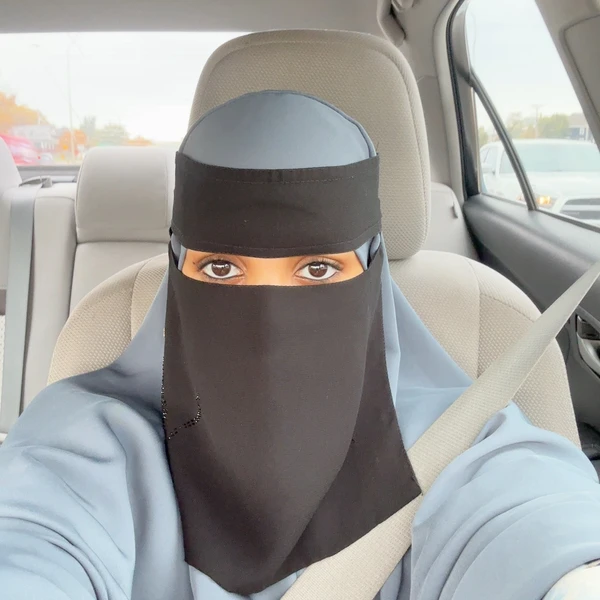
Using my voice has never been simple for me. Before I even say hello, people already think they know who I am. I wear niqab, I am a Black African Muslim girl, and somehow that turns into a whole story written for me. Quiet. Oppressed. Serious. Not a leader. So for a long time, I spoke carefully, not because I had nothing to say, but because I was tired of explaining myself before people even listened.
The real moment I had to choose my voice was when I decided to run for student council president. Honestly, it sounded ridiculous at first. A girl who people hesitate to approach running a whole school? I kept asking myself, “Do I actually belong here?” I was scared people would vote based on what they assumed about me instead of who I really was. But something in me also knew that staying silent was easier than it was right.
Campaigning pushed me out of my comfort zone fast. I had to talk to students who had never spoken to me before. Some were curious, some were awkward, and some definitely did not expect me to be funny, normal, or confident. I remember introducing myself and seeing surprise on people’s faces, like, “Oh… she actually talks.” That used to hurt, but during the election, I learned to laugh at it. If people already had expectations, I might as well break them.
Giving my speech was the hardest part. Standing in front of everyone, knowing all eyes were on me, I felt my heart racing under my calm face. I talked about leadership not being about popularity, but service. I talked about listening, responsibility, and representing people who feel overlooked. The words were simple, but they were mine. For the first time, I was not hiding behind fear. I was letting people hear me.
When I won, I was shocked. Not because I doubted my work ethic, but because I realized people had finally seen past assumptions. Being president while maintaining a 3.8 GPA taught me how powerful communication really is. I learned that leadership is not being the loudest in the room, but being the most honest and consistent. I learned how to speak clearly, listen carefully, and advocate without disrespecting others.
That experience changed how I see my voice. I stopped using it only when I felt safe and started using it when it felt necessary. As someone interested in psychology and sonography, communication matters even more. Patients do not just need skill, they need someone who makes them feel understood. Women especially need voices that explain, comfort, and protect instead of judge.
In the future, I want my voice to create spaces where people feel seen. Whether I am working with pregnant mothers, young girls, or underserved communities, I want to speak in ways that educate, support, and challenge harmful silence. I learned that my voice is not something to wait for permission to use. It is something to carry with confidence.
Running for president taught me that the quiet girl people assume I am actually has a lot to say. And now, I plan on saying it.
Kristinspiration Scholarship
Education is important to me because it turns curiosity into purpose. I have always been curious about how people think and how the human body works. As a high school student thinking about college, I realized I get most excited when I explore things outside of what is expected. Learning helps me understand the world instead of just memorizing it. It gives me confidence to ask questions, grow, and use what I know to help others.
My interest in healthcare started in an unexpected way, through TikTok. I was watching short videos of sonographers at work, and the more I watched, the more curious I became. I started researching the career and learned how ultrasound combines patient care with technology. What stood out to me most was seeing sonographers work with women during pregnancy. That is such an emotional and important time, and they provide comfort while capturing moments families will remember forever. Education helped me see myself in healthcare for the first time and showed me that curiosity can turn into a real career.
At the same time, psychology became a big part of my academic life. Taking AP Psychology changed how I understand people. Instead of calling actions “normal” or “emotional,” I learned that behavior comes from deeper mental and biological systems. Psychology taught me to ask better questions and listen more carefully. Education made me more patient, open minded, and aware of how experiences shape who we become.
Education matters to me because it creates opportunity and responsibility. When people understand their bodies and minds, they gain confidence and safety. This is especially important for women and families who do not have access to health or mental health education. In many communities, women’s bodies and mental health are treated as uncomfortable topics, and without education, people believe stereotypes or stay silent. Knowledge replaces fear with understanding.
The legacy I hope to leave is one of service and empowerment. I want to use my education to help women understand their health, their rights, and their value. Whether I become a diagnostic medical sonographer, a psychologist, or someone who uses both perspectives, I want to be someone patients trust. I want to communicate clearly, stay calm under pressure, and bring both skill and empathy into every room I enter.
Through college and my career, I want to take what I learn and give it back to others, especially in communities with limited resources. I want to educate women about pregnancy, mental health, and their choices so they feel supported instead of ignored. My goal is not just to earn a degree, but to use education to challenge stigma, support families, and give the next generation knowledge instead of fear.
For me, education is how curiosity becomes service and how service becomes lasting impact.
Resilient Scholar Award
One of the strongest people I know is my mom. She immigrated to the United States at a young age, carrying big hopes before she ever had stability. She came here with my dad and built a life from nothing, learning how to survive in a new country while raising a big family. My parents were together for a long time, but recently they divorced, and now my mom is the main provider and parent in our household. I love my dad, but today my mom is the one holding everything together for me and my siblings.
She works a nine to five job as a warehouse associate at Amazon. The work is hard on her body, but she never complains. Instead, she reminds us why she came here in the first place. She always tells us that she did not struggle just so her kids could struggle the same way. She wants us to have jobs that are safe, flexible, and meaningful, not ones that hurt our health. Hearing that from someone who works long hours makes education feel serious to me. It is not just about going to college. It is about changing our future.
Growing up in a house full of siblings taught me responsibility early. I learned how to help, listen, and stay patient when things felt stressful. My mom showed me what real strength looks like. She stays hopeful even when life feels heavy. Watching her carry herself with confidence and kindness taught me to do the same.
Outside my home, I also learned about understanding others. As a visibly Muslim student who wears niqab, people sometimes judge me before they know me. At first, that hurt, but then I realized something important. When classmates said, “I thought you’d be different,” I understood that just being myself could change how people see things. That taught me empathy and confidence without needing to argue or explain everything.
That confidence pushed me into leadership. Running for student council president was scary, but I learned leadership is about service, not popularity. Being elected while keeping a 3.8 GPA showed me that my voice belongs in spaces where people once doubted me.
My mom supports me in everything. If I need a car, she helps me pay it off. If I need supplies, she finds a way. But I do not want to add stress to someone who already gives everything to her children. The private university I will attend is the only one near me that offers sonography, but it is expensive. Scholarships help me move forward without placing that burden on her.
My upbringing in a single parent household shaped who I am. It taught me courage, responsibility, and care for others. I carry my mom’s strength with me every day, not only to succeed for myself, but to honor the woman who sacrificed so I could dream bigger.
Sunshine Legall Scholarship
I’ve always been curious about how people think and how the human body works, and that curiosity is what drives my academic and career interests. As a high school student thinking about college, I’ve realized I get most excited when I explore things outside of what’s expected. That curiosity has led me to two fields that really interest me: psychology and diagnostic medical sonography (ultrasound). Both let me work with people in meaningful ways, while also using science and technology to make a real difference.
My interest in ultrasound started in a way I didn’t expect, which is through TikTok. I was just watching short videos of sonographers at work, but the more I watched, the more fascinated I became. I started researching the career and realized it combines patient care with technical skill in a way that’s different from nursing, which I never fully connected with. What really stood out to me was seeing sonographers work with women during pregnancy. That’s such an emotional and important time, and they provide reassurance while capturing images that families will remember forever. That curiosity grew into a serious interest and helped me see myself working in healthcare for the first time.
At the same time, psychology has become a big part of my academic life. I’m currently taking AP Psychology, and my teacher encouraged me to pursue it because of how engaged I am in class. Learning about behavior, the mind, and mental processes has changed how I understand people. Instead of calling actions “normal” or “emotional,” I see that behavior comes from deeper psychological and biological systems. Psychology has taught me to ask better questions and think more carefully about why people act the way they do. Because of this, I’m thinking about possibly studying both psychology and ultrasound in college to combine understanding the mind with helping people physically.
Right now, my career goal is to enter healthcare where I can work directly with patients while continuing my education. Whether I become a diagnostic medical sonographer, a psychologist, or someone who uses both perspectives, I want a job that challenges me both mentally and emotionally. I want to be someone patients trust, who communicates clearly, stays calm under pressure, and brings both skill and empathy into the room.
I especially want to help women and families who don’t have access to proper health or mental health education. In many communities, women’s bodies and mental health are seen as uncomfortable topics, and without education, people make assumptions or believe stereotypes. This matters to me because understanding your body and mind changes lives. When women know their health and rights, they gain confidence, safety, and independence.
Through college and my career, I want to educate women about their health, their rights, and their potential. I want to work not just in the United States but also in places where resources are limited. My goal is to take what I learn in college and use it to help others, challenge stigma, and give the next generation knowledge instead of fear. College is where I can turn curiosity into service and passion into real impact
Big Picture Scholarship
The Hunger Games has been one of the most influential stories in shaping how I see resilience, courage, and the power of one person to inspire change. Watching Katniss Everdeen navigate the oppressive world of Panem showed me that your background does not define your ability to make a difference. She came from a district that many would consider powerless, yet she refused to let her circumstances dictate her potential. That determination resonated with me deeply.
Katniss taught me that resilience is not just enduring hardship, it is acting with purpose despite fear. She risked everything for those she loved, stepping into the arena not only to survive but to protect her sister and inspire those around her. This courage reminded me that even in moments when it seems impossible to stand out or challenge expectations, the way you carry yourself, the choices you make, and the risks you are willing to take can ripple outward, impacting the lives of others.
The movie also emphasized the power of words and presence. Katniss’s actions, her defiance, and her voice became symbols of hope and resistance for her community. She demonstrated that leadership is not about position or privilege, rather it’s about influence, integrity, and the willingness to stand for what is right. This lesson has shaped the way I approach challenges in my own life. I have learned to use my voice thoughtfully, to advocate for myself and others, and to show courage even when it might be easier to stay silent.
The Hunger Games also showed me that resilience often comes with creativity and strategy. Surviving the games required Katniss to think critically, adapt quickly, and trust both herself and those she worked alongside. These lessons remind me that perseverance is not passive.Perseverance requires intentional action, planning, and the confidence to face uncertainty head-on.
Ultimately, Katniss Everdeen’s story reinforced a truth I carry with me daily: your beginnings do not limit your impact. Even when you face societal expectations, fear, or doubt, courage and resilience can inspire change. Just as Katniss transformed her community and became a symbol of hope, I believe that with determination, faith, and action, I can influence my own community, uplift those around me, and contribute to meaningful change. That is why The Hunger Games has left such a lasting impact on me, because it is a story of resilience, leadership, and the extraordinary power of one person to make a difference.
Women in STEM Scholarship
I was 12 the first time I traveled back to the motherland , and while I already saw the struggles women faced, this experience was sobering. Women were the backbone of their households, raising children, caring for families, and holding communities together, yet many lacked access to basic healthcare, education, and information about their own bodies. Topics like women’s health and pregnancy were treated as taboo, and many women did not know their rights or have the resources to advocate for themselves.
In some places, I also witnessed the effects of harmful traditional practices, such as FGM, which is still present in parts of Africa and often not openly discussed or properly educated about. Seeing how young girls and women were affected, often without understanding what was happening to them, was heartbreaking. It opened my eyes to how deeply healthcare inequities and lack of education impact women, especially in underserved communities.
That experience sparked my desire to pursue a degree in healthcare. I realized I wanted to support women not only in the United States, but also in places where access to care and education is limited. I want to use my education to uplift women, provide knowledge, and help break cycles of silence surrounding women’s health. Healthcare, to me, is not just a career but a responsibility to serve those who are often overlooked.
I plan to become both a sonographer and a psychologist. Sonography allows me to support women during emotional moments, especially pregnancy. In my culture, pregnancy was not openly discussed or celebrated, which often left women feeling isolated and uninformed. I want to help change that by being a source of comfort, education, and reassurance. Psychology, which I discovered through AP Psychology and reading, taught me how experiences shape behavior and culture influences mindset. I hope to use this knowledge to help individuals understand themselves and feel supported mentally and emotionally, especially those who feel unheard.
I come from an immigrant household, and my mother has raised my siblings and me as a single parent. Watching her work tirelessly without the opportunity to pursue higher education has shaped my motivation and work ethic. Her strength inspires me, and I want to honor her sacrifices by building a future that allows me to give back to others.
As a Black African woman who wears the hijab, I often stand out in academic and leadership spaces. While this has brought challenges, it has never stopped me from pursuing my goals. One of my proudest accomplishments was being elected president of my high school, which taught me that leadership is possible even when people underestimate you and reinforced my belief that I should never limit myself.
I will be attending St. Catherine University in Minnesota this fall, a private women’s college that aligns with my values and goals. However, the cost of attendance presents a financial challenge for my family. Receiving this scholarship would ease that burden and allow me to focus on my education, supporting my dream of becoming a woman in healthcare who breaks barriers, uplifts others, and brings meaningful change wherever she goes.
Maxwell Tuan Nguyen Memorial Scholarship
I was 12 the first time I traveled back to the motherland, and while I already saw the struggles women faced, this experience was sobering. Women were the backbone of their households, raising children, caring for families, and holding communities together, yet many lacked access to basic healthcare, education, and information about their own bodies. Topics like women’s health and pregnancy were treated as taboo, and many women did not know their rights or have the resources to advocate for themselves.
In some places, I also witnessed the effects of harmful traditional practices, such as FGM, which is still present in parts of Africa and often not openly discussed or properly educated about. Seeing how young girls and women were affected, often without understanding what was happening to them, was heartbreaking. It opened my eyes to how deeply healthcare inequities and lack of education impact women, especially in underserved communities.
That experience sparked my desire to pursue a degree in healthcare. I realized I wanted to support women not only in the United States, but also in places where access to care and education is limited. I want to use my education to uplift women, provide knowledge, and help break cycles of silence surrounding women’s health. Healthcare, to me, is not just a career but a responsibility to serve those who are often overlooked.
I plan to become both a sonographer and a psychologist. Sonography allows me to support women during emotional moments, especially pregnancy. In my culture, pregnancy was not openly discussed or celebrated, which often left women feeling isolated and uninformed. I want to help change that by being a source of comfort, education, and reassurance. Psychology, (which I’m taking this year as an AP class) taught me how experiences shape behavior and culture influences mindset. I hope to use this knowledge to help individuals understand themselves and feel supported mentally and emotionally, especially those who feel unheard.
I come from an immigrant household, and my mother has raised my siblings and me as a single parent. Watching her work tirelessly without the opportunity to pursue higher education has shaped my motivation and work ethic. Her strength inspires me, and I want to honor her sacrifices by building a future that allows me to give back to others.
As a Black African woman who wears the hijab, I often stand out in academic and leadership spaces. While this has brought challenges, it has never stopped me from pursuing my goals. One of my proudest accomplishments was being elected president of my high school, which taught me that leadership is possible even when people underestimate you and reinforced my belief that I should never limit myself.
I will be attending St. Catherine University in Minnesota this fall, a private women’s college that aligns with my values and goals. However, the cost of attendance presents a financial challenge for my family. Receiving this scholarship would ease that burden and allow me to focus on my education, supporting my dream of becoming a woman in healthcare who breaks barriers, uplifts others, and brings meaningful change wherever she goes.
Nabi Nicole Grant Memorial Scholarship
Growing up, I often followed my family’s expectations more than my own understanding. I was Muslim by birth, but I had never truly connected or understood my faith. I wore my religion as a label, performing the practices expected of me without understanding the meaning behind them. My world was shaped by the culture I was born into, which often used religion as justification for rules I did not question. I accepted what I was told, mainly because I was hesitant to challenge it, and unsure how to claim my own voice.
Everything began to change when I returned to the motherland . For the first time, I witnessed how deeply culture could be intertwined with religion, sometimes to the detriment of young girls like me. I saw practices that were justified as religious, but when I studied the Quran and spoke with local scholars, I realized that what I had been told was not the essence of my faith. I began learning Islam for myself, and in doing so, I discovered not only knowledge but also courage. I could now distinguish between what my culture expected of me and what my religion truly taught. This understanding gave me the strength to speak up, advocate for myself, and protect others from harm under the guise of tradition.
Returning to the United States, I faced a new challenge: navigating a world where my faith and identity would be judged by appearances alone. Wearing my hijab, I knew some people would make assumptions before ever knowing me. I could have let this fear hold me back, but I chose to let my faith guide me. My belief in God reminded me that my worth and abilities are not determined by others’ perceptions. Instead, I relied on my faith to fuel my determination. I committed to pursuing my goals with resilience
and confidence, refusing to let stereotypes define or limit me.
This journey has transformed my faith from a label into a source of strength. Islam has taught me patience, courage, and the importance of standing up for what is right. It has inspired me to advocate for myself and others, to navigate life with my head held high, and to pursue my ambitions in spite of obstacles. By trusting in my faith, I have been able to overcome self-doubt, cultural pressures, and societal assumptions, emerging stronger, more confident, and more determined to make a difference.
Faith is no longer just a part of my life—it is the foundation of who I am and the driving force behind everything I strive to achieve. It has allowed me to overcome obstacles I once thought insurmountable and has given me the courage to follow my dreams unapologetically. Through this scholarship, I hope to continue honoring that faith, using it to uplift myself and others, just as Nabi Nicole dedicated her life to doing.
Women in Healthcare Scholarship
I was 12 the first time I traveled back to Africa, and while I already saw the struggles women had to deal with, this experience was sobering. Women were the backbone of their households, raising children, caring for families, and holding communities together, yet many of them lacked access to basic healthcare, education, and information about their own bodies. Topics like women’s health and pregnancy were treated as taboo, and many women did not know their rights or have the resources to advocate for themselves.
In some places, I also witnessed the effects of harmful traditional practices, such as FGM, which is still present in parts of Africa and often not openly discussed or properly educated about. Seeing how young girls and women were affected by this, often without understanding what was happening to them, was heartbreaking. It opened my eyes to how deeply healthcare inequities and lack of education impact women, especially in underserved communities.
I realized that I wanted to be someone who could support women not only here in the United States, but also in places where access to care and education is limited. I want to use my education to uplift women, provide knowledge, and help break cycles of silence surrounding women’s health. Healthcare, to me, is not just a career but a responsibility to serve those who are often overlooked.
I plan to become both a sonographer and a psychologist. I am drawn to sonography because it allows me to support women during some of the most emotional moments of their lives, especially pregnancy. In my culture, pregnancy was not something openly discussed or celebrated, which often left women feeling isolated and uninformed. I want to help change that by being a source of comfort, education, and reassurance. I want women to feel seen, supported, and empowered during every stage of their journey.
My interest in psychology began through taking AP Psychology and through my love for reading. Learning about how people think, how experiences shape behavior, and how culture influences our mindset changed the way I see others. Psychology taught me to approach people with empathy and understanding rather than judgment. I hope to use this knowledge to help individuals understand themselves better and feel supported mentally and emotionally, especially those who feel unheard.
I come from an immigrant household, and my mother has raised my siblings and me as a single parent. Watching her work tirelessly without having the opportunity to pursue higher education has shaped my motivation and work ethic. She has given everything to ensure that we could have opportunities she never had. Her strength inspires me, and I want to honor her sacrifices by building a future that allows me to give back to others.
As a Black African woman who wears the hijab, I often stand out in academic and leadership spaces. While this has sometimes come with challenges, it has never stopped me from pursuing my goals. One of my proudest accomplishments was being elected president of my high school. That experience taught me that leadership is possible even when people underestimate you, and it reinforced my belief that I should never limit myself.
I will be attending St. Catherine University in Minnesota this fall, a private women’s college that aligns with my values and goals. However, the cost of attendance presents a financial challenge for my family. Receiving this scholarship would ease that burden and allow me to focus on my education. More importantly, it would support my dream of becoming a woman in healthcare who breaks barriers, uplifts others, and brings meaningful change wherever she goes.