Hobbies and interests
Art
Reading
Sustainability
Psychology
Counseling And Therapy
Criminology
Criminal Justice
Community Service And Volunteering
Crafting
Reading
Academic
Adult Fiction
I read books daily
Amelia Schenkel
1x
Finalist
Amelia Schenkel
1x
FinalistBio
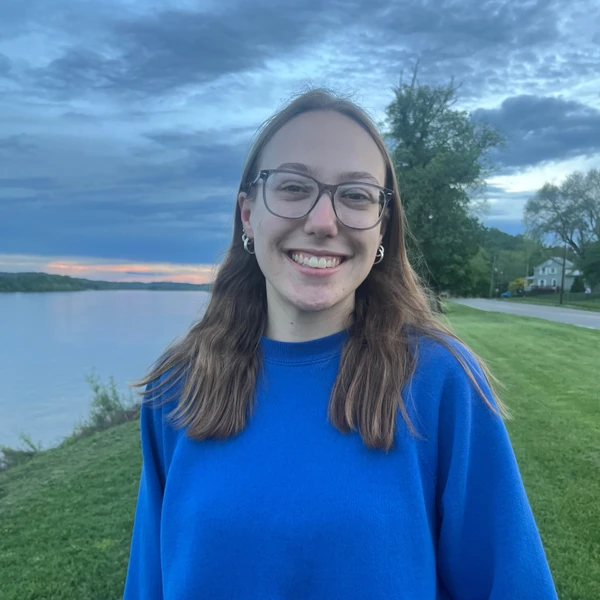
Hello, my name is Amelia! I've been dreaming of studying abroad in Ireland for a long time. My goal is to be able to study abroad this summer (2026), in Limerick, Ireland.
I'm a second year at Chatham University, and I'm majoring in social work. A big part of social work is accepting and understanding other cultures, but I've never been able to travel outside the United States before. I would greatly appreciate the opportunity to study in Ireland and be immersed in a different culture.
I'm hoping to earn some scholarships to ease the financial burden of this trip.
Education
Chatham University
Bachelor's degree programMajors:
- Social Work
Miscellaneous
Desired degree level:
Master's degree program
Graduate schools of interest:
Transfer schools of interest:
Majors of interest:
- Social Work
Career
Dream career field:
Civic & Social Organization
Dream career goals:
My goal is to serve the community by working in the social work field. I would like to work with teens or in a women's shelter. Through my career, I would like to help others while also providing a stable and fulfilling life for myself.
Resident Assistant (RA)
Chatham University2025 – Present1 yearManager
Whit's Frozen Custard2023 – Present3 years
Arts
Chatham University
Visual Arts2025 – PresentChatham University
Film Criticism2025 – 2025Chatham University
Visual Arts2024 – 2024
Public services
Advocacy
Chatham University club: Chatham Students for Global Liberation — Club member2025 – PresentVolunteering
Building Bridges to Careers (BB2C) — volunteer; cleaned, assisted with classes2022 – 2024Volunteering
Local soup kitchen — volunteer; helped with organizing2024 – 2024
Future Interests
Advocacy
Politics
Volunteering
Online ADHD Diagnosis Mental Health Scholarship for Women
I have been lucky enough to find a great group of women friends in college. Being so close with them, I have seen first hand the effects mental health can have on women in college. With so much to balance, it’s easy to get overwhelmed.
I, too, have experienced this. As much as I loved my first year of college, it was also a struggle. For the first time in my life, I went weeks without seeing my family and home. The loneliness set in quickly, and I found it difficult to stay positive. And, for some reason, the anxiety that I had been living with my whole life got a whole lot worse.
After I experienced my first panic attack, it sent me down a spiral. I thought about it practically all day, every day. I was terrified of having another one. Any calm moment, any rest or relaxation was targeted by my anxiety. Suddenly, I couldn’t even sit in my bed during the day without falling apart. To keep it together, even slightly, I had to sit at my desk and color in a coloring book, no matter how exhausted I was. I had never felt so scared and out-of-control before.
Slowly, painstakingly, it did get better. I used to have panic attacks everyday, sometimes multiple times a day. Now, it’s more like once a week. I started on medication, and began going to the free counseling center at my school. I started to notice certain triggers that made me more likely to panic. I also found better coping mechanisms. For example, I now know that if I’m laying in bed and begin to feel panicked, sitting up will help me calm down or at least shorten the duration of the panic attack. Holding ice packs and physical touch also helps.
Now I’m a second year student, and busier than ever. I’m a detail-oriented person, so every assignment I do takes a bit longer for me than it does for others. I’m taking sixteen credits, and I have a 3.9 GPA. I’m majoring in social work and minoring in criminology and visual art. I’m also working on getting a women’s leadership certificate and a forensic social work certificate. I’m a member of the film club and a club called Chatham Students for Global Liberation. I’m a Resident Assistant (RA), so I design informational bulletin boards, spend nights on-call, plan and host events, and more. I also work about six hours a week on campus as an office assistant for residence life. This all means that it’s extremely important I take care of my mental health.
There’s things I do every week to take care of myself, in addition to the coping strategies I implement as needed to handle panic attacks. In my opinion, one of the most important things for mental health is sleep. I do my best to get at least eight hours every night, even on the nights I’m on-call. I spend quality time with friends every single day, and also try to express myself creatively. In one of the darkest times in my life, I found safety in coloring. Ever since, I have channeled that. I like drawing, painting, and junk journaling too. Getting fresh air and taking walks also helps to clear my head. Knowing this, I purposely enrolled in a wellness class centered on walking.
Living with mental illness is difficult, especially as a woman in college, but that doesn’t mean things are hopeless. My story serves as an example of how important it is to take care of yourself.
Greg Lockwood Scholarship
Part of what influenced me to study social work was what I learned early on as a queer woman. I was inspired by the activists who worked so hard to gain social acceptance and respect for the queer community; activists such as Marsha P. Johnson and Sylvia Rivera, who, if they were still alive today, would still face significant discrimination for their identities. I often think about the lesbians who stepped up to take care of men during the AIDS epidemic. So many people throughout history have sacrificed so much to get us to the point we are at today.
I’m lucky to be alive now, however, I refuse to let that distract me from the work that still needs done. Being a (white) lesbian comes with its struggles, of course, but the dangers faced by my friends who are transgender and/or people of color worries me deeply. Young queer people must still face many questions and concerns. Is it safe to disclose my identity to my peers, coworkers, professors, and bosses? Will my family see me differently? Will my pronouns be met with ridicule? And there are other, more terrifying questions to consider, such as if one will be attacked on the street or even murdered. Medical care is even being withheld.
It’s easy to feel hopeless in the face of everything that has happened in recent years. It seems like every day the world must face a new devastating trauma. However, the past has shown us that we do not have to be hopeless or helpless. When people come together to achieve shared goals, great things can happen.
In my opinion, one of our world’s biggest issues is division among people. Especially in the United States, social and political division runs deep. Even people on the same political “side” are divided by opinions, race, gender, and more.
The change I wish to see in the world is a more unified people. Positive change and queer liberation cannot be achieved without cooperation and acceptance of differences. Time and time again people have demonstrated the power of working together. Revolutions, protests, and strikes are all ways people have joined together to create change.
I hope to become a social worker who helps to make the world a more accepting and unified place. While it’s easy to focus on the bad, I do believe that society will change in a positive way. Each generation brings new strengths and perspectives for how to handle society’s issues.
Early Childhood Developmental Trauma Legacy Scholarship
In my social work classes, I learned about the Functional Hypothesis. This is a theory that truly stuck out to me. The Functional Hypothesis is the idea that the psychological symptoms from which people suffer are adaptive and protective. Basically, the symptoms began as a way to help the individual survive and feel safe, despite also being problematic. These symptoms can be understood, appreciated, and altered to better help the individual.
The Functional Hypothesis does not just make sense to me; it makes me feel hopeful. The world is full of hurt and pain. Even the most innocent and vulnerable groups are subject to abuse and mistreatment. Early childhood development trauma is all too common. Naturally, childhood trauma can increase the risk of an individual developing mental illness. The brain and the body are connected, though, so childhood trauma can also increase the chance of a chronic illness emerging in the future. Childhood trauma can cause learning issues, low self-esteem, relationship problems, and risky behavior. The memories of trauma and abuse can be extremely difficult to deal with, and trauma may cause unpleasant side effects in the future. In my opinion, the Functional Hypothesis provides a productive and healing framework through which one can view and treat these symptoms. It provides a sense of hope and appreciation.
For example, if a boy grows up in a family where expressions of emotion are punished, the boy may begin to conceal his feelings from others. This would be an understandable reaction to his environment, and a way to stay safe. Unfortunately, this quality may become a point of contention in his adult life. He may struggle to share and be vulnerable in romantic relationships. The Functional Hypothesis would allow him to understand why he has that struggle and appreciate how it was once something that protected him. Understanding this would prevent feelings of shame and guilt, and help him to make positive changes.
It is easy to blame oneself when dealing with mental health issues and the effects of early childhood development trauma. I personally have struggled with anxiety and panic attacks, and blaming myself for them has only made things worse. Understanding that this anxiety and panic is my body’s way of trying to protect me has been a game changer.
In the future, I would like to be a social worker who works with individuals who have suffered from early childhood development trauma. I hope to help people be more gentle and understanding of themselves as they work to heal their psychological symptoms. This healing work is beneficial to the individual, of course, but it also helps others. It improves the lives of the individual’s friends, family, coworkers, and anyone else who they regularly interact with. Working through trauma can even help to prevent the traumatization of future generations. If an individual deals with their own issues, they are less likely to pass these issues onto their children in the form of generational trauma.
I am deeply grateful for all that I have learned in my social work and psychology classes in college, and the positive impact they have had on my personal life. I hope that one day I can show others what I have learned.