Hobbies and interests
Music
Drawing And Illustration
Writing
Reading
Fantasy
Mystery
Classics
Novels
Media Tie-In
Young Adult
Retellings
Romance
I read books multiple times per month
LOW INCOME STUDENT
Yes
FIRST GENERATION STUDENT
Yes
Ameena Bah
1x
Finalist1x
Winner
Ameena Bah
1x
Finalist1x
WinnerBio
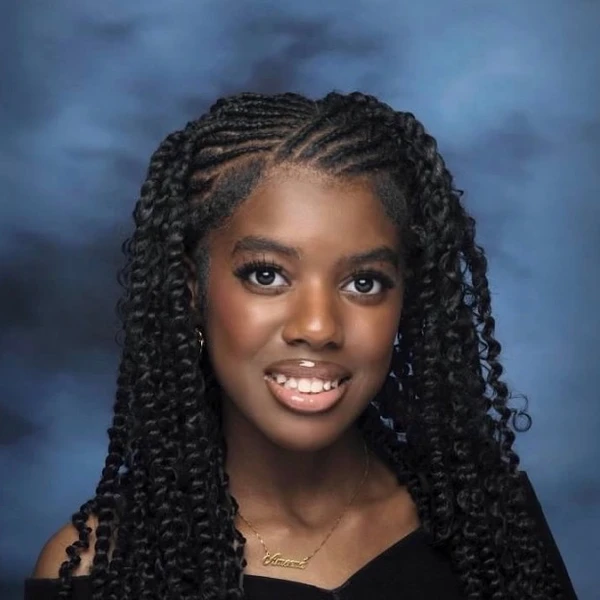
Hello! My name is Ameena. I'm a current senior and dually-enrolled student. I would like to study neuroscience/public health in college. I enjoy reading, playing video games, and watching Teenage Mutant Ninja Turtles.
Education
Clayton State University
Associate's degree programMajors:
- Multi/Interdisciplinary Studies, Other
Minors:
- Multi/Interdisciplinary Studies, Other
GPA:
4
Elite Scholars Academy School
High SchoolGPA:
3.9
Miscellaneous
Desired degree level:
Doctoral degree program (PhD, MD, JD, etc.)
Graduate schools of interest:
Transfer schools of interest:
Majors of interest:
- Psychology, General
- Public Health
Career
Dream career field:
Mental Health Care
Dream career goals:
Cashier
Global Concessions Inc2025 – 2025
Sports
Cross-Country Running
Varsity2025 – 20261 year
Cheerleading
Junior Varsity2024 – 20251 year
Awards
- Most Improved - Varsity Brands Cheer Camp
Basketball
Varsity2019 – 20267 years
Public services
Advocacy
Georgia Youth Justice Coalition — Summer Fellow2025 – 2025Volunteering
Emory Healthcare — Teen Volunteer2025 – 2025
Future Interests
Advocacy
Volunteering
Philanthropy
Bettie Lott and Vera Times Public Health Scholarship
WinnerDrug abuse is an incredibly pervasive, longstanding, and misunderstood facet of public health. Coming from an area in which organized crime is quite rampant and predatory, I am no stranger to this. Many kids my age are often encouraged to smoke or consume edible gummies recreationally, not knowing that casual usage of these marijuana-based substances can snowball into an even bigger problem down the line. It acts as a sort of "gateway drug," appearing relatively innocuous initially and then becoming the first real addiction many are exposed to. I have seen people's livelihoods, futures, and most importantly, happiness stolen away by these substances.
When users of drugs eventually develop conditions such as substance use disorder, their families, their communities, and society at large often turns their backs on them. They are simply left to battle their addiction alone, with little assistance, in a manner that becomes increasingly dangerous to their own wellbeing. One thing that makes this such a common occurrence is the fundamental misunderstanding of addiction by others who do not struggle with it. It is not simply "a choice," nor is it particularly pleasant for anyone involved. Those who find themselves addicted to a substance often reach a point where they use it in order to simply not feel sick from withdrawal symptoms, or to maintain some semblance of equilibrium and normalcy as opposed to simply chasing a high.
If I were to suggest a solution, I would start with education. The issue with programs like DARE is that they do not portray drug usage with fidelity. They frame it as something that will cause you to be hooked immediately upon first use. When teenagers eventually try these drugs, they are often pleasantly surprised by the mild nature of them compared to what they were taught to expect. They grow curious about other things they may have been "lied to" about, and they eventually develop an addiction because they were never truly taught the realities of drug abuse. This could be rectified by giving students a more mellow, less dramatized, and honest version of events. What makes addiction particularly insidious is how easily it creeps up on you; there are both highs and lows, and then you eventually hit lows trying to chase the highs.
Additionally, I would like to emphasize the more systematic aspect of solving this problem. The healthcare infrastructure of the metro-Atlanta area is quite extensive, boasting numerous hospitals and hospital systems in and around the city. However, it is stretched incredibly thin. Following the finance-driven closure of the Atlanta Medical Center in 2022, Grady became the only Level 1 trauma center in the city, and Emory Midtown saw major stress on its carrying capacity. Simply put, the issue of addiction cannot be solved without adequate resources being poured into healthcare. These hospitals also frequently provide inpatient and rehabilitative care to those who struggle with addiction, and the increased pressure on them has affected their ability to serve those who are recovering or would like to recover from their condition. Substance abuse crises can be alleviated, but they require continued attention and care of everyone in our communities to make this happen.