
Hobbies and interests
Baking
Music
Babysitting And Childcare
Community Service And Volunteering
Cooking
Reading
Television
Reading
Adult Fiction
Childrens
Education
Horror
Religion
I read books daily
Amber Deckard
1x
Finalist
Amber Deckard
1x
FinalistBio
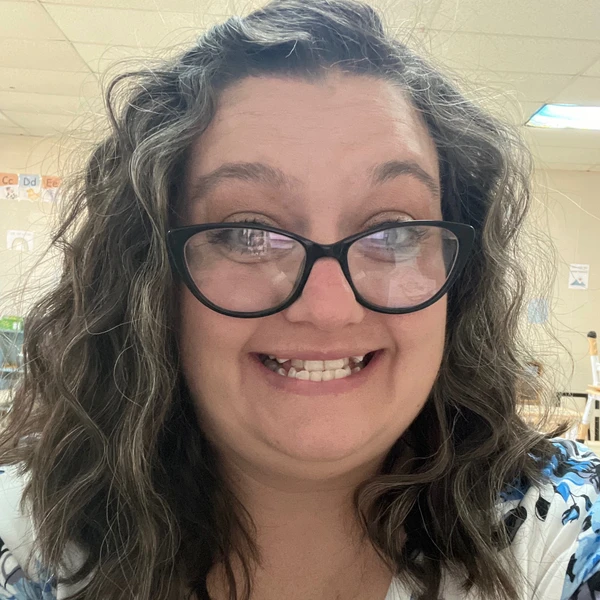
I am a child of God, wife, mom, and special education teacher. I love to learn and share my experiences with others in order to make a difference in my students’ lives!
Education
Western Governors University
Bachelor's degree programMajors:
- Special Education and Teaching
Miscellaneous
Desired degree level:
Master's degree program
Graduate schools of interest:
Transfer schools of interest:
Majors of interest:
Career
Dream career field:
Education
Dream career goals:
Special Education Teacher
Alton School District2025 – Present1 yearParaprofessional
RPSD2020 – 20222 yearsParaprofessional
SMSD2017 – 20203 yearsParaprofessional
Alton Schooler District2024 – 20251 year
Public services
Volunteering
Shepherd’s View Assisted Living Facility — Volunteer2024 – PresentVolunteering
DODEA — Classroom Volunteer2014 – 2017
Future Interests
Advocacy
Volunteering
RonranGlee Special Needs Teacher Literary Scholarship
My passion for special education is rooted in both my past and my present—in the life I grew up living and the lives of the students I serve every day. For me, special education is not simply a career choice. It is a calling shaped by trauma, resilience, poverty, and the belief that children deserve safety, dignity, and someone who refuses to give up on them.
Many of the students I work with carry burdens far heavier than academics. I have supported children who have experienced sexual abuse, neglect, and domestic instability. Some come to school exhausted from nights spent in chaos or fear. Some come to school with empty bellies because there is no food at home. Others are learning to regulate emotions while navigating memories no child should ever have to carry. Their struggles often surface as behavior, and it is my job to find the function of their anger, withdrawal, and definace. Special education has taught me to look past what is visible and ask why.
I have worked with students who flinch at raised voices, who panic when routines change, and who struggle to trust adults. I have sat with children during moments of dysregulation, offering calm when their nervous systems are overwhelmed. These experiences have shown me that special education is not just about teaching reading or math. This is something much bigger—it is about helping children feel safe enough to learn at all.
Many of my students come from homes impacted by addiction. Parents struggling with substance abuse are often choosing themselves over their children. Some are trying to do the best they can with the tools they have, but the reality is that my children feel the fallout. Missed school days, inconsistent routines, unmet basic needs, and emotional neglect all show up in the classroom. This reality is deeply personal for me. I grew up with parents who struggled with addiction, and I understand what it feels like to live in survival mode. I know what it is like to grow up too fast, to read adults’ moods, and to learn early that stability is not guaranteed.
Because of my own experiences, I recognize things others might miss. I see the child who hoards food, the student who panics when an adult is late or flustered, the quiet compliance that masks fear. I know that learning cannot happen when a child’s most basic needs are unmet. That understanding fuels my compassion and my determination to be a consistent, reliable presence for my students. I have to be someone they can count on.
The community I live and teach in is one of deep poverty. In our county, approximately 60% of elementary students receive food assistance. Hunger is a daily reality. Many students rely on school for breakfast, lunch, and sometimes their only sense of structure. Poverty impacts everything in our school district. From attendance, attention, health, behavior, and academic progress it impacts our children across the board. It impacts our school and our budget. It is impossible to separate learning from life circumstances, yet students in poverty are often expected to perform as though those circumstances do not exist. This is one of those “facts of life” that we must deal with.
Special education exists at the intersection of poverty, trauma, and disability. Many of my students face all three. I have seen how easily they can be misunderstood, labeled, ostracized, or overlooked. I am passionate about special education because it gives me the opportunity to advocate for students who are too often dismissed—not because they lack ability, but because they lack support. And often, their families lack the knowledge of what resources are available to them.
Academically, I have worked with students across age levels whose learning differences significantly impact their access to the curriculum. Autism is, after all, a spectrum! One student struggles with decoding multisyllabic words, which affects her comprehension and confidence despite her strong thinking skills. Another student becomes overwhelmed by dense informational texts unless visual supports and structured scaffolding are provided. Another student is nonverbal, but has a personality itching to be expressed. In younger grades, I have worked with students functioning well below grade level—some verbal but difficult to understand, others struggling with emotional regulation and task avoidance.
What I have learned is this—progress in special education is rarely fast, but it is deeply meaningful. A single grade-level gain in reading, a student completing a task without shutting down, or a child learning to ask for help instead of melting down—these are victories that matter. The little wins! I celebrate them because I understand what they represent: trust, effort, and growth against the odds.
I am especially passionate about advocating for appropriate placements and services. I have spent time learning Missouri special education laws and guidelines because I believe students deserve environments that truly meet their needs. Placement decisions should never be about convenience to the general educators, or labels—they should be about access to meaningful instruction. I want to be a teacher who uses data, collaboration, and compassion to ensure students are supported in the least restrictive environment where they can succeed.
Relationships are the foundation of everything I do. Many of my students have learned that adults are inconsistent or unsafe. Earning their trust takes time, patience, and follow-through. I show up every day knowing that my presence matters—that being calm, predictable, and kind can make the difference between a student shutting down or trying again. In special education, we are often the steady adults in children’s lives, and I take that responsibility seriously. My goal is to be who I needed growing up.
As a mother, I also bring a parent’s heart into the classroom. I know that every child I teach is someone’s whole world. I strive to communicate openly with families, to approach difficult conversations with empathy, and to partner with parents rather than judge them. I understand that families are navigating challenges that extend far beyond school, and I want to be an ally, not another source of pressure. I try to always remember, I spend more time with these children during the day than their own parents/caregivers do!
My pursuit of certification through Western Governors University reflects my commitment to becoming a skilled and knowledgeable special education teacher. I am driven to learn more about trauma-informed practices, early literacy intervention, data collection, and IEP development because my students deserve nothing less than informed, intentional instruction.
Ultimately, I am passionate about special education because I see myself in my students—not in their disabilities, but in their resilience. I understand what it means to grow up with instability and still hope for something better. Special education allows me to be the adult I needed when I was younger: someone who noticed, someone who cared, and someone who believed that circumstances do not define a child’s future.
This work is hard. It is emotional. It requires patience, strength, and unwavering commitment. But it is also sacred work. Every child deserves to be seen, protected, and taught with dignity. Being a special education teacher allows me to do exactly that—and there is no profession I am more passionate about. I love these children with all of my heart, and I will continue to advocate for them!