
Cedar Grove, WV
Age
19
Gender
Female
Ethnicity
Hispanic/Latino
Religion
Christian
Church
Pentecostal
Hobbies and interests
Biomedical Sciences
Anatomy
Bible Study
Genetics
Journalism
Medicine
Mental Health
National Honor Society (NHS)
Neuroscience
Philosophy
Poetry
Physiology
Piano
Politics and Political Science
Public Speaking
Psychology
Running
Research
Science
Science Olympiad
Self Care
Soccer
Social Justice
Spanish
Speech and Debate
Spirituality
STEM
Studying
Sports
Student Council or Student Government
Sustainability
Track and Field
Travel And Tourism
LOW INCOME STUDENT
Yes
FIRST GENERATION STUDENT
Yes
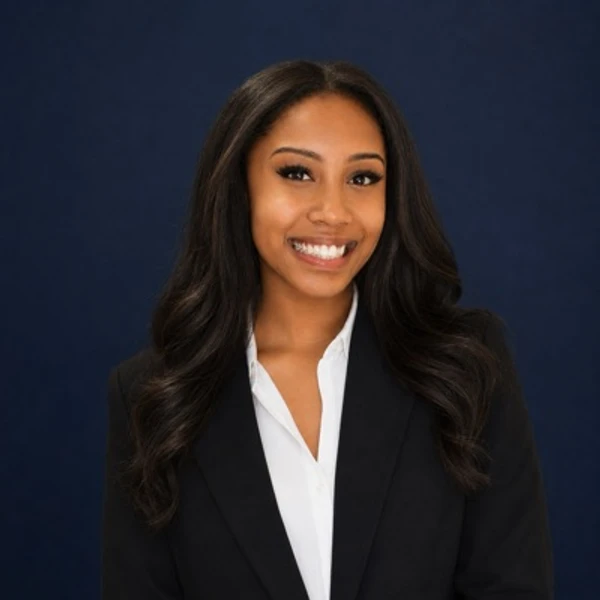
Amayah Bell
1x
Finalist
Amayah Bell
1x
FinalistBio
I’m not just chasing a dream, I’m stepping into a purpose. Becoming a neurosurgeon isn’t just about the science for me; it’s about using my hands and my heart to change lives. I’ve always been drawn to the brain, the way it holds our thoughts, our fears, our memories, our entire story. But just as deeply, I’ve been drawn to the stories of people whose voices are often marginalized. The ones who are overlooked, silenced, or pushed to the side. I see them, because I come from them. And I carry them with me in everything I do.
I’m on the rise, not just in medicine, but as a public advocate for those who are too often left behind. I don’t just want to be in the room where change happens, I want to be the change. I want to make sure that when I speak, I’m echoing the voices of every community, not just mine. That when I step forward, I’m opening the door for others, too. I believe healing isn't just something that happens in a hospital. It's something that happens when people feel seen, valued, and protected.
This journey is bigger than me. It’s about rewriting the narrative for the next generation, proving that you can be both brilliant and bold, both compassionate and powerful. I’m not waiting for change to come. I am becoming it. Every single day!
Education
West Virginia University
Bachelor's degree programMajors:
- Biological and Biomedical Sciences, Other
- Neurobiology and Neurosciences
Minors:
- Molecular Medicine
Riverside High School
High SchoolMiscellaneous
Desired degree level:
Doctoral degree program (PhD, MD, JD, etc.)
Graduate schools of interest:
- Columbia University in the City of New York
Transfer schools of interest:
Majors of interest:
- Neurobiology and Neurosciences
- Biological and Biomedical Sciences, Other
- Microbiological Sciences and Immunology
Career
Dream career field:
- Medicine
Dream career goals:
Nursing Assistant
CAMC Memorial Hospital2026 – Present8 monthsBiomedical Engineering Researcher
Columbia University, Department of Biomedical Engineering2023 – 20252 years
Sports
Soccer
Varsity2021 – 20254 years
Awards
- New York State Semi Finalists Leadership & Sportsmanship Award (Acted as a liaison between coaches and players) Founded and managed the team’s social media account
Football
Varsity2021 – 20243 years
Awards
- New York State Divisions Champion Student Athlete ( Academic Award)
Track & Field
Varsity2021 – 20254 years
Awards
- Third Place Borough Champions in the 4x200 Top 10 in the 4x200 First place in 55m Third place in Long Jump
Research
Biological and Biomedical Sciences, Other
New York Academy Of Sciences — Researcher2023 – 2024Biological and Biomedical Sciences, Other
UBP DNA Barcoding Research Center — Researcher2023 – 2024Biochemical Engineering
Columbia University, Department of Biomedical Engineering — Research Intern2024 – 2025
Public services
Volunteering
High School for Health Professions and Human Services — Teacher’s Assistant for Science Research2022 – 2025Public Service (Politics)
YVote Civic Fellowship Program — Civic Fellow2024 – 2025Volunteering
High School for Health Professions and Human Services — Student Ambassador2023 – PresentAdvocacy
Student Government — President2022 – PresentPublic Service (Politics)
Model Congress — Founder and Former President2024 – Present
Future Interests
Advocacy
Volunteering
Entrepreneurship
Eric W. Larson Memorial STEM Scholarship
Stability was never something I could assume—I had to learn how to create it, even in places that were never meant to feel like home.
Some of my earliest memories are not tied to a single house or neighborhood, but to movement. I spent part of my childhood in Puerto Rico before relocating back to New York City, a transition driven by urgency rather than choice. My brother, even in his earliest years, showed signs that his mind functioned differently from other children his age. His behaviors were complex, often overwhelming, and at the time, undiagnosed. What I now understand as neurological differences once felt like confusion and instability within our home.
My mother, too, shaped my early understanding of the human mind. She carried burdens I could not fully comprehend as a child—burdens that often surfaced as anger, unpredictability, and harm within our household. Experiencing her abusiveness was deeply confusing, especially when love and pain became intertwined. As I grew older, I began to recognize that her behavior was influenced by unresolved trauma. While this did not excuse the harm, it revealed how profoundly trauma can affect emotional regulation, decision-making, and behavior. I witnessed how unaddressed pain can extend beyond one individual and impact an entire family.
When we returned to New York City seeking support for my brother, we faced another obstacle: financial instability. Without sufficient resources, we entered a cycle of homelessness, moving from shelter to shelter. Limited financial means delayed access to proper medical care and diagnosis for my brother, highlighting how economic barriers directly affect health outcomes. Each place we stayed was temporary, and the uncertainty of constant relocation made it difficult to feel secure.
In that instability, I learned how to adapt.
I learned how to create comfort in unfamiliar environments and how to make temporary spaces feel like home. Adaptability became more than a skill—it became my foundation. Even small things carried meaning. What others might consider “struggle meals” became a source of comfort, representing consistency in a life that often lacked it.
Despite these challenges, I remained committed to my education. I showed up to school carrying responsibilities that often went unseen. For a long time, I masked my reality, presenting myself as composed even when I was struggling. But internally, I was observing, questioning, and trying to understand the complexity of the human mind—how my brother experienced the world differently, and how my mother’s trauma shaped her responses.
Rather than allowing my circumstances to limit me, I took action.
I sought out opportunities to use my voice, not only for myself but for others. I served as president of my school for over two years, advocating for underrepresented students and working to ensure their concerns were heard. I also founded and became president of Model Congress, where I developed solutions to real-world issues and engaged in political discourse. Through this work, I competed in academic settings at institutions such as Yale University and spoke with policymakers, including senators from New York, to express the needs of communities like mine.
These experiences taught me that leadership is rooted in responsibility and action. I learned how to advocate, how to listen, and how to create change in spaces where voices are often overlooked.
At the same time, I maintained strong academic performance despite instability, driven by my growing passion for neuroscience. My interest in this field was not formed in a classroom—it was shaped by lived experience. I witnessed how neurological differences, trauma, and environment intersect to shape behavior and identity. This inspired me to pursue a deeper understanding of the brain—not only its functions, but its connection to lived experiences.
I am particularly interested in how early life stressors and environmental factors influence brain development and behavior over time. My goal is to contribute to research that explores these connections, helping to improve how neurological and psychological conditions are understood and treated.
As a future neurosurgeon, I aim to combine scientific precision with compassion. Neurosurgery is a demanding field, but what draws me to it is its potential to directly transform lives. The brain is central to who we are, and being able to improve someone’s quality of life at that level is both a privilege and a responsibility.
However, my goals extend beyond medicine alone.
I want to address the disparities I have witnessed in access to care. My brother’s delayed diagnosis and my mother’s lack of support were not isolated experiences—they reflect systemic gaps that disproportionately affect low-income families. I want to work toward a future where individuals receive timely care, understanding, and support regardless of their financial circumstances.
Additionally, I aim to contribute to greater diversity within the medical field. As an Afro-Latina first-generation student, I am aware that neurosurgery remains a field where individuals who look like me are underrepresented, particularly as women. This lack of representation can create barriers for those who aspire to enter the field. I want to be part of changing that narrative—not only by becoming a neurosurgeon, but by opening doors for others who may not see themselves reflected in these spaces.
Representation matters because it shapes what people believe is possible.
I also hope to continue advocating for underserved communities, using research as tools for change. I want to ensure that individuals from backgrounds like mine are not overlooked, but supported and empowered.
Every challenge I have faced has shaped me into someone who is resilient, adaptable, and driven by purpose. My experiences have not limited me—they have guided me. They have given me a deeper understanding of the world and a clear sense of the impact I want to make.
My story is not defined by instability, but by how I chose to rise from it.
Through neuroscience, I will work to understand the complexities of the human mind, improve access to care, and create pathways for others to follow.
Because I do not just want to understand the brain—I want to use that understanding to change lives.
Jim Maxwell Memorial Scholarship
I used to believe that survival depended on how well I could disappear.
In my mother’s apartment, silence functioned as armor. My mother struggled with depression, anxiety, bipolar disorder, and anger, while my younger brother faced ADHD, aggressive compulsive disorder, and depression. In a household of three, I became the “normal” one—but that meant suppressing my emotions, staying quiet, and avoiding becoming another burden. At school, I performed the opposite role, presenting myself as the happiest person in the room. I was surviving, but I was not present.
In the middle of that silence, I found faith.
One night, overwhelmed, I sat in the corner of my room and cried out, “I believe in Him, even if no one else will.” In a home where faith was not practiced, I chose it anyway. That moment became the foundation of my relationship with God.
Soon after, a middle school friend invited me to their church during quarantine. Through online Bible studies, I found a sense of belonging. One night, I suddenly began to hyperventilate during a call and had to be rushed to the hospital. The next day, I was invited to the church for prayer. In that moment, I felt God place purpose over my life. For the first time, I felt seen not for what I was hiding, but for who I was becoming.
My church became my family. When I had no encouragement at home, they guided me, supported me, and taught me how to walk in faith.
My faith was tested again when my mother forced me out of the house during my senior year. Within days, I left New York City and moved to West Virginia to live with a father I had never met. I lost everything familiar and had to rebuild my life in a new environment. Adjusting while processing that upheaval challenged me deeply, but this time, I did not rely on survival alone—I relied on God.
Through prayer and faith, I found stability. I also carried that faith into my relationship with my younger brother. While others doubted him, I continued to pray and believe in his potential, trusting that he would one day prove everyone wrong.
As a first-generation, low-income student, my journey to higher education has been uncertain, but my faith has guided me forward. This scholarship is meaningful because it represents support rooted in faith, much like the community that helped shape me.
As I pursue a degree in neuroscience and biology on the pre-med track, I aspire to become a neurosurgeon—not only to practice medicine, but to understand the human brain and the behaviors that shape who we are. I want to serve with compassion and purpose, offering others not just treatment, but hope. Just as God has given us a second chance through the cross, I hope to give others a second chance at life and healing. Through mentoring youth, supporting those facing mental health challenges, and serving with empathy, I will use my faith to uplift others.
I once believed disappearing was the safest way to exist.
Now, I know I am called to stand, to serve, and to be seen.
( Micah 7:7-8
7 Therefore I will look unto the Lord; I will wait for the God of my salvation: my God will hear me.
8 Rejoice not against me, O mine enemy: when I fall, I shall arise; when I sit in darkness, the Lord shall be a light unto me. ) Amèn.
First Generation Scholarship For Underprivileged Students
My name is Amayah Angelye Bell. As a first-generation Afro-Latina college student, my journey to higher education has been defined by resilience, independence, and purpose. I am an incoming freshman at West Virginia University, where I plan to double major in neuroscience and biology on the pre-med track, with a minor in immunology and medical microbiology. My goal of becoming a neurosurgeon is rooted not only in my passion for science, but in the life experiences that have taught me how to navigate challenges without a clear roadmap.
Growing up, I did not have access to guidance about college. There were no conversations at home about applications, financial aid, or what it takes to build a competitive academic profile. Instead, I had to learn everything on my own. From understanding deadlines and requirements to figuring out how to fund my education. At times, the process felt overwhelming. The financial burden alone, from application fees to the uncertainty of tuition, made higher education seem distant. Beyond that, there were unspoken rules I had to discover independently, such as how to present myself as a strong candidate and how to advocate for opportunities I didn’t initially know existed.
At the same time, I was navigating personal challenges that shaped my sense of responsibility early on. Growing up in a household impacted by mental health struggles, I often found myself in the role of the “stable” one; learning to adapt, stay focused, and push forward even when circumstances were uncertain. That experience, combined with relocating from New York City to West Virginia during my senior year, forced me to rebuild my academic and personal foundation in a completely new environment. Despite these disruptions, I remained committed to my goals and continued to pursue higher education with determination.
Because of this journey, I understand firsthand how isolating and intimidating the college process can be for first-generation students. It is not just about academics, it is about navigating systems without guidance, managing financial stress, and overcoming the feeling of being unprepared in spaces where others may seem more equipped. That is why I am deeply committed to inspiring and supporting students who share similar backgrounds.
I plan to inspire other first-generation students by being both a resource and a representation of what is possible. Representation matters, and I want students to see that someone who started without guidance can still achieve ambitious goals. Beyond that, I am committed to mentorship. Through programs like TRIO and peer mentorship initiatives, I hope to guide students through the process I once had to navigate alone, helping them understand applications, financial aid, and how to successfully transition into college life.
Equally important, I want to create spaces where first-generation students feel supported not only academically, but emotionally. Many of us carry responsibilities and pressures that are often overlooked. By encouraging open conversations and offering reassurance, I hope to help students feel less alone in their journey.
Ultimately, my goal is not just to earn a degree, but to use my experiences to uplift others. Higher education should not feel out of reach for students like me, it should feel attainable. By sharing my story, providing guidance, and building supportive communities, I hope to inspire other first-generation students to pursue their college degrees with confidence, resilience, and a belief in their own potential.
Ethel Hayes Destigmatization of Mental Health Scholarship
I used to believe that survival depended on how well I could disappear.
In my mother’s apartment, silence functioned as a kind of armor. I learned to anticipate conflict before it arrived—to read it in footsteps, in the subtle shift of air before a door opened, in the tone of a single word that determined whether I would be ignored or confronted. My mother struggled with depression, anxiety, bipolar disorder, and anger issues, and those struggles shaped the emotional climate of our home. At the same time, my younger brother had been diagnosed at an early age with ADHD, aggressive compulsive disorder, and depression. The weight of those realities meant that I became what many would call the “normal” child—but that role required me to be anything but.
Being the “normal” one meant adapting constantly. It meant suppressing my own emotions to make space for everyone else’s. I became hyper-aware, learning how to keep the peace, how to stay quiet, and how to avoid becoming another problem in a household already overwhelmed. Love, when it appeared, felt conditional and unpredictable. Over time, I stopped expecting stability and instead focused on minimizing harm. Survival became less about living and more about enduring.
But silence was only one of the strategies I learned.
I also learned how to perform.
At school, I constructed a version of myself that would not invite questions. I smiled easily, laughed when expected, and presented an image of ease that concealed the instability beneath it. I became, outwardly, the happiest person in the room. It was intentional. If I appeared whole, no one would look closely enough to see what was missing. I understood early that people respond to what is visible, so I made sure to give them something simple, something manageable.
For years, I lived in that duality—quiet at home, composed in public. I was surviving, but I was not present.
That fragile balance collapsed during my senior year of high school.
The night my mother forced me out of the house was abrupt and irreversible. One moment I had a place to exist, and the next I was standing outside with nothing but what I was wearing, watching everything familiar disappear. What followed was not immediate fear, but a hollow stillness—the kind that comes when something permanent happens too quickly to process.
With nowhere else to turn, I called my father—a man I had never met. Yet he answered. Not hesitantly, but with a sense of certainty that I mattered.
Two days later, I was on a train leaving New York City for West Virginia.
I remember watching the landscape change through the window—buildings giving way to open space, then to mountains. With every mile, I was leaving behind not only a place, but the fragile identity I had built to survive there. When I arrived, I was stepping into an entirely unfamiliar life.
Adjusting to a new school environment while processing personal upheaval challenged my focus in ways I had never experienced before. After relocating, I struggled to find my footing. I had lost the academic and social foundation I had built in New York City and was suddenly expected to rebuild it in an unfamiliar place. At times, even concentrating felt like an accomplishment.
At first, I relied on what I had always known.
I performed.
I observed, adapted, and blended in. On the surface, it worked—I stayed on track and avoided drawing attention to the instability I was navigating. But internally, I remained fragmented, balancing academic expectations with emotional displacement.
What began to change was not my environment, but my response to it.
Living in a space that was stable, where I no longer had to anticipate conflict, allowed me to redirect my energy. Instead of focusing solely on survival, I began focusing on consistency and growth. I made a deliberate effort to stay engaged in my coursework, even when my concentration wavered. I held myself accountable, not out of fear, but out of purpose.
I also began to use writing differently. What had once been a private outlet became a way to process, reflect, and communicate. Writing helped me understand not only my experiences, but the broader impact of mental health on individuals and families. It allowed me to reclaim my voice—both internally and in the classroom.
Through these experiences, my understanding of mental health transformed. I saw firsthand how untreated conditions can shape entire environments, influencing relationships, communication, and identity. How often mental health is misunderstood or unspoken, particularly in communities where survival takes priority over emotional expression. These realizations have shaped my belief that mental health is not a weakness, but an essential part of overall well-being that deserves attention and care.
My experiences have also shaped my relationships. I value emotional honesty, stability, and empathy in ways that are deeply intentional. I understand what it feels like to be unseen, and because of that, I strive to ensure others feel heard and supported.
Most importantly, my journey has shaped my goals. My aspiration to pursue a career in neuroscience is rooted in both intellectual curiosity and lived experience. Having grown up witnessing the effects of mental health disorders, I am driven to contribute to a field that seeks better understanding, treatment, and compassion for those affected. I want to be part of a future where individuals and families receive the support they need without stigma or silence. More specifically, I am committed to addressing the stigma surrounding mental health in underserved communities—communities like my own—where struggles are often minimized or misunderstood, and where access to resources and open dialogue remains limited.
I once believed that disappearing was the safest way to exist.
Now, I understand that growth requires the opposite. It requires presence, resilience, and the willingness to be seen—even when it feels uncomfortable.
My story is not defined by survival alone, but by transformation. I once survived by disappearing, but now I am building a life defined by being seen—and by helping others do the same.
Christian Fitness Association General Scholarship
I used to believe that survival depended on how well I could disappear.
In my mother’s apartment, silence functioned as a kind of armor. I learned to anticipate conflict before it arrived—to read it in footsteps, in the subtle shift of air before a door opened, in the tone of a single word that determined whether I would be ignored or punished. Love, when it appeared, was conditional and fleeting. It came in fragments, never in forms I could trust. Over time, I stopped expecting it altogether and instead focused on minimizing harm. Survival became less about living and more about enduring.
But silence was only one of the strategies I learned.
I also learned how to perform.
At school, I constructed a version of myself that would not invite questions. I smiled easily, laughed when expected, and presented an image of ease that concealed the instability beneath it. I became, outwardly, the happiest person in the room. It was a calculated choice. If I appeared whole, no one would look closely enough to see what was missing. I understood early that people respond to what is visible, so I made sure to offer them something manageable.
For years, I lived in that duality—quiet at home, composed in public. I was surviving, but I was not present.
That fragile balance collapsed during my senior year of high school.
The night my mother forced me out of the house was abrupt and irreversible. There was no time to prepare, no space for negotiation. One moment I had a place to exist, and the next I was standing outside with nothing but what I was wearing, watching seventeen years of my life collapse into a single moment. What followed was not relief or even immediate fear, but a hollow, disorienting quiet—the kind that comes when something permanent happens too quickly to process.
With nowhere else to turn, I called my father—a man I had never met. Our connection existed only in biology, not in shared experience. Yet he answered. Not hesitantly, but as if my call mattered. As if I mattered.
Two days later, I was on a train leaving New York City for West Virginia
I remember watching the landscape change through the window—urban density giving way to open fields, then to mountains. Each mile placed distance between me and everything I had known, including the foundation I had spent years building in NYC. When I arrived, I was not only stepping into a new home, but into an entirely unfamiliar life.
Adjusting to a new school environment while processing personal upheaval challenged my focus in ways I had never experienced before. After relocating from my old school, I struggled to find my footing. I had lost the academic and social foundation I had built in my city and was suddenly expected to rebuild it in an unfamiliar place. Classrooms felt different, expectations were unspoken, and relationships that once grounded me were gone. At times, simply concentrating felt like an achievement.
At first, I relied on what I had always known.
I performed.
I observed how others interacted, adapted my behavior, and worked to blend in. On the surface, it was effective—I stayed unnoticed, kept up with my responsibilities, and avoided drawing attention to the instability I was navigating. But internally, I was still fragmented, trying to balance academic expectations with emotional displacement.
What began to change was not my environment, but my response to it.
Living in a space that was stable, where I no longer had to anticipate conflict, allowed me to redirect my energy. Instead of focusing solely on survival, I began focusing on consistency. I made a deliberate effort to stay engaged in my coursework, even on days when my concentration wavered. I held myself accountable, not out of fear, but out of a growing sense of purpose.
I also began to use writing differently.
What had once been a private outlet became a tool for clarity and connection. Writing helped me process what I was experiencing while strengthening my ability to express complex ideas—both personally and academically. It allowed me to reclaim my voice, not just internally, but in the classroom as well. Rather than shrinking into silence, I began contributing more, allowing my thoughts to exist without constant filtration.
There were still moments of difficulty—moments where the weight of change felt overwhelming. But each time I chose to remain present, to engage rather than withdraw, the challenge became more manageable.
Through this experience, I came to understand a fundamental distinction: survival is not the same as living.
In my earlier environment, I had been shaped by instability, learning to endure rather than to grow. But in this new chapter, I was given the opportunity to rebuild—not just my surroundings, but my sense of self. I was no longer defined by reaction, but by intention.
Overcoming this challenge was not a single moment, but a series of choices: choosing to adapt to a new academic environment, choosing to remain committed despite disruption, and choosing to replace performance with authenticity.
I once believed that disappearing was the safest way to exist.
Now, I understand that growth requires the opposite. It requires presence, resilience, and the willingness to be seen—even in unfamiliar spaces.
My story is not defined by the moment everything fell apart, but by what I built in its place.
Dorothy Walker Dearon Scholarship
My academic and career goals are rooted in both lived experience and a deep commitment to advancing science in ways that improve public health. As a first-generation Afro-Latina college student, I come from a background where access to higher education was not guaranteed, and where financial and personal challenges often overshadowed opportunity. Raised in a single-parent household alongside my younger brother, who faced complex and largely undiagnosed mental disorders, I grew up in an environment shaped by instability, uncertainty, and unmet needs. For much of my childhood, the focus of care and attention was directed toward managing his challenges, leaving me to navigate my own questions and emotions independently. What began as confusion and frustration eventually transformed into something more powerful: a desire to understand.
That desire is what led me to pursue a career in neuroscience and, ultimately, to become a neurosurgeon. I was not driven by prestige, but by a need to make sense of the conditions that shaped my family’s life. I wanted to understand how the brain influences behavior, how mental disorders develop, and why so many individuals—especially those in underserved communities—go undiagnosed and untreated. Science became more than an academic interest; it became a pathway to healing, both personal and collective.
Throughout my academic journey, I have intentionally pursued opportunities that strengthened my scientific foundation and research skills. As a mentee in the Science Research Mentoring Program at the American Museum of Natural History, I developed critical skills in scientific inquiry, data analysis, and experimental design. My research extended into computational science, where I analyzed over 39,000 astronomical images to classify brown dwarfs using machine learning, achieving over 99% accuracy. This experience challenged me to think analytically and reinforced my ability to approach complex problems with precision and persistence.
My passion for biological sciences deepened through hands-on laboratory research. At Columbia University’s Department of Biomedical Engineering, I studied probiotic-microbe interactions, designing experiments to evaluate adhesion and biofilm formation. Additionally, my research at the Cold Spring Harbor Laboratory DNA Learning Center explored antimicrobial effects within soil microbiomes using DNA barcoding. These experiences allowed me to bridge multiple scientific disciplines while strengthening my ability to communicate complex findings through presentations at regional and state symposiums.
However, my goals extend beyond research alone. I aim to earn a Bachelor of Science in Neuroscience and Biology on the pre-medical track, followed by medical school and a neurosurgery residency. I am particularly interested in neuroregeneration and neurological disorders, fields where scientific advancement has the potential to significantly improve patient outcomes. As a future neurosurgeon, I hope to bridge the gap between research and clinical practice—using scientific discovery not only to understand disease, but to directly treat and advocate for patients.
Equally important to my career is my commitment to public health and equity. Coming from an underrepresented background, I have seen firsthand how systemic barriers limit access to care and education. I plan to use my career to advocate for underserved communities, increase awareness of neurological and mental health conditions, and contribute to research that addresses disparities in diagnosis and treatment.
This scholarship represents more than financial assistance—it represents access, opportunity, and the ability to fully pursue my goals without limitation. I am a goal-driven and focused student, shaped by adversity but defined by purpose. By continuing my education in the biological sciences, I aim to contribute to a future where scientific advancements are not only discovered, but shared, accessible, and used to improve the health and lives of all communities.
Sharen and Mila Kohute Scholarship
I used to believe that potential was something someone had to see in you first. That it had to be named, nurtured, and protected by someone who loved you. For a long time, I thought I didn’t have that person.
I lost my mother, not through death, but through presence. She was there physically, but emotionally unpredictable—her love inconsistent, her reactions shaped by something I was too young to understand. In her home, I learned how to survive before I ever learned how to grow. I became observant, hyper-aware, and quiet. I studied tone, movement, and silence like they were languages I needed to master just to feel safe.
At first, I saw that environment only as something that held me back. But over time, I began to realize something more complicated: my mother, without ever intending to, profoundly shaped who I would become—not by showing me what to be, but by showing me what I refused to become.
What impacted me most was not her absence of nurturing, but the questions her behavior left behind. Why did she act the way she did? Why did love feel conditional? Why did emotions shift so quickly, without warning? I didn’t have the answers, but I had an unshakable curiosity.
That curiosity became the first sign of my potential.
When I was forced to leave her home and move to West Virginia to live with a father I barely knew, everything in my life changed. The chaos I was used to was replaced with something unfamiliar: quiet, stability, and space. For the first time, I wasn’t focused on survival. I had room to think.
And I thought about her.
I began to see my mother not just as a parent, but as a person—someone shaped by her own experiences, her own biology, and her own struggles. I started asking deeper questions about behavior, emotion, and the human mind. What I once feared became something I wanted to understand.
In that shift, I discovered my direction.
My experiences pushed me toward neuroscience—not out of resentment, but out of a desire for understanding. I want to know how the brain shapes behavior, how trauma rewires responses, and how conditions that go undiagnosed or misunderstood can impact entire lives. Where I once felt powerless, I now feel driven.
Like Mila Kohute, I recognize that potential can exist even in the most difficult circumstances, waiting to be realized. And like Sharen Kohute, I understand that realizing it requires discipline, resilience, and an unwavering commitment to growth.
My mother never guided me toward my future in the traditional sense. She didn’t encourage my dreams or help me plan for college. But in an unexpected way, she gave me something just as powerful: the motivation to seek answers, to break cycles, and to build a life defined by understanding rather than confusion.
She taught me that who you become is not solely determined by where you start, but by how you respond to it.
Today, I no longer measure my life by what I lacked, but by what I’ve built in response. I’ve learned that potential isn’t always something that is nurtured gently—sometimes, it is forged in discomfort, in questions, and in the decision to become more than what you were shown.
The person who impacted my life the most helped me realize my full potential not through guidance, but through contrast. And because of that, I am not just pursuing an education—I am pursuing purpose.