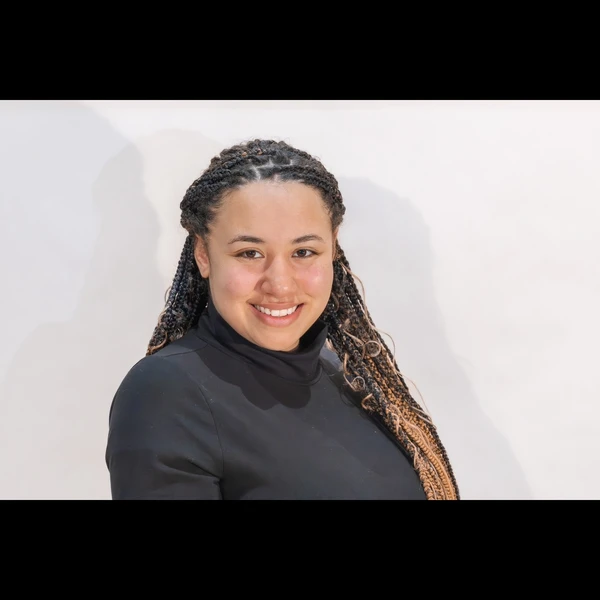
Growing up Black in a household where therapy was seen as a weakness nearly destroyed me.
I was the “overdramatic” one. The “sensitive” one. The “shit-starter.” I could cry, beg, and scream on the floor, and my parents still wouldn’t believe me when I said I was hurting. I wasn’t allowed to have pain. I wasn’t allowed to be broken. Because if I were, that meant something was wrong with our family, and in their eyes, that couldn’t be true. So I swallowed my pain. I silenced my tears. I wore a mask every single day because pretending was the only way to survive.
By the time I turned 18, I wasn’t living, I was existing. I was a shell, numb and obedient, doing whatever my parents asked, no matter how much it suffocated me. I struggled with anxiety so intense it stole my breath, depression that made getting out of bed feel impossible, and binge eating that became my only comfort. But no one noticed. Or maybe they did notice and didn’t care. Either way, I was alone. And I was tired.
My family’s silence wasn’t just painful, it was deadly. My oldest brother fell into addiction and now lives in a mental institution. My second-oldest brother died before I was even born because of the trauma and toxicity between my father and his first wife. My older sister, my heart, my friend, my mirror, was molested as a child because of her own mother’s selfishness. Her light dimmed early, and I watched her carry more pain than anyone should ever have to bear.
And then, she took her life.
It happened in November 2024. My sister, who had always been hurting, always surviving, always trying, was gone. And my father, the man who ignored her for ten years out of spite, called her “the worst thing” he ever knew. For years, he had manipulated me into believing that, too. I hated myself for that. I hated that I hadn’t known better. But more than anything, I hated that I had spent so long warning them. Telling them she was struggling. Telling them she was depressed. Telling them she needed help.
But just like me, she was labeled as dramatic. And now she was gone.
I broke. Truly broke. The kind of grief that changes your bones, that rewires your soul. There were nights when I screamed into my pillow until my throat burned. Nights, I couldn’t move. Nights, I wanted to join her to make the pain stop.
But something inside me whispered, “No.”
I couldn’t go.
Not yet.
How could I claim to advocate for mental health while letting myself drown? How could I honor my sister if I refused to fight for myself?
So I fought. I turned to the people who never gave up on me, my partner, my chosen family, my friends. I leaned on God when I felt like I had nothing else left. I screamed at the sky. I cried in therapy. I dug deep into the parts of myself I had buried for 22 years. I relived every moment of pain, every dismissal, every lie I’d told myself to survive.
And slowly, so slowly, I began to heal.
Six months of intensive therapy reshaped everything. There were weeks I didn’t think I’d make it. I was raw, exposed, stripped bare. But for the first time, I was finally being seen. I found the pieces of myself that I thought were gone forever. I found strength I didn’t know existed. And I emerged from that fire still standing.
No. Not just standing, Rising!
Today, I feel light. I feel strong. I can smile without faking it. I can breathe without guilt. I can love myself without apology. And that self-love didn’t just save me, it allowed me to step into a role I was born for.
As Vice President of Black Students United at California State University, Monterey Bay, I’ve used every ounce of my pain, my healing, and my voice to fight for others. In just one year, I’ve helped five students get into our personal growth and wellness counseling program. Five people who were where I once was. Five people who now know that they matter. They’ve told me that I helped them feel seen, helped them take that terrifying first step. That’s everything to me. That’s my purpose.
When I speak at BSU events, students listen, not because I’m perfect or polished, but because I’m real. I tell them the truth. That healing is ugly and beautiful. That it’s okay to break. That needing help isn’t weakness, it’s power! I tell them about my sister. About how I refused to let her story die in vain. About how I am using my life to write the ending she deserved.
And every time someone comes up to me afterward and says, “I thought I was the only one,” I know I’m doing what I was meant to do.
Mental health is not just a chapter of my life, it is the spine of my story. It’s the thread that runs through my pain, my growth, my leadership, and my future. I will continue to speak, scream, write, and lead until no student has to suffer in silence as my sister did. Until no Black child is told they’re “too sensitive.” Until every family learns that silence kills and that healing is holy.
To my big sister: I love you more than words will ever capture. I will carry your memory like a torch through every room I enter. You deserved better. I’m going to make sure the next generation gets better.
And to anyone out there who thinks they’re too broken to heal, let me be the proof that you’re not. You don’t have to carry it alone. Make that first call. Say the words out loud. Cry if you need to. Scream if you have to.
Just don’t give up.
Because your story is needed now more than ever.