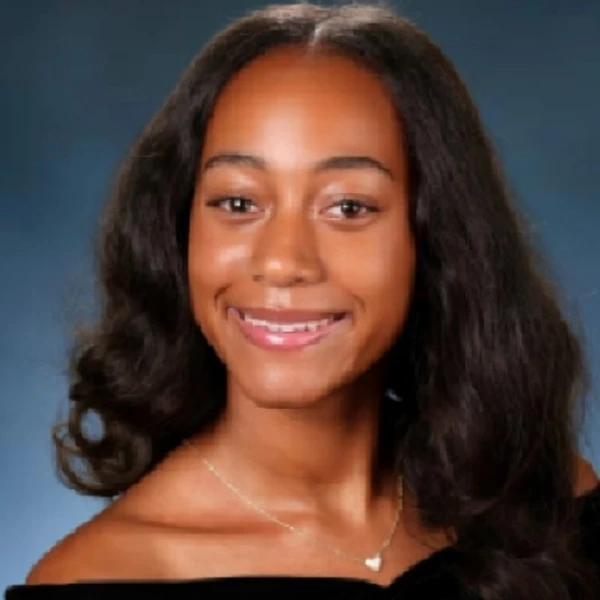
Amaya DeFlorimonte
1x
Finalist
Amaya DeFlorimonte
1x
FinalistBio
Hello! My name is Amaya DeFlorimonte and I am a Senior (Class of 2026) at Bishop O'Dowd High School, Oakland, CA. I plan to study Molecular Environmental Biology at UC Berkeley this fall and minor in Business my Sophomore year.
I am an active leader in my community...
Education
Bishop Odowd High School
High SchoolMiscellaneous
Desired degree level:
Doctoral degree program (PhD, MD, JD, etc.)
Majors of interest:
- Environmental/Environmental Health Engineering
- Psychology, General
- Neurobiology and Neurosciences
Career
Dream career field:
Medicine
Dream career goals:
STEM
Sports
Basketball
Varsity2019 – 20223 years
Volleyball
Varsity2019 – 20212 years
Artistic Gymnastics
Varsity2010 – 20199 years
Track & Field
Varsity2022 – Present4 years
Arts
Oakland Ballet School
DanceThe Nutcracker, Spring Show2010 – 2022
Public services
Volunteering
Boys & Girls Club Intern — Volunteer2024 – PresentVolunteering
Girl Scouts — Member2018 – Present
Future Interests
Advocacy
Volunteering
Philanthropy
Entrepreneurship
Forever90 Scholarship
From the moment I saw a bird cut open with trash inside its stomach at the Oakland Museum of California when I was eight years old, I began to understand the deep impact humans have on the natural world. What started as shock quickly became compassion, and eventually transformed into action. Since then, I have committed myself to living a life rooted in service through environmental advocacy, leadership, and community engagement. My education has given me the tools to better understand the world’s environmental challenges, while service has taught me how to turn knowledge into meaningful change for others.
In my Marine Biology and AP Environmental Science classes, I have studied issues such as ocean acidification, biodiversity loss, pollution, and climate change. Rather than leaving me overwhelmed, these classes empowered me by showing me that individuals can make a measurable difference. I realized that service is not only about solving problems on a large scale, but also about improving the spaces and communities directly around you.
One experience that deeply shaped my understanding of service was restoring the outdoor garden and laboratory at Martin Luther King Jr. Elementary School with my Girl Scout troop. When I first visited the site, it felt abandoned. Dead plants drooped in cracked planting beds, paint peeled from the wood, and student seating areas were covered in mold and cobwebs. I kept thinking about the children who saw this every day and what message it might send them about their value and potential. Every child deserves a space where they feel safe, inspired, and cared for.
Motivated by that belief, I researched plants and soil supplements that would thrive in West Oakland’s climate, identified gardening tools to restore the beds, and selected paint colors that would help preserve the wood while brightening the space. I spent long hours pulling weeds, loosening soil, and helping reimagine the area into a place students could enjoy again. To me, this project was about more than gardening. It was about restoring dignity and showing students that their community cared about them and their future.
The transformation was incredibly rewarding. Teachers and staff expressed gratitude, but the most meaningful moment came when I watched students run excitedly toward the new garden beds, curious about what would grow there. The laughter and energy that filled the space showed me that service can inspire hope and create lasting impact.
My passion for service also extends beyond this project. As a senior leader on my high school’s Eco Leadership Team, I oversee the Eco Club, help manage our campus composting program and Living Lab habitat, and care for the animals on campus. I also founded “Project Green Gloves,” a waste-reduction initiative focused on multimedia advocacy, campus cleanups, and environmental audits to encourage more sustainable habits within our school community. Through the Sprouts mentorship program, I help younger students develop leadership skills and confidence in environmental stewardship.
In college, I plan to continue studying Life Sciences and environmental issues while using my education to serve others through advocacy, sustainability initiatives, and community-based leadership. I hope to inspire people of all ages to care for both the environment and each other. To me, a life of service means leaving every community better than you found it and creating spaces where people feel seen, valued, and empowered to grow.
Rodney James Pimentel Memorial Scholarship
The first day I arrived at the Boys & Girls Club, Aubreigh greeted me in a pink dress, her missing front teeth unable to hide her smile. I was sixteen, she was nine, and within minutes, she was sharing parts of her life that most people wouldn't notice at first glance.
As the oldest sibling in a household shaped by divorce, Aubreigh carried responsibilities far beyond her age. She helped her younger siblings get ready in the morning, did her sister's hair for competitions, and moved between homes, constantly adjusting to new routines. This was her normal, yet it quietly took away from her ability to just be a kid.
When someone comes to me for guidance, I've learned the most important thing I can offer isn't an answer. It's understanding. With Aubreigh, there was no clear decision to solve in the way adults might frame one, but for a nine-year-old learning whether she could trust someone with her pain, that was its own kind of major crossroads. She needed a space where she didn't have to hold everything together. At first, I wanted to help the way I thought I was supposed to: suggest ways she could talk to her parents, ask for more support. But I stopped myself. What she needed wasn't direction. It was relief. So I listened. Sometimes that looked like quiet conversations between activities. Other times, it meant sitting beside her in silence, letting her feel without interruption.
By the end of the summer, she didn't feel alone anymore. Not because I had given her answers, but because she knew I wouldn't rush her toward them. That experience reshaped how I think about guidance entirely. Sometimes leading someone means helping them feel steady enough to face what they're already carrying.
Aubreigh taught me that real support requires patience, and I've had to apply that same lesson to myself in my pursuit of STEM.
When I was eight years old, I stood in front of a display at the Oakland Museum: a bird, cut open, its stomach full of trash. I didn't have words for what I felt, but something shifted in me that day. That image is part of why I eventually joined my school's Eco Leadership Team, enrolled in Marine Biology and AP Environmental Science, and created Project Green Gloves, a waste management initiative I built from the ground up.
But building something from scratch is harder than it sounds. When I launched Project Green Gloves, I ran into resistance I hadn't anticipated. Not everyone saw waste management as urgent, and getting people to care, really care, required more than facts and data. I had to learn how to communicate urgency without alienating people, how to lead without pushing, and how to stay motivated when the results weren't immediate. I designed multimedia advocacy materials, built in an audit to measure our actual impact, and kept reassessing our approach when something wasn't working.
Just as I learned not to rush Aubreigh's process, I learned not to rush my own. Growth in both cases came from patience, presence, and a willingness to keep going even when things felt uncertain. Education has given me more than knowledge. It has given me people and purpose, and I hope to keep building spaces and initiatives worth caring about, because that is how we move forward.