Hobbies and interests
African American Studies
Child Development
Community Service And Volunteering
Education
Mentoring
Meditation and Mindfulness
Reading
Psychology
I read books multiple times per month
Amanda Blake
1x
FinalistAmanda Blake
1x
FinalistBio
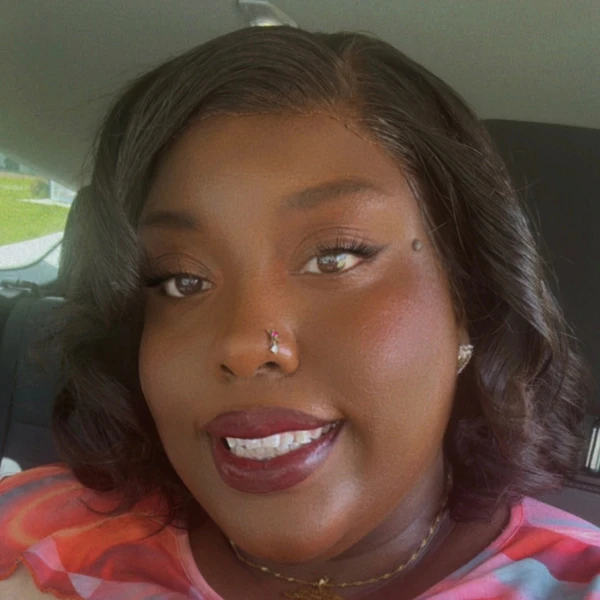
I am carving out a life rooted in healing, purpose, and generational impact. My biggest goal is to become a licensed Marriage and Family Therapist who not only serves diverse families, but also changes the way mental health feels for communities that have historically been overlooked. I want my life’s work to reflect compassion, cultural humility, and a deep belief that every family deserves space to be seen, supported, and strengthened.
What drives me most is the intersection of mental health, culture, and social justice. I am passionate about helping families break cycles, communicate with intention, and feel empowered as they make sense of their stories. I show up for this work as a mother, a Jamaican-born woman, and someone who knows firsthand how transformative safe, culturally responsive care can be. I carry my lived experiences, my education, and my heart into every room I enter.
I am a strong candidate because I lead with empathy, resilience, curiosity, and a commitment to excellence. I don’t simply aim to succeed for myself. I show up for my family, my community, and the next generation of helpers who look like me and need to see what’s possible. Every class I take, every family I support, every client I sit with brings me one step closer to building a legacy of healing, hope, and meaningful change.
Education
Capella University
Master's degree programMajors:
- Clinical, Counseling and Applied Psychology
College of Saint Elizabeth
Bachelor's degree programMajors:
- Psychology, General
Miscellaneous
Desired degree level:
Doctoral degree program (PhD, MD, JD, etc.)
Graduate schools of interest:
Transfer schools of interest:
Majors of interest:
- Behavioral Sciences
- African Languages, Literatures, and Linguistics
- Communication, Journalism, and Related Programs, Other
- Cultural Studies/Critical Theory and Analysis
- International and Comparative Education
- Peace Studies and Conflict Resolution
- Psychology, General
Career
Dream career field:
Mental Health Care
Dream career goals:
Therapist Impact Fund: NextGen Scholarship
I did not grow up with therapy in my vocabulary. I grew up with faith, family, resilience, and the belief that surviving was our first language. Being Jamaican, being raised between cultures, and being the daughter of a woman who left home to build a safer life across oceans meant strength was expected. It also meant vulnerability was something we often held in private through silence and prayer. I learned early how pain can hide in plain sight, how generational strength can sit beside unspoken wounds, and how communities like mine hold emotional battles with limited support.
My decision to become a Marriage and Family Therapist is deeply personal. I am a mother, and that shapes how I hold space, how I listen, and how I dream. I want my daughter to grow up in a world where reaching out for support feels natural and honorable. Where softness is treated as strength and not weakness. I am pursuing this work to help build a world where Black families, Caribbean families, and families with rich cultural roots see themselves reflected in the therapeutic space. I want therapy to feel like somewhere we belong, not a room we must shrink ourselves to fit into.
Recently, Hurricane Melissa became a turning point in my purpose. I was far from home, watching the place that raised me fall apart both physically and emotionally. I refreshed screens, called numbers that never rang, and prayed through each hour of silence. Family still unaccounted for. Friends without resources. Communities grieving without power, without shelter, and without access to mental health support as fear, hunger, and loss settled into everyday life. I sat safe, housed, and warm while my island cried, and I cried too.
That experience cracked my heart open. To love a place so deeply and witness your people suffer from a distance is a weight you carry in your spirit. I realized in a deeper way that mental health support is not optional. It is a lifeline. Crisis does not pause for emotional wounds to heal. Trauma does not wait for power to be restored. Grief does not pause until families are accounted for. That moment reaffirmed that this field is not simply a career path for me. It is a calling. My purpose is tied to my people.
If I could create one significant change in the mental health system, it would be expanding culturally rooted access points so care reaches people where they are, even through crisis. Healing should not require privilege, proximity, or assimilation. Our communities deserve emotional support that is flexible, community-focused, trauma informed, culturally aligned, and available beyond traditional systems.
Teletherapy carries incredible potential to support this mission. It increases access for parents, caregivers, people with chronic illness, individuals in underserved areas, and those who simply need care to meet them where they are. It brings therapy into real life. Yet, it still needs innovation, especially for communities with limited privacy, technology, or stability. We need systems that are inclusive, culturally attuned, and technologically accessible so no one is left behind.
This work is my legacy. It is my commitment to my family, my daughter, and my community. I am becoming the therapist I once needed, and the therapist my island and so many others deserve. My purpose is to hold stories with tenderness, honor culture within healing, and help build a future where emotional wellness feels like something we all have permission to choose.
Elizabeth Schalk Memorial Scholarship
I am a Black woman who has battled the mental toll of isolation, migration, and systemic racism from a young age, a fight that has shaped not only my identity but my very sense of survival. Through every trial, from navigating the complexities of being a Black female migrant to facing overt racism in academic and professional spaces, I’ve realized that mental illness is not just a personal struggle, but a reflection of a world that often refuses to see me.
As a young child, migrating to a new country meant adapting to unfamiliar societal norms while grappling with the realities of being Black and female in predominantly white spaces. This intersection of race, gender, and migration created a deep feeling of isolation that weighed heavily on my mental health. Without the tools to process these challenges, I struggled with anxiety and a constant pressure to prove my worth in environments where I felt invisible.
In undergrad, attending a private Catholic PWI brought my mental health struggles into sharper focus. Witnessing and experiencing racial dynamics that marginalized people like me intensified my internal battles, leading me to take action. I helped found the Black Student Union and International Student Union, creating safe spaces where students of color could feel seen and supported. Advocating for racial justice on campus deepened my understanding of how essential mental health care is for people of color navigating oppressive systems.
My struggles with racism didn’t stop there. As the only Black lead educator at a private Jewish academy, I faced direct discrimination from colleagues who avoided me because of the color of my skin. Some wouldn’t even use the printer after me. These experiences further fueled my belief that mental health support is vital, especially for those facing racial and cultural isolation. I became determined to make mental health care more accessible and empathetic for people who, like me, often feel unseen.
Now, as a mother, I am deeply committed to fostering my daughter’s emotional intelligence and encouraging her to express herself freely. I am determined to ensure she grows up in an environment where she knows she is valued and loved for exactly who she is.
Through my experiences, I’ve come to understand the importance of mental wellness on a profound level. It is not just about surviving the challenges of life, but about finding ways to thrive, heal, and support others on that same journey.
Fishers of Men-tal Health Scholarship
My experience with mental health has deeply shaped my beliefs, relationships, and career aspirations. Coming to a new country as a young child, I was thrust into a world that was vastly different from what I had known.
As a young migrant, I was often caught between two worlds. I was expected to blend into my new environment while also holding on to the cultural values and traditions of my family. This balancing act created an internal conflict that felt overwhelming at times. I struggled with feelings of isolation, not knowing where I truly belonged.
It wasn't until I attended a private Catholic PWI for undergrad that I truly understood what it meant to be one of the few Black students in an overwhelmingly white space. This experience heightened my awareness of the racial dynamics at play and intensified my mental health struggles. The subtle and overt forms of racism I witnessed and experienced pushed me into action. I helped found the Black Student Union and International Student Union, both of which created spaces for students like me to feel seen, heard, and supported. I also organized meetings with the university president, consistently advocating for change after witnessing acts of racism on campus. These experiences taught me the importance of using my voice to advocate for myself and others, even in the face of resistance.
My struggles with racism didn’t stop there. As a lead educator at a private Jewish academy, I was the only Black educator in the school. Despite my leadership role, I experienced isolation and discrimination from some of my colleagues. There were days when I would cry alone in my classroom, overwhelmed by the reality of being judged solely by the color of my skin. Some colleagues would avoid talking to me or even using the printer after I had used it. The blatant fear and avoidance I encountered reminded me of how deep racial biases can run, even in professional and supposedly progressive environments. These experiences deepened my resolve to address mental health, especially as it relates to race and identity, in my work.
Being Black and female added another layer to these struggles. I often felt invisible or misunderstood in predominantly white spaces. Society’s expectations for Black women to be strong, resilient, and self-sufficient sometimes left little room for vulnerability or expressing the emotional pain I felt inside. It took years for me to learn how to navigate the intersection of race, gender, and mental health in a way that honored my experiences while also allowing me to heal and grow.
This period of struggle and adaptation shaped my beliefs about mental health. I came to understand that mental health is not just about personal wellness but also about the environments we inhabit and the societal pressures we endure. It’s about feeling seen, heard, and understood by others. For much of my life, I felt that no one truly saw me for who I was. As a result, I adopted the personal motto of wanting to be “someone’s person.” I know firsthand the pain of not having someone in my corner, someone to confide in or lean on during tough times. This realization planted the seed for my deep interest in therapy and mental health care.
Therapy, for me, is not just a profession it’s a calling. I fell in love with the idea of being someone who could offer a safe space for others to express their feelings and work through their struggles. I want to be the person that others can turn to when they feel lost, unheard, or invisible, because I understand the profound impact of having someone truly listen and support you. This passion for mental health care is rooted in my desire to provide others with the support I wished I had growing up. I believe that everyone deserves to be seen and heard, especially when they are going through difficult times.
My experience with mental health has also influenced the way I approach relationships. I have learned that emotional intelligence and vulnerability are essential for deep, meaningful connections with others. I strive to be present for those I care about in the same way I wish someone had been there for me during my struggles. My belief in the power of human connection drives me to nurture my relationships with care and intentionality.
As a mother, these experiences have profoundly shaped the way I raise my daughter. I take pride in “breathing life” into her every day. I am deeply committed to fostering her emotional intelligence and encouraging her to be free in expressing her thoughts, feelings, and desires. I want her to grow up knowing that she is seen, valued, and loved for who she is, without any conditions. In a world that can often be harsh and unforgiving, I strive to create an environment for her where she feels safe to be herself, where her emotions are honored, and where she learns the importance of self-care and emotional awareness.
I know the importance of nurturing mental health from a young age. I want my daughter to feel empowered to take care of her emotional well-being as she navigates life. By encouraging her to express herself freely, I hope to give her the tools she needs to handle life’s challenges with resilience and grace.
My personal journey has also shaped my career aspirations in a way that feels both purposeful and fulfilling. I am passionate about becoming a therapist because I want to help others navigate the complexities of their mental health in the same way I had to. I believe that everyone deserves access to compassionate, empathetic care that allows them to heal, grow, and thrive. My own experiences with mental health have given me a unique perspective that I want to bring into my work. I understand what it feels like to be on the other side of the therapy room, and I know the power of feeling truly heard and understood by someone else.
In everything I do, I carry with me the lessons I’ve learned from my own mental health journey. These experiences have shaped not only who I am but also who I aspire to be, a person who uplifts others, creates spaces for healing, and fosters a deeper understanding of the importance of mental wellness.
Mental Health Importance Scholarship
Mental health is fundamental to living a fulfilling and meaningful life. It is the difference between merely existing and truly thriving. When mental health is neglected, it can feel like being trapped in a suffocating fog, where every step forward is heavy with sadness and pain. I know firsthand the importance of breaking free from those feelings. Attending to my mental well-being is a non-negotiable part of my life because I understand how vital it is to my overall happiness and success.
The weight of mental struggles can make even the simplest tasks feel overwhelming. It is in these moments that life can feel less like living and more like merely surviving. And that’s why prioritizing mental health isn’t just about avoiding suffering; it’s about creating a life that is filled with purpose, connection, and joy. For me, mental health care is the key to unlocking a life that feels vibrant and alive, instead of one that feels stagnant or burdensome.
Maintaining my mental wellness requires continuous effort and self-awareness. I practice mindfulness by regularly checking in with myself, which helps me stay in tune with my emotions and physical sensations.
This self-awareness allows me to recognize when something is off before it spirals into something bigger. I pay attention to my innermost thoughts, the physical sensations in my body, and how these signals change based on my stress levels or emotional state. It’s a way of staying grounded and catching the early signs of distress before they escalate.
A crucial part of my mental health routine also involves surrounding myself with positive influences.
My daughter plays an essential role in this. Spending time with her is more than just a bonding experience; it’s a lifeline for my mental health. Her happiness acts like a source of serotonin, the brain’s natural feel-good chemical, and it helps me stay centered. There’s a unique joy I experience when I see her smile, laugh, or reach new milestones. It fills me with purpose and reminds me of the beauty in life, even during challenging times. She is my constant source of joy, and her presence recharges me in a way that nothing else can.
In addition to checking in with myself and spending time with my daughter, I engage in practices that promote mental clarity and balance. Exercise, creative outlets, and quiet moments of reflection help me process my thoughts and feelings. These activities give me space to breathe and reset, allowing me to approach each day with a clear mind and an open heart.
By balancing these practices, I ensure that my mental wellness is cared for consistently. I believe that maintaining mental health is crucial because it empowers me to be the best version of myself for both me and my daughter.
When I cater to my mental wellness, I create a better life for us. I become more patient, more present, and more resilient. This focus on mental health allows me to show up fully, not just as a mother but as an individual who embraces life in all its complexity. Mental wellness, in my view, is not a luxury but a necessity. It is the foundation upon which all other aspects of life are built, and without it, the rest crumbles. By nurturing my mental health, I ensure that I can keep moving forward, not just surviving but truly living.