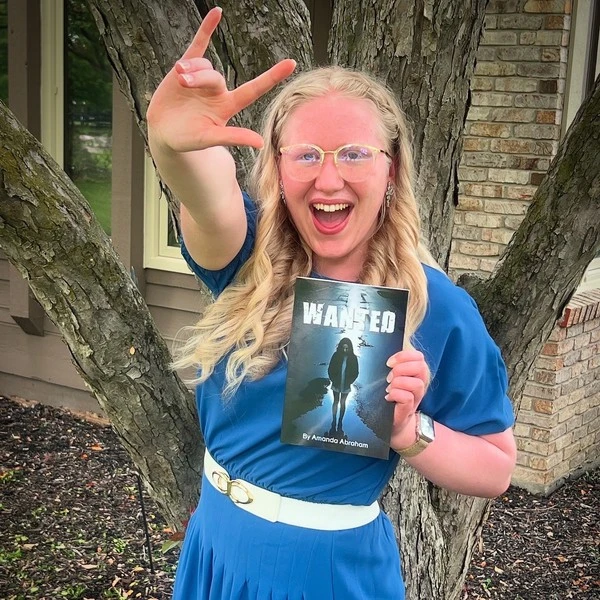
I am severely visually impaired. I truly believe that if I wasn’t born this way, I likely would not be pursuing a career in health. My disability has given me a new “vision” into what it looks like, what it sounds like, and what it feels like to be “underserved”. My example is small, but in the real world, we can find cases of underserved communities, particularly in terms of health, every day. During high school, I decided to take up American Sign Language. During the time I spent learning the language (which I still use today), I recognized just how few resources Deaf communities receive, just how many disparities arise in their healthcare access, and just how little say they have in their own lives. Their voices are, quite literally, drowned out. I noticed a similar phenomenon on a medical mission trip to Panama. How many more populations, at home and afar, face the same problem(s)? As a future public health practitioner and occupational therapist, I hope to give these silenced populations a voice through equitable healthcare, empathy, cultural competence, and respect.
Empathy is so much more than smiling and nodding to someone during a conversation. It’s more than saying “I get how you feel” and walking away. It’s more than pretending to understand even when we don’t. Empathy is respect created from recognizing and attempting to understand the experiences of others. It’s bringing ourselves, no matter how large the gap may be, to their level and viewing the world through their eyes.
Empathy is a powerful cornerstone for both occupational therapy and public health. Without it, I don’t believe many people would be interested in pursuing these fields. Occupational therapy is all about Activities of Daily Living (ADLs); what occupations (these don’t all have to be work-related) a person values, and how to continue performing these activities after an injury, diagnosis, or amputation. It’s not about what the provider wants for a patient, it’s about what the patient wants for themself, with the provider willing to listen and assist in any and all ways possible. Empathy allows OTs to think beyond themselves and ultimately help patients create a better life. As a patient who received OT services once told me, “[The provider] gave me hope. They listened, they did their best to understand, and honestly, they put the stars within my reach.” This quote has stuck with me because I would love nothing more than to be that person, that provider, in someone else’s life. Empathy will allow me to do it.
Public health is another field that requires a great deal of empathy. It’s easy to look down upon those who are less fortunate or experience different health outcomes than we do. However, our judgement is irrelevant in the light of their experiences. Empathy in this context is centered around choosing to listen actively, giving the person a chance to express their experiences, problems, etc., and using those findings to make their community safer, happier, and healthier. As a future public health practitioner, I hope to never overlook a person or population, writing them off for any reason at all. In fact, I want those people who most others choose to ignore, to be the ones that I run to. Through empathy, I want to show all populations-particularly the underserved-that they are loved, respected, beautiful, and wanted.