Hobbies and interests
Advocacy And Activism
Cheerleading
Community Service And Volunteering
Student Council or Student Government
Volunteering
Reading
Leadership
Cultural
Epic
Literary Fiction
Self-Help
Young Adult
I read books daily
Alyssa Ashley
1x
Finalist
Alyssa Ashley
1x
FinalistBio
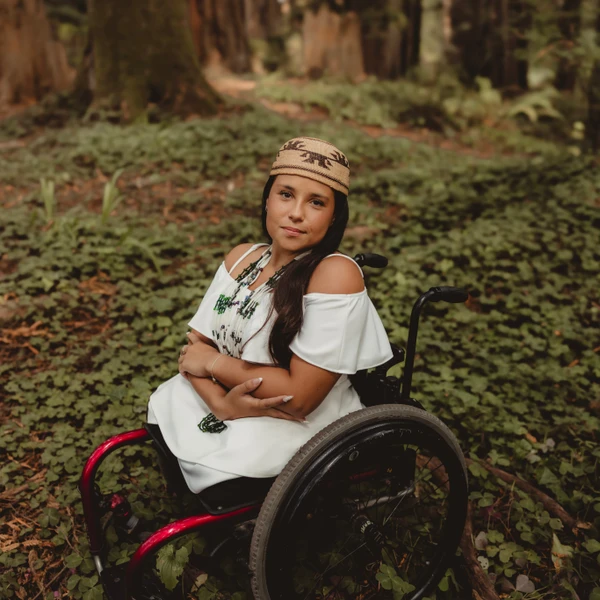
I want to make an impact, whether it be by helping one person or changing the world. I want my impact to be that a physical disability does not mean you should live a smaller life. I am passionate about my education. I work hard to achieve the grades that I have. I have served as my Class President for 3 years and I am now the ASB President. In my time I have advocated to inclusiveness in all campus activities. I have participated in cheerleading for 8 years. I have served my community by volunteering to work with a local sports organization. In addition, I also volunteer at school events as well as with the California Scholarship Foundation.
Education
College of the Redwoods
Associate's degree programMajors:
- Education, General
Hoopa Valley High School
High SchoolMiscellaneous
Desired degree level:
Bachelor's degree program
Majors of interest:
- English Language and Literature, General
- Law
- Communication, Journalism, and Related Programs, Other
- Community Organization and Advocacy
- American Sign Language
Career
Dream career field:
- Law Practice
Dream career goals:
My long term goal is to practice family and civil law. I want to be an advocate for Native people, children and disabled.
Sports
Cheerleading
Varsity2021 – Present5 years
Public services
Volunteering
California Scholarship Foundation — Member2022 – 2026Volunteering
Hoopa Youth Cheer and Football — Cheer Instructor2023 – Present
Future Interests
Advocacy
Politics
Volunteering
Bright Lights Scholarship
Receiving this scholarship would have a profound impact on both my education and my future career. It would not only reduce the financial burden of pursuing my undergraduate degree but also allow me to stay focused on my academic goals instead of worrying about how I will pay for school. Investing in my education is an investment in the work I hope to do for my community for years to come.
As a Hoopa Valley Tribal member (Na, "People of the Place Where the Trails Return") and a person living with caudal regression syndrome, I have learned that perseverance is built through overcoming challenges. Growing up in a wheelchair and navigating financial hardships in a single-income household taught me resilience, determination, and the importance of advocating for those whose voices are too often overlooked. These experiences have shaped my passion for higher education and my commitment to creating meaningful change.
Although I have worked hard to earn admission and continue my education, the cost remains a significant obstacle. For the Fall 2026 semester alone, I still owe for my tuition and educational expenses. This financial burden creates uncertainty and stress that can distract from my academic success. Receiving scholarship support would directly help pay my tuition, reducing the need to rely on loans and allowing me to dedicate more time to my coursework, leadership opportunities, and community involvement.
My long-term goal is to earn my undergraduate degree and continue on to law school. As an attorney, I hope to advocate for Native communities and individuals with disabilities by working to improve access to justice, strengthen tribal sovereignty, and ensure that marginalized voices are represented in legal and policy decisions. I want to use my education to address issues that affect Indian Country, including access to resources, healthcare, education, and equal opportunities for people with disabilities. My personal experiences have given me a unique understanding of these challenges, and I am determined to turn those experiences into a career centered on service and advocacy.
This scholarship would do more than provide financial assistance—it would help make my goals attainable. By easing the cost of tuition, it would allow me to continue building the knowledge and skills necessary to become an effective advocate for my community. Every dollar invested in my education brings me one step closer to returning that investment through a lifetime of service to Native people and individuals with disabilities.
I am committed to working hard, succeeding academically, and using my education to create positive change. With the support of this scholarship, I will be better equipped to complete my undergraduate degree, pursue law school, and dedicate my career to ensuring that Native and disabled voices are heard, respected, and represented.
Love Island Fan Scholarship
"In Sync or Sink"
Theme: How well do you really know your partner and does everyone else believe your connection is genuine?
The challenge takes place around the fire pit with a giant scoreboard.
Each couple has:
• Two podiums facing away from each other so they cannot see each other's answers.
• Whiteboards (or electronic tablets) to write responses.
Round one: How well do you know me?
Each Islander answers how they think their partner would answer
After both have written their answers, they reveal simultaneously.
Matching answers = 1 point
Questions focus on personality rather than facts
Examples:
• Who would be more likely to accidentally spill a secret?
• Who would ghost someone after one bad date?
• Who catches feelings first but hides them?
• Who has the biggest green flags?
• Who is more jealous?
• Who would flirt without realizing it?
• Who would survive longer in the villa if they were single?
This round should be quick
Round Two: Relationship Reality
Questions become more serious.
Again, answers must match. and worth 1 point
Examples:
• Who would be more devastated if this relationship ended?
• Which one of you is harder to read emotionally?
• Who is more likely to have their head turned by a bombshell?
• Who sacrifices more in this relationship?
• Who has changed the most since coupling up?
• Who is more invested in making this relationship work outside the Villa?
Round Three: The Hot Seat
The lowest-scoring couple is eliminated from the challenge.
The remaining couples continue.
This round introduces multiple-choice situations.
Example:
"If your partner forgot your birthday..."
A. Laugh it off
B. Stay quiet but be upset
C. Start an argument
D. End the relationship
Both partners secretly answer how they believe their partner would react.
Additional scenarios:
• Your partner dances with a bombshell.
• Someone tells you your partner isn't genuine.
• Your partner kisses someone during Casa Amor.
• You find out your partner lied about something small.
• You hear your partner was talking behind your back.
• Your partner chooses another Islander for a challenge kiss.
Each correct match earns:
2 points
Final Round: Villa Verdict
Lowest scoring couple eliminated
The remaining top couples sit together while the other Islanders secretly vote. Shifting the challenge to compatibility to reputation. Each eliminated Islander answers anonymously.
Questions are about each couple not individual Islanders.
Examples:
Which couple would survive longest outside the villa?
Which couple seems to have the strongest emotional connection?
Which couple is forcing a connection?
Which couple is most likely staying together to win?
Which couple communicates the healthiest?
Which couple has the strongest chemistry?
Which couple do you trust the most?
Scoring
Each anonymous Villa vote is worth 3 points.
For example:
Question:
"Which couple is the most genuine?"
If 8 Islanders vote for Couple A...
Couple A earns 24 points.
This allows all couples a chance to win.
Final Reveal:
The host reveals answers one at a time. This creates suspense.
Example:
Host:
"The Villa voted the couple most likely to stay together after Love Island..."
pause
"...Emma and Jake."
Cheers.
Next:
"The couple the Villa believes may be forcing their connection..."
dramatic pause
"...Olivia and Ben."
Winner
After all Villa votes are counted, total scores from each round are added, the couple with the highest score wins.
Prize:
• An exclusive sunset yacht date (or luxury overnight hideaway)
• First choice in the next recoupling order or immunity from the next dumping (depending on the season's format)
Frank and Patty Skerl Educational Scholarship for the Physically Disabled
Growing up with Caudal Regression Syndrome has given me a perspective on the world that many people never have the opportunity to experience. As a wheelchair user, I have learned that barriers are not always physical. Sometimes they are assumptions, inaccessible spaces, or the belief that a disability limits a person's potential. Being part of the disabled community has taught me resilience, patience, and determination, but above all, it has shown me the importance of advocating for those whose voices are too often overlooked.
I am that girl everyone in my community knows as the girl in the wheelchair. In fact, I was the only child growing up on the Hoopa Valley Indian Reservation who used a wheelchair. While my wheelchair is often the first thing people notice about me, it has never defined who I am. I am a daughter, a sister, a student, a cheerleader, a volunteer, and a proud Na:tinxwe, "People of the Place Where the Trails Return." Living with a disability has simply become one part of my story, not the whole story.
Because I navigate the world differently, I notice the challenges that many people never have to think about. I understand the frustration of inaccessible buildings, uneven sidewalks, gravel roads, football fields with no paved access, and spaces that were never designed for someone using a wheelchair. I also know what it feels like when people underestimate your abilities before they even know your name. Those experiences have taught me empathy, not only for people with disabilities but for anyone who faces obstacles because of circumstances beyond their control.
Rather than allowing those challenges to discourage me, they have inspired me to become an advocate. I have learned to speak up for myself, ask for accommodations when necessary, and encourage others to do the same. Through volunteering as a youth cheer instructor, participating in community service projects, and supporting Native youth events, I have seen how inclusion and encouragement can help others believe in themselves. My disability has strengthened my desire to serve others because I understand firsthand how meaningful support and opportunity can be.
As I continue my education, my long-term goal is to earn my undergraduate degree and attend law school. I hope to become an attorney who advocates for Native communities and individuals with disabilities by improving access to healthcare, education, and strengthening tribal sovereignty, and ensuring that marginalized voices are represented in legal and policy decisions. I want to help remove barriers that prevent people from receiving equal opportunities in education, healthcare, employment, and public life.
Being part of the disabled community has shaped not only how I see the world, but also the person I strive to become. My experiences have taught me that true strength is found in perseverance, compassion, and service. I will carry those lessons with me throughout my life, using my education and personal experiences to create positive change for future generations. My disability has never diminished my dreams, it has created bigger ones.
Hines Scholarship
To me, going to college means opportunity. It is an opportunity to build a better life for myself, honor the sacrifices my family has made, and gain the knowledge and skills needed to give back to the community that has shaped me. College is more than earning a degree, it is the path that will allow me to create lasting change for others while proving that obstacles do not have to determine a person's future.
Growing up in the Hoopa Valley as a Native American woman with Caudal Regression Syndrome, I have faced challenges that many people cannot imagine. As the only child in my community who used a wheelchair, I often stood out. While my disability has presented physical obstacles, it has also taught me resilience, determination, and the importance of advocating for myself. Those experiences have inspired me to become an advocate for others whose voices are too often overlooked.
My family has always emphasized the value of hard work and education. Growing up in a single-income household, I learned that every opportunity is earned through perseverance. Watching my mother work tirelessly to provide for our family showed me that success is not measured by what we have, but by what we do with the opportunities we are given. Her example motivates me to work hard so that I can one day give back to both my family and my community.
My goal is to earn my undergraduate degree before continuing to law school. As an attorney, I hope to advocate for Native communities and individuals with disabilities by improving access to justice, strengthening tribal sovereignty, and ensuring that marginalized voices are heard in legal and policy decisions. I want to help address challenges facing Indian Country, including limited access to healthcare, education, economic opportunities, and resources. My own experiences have given me a personal understanding of these issues, and I want to use that perspective to create meaningful change.
Education is also an investment in my community. Every lesson I learn, every challenge I overcome, and every milestone I achieve will prepare me to return home with the knowledge and skills to serve others. I want young people in my community to see that no matter their circumstances, they can pursue higher education and accomplish their dreams..
College represents hope, purpose, and possibility. It is the bridge between where I am today and the future I envision, a future where I can advocate for those who need it most and leave my community stronger than I found it. By pursuing higher education, I am not only investing in myself but also in the future of the people and community I proudly call home.
Michael Rudometkin Memorial Scholarship
How I Embody Selflessness
Selflessness means putting the needs of others before your own and giving your time, energy, and compassion without expecting anything in return. Growing up in the Hoopa Valley as a Na:tixwe (Hoopa) Tribal member, I learned that serving others is simply part of being a member of the community. Na:tinxwe believe in giving without expectation of anything in return. We have ceremony to "balance the world" to dance and sing prayers for every person.
Living with Caudal Regression Syndrome has given me a unique perspective on compassion and service. As someone who uses a wheelchair, I understand what it feels like to face obstacles and rely on the kindness of others. Rather than allowing my disability to limit what I can contribute, it has motivated me to become someone others can count on. I believe everyone deserves encouragement, respect, and the opportunity to succeed, regardless of the challenges they face.
One of the most meaningful ways I have given back is by volunteering as a youth cheerleading instructor. Cheer has been an important part of my life, and I enjoy sharing that passion with younger athletes. I help teach cheers, chants, and basic skills while encouraging each child to believe in themselves and work together as a team. I strive to be a positive role model by reminding them that success comes through dedication, kindness, and perseverance. Watching young cheerleaders grow in confidence and realize their own potential is one of the most rewarding experiences I have had.
I also volunteer at school and community events throughout the year. Whether I am serving food at community dinners, participating in community clean-up projects, or assisting with fundraisers that benefit Native youth programs, I am always willing to lend a hand wherever it is needed. These opportunities have shown me that every contribution, no matter how small it may seem, helps strengthen our community.
One experience that reinforced the importance of selflessness was helping organize fundraising efforts when my uncle became critically ill. My family faced the emotional and financial challenge of traveling more than two hours to visit him in the hospital. Alongside community members, I volunteered my time helping with breakfast burrito sales, recycling drives, and other fundraising efforts that allowed our family to continue making those trips during his final days. That experience reminded me that selflessness often means standing beside others during life's most difficult moments.
As I pursue my undergraduate degree and continue on to law school, I hope to dedicate my career to advocating for Native communities and individuals with disabilities. I want to use my education to improve access to justice, healthcare education, and create opportunities for those whose voices are often overlooked. The acts of service I practice today are preparing me for a lifetime of serving others. I believe true selflessness is not defined by a single act but by a lifelong commitment to helping others, strengthening your community, and leaving every place better than you found it.
Lotus Scholarship
Growing up in a single-income household, I often heard the words, "Next time." At the time, I didn't fully understand what they meant. As a child, I only knew that sometimes there wasn't enough money for new clothes, school trips, or things my siblings and I wanted. As I grew older, I realized "next time" wasn't about my mother saying no, it was about her making impossible choice to ensure that we always had what we needed. Watching my mother stretch every dollar taught me that budgeting is more than balancing numbers; it is an act of sacrifice, resilience, and love.
Living in Hoopa also exposed me to challenges that affect many Native communities, including poverty, limited resources, and barriers to educational and healthcare opportunities. I have seen firsthand how resilience is woven into our people. Our community continues to support one another through hardships while preserving our language, traditions, and ceremonies that remind us where we come from.
The challenges I faced have become my greatest source of motivation. My disability has never defined my potential. Instead, it has taught me patience, resilience, and empathy for others who face obstacles of their own. Watching my mother overcome adversity with grace and determination inspired me to work hard, pursue higher education, and use my experiences to help others.
I hope to serve my community by advocating for greater inclusion, accessibility, and opportunity for Native youth and individuals with disabilities. My journey has not been easy, but every challenge has made me stronger. I am proud of where I come from, proud to be Na:tinxwe, "People of the Place Where the Trails Return," and confident that the obstacles I have overcome will help me make a meaningful difference in the lives of others.
TRAM Resilience Scholarship
I am that girl. Everyone in my community knows me as the girl in the wheelchair. Quite literally, I was the only child growing up in Hoopa Valley who used a wheelchair. While my wheelchair is often the first thing people notice about me, it has never defined who I am. I am more than a wheelchair. I am a daughter, sister, friend, cheerleader, and an ASB President. I am someone who has learned to lead, to persevere, and to prove my abilities matter far more than the way I get around.
Growing up in Hoopa Valley came with challenges that shaped the person I am today. As a proud Na:tixwe (Hoopa) Tribal member, I was raised in a community rich in culture, tradition, and resilience. At the same time, I faced obstacles that many people could not fully understand. Living with caudal regression syndrome meant that everyday tasks required extra effort, planning, and determination. Those challenges were difficult, but they taught me strength, perseverance, and the importance of never giving up.
Growing up in a rural community also presented unique challenges. Accessibility was rarely guaranteed, and opportunities for people with disabilities were limited. I learned early that if I wanted to do something, I would have to find my own way. I had to become stronger to push my wheelchair across gravel roads, through grass fields, and around football fields that had no paved track. While others could simply walk where they wanted to go, I had to think ahead, adapt, and keep pushing. There were moments when I felt different from my peers because I could not participate in activities the same way they could. Instead of allowing those moments to defeat me, I learned to advocate for myself, find creative solutions, and focus on what I was capable of accomplishing rather than what I could not do.
Living in Hoopa also exposed me to challenges that affect many Native communities, including poverty, limited resources, and barriers to education and healthcare. Despite these hardships, I witnessed something even stronger, our resilience. I have seen neighbors come together to support one another during difficult times while continuing to preserve our language, traditions, and ceremonies. That sense of community taught me that even in the face of adversity, we rise together.
The challenges I have faced have become my greatest source of motivation. My disability has never defined my potential. Instead, it has taught me patience, resilience, and empathy for others who face obstacles of their own. Watching the people in my community overcome hardship with grace and determination has inspired me to pursue higher education and dedicate my future to helping others.
My long-term goal is to earn my undergraduate degree and continue on to law school. As an attorney, I hope to advocate for Native communities and individuals with disabilities by protecting tribal sovereignty, expanding access to justice, healthcare, education, economic opportunity, accessibility and ensuring that marginalized voices are represented in legal and policy decisions. My personal experiences have given me a unique understanding of these challenges and inspired me to build a career dedicated to service, advocacy, and creating meaningful change. I am proud of where I come from, proud to be Na:tixwe "People of the Place Where the Trails Return" and confident that the obstacles I have overcome have prepared me to make a lasting difference in the lives of others.
Marcia Bick Scholarship
Growing up in Hoopa Valley came with challenges that shaped who I am today. As a proud Na :tinxwe (Hoopa) Tribal member, I was raised in a community rich in culture, tradition, and resilience. At the same time, I faced obstacles that many people could not see or fully understand. Living with caudal regression syndrome and using a wheelchair meant that everyday tasks often required extra effort, planning, and determination. While those challenges were difficult, they taught me strength, perseverance, and the importance of never giving up.
I was raised by a single mother who worked hard to provide for our family. Money was always tight, but as a child I did not realize how much she sacrificed to make sure I had what I needed. Looking back now, I understand the financial burden that came with raising a child with a disability. Medical appointments, specialized equipment, travel expenses, and everyday necessities added costs that many families never have to consider. Despite those hardships, my mother never let me feel like I was a burden. She taught me that love, hard work, and determination mattered more than material things.
Growing up in a rural community also presented unique challenges. Accessibility was not always guaranteed, and opportunities for people with disabilities could be limited. There were times when I felt different from my peers because I could not participate in activities the same way they could. Instead of allowing those moments to define me, I learned to adapt. I found new ways to participate, advocate for myself, and focus on what I could accomplish rather than what I could not.
Living in Hoopa also exposed me to challenges that affect many Native communities, including poverty, limited resources, and barriers to educational and healthcare opportunities. While these realities were difficult, they also strengthened my desire to create positive change. I have seen firsthand how resilience is woven into our people. Our community continues to support one another through hardships while preserving our language, traditions, and ceremonies that remind us where we come from.
The challenges I faced have become my greatest source of motivation. My disability has never defined my potential. Instead, it has taught me patience, resilience, and empathy for others who face obstacles of their own. Watching my mother overcome adversity with grace and determination inspired me to work hard, pursue higher education, and use my experiences to help others.
Today, I carry those lessons with me as I work toward my future. I hope to serve my community by advocating for greater inclusion, accessibility, and opportunity for Native youth and individuals with disabilities. My journey has not been easy, but every challenge has made me stronger. I am proud of where I come from, proud to be Na:tinxwe, "People of the Place Where the Trails Return," and confident that the obstacles I have overcome will help me make a meaningful difference in the lives of others.
Little Miami Brewing Native American Scholarship Award
Growing up Na:tinixwe, a member of the Hoopa Valley Tribe, has shaped every part of who I am. Being Hoopa is more than my identity, it is a connection to my family, my community, my ancestors, and the land my people have called home since time immemorial. My culture has taught me resilience, respect, and responsibility, and it continues to guide my goals, my values and my commitment to serving others.
Some of my most meaningful experiences have been participating in our traditional ceremonies, including the Brush Dance, White Deerskin Dance, Jump Dance and Boat Dance. These ceremonies are not events, they are living traditions that connect us to our ancestors and remind us of our responsibility to preserve our way of life. These ceremonies are an important part of who we are as Na:tinixwe. These are our expressions of prayer, healing, renewal, balance, and our strength. Watching generation come together reminds me that I am a part of something much larger than myself. They reinforce the values of honoring our elders, preserving our traditions, and ensuring that our culture continues to thrive for future generations.
The Brush Dance is especially meaningful to me. The ceremony takes place in what we call the pit, a square area dug into the ground and supported by redwood planks. At the center of the pit, a medicine woman and medicine carrier care for a child receiving healing. Herb-infused steam rises into the air while the medicine woman waves it with a burning pine pitch stick, offering prayers and helping to ward off illness. Around them, dancers prepare, men, boys, and girls enter the pit, lining its perimeter. As they sing their songs and dance through the night, the sound of their regalia comes alive. Dresses adorned with abalone, clam shells, pine nuts and necklaces made of the same materials gently sway, clinking together in rhythm with the dancers movements blending with songs, creating a beautiful sound that echoes out of the pit into each spectator. I have spent summer nights star gazing while listening to the voices of the singers, smelling cedar and pine and feeling complete. It is a tradition that has endured for generations, an I am proud to be a part of it.
While I am deeply proud of my heritage, I also understand the challenges that many of our native communities continue to face. Poverty, substance abuse, limited educational and healthcare resources, and the effects of historical trauma are realities that impact many tribal families. Witnessing these struggles has strengthened my determination to pursue higher education so i can give back to my community and help create opportunities for future generations.
I was not only born to the "people where trails return", I was also born with caudal regression syndrome. My disability has taught me perseverance, adaptability, and determination. Combined with the values I have learned through my culture, it has shown me obstacles do not define a person's future. Instead, they can become the source of strength and purpose.
As I continue my education, i hope to be a positive role model for Native youth by demonstrating that cultural pride and academic success go hand in hand. I want to use my education to advocate for my community while helping preserve the traditions that have shaped me. Being Na:tinixwe is one of my greatest sources of pride. My culture has given me a strong foundation and a responsibility to my community and ancestors to ensure that our traditions will thrive forever.
Jeanne Murphy Scholarship: Compassion in Action
Compassion is something I learned long before I understood its meaning. It was first taught to me through the actions of my mother, who has dedicated many hours to serving our community. Whether she was coaching youth sports, serving on nonprofit boards, organizing fundraisers, or mentoring young people, she consistently showed me that compassion is not simply feeling empathy for others, but taking actions to make a difference. She has always believed that every child deserves encouragement, opportunities, and someone who believes in them. Watching her serve others without expecting anything in return is the kind of person I strive to be.
My own experiences have strengthened my compassion. I was born with caudal regression syndrome, a condition that has presented physical challenges throughout my life. Growing up my disability taught me resilience, patience, and determination. It also has given me a unique perspective on the importance of understanding and inclusion. There have been times when I have needed accommodations or support, and those experiences have shown me how meaningful a simple act of kindness or acceptance can be. Rather than allowing my circumstances to define my limitations, they have inspired me to recognize the challenges others may face, even when those challenges are not immediately visible.
Through cheer, school, and community involvement, I have tried to put compassion into action. I believe that encouraging teammates, welcoming others, and treating everyone with respect creates an environment where people feel valued. Small acts of kindness, offering supports, listening without judgement, or helping someone who feels left out can have a lasting impact. Compassion is not always found in grand gestures; it is often demonstrated through everyday choices to care for others.
As a proud member of the Na:tinixwe, "People of the Place Where Trails Return," I have also witnessed the challenges that many Native communities face, including poverty, substance abuse, limited access to resources and discrimination. These realities have strengthened my desire to help others and be part of positive change. I want to use my education and experiences to advocate for those whose voices are often overlooked and help to create opportunities that allow everyone to succeed.
Looking toward the future, I intend to continue living a life of compassion through advocacy, service, and leadership. I will be attending college and pursue a career where I can make a meaningful difference in the lives of others, particularly within the Native Communities and for individuals with disabilities. I want to promote inclusion, encourage kindness,and help build communities where every person feels respected, supported and valued.
Compassion is one of the greatest gifts my mother has given me, and it has been strengthened by my own life experiences. It has shaped who I am today, and will continue to guide the choices I make, the people I serve, and th future I hope to build.
Barbara Cain Literary Scholarship
Books have the power to shape the way we see ourselves and the future we want to create. Of all the books I have read, Firekeeper's Daughter has had the greatest impact on me because I saw pieces of my own life reflected in the story. As a Native student growing up on a reservation, I connected with the main character's experiences, her commitment to her community, and her determination to overcome obstacles while staying true to who she is.
Reading Firekeeper's Daughter reminded me that my background is not a barrier to success but a source of strength. The novel celebrates Native identity, culture, and resilience while showing that difficult circumstances do not define a person's future. Like the main character, I have learned that perseverance, courage, and integrity are essential when facing challenges. Her story encouraged me to believe that I can overcome obstacles without losing sight of my values, culture, traditions and community.
Growing up on the reservation has given me a deep appreciation for my family, culture and community. It has also allowed me to see the challenges that many Native communities continue to face, including poverty, lack of resources, substance abuse, historical trauma, and the effects of racism. These challenges are real, but they do not define us as a people. Rather than discouraging me, these experiences have motivated me to pursue a college education so I can gain the knowledge and skills needed to make a positive impact in my community.
One of the most meaningful lessons that I learned from Firekeeper's daughter is that success is not measured by the money you have or where you live, but using your education and experience to strengthen your community. My goal is to earn a college degree and return with the knowledge, leadership skills to serve my people. I want to advocate for Native youth, support the programs that improve opportunities for future generations, and help address the barriers that often prevent Native communities and people from reaching their full potential.
The novel also reinforced my belief that a person's identity should never feel pressured to hide or change. I am proud to be Na:tinixwe. Our traditions, values and culture provide the foundation that will continue to guide me through life's challenges. My heritage has taught me fortitude, responsibility and respect, and the responsibility to help those in my community.
Firekeeper's Daughter has inspired me to dream bigger while remaining connected to my roots. It has strengthened my commitment to earning a college degree and using that education to make a meaningful difference. No matter where my future leads, I will always be proud to be Na:tinixwe, one of the "People of the Place where the Trails Return." I hope to honor my ancestors by using my education to create opportunities for future generations, strengthen my community, and prove that while our challenges may be part of our story, they are not the ending.