Hobbies and interests
Anatomy
Bible Study
Biology
Ethics
Medicine
Piano
Soccer
National Honor Society (NHS)
Math
Health Sciences
Military Sciences
Spending Time With Friends and Family
Reading
Photography and Photo Editing
Saxophone
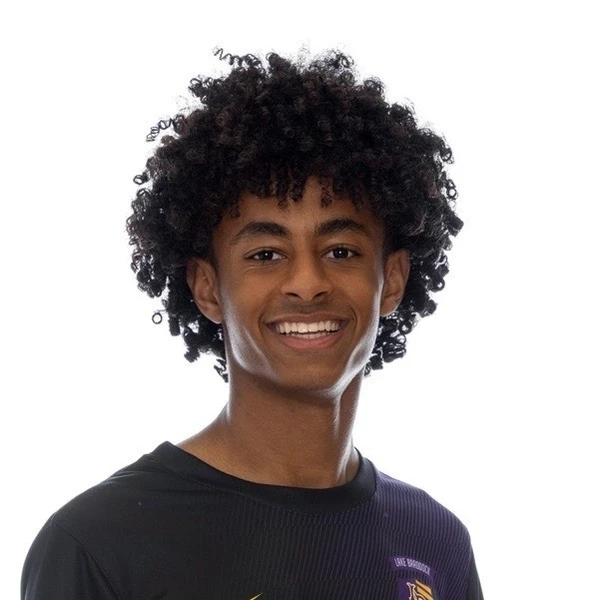
Alula Berhanu
1x
FinalistAlula Berhanu
1x
FinalistBio
I'm a senior passionate about healthcare and community service. I've founded an organization to support Ethiopian student's education, spent hundreds of hours working in clinical settings, tutoring underserved students, and play soccer as a varsity athlete and 3 year soccer captain.
Education
Lake Braddock Secondary
High SchoolMiscellaneous
Desired degree level:
Doctoral degree program (PhD, MD, JD, etc.)
Majors of interest:
- Biological and Biomedical Sciences, Other
- Health Professions Education, Ethics, and Humanities
- Neurobiology and Neurosciences
Career
Dream career field:
Medical Practice
Dream career goals:
Sports
Soccer
Varsity2016 – Present10 years
Awards
- Club captain
- Presidents Cup Offensive Player of the Tournament
- 3x Club mvp
Research
Biological and Biomedical Sciences, Other
USU — Researcher2023 – 2023
Public services
Volunteering
Local Medical Family Practice — Medical Assistant2025 – 2026
Second Chance Scholarship
I want to make a change because last spring, an Eritrean father pointed at his daughter's stomach and repeated "fire, fire" in broken English.
The physician diagnosed heartburn. Something felt wrong. I asked the father in Amharic what hurt. He grabbed my arm. Three days of burning urination. The physician caught a kidney infection hours before sepsis.
Walking out, one question stayed: what happens when I'm not there?
Six months earlier, I watched Ethiopian parents sit beside their son who had acute liver failure. The attending used a phone interpreter. The translation was perfect. The parents offered nothing beyond yes or no. I asked the mother in Amharic if anything else seemed wrong. She grabbed my hand. Her son's appetite had disappeared. That detail changed his treatment plan.
These families were gambling their lives on whether someone who speaks their language happened to be present.
I've taken steps toward becoming the physician who makes care automatic instead of accidental. I've spent 400+ hours in clinical settings at Walter Reed, Georgetown MedStar Hospital, and Dr. Gallagher's family practice, where I work as a medical assistant. Through the S2M2 program, I researched COPD protocols and presented findings to physicians. I founded the Fitsum Bahru Memorial Foundation Youth Chapter, raising $6,000+ annually for Ethiopian students' education after watching my aunt write checks for students whose education was destroyed during the Derg regime.
But every step involves calculations I shouldn't have to make. Application fees for research programs. Conference registration costs. SAT prep materials. This scholarship eliminates that constant math, covering costs between where I am and medical school.
Here's how I'll pay this forward.
I'll create a medical mentorship program for bilingual high school students. Right now, students like me discover healthcare by accident. We shadow because someone knows someone. We translate because we happen to be present. I'll build structured pathways connecting bilingual students with clinical opportunities, showing them their language skills aren't supplementary but essential to addressing healthcare's bilingual worker shortage.
I'm already starting. Last month, a sophomore asked how I balance everything. I told her about translating in the ICU, about catching details physicians miss when patients can't express symptoms in English. She texted yesterday: "I asked my biology teacher about shadowing. She's helping me find physicians who speak Spanish."
That's one student who won't wait for luck.
Once established as a physician, I'll fund scholarships for bilingual students pursuing healthcare. The criteria will recognize what most scholarships miss: students translating medical appointments for family since elementary school already understand patient advocacy better than classrooms teach.
That father's daughter survived because I was there. This scholarship helps me reach the next family. Everything I build ensures someone else will be in the room after me, asking the right questions in the right language, making trust automatic instead of chance.
Eden Alaine Memorial Scholarship
I didn't cry when my grandfather died. What scared me most was that I felt nothing.
The beach smelled of sunscreen and salt, the sun warm on my back as I rode the waves. The sound of my family cheering suddenly fractured into silence, then into a sound I will never forget: my mother's scream. She crumpled on the sand, my siblings clutching her arms, their bodies trembling with sobs. I stood there, dripping water, frozen. When my mother told us the news, I waited for tears that never came.
It wasn't grief I felt, but the hollow realization that I barely knew my grandfather: a name I'd heard, a blurry face I'd seen once or twice on a call. While everyone else wept for memories, I had none. The ache wasn't from his death but from a locked room of connection I would never enter. Regret pressed heavier than grief.
When my mother flew to Ethiopia for the funeral, I stayed behind with my siblings. Overnight, I became the one who woke early, braided hair, and packed lunches. But one night, after tucking my brother in, he whispered into the dark: "Who's gonna tell me stories now that Mom's gone?" His voice cracked on the last word.
That question split me open. He wasn't asking for food or help with homework. He was asking for presence. I sat beside him, fumbling for a story, weaving together tales I'd been told years ago. My voice shook. The words came out uneven. As I spoke, his breathing slowed. His shoulders relaxed. I realized the story didn't need to be perfect. What mattered was that I stayed.
For the first time since my grandfather's death, I felt something shift inside me. Connection wasn't something I'd inherited or lost. It was something I could choose to build.
From then on, I paid attention differently. I noticed how my sister's laugh lingered during soccer games. I noticed how my brother's most thoughtful questions came late at night when the house finally quieted. These moments became keys to doors I could still open.
That summer, I spent weeks caring for my 90-year-old grandmother. She couldn't walk on her own and her memory faltered. Each day, I bathed her, dressed her, and listened. I listened to her voice rise as she spoke about her village in Ethiopia. I watched her eyes brighten at the memory of the mango tree outside her window. I felt her pauses deepen when she mentioned my grandfather. These stories were keys unlocking the past I had missed with him.
Through those moments, I realized connection isn't something you inherit. It's something you choose to build. It takes patience to catch the story spoken in a whisper and courage to remain present even when silence feels easier.
Losing my grandfather taught me that grief doesn't always arrive in tears. Sometimes it arrives in silence, in the absence of what could have been but never was. I used to think not crying meant I didn't care. Now I know that longing is what shapes me. I listen more closely. I notice the small details others might miss. I choose to show up fully for the people beside me.
I will be the one who unlocks. The one who walks in. The one who never leaves another door unopened.
Learner Tutoring Innovators of Color in STEM Scholarship
I chose STEM because I watched science fail people who looked like me.
At seventeen, I shadowed in an ICU where an Ethiopian family nearly lost critical information about their son's acute liver failure because no one spoke Amharic. The phone interpreter translated perfectly. The parents still said nothing beyond yes or no. When I asked directly in their language, the mother grabbed my hand. Her son's appetite had vanished days earlier. That detail changed his treatment plan.
The science treating his liver failure was extraordinary. The communication system delivering that science was broken. I realized then that pursuing medicine meant pursuing both: the cellular biology that explains disease and the systems thinking that ensures everyone can access treatment.
I'm choosing biology and public health because I need both to solve the problem I witnessed. Biology teaches me how organs fail. Public health teaches me why some communities face higher failure rates. Chemistry explains pharmacological interventions. Statistics proves which interventions actually work for diverse populations. I need the complete STEM foundation to become a physician-researcher who doesn't just treat disease but addresses why certain populations get sicker and die younger.
As a person of color in STEM, my impact starts with representation that goes beyond being counted. I'm Ethiopian-American and bilingual. Those aren't demographic checkboxes. They're clinical tools. When I work as a medical assistant, patients who speak Amharic relax immediately when I greet them in their language. They share symptoms they'd hidden from other providers. Representation matters because trust forms differently when patients see themselves in their healthcare team.
But representation alone doesn't fix broken systems. My research will focus on health outcomes in non-English speaking populations with chronic diseases. Right now, clinical trials overwhelmingly study white English-speaking patients, then apply findings to everyone. Medications get dosed based on bodies that don't reflect global diversity. Treatment protocols assume communication styles that don't account for cultural differences in discussing symptoms or expressing pain.
I'll conduct research that centers communities of color from the beginning. Not as afterthoughts in diversity supplements, but as primary study populations whose unique experiences with disease inform how we understand and treat those conditions. I'll publish findings proving that race-conscious medicine produces better outcomes because it accounts for biological and social factors that colorblind approaches miss.
I'll also change who enters STEM pipelines. I founded the Fitsum Bahru Memorial Foundation Youth Chapter, raising funds for Ethiopian students' education. I've seen firsthand how financial barriers keep talented students from pursuing science careers. Through medical school and beyond, I'll build mentorship programs specifically recruiting bilingual students of color into healthcare research. I'll show them their languages aren't obstacles to overcome but advantages that make them better scientists.
The STEM field needs people of color not just in the room but leading the research questions. Who gets studied? Whose symptoms are considered typical? Which communities receive breakthrough treatments first? These decisions have historically excluded us. My impact will be changing those defaults so that the next generation of Ethiopian families doesn't gamble their health on whether someone who speaks their language happens to be present.
Science gave that boy in the ICU a chance at survival. My presence gave him access to it. My career in STEM will ensure access doesn't depend on luck.
Sammy Hason, Sr. Memorial Scholarship
The technology worked perfectly. The care still failed.
At seventeen, shadowing in an ICU, I watched an attending physician use a phone interpreter to speak with Ethiopian parents whose son had acute liver failure. The translation was flawless. The parents nodded but offered nothing beyond yes or no. The physician, managing multiple critical patients, moved on.
I asked the parents directly in Amharic if anything else seemed wrong. The mother grabbed my hand. Her son's appetite had vanished days earlier. I told the attending. He adjusted the treatment plan immediately, then asked why the interpreter hadn't caught this. It had. The parents just didn't trust a voice in a phone enough to share what seemed small.
A year later, an Eritrean father pointed at his daughter's stomach in the emergency department and repeated "fire, fire" in broken English. The physician diagnosed heartburn. I asked the father in Amharic what hurt. He relaxed immediately. Three days of burning urination, he explained. When the physician returned, I shared what I'd learned. He examined her again and caught a kidney infection hours before potential sepsis.
I realized families were gambling their health on whether someone like me happened to be present.
Healthcare invests billions in interpreter technology but not in recruiting bilingual providers. Phone interpreters translate words accurately but can't build the trust required for patients to share details that seem small but change diagnoses. What families need are physicians who speak their language directly.
I want to specialize in pulmonology because lung disease requires patients to describe symptoms that don't translate cleanly. My mother works at a hospital. Last year, she tried explaining chest tightness to her physician. The Amharic phrase she used translates to "my chest is heavy like someone sitting on it." The interpreter said "chest pressure." Technically correct, but my mother meant the heaviness came in waves and worsened when she lay down. Those details matter for diagnosis. They disappeared in translation.
I've watched this repeatedly during clinical work. A patient says their breathing feels "tight." Through an interpreter, that could mean constriction, heaviness, sharpness, or burning. Each points to different conditions. When I ask directly in Amharic, I hear the nuance that determines accurate diagnosis.
I'll conduct appointments in both English and Amharic, but individual practice isn't enough. I'll build medical mentorship programs recruiting bilingual high school students into healthcare careers. Right now, students like me discover clinical opportunities by accident. I'll create structured pathways showing bilingual students their language skills are essential to addressing healthcare shortages.
My research will focus on health outcomes in non-English speaking patients with chronic respiratory conditions. I'll quantify what I've witnessed: interpreter services improve access but don't eliminate disparities. Language-concordant care produces better outcomes because trust forms differently when providers and patients share a language.
I'll also push medical schools to recruit bilingual students strategically, then support them so they don't lose fluency during rigorous training. I've watched my own Amharic weaken because I spend years reading medical textbooks in English. That can't happen to the next generation.
That Ethiopian mother grabbed my hand because I spoke her language. Her son's life depended on whether I happened to be shadowing that day. My career will ensure the next family doesn't rely on luck. They'll walk into appointments with providers who speak their language and build trust without a phone between them.
The technology will keep working perfectly. But the care will finally work too.
Love Island Fan Scholarship
I've always thought Love Island's best moments happen when Islanders actually have to prove their connection instead of just talking about it. That's why I created "Love Language Lockdown," a challenge that strips away the one thing Islanders rely on most: normal communication.
The challenge starts at the firepit with couples competing in a physical course that tests both athleticism and how well they know each other. Navigate a maze while answering relationship trivia. Solve puzzles under time pressure. Complete synchronized tasks that require perfect coordination. But here's the twist: performance only determines 50% of their ranking. The other 50% comes from a live fan vote happening while they compete.
Viewers watching at home vote for their favorite couples in real-time. The couple with the highest fan support gets a ranking boost, potentially saving them from harsh restrictions even if they struggled physically. The couple with the lowest fan support drops down, meaning even strong performers might end up restricted if viewers don't like how they've been acting in the villa. This adds accountability beyond just the physical challenge. Islanders who've been playing games or treating people poorly face consequences from the audience watching at home.
The rankings determine each couple's communication restrictions for the next 24 hours. Last place can only communicate through song lyrics, quoting existing songs instead of speaking their own words. Fourth place can only use interpretive dance and gestures. Third place can only speak in questions. Second place can only write notes. First place gets normal communication, which seems like the obvious advantage until you realize everyone's watching how you handle having privilege while others struggle.
The real test begins after restrictions are assigned. The 24 hours aren't peaceful. Producers deliberately schedule chaos. A bombshell arrives and pulls your partner for a chat. You watch them flirt back using only Beyoncé lyrics. A recoupling gets announced. You need to have a serious conversation about your relationship, but you can only speak in questions. Your partner does something that upsets you. You have to address it by writing notes while the entire villa watches.
Some couples will find creative workarounds. Others will completely collapse. The couple restricted to questions might discover they've been avoiding real answers their entire relationship. The couple writing notes can't hide behind tone or humor when everything's on paper. The couple using song lyrics creates either hilarious moments or devastating ones when "We Are Never Getting Back Together" is the only way to express how you feel.
After 24 hours, restrictions lift. The villa gathers to watch footage of everyone's biggest communication fails and unexpected successes. Then comes the final fan vote: viewers choose which restricted couple communicated best despite their handicap. That couple wins immunity from the next dumping.
This challenge works because it exposes everything. Who has real connection versus who just talks a lot? Which couples can adapt when their normal patterns get disrupted? Who gets creative under pressure? The fan involvement rewards couples viewers actually want to see succeed while holding game-players accountable. The 24-hour duration means you can't fake it. Real villa life continues. Real emotions surface. Real compatibility gets tested when you can't rely on the communication style you're comfortable with.
Love Island thrives on drama, but the best drama comes from truth. This challenge forces truth to surface by taking away the words Islanders use to hide behind.
Raise Me Up to DO GOOD Scholarship
I became the emergency contact for my siblings in fourth grade.
Not because I asked to be. Because my mom couldn't leave the hospital early enough to pick them up from school. Someone had to be listed on the forms. I was ten, but I was the one who showed up.
My mom leaves for the hospital at 6am and comes home after dark. My dad lives over an hour away. My older half-brother moved out. Someone had to pick up my younger siblings, make dinner, help with homework, get them to soccer practice. That someone became me.
The hardest part wasn't the work itself. It was explaining to my coach why I missed practice again. Watching my teammates bond during warm-ups while I sat in traffic taking my brother to his game first. Finishing homework in my car at 10pm because the house was too loud to concentrate.
My transcript shows a 4.425 weighted GPA. It doesn't show where I earned it. In parking lots between soccer practices. At the kitchen table after everyone went to bed. During lunch periods when other students were relaxing.
But growing up this way taught me something classrooms can't. I learned to notice what people need before they say it. My sister gets quiet when she's overwhelmed. My brother asks the most questions right before bed when something's bothering him. These patterns became instinct.
That skill matters in medicine. At Dr. Gallagher's family practice where I work as a medical assistant, a patient mentioned his ankle swelling last week. Just mentioned it, like he was commenting on the weather. That detail changed how Dr. Gallagher approached his entire treatment. I caught it because I've spent years listening for what people almost don't say.
At Georgetown's ICU, I watched an attending physician use a phone interpreter with Ethiopian parents whose son had acute liver failure. The translation worked perfectly. They still offered nothing beyond yes or no. I asked the mother in Amharic if anything else seemed wrong. She grabbed my hand. Her son's appetite had disappeared days earlier. That information changed his treatment plan.
I want to become the physician who catches those details. The one who works with families navigating systems that weren't designed for them. I'll build mentorship programs for students balancing family responsibilities with college dreams. I'll research health outcomes in households like mine where one parent carries everything.
But the real future I'm building starts at 5:45am when my alarm goes off. It happens in carpool lines. In late-night homework sessions. At soccer practices I drive my siblings to even when I'd rather be anywhere else.
My siblings taught me that leadership isn't dramatic. It's showing up when no one's watching. It's being the emergency contact at ten years old. It's staying awake past exhaustion because someone needs help with fractions.
That's the physician I'll become. The one who learned to lead by showing up, one carpool line at a time.
Aserina Hill Memorial Scholarship
I founded the Fitsum Bahru Memorial Foundation Youth Chapter at fifteen after watching my aunt write a check to a student she'd never meet. I didn't understand why she gave money to strangers until years later when she told me her family lost their education during Ethiopia's military regime. That check was repairing what systems destroyed.
I started fundraising. Fifty emails to local businesses asking for sponsorships. Thirty-five rejections. The thirty-sixth business owner wrote a check larger than I'd requested. He told me he saw his own story in my letter. I'd finally learned to make distant students real: a girl who walks three hours to school carrying her shoes so they don't wear out, a boy whose mother sells injera to afford his textbooks. Now I lead 30+ members who've raised $6,000+ annually, co-sponsoring 200+ Ethiopian students' education.
That work taught me something I carry everywhere: people care about specific stories. I use that understanding as president of Doctors of Tomorrow, where I organize physician seminars that show students what specialties actually look like beyond textbooks. As National Honor Society Vice President, I direct service drives. As class officer for four years, I've raised $15,000+ organizing fundraisers and school events for 2,500+ attendees.
I'm also a three-year varsity soccer captain with five state championships and a pianist of ten years. I tutor underserved K-9 students every Saturday at our local library. I work as a medical assistant at Dr. Gallagher's family practice, where I room patients, take vitals, and manage electronic health records. Through the S2M2 program at Walter Reed, I shadowed physicians and researched COPD protocols. At Georgetown MedStar Hospital, I observed ICU cases and surgical procedures.
After high school, I'm attending college focused on pre-medical studies with the goal of medical school at the Uniformed Services University. I want to become a physician-researcher specializing in health equity for multilingual immigrant communities.
If I could start my own charity, I'd create the Bilingual Healthcare Bridge. Its mission would be addressing the interpreter shortage that leaves immigrant families gambling their health on whether someone who speaks their language happens to be present. We'd serve non-English speaking families navigating healthcare systems in areas with large immigrant populations.
Volunteers would receive training in medical interpretation basics, then accompany families to appointments at partner clinics. But interpretation is only half the work. We'd also train bilingual high school students interested in healthcare through structured clinical exposure and mentorship. Right now, students like me discover medicine by accident. This charity would build the pathway I wish existed.
Additionally, volunteers would conduct workshops at community centers teaching families how to prepare for medical appointments: what questions to ask, how to describe symptoms clearly, what information to bring. Healthcare access isn't just about translation. It's about giving families the tools to advocate for themselves effectively.
The Bilingual Healthcare Bridge would transform luck into systems that outlast my work. Families would receive quality care regardless of who happens to translate.
Stewart Family Legacy Scholarship
Leadership without science builds on assumptions. Science without leadership stays trapped in laboratories. The future requires both.
I learned this at Walter Reed when I researched COPD management protocols through the S2M2 program. The science was clear: certain interventions improved patient outcomes significantly. But those interventions weren't reaching the patients who needed them most. The gap wasn't scientific knowledge. It was implementation. Someone had to translate research into accessible care, and that translation required leadership.
Science discovers what's possible. Leadership determines who benefits from those discoveries. When I translated for an Ethiopian family at Georgetown's ICU, their son's treatment plan changed because of a detail about his appetite that would have been lost otherwise. The medical science treating his liver failure was extraordinary. But without leadership that prioritizes language access, that science becomes unavailable to families who can't communicate clearly with their physicians.
Real leadership in science means asking who's missing from the room where discoveries happen and who's excluded from benefiting when breakthroughs occur. Through my Nigeria consulting project, I watched how Sa'adu ran a sophisticated business using demand forecasting he'd developed over three years. His methods worked, but no one recognized them because they didn't match textbook models. Leadership meant learning from his expertise instead of dismissing it. Science meant helping him access resources to scale what already worked.
Healthcare has a bilingual worker shortage that science alone can't fix. We develop breakthrough treatments but deliver them through systems where families gamble their health on whether someone who speaks their language happens to be present. I'm planning to build medical mentorship programs connecting bilingual high school students with clinical opportunities. Right now, students like me discover medicine by accident. Leadership means creating the pathway I wish existed so the next generation of bilingual physicians enters medicine already understanding their language skills aren't supplementary.
Science and leadership together shape a future where discoveries reach the people who need them. That's what I'm building toward: a healthcare system where trust doesn't depend on luck.
Ava Wood Stupendous Love Scholarship
"Kindness in Action"
Max rejected every workbook I offered during Saturday tutoring at the library. He was seven, spoke with a heavy European accent, and wouldn't look at me. I was about to give up when I noticed his eyes on a car magazine someone had left behind.
We turned "Tayotah" into "to-yo-ta." Then we built sentences about car engines. As he read, he leaned forward, hungry. I realized I'd been trying to make him fit the curriculum instead of making the curriculum fit him.
Over three years tutoring 20+ students, that pattern repeated. A girl who loved drawing labeled her Paw Patrol sketches. Another learned fractions through Ronaldo's soccer stats. The moments that mattered weren't when I taught them what I thought they should learn. They mattered when I paid attention to what they already cared about.
That shift changed everything. Students who'd been silent started asking questions. Parents who'd been skeptical started staying. Max's mother told me he'd never liked reading until someone made it about cars.
The kindness wasn't in showing up every Saturday, though that mattered. It was in recognizing that each student arrived carrying interests that could become the doorway to learning. My job wasn't to push them through my door. It was to find theirs and walk through it with them. That's what I'll carry into medicine: meeting people where they are instead of demanding they come to me first.
"Creating Connection"
My family gathers every Thanksgiving with two kinds of plates. Mine holds turkey on one side, injera and doro wat on the other. My grandmother's plate holds only Ethiopian dishes. My cousins lean American. We eat together, speaking different languages even when we all can use English.
After dinner comes charades. Last year, the adults gave us "wisha" to act out. We barked. "Dog!" we shouted. They shook their heads, laughing. The answer was "hyena." We'd been answering in English when the question was in Amharic. We were solving different problems.
I started translating not just words but contexts. When my grandmother told stories about walking barefoot to school in Ethiopia, my younger cousins couldn't follow. I began teaching them Amharic over FaceTime every Sunday so they could understand her directly instead of through me. When my cousins asked about American traditions my grandmother didn't recognize, I explained both sides until everyone understood what we were actually celebrating.
At school, I brought that same approach to the Ethiopian Eritrean Student Association. As co-president, I choreographed traditional dances for International Night, but I also made sure we explained their significance instead of just performing them. I recruited 25+ new participants over four years by helping students who felt caught between cultures realize they didn't have to choose one.
Connection requires recognizing when people are answering different questions. My role isn't picking which question matters. It's making sure everyone understands what's actually being asked.
Patrick B. Moore Memorial Scholarship
At Georgetown's ICU, I watched an attending physician use a phone interpreter to speak with Ethiopian parents whose son had acute liver failure. The translation was perfect. Every word reached them clearly. But they answered only yes or no. The physician, managing multiple critical patients, moved on. I asked the mother in Amharic if anything else seemed wrong. She grabbed my hand. Her son's appetite had disappeared days earlier. That detail changed his treatment plan.
Walking out of that room, I realized the family was gambling their health on whether someone like me happened to be there. That moment refuses to leave me.
My medical education will focus on eliminating that gamble. I'll specialize in internal medicine serving multilingual immigrant communities where language barriers routinely compromise care. But pouring into others' lives means more than treating patients who look like me. It means training the physicians who don't.
During my clinical rotations, I'll create language access workshops teaching medical students how to work effectively with interpreters. Most physicians have never learned that families trust people differently than devices, that a nod doesn't always mean understanding, that critical information hides in questions patients almost don't ask. I'll teach them to recognize when translation is happening but communication isn't. These workshops will become part of standard medical education because every physician will encounter patients whose words don't reach them clearly.
I'll also establish a medical mentorship program connecting bilingual high school students with physicians serving their communities. Right now, students like me discover clinical opportunities by accident. We shadow because someone knows someone. We translate because we happen to be present. I'll build the pathway I wish existed: structured clinical exposure for bilingual students interested in medicine, paired with mentorship from physicians who understand why their language skills matter clinically. These students will enter medical school already understanding that their bilingualism isn't supplementary. It's essential.
Beyond clinical practice, I'll research health outcomes in non-English speaking populations to document what I've witnessed: that language barriers aren't just communication problems but diagnostic ones. Physicians make treatment decisions based on incomplete information when patients can't express symptoms fully. My research will quantify how often critical details are lost and what that costs in outcomes. Numbers change policies in ways that stories alone cannot.
I'll pour into the lives of the families who nearly lose critical information because no one speaks their language. I'll pour into medical students who've never considered that their training is incomplete without understanding how trust forms across language barriers. I'll pour into bilingual high school students who need someone to show them their skills matter in medicine. I'll pour into the research that proves what immigrant communities already know: that quality care requires more than clinical expertise.
That Ethiopian mother grabbed my hand because I spoke her language. But she shouldn't have needed luck. My education will ensure families receive excellent care regardless of who happens to translate. That's the impact I'll spend my career building, one conversation at a time, until trust no longer depends on chance.