user profile avatar

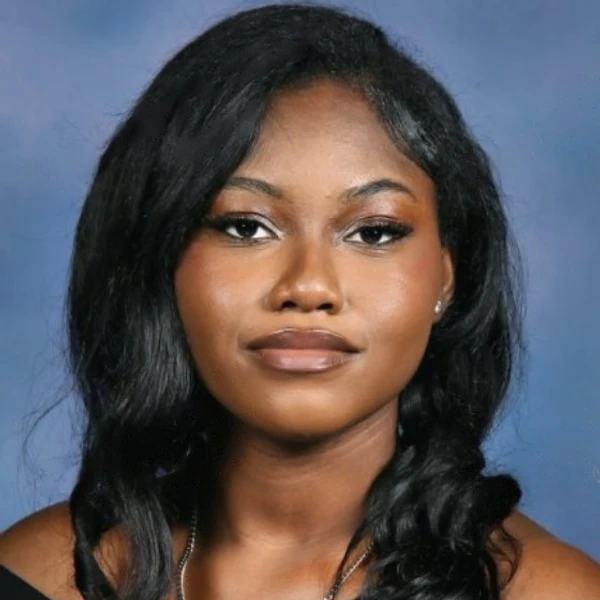
Alouna Alincy

1x

Finalist

Bio

My name is Alouna Alincy, and I am an Economics and Sustainable Business student minoring in Art at the University of Miami Herbert Business School. As a first-generation college student from a low-income immigrant household, I have always viewed education as both an opportunity and a responsibility. I serve as the Marketing Officer for Caribico, where I was part of the organization’s first executive board and helped grow engagement through campus outreach initiatives. I am also involved in Women in Business and continue pursuing opportunities that strengthen my leadership and communication skills. In addition to my campus involvement, I work with the St. Lucie County Economic Development Council, where I contribute to workforce development and economic initiatives through marketing, outreach, and public speaking. I helped support a paid student internship initiative that grew from a pilot cohort of 20 participating companies and 51 student interns to more than 50 companies and over 60 paid student interns in 2026. One of my biggest goals is to create a nonprofit organization in honor of my brother focused on helping children through housing support, food accessibility, academics, mentorship, and sports. Long term, I hope to continue working in economic development while eventually opening my own art and fashion centered studio.

Education

University of Miami

Bachelor's degree program
2026 - 2029
  • Majors:
    • Economics
    • Sustainability Studies

St. Lucie West Centennial High School

High School
2021 - 2025
  • GPA:
    4

Miscellaneous

  • Desired degree level:

    Doctoral degree program (PhD, MD, JD, etc.)

  • Graduate schools of interest:

  • Transfer schools of interest:

  • Majors of interest:

  • Not planning to go to medical school
  • Career

    • Dream career field:

      • Non-Profit Organization Management
    • Dream career goals:

      To work in Economic & Workforce Development

    • Paid Intern

      St. Lucie Economic Development Council
      2024 – Present2 years

    Sports

    Weightlifting

    Varsity
    2024 – 20251 year

    Arts

    • Self-Study

      Ceramics
      2023 – Present

    Public services

    • Volunteering

      Hard Hat Hustle — Group Leader
      2026 – 2026
    • Volunteering

      CRIC — Childcare Volunteer
      2019 – 2023
    • Volunteering

      Miami Open — Court Access Team
      2026 – 2026

    Future Interests

    Advocacy

    Volunteering

    Philanthropy

    Entrepreneurship

    Charles B. Brazelton Memorial Scholarship
    My “awkward” thing is that I am apparently not very convincing as a human being. I have been compared to a robot, an NPC, and artificial intelligence more times than I would like to admit. Not because I am particularly advanced, but because I regularly respond to social situations like someone forgot to finish programming me. I miss social cues constantly. I do not always know when someone is joking, when a conversation has ended, or when I am supposed to stop explaining something. Someone will say something sarcastic, everyone will laugh, and I will be standing there mentally processing the sentence like a computer loading on bad Wi-Fi. Sometimes, I answer rhetorical questions. Sometimes, I rehearse a completely normal interaction so intensely that I somehow make it abnormal. Sometimes, I wave back at people who were not waving at me, then pretend I was adjusting my hair, even though no hairstyle has ever required that much aggressive movement. I have also been told that my facial expressions do not always match what is happening. I can be deeply interested in a conversation while looking like I have just been assigned jury duty. Other times, I will smile at the wrong moment because I am nervous, which is especially helpful when someone is telling me something serious. Nothing says emotional intelligence like accidentally grinning while a person describes the worst day of their life. My friends occasionally have to translate interactions for me afterward. “They were joking.” “Oh.” “They wanted to leave.” “Oh.” “You were supposed to stop talking five minutes ago.” That one usually gets another “oh.” For years, I thought this meant there was something wrong with me. I replayed conversations after they happened and searched for every moment when I might have sounded strange. I tried to monitor my posture, tone, facial expressions, eye contact, hand placement, and the exact number of seconds I was supposed to laugh. By the time I finished trying to appear normal, I probably looked even more robotic. However, being socially awkward has made me pay closer attention to people who feel out of place. I notice the person standing alone because I am often wondering whether I am supposed to be standing alone too. I make an effort to welcome new members into organizations, explain things clearly, and create environments where people are not punished for being shy, different, or slightly unsure of what to do with their hands. My awkwardness has also made me honest. I am terrible at pretending not to care. When I am excited, it is obvious. When something feels unfair, I ask questions. When I love an idea, I will give you the full presentation, including unnecessary background information and probably a visual aid. I may never completely master social cues. I may continue responding to jokes like they are customer-service inquiries. I may still look like a bot waiting for someone to press the correct button. But at least I am a bot with excellent intentions.
    Rosie Walks Human–Wildlife Coexistence Scholarship
    The most urgent problem in wildlife conservation is the continued destruction of the Everglades and the animals that depend on it. This is not a distant environmental issue to me. I grew up beside this beautiful ecosystem in St. Lucie County, surrounded by waterways connected to it. The Everglades is home. It represents the Florida I know, and watching it be treated as disposable pains me to my core. The Everglades is a true pinnacle of biodiversity. Its sawgrass marshes, wetlands, mangroves, estuaries, and forests support 36 federally threatened or endangered species. The Florida panther, American crocodile, West Indian manatee, wood stork, and five beautiful species of sea turtle all rely on this interconnected landscape. Its protected mangrove forest is unlike anything else in the Western Hemisphere. Mangrove roots serve as nurseries for fish, shelter for birds, and protection for countless young animals before they enter open water. Yet the water system that sustains these animals has been fundamentally altered. Historically, water flowed south from Lake Okeechobee through the River of Grass. Instead, much of it has been redirected east toward the St. Lucie River and west toward the Caloosahatchee. This deprives parts of the Everglades of the freshwater they need while overwhelming other ecosystems with polluted water. I remember what happened in 2016 and 2017. Lake Okeechobee discharges helped carry a massive toxic cyanobacterial bloom into the St. Lucie River and estuary. High-volume freshwater releases lowered the water’s salinity, killed shellfish, damaged oyster reefs, and destroyed seagrass. The damage did not stop with one species. It traveled through the entire food web. Fish lost breeding grounds, birds lost feeding areas, and manatees and sea turtles lost vegetation and clean water. Animals died, while those that survived were left with less food, shelter, and safe habitat. The damage also reaches people. In Stuart, residents have repeatedly lived beside water covered in toxic algae. Research has shown that cyanobacterial toxins can become airborne and travel beyond the water. These toxins are associated with liver damage and possible long-term cancer risks. People in Stuart are now being exposed to conditions that may increase their risk of serious illness because Florida has repeatedly failed to manage Lake Okeechobee responsibly. That failure is political. Former Governor Rick Scott vetoed the full $305 million appropriation for Florida Forever, a program created to conserve vulnerable land. Former state employees also reported being discouraged from using terms such as “climate change” and “global warming” in official work. How can leaders protect animals from climate change when they refuse even to name the threat? “Alligator Alcatraz” is another disturbing example. Florida placed a massive detention facility in the greater Everglades and Big Cypress ecosystem, within important Florida panther habitat. Paving, generators, bright lights, traffic, pollution, and constant activity were introduced into wetlands where endangered animals are already struggling to survive. Building it there sent a clear message that political spectacle mattered more than wildlife. Meanwhile, development continues, temperatures rise, seas push farther inland, and saltwater enters freshwater habitats. Animals are losing land, food, clean water, nesting areas, and safe migration routes all at once. The Everglades is not empty land waiting to become profitable. It is alive. Its animals cannot vote, speak at public meetings, or defend themselves from bulldozers and polluted water. Protecting the Everglades means protecting the creatures that make Florida, Florida. Once they and their habitats are gone, no amount of money will bring them back.
    Zelaya Creativity Scholarship
    1. 2. 3. Steps to complete. 5:43 a.m. Put in contacts. Plop. Blink. 1. 2. Stare in mirror. My face swims into focus beneath the bathroom light. Hollowed cheeks. Tangled dark coils. One eyelash stuck crooked against my lid. I count the freckles near my nose. 1. 2. 3. For most of my life, I have done things in threes. Three knocks before entering. Three taps on the steering wheel. Three checks before sleep. Three is whole. Three is safe. If I stop at two, the day feels unfinished, a sentence abandoned before its final word. If I reach four, something bad might notice. I know numbers cannot guard a house or bargain with morning, but knowing has never quieted the counting. 5:53 a.m. Put on slippers. Shuffle. Rustle. 1. 2. Put on robe. Swish. Tug. 3. The house is quiet, but not silent. The air conditioner groans. Pipes tick inside the walls. Somewhere outside, a bird begins its first song. 5:55 a.m. Check my phone. Click. Scroll. 1. Brush my teeth. Scrub. Zing. 2. I freeze. The toothbrush hums in my hand. Foam gathers at the corner of my mouth. I have forgotten three. Think. Think. Think. Was it the robe? The slippers? The mirror? No. 5:57 a.m. Refill water bowl. Drip. Drop. 1. Let the dog out. Whoosh. Pitter. Patter. 2. She disappears into the blue-black yard, tail flicking through the dark. 3, 3, 3, 3. What is three? THREE IS SAFE. THREE IS WHOLE. Think. Think. Think. The kitchen clock clicks too loudly. Each second lands like a finger tapping my skull. 6:02 a.m. Let her back in. Clomp. Thud. Tap. Lock the three doors. Creak. Clap. Click. Cook my meager meal. Splash. Sigh. Sizzle. Look up the forecast. Click. Type. Type. I stop. Four. Four tasks. Four sounds. Four is too many. My spoon slips from my hand and strikes the floor. Clang. 3! 3! 3! My breath catches. The room tilts. I retrace every movement, every sound, every step. Contacts. Slippers. Phone. Water. Dog. Doors. Food. Forecast. Too many. Not enough. Wrong. THREE IS SAFE! THREE IS WHOLE! Check the time. 6:03 a.m. The glowing numbers stare back at me. Six. Zero. Three. Three. My shoulders loosen. My lungs open. The kitchen settles around me again. The counting wins. The dog nudges my ankle once, twice, three times. Three is safe. Three is whole. I have found three.