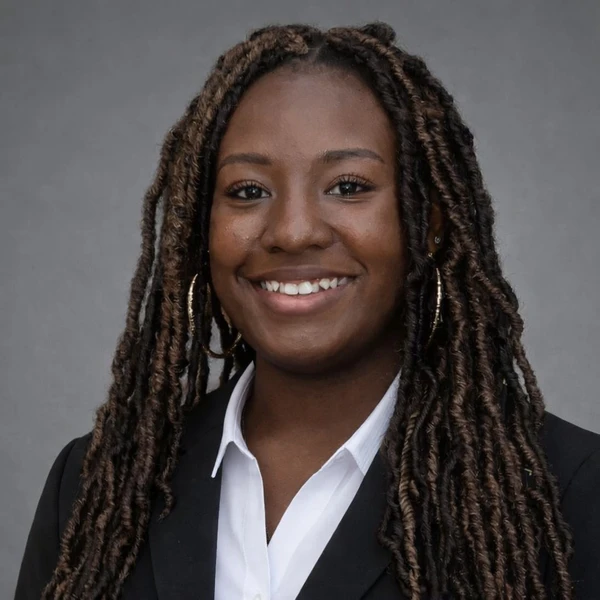
Growing up, I never imagined I’d end up in a field like computer science. Not because I lacked the interest or ability, but because I didn’t have anyone around me who had taken that path. As a Black woman and first-generation college student, I’ve had to figure out a lot on my own, from navigating college applications and financial aid, to choosing a major that I felt could satisfy my thirst for knowledge as well as provide long-term financial stability. Through that process, I found a passion for technology that continues to grow with each new class and project.
What drew me to tech is its power to solve problems in creative ways. I’ve always been curious about how things work, but how they could work better, especially for communities like mine that are often overlooked. Whether it's building an application that improves access to local resources or working on data to support social impact, I see technology as a tool for empowerment. I am currently pursuing a degree in Computer Science, and I know this is just the beginning of what I hope to contribute.
The road here hasn’t been smooth. Without family members who’ve gone through college, I had to take on a lot of responsibilities myself , such as researching financial options, figuring out course loads, and trying to understand the hidden rules of higher education. Financial stress is a constant concern, and receiving this support would allow me to focus more fully on my academic goals and personal growth. Being a Black woman in a predominantly white institution means I constantly have to navigate stereotypes, microaggressions, and the pressure to prove I belong. Sometimes I wonder if attending an HBCU would’ve felt more supportive, but I’ve learned to find strength in discomfort. Being here, in this space, allows me to challenge what’s “normal” in tech, by simply showing up, speaking up, and staying in the room.
That’s why diversity and inclusion in the tech world matter so deeply to me. Representation changes outcomes. When more perspectives are included in designing technology, the results are more equitable, more creative, and more reflective of the world we live in. But I’ve learned that diversity isn’t just about hiring. Diversity is about creating environments where people feel safe, respected, and encouraged to lead. One area I’m especially passionate about is artificial intelligence. As AI continues to shape so many aspects of our lives, I want to ensure it's being built with fairness and inclusion in mind. My goal is to work on improving how AI is trained to interact with people of color, and to emphasize that racial bias can lead to harmful outcomes when left in the hands of technology. We should be responsible with technology as advanced as artificial intelligence, and I want to help build that kind of future.
My dream isn’t just to land a great job in the industry. I want to mentor other young women of color in STEM, work on projects that uplift underrepresented communities, and contribute to a tech culture where inclusion is no longer an afterthought. I’ve come this far through resilience and a belief that I can do something bigger than myself. With this scholarship, I’ll continue to rise. Not just for me, but for everyone who’s ever felt like there wasn’t a seat at the table for them.