Hobbies and interests
Coding And Computer Science
Art
Art History
Fashion
Reading
Screenwriting
Gaming
Cinematography
Graphic Design
Movies And Film
Reading
Action
Adult Fiction
Academic
Art
Biography
Design
Fantasy
Adventure
Drama
Women's Fiction
I read books daily
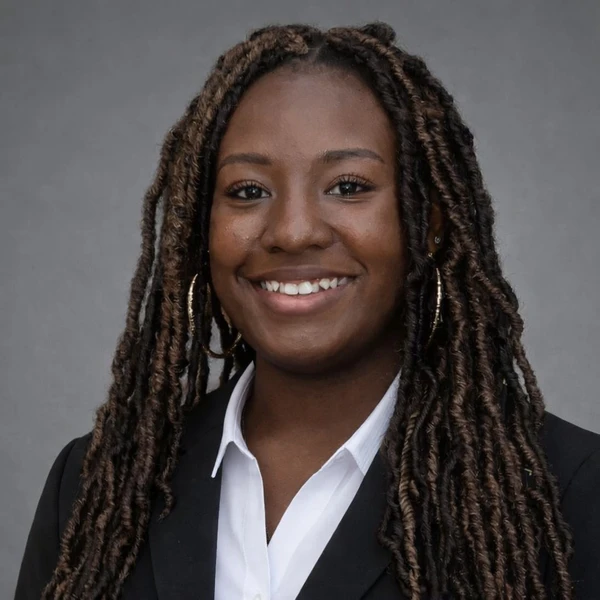
Allaysia Miller
1x
Finalist1x
WinnerAllaysia Miller
1x
Finalist1x
WinnerBio
Hello! I am a current Computer Science student who’s excited about using technology to solve real-world problems. I love learning new skills, especially anything that helps me grow as a software developer. I spend a lot of my free time building websites, trying out new coding tools, and exploring different areas of tech.
Outside of school and coding, I’m really into reading (mostly science fiction and fantasy), and I’m a huge fan of horror movies. I enjoy getting creative, whether it’s through design or just finding fun ways to challenge myself with new projects.
I’m always looking for opportunities to learn, connect, and make a difference.
Education
University of Central Florida
Bachelor's degree programMajors:
- Computer/Information Technology Administration and Management
- Computer Science
Indian River State College
Associate's degree programMajors:
- Multi/Interdisciplinary Studies, Other
Miscellaneous
Desired degree level:
Master's degree program
Graduate schools of interest:
Transfer schools of interest:
Majors of interest:
- Accounting and Computer Science
- Computer Science
- Computer/Information Technology Administration and Management
- Computer Systems Networking and Telecommunications
- Computational Science
- Mathematics and Computer Science
- Science, Technology and Society
- Data Science
- Data Analytics
Career
Dream career field:
Computer Software
Dream career goals:
Senior Engineer
Barista
Starbucks2025 – Present1 yearCustomer Service
Chick Fil A2020 – 20222 yearsTeam Member
Dunkin'2022 – 20242 yearsTeam Member
CAVA2024 – 20251 year
Sports
Basketball
Junior Varsity2015 – 20161 year
Research
Data Analytics
Extern — Student2026 – PresentComputational Science
Self-Regulated — Researcher2021 – PresentComputer Software and Media Applications
Self-Regulated — Researcher2020 – PresentFashion
Personal Research — researcher2020 – Present
Arts
IRSC
Computer Art2020 – 2022
Public services
Volunteering
Upward Bound — Peer Volunteer/Peer Advocate2020 – 2022
Future Interests
Advocacy
Volunteering
Philanthropy
Entrepreneurship
Learner Tutoring Innovators of Color in STEM Scholarship
Growing up, I never imagined I’d end up in a field like computer science. Not because I lacked the interest or ability, but because I didn’t have anyone around me who had taken that path. As a Black woman and first-generation college student, I’ve had to figure out a lot on my own, from navigating college applications and financial aid, to choosing a major that I felt could satisfy my thirst for knowledge as well as provide long-term financial stability. Through that process, I found a passion for technology that continues to grow with each new class and project.
What drew me to tech is its power to solve problems in creative ways. I’ve always been curious about how things work, but how they could work better, especially for communities like mine that are often overlooked. Whether it's building an application that improves access to local resources or working on data to support social impact, I see technology as a tool for empowerment. I am currently pursuing a degree in Computer Science, and I know this is just the beginning of what I hope to contribute.
The road here hasn’t been smooth. Without family members who’ve gone through college, I had to take on a lot of responsibilities myself , such as researching financial options, figuring out course loads, and trying to understand the hidden rules of higher education. Financial stress is a constant concern, and receiving this support would allow me to focus more fully on my academic goals and personal growth. Being a Black woman in a predominantly white institution means I constantly have to navigate stereotypes, microaggressions, and the pressure to prove I belong. Sometimes I wonder if attending an HBCU would’ve felt more supportive, but I’ve learned to find strength in discomfort. Being here, in this space, allows me to challenge what’s “normal” in tech, by simply showing up, speaking up, and staying in the room.
That’s why diversity and inclusion in the tech world matter so deeply to me. Representation changes outcomes. When more perspectives are included in designing technology, the results are more equitable, more creative, and more reflective of the world we live in. But I’ve learned that diversity isn’t just about hiring. Diversity is about creating environments where people feel safe, respected, and encouraged to lead. One area I’m especially passionate about is artificial intelligence. As AI continues to shape so many aspects of our lives, I want to ensure it's being built with fairness and inclusion in mind. My goal is to work on improving how AI is trained to interact with people of color, and to emphasize that racial bias can lead to harmful outcomes when left in the hands of technology. We should be responsible with technology as advanced as artificial intelligence, and I want to help build that kind of future.
My dream isn’t just to land a great job in the industry. I want to mentor other young women of color in STEM, work on projects that uplift underrepresented communities, and contribute to a tech culture where inclusion is no longer an afterthought. I’ve come this far through resilience and a belief that I can do something bigger than myself. With this scholarship, I’ll continue to rise. Not just for me, but for everyone who’s ever felt like there wasn’t a seat at the table for them.
Learner Online Learning Innovator Scholarship for Veterans
Education has never been confined to a single place or schedule in my life. Between being a full-time student and working a full-time job, I have had to find ways to learn whenever and wherever time allows. Online platforms such as YouTube, Zoom, and GitHub have made that possible by giving me flexible access to knowledge and practical experience that extends far beyond the classroom. These tools have not only strengthened my academic foundation in computer science, but have also helped me apply what I learn in real-world and professional settings.
YouTube has been one of the most consistent learning resources throughout my undergraduate education. When coursework introduced complex programming concepts or algorithms, I often needed additional explanations and practice to feel confident. YouTube allowed me to explore topics at my own pace, whether that meant revisiting basic concepts or diving deeper into advanced material. Because I balance school with full-time work, I frequently used breaks during my workday to watch coding tutorials and complete short lessons related to my classes. This approach helped me stay engaged with my coursework even outside of scheduled class time and made it easier to prepare for exams and large projects. Learning in this flexible way allowed me to reinforce classroom material and immediately apply it to assignments, which improved both my understanding and performance.
Zoom played a key role in helping me translate academic knowledge into professional readiness. Through Zoom, I participated in the CodePath software engineering program, which brought together students and instructors from around the world. This experience exposed me to collaborative learning in a virtual environment similar to modern workplaces. Zoom made it possible to work with peers across different time zones, attend live instruction, and receive real-time feedback. One of the most impactful aspects of this program was completing mock technical interviews through Zoom. These interviews pushed me to explain my reasoning clearly, think through problems under pressure, and receive constructive feedback. As a result, my confidence grew significantly, and I began applying for internships I previously believed I was not prepared for. Practicing these interviews in a realistic, virtual setting helped bridge the gap between academic learning and professional expectations.
GitHub further strengthened my ability to apply technical knowledge in practical ways. Using GitHub, I collaborated with classmates on projects even when we were not physically together. The platform taught me how to manage version control, contribute to shared codebases, and adapt to feedback from others. Reading and responding to code reviews improved my problem-solving skills and encouraged me to write cleaner, more efficient code. GitHub also helped me understand how software development functions in real-world teams, where communication and adaptability are just as important as technical skill.
These online tools have shaped me into a disciplined and motivated learner. As a first-generation college student, I have relied on ambition and persistence to create opportunities for myself. Online learning platforms have allowed me to maximize my time, apply my knowledge beyond the classroom, and prepare confidently for a career in software engineering. They have shown me that with determination and the right resources, education can continue anywhere.