Hobbies and interests
Cooking
Songwriting
Writing
Guitar
Sewing
Reading
Action
I read books multiple times per month
alissa curiel
1x
Finalist
alissa curiel
1x
FinalistBio
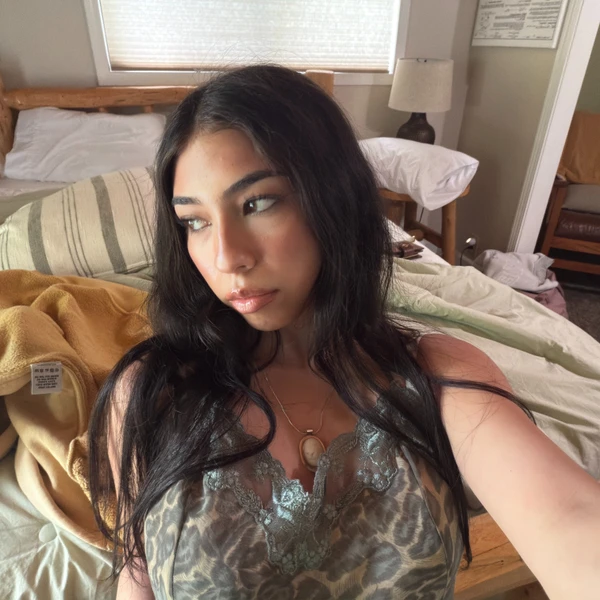
Hi!! My name is Alissa and I am a junior at Chico State! I love sewing, playing guitar, and thrifting. I am excited to pursue a career in psychology.
Education
California State University-Chico
Bachelor's degree programMajors:
- Psychology, General
Yuba College
Associate's degree programMajors:
- Psychology, General
Miscellaneous
Desired degree level:
Doctoral degree program (PhD, MD, JD, etc.)
Graduate schools of interest:
Transfer schools of interest:
Majors of interest:
Career
Dream career field:
Individual & Family Services
Dream career goals:
Waitress
Kenzo Sushi2023 – Present3 years
Sports
Basketball
Intramural2018 – 20202 years
Awards
- no
Public services
Volunteering
Sutter Buttes Little Leagues — cashier2021 – 2023
Future Interests
Advocacy
Volunteering
Entrepreneurship
Fuerza de V.N.C.E. Scholarship
I didn’t go into mental health because it seemed like a good career, I went into mental health because I’ve seen what it looks like when people don’t have support.
Growing up, I was surrounded by people who were dealing with stress, anxiety and emotional struggles, but it wasn’t something that was talked about out loud. It was more like something people were supposed to look after themselves. I’d notice when someone didn’t seem like themselves or things felt off and instead of having real conversations about it, it would get brushed aside. People just told me “you’ll be fine” or “just be strong” and that was it. That stuck with me, because it felt like there was so much going on under the surface that nobody was really talking about.
That experience is what made me go into mental health as a degree. At first my understanding of this field was pretty basic. I thought it was helping people one-on-one, being someone people could talk to when they were going through something. I knew I wanted to be that person for other people and especially for people who felt like they had nobody to turn to. But my view has changed a lot since I started my program.
I’ve learned that mental health is not just about individual struggles, it is also deeply connected to things like culture, environment, access to resources, and systemic inequalities. It opened my eyes to the fact that many people are not just struggling internally, but are also faced with obstacles that make it more difficult to access help initially. It changed how I viewed my role in this field. It’s not just being there for someone emotionally, it’s being an advocate for better access, being culturally aware, and creating spaces where people actually feel understood.
I have also reflected further on my own experiences. I’ve always been a driven student, taking on heavy course loads and holding myself to high expectations. It can appear from an external perspective that everything is under control but internally, I have experienced moments of feeling overwhelmed and stressed. Those experiences made me realize how easy it is to feel like you have to keep it all together, even when you're struggling. It showed me how important it is to have support that feels real, not judgmental.
That’s why I want to work closely with marginalized communities, especially young adults who may be struggling with depression, anxiety or identity issues, while also being faced with cultural expectations that make it hard to share. I want to make a space where people feel comfortable being honest without feeling judged or misunderstood. I don’t want it to feel distant and clinical, I want it to feel safe and real.
When it comes to the capacity that I want to give back, I see it beyond the individual support. I want to be involved in community outreach, education and awareness programs that help normalize mental health conversations. Many don’t get help because they don’t feel it’s something they are “allowed” to talk about and I want to help change that.
In general it started out as wanting to help people but it has grown into so much more. I now realize that making a difference in mental health means showing up in many ways, through support, education, advocacy, and representation. I want to help build a future where people don’t feel like they have to struggle in silence, especially in communities where that silence has been normalized for so long.
Arnetha V. Bishop Memorial Scholarship
And before I knew what mental health was, I knew what silence sounded like.
It was like people saying they're okay when they're not. It was like conversations shutting down the second they got too real. It sounded like people trying to fight right in front of me, but without the words or the space to talk about it. In our family, we never talked about mental health when I was growing up. Something that was meant to be handled quietly.
As a Mexican American student, I have witnessed the pervasiveness of that silence. Mental health is often not taken seriously and even when it is, there are still barriers like access, cost, or just not feeling understood. Many people are used to bottling things up, and that can become a heavier thing over time. That's a big part of why I chose to study psychology, is to see that.
I have also experienced what it is to feel overwhelmed, as though you still have to push through. Academically, I have pushed myself, taking heavy course loads and setting high standards for myself. It may seem like everything is together on the outside, but on the inside it can feel stressful and draining. Those experiences taught me the importance of support and how different things can feel when you actually feel heard.
That’s why I want to be a therapist. I want to create a space where people don’t feel judged or misunderstood, especially those who come from backgrounds where mental health isn’t openly discussed. I want to work with young adults who struggle with anxiety, depression, and identity issues and feel like they have no one to really talk to.
I also want to go beyond one to one support. I want to be a part of the change in conversation about mental health in marginalized communities.” It’s about making conversations normal and spreading awareness and making people feel like it’s okay to ask for help. I think representation matters too and I want people to feel like they’re talking to someone who understands where they’re coming from.
I want to continue my education and real-world experience, so that I can show up for the communities I care about in a meaningful way. I don’t want a career, I want to make a real difference to people’s experience of mental health support.
The reason for the Arnetha V. Bishop Memorial Scholarship really hits home with me. I want to have the kind of impact that helps people who are working to make mental health services more accessible. This would help me keep going down that road and get closer to being someone who could really help others in ways I didn’t always see growing up.