Hobbies and interests
Church
Community Service And Volunteering
Fashion
Gardening
Makeup and Beauty
Nursing
True Crime
Travel And Tourism
Reading
Christianity
Family
Parenting
Religion
Spirituality
I read books daily
Alisha Ross
1x
FinalistAlisha Ross
1x
FinalistBio
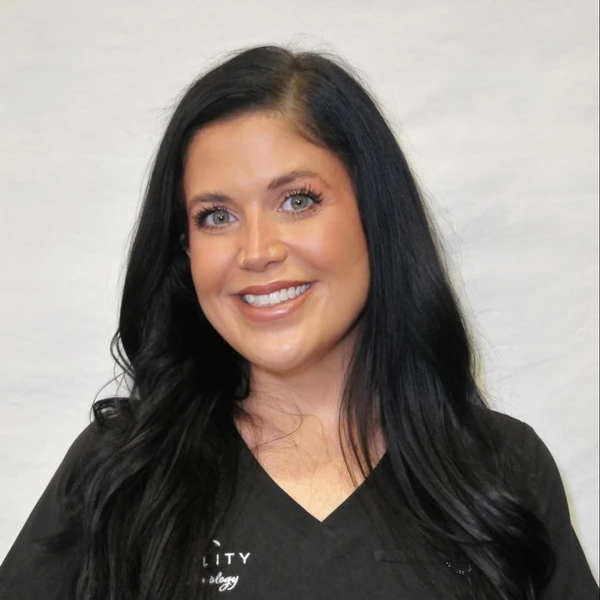
My name is Alisha Hope Ross, and I’m a Registered Nurse with over 14 years of experience in areas including labor and delivery, NICU, postpartum, dermatology, surgery, and children’s mental health. I’m passionate about delivering care that’s not only clinically sound but also deeply compassionate. I’ve been honored with the Daisy Award and nominated 11 times, but my greatest reward has always been the trust and connection I build with my patients. I’m a proud mother of two daughters, and I carry the memory of my son, who passed away, with me in everything I do. His loss—and the strength I found through that grief—continues to shape the nurse and woman I am today. After going through a traumatic divorce following 21 years of marriage, I’ve committed to reclaiming my confidence and continuing to grow. Furthering my education is part of that journey. I want to lead by example—for my girls and for every patient I care for—showing that resilience, compassion, and purpose can carry us through anything.
Education
Walden University
Bachelor's degree programMajors:
- Registered Nursing, Nursing Administration, Nursing Research and Clinical Nursing
Bevill State Community College
Associate's degree programMajors:
- Registered Nursing, Nursing Administration, Nursing Research and Clinical Nursing
South Lamar School
High SchoolMiscellaneous
Desired degree level:
Master's degree program
Graduate schools of interest:
Transfer schools of interest:
Majors of interest:
- Registered Nursing, Nursing Administration, Nursing Research and Clinical Nursing
Career
Dream career field:
Hospital & Health Care
Dream career goals:
Registered Nurse
Northport Medical Center2011 – 20132 yearsRegistered Nurse
Northwest Alabama Mental Health2014 – 20151 yearRegistered Nurse
State of Alabama Wellness Program2012 – 20164 yearsRegistered Nurse
NMMC Women’s Hospital2016 – 20182 yearsRegistered Nurse
Northport Medical Center2018 – 20235 yearsRegistered Nurse
Vitality Dermatology2023 – 20252 yearsRegistered Nurse
PediaTrust2025 – Present1 year
Sports
Cheerleading
Varsity2000 – 20044 years
Public services
Volunteering
Vibrant Church — Volunteer2024 – Present
Future Interests
Volunteering
Champions Of A New Path Scholarship
I don’t come to this scholarship application with a perfect story—I come with a real one. I’m a single mother of two daughters, pursuing my BSN while working as a registered nurse with over 14 years of experience. I’ve navigated grief after losing my son. I’ve rebuilt my life after a traumatic divorce that followed 21 years of marriage. And through it all, I’ve never stopped showing up—for my patients, my children, and my future.
What sets me apart isn’t just my clinical knowledge, which spans labor and delivery, NICU, dermatology, surgery, and mental health. It’s not even the Daisy Award I received for extraordinary patient care, though I’m incredibly proud of that. What gives me an edge is resilience. It’s empathy earned through lived experience. It’s the strength to care for others while silently surviving my own pain.
While others may bring credentials, I bring compassion forged in fire. I know what it means to advocate for patients because I’ve had to advocate for myself. I’m not just studying to become a better nurse—I’m studying to become the kind of nurse who changes lives, because mine has been changed so many times.
This scholarship would not just alleviate financial strain—it would be a vote of confidence in someone who refuses to give up, no matter how hard the road gets. That’s what gives me an advantage: I’ve already fought to be here, and I’m not done yet.
RonranGlee Literary Scholarship
Selected Paragraph:
“Begin each day by telling yourself: Today I shall be meeting with interference, ingratitude, insolence, disloyalty, ill-will, and selfishness—all of them due to the offenders’ ignorance of what is good or evil. But for my part, I have long perceived the nature of good and its nobility, the nature of evil and its meanness, and also the nature of the culprit himself, who is my brother (not in the physical sense, but as a fellow-creature similarly endowed with reason and a share of the divine); therefore none of those things can injure me, for nobody can implicate me in what is degrading. Neither can I be angry with my brother or fall foul of him; for he and I were born to work together, like a man’s two hands, feet or eyelids, or the upper and lower rows of his teeth. To obstruct each other is against Nature’s law—and what is irritation or aversion but a form of obstruction?”
— Marcus Aurelius, Meditations, Book 2, Paragraph 1
Essay:
Thesis:
In this passage, Marcus Aurelius teaches that our peace of mind and moral clarity must not depend on the behavior of others, but on our own understanding of virtue, the nature of humanity, and our shared role in the fabric of the universe. True strength is found not in resisting conflict, but in refusing to be morally compromised by it.
⸻
Marcus Aurelius begins this passage with a bracing dose of realism: expect interference, ingratitude, insolence, disloyalty, ill will, and selfishness. Not “you might encounter,” but “you shall.” For a Stoic, disappointment is not a failure of fate—it’s the failure of expectation. But this is not a pessimistic view; it’s a strategic one. Marcus is not asking us to be cynical or to withdraw emotionally—he is preparing us to meet inevitable human behavior with composure and clarity. He is equipping us, not to avoid pain, but to transcend it.
The moment that made me understand this principle not as a quote but as a survival mechanism was when I went through the most devastating betrayal of my life: the collapse of my marriage after twenty-one years due to infidelity. I had sacrificed, supported, stayed faithful, and held my family together through every hardship. And yet, I was left shattered, abandoned, and overwhelmed with resentment. I couldn’t understand how someone I loved could be so callous, so selfish, so blind to the good in front of him. The bitterness could have consumed me. And for a while, it did.
But rereading this passage from Meditations reframed everything. Marcus doesn’t deny that people will hurt us. He anticipates it. He names each fault—ingratitude, disloyalty, insolence—and attributes it to ignorance, not malice. This is not to excuse bad behavior but to understand its source. Most people, he argues, act wrongly because they are confused about what is truly good or evil. That doesn’t make their actions harmless, but it does remove the moral venom. When you view others not as villains but as flawed, reasoning beings still searching for wisdom, your own heart becomes lighter.
The part that truly struck me is when he refers to the offender as “my brother.” Not just in a physical or familial sense, but as “a fellow-creature similarly endowed with reason and a share of the divine.” It was a radical invitation to humility. Even the one who hurt me—who betrayed vows and broke a family—is still a being created by the same divine spark, struggling to navigate life with incomplete knowledge. He is still my brother in the larger sense of our shared humanity. And if I let his actions embitter me, if I stoop to retaliation or hatred, I am no longer free—I’ve been spiritually contaminated by what he’s done. As Marcus writes, “none of those things can injure me, for nobody can implicate me in what is degrading.”
This became a turning point in how I chose to rebuild my life. I stopped fixating on what was taken from me and started focusing on what I still had the power to cultivate—my peace, my strength, and my purpose. Rather than let my suffering harden me, I let it refine me. I returned to nursing with renewed resolve, determined not just to do my job, but to treat every patient—difficult or delightful—as someone like me: wounded, flawed, but worthy. I enrolled in a BSN program, driven not just by ambition but by a deeper desire to grow as a caregiver, as a leader, and as a human being.
Marcus continues the paragraph with a striking metaphor: “he and I were born to work together, like a man’s two hands, feet or eyelids… To obstruct each other is against Nature’s law.” In a modern world dominated by individualism and conflict, this image of harmony and interdependence is radical. We are not enemies by default. Conflict is the result of misunderstanding, of ego, of forgetting that we are built to cooperate. To lash out is not strength—it’s dysfunction. What if we viewed our irritations, not as betrayals, but as opportunities to align with our better nature?
I’ve tried to carry this idea with me into every interaction—as a nurse, a mother, a student, and even just a stranger in line at the grocery store. Especially in healthcare, patients often lash out—not because they are evil, but because they are scared, in pain, or have been failed by the system. Recognizing this helps me respond with compassion rather than defensiveness. When I am met with rudeness or cynicism, I remind myself: “This person may not know what is good. But I do.” That doesn’t make me better—it makes me responsible.
Even when I lost my son, Easton—an unimaginable grief that fractured my soul—I held on to this teaching. It would have been easy to be angry at the universe, at God, even at myself. But instead, I tried to focus on what Marcus would have asked: What is within my control? What kind of mother will I be to the daughters who still need me? What will I do with this pain that won’t dishonor his memory? I chose to honor him by living with kindness, with purpose, and with unshakable inner strength.
Ultimately, this passage from Meditations is not about suppressing emotion or pretending that people cannot hurt us. It is about moral autonomy. Marcus reminds us that while we cannot choose how others behave, we can always choose how we respond. If we stay rooted in reason, in virtue, and in the knowledge that we are part of something larger than ourselves, no one—not even those who betray us—can drag us down into moral degradation. We were not born to obstruct each other. We were born to heal.
In a world that seems increasingly fractured—politically, socially, and emotionally—this ancient paragraph holds modern power. It invites us to expect the worst from others, but not to become it. It tells us to be prepared for the chaos of life, but not to let it compromise our character. It asks us to view even our enemies as fellow human beings lost in confusion. And most importantly, it challenges us to walk through fire without becoming ash.
I carry this truth with me in everything I do. It is why I chose to return to school, to become a better nurse, and to model resilience for my daughters. Because, as Marcus Aurelius reminds me every day: no one else can make me degrade myself. My mind, my soul, my integrity—they are mine alone. And in them, I have found unshakable strength.
Rose Browne Memorial Scholarship for Nursing
From an early age, I learned the importance of compassion, resilience, and the power of human connection—values that ultimately guided me toward a career in nursing. My journey to becoming a nurse has not been straightforward or easy, but it has been deeply rooted in personal experience and shaped by life’s trials and triumphs.
My earliest inspiration came from my grandmother. Though she wasn’t a nurse, she was the purest example of a caregiver I have ever known. Even while she was dying of cancer, she was still baking casseroles and pies to deliver to the sick, elderly, and underprivileged in our community. Her selflessness and strength left a lasting impression on me. Watching her give so much of herself to others—even while quietly enduring her own suffering—showed me what true compassion looks like. Her example planted the seed of service in me long before I realized what nursing truly entailed.
As I grew older, my desire to help others became clearer. In high school, I volunteered at a local hospital, assisting patients with meals and delivering small comforts like warm blankets and conversation. These simple acts were powerful. I saw firsthand how kindness and presence could ease suffering, even momentarily. It was during these moments that I began to see nursing as more than just a career—it was a calling.
However, it wasn’t until I faced some of the hardest chapters in my own life that I fully understood the strength and heart required to be a nurse. I experienced the unimaginable pain of losing my child and later endured a traumatic divorce after 21 years of marriage. These experiences were devastating, but they also gave me profound insight into grief, healing, and the importance of compassionate care. I understand what it feels like to be vulnerable, to search for answers, and to need someone—anyone—to show up with empathy. That’s who I strive to be for my patients.
Becoming a nurse allowed me to channel my pain into purpose. In my nursing career, I’ve worked in women’s health, labor and delivery, NICU, mental health, and dermatology. Each role has reinforced my belief that nursing is not only about treating illness—it’s about nurturing the whole person. I’ve stood by new mothers as they navigated the joys and fears of childbirth, comforted grieving families, and cared for patients experiencing both visible and invisible wounds. Every patient I meet is a reminder of why I chose this path and why I continue to walk it with pride.
I was honored to receive the DAISY Award, a recognition that means so much because it came from a grateful patient. She was a new mother, nervous and overwhelmed, and our connection extended beyond her hospital stay. We remain in touch to this day, a testament to how lasting and meaningful nursing care can be.
Nursing, to me, is about more than clinical skills—it’s about heart, strength, and being present in the hardest moments of someone’s life. My life experiences have taught me how to empathize deeply and serve wholeheartedly. They didn’t break me; they built me into the nurse I am today. And with each new patient, I’m reminded that I didn’t just choose nursing—nursing chose me.
Solomon Vann Memorial Scholarship
The Real Me: Social Media, Mental Health, and Rebuilding Self-Worth
Social media can be a powerful force—for better or worse. I’ve seen both sides of that coin, not just as a mother and registered nurse, but as a woman who had to rebuild her identity after a painful divorce and the devastating loss of a child. These platforms promise connection and community, but too often they magnify insecurity and isolation. That’s why I’m passionate about not only understanding the impact of social media on mental health and self-esteem, but also doing my part to help others navigate it in a healthier way.
As a nurse, I’ve watched young patients wrestle with anxiety, depression, and body image issues stemming from what they see online. Teenagers come into the clinic asking for advice about weight loss, comparing themselves to filtered images and influencers. They are absorbing unrealistic standards of beauty and success and measuring their worth by likes and comments. What concerns me most is that many of them are doing this silently, without realizing they are chasing a false version of reality.
I’ve also lived this experience myself. After my 21-year marriage ended due to repeated infidelity, I felt broken. I was grieving the life I thought I had, while still trying to raise two daughters and process the loss of my son. In my lowest moments, I would scroll through social media and see happy couples, perfect families, and glowing motherhood—images that left me feeling inadequate and alone. But over time, I came to understand that social media is a highlight reel, not the whole story. I stopped chasing perfection and started embracing authenticity.
Now, I use my voice—both online and in real life—to advocate for balance, healing, and truth. I talk to my daughters openly about what they see on their screens. I encourage them to unfollow accounts that make them feel small and to value real connection over curated content. As a nurse, I listen without judgment and try to be the steady voice that reminds young people that their value is not determined by how they look or what they post.
But there’s still so much more we can do. Schools and families need to prioritize digital literacy and emotional wellness. Social media companies should offer built-in mental health resources, restrict harmful content, and provide tools that encourage users to take healthy breaks. And as individuals, we need to model honesty. Share the struggles. Celebrate progress, not perfection.
For me, earning my BSN is more than a career goal—it’s part of the life I’m rebuilding. I want to use my degree to provide not only excellent patient care, but also education and support around mental health, especially for women and teens. I believe healing happens when we stop pretending and start being real—with ourselves and each other.
Social media will likely always be a part of our world. But with the right tools, voices, and care, we can make it a place that uplifts rather than undermines. I plan to be one of those voices—both in the clinic and in my community.
Bulkthreads.com's "Let's Aim Higher" Scholarship
Building a Life of Purpose Through Compassionate Care
What I want to build is a life rooted in compassion, purpose, and resilience—a future that allows me to care for others while continuing to grow as a nurse, mother, and advocate for those who feel unseen or unheard. I am building a life where my personal hardships, like the loss of my son and a painful divorce after 21 years of marriage, are not just parts of my story, but bricks that strengthen the foundation of who I am becoming.
As a registered nurse with over 14 years of experience, I’ve worked in labor and delivery, NICU, mental health, dermatology, and surgical care. Each role has given me a deeper understanding of humanity and the power of presence. But I want to build more than a career—I want to build trust with every patient, hope in every room I enter, and mentorship among the next generation of nurses. I want to be a source of comfort and confidence for women who may be scared or overwhelmed, much like I was during the most vulnerable seasons of my own life.
Pursuing my BSN is part of this foundation. This degree will not only deepen my clinical knowledge but also strengthen my ability to lead, educate, and advocate. I plan to use my education to eventually teach and mentor nursing students, especially those from rural or underserved communities, where healthcare access and representation are often lacking.
In my community, I aim to build more than professional success—I want to build bridges. Whether it’s creating patient education programs, supporting maternal health, or simply offering a kind word during a hard moment, I believe in the ripple effect of empathy. When you help one person feel cared for, it empowers them to care for others.
This future I’m building is not just about me. It’s about honoring the life of my son, being a strong example to my daughters, and showing others that even in the face of loss and hardship, you can rebuild with strength, purpose, and heart.
Sara Jane Memorial Scholarship
The nursing industry interests me because it allows me to combine compassion with clinical skill to truly make a difference in people’s lives. From the moment I began my nursing education, I was drawn to the idea of being a source of comfort and strength for others during their most vulnerable moments. Nursing is a career that demands not only knowledge, but heart—and I knew I was meant to be part of it. The ability to advocate for patients, educate families, and provide both emotional and physical care gives nursing a depth and purpose that continues to inspire me.
What I love most about nursing is that it’s constantly evolving. There are always new opportunities to grow, learn, and serve in different capacities. That’s one of the many reasons I’ve decided to pursue my BSN. While I already have over 14 years of experience as a registered nurse, earning my bachelor’s degree will allow me to take on greater leadership roles, contribute to quality improvement initiatives, and eventually mentor and support new nurses entering the profession. Long term, I see myself working in women’s health and community outreach—educating underserved populations and helping patients feel empowered in their care.
Throughout my career, I’ve been fortunate to gain diverse experience in multiple areas of nursing. I’ve worked in labor and delivery, NICU, mother-baby units, dermatology, surgery, and children’s mental health. Each specialty has taught me something different, but all have reinforced the importance of holistic, compassionate care. One of my proudest accomplishments to date was receiving the DAISY Award for Extraordinary Nurses. I earned this recognition while caring for a young couple who had just welcomed their first baby. They were nervous and overwhelmed, and I made it a priority to not only care for the mother and newborn but to guide them both through those first tender days. That experience blossomed into a lasting friendship, and the award reminded me that taking a little extra time to truly connect with someone can leave a lifelong impact.
In addition to my professional experience, I’ve also faced deeply personal challenges that have shaped me as both a nurse and a human being. I’ve experienced the heartbreak of losing a child and endured a painful divorce after more than two decades of marriage. These experiences were devastating, but they gave me a profound understanding of grief, healing, and resilience. They’ve strengthened my ability to empathize with patients on a deeper level and reminded me why compassion and patience are just as important as clinical skill.
I did not complete a traditional internship or volunteer program before entering the nursing field, but my journey through nursing school and into the workforce was shaped by dedication, hard work, and a deep desire to serve others. Every role I’ve held—from hospital units to outpatient clinics—has been an opportunity to learn, grow, and reaffirm that I’m right where I’m meant to be.
Nursing is not just what I do—it’s who I am. My past experiences, both professional and personal, have all led me to this point, and I’m excited to take the next step by advancing my education and continuing to pursue a meaningful, successful career in nursing.