Graduating with my master’s degree in nursing is not just a personal milestone for me. It represents the fulfillment of a plan that I started building when I was 19 years old and just beginning to find my way in healthcare. It represents my commitment to changing how we care for people in crisis, especially those with psychiatric needs who are so often ignored or mistreated in fast-paced medical settings. And it represents a new chapter for me as a mother, a survivor, and a future mental health provider who believes deeply in showing up for people who feel invisible.
When I was younger, I never imagined I would have a career in healthcare at all. In high school, I was the type of student teachers often gave up on. I skipped class regularly to work. I was exhausted, overwhelmed, and felt like the only way to stay afloat was to keep my head down and survive each day. I had no college plans. The only reason I graduated was because my mom promised I could get my nose pierced if I walked across the stage. I took the deal and crossed that stage, but I still had no direction.
That changed shortly after graduation. My best friend got pregnant and was kicked out of her house. She came to live with us, and I ended up in the delivery room with her, helping her through labor and witnessing the birth of my niece. That moment lit a spark in me that I didn’t expect. I saw how powerful, present, and calm the nurses were. I saw how they made her feel safe and cared for. And I left that hospital wondering if maybe I could do something like that too.
I started researching how to become a midwife and realized that nursing was the first step. A few weeks later, I mentioned the idea of nursing school at a party. A girl I had just met overheard me. She was a tech in the float pool at a local hospital and told me, “You don’t want to be a nurse. It’s the worst job in the world. I’ll get you hired so you can see for yourself.” That night, I applied for a hospital job on my phone. A few weeks later, I was hired as a PCA in the float pool at a level-one trauma center.
That job changed everything. I floated to every kind of unit—ICU, oncology, med-surg—but it was the emergency department where I found my place. I loved the pace, the intensity, and the teamwork. I became an emergency department nurse at 25 and have spent the last seven years working in emergency care across New York State.
But the more time I spent in emergency rooms, the more I saw a pattern that deeply bothered me. Psychiatric patients were often treated as less important. They were left waiting for hours or even days, sometimes restrained, often misunderstood, and frequently discharged without a real plan. Their medications were missed. Their basic needs were overlooked. And worst of all, many of them came back again and again, trapped in a cycle without support. It made me realize that I didn’t just want to work in healthcare—I wanted to change it.
At the same time, I was dealing with my own mental health struggles. During my freshman year of nursing school, I was in an emotionally abusive relationship. My partner tried to convince me to leave school because there were men in my classes. He worked hard to isolate me, control me, and break down my confidence. I left him that year, and it was one of the hardest choices I’ve ever made. But walking away gave me my future back.
Years later, after becoming a nurse and a mother, I went through postpartum depression. I had always been a high-functioning person, the kind who showed up to work and kept it together on the outside. But inside, I felt completely numb and disconnected. I struggled quietly for a long time before finally asking for help. Therapy helped me find my footing again, and it made me realize just how many people around me were going through the same thing in silence.
All of this led me to where I am now. I’m currently pursuing my Master of Science in Nursing to become a Psychiatric-Mental Health Nurse Practitioner. My goal is to return to the emergency department, but not just as a nurse. I want to come back as a provider who is trained specifically in mental health. I want to be the person who sits with patients in crisis and helps create real solutions—not just temporary fixes.
I want to work in underserved communities where psychiatric care is hard to access or not offered at all. I want to support people through the kinds of experiences I’ve lived myself. I want to treat mental health the same way we treat trauma, heart attacks, and strokes—with urgency, dignity, and follow-up.
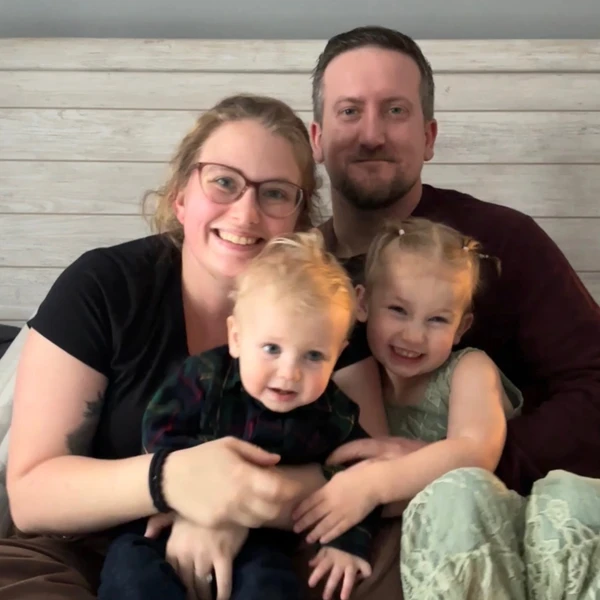
At home, I’m a wife and a mother of two young children. My husband stays home with our kids so I can work full time and pursue my degree. That makes me the sole income earner in our home, and the financial pressure of graduate school is something I feel every day. Receiving this scholarship would help ease that burden. It would allow me to stay on track with my education, reduce the number of hours I need to work, and make sure I don’t have to choose between being present for my family and finishing my degree.
This scholarship would not only support me as a student, but also the community I plan to serve. I’ve seen the system fail people in pain, and I want to be part of building something better. I’ve been the nurse stuck trying to comfort a patient who needs more than the system is designed to give. I’ve also been the patient who needed someone to believe her.
Graduating with this degree means I’ll be able to step into a role where I can make change from the inside. It means I can create space for patients who are used to being rushed, judged, or ignored. And it means I can show up fully—not just as a nurse, but as someone who truly understands how much courage it takes to ask for help.
My future is rooted in service, in healing, and in listening. This scholarship would bring me one step closer to all of that. Thank you.