user profile avatar

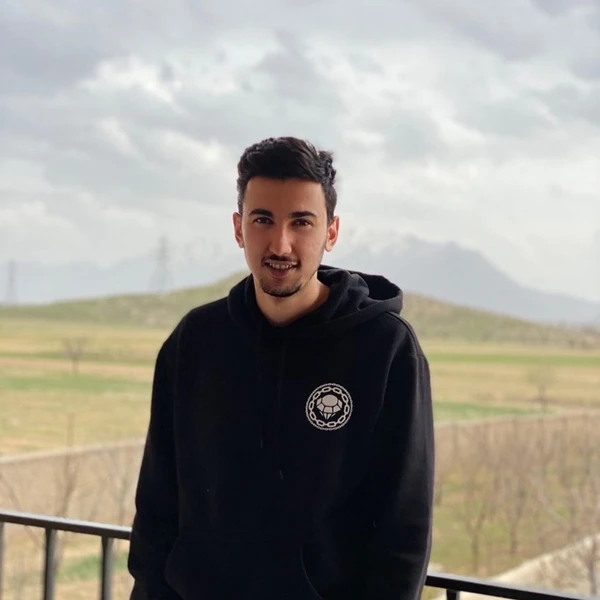
Ali Pirmohammadi

1x

Finalist

Bio

Ali Pirmohammadi is a transportation engineering researcher focused on traffic flow modeling and efficient computational methods for urban networks. He earned his undergraduate degree from the University of Tehran and completed a master’s in Transportation Engineering at Sharif University of Technology, where he worked on a planning project with the Fire Department to support improved emergency dispatch and decision-making. He is currently pursuing a PhD, developing fast and reliable approaches for network-scale traffic flow problems that support downstream applications in transportation planning, management, and control.

Education

New York University

Doctoral degree program (PhD, MD, JD, etc.)
2023 - 2028
  • Majors:
    • Ground Transportation
    • Civil Engineering
  • Minors:
    • Applied Mathematics

New York University

Master's degree program
2020 - 2023
  • Majors:
    • Ground Transportation
    • Civil Engineering
  • Not planning to go to medical school
  • Career

    • Dream career field:

      transportation analyst

    • Dream career goals:

    • phd candidate

      c2smart lab - nyu tandon
      2023 – Present3 years

    Sports

    Basketball

    2017 – 20192 years

    Awards

    • playing at national team

    Research

    • Ground Transportation

      c2smart lab - nyu tandon — phd candidate
      2023 – Present

    Public services

    • Volunteering

      tutoring high schooler from low income family — tutor
      2018 – 2021
    Dr. Hassan Homami Memorial Scholarship
    I’m a PhD student at NYU Tandon studying transportation systems, and I’m excited to apply again for the Dr. Hassan Homami Scholarship after being selected as a finalist in the previous round. I’m reapplying because this scholarship aligns strongly with my background and my goal: using engineering to create real, positive changes in how cities move and how they serve people. My interest in transportation began when I left my hometown and moved to Tehran to study civil engineering at the University of Tehran. Living in a major city made transportation challenges impossible to ignore, traffic affected everyday life and could even delay emergency vehicles. That experience pushed me to choose transportation engineering as the field for my master’s where I could make a practical impact. During my master’s in transportation engineering at Sharif University of Technology, I worked on a planning project connected to the Tehran Fire Department. That experience reinforced why this work matters: better transportation decisions can support faster, more reliable emergency response and help protect lives and property. Now in my PhD, I’m focused on using AI to help build the next generation of intelligent and smart transportation systems. With today’s rapid progress in these tools, and the fact that transportation systems generate huge amounts of data, I see this as a natural and timely direction for the field. I’ve also written a couple of grant proposals for companies to clearly explain and support my research ideas, which reflect that I have a strong vision and I’m actively working to move it forward. My goal is to create tools that help public-sector decision makers—from transportation planners to emergency agencies—make better and more realistic decisions. That includes long-term planning and time-sensitive situations like disruptions and emergencies. Stronger, more data-informed tools can improve reliability, reduce wasted time, and support policies that are both effective and fair. One example is congestion pricing and tolling in New York City. Pricing policies can sometimes feel “rough,” applying broadly without reflecting real daily traffic conditions across time and location. With better tools to understand traffic patterns and predict how they change, cities can design tolling strategies that are more targeted—reducing congestion where it’s worst, saving people time, and making outcomes more equitable rather than placing the same burden on everyone. Dr. Hassan Homami’s story inspires me because it represents ambition, persistence, and service. As a first-generation immigrant from Iran who pursued a PhD while working full-time and gave back through mentorship, he built a legacy that goes beyond technical achievements. I’m especially motivated by the fact that he was active in intelligent and smart transportation systems, the same direction I’m pursuing—using engineering to strengthen cities and support the next generation. This scholarship would support my commitment to keep learning, keep building, and contribute work that improves transportation systems for the communities that rely on them.
    Dr. Hassan Homami Memorial Scholarship
    I’m a PhD student at NYU Tandon studying transportation systems, and I’m a first-generation immigrant from Iran who moved to the U.S. in 2023. My interest in engineering started earlier, when I left my hometown, and moved to Tehran to study at the University of Tehran. That move was exciting, but it also made me notice how much a city depends on transportation working well. In Tehran, traffic congestion wasn’t just an inconvenience—it affected daily schedules, increased stress, and made the city feel less predictable. What stayed with me most was how congestion can slow down emergency vehicles and make it harder for help to reach people quickly. Seeing that connection between transportation and safety is what pushed me toward transportation engineering. After my undergraduate studies, I decided to continue in this field and earned a master’s degree in transportation engineering at Sharif University of Technology. During my master’s thesis, I worked on a planning project with the Tehran Fire Department. The focus was practical: how to support better decision-making and improve dispatching so response teams can provide faster and more reliable service. Working with an emergency-focused project changed how I think about engineering. It made the purpose of the work very clear—small improvements in how a system is planned and managed can lead to real benefits for people, including saving lives and protecting property. It also taught me that solutions need to fit real-world conditions, not ideal assumptions. In emergency settings, decisions are made under pressure, information can be limited, and tools must be reliable and easy to use. Now, in my PhD, my goal is to help cities manage traffic better and respond more effectively when disruptions happen. I care about improving transportation systems in ways that matter to everyday travelers—making travel more reliable, reducing delays, and helping agencies make better decisions during incidents and emergencies. I’m especially interested in building approaches that can provide guidance quickly, because transportation decisions often have to be made in real time. Whether it’s a crash, a sudden surge in demand, bad weather, or a major event, transportation agencies need tools that help them understand the situation and act fast. My long-term goal is to contribute research that leads to practical tools that planners and operators can actually use to improve safety, reliability, and service. Dr. Homami is especially inspirational to me. As a first-generation immigrant from Iran who dedicated his life to using engineering to make a difference, his story resonates deeply with mine. What I admire most is the idea of combining technical excellence with a clear commitment to helping others. I see this scholarship not only as support for my education, but also as a reminder of responsibility: to use my skills to serve communities and to focus on work that has real impact. I hope to follow a similar path—building a career where engineering is not just about solving abstract problems, but about improving systems that people depend on every day.