Hobbies and interests
Poetry
Basketball
Art History
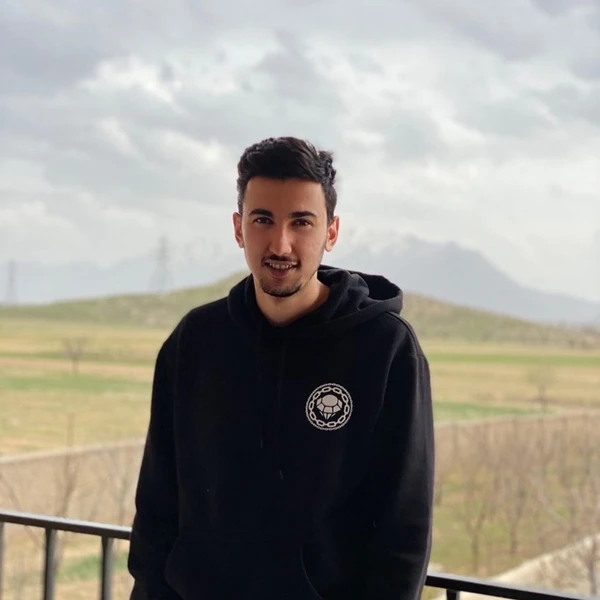
Ali Pirmohammadi
1x
FinalistAli Pirmohammadi
1x
FinalistBio
Ali Pirmohammadi is a transportation engineering researcher focused on traffic flow modeling and efficient computational methods for urban networks. He earned his undergraduate degree from the University of Tehran and completed a master’s in Transportation Engineering at Sharif University of Technology, where he worked on a planning project with the Fire Department to support improved emergency dispatch and decision-making. He is currently pursuing a PhD, developing fast and reliable approaches for network-scale traffic flow problems that support downstream applications in transportation planning, management, and control.
Education
New York University
Doctoral degree program (PhD, MD, JD, etc.)Majors:
- Ground Transportation
- Civil Engineering
Minors:
- Applied Mathematics
New York University
Master's degree programMajors:
- Ground Transportation
- Civil Engineering
Career
Dream career field:
transportation analyst
Dream career goals:
phd candidate
c2smart lab - nyu tandon2023 – Present3 years
Sports
Basketball
2017 – 20192 years
Awards
- playing at national team
Research
Ground Transportation
c2smart lab - nyu tandon — phd candidate2023 – Present
Public services
Volunteering
tutoring high schooler from low income family — tutor2018 – 2021
Dr. Hassan Homami Memorial Scholarship
I’m a PhD student at NYU Tandon studying transportation systems, and I’m a first-generation immigrant from Iran who moved to the U.S. in 2023. My interest in engineering started earlier, when I left my hometown, and moved to Tehran to study at the University of Tehran. That move was exciting, but it also made me notice how much a city depends on transportation working well. In Tehran, traffic congestion wasn’t just an inconvenience—it affected daily schedules, increased stress, and made the city feel less predictable. What stayed with me most was how congestion can slow down emergency vehicles and make it harder for help to reach people quickly. Seeing that connection between transportation and safety is what pushed me toward transportation engineering.
After my undergraduate studies, I decided to continue in this field and earned a master’s degree in transportation engineering at Sharif University of Technology. During my master’s thesis, I worked on a planning project with the Tehran Fire Department. The focus was practical: how to support better decision-making and improve dispatching so response teams can provide faster and more reliable service. Working with an emergency-focused project changed how I think about engineering. It made the purpose of the work very clear—small improvements in how a system is planned and managed can lead to real benefits for people, including saving lives and protecting property. It also taught me that solutions need to fit real-world conditions, not ideal assumptions. In emergency settings, decisions are made under pressure, information can be limited, and tools must be reliable and easy to use.
Now, in my PhD, my goal is to help cities manage traffic better and respond more effectively when disruptions happen. I care about improving transportation systems in ways that matter to everyday travelers—making travel more reliable, reducing delays, and helping agencies make better decisions during incidents and emergencies. I’m especially interested in building approaches that can provide guidance quickly, because transportation decisions often have to be made in real time. Whether it’s a crash, a sudden surge in demand, bad weather, or a major event, transportation agencies need tools that help them understand the situation and act fast. My long-term goal is to contribute research that leads to practical tools that planners and operators can actually use to improve safety, reliability, and service.
Dr. Homami is especially inspirational to me. As a first-generation immigrant from Iran who dedicated his life to using engineering to make a difference, his story resonates deeply with mine. What I admire most is the idea of combining technical excellence with a clear commitment to helping others. I see this scholarship not only as support for my education, but also as a reminder of responsibility: to use my skills to serve communities and to focus on work that has real impact. I hope to follow a similar path—building a career where engineering is not just about solving abstract problems, but about improving systems that people depend on every day.