user profile avatar

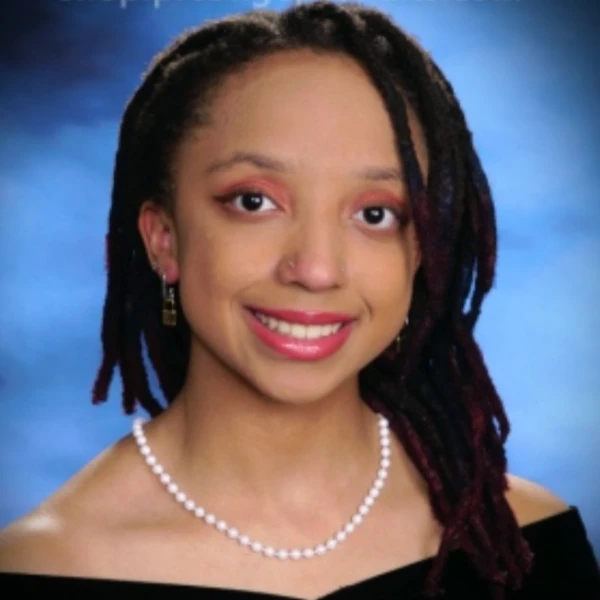
Jaida Lands

1x

Finalist

Bio

Hello, my name is Jaida, but I prefer to go by Alexandria. I have been accepted to and will be attending Loyola University New Orleans this Fall. I am very passionate about preserving the arts as a career path for people in my generation, as well as preserving the health of our earth for future generations! I hope that my chosen double majors, creative writing and environmental science, will allow me to accomplish these goals. Thank you for considering me for your scholarship!

Education

Loyola University New Orleans

Bachelor's degree program
2026 - 2030
  • Majors:
    • Environmental/Environmental Health Engineering
    • English Language and Literature, General
Zachary High School

High School
2022 - 2026

Miscellaneous

  • Desired degree level:

    Doctoral degree program (PhD, MD, JD, etc.)

  • Graduate schools of interest:

  • Transfer schools of interest:

  • Majors of interest:

    • English Language and Literature, General
    • Environmental/Natural Resources Management and Policy
  • Not planning to go to medical school
  • Career

    • Dream career field:

      Writing and Editing

    • Dream career goals:

      Write a fiction series , ghostwriting or co-authoring biographies and international works, writing or co-authoring non-fiction books on social progress and environmental conservation

    • Library Page

      East Baton Rouge Parish Library
      2025 – Present1 year

    Arts

    • Texas Thespian Festival

      Theatre
      Steel Magnolias Group Scene
      2023 – 2023
    • Vonnie Borden Speech and Theatre Festival

      Theatre
      Orignal Oratory
      2025 – 2025
    • Vonnie Borden Speech and Theatre Festival

      Theatre
      Duo Performance
      2024 – 2024
    • International Thespian Society

      Theatre
      2023 – 2025

    Future Interests

    Advocacy

    Volunteering

    Philanthropy

    Irving S. Berman Scholarship
    Animals and wildlife have been my obsession since I was old enough to speak. At 3 years old, I learned to tell time by memorizing the TV schedule, so I would know when shows like Wild Kratts and Go, Diego Go were showing. My cousins and I bonded by watching reruns of Zaboomafoo and exploring my grandmother's backyard. Nature brings me a feeling of rest, nostalgia, and immense sadness. For most of my childhood, I did not know the word for what I wanted to do. I knew I wanted to follow the Kratt brothers' path: study animals, help rebuild endangered populations, while making suburban and urban areas more eco-friendly. But I felt that if I said "I want to be like the Kratt brothers," my relatives would laugh at me. Instead, I showed my interest in other ways. I created a large 50-page Word Document of my favorite animals and endangered species (and crashed the family computer). I paid close attention in my elementary school science classes and kept my notebooks the next year. When I visited my grandmother, I watched the birds, worms, and butterflies in her garden. But I still felt helpless in my lack of contribution to environmental improvement; I wanted to do more than read and observe. But my nightly rants about recycling and compost made my parents groan, so I buried the interest and searched desperately for a clearer and more concise career. When I entered middle school, I finally discovered the subject that perfectly encapsulated what I loved: "zoology". I began rebuilding my animal science library and showing my excitement more openly. By the end of seventh grade, I had amassed a collection of over 60 old National Geographics from the 1970s, and I was so excited to read them and carry that interest into high school, but my father saw them as useless clutter and made me throw them all away. With this second blow to my love of environmental science, I felt defeated. I had no support to pursue volunteer work and advocacy, and even my small interests were discouraged. I would likely have abandoned the interest altogether if my middle school counselor hadn't noticed my academic success and placed me in AP Environmental Science freshman year. I loved the class and my teacher. Within the first month, she quelled my insecurities about math and told us about small ways we could help the environment both in high school and college. This career that seemed so out of reach and impractical amongst naysaers was now within my grasp. I excelled in class and regularly asked my teacher about careers and college pursuits. Throughout the rest of my high school career, I continued to take college or honors science classes in hopes of building towards my future major. Even though I was becoming more serious about my interest in environmental science and future career, my family remained the same. I was still the nonsensical "tree hugger" who was overly sensitive about animals and pollution, but now I had friends and a plan to support me. I am incredibly excited to begin my environmental science major at Loyola University. Their greenhouse, food pantry, and anti-food-waste programs will allow me to finally begin contributing to conservation efforts. I'm hoping this year will be the stepping stone toward me eventually getting a PhD in zoology. With the recent onset of generative AI pollution, many people feel it is too late or stupid to continue with environmental activism or support, but I am excited to join the fight because it is needed now more than ever.
    Justin Burnell Memorial Scholarship
    Growing up in the south, you are made very aware of the negative view of the LGBTQIA+ community, even if your family isn't devoutly religious. It breeds a feeling of isolation and hopelessness. Sometimes you escape by fleeing to northern states with their own judgements, other times you escape into the world of fiction. Even as a young child, I was very aware of prejudice, both systemic and social. Though I had the levity of Barack Obama as president for most of my childhood, I was still aware that people made assumptions about me because of the melanin in my skin. I was bullied for being a girl, for being a smart girl, and for being a smart black girl. Growing up this way made me never want to make anyone feel bad about themselves, especially not over something they couldn't control. When I was little, my parents supported that mindset. But when I was 9 years old, one year after the landmark Obergefell v. Hodges case, my mother had a Talk with me. She explained that God (who, up until this point, I had been told was omniscient and forever magnanimous) did not want men to love men or women to love women the way she and my father did. Apparently, as Christians, we could not support them. The hypocrisy of it all baffled me. How could God love everyone and hate people at the same time? The year after that lovely conversation, I read The Manny Files, a comedic children's book where the manny is eventually revealed to be gay. From what I was taught, I should have been revolted, but I loved Matthew (the Manny) and the way the story didn't patronize me with its humor. Later that year, I read The House of Hades by Rick Riordan. I'd read all of his previous books, and I loved his characters. In the book, a character is outed, and while the scene itself was upsetting, I wasn't bothered by the reveal; in fact, I wanted him to fall in love more than anyone else. I felt so confused and guilty. The more I read and the more queer characters I came to know and love, the heavier that guilt weighed. How could my parents, who taught me everything I knew about combating prejudice, want me to dislike a group of people that also couldn't control the thing they were hated for? Throughout middle school and the beginning of high school, I made friends with several people who came out to me. I loved them, but I felt like I was a disappointment to God for not hating my friends. I felt like I shouldn't have shared in their joy in finding books with gay characters or the feeling of relief I had when a teacher had a rainbow flag tucked into the corner of their classroom. The summer before my sophomore year, I realized, after months of denial, that I was bisexual. Although my initial reaction was to burst into tears, I eventually found myself laughing. I laughed at how similar my situation was to the character Liz Lighty from You Should See Me in a Crown by Leah Johnson. Instead of drowning in shame and self-hatred, I found solace in the book characters that give me a window into a world of acceptance and hope. I want to write stories that give other young queer kids growing up in the south a window into a world where they are loved and accepted, and maybe possibly help them on their journey to embrace their true selves.
    Ethel Hayes Destigmatization of Mental Health Scholarship
    I experienced my first anxiety attack at 3 years old. At the time, I did not know it was an anxiety attack; I thought everyone cried to the point of hyperventilating when their mom left them in the car to lock the front door. It would take 12 years for me to realize that it isn't normal for my nervous system to fight against me every day. In my mind, our second-story apartment became a death trap in those two minutes my mom left to lock the door. Despite living higher, I still agonized over my family being robbed. I would hold my breath and listen for the sound of someone trying to break our windows. I did not live in a violent neighborhood; my elementary school was blue-ribbon awarded, my parents loved each other, yet I lived in a near-constant state of fear. My anxiety caused me to become very observant at a young age, and my observations brought hundreds of questions. My parents quelled many of my anxieties (and saved their sanity) by presenting me with books and a library card. By age eight, I was very confident that my mother would not be mugged in broad daylight by one of the neighbors we'd known for half a decade, and I learned the odds of being robbed in a second-story apartment were low. But with age and understanding came two new sources of anxiety: ostracization and insecurity. Though literature did (and still does) bring me comfort, my awkward, theatrical demeanor made other kids wary of me. Everyday a new trait of mine seemed to disgust them. I made one or two friends, but I was always waiting for things to go wrong. By fifth grade, the only people I felt accepted by were my teachers, so I decided that I should put all my focus on academics. My new life goals were finish fifth grade with a perfect 4.0, get into a magnet middle school, earn a cumulative 4.0, get into a magnet high school, graduate early, and get a full academic scholarship to college. Fifth grade was also when I had my first panic attack. I won a competition and got to read my essay in front of the entire grade. This should've been a moment of jubilation and pride. Performing on stage was familiar, but now I had no character to hide behind. The more I read, the worse my writing sounded. I felt guilty for beating my friend; the entire auditorium was staring at me, and even my teachers were whispering. Then I couldn't see, I panicked, and read from memory. Then I couldn't breathe. I thought I was going to die on stage. Finally, I returned to my class, there were fewer eyes, and my heart unclenched. I could breathe again. My vision returned, but I felt like a ghost for the rest of the day. Throughout middle school and high school, I continued to obsess over my academics. I made a few friends who were fellow anxious nerds, but they had access to therapy and healthcare. I did not. I did not question my need to check my grades every class period. I did not think it was odd to calculate my gpa and my prospective cumulative gpa at twelve. I had my second panic attack in 7th grade after staying up until 4 am trying to get a perfect score on a math assignment. I did not hesitate to deny myself sleep, food, and water. Caffeine became most of my diet. I ignored the daily anxiety attacks and random heart palpitations. Self-harm seemed like a natural consequence for any academic blunders. My only focuses were making my parents proud, impressing my teachers, and earning grades that would grant me an academic scholarship. As a result, I lost weight, took more sick days because I was sleep-deprived to the point of being too dizzy to stand, missed assignments, and was so sleep-deprived that I misread the fine print on the scholarship I did earn. I briefly had access to therapy last year, and my therapist confirmed I had all of the symptoms of an anxiety disorder, but I have yet to be given an official diagnosis. My anxiety allowed school to consume me, caused me to alienate myself before others could ostracize and left me paralyzed with fear of the world without allowing myself to experience it. I've been clean of self-harm for a year and four months, but I still have anxiety attacks and panic attacks, monthly now instead of weekly. My hope is that in college, I will continue to perfect my coping strategies and allow my planning and foresight to become tools for my success and not instruments of my destruction.