
Hobbies and interests
Poetry
Calisthenics
Calligraphy
3D Modeling
Research
Reading
Foreign Languages
Singing
Babysitting And Childcare
Philosophy
Psychology
Reading
Academic
Philosophy
Drama
Novels
Realistic Fiction
Self-Help
Psychology
Literature
Science
I read books multiple times per week
Alexandria Collins
1x
Finalist
Alexandria Collins
1x
FinalistBio
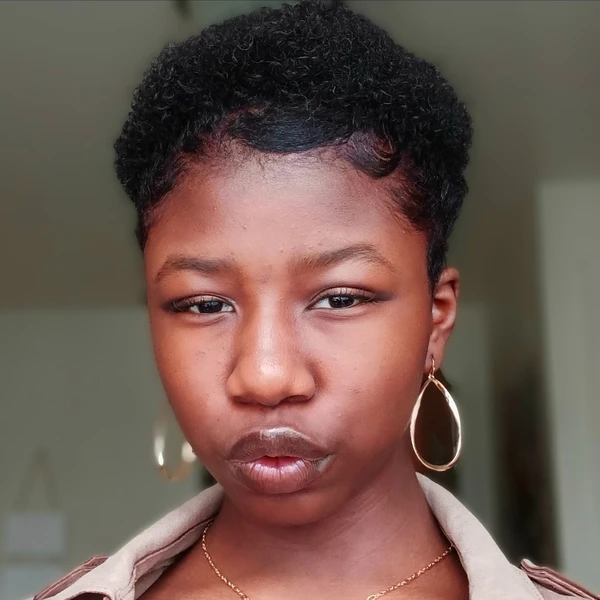
My name is Alexandria Collins, I'm a senior at Avondale High School. I am passionate about neuroscience and aspire to make a global impact by advancing research, educating communities, and improving health outcomes. I have created passion projects a labs to prepare for this goal, and networking events. My goal after a bachelor's is to run an organization that empowers people worldwide through access to knowledge and resources for better health after pursuing my phd.
Education
Avondale High School
High SchoolMiscellaneous
Desired degree level:
Doctoral degree program (PhD, MD, JD, etc.)
Majors of interest:
- Neurobiology and Neurosciences
- Business, Management, Marketing, and Related Support Services, Other
- International Business
Career
Dream career field:
Research
Dream career goals:
Neuroscientist
Creative Strategist
Avondale Marketing2025 – Present1 year
Sports
Basketball
Club2013 – 202411 years
Arts
Avondale Theater Company
Theatre2022 – 2025
Future Interests
Advocacy
Volunteering
Entrepreneurship
Dynamic Edge Women in STEM Scholarship
"A person is a person through other persons; you can't be human in isolation; you are human only in relationships." - Desmond Tutu.
I was twelve when I read those words, sitting at home during a quarantine that had made the entire world feel like a caged mouse. I had started collecting quotes the way people collected news. It gave me awareness of what was happening outside my own walls without the weight of tragedy landing too directly on a child. That quote, though, did something permanent. It made me ask a question a philosopher couldn't put down: what makes a person a person? And if I were locked inside my house, sealed off from everyone — was I still one?
Tutu wasn’t a scientist. He was a theologian, an activist, a man who had fought apartheid with words. He had no reason to redirect a child towards neuroscience. And yet.
That question became an obsession. I started researching. The words that kept appearing were psychology and neuroscience, fields that offered logic to the things entrapping me, that could be applied to anyone, anywhere, regardless of circumstance. I dug into how the brain works. I used what I was learning to sharpen other things I loved, like language learning, study skills, athletics, and drawing. It was amusing building with a child’s innocence. There was little to be concerned about — just utter curiosity being gratified. I realize now it was an attempt to answer his quote.
Then as I read on a typical night, I saw a phrase… mental health? What a strange phrase I thought, but I still felt its assertive shift. It explained what I've witnessed in the communities around me — why so many people stayed stuck, why some silences were elongated, why COVID wasn't only about the physical illness, but the fracturing people had from the inside. What he didn't say was what happens when those relationships can't hold the weight of what's inside you.
The suicide rates became a face. My friend FaceTimed me. Silence. Elongated again. My friend took her life moments after ending that silence.
I went back to what Desmond Tutu said weeks afterward. You are only human in relationships. I sat with the contradiction. My friend had a relationship. And still felt less human than anyone I had ever known. His words hadn't failed her, but something between the words and the world had.
I didn't know what to do with that except learn. I became obsessive about understanding, not yet processing my own grief at the time, but because I couldn't tolerate the idea of more people suffering from something that had language, had research, had solutions, and still never reached the people who needed it. That's what led me to neuroscience. It felt necessary in order to make a change, because the brain is the root of our body and our body is how we exist in the world.
Tutu, though I never met him, opened my eyes to what passion was very early. One sentence from a man I would never know made a twelve-year-old ask a question she couldn't stop answering. I am teaching myself programming, studying 3D modeling to build neuroanatomy visualizations, and conducting independent research. All of it traces back to that quote. He wrote that you cannot be human in isolation. I intend to spend my career making sure fewer people have to question their humanity and to educate worldwide on what makes people who they are.
Ella's Gift
There was always a void to be filled in me. No matter how joyful the moment was, something was missing — as if my throat were collapsing with the sky during a rainy night, and I couldn't help but let it take my whole body. My mind didn't feel like mine. It felt like an emotional pianist holding his instrument captive because he couldn't bear to release what he felt into himself.
I never received a name for what was wrong. Neither did my therapist. But I recognized my patterns early. The way a certain song sent needles through my body, the way touching a specific object could pull me entirely out of my present reality. That escape became something I needed. And needing it led me somewhere I couldn't have predicted. I obtained the substances that numbed the pianist, quieted the collapsing, stilled that void — at least temporarily. The girl I used to be, the one who would wail at the sight of them, didn't understand yet what it felt like when the noise inside becomes louder than anything outside.
I see her still, through the mirror. Waiting for me to turn my head slightly to the right and look at her. For a long time, I couldn't. It hurt too much — recognizing that we share the same ideologies, the same parents, the same body, and yet I brought this sharedness somewhere she could never fathom. She doesn't know what a rehabilitation center is. She believes that suffering comes only to those who deserve it, not that suffering creates people who spend their lives confused about whether they do.
My recovery wasn't a single decision — it was an elongated process of accumulation of recognitions. I began to unfold the language that my body was attempting to speak to me every time I tried to reach for an escape. When I finally had the vocabulary — for the patterns, for the emptiness, for the weight of caretaking a younger sibling while my own adolescence quietly divided itself — I stopped needing to leave the room of myself.
What replaced the escape was structure with intention. Academically, I return to something I had always trusted: the pursuit of knowledge and understanding, something that never failed to put a gleam in my eyes. Neuroscience gave me a framework for the very experiences I had lived — the way my sensations became memories, the way the brain learns to reach for relief from necessary pain, the way underserved communities are denied access to the knowledge that could name what they carry internally. My studies became a part of my recovery. I didn't study it for selfish intentions, but to learn a way to help others similar to me or in the worst predicaments, because many can't unravel their body's language quite yet.
I return to the mirror now. To look toward the girl helplessly looking for reassurance that we will do just fine. And I gave it to her, this time without a lie.
I began to understand the self-awareness I had developed through my hardest years of suffering was long lines of code I finally learned to read. The mind that entrapped me and led to addiction was the same intellect that helped me rebuild myself into something meaningful. I use this meaning to further my awareness externally — to see the communities and environments that have always surrounded me. I'm aware many are carrying similar weights where just showing up is its own management.
She wouldn't be disappointed. The girl in the mirror. Graduating with honors. Entering university. Pursuing artistic work alongside a neuroscience degree taken up for the pure intention of helping others — those in mental illness, those in underserved communities who remain stuck not because of who they are, but because of what was never made accessible to them. She might not understand the full path that led here. But I believe she would recognize the direction.
I can look at her now. It doesn't hurt any less. It just means I've learned — and with what I've learned I can create a change globally with my knowledge. My division didn't mean damage, the weight I carried shaped what I have been capable of carrying forward, and that unwavering presence has been enough, and hopefully will become more.
Jessie Koci Future Entrepreneurs Scholarship
What weighs the most within us shapes every form we become. Complex, universal, and deeply meaningful, it exists in every being—yet few truly honor it. This force is the brain.
A grim reality persists: there is no truly accessible platform that bridges neuroscience research, brain-health technology, clinical tools, and educational institutions under one roof—one designed to strengthen communities while inspiring future scientists. I intend to build that bridge.
My neuroscience major is not just an academic pursuit—it is the foundation everything else is built on. I want to be the scientist behind the research my company produces, because you cannot teach what you have not truly learned. Credibility is not borrowed. It is built, slowly, the way most things worth having are.
I also understand that scientists and entrepreneurs cannot be strangers to each other. One without the other produces either research that never leaves the lab or a company with nothing real to stand on. I want both working together, because that is where real change happens.
My goal is to build a vertically integrated neuroscience and brain-health company that produces original research, develops clinical and consumer tools, and expands access to neurological and psychological care through technology. Beyond that, I want to create research and education hubs where students gain real experience without needing the right last name or zip code to do so. I am not chasing higher education just for myself—I want others to have the same opportunity, and to dream just as big, or bigger. Education should not feel like a privilege you stumble into. It should feel like something that was always meant for you.
The neuroscience and brain-health industry is fractured. Research does not reach consumers. Clinical technology does not reach undeserved communities. Neuroscience education remains locked behind expensive degrees and institutions that were never built with everyone in mind. What this field needs is infrastructure—something that connects research, technology, clinical care, and education into one accessible system, where a person comes from does not limit what they can reach. That is the gap I intend to spend my life filling—not because it is easy, but because it is necessary, and because I have not found anyone else willing to hold all of it at once.
I am not waiting until everything is in place to start. I am already learning programming to build the platforms my company will need. I am studying 3D modeling to create interactive brain visualizations that barely exist in consumer education. I am conducting independent research because the curiosity driving this is not something I am saving for later—it is already here, already working. Most ventures fail because the idea never becomes anything more than an idea. I have a defined problem, a mapped solution, and I am building the skills to execute it, one layer at a time.
Success, to me, does not look like a number. It looks like a first-generation student running their first real experiment in something I built. It looks like a research team using data we produced to change someone’s outcome. It looks like someone who never had access to proper care finally reaching a specialist through our platform for the first time. The brain is where human potential lives. I want to spend my life making sure more people can reach it.
What weighs the most within us deserves the most of us. The Jessie Koci Scholarship would help make sure I give it exactly that.