Hobbies and interests
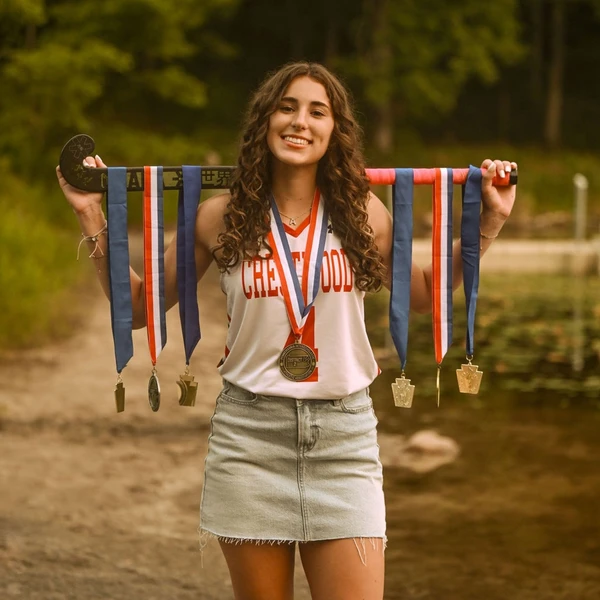
Field Hockey
Track and Field
Alpine Skiing
Physics
FBLA
Alexandra Geiger
1x
Finalist
Alexandra Geiger
1x
FinalistBio
I am going to attend Hofstra University to major in Speech and Language Hearing Sciences and play field hockey. I would like to work with children so that they may have as many opportunities as possible to have a voice.
Education
Crestwood High School
High SchoolMiscellaneous
Desired degree level:
Bachelor's degree program
Majors of interest:
- Special Education and Teaching
- Linguistic, Comparative, and Related Language Studies and Services
- Biological and Biomedical Sciences, Other
Career
Dream career field:
Education
Dream career goals:
Sports
Field Hockey
Varsity2016 – Present10 years
RonranGlee Special Needs Teacher Literary Scholarship
My passion for becoming a teacher for students with special needs didn’t come from a textbook or a career assessment. It came from someone in my own family — my dad’s cousin Lindsay’s son, who is non‑verbal autistic. Growing up, I watched him navigate a world that wasn’t always built for him. He communicated through gestures, expressions, and sounds that only the people closest to him understood. Even as a child, I could see how much he wanted to connect, to express himself, to be heard.
What stayed with me most were the moments when he tried so hard to communicate something and couldn’t. The frustration in his eyes wasn’t because he didn’t understand — it was because he did. He just didn’t have the tools to express it. Watching him taught me something I’ve carried with me ever since: every child has a voice, even if it doesn’t sound like everyone else’s. And every child deserves someone who will help them use it.
That belief is what led me to Speech, Language, and Hearing Sciences. I want to be the teacher who sits beside a child and celebrates every small victory — the first sign, the first sound, the first time they express a thought in a way the world understands. I want to be the person who helps families experience the joy of hearing their child communicate in a new way. And I want to help students feel seen, valued, and capable, no matter how they communicate.
The quote in the prompt reminds me that guiding students isn’t about fixing them — it’s about empowering them. It’s about meeting them where they are, honoring who they are, and helping them grow into who they’re meant to be. My approach will always be rooted in patience, compassion, and the belief that communication takes many forms. I will guide my students by celebrating their strengths, supporting their challenges, and reminding them that their voice matters — in whatever form it takes.
A Brief Fairy Tale
Once upon a time, in a small Pennsylvania town, there lived a girl named Alexandra who believed every child deserved a voice. She wasn’t a princess or a warrior — she was something better: determined. She trained in the art of leadership on the field hockey field, learned courage through competitions, and discovered her purpose through a young boy who spoke without words.
One day, she set out on a journey to a faraway land called Hofstra, where she would study the magic of communication. Her goal was simple: help children unlock the voices hidden inside them. Along the way, she gathered tools — patience, empathy, resilience — and carried them like armor.
And in the end, Alexandra didn’t just become a teacher. She became a champion for children who needed someone to believe in them. A heroine whose greatest power was helping others find their own.
David Foster Memorial Scholarship
When I look back on high school and think about the person who changed the way I approach my life, I always come back to Mrs. Labauch, my FBLA advisor and Leadership Lab teacher. She wasn’t just a teacher who handed out assignments or graded presentations. She was the person who pushed me to step into the kind of leader I didn’t even realize I was capable of becoming.
I joined FBLA because I liked business and competition, but I had no idea how much it would shape me. In the beginning, I was the type of student who did the work, stayed organized, and quietly hoped everything went well. I wasn’t the first to raise my hand or volunteer to lead a group. I was comfortable staying in the background.
Mrs. Labauch didn’t let me stay there.
She had this way of seeing potential in people before they saw it in themselves. She’d call on me when I least expected it, push me to speak up, and challenge me to take on roles that felt bigger than me. She didn’t do it to make me uncomfortable — she did it because she genuinely believed I could handle more.
The moment that changed me happened right before the FBLA state competition. I was overwhelmed with field hockey, AP classes, and preparing for the University of Scranton physics contest. I walked into her room ready to tell her I might drop out of the event. Before I could even get the words out, she looked at me and said, “You’re not backing down. You’re ready for this.”
It wasn’t a pep talk. It wasn’t dramatic. It was just said with complete certainty — the kind that makes you believe it too.
I didn’t quit. I competed. And I became a two‑time state place winner in FBLA.
That confidence she helped me build carried into everything else, especially field hockey. When my club coach, Lunda Comiskey, asked me to lead teams that weren’t expected to medal or even qualify for Nationals, I heard Mrs. Labauch’s voice in the back of my mind. And because of that, I stepped up. Our team didn’t just qualify — we finished second in the entire country.
Mrs. Labauch taught me that leadership isn’t about being the loudest or the most talented. It’s about showing up, staying steady, and lifting others up — the same traits that defined people like David Sutton. She taught me to trust myself, to take on challenges even when they scared me, and to use my voice to help others find theirs.
Because of her, I approach my life with more confidence, more purpose, and a commitment to leading with heart, humor, and resilience. She helped me become someone who doesn’t just participate — but someone who leads.
David G. Sutton Memorial Scholarship
Throughout my athletic career, I’ve been lucky to have coaches who pushed me, believed in me, and helped shape the person I am today. But no coach has impacted me more than my club field hockey coach, Lunda Comiskey, the owner of Electric Surge. She is the one who taught me what real leadership looks like — not the loudest voice, not the flashiest player, but the person who steps up when things get hard and lifts everyone else with them. That lesson changed me as an athlete and as a person.
When I first joined Surge, I was surrounded by incredibly talented players. We had the skill, the speed, and the potential to be one of the top teams in the country. But potential doesn’t win games — leadership does. And that’s where Lunda challenged me in a way no one else ever had. She pulled me aside one day and said, “You’re going to lead this team.” Not asked. Not suggested. Told. I remember thinking, Why me? But she saw something in me I hadn’t fully seen in myself yet.
That season wasn’t smooth. We had tournaments where we fell short, games where we knew we should have medaled, and moments where qualifying for the National Indoor Tournament felt out of reach. But every time we stumbled, Lunda pushed me to be the one who steadied the team. She taught me how to keep my teammates focused, how to lift them up when they were frustrated, and how to stay composed when everything felt chaotic. She didn’t want a captain who barked orders — she wanted someone who made everyone around them better.
And we did get better. We grew tougher, more connected, and more confident. Eventually, we didn’t just qualify — we finished second in the entire country. Standing on that podium, I realized that Lunda hadn’t just coached my skills; she had coached my character.
That’s why I connect so deeply with the values David Sutton embodied. Like him, Lunda coached with a huge heart and high expectations. She pushed us hard because she believed in us even harder. She taught me to be loyal to my teammates, to fight for them, and to support them on and off the field. She taught me that leadership isn’t about being perfect — it’s about showing up, staying steady, and giving everything you have for the people beside you.
I carry those lessons with me in every part of my life. Whether I’m competing, studying, or preparing for my future career in Speech, Language, and Hearing Sciences, I try to lead with heart, humor, resilience, and the belief that every person deserves to be lifted up. Those are the traits that made Dave one in a million — and the traits I strive to live out every day.
Teaching Like Teri Scholarship
My decision to pursue Speech, Language, and Hearing Sciences didn’t come from a single class, a career quiz, or even one of those “lightbulb moments” people talk about. It came from someone much younger than me — my dad’s cousin Lindsay’s son, who is non‑verbal autistic. He is the reason I realized how powerful communication truly is, and why I want to spend my life helping children find their voices, in whatever form those voices take.
Growing up, I saw him at family gatherings — surrounded by people who loved him, yet often unable to express what he was thinking or feeling. While other kids his age were running around yelling, asking questions, or arguing over toys, he communicated in quieter ways: a glance, a gesture, a sound that only his mom seemed to understand. I remember watching her interpret his needs with this incredible patience and love, almost like she was translating a language only the two of them shared.
But I also remember the moments when he tried so hard to express something and couldn’t. The frustration in his eyes. The way he’d pull at someone’s hand or point, hoping they’d understand. Those moments stayed with me. They made me realize that communication isn’t something everyone gets easily — and that not having a voice doesn’t mean you don’t have something important to say.
As I got older, I started paying more attention. I noticed how people talked around him instead of to him. I noticed how some adults assumed he didn’t understand things simply because he couldn’t respond the way they expected. And I noticed how different he became when someone took the time to slow down, listen, and meet him where he was.
That’s when it clicked for me: I wanted to be someone who helps bridge that gap.
Throughout high school, that motivation only grew stronger. Whether I was helping classmates prepare for FBLA, working with teammates on the field hockey field, or tutoring friends in physics, I realized how much I valued helping people understand and be understood. Communication was always at the center of everything I did — and everything I cared about.
But my drive to become a speech teacher always came back to him. I want to help kids like him — kids who have thoughts, feelings, humor, intelligence, and personality, but who need support to express it. I want to help families experience the joy of hearing their child communicate in a new way. I want to give children the tools to connect with the world, whether through speech, sign, devices, or any method that works for them.
He taught me that every child deserves a voice. And that’s why I’m choosing a career where I can help them find it
Women in Healthcare Scholarship
Choosing a health‑related field was never just about finding a stable career or picking something that sounded impressive. For me, it came down to one simple idea: communication is one of the most powerful tools a person can have. The ability to express yourself, to be understood, and to connect with others shapes every part of life. And not everyone gets that ability easily. That’s why I chose Speech, Language, and Hearing Sciences — because I want to help give children the voice they deserve.
Throughout high school, I found myself drawn to roles where I could support others. Whether it was helping classmates prepare for FBLA, encouraging teammates on the field hockey field, or even explaining physics concepts during study sessions, I realized how much I valued helping people understand and be understood. Communication wasn’t just something I was good at; it was something I cared about deeply.
My interest in this field grew even stronger as I learned more about the challenges many children face with speech and language development. Some struggle to form words. Some struggle to process them. Some know exactly what they want to say but can’t get their voice to cooperate. The idea that I could be the person who helps unlock that ability, who helps a child finally say their name clearly, or express a thought, or tell a joke, felt incredibly meaningful.
I’ve always believed that every child deserves the chance to be heard. That belief guided me through my academic and athletic experiences. As a two‑time state place winner in FBLA and a second‑place finisher in the University of Scranton physics contest, I learned how powerful communication is in academic success. As a two‑time First Team All‑State field hockey player and future Division I athlete at Hofstra, I learned how essential communication is in teamwork, leadership, and trust. In every part of my life, communication has been the thread that holds everything together.
But the truth is, my decision wasn’t just about what I’ve done, it was about who I want to become. I want to be someone who makes a real difference in the lives of children and families. Someone who celebrates small victories that feel huge. Someone who helps a child say “mom” for the first time, or helps a shy student speak up in class, or gives a frustrated kid the tools to finally express what they’re feeling.
Speech, Language, and Hearing Sciences is the perfect blend of science, compassion, and human connection. It allows me to use my strengths, challenge myself, and contribute to something bigger than me. It’s a field where I can grow, learn, and help others grow too.
That’s why I chose it, because helping a child find their voice is the kind of impact I want to make in the world.
Big Picture Scholarship
The movie that has had the greatest impact on my life is A Quiet Place. Most people remember it for the suspense, the monsters, or the fact that the entire theater was afraid to open a bag of popcorn. But for me, the movie meant something deeper. It showed the power of communication, not just the words we speak, but the ways we connect, support, and understand one another even when sound isn’t an option. As someone who plans to major in Speech, Language, and Hearing Sciences at Hofstra University, the film resonated with me in a way I didn’t expect.
What struck me most was how the family in the movie relied on sign language to survive. Their daughter, who is deaf, wasn’t a burden or a limitation, she was the reason they were able to communicate silently and stay alive. Her ability to express herself, and her family’s commitment to understanding her, reminded me of why I want to become a speech teacher. Communication isn’t just a skill; it’s a lifeline. It’s how we connect to the world, how we build relationships, and how we find our place in our communities.
Throughout high school, I’ve learned how powerful communication can be. Whether I was helping classmates prepare for FBLA, working with teammates on the field hockey field, or even competing in the University of Scranton physics contest, I realized that success often depends on how well people understand one another. I’ve seen how a single encouraging word can change someone’s confidence, how a clear explanation can turn confusion into excitement, and how listening can be just as important as speaking.
Watching A Quiet Place made me think about the children I hope to work with in the future — kids who may struggle to express themselves, who may feel unheard, or who may need someone patient enough to help them find their voice. The movie reminded me that communication takes many forms, and every form deserves to be valued. It reinforced my belief that every child deserves the chance to be understood.
The film also connected to my own experiences as an athlete. On the field, communication isn’t always verbal. Sometimes it’s a glance, a gesture, or the unspoken trust between teammates. As a two‑time First Team All‑State field hockey player and future Division I athlete at Hofstra, I’ve learned that leadership often comes from how you communicate without saying a word. That’s something I saw reflected in the movie — strength shown through silence, teamwork built on understanding.
Ultimately, A Quiet Place reminded me why I’m passionate about the field I’m entering. It showed me that communication is powerful, even when it’s quiet. It can protect, empower, and connect people in ways that shape their lives. That’s the kind of impact I hope to make, helping children find their voices, in whatever form those voices take.
Sean Flynn Memorial Scholarship
If you ever want to know what pure chaos looks like, picture me on the morning of the University of Scranton physics contest awards ceremony. I had exactly two goals that day: accept my award like a normal, functioning human being, and make it back to Crestwood in time for field hockey practice. Simple, right? You’d think so. But my life apparently runs on a different operating system.
The day started with my alarm deciding it was done with its job. I woke up twenty minutes late, launched myself out of bed, and grabbed the first sweatshirt I saw — which, for the record, was inside out. I didn’t notice until much later. I sprinted out the door with a bagel in my mouth and my field hockey stick under my arm like I was late for the Olympics.
Now, here’s the thing: I knew my car was messy. But I didn’t realize it had reached “archaeological dig site” levels. When I opened the door, a pile of cleats, notebooks, and water bottles tumbled out like they were trying to escape. I shoved everything back in, prayed nothing alive was hiding under the seat, and took off.
The ceremony itself went great. I smiled, shook hands, and accepted my shiny second‑place physics trophy — which was shaped like a golden lightbulb. Cute, right? Inspirational, even. Little did I know it would soon become my mortal enemy.
I buckled the trophy into the passenger seat (because safety matters), and started driving back to school. I made it about three minutes before hitting the tiniest pothole known to mankind. The lightbulb trophy shot out of the seatbelt like it had been launched from a catapult. It bounced off the dashboard, rolled under the seat, and started clanging around every time I turned the wheel.
I tried to grab it at a red light, but of course that’s when my coach called. I answered with one hand while the other was blindly fishing under the seat, praying I didn’t grab something horrifying. I must’ve looked completely unhinged to the car next to me.
By the time I got to practice, I was sweaty, frazzled, and covered in crumbs from the floor of my car. My teammates stared at me like I had just fought a wild animal. I held up the trophy in victory — and they absolutely lost it.
Honestly, I don’t blame them.
But here’s the thing: that ridiculous day taught me something. Life is messy. Plans fall apart. Trophies go flying. But if you keep going — and keep laughing — you’ll get where you’re supposed to be.
And sometimes, you’ll show up with a story that’s way better than the award itself
Change of Heart Scholarship
My plans for the future are rooted in a simple but powerful belief: every child deserves a voice. This belief is what drives my decision to attend Hofstra University and major in Speech, Language, and Hearing Sciences. My goal is to become a speech teacher who can help children communicate with confidence, clarity, and pride. Throughout high school, I discovered how meaningful it is to support others, and that realization continues to guide me as I take my next steps. I want to use my education not just to build a career, but to make a difference one child, one voice, one breakthrough at a time.
The positive changes I experienced in high school shaped the person I am becoming. I learned how to push myself academically, how to lead by example, and how to stay grounded while balancing demanding commitments. Whether I was studying for competitions, training for field hockey, or helping classmates, I grew into someone who embraces challenges instead of avoiding them. That mindset is what I’m carrying with me to Hofstra: the determination to work hard, the courage to step outside my comfort zone, and the desire to help others find their own strength.
One of the most defining moments of my high school journey happened during my junior year, when I competed in the FBLA state competition. I had placed before, but that year felt different. I was juggling intense field hockey training, AP classes, and preparation for the physics contest at the University of Scranton. I remember sitting in my room late one night, surrounded by notes and practice tests, feeling overwhelmed and questioning whether I could keep up with everything I had committed to. But instead of giving up, I made a choice that changed me: I kept going.
That decision led to some of the proudest moments of my high school career. I became a two‑time state place winner in FBLA, earned second place in the University of Scranton physics contest, and became a two‑time First Team All‑State field hockey player, ultimately earning the opportunity to play Division I field hockey at Hofstra.
What mattered most wasn’t the medals or titles—it was realizing I was capable of more than I ever imagined. That moment of doubt, followed by the decision to push forward, taught me resilience and showed me that growth happens when you choose effort over fear.
Those lessons are exactly why I want to become a speech teacher. As I move forward to Hofstra University, I’m ready to work hard, learn deeply, and dedicate myself to helping children communicate and connect with the world. My journey is just beginning, but I know it’s headed toward a future where I can help as many children as possible find their voice.