Hobbies and interests
Music
3D Modeling
Reading
History
I read books multiple times per week
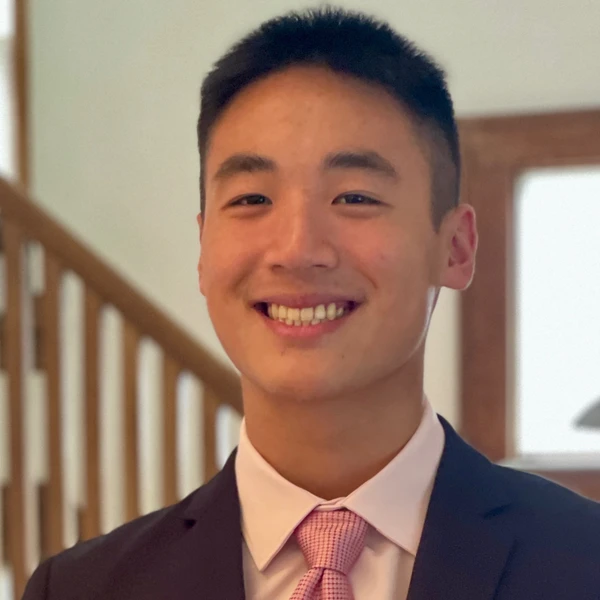
Alexander Chung
1x
FinalistAlexander Chung
1x
FinalistBio
I play Viola and love swimming and playing games.
Education
East Grand Rapids High School
High SchoolMiscellaneous
Desired degree level:
Bachelor's degree program
Majors of interest:
- Architecture and Related Services, Other
Career
Dream career field:
Architecture & Planning
Dream career goals:
Dish washer
Olive Restaurant2025 – Present1 year
Sports
Water Polo
Varsity2022 – 20242 years
Swimming
Varsity2022 – Present4 years
Rowing
Varsity2024 – Present2 years
Research
Pre-Architecture Studies
School Project — Primary research2024 – 2024
Public services
Volunteering
Grand Rapids Youth Symphony — 2nd chair Violist2022 – Present
Hines Scholarship
Building Change Through Education
To me, going to college means more than earning a degree. It represents the chance to honor my family’s sacrifices, pursue my passion, and create something meaningful that can help shape a better future. I was raised by a single mother who immigrated to the United States to build a new life and provide more opportunities for me. Watching her navigate challenges in a new country, often working long hours while still encouraging me to focus on my studies, taught me the values of perseverance, dedication, and determination. She has always been my role model, showing me that education is not only the key to success but also a tool for transformation.
My mother came to this country with courage and hope, and she has worked tirelessly to give me the chance to dream beyond limits. Her journey inspires me to make her proud, not just by going to college, but by using my education to make a difference in the world. Every time I study or create something new, I think about her sacrifices and the faith she placed in me. I want to carry forward her strength through my work and my future career.
My passion for architecture grew from a fascination with how buildings influence people’s emotions, connections, and daily lives. I’ve always been drawn to spaces that tell stories, and places where design and human experience meet. To me, architecture is more than creating structures; it’s about shaping environments that bring people together and reflect cultural identity. I want to design buildings that balance functionality, beauty, and sustainability, spaces that improve lives and honor both nature and community.
Going to college will allow me to explore these ideas deeply, combining art, science, and empathy to design with purpose. I want to learn how to create spaces that serve people’s needs while inspiring them to think differently about their surroundings. My goal is to use architecture as a way to give back to create environments that foster inclusion, understanding, and hope.
Being a first-generation college student means that my education is not only my dream but also my mother’s. Going to college represents every late night she spent working, every word of encouragement she gave me, and every belief she held that I could achieve something greater. I want to make my family proud by using what I learn to build, not just buildings, but connections, opportunities, and positive change in the world.
Mad Genius Scholarship
Eye in the Plate: A Magritte Mashup
A mashup, to me, isn’t just stacking two sources together. It’s using contrast to reveal a new idea that neither could express alone. My digital design project Eye in the Plate fuses a 3D-modeled dining table and plate layout with René Magritte’s surrealist language, specifically drawing from The Portrait and its unsettling “seeing” plate. Magritte’s painting, where a slice of ham becomes an eye gazing back at the viewer, inspired me to transform an ordinary, engineered design into something uncanny, allowing a famous artwork to escape its frame and enter a new digital world.
Inspiration
I’ve always been drawn to Magritte because he transforms everyday objects- bottles, plates, eyes into philosophical questions. In my digital design practice, especially when modeling objects in SketchUp, I focus on structure, proportion, and precision. But I began to wonder: what happens when structure meets strangeness? Could a table setting, a symbol of home, comfort, and order, carry the same sense of mystery and reflection found in Magritte’s art?
Concept + Story
I titled the piece Eye in the Plate. The eye serves as both observer and observed, creating tension between consumption and awareness. The plate’s gaze looks outward, questioning what or who is truly being consumed. The placement of utensils and dishes follows the exact order of my CAD layout, but their geometric clarity contrasts with the surreal eye that breaks logic. Movement and stillness coexist, the viewer feels watched even in a static image.
Composition
The perspective sits slightly overhead to echo blueprint drawings while maintaining Magritte’s theatrical frontality. Shadows are soft and deliberate, edges clean and crisp, half painting, half prototype. Using Photoshop and AI generative tools, I blended the technical precision of my table layout with the muted palette and texture of Magritte’s surreal still life.
Why It’s a Mashup
This project merges two visual languages: the rational logic of design (precision, alignment, order) and the poetic uncertainty of surrealism (defamiliarization, hidden meaning). It doesn’t recreate Magritte or the table. It invents a third interpretation where seeing becomes both literal and symbolic.
Takeaway
Through this project, I learned that the most powerful mashups let each source retain its voice. The engineered table keeps its structure; Magritte’s influence keeps its mystery. Together, they ask viewers to look twice because the dining table isn’t only for food; it’s also a place for thought and reflection.
Big Picture Scholarship
The Pianist: Finding Hope Through Music
The movie The Pianist has had a profound impact on me because it captures the resilience of the human spirit through the power of music. Watching the story of Wladyslaw Szpilman, a talented Jewish pianist struggling to survive during the Holocaust, made me realize how deeply music can sustain hope even in the darkest times. As someone who plays the viola and has experienced how music connects people, I was moved by how Szpilman’s music became his lifeline, an act of quiet defiance and faith when everything else was taken away.
What inspired me most was how Szpilman’s passion for music endured despite immense suffering. When his family was deported, when he faced starvation and isolation, and even when he lost his piano, his love for music never left him. That scene where he plays Chopin’s Ballade in G minor for a German officer is unforgettable. It was not just a performance—it was his humanity shining through despair. In that moment, music bridged the divide between enemies and spoke a universal truth: that art, beauty, and compassion survive even in destruction.
As a musician, I relate to that connection between perseverance and creativity. Music requires discipline, patience, and emotional honesty. When I practice or perform, I feel the same quiet strength that The Pianist portrays, the ability to express what words cannot. There are days when life feels overwhelming or uncertain, but playing music helps me center myself. It reminds me, as it did Szpilman, that creation can triumph over chaos.
The film also deepened my understanding of how art can bear witness to history. Music in The Pianist is not just background and it is memory, identity, and survival. It reminded me that musicians have a responsibility to carry forward human stories through sound, to give voice to what cannot be forgotten.
After graduation, I plan to study architecture, another form of creative expression that shapes human experience. Like music, architecture can bring hope and it transforms space into emotion and connects people through shared beauty. I want to design environments that inspire resilience and harmony, much like how Szpilman’s music gave light in darkness.
The Pianist taught me that art, in any form, is an act of courage. It affirmed my belief that creativity is not just for expression but for endurance. Through music, both Szpilman and I have found the same truth that hope, like melody, can never be silenced.
Julie Holloway Bryant Memorial Scholarship
Between Two Languages, One Identity
I was born in the United States, but my family’s roots are deeply tied to Taiwan. My first language was Mandarin Chinese-the language my mother spoke to me at home, filled with stories, traditions, and lessons about perseverance. English, however, quickly became the language of my education, friendships, and daily life. Living between two languages has been both a challenge and a gift. It has shaped how I think, communicate, and understand the world.
Being raised by a single mother, I learned early the values of perseverance, dedication, and determination. My mom taught me that education and hard work can open doors and that challenges are opportunities to grow stronger. She encouraged me to never forget where I come from, reminding me that bilingualism is more than a skill, it’s a connection to my heritage and a bridge to the future.
At times, being bilingual has been confusing. Switching between Mandarin and English can make me feel as though I belong to two different worlds. In Taiwan, I speak Mandarin fluently but sometimes miss small cultural nuances. In the U.S., I’m fully American, yet some traditions from home make me feel different. Over time, I’ve learned to see this duality not as a conflict, but as a balance. It gives me a broader perspective and a deeper appreciation for diversity.
Academically, speaking two languages has strengthened my communication and critical-thinking skills. Translating ideas between Mandarin and English forces me to slow down and think carefully about meaning. I’ve learned that language is more than vocabulary, it carries emotion, culture, and identity. Some expressions in Mandarin don’t exist in English, and that challenge has made me more creative and empathetic when I communicate.
Outside of school, I express myself through rowing and music. As a second-chair violist for the Grand Rapids Youth Symphony, I’ve learned that music, like language, connects people without the need for translation. Performing at community concerts has shown me how art and culture can bridge differences and inspire hope.
After graduation, I plan to study architecture. To me, architecture is another kind of language, one that tells stories through structure and design. I hope to create spaces that connect people across cultures, blending creativity with sustainability.
Being bilingual has taught me how to adapt, listen, and see the world through multiple perspectives. It reminds me that identity doesn’t have to be one thing or another, it can be both, harmoniously intertwined, just like the two languages that shape who I am.
Raise Me Up to DO GOOD Scholarship
Being raised by a single mother has shaped every part of who I am and the values I hold closest, perseverance, dedication, and determination. My mom has always reminded me that education and hard work can open doors, no matter how difficult the circumstances. Watching her balance responsibilities and face challenges with quiet strength taught me that obstacles are not roadblocks but opportunities to grow stronger. She often says that learning isn’t just about grades or achievements, but about becoming a better person and using what I learn to help others. Her resilience has been the foundation of my character and continues to inspire me every day.
Balancing school, rowing, and music has not been easy, but these experiences have taught me important lessons about focus, teamwork, and persistence. As a member of the rowing team, I’ve learned the importance of rhythm, unity, and pushing forward even when every muscle aches. Rowing has shown me that success doesn’t come from talent alone but from consistency and trust in those around you.
Music has given me another kind of strength, the power to express and connect. As a second-chair violist for the Grand Rapids Youth Symphony, I’ve found joy in performing and collaborating with others. Playing at community festivals and concerts has taught me how art can bring people together, heal, and inspire hope. These performances remind me that creativity has the power to bridge differences and foster understanding.
This year, I was honored to receive the Grand Rapids Federation of Musicians Scholarship Fund, founded by Robert Madura. This recognition motivated me to keep improving as both a student and a musician. It also reminded me that dedication and passion can lead to opportunities to give back. Whether through music or other forms of creativity, I want to continue using my talents to make a difference in my community.
Despite financial challenges, I’ve maintained a 3.86 GPA while taking two AP courses and staying committed to both sports and music. Balancing everything has required sacrifice, but I’ve learned how to manage my time, stay focused, and remain grateful for every opportunity.
Looking ahead, I plan to study architecture. I want to design spaces that connect people, strengthen communities, and promote sustainability. For me, architecture is more than structure—it’s a way to build relationships, tell stories, and create environments that bring people together. This scholarship would help ease the financial stress on my family and allow me to take the next step toward that dream, continuing the legacy of perseverance my mother taught me.