Hobbies and interests
Athletic Training
Band
Clarinet
Rowing
Reading
Russian
Spanish
Reading
Academic
Classics
Novels
Social Issues
I read books daily
Alexander Chenski
1x
Finalist1x
WinnerAlexander Chenski
1x
Finalist1x
WinnerBio
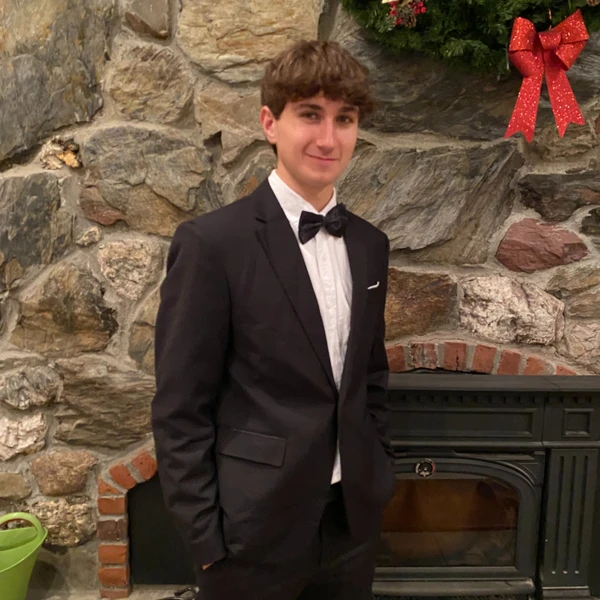
I'm a high school senior and hopeful pre-med student. I am a competitive rower who believes the best physicians combine scientific rigor with cultural empathy. Through early morning practices and challenging coursework, I've developed the discipline medicine demands. As an avid reader and the son of immigrants, I'm committed to becoming a doctor who serves underrepresented communities with both clinical excellence and deep understanding of the patients I'll treat.
Education
Arlington High School
High SchoolMiscellaneous
Desired degree level:
Bachelor's degree program
Majors of interest:
- Biological and Biomedical Sciences, Other
Career
Dream career field:
- Hospital & Health Care
Dream career goals:
Lifeguard
American Pool2025 – Present1 year
Sports
Rowing
Varsity2021 – Present5 years
Public services
Advocacy
Big Brothers Program — Tutor2024 – Present
Future Interests
Advocacy
Volunteering
Philanthropy
Christian Fitness Association General Scholarship
When I was eight years old I bit into what I thought was an ordinary pretzel at a party. It was filled with peanut butter. Within minutes my throat began to close, hives erupted across my skin, and the world started narrowing. An EpiPen barely stopped it from becoming fatal. I was lucky. I knew it then and I know it now.
What followed was the beginning of the hardest and most defining chapter of my life. My parents found Dr. Mendelson at the New England Food Allergy Treatment Center, who was running trials on oral immunotherapy, a treatment designed to train the immune system to tolerate what it once attacked by introducing the allergen in doses so small the body might not notice. The concept was straightforward. My body did not cooperate. My first dose, three milligrams of peanut powder, triggered violent cramps and hives severe enough that my doctors had never seen anything like it in a patient my age. We restarted at one milligram. The lowest possible starting point. And we began.
From that day forward, every single day of my academic life has included eating a muffin baked with a precise, measured dose of peanut flour. My grandparents baked thousands of them over the years, each one containing a slightly larger dose than the last. What made my case particularly difficult was that my body never fully adapted to the desensitization process the way other patients do. Most patients gradually build tolerance and their symptoms ease over time. Mine never did. Every increase in dosage remained a battle. The side effects, nausea, stomach cramps that felt like something alive inside me, restricted breathing, hours lying awake staring at the ceiling while my immune system waged war against itself, never became routine. They simply became something I endured. Every single day. Because quitting meant returning to a life governed by fear, and I had already decided that was not the life I was going to live.
The mornings were the hardest. There is something particularly cruel about waking up knowing the first thing you have to do will make you feel sick. I was a student with a full schedule, an athlete with early practices, a person with responsibilities and standards I refused to lower. On the worst mornings, the ones where the previous night's dose had left me depleted and the thought of eating that muffin felt genuinely unbearable, I had to make a decision before I was fully awake. I made the same decision every time. I got up. I ate it. I went.
I went to school. I went to practice. I stayed up late finishing assignments when the day had already cost me more than most people around me knew. I maintained a 4.0 GPA not despite this challenge but because of what it demanded of me at the most fundamental level. It taught me something that cannot be learned in a classroom: that discipline is not about motivation. Motivation is a feeling, and feelings are unreliable. Discipline is a decision made in advance and honored regardless of how you feel when the moment arrives. Nine years of that muffin taught me to make that decision before my emotions had a chance to argue.
That lesson transferred into everything. When rowing practice was brutal and my body was already tired from a difficult night, I remembered that I had done harder things before breakfast. When a difficult exam loomed and the material felt impossible, I remembered that I had been sitting with impossible every morning for years and had never once let it win. When the financial reality of my family's situation made the future feel distant and uncertain, I remembered that I had learned to measure progress in milligrams, to trust that small, consistent effort accumulates into something real even when you cannot see it happening.
Dr. Mendelson, who treated me throughout this journey, did something that changed the course of my life. He did not just adjust my dosage and send me home. He sat with me. He explained what was happening inside my body at a cellular level, drawing diagrams of mast cells and IgE antibodies, describing the precise mechanism of the war I was fighting. He turned my suffering into something I could understand, and understanding made it bearable in a way that pure endurance never could. He is the doctor I intend to become. Someone who believes that a patient who understands their condition is a patient who can face it.
That pretzel at eight years old could have defined me as fragile, as limited, as someone for whom certain futures were simply not possible. Instead it became the first chapter of a story about what happens when you refuse to accept that framing. I have maintained my grades, earned a state championship in rowing, tutored peers for free, cared for my grandmother through cancer, and worked every summer toward the cost of a future I refuse to give up on.
The muffin is still difficult. Some mornings it is as hard as it has ever been. I eat it anyway, because that is what I do. That is who I decided to be the first time I got up and went when everything in me wanted to stay down.
That is also the foundation of the physician I intend to become: someone who understands from the inside what it means to keep going when stopping would be so much easier, and who can sit across from a patient in their hardest moment and say, with complete honesty, I know what this costs. Keep going anyway.
Ethel Hayes Destigmatization of Mental Health Scholarship
Nobody in my family ever called it a mental health problem.
They called it having a drink to unwind. Taking the edge off. Needing something to get through the day. The language was always casual, always minimizing, as though the right words would make what I was watching less serious than it was. But I was watching closely, and I knew what I saw.
Growing up, I witnessed people I love deeply use alcohol as a way to manage what they could not bring themselves to say out loud. Stress that had no outlet. Grief that had no language. Pain that had accumulated quietly over years of hard circumstances, immigration, financial instability, loss, and the particular loneliness of carrying too much without asking for help. In my family, across cultures and generations, the unspoken rule was the same: you endure, you do not discuss. You pour another drink, and you move on.
I understood the impulse even as a child. Life is genuinely hard. The body and mind crave relief. What I could not understand was why the relief always came at such a cost. I watched alcohol slowly change people I loved. It softened the sharpest edges of their pain, but it also softened them. Their presence. Their clarity. Their ability to show up fully for the people who needed them. The coping mechanism was working in the most superficial sense and failing in every sense that mattered.
I made a decision quietly and without announcement. I was not going to do that.
What I found instead was the water.
I discovered rowing at twelve years old and fell into it with an intensity that surprised even me. At first I thought I loved it because of the competition, the team, the early mornings on the Hudson River when the world was still dark and quiet and the only thing that existed was the rhythm of the stroke. All of that was true. But over time I came to understand something deeper about why I kept coming back. Rowing gave my body somewhere to put things. Anxiety, frustration, the low hum of worry that I carried about my family and my future, the grief of watching people I loved struggle without help. When I was on the water, those things did not disappear. But they transformed. Physical exertion converted emotional weight into something I could actually use, into power, into focus, into forward motion.
I learned that the body is not separate from the mind. What we do with one changes the state of the other. Alcohol had taught me this in the negative. Exercise taught me in the positive. When I trained through the hardest mornings, the ones where I was exhausted and the weight of everything felt too heavy, I came off the water quieter inside. More capable of thinking clearly. More present for the people around me.
This understanding has shaped everything about my aspirations. I am going to medical school to become a surgeon, but I am also going because of what I witnessed in my own home. Mental health does not announce itself with clinical language in most families. It shows up as a bottle on the counter. As someone who laughs a little too loudly at nothing. As a person who is physically present but somewhere else entirely. I want to be a physician who recognizes those signs, who knows how to ask the right questions, and who understands that treating a patient means seeing everything they brought into the room with them, not just the presenting complaint.
I also want to be a physician who talks openly about mental health with patients who have never had anyone do that for them. The stigma that kept my family members from seeking real help was not weakness. It was the product of cultures and generations that never gave them permission to struggle out loud. I want to be someone who gives people that permission.
Exercise saved me from a path I watched others walk. It taught me that coping does not have to cost you yourself. That relief and clarity are not opposites. That the hardest mornings on the water are the ones that change you most.
I row every morning before the sun comes up. I do it for my health, for my team, for my future in medicine. But I also do it because somewhere along the way it became the way I honor the version of myself that chose differently, and the people in my family who deserved that choice too and never quite found it.
“I Matter” Scholarship
The air at the natatorium was thick with the scent of chlorine and the echoes of sharp whistles. As a lifeguard, I am trained to scan for the subtle shifts in the water, but on this Tuesday afternoon, the shift happened on the pool deck. A six year old girl named Sophie was standing at the edge of the deep end. Her mom had looked away for only a second, just long enough for Sophie to lose her footing. I watched her slip, and before the splash even settled, I was moving.
I jumped in, and within seconds, I had her back at the surface. I carried her to the side, my own heart racing as the adrenaline began to level out. Once I knew she was physically safe and breathing clearly, I noticed the look on her face. It was a quiet, paralyzing fear. Her goggles were crooked and her eyes were brimming with the kind of defeat that can make a child never want to touch the water again. I recognized that expression instantly. It was the same look I had carried during the early years of my medical treatments when the doses felt too high and the progress felt too slow.
I knew that simply saving her from the water was not enough. If she left the pool now, the water would always feel like an enemy. I stepped away from the elevated stand and sat down on the rough concrete deck right next to her. I did not tell her to just be brave. Instead, I asked her what the water felt like now. When she whispered that it felt scary, I told her she was right. I shared with her that even though I am a lifeguard, I have deep respect for how powerful the pool can be. By leveling the playing field, I saw her shoulders drop just a fraction of an inch. I was employing a strategy I learned from my own role models: the art of the intentional pause.
I decided to apply the same philosophy of incrementalism that saved my life during my allergy treatments. I told Sophie that she did not have to jump back in the deep end, but she should not go home yet. Our only goal for the next five minutes was to sit on the edge of the shallow end and let our feet dangle. We sat there in silence, just feeling the temperature against our skin. Once she was comfortable, I encouraged her to find her instructor. I walked her over and stayed nearby as she slid back into the shallow water while holding the instructor's hand. I spoke to her as a collaborator, explaining how her body was designed to float. This technique of transparency gave her a sense of agency over her fear.
By the end of the hour, Sophie was practicing her kicks with a tentative smile. Helping her reminded me of the bigger reason I pursue my goals. My role that afternoon was not just to be a lifeguard who performs a rescue, but to be the bridge between a child’s trauma and her confidence. This experience reinforced my mission to become a physician who sees the person behind the emergency. I want to spend my life understanding that while a single moment can cause a setback, the most meaningful healing happens one small, brave step at a time.
RonranGlee Literary Scholarship
"To be beneficent where one can is a duty, and besides there are many souls so sympathetically attuned that, without any other motive of vanity or self-interest they find an inner satisfaction in spreading joy around them and can take delight in the satisfaction of others so far as it is their own work. But I assert that in such a case an action of this kind, however it may conform with duty and however amiable it may be, has nevertheless no true moral worth but is on the same footing with other inclinations... Suppose, then, that the mind of this philanthropist were overclouded by his own grief, which extinguished all sympathy with the fate of others... and suppose that now, when no longer incited to it by any inclination, he nevertheless tears himself out of this deadly insensibility and does the action without any inclination, simply from duty; then the action first has its genuine moral worth."
— Immanuel Kant, Groundwork of the Metaphysics of Morals, Section I
Kant's central thesis in this passage is not about the consequences of our actions, nor about the feelings that accompany them, but about the source from which they originate. His argument is precise and deliberately counterintuitive: an action performed from natural sympathy, however generous and however beneficial to others, carries no genuine moral worth. Moral worth belongs exclusively to actions performed from duty, and duty alone, meaning actions undertaken because reason has identified them as obligatory, not because inclination has made them appealing. This is not a minor qualification. It is the structural foundation of Kant's entire moral philosophy, and understanding what it demands requires examining what he means by the terms he employs and why he draws the distinctions he does.
The passage operates through contrast. Kant begins by acknowledging the sympathetic philanthropist, a person whose natural disposition toward generosity makes beneficence easy, even pleasurable. He grants that such a person produces genuine good in the world. He does not deny that their actions conform with duty. What he denies, firmly and without apology, is that conformity with duty and action from duty are the same thing. The philanthropist who gives because giving brings inner satisfaction has, in Kant's framework, acted on inclination. The fact that this particular inclination happens to align with what duty requires is morally irrelevant. The shopkeeper who charges honest prices because honesty is good for business has acted honestly. But he has not acted morally. The distinction is not pedantic. It cuts to the question of what makes an action genuinely praise-worthy rather than merely fortunate.
To understand why Kant draws this line so sharply, one must understand what he is protecting. Throughout the Groundwork, Kant is constructing a moral philosophy that is unconditional, one that does not depend on circumstances, outcomes, or the psychological temperament of the agent. If moral worth were grounded in feeling, morality would become contingent in precisely the ways Kant finds philosophically intolerable. A person born with a warm and generous disposition would have structural advantages in moral life over someone cold by temperament or devastated by grief. Virtue would be partly a matter of luck. The moral law would apply unevenly, bending to accommodate what different people happen to feel. For Kant, this is not morality at all. It is, at best, a system of socially useful tendencies.
The figure of the grieving philanthropist is the intellectual centerpiece of the passage and deserves careful attention. Kant does not choose this example arbitrarily. He selects a person who has been deprived of the very inclination that previously made beneficence easy, someone whose natural sympathy has been extinguished by their own suffering. This person has no emotional resources left to draw on. They do not want to help. They feel nothing that inclines them toward the action. And yet they act, pulled not by feeling but by the recognition that beneficence is their duty. Kant's claim is that it is precisely here, in this bleak and effortful moment, that genuine moral worth first appears.
The word Kant uses is striking: the person tears themselves out of deadly insensibility. The language is violent and deliberate. Kant is not describing a mild exercise of willpower. He is describing a rupture, a separation of the rational will from the emotional state that surrounds it. The agent does not wait for better feelings to arrive. They do not postpone the action until sympathy returns. They act because reason commands it and for no other reason. This rupture between inclination and action is not a failure of feeling. It is the purest expression of freedom.
This connects directly to one of Kant's deepest commitments, the idea that moral freedom consists in self-legislation. A will governed by inclination is not truly free. It is determined by forces outside itself, by desire, temperament, mood, and circumstance. The will that acts from duty alone has liberated itself from these external determinants and is governed entirely by the rational law it gives to itself. Kant describes this capacity for self-governance elsewhere in the Groundwork as the source of human dignity. The grieving philanthropist who acts from duty is not merely doing the right thing. They are exercising the highest human capacity available to a rational being.
This also illuminates why Kant insists that love cannot be commanded but beneficence can. Inclination lies outside the reach of rational command. We cannot instruct ourselves to feel warmth we do not feel, to summon sympathy that grief has extinguished. But we can instruct ourselves to act regardless of what we feel, because action falls within the domain of the will, and the will is governable by reason. The commandment to love one's neighbor, which Kant references obliquely, is therefore not, on his reading, a command to feel affection. It is a command to act as one who values the welfare of others, independent of whether affection accompanies that action. Practical love, as Kant calls it, is located in the will and in the principles of action, not in the warmth of feeling.
What is most philosophically provocative about this passage is what it implies about the moral life as a whole. Kant is not arguing that feeling is bad or that compassion is a character flaw. He is arguing that a moral framework built on feeling is architecturally unstable. Feelings are variable. Sympathy wanes under grief, exhaustion, and personal suffering. A person whose goodness depends on the presence of warm inclination has constructed their moral life on a foundation that will fail them in the worst conditions, which is to say, in precisely the conditions when moral reliability matters most. Duty, by contrast, does not fluctuate. The rational recognition of obligation is available on good days and bad ones, when inclination supports action and when it opposes it entirely. By grounding moral worth in duty rather than feeling, Kant makes genuine virtue something that can be sustained in the darkest circumstances, not merely celebrated in comfortable ones.
The critics of this position typically argue that Kant's moral framework produces a cold and inhuman picture of virtue, one that strips ethics of the very warmth and care that make human life worth living. This criticism misreads the passage. Kant does not want the grieving philanthropist to act without feeling forever. He wants to identify what makes an action morally worthy when feeling is absent, so that the moral law does not collapse the moment circumstances become difficult. He is not prescribing emotional detachment as an ideal. He is identifying duty as the bedrock beneath all other moral motivations, the thing that remains when everything else is taken away.
The passage ultimately argues that moral character is revealed not in ease but in resistance. The sympathetic philanthropist who gives freely from abundance tells us something pleasant about themselves. The person who tears themselves out of grief and insensibility to act from duty alone tells us something about the quality and depth of their rational commitment. For Kant, this is the only measure of moral worth that can be taken seriously, because it is the only one that does not depend on conditions outside the agent's control.
Dream BIG, Rise HIGHER Scholarship
For most of my childhood, I was afraid of food.
I have a life-threatening nut allergy so severe that a single bite sent me into anaphylactic shock at three years old. For years that fact lived in me as pure fear. I did not understand what was happening inside my body during a reaction. I only knew that it was dangerous and that I felt powerless against it. I grew up faster than my peers out of necessity. I read food labels before I read chapter books. I interrogated every meal, avoided anything without a wrapper, and carried an EpiPen everywhere I went. While my classmates grabbed lunch without a second thought, I was calculating risk. That vigilance became my baseline. Fear became the lens through which I experienced the world.
Education changed that entirely.
At eight years old I made one mistake. A pretzel stuffed with peanut butter. The EpiPen barely saved me. Shortly after, my parents found Dr. Mendelson at the New England Food Allergy Treatment Center, who was running oral immunotherapy trials. The concept was simple: consume the allergen in doses so small your body might not notice, increase gradually, and train your immune system to tolerate what it once attacked. I was their most complicated patient. Three milligrams of peanut powder triggered violent cramps. We restarted at one milligram. What made my case particularly difficult was that my body never truly adapted to the desensitization process the way other patients did. Every increase in dosage remained a battle. Nightly cramps, restricted breathing, hours staring at the ceiling while my body fought itself. The side effects never fully subsided. They simply became something I endured every single day, because quitting meant living in fear forever. I still eat that muffin every morning.
For years the treatment felt like something happening to me rather than something I understood. Then school began to change that.
As I advanced through my classes, the science that most students treated as an obligation became deeply personal. The day my biology teacher explained the immune system I was not taking notes about an abstraction. I was finally understanding my own body. When we covered histamines and how they flood the system during an allergic response, I recognized what I had been feeling for years. When we studied IgE antibodies and how they bind to allergens and trigger mast cells to degranulate, I understood for the first time the precise mechanism behind every reaction I had ever suffered through. When we discussed anaphylaxis, I was not learning a vocabulary word. I was reading a description of the morning that nearly ended my life at three years old.
For the first time, my allergy had a language. And language made it less frightening.
That shift was profound. I went from a child who feared every meal to a student who could articulate exactly what was happening at a cellular level during a reaction. Knowledge replaced helplessness. Curiosity replaced dread. I began arriving at my appointments with Dr. Mendelson armed with questions I had never known how to ask before. He met that curiosity with patience and depth, drawing diagrams of mast cells on the examination table paper, explaining the mechanics of desensitization, describing why my immune system was responding differently than other patients. He treated me like a colleague rather than a patient. Education had given me the foundation, and he built on it, turning my suffering into understanding and my understanding into direction.
I began to see that the most frightening things in life become manageable when you understand them. That insight did not stay confined to my allergy. It spread into everything. I approached difficult coursework the same way I approached a new concept in immunology: with curiosity rather than avoidance. I stopped fearing challenges and started examining them. School taught me that knowledge is not just academically valuable. It is personally liberating.
That liberation gave me a calling.
I want to become a surgeon who does for patients what education and Dr. Mendelson did for me. I want to sit across from someone who is scared and confused and hand them the tools to understand what they are facing. A clear explanation. A honest assessment. The steady confidence that comes from truly knowing what is happening inside your own body. I have experienced firsthand the difference between a patient who is managed and a patient who is informed, and I know which one I want to be responsible for creating.
I have been accepted to Dartmouth College, where I will study biology with a focus on immunology, pursue undergraduate research, and build the academic foundation for medical school. My family cannot fund this path alone. I am asking for support not because the journey has been hard, but because the commitment is real, the goal is specific, and the only meaningful obstacle remaining is financial.
Education replaced my fear with understanding. It gave me language for my suffering, direction for my curiosity, and purpose for my ambition. I intend to spend the rest of my life giving that same gift to others, one patient, one student, one community at a time.
Gabriel Martin Memorial Annual Scholarship
WinnerI died when I was three.
Technically, my heart stopped after I grabbed my mother's peanut butter sandwich and took a bite. Within minutes, my throat closed, rashes erupted, and my heart gave out. The paramedics revived me in the ambulance. My parents learned that a single bite could kill me, and the solution was simple: absolute avoidance, forever.
That worked until I turned eight, when I grabbed what looked like normal pretzels at a party. They were filled with peanut butter. The EpiPen barely stopped it from becoming a crisis.
My mother found Dr. Mendleson, who was running trials on oral immunotherapy: consuming the allergen in doses so small your body might not notice, training your immune system to tolerate what it once attacked. I was their worst candidate. My first dose, three milligrams, triggered violent stomach cramps. I restarted at one milligram. The muffin became my daily opponent.
As doses increased, so did the aftermath. Every night brought cramps, restricted breathing, hours staring at the ceiling while my body revolted. There were mornings I didn't want to eat that muffin. Mornings I wanted to quit. But I never did. Because short-term suffering meant long-term survival.
That daily discipline rewired how I approach everything. When chemistry homework feels impossible, I remember nine years of nightly cramps. When crew practice pushes me to my limit, I remember nights when breathing itself was a struggle. When pre-med coursework seems overwhelming, I remember adding one milligram at a time and eating that muffin for over 3,000 days straight. My allergy taught me that progress isn't dramatic. It's showing up every day, even when you want to quit.
But Dr. Mendleson gave me something beyond treatment. During appointments, he explained what was happening inside my body. How chemoreceptors flag threats. How histamines flood the system. How leukocytes swarm proteins they mistake for poison. He showed me images of IgE antibodies binding to allergens, making my invisible war visible.
I started asking questions. Why did my body react when others didn't? What happened at the molecular level during anaphylaxis? He answered every one, treating me like a colleague in training. The nightly suffering became data points. I didn't just want to survive this treatment. I wanted to understand it completely.
I watched how Dr. Mendleson balanced clinical precision with genuine care. He didn't just see a patient with an allergy. He saw a person whose life was limited by fear, and he worked to expand those limits. That's the doctor I want to become. Someone who translates medical chaos into strategy, who transforms fear into knowledge and helplessness into agency.
My goals are clear: pursue immunology research focused on food allergies, become a physician specializing in allergic diseases, and advocate for better access to life-saving treatments. As a Hispanic pre-med student, I've seen how crucial it is to have physicians who understand what living with chronic conditions actually means. Too many families can't afford the EpiPens that save lives or the specialized care that transforms them.
This scholarship would alleviate the financial burden of pursuing higher education while managing a chronic condition requiring ongoing medical care and expensive treatments. It would allow me to focus on rigorous pre-med studies rather than choosing between textbooks and EpiPens.
Nine years later, I still eat that muffin every day. The treatment will never end. But it's a reminder of what I survived and who I became through the fight. That sandwich at three should have been the end of my story. Instead, it became the beginning, giving me my calling, my resilience, and my refusal to quit.