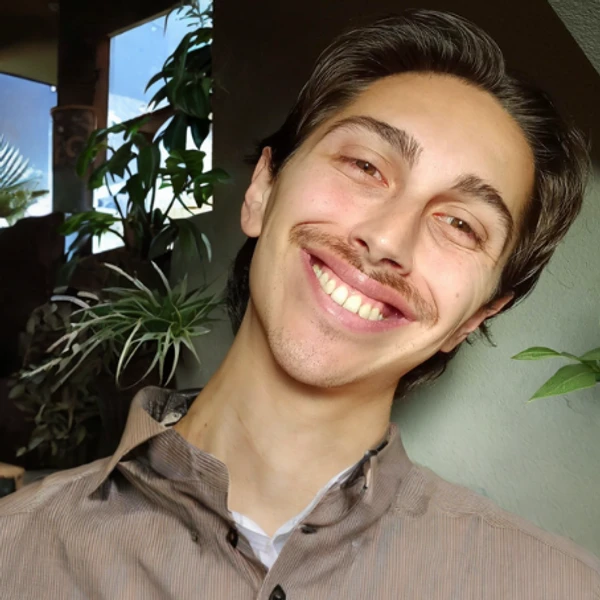
Hobbies and interests
Animals
Art
Art History
Culinary Arts
Painting and Studio Art
Spirituality
Cooking
Education
Fitness
Crafting
Meditation and Mindfulness
Gardening
Mental Health
Human Rights
Music
Pet Care
Hiking And Backpacking
Exploring Nature And Being Outside
Reading
Self-Help
Environment
Gardening
Philosophy
Spirituality
I read books multiple times per month
Alexander Bueno
1x
FinalistAlexander Bueno
1x
FinalistBio
Beginning my career in education in hopes to further my own. <3
Education
Dallas County Community College District
Associate's degree programMajors:
- Education, Other
GPA:
3.5
Dallas County Community College District
Associate's degree programMajors:
- Education, General
Arlington High School
High SchoolGPA:
3
Miscellaneous
Desired degree level:
Bachelor's degree program
Graduate schools of interest:
Transfer schools of interest:
Majors of interest:
- Education, General
- Education, Other
Career
Dream career field:
Education
Dream career goals:
MLP Teacher Aide
Uplift Education2024 – Present2 years
Sports
Soccer
Club2013 – 20152 years
Arts
me
Visual Arts2020 – 2025
Sabrina Carpenter Superfan Scholarship
Some people have a comfort movie, I have a comfort pop star, and her name is Sabrina Carpenter.The first time I really listened to her music, it felt like someone had taken the thoughts I couldn’t say out loud and set them to melody. As a gay man , I have spent a lot of my life negotiating who I could be in public and who I could be in private. I learned early how to be funny, charming, and quiet about the parts of me that might make others uncomfortable. Sabrina’s music reminded me that it is okay to be bold, to be messy, and to take up space without apology.
I first knew her as the Disney girl with the perfect smile and catchy songs, but it didn’t take long to see there was more beneath the surface. Album after album, she grew, shedding the safe version of herself and stepping into something authentic. Songs like “Sue Me” and “Because I Liked a Boy” felt like diary entries for anyone who has ever been judged for existing too loudly or loving too openly. Hearing her sing about owning your mistakes, your choices, and your voice struck a chord I didn’t realize needed striking. It told me that I didn’t have to hide or soften my truth so others could digest it.
What makes Sabrina truly inspiring is not just her talent but her fearlessness. She is playful, sarcastic, emotional, and unapologetically herself. Watching her evolve on stage and through social media has been like watching someone carve a path through walls that society often builds around women, around artists, and around people who don’t fit a narrow mold. That journey has mirrored mine in subtle ways; learning to be brave in situations where I might have once stayed silent, learning to speak my truth even when it might be misunderstood, learning to embrace the parts of myself I was taught to hide.
Her career has also been a lesson in resilience. Mistakes, criticism, and public scrutiny could have slowed her down, but she continued to create, to perform, and to share her story. That resilience has been contagious. I find myself taking more risks, expressing myself more honestly, and celebrating my identity with a little more confidence because I’ve watched her do the same. There’s an unspoken mentorship in that she may not know me personally, but her journey has given me permission to claim space in the world.
At the end of the day, being a fan of Sabrina Carpenter is more than enjoying her music. It is about connecting to a story of growth, courage, and authenticity that resonates with my own life. She reminds me that it is not only okay to be different, it is necessary to be different, to be seen, and to keep moving forward no matter what others think. Her career has shaped how I show up in the world, how I embrace my voice, and how I celebrate my identity. And in that way, she has become more than a pop star, she has become a quiet, powerful ally in the soundtrack of my life.
Wicked Fan Scholarship
Long before I ever knew what it meant to be different, I was already rooting for the one everyone else was afraid of. That is why Wicked feels less like a musical I enjoy and more like a story that has been quietly following me my whole life. The first movie I ever watched was The Wizard of Oz when I was five years old, sitting up late at night in my parents’ room with my mom while the house was still. I was completely enchanted by Oz, by the colors and the music and especially by the Wicked Witch. Instead of being scared of her, I was fascinated. My mom leaned into that fascination with love, buying me Oz Barbie dolls even when she knew they were not what most little boys were expected to want. My favorite was always the Wicked Witch. I would line them up and reenact the scenes with intense focus, melting dramatically to the floor when it was time for that famous moment. Those memories became family lore, and even now my mom still brings them up during the holidays, laughing as she tells my husband about her child who always wanted to be the witch.
When I discovered Wicked, it felt like someone had finally given that little green doll a voice. Elphaba was no longer just the villain from my childhood playacting. She was a girl who was different, misunderstood, and judged before anyone bothered to know her. That resonated deeply with me as a gay man who grew up learning that being different often meant being watched more closely and treated more harshly. Wicked does not ask us to admire perfection. It asks us to have compassion for someone who does not fit neatly into the world she is born into. Watching Elphaba fight to stay true to herself, even when it costs her her reputation and her safety, felt like a mirror to my own journey of becoming comfortable with who I am.
What makes Wicked extraordinary is that it reframes everything we thought we knew. It takes a story that once painted someone as evil and reveals the layers of pain, hope, and courage underneath. The friendship between Elphaba and Glinda adds another layer of truth. They love each other deeply, yet they make different choices about how to survive in a world that rewards conformity. That bittersweet reality feels so real because so many of us have had to make similar choices, balancing the desire to belong with the need to be honest. The music carries all of that emotion, lifting it into something that feels almost sacred. Every time I hear Defying Gravity, I think about how brave it is to decide you are worth more than the labels placed on you.
In the end, being a fan of Wicked is about honoring a lifelong connection to a story that has grown with me. It connects the child who sat on a bed in his parents’ room playing with Oz dolls to the man who now understands why he was drawn to the misunderstood witch. It reminds me of my mom’s quiet acceptance, of her laughter as she tells my husband those old stories, and of how love makes space for who we really are. Wicked taught me that being different is not something to hide, and that sometimes the people called wicked are simply the ones brave enough to be themselves.
Elijah's Helping Hand Scholarship Award
The first time I realized I might not survive my own thoughts, I was only a teenager, sitting alone in a quiet room and wondering if anyone would notice if I were gone. For much of my teenage years, I did not imagine a future that extended very far beyond the present moment. My mental health was fragile, shaped by depression, isolation, and the quiet weight of understanding that I was gay in a world that rarely made that feel safe. Every day felt like something I had to endure than experience, and hope was not something I carried easily. I moved through school and family gatherings feeling unseen, afraid that no one truly knew me, I would feel more alone. At my lowest point, suicide felt less like a dramatic idea and more like an escape, a way to silence the pain that never seemed to let up. I did not want to die as much, and at the time, I couldn't imagine another way forward.
During those years, I was constantly fighting a version of myself that I didn't know how to love. Being a gay teenager came with the feeling that so many of life’s milestones were closed to me before I ever had the chance to reach them. I believed I would never fall in love openly, never build a family, never get to be the grownup I saw others becoming. Those thoughts fed into my depression, turning inward until it became self-blame. I had episodes where getting out of bed felt impossible and moments where I questioned whether I deserved to be alive at all. Even now, I sometimes experience those episodes, where the familiar darkness returns, but I have learned that they do not define me. Back then, however, I was convinced they did. I was surviving, but barely, and every day felt like it required more strength than I had.
Everything began to change when my nephew was born. His arrival did not magically erase my struggles, but it gave me something I had not had before: a reason to stay. My sister and I began co-parenting him, and suddenly I was no longer just fighting for myself. I was showing up for him. He needed consistency, warmth, and safety. For the first time, I was experiencing a version of family that I never thought I would have. As a gay man, I had assumed that raising a child would always belong to someone else’s story, not mine. Yet there I was, helping with late-night feedings, scraped knees, and bedtime stories. In caring for my nephew, I learned how to care for myself. He reminded me that love is not limited by labels or expectations. Being part of his life made me realize that I was not unworthy. I was capable of giving and receiving love in ways that truly mattered.
Today, I'm still someone who lives with mental health challenges, and I am honest about that. I still have episodes when things feel heavy, but they no longer convince me that I should disappear. Instead, I have learned to reach for support, to pause, and to remember the life I have built. My nephew, my family, and my identity as a gay man are not sources of pain anymore; they are sources of strength. My story is not one of perfection, but of growth, resilience, and the quiet decision to keep going. I once believed I would never have a future worth staying for. Now I know that even in the darkest moments, life can still surprise us with reasons to hope.
Jim Maxwell Memorial Scholarship
Some of the hardest goodbyes I have ever experienced did not happen at an airport or a hospital. They happened in my classroom. I have watched young students quietly pack their backpacks for the last time, not because the school year ended, but because their families were being deported. Their empty desks stayed behind, heavy with silence and unanswered questions. Those moments left a lasting toll on my heart and forced me to confront a difficult truth. Teaching is not only about lesson plans and learning objectives. It is about staying present in the face of heartbreak. This opportunity is meaningful to me because it affirms my decision to remain committed to this calling, even when walking away felt easier.
There were seasons when the emotional weight of the classroom nearly broke me. Witnessing fear, instability, and loss at such a young age challenged my sense of purpose and tested my resilience. Doubt crept in, whispering that my efforts were too small to matter. During those moments, my Catholic faith became my refuge. Prayer grounded me when I felt overwhelmed, and the sacraments restored strength when I felt depleted. I often returned to the image of Christ welcoming children with gentleness and unwavering love. That example reminded me that presence itself can be transformative. Teaching young children demands patience, compassion, and humility, qualities my faith continues to shape and strengthen within me.
My identity and lived experiences deeply influence how I teach and how I show up for my students. Many of them see familiarity and trust in someone who understands their culture, their language, and their fears. When a child asks why a friend suddenly disappeared, faith guides my response with honesty and care. When exhaustion tempts me to quit, faith reminds me that perseverance is not passive, but powerful. Triumphs in the classroom often arrive quietly. A hesitant reader gaining confidence, a child finding the courage to speak, or a student learning they are worthy of stability and care. These moments reaffirm that God is at work in the ordinary and the unseen.
Looking ahead, faith will remain my compass as I continue dedicating my life to educating younger children. My goal is to create learning environments rooted in dignity, belonging, and hope. Faith informs my integrity, resilience, and commitment to justice, shaping the kind of educator and role model I strive to be. This opportunity represents growth, not only professionally, but spiritually. I believe I was placed in the classroom with intention, entrusted with the responsibility to serve, advocate, and remain steadfast. With faith guiding each step, I am determined to reach greater heights so I can continue lifting the children who depend on someone willing to stay.
Kim Moon Bae Underrepresented Students Scholarship
Before I ever had the language to describe who I was, I learned how to read silence. Silence in classrooms when I did not match expectations. Silence in conversations where attraction was assumed to be singular and gender fixed. That silence taught me early that my existence as a bisexual and biromantic man with a fluid gender expression placed me outside what was familiar and comfortable. Rather than shrinking me, that realization became the beginning of a deeper awareness of myself and the world I move through.
My identity has never followed a straight or narrow path. I experience attraction across genders, emotionally and romantically, and I express my gender in ways that shift with how I feel most honest in my body and spirit. This fluidity has often been misunderstood as uncertainty, but for me it is clarity. It reflects a willingness to listen inwardly rather than conform outwardly. Growing up, this meant navigating spaces that did not have room for someone like me. Masculinity was presented as rigid and emotionless, while queerness was often stereotyped or ignored entirely. Existing between these ideas forced me to build resilience and self trust at a young age. As a member of an underrepresented minority, I became acutely aware of how systems reward conformity. I noticed how leadership, success, and professionalism were often coded in ways that excluded people who did not look or live the same way. Instead of discouraging me, this awareness sharpened my sense of purpose. I began to understand that my presence alone could challenge assumptions. Each time I showed up authentically, I expanded what was possible for those who came after me, even in small and quiet ways.
My identity has also shaped how I connect with others. Being bisexual and biromantic has taught me to approach relationships without rigid expectations, allowing people to define themselves on their own terms. My fluid gender expression has deepened my empathy, as I understand how vulnerable it can feel to be seen incorrectly or not at all. These experiences have strengthened my ability to listen, to lead with compassion, and to create spaces where people feel safe expressing complexity. I do not see difference as an obstacle, but as a source of insight. Looking toward the future, I carry these lessons with intention. My path forward is guided by the belief that authenticity is not a liability, but a strength. I aim to enter spaces where voices like mine are still rare and help shift the culture through visibility, dialogue, and action. Whether through my career or community involvement, I want to advocate for environments that honor nuance and challenge rigid norms. My identity equips me to adapt, to question, and to imagine solutions that include rather than exclude.
Being part of an underrepresented minority has shaped my ambitions and values. It has taught me courage, patience, and the importance of integrity. I move forward knowing that my story matters, not because it is exceptional, but because it reflects a reality that too often goes unseen. By embracing who I am fully, I am not only shaping my own path, but helping widen the path for others who are still learning how to speak through silence.
Raise Me Up to DO GOOD Scholarship
Family dinners at my house never sounded the same twice. Some nights there were pierogi on the table, other nights arroz con frijoles, and often a mix that didn’t quite belong to any tradition but somehow belonged to us. Growing up in a blended family shaped me before I ever had words for it. Being Polish American and Mexican American, raised by parents who carried different histories, rhythms, and expectations has taught me early how to live between worlds. My dad, who is Latino, passed down pride and resilience, even when cultural practices weren’t always fully present in our daily lives. That distance from language and tradition sometimes felt like a gap I didn’t know how to cross, but it also made me observant. I learned to read rooms, emotions, and unspoken rules. In a household where love was constant but culture felt fragmented, I became someone who listens closely, adapts quickly, and looks for belonging not in perfection, but in connection. Those early experiences quietly shaped the person I am becoming.
As I grew older, I began to understand that being “connected but disconnected” to culture is its own identity. I don’t speak Spanish fluently, and I didn’t grow up immersed in Polish customs, yet both live in me through values; family loyalty, hard work, humor in tough moments, and deep respect for others. This realization became a turning point. Instead of seeing what I lacked, I started seeing what I carried. That shift naturally led me toward early childhood education, a field rooted in empathy, patience, and understanding diverse backgrounds. In many ways, my childhood prepared me for this path. I know what it feels like to navigate spaces where you’re still figuring out where you fit, and that awareness helps me show up fully for children who may feel the same. Moving from reflection to purpose, I now see my blended upbringing not as confusion, but as training, preparing me to create environments where differences are honored and every child feels seen.
Looking ahead, I don’t have every detail of my future mapped out, but I am certain about the kind of impact I want to make. I imagine a life where my talents, communication, creativity, and compassion are used to uplift others, especially young people and families. Whether I remain in a classroom, move into advocacy, or support communities in new ways, my goal is to be a steady presence in moments that matter. I want to help children build confidence in who they are, even when their identities feel complex or unfinished. Ultimately, my future is about giving what I once searched for: reassurance, understanding, and a sense of belonging. The blended household that shaped me didn’t give me all the answers, but it gave me the heart to ask better questions and the drive to use my story to do good in the lives of others.
Dream BIG, Rise HIGHER Scholarship
Some nights, my textbooks were spread across the kitchen table beside immigration documents, wedding planning notes, and a laptop still open from a full day of work. The hours were long, the responsibilities heavy, and the exhaustion constant. Yet in those moments, education was not something separate from my life, it was the thread holding everything together. It gave me direction when everything else felt uncertain and reminded me why I continued to push forward.
Education has shaped my goals by helping me understand the kind of impact I want to make in the world. As an early childhood educator specializing in English as a Second Language, my studies revealed the profound role education plays in shaping identity, confidence, and opportunity. Learning about child development, language acquisition, and culturally responsive teaching helped me see that education is not only about academic success, but also about safety, belonging, and advocacy—especially for immigrant children. My coursework transformed the way I view my role as an educator. I learned that language is deeply tied to power and access, and that the early years are critical in shaping how children see themselves and their place in the world. This knowledge gave me clarity and purpose. I knew I wanted to work with immigrant and multilingual children, creating learning environments where they feel supported rather than marginalized. Education did not simply point me toward a career, it gave me a mission.
Reaching this point, however, required overcoming significant challenges. I balanced full-time work while attending school full-time, often studying late at night or early in the morning to meet deadlines. At the same time, I was planning my wedding and supporting my now-husband through the immigration process. Managing these responsibilities required constant coordination, emotional strength, and financial discipline. There were days when it felt as though every part of my life demanded my full attention at once. Supporting my husband through his immigration journey was especially challenging. The process involved extensive paperwork, legal uncertainty, and long periods of waiting. It carried emotional weight and fear of delays, fear of separation, and fear of the unknown. While navigating this process, I was also expected to show up fully at work and in school. There were moments of exhaustion and self-doubt when I questioned whether I could continue at the pace I had set.
Despite these challenges, education became my anchor. Each course reminded me why I was persevering and reinforced my belief in the power of learning to create stability and opportunity. Experiencing the immigration system firsthand deepened my empathy for the families I work with. I began to understand more clearly the stress immigrant parents carry and the courage it takes to navigate unfamiliar systems in a new language. This personal experience strengthened my commitment to creating classrooms that feel safe, predictable, and welcoming. Through these challenges, I developed resilience and discipline. I learned how to manage my time intentionally, advocate for myself, and remain focused on long-term goals despite short-term stress. Education taught me how to balance ambition with patience and determination with compassion. It also taught me the importance of asking for help and building supportive networks, lessons that continue to shape both my personal and professional life.
As I progressed in my studies, my sense of direction became clearer. I want to use my education to expand my impact beyond the classroom by advocating for inclusive, trauma-informed early childhood education. I hope to mentor other educators working with ESL learners and immigrant families, sharing strategies that promote equity, cultural respect, and language access. I also aspire to be involved in community initiatives that support families navigating educational systems for the first time. For the children I serve, education represents possibility. For families, it represents hope and stability. For me, it represents growth, purpose, and responsibility. I aim to use my education to create learning environments where children feel confident enough to speak, safe enough to take risks, and valued enough to believe they belong. These early experiences shape how children engage with education for the rest of their lives.
Education has also allowed me to envision a more stable and meaningful future for myself. Through perseverance and commitment, I have learned that progress is not always linear, but it is always possible. My journey has shown me that challenges do not diminish potential, they strengthen it. Balancing work, school, and personal responsibilities pushed me beyond what I believed I was capable of achieving. Looking ahead, I see my education as both a foundation and a responsibility. It is the foundation that supports my career goals and the responsibility I carry to use my knowledge in service of others. By continuing my education, I am investing not only in my own future, but in the futures of the children and families who depend on compassionate, informed educators.
Education has given my life direction during times of uncertainty and strength during moments of doubt. What once felt overwhelming has become a source of clarity and purpose. Through persistence, empathy, and commitment, I hope to use my education to build a more inclusive and supportive future, one classroom, one family, and one opportunity at a time.
FIAH Scholarship
The first time a child trusted me enough to speak in a new language, I understood the weight of my work. It was not a perfect sentence, and it did not need to be. What mattered was the courage behind it. As an early childhood educator specializing in English as a Second Language for immigrant children, I witness moments like this every day, small victories that carry lifelong meaning.
I work with young children during their most formative years, when language, identity, and confidence are taking root. For immigrant families, especially during today’s political climate, schools can feel intimidating or unsafe. My classroom is intentionally different. It is a space where children are protected, respected, and encouraged to be exactly who they are while learning how to navigate a new language and culture. Language is more than communication; it is access and belonging. I teach English through play, stories, music, and movement, allowing children to learn naturally and without fear. Just as importantly, I honor their home languages and cultures. Bilingualism is not something to overcome, it is something to celebrate. When children feel proud of where they come from, they gain the confidence to grow.
My work extends beyond the classroom. I build strong relationships with families who may be unfamiliar with the education system or hesitant to engage due to fear or language barriers. By offering translated resources, maintaining open communication, and celebrating cultural traditions, I help families feel seen and supported. This trust strengthens the child’s learning and reinforces the message that they belong in this community. In these political times, immigrant children often carry stress that adults underestimate. Even at a young age, they sense fear, uncertainty, and difference. While I cannot change national policies, I can control the environment my students experience each day. I choose consistency, warmth, and advocacy. I choose to listen. I choose to protect their right to learn without fear.
Through my career, I plan to continue advocating for equitable, inclusive early childhood education. I hope to mentor fellow educators, share effective ESL strategies, and contribute to programs that prioritize language access and trauma-informed care. I also aim to be active in my community, speaking up for early education as a foundation for long-term social change. My goal is simple: to help children feel safe, capable, and valued. When a child finds their voice, makes a friend, or realizes they are worthy of belonging, the impact reaches far beyond the classroom. By nurturing empathy, resilience, and confidence in young learners, I believe I am helping shape a more compassionate and just world—one child at a time.
Bulkthreads.com's "Let's Aim Higher" Scholarship
Most people think building a future means chasing a title, a paycheck, or a five-year plan. For me, it starts much closer to home. The most important thing I am trying to build is a strong, lasting relationship with my husband. As a man married to another man, investing deeply in our relationship is not just personal, it is intentional and, in today’s political climate, quietly radical.
To build this relationship, I focus on purpose rather than assumption. Love brought us together, but it is daily commitment that keeps us grounded. This means choosing honest conversations over silence, especially when being honest feels uncomfortable. It means learning how to navigate conflict without seeing it as failure and understanding that growth will sometimes be messy. In a culture that often teaches men to suppress emotion, building a marriage rooted in openness and vulnerability feels like an act of resistance. By intentionally practicing communication and patience, we are laying a foundation of trust that can endure challenges.
Resilience is another essential layer of what I hope to build. Living under the current U.S. administration has made our relationship feel more visible and vulnerable at the same time. Political rhetoric and policies that question the legitimacy of queer lives add a layer of stress that follows us into everyday moments. That reality makes emotional support not just important, but necessary. I want our marriage to be a place of stability and reassurance within that uncertainty. By choosing each other consistently and affirming our worth, we are creating a bond that can withstand external pressures.
This focus on resilience also shapes how I imagine my broader future. Building a life with my husband gives me a sense of grounding that allows me to take risks and pursue goals with confidence. It reminds me that success is not measured solely by individual achievements but by the strength of the connections we nurture along the way. Our partnership strengthens everything else in my life because it is built on mutual respect, care, and shared growth.
Finally, what we are building extends beyond the two of us. A healthy, loving marriage between two men challenges assumptions simply by existing. It offers visibility to younger LGBTQ+ people who may not yet believe that long-term love is possible for them. By modeling commitment, care, and resilience, we contribute to a community where love is visible, normalized, and celebrated. By building a strong relationship with my husband, I am building a future rooted in love, courage, and intention. In a time when those values feel increasingly fragile, choosing to build them feels like the most powerful investment I can make, for myself, for him, and for the community that surrounds us.
RonranGlee Literary Scholarship
Aristotle’s underlying claim in this passage is that moral understanding has value only insofar as it actively reshapes behavior and that virtue is not an intellectual possession but a character formed through disciplined and repeated action.
Aristotle begins by rejecting the idea that ethical inquiry functions like other branches of knowledge. This rejection is deliberate and foundational. By stating that the inquiry does not aim at theoretical knowledge he denies that virtue can be mastered through contemplation alone. The underlying meaning is that ethics is inseparable from practice. Aristotle is not diminishing the role of reason but redefining its purpose. Reason exists to guide action not to replace it. Knowing what virtue is without becoming virtuous is for Aristotle a failure of ethics rather than an incomplete success.
The phrase in order to become good establishes the standard by which ethical inquiry should be judged. Aristotle is asserting that moral philosophy must be measured by its effect on character. This shifts the focus away from abstract definitions and toward lived transformation. Virtue is not a static concept that can be fully captured in language. It is a condition of the soul that develops over time. Aristotle’s insistence on becoming rather than knowing suggests that moral identity is dynamic. A person is always in the process of formation and this process depends on what they repeatedly choose to do.
Aristotle’s emphasis on actions reveals his belief that character is shaped from the outside inward. He argues that actions determine states of character rather than the reverse. This challenges the common assumption that people act well because they already possess virtue. Aristotle contends that virtue emerges through disciplined behavior long before it becomes a stable disposition. The implication is that moral growth requires structure consistency and self regulation. Good intentions alone do not generate virtue. Only action sustained over time does.
The focus on how we ought to do actions further clarifies Aristotle’s position. He is not concerned with isolated moral gestures but with the manner and context in which actions are performed. This reflects his broader commitment to balance and judgment. Virtue is not rule following but skillful engagement with circumstances. By emphasizing how actions are done Aristotle underscores that moral excellence requires attention deliberation and adaptability. Ethical behavior is neither mechanical nor accidental. It is learned through practice and refined through experience.
Aristotle’s claim that actions produce states of character carries an implicit warning. If repeated actions form character then careless or unjust actions do not remain isolated. They accumulate. They shape the person performing them. This gives ethical decisions lasting weight. Each choice contributes to the kind of person one becomes. Aristotle is arguing that character is not revealed in rare moments of crisis but constructed in ordinary decisions. This makes moral responsibility continuous rather than occasional.
Underlying this passage is a demanding view of moral education. Aristotle implies that studying ethics without aligning one’s actions to its insights is pointless. Philosophy that remains detached from behavior fails its purpose. This challenges students and thinkers who engage with ethical ideas for intellectual satisfaction alone. Aristotle’s position is persuasive because it aligns moral development with human psychology. Habits shape desire and desire shapes judgment. To change how one thinks one must first change how one acts.
Ultimately Aristotle’s meaning is that virtue is not something one possesses by definition or belief. It is something one earns through consistent and intentional practice. Ethical inquiry matters only when it guides action and action matters because it forms character. Aristotle’s argument leaves no room for passive morality. To understand virtue is to commit to becoming virtuous and that commitment must be expressed in how one lives rather than in what one claims to know.
Learner Mental Health Empowerment for Health Students Scholarship
Mental health is important to me as a student because it shapes how I experience everything else in my life. In my early twenties, I’m expected to have direction, motivation, and resilience all the time, but the truth is that being a student right now is mentally exhausting. Between academic pressure, financial stress, and uncertainty about the future, it’s easy to feel overwhelmed. When my mental health suffers, my ability to learn, connect with others, and show up as my best self suffers too. Taking care of my mental health allows me to stay grounded, focused, and emotionally present, both in and outside the classroom.
My mental health is also deeply tied to my identity. As a gay man in a committed relationship, I’ve experienced both the comfort of love and the stress that comes with navigating a world that isn’t always accepting. While my relationship is a source of strength and stability, it also makes me more aware of how vulnerable LGBTQ+ people can feel. There are moments when I second-guess how open I should be, where I hold back parts of myself out of fear of judgment or discrimination. That kind of constant self-monitoring can be draining, and it reinforces how important it is to prioritize mental well-being.
Living under the current U.S. administration has intensified these feelings. Political rhetoric and policy decisions often feel personal, especially when they involve LGBTQ+ rights or the safety and recognition of queer relationships. As a student, it’s hard to focus solely on school when the broader political climate creates anxiety about the future; about whether my relationship will continue to be protected or whether my identity will be respected. This ongoing stress affects my mental health and has made me more aware of how deeply politics and mental well-being are connected.
Because of these experiences, I try to advocate for mental health in my community in small but meaningful ways. Within my school environment, I make an effort to check in on friends and classmates, especially during high stress periods like midterms and finals. I talk openly about anxiety, burnout, and therapy to help normalize these conversations. I also encourage people to use campus mental health resources and remind them that needing support doesn’t mean they’re failing, it means they’re human.
At home and within my personal circles, I try to create a space where honesty is valued. I listen without judgment, share my own struggles, and remind people, especially other young men, that vulnerability is not a weakness. Too often, men are taught to internalize stress and “power through,” which only worsens mental health over time.
Ultimately, advocating for mental health is about building a culture of care. By being open about my experiences as a student, a gay man, and someone living in a politically charged environment, I hope to encourage others to prioritize their mental well-being. When mental health is taken seriously, students are better equipped not just to succeed academically, but to live fuller, healthier lives.
Jimmy Cardenas Community Leader Scholarship
The moment I realized quitting was an option was the moment I knew I could not take it. Sitting at my desk late one night, staring at an unfinished assignment and a growing list of responsibilities, I felt the weight of doubt settle in. It would have been easy to step back, tell myself the timing was wrong, and walk away. Instead, I made a quieter decision to stay, struggle, and figure it out.
The obstacle was not a single event but a buildup of pressure. As an Early Childhood Education student, I struggled with academic confidence, especially in writing and classroom communication. I constantly questioned whether I belonged in a field that requires clarity, patience, and constant interaction. Each assignment felt like a test of my ability rather than my growth, and that mindset made progress feel exhausting. Rather than giving in to self doubt, I chose to change how I approached the challenge. I began seeking feedback instead of avoiding it. I met with professors, rewrote assignments multiple times, and spent extra hours practicing lesson plans until they made sense to me. Progress was slow, but it was real. Each small improvement became proof that persistence mattered more than perfection.
As I worked through my own challenges, I noticed others around me struggling in similar ways. Classmates quietly expressed frustration, fear of falling behind, and uncertainty about their abilities. Instead of focusing inward, I stepped up. I organized informal study sessions where we shared notes, talked through concepts, and supported one another. I encouraged open conversation, reminding everyone that struggling did not mean failing. That experience taught me that leadership does not require a title or authority. It starts with initiative and empathy. By showing up consistently and staying committed despite difficulty, I modeled resilience for others. Our group improved together, not just academically, but in confidence. We became a team rather than isolated individuals trying to survive the semester.
Overcoming this obstacle changed how I define success. I learned that strength is not the absence of struggle, but the decision to continue when quitting feels reasonable. I became more patient with myself and more aware of how powerful encouragement can be, especially in moments of uncertainty. Today, I carry these lessons into every aspect of my life. When challenges arise, I respond with problem-solving instead of avoidance. When others struggle, I listen before leading. This experience prepared me for a future in education, where obstacles are inevitable and leadership is built through consistency, compassion, and persistence.
Choosing not to quit that night was a small decision with a lasting impact. It taught me that leadership begins internally, grows through action, and is strengthened by the willingness to stand firm when walking away feels easier. That lesson continues to shape who I am and how I lead.
Marie Humphries Memorial Scholarship
I did not always know I wanted to be a teacher, but I always knew I wanted to be someone who helped others find their voice. Growing up as a mixed Latino in a multicultural environment, I often found myself navigating between cultures, languages, and expectations. At times, that felt confusing, but it also taught me empathy, adaptability, and the importance of being seen and understood, especially at a young age.
Art became my earliest form of self-expression. Through painting and writing, I learned how to communicate thoughts and emotions that I struggled to say out loud. Creativity gave me confidence and helped me understand that learning does not have to fit into a single mold. These experiences planted the foundation for my interest in teaching, even before I realized it.
One teacher in particular changed my life and solidified my desire to pursue education. In elementary school, I struggled with language and confidence. I was quiet, hesitant to speak, and often afraid of being wrong. My English teacher noticed this and took the time to understand me rather than label me. Instead of focusing on what I lacked, she encouraged me to write freely and express myself without fear of judgment. She praised my creativity and reminded me that my voice mattered.
That teacher created a classroom where students felt safe to be themselves. She used stories, art, and open discussions to make learning engaging and meaningful. For the first time, I felt confident participating in class. Her belief in me helped me believe in myself, and that experience showed me how powerful a supportive teacher can be in shaping a child’s confidence and future.
I am currently pursuing an Associate’s degree in Early Childhood Education for grades Pre-K through six because I want to be that same source of encouragement for young learners. Early childhood education is especially meaningful to me because these years shape how children view themselves and their abilities. I am particularly interested in language development and creative expression, and I believe that learning should inspire curiosity rather than fear.
My multicultural background allows me to connect with students from diverse experiences and understand the importance of inclusion in the classroom. I want to create a learning environment where children feel valued, respected, and encouraged to explore who they are. Representation matters, and I hope to be a teacher who makes every student feel seen.
My long-term goal is to become an English teacher for young learners. Language has the power to open doors, tell stories, and connect people across cultures. If that path changes, I would also love to become an art teacher, allowing students to express themselves in original and intelligent ways. In either role, my purpose remains the same: to nurture confidence, creativity, and a love for learning.
Teaching, to me, is more than a career; it is a responsibility and a privilege. I want to be the teacher who notices the quiet student, encourages creativity, and reminds children that their voices matter. Just as one teacher changed my life, I hope to positively shape the lives of many others through patience, creativity, and compassion.
Beatrice Diaz Memorial Scholarship
Before I ever stood in front of a classroom, I learned the power of expression through culture, color, and words. Growing up as a mixed Latino in a multicultural environment meant constantly navigating different traditions, perspectives, and identities. It taught me early on that everyone has a story worth telling and a voice. Those lessons shaped not only who I am, but who I aspire to become as an early childhood educator.
Art became my first true form of communication. Painting and writing gave me a way to express thoughts and emotions that felt too complex to say out loud. Through creativity, I learned confidence, patience, and self-awareness. More importantly, I discovered that expression is not just personal, it is a bridge that connects people. This belief continues to guide my passion for education and my desire to work with young children.
I am currently pursuing an Associate’s degree in Early Childhood Education for grades Pre-K through six grade. I chose this program because early childhood is a foundational stage of development, where curiosity, self-esteem, and learning habits are formed. I am particularly drawn to how children develop language skills and creative thinking during these years. I believe that when education is engaging and expressive, children feel empowered rather than pressured.
Coming from a multicultural background allows me to relate to students from diverse households and experiences. I understand what it feels like to exist between worlds, and I recognize how important representation and inclusion are in a classroom setting. I want my classroom to be a safe and welcoming space where children feel respected, understood, and encouraged to be themselves.
My long-term goal is to become an English teacher for young learners. Language has always fascinated me because it shapes how we communicate, connect, and understand the world around us. Teaching English to young students would allow me to help them develop strong communication skills and confidence in their voices. If that path is not available, I would be equally fulfilled becoming an art teacher, using creativity as a foundation for learning and emotional expression.
In either role, my mission remains the same: to encourage children to express themselves in original and intelligent ways. I believe education should nurture imagination, critical thinking, and individuality rather than limit them. Creativity allows children to explore ideas freely and build confidence in who they are and who they can become.
Choosing a career in education is deeply personal for me. I want to provide the encouragement and creative freedom that helped shape my own identity. My goal is to be the kind of educator students remember not just for lessons taught, but for how they were made to feel. I hope to inspire curiosity, confidence, and joy in learning while honoring culture, creativity, and individuality. Education gives me the opportunity to turn passion into purpose, and I am committed to growing into an educator who makes a lasting, meaningful impact.
Ross Mitchell Memorial Scholarship
Some people chase success, others chase money—but I’ve always chased understanding. My love of learning isn’t just about school; it’s a mindset that influences how I live, how I work, and how I grow. Learning is what drives me to ask better questions, explore new ideas, and improve not only myself but the world around me. It’s a passion that’s shaped my personal growth, challenged my outlook, and now inspires the career I’m working toward.
College has deepened this passion. Each course pushes me to think critically, to communicate more effectively, and to understand perspectives beyond my own. I don’t just want to pass tests—I want to truly grasp the ideas, the “why” behind the facts. Whether through discussions, writing, or solving real-world problems, learning helps me build skills I’ll carry for life: curiosity, patience, and resilience.
But much of my growth has happened outside the classroom. As a teacher aide, I’ve gained hands-on experience in what it means to guide and support others. Every day, I work closely with students—some confident, some struggling, all trying to find their place. Being part of their journey has taught me that learning isn’t one-size-fits-all. It’s about meeting people where they are and helping them believe in what they’re capable of. That experience has deepened my understanding of the kind of teacher I want to become—one who listens, adapts, and uplifts.
It’s also helped me reframe challenges. When something goes wrong—a rough test, a stressful week, a mistake at work, I try to look at it as a lesson. What did I learn? How can I improve? This mindset has taught me to be more reflective and less reactive. It’s helped me grow not just as a student, but as a person who’s determined to keep moving forward.
Looking ahead, I see this passion guiding my future in the classroom. I want to create an environment where students feel safe to ask questions, make mistakes, and stay curious. I want them to see learning the way I do; not just as a path to a diploma, but as a lifelong tool for growth, freedom, and change. My goal is to become an educator who doesn’t just teach content, but one who helps shape confident, thoughtful individuals.
Ultimately, my love of learning has shaped every part of who I am. It’s made me more open-minded, more determined, and more hopeful. No matter where life leads me, I’ll carry this mindset with me, because when you stay curious, you never stop growing. And that’s the kind of life I want to live—and the kind of example I want to set for others.
Jeanne Kramme Fouke Scholarship for Future Teachers
Teaching is more than a career choice for me; it is a calling inspired by my experiences and the people I’ve had the privilege to work with. As a full-time college student and a teacher aide, I have seen firsthand the powerful impact that dedicated educators have on their students’ lives. This has fueled my desire to become a teacher, so I can help shape the future by supporting and inspiring young minds.
Working as a teacher aide has been a rewarding experience. I have witnessed that education is not only about academics but also about building relationships, encouraging growth, and creating opportunities. Helping students overcome challenges and celebrating their achievements has shown me the importance of patience, empathy, and creativity, qualities I am committed to developing as a future educator. I want to be the kind of teacher who not only shares knowledge but also fosters confidence and a love of learning in every student.
Balancing full-time college coursework with my responsibilities as a teacher aide has taught me resilience and time management, skills I know will help me support my future students in facing their own challenges. Many young people deal with difficulties both inside and outside the classroom, and I believe teachers can make a difference by providing guidance and understanding. I want to create a classroom environment where every student feels valued, safe, and empowered to succeed.
Growing up as the middle child and oldest son taught me the importance of responsibility, leadership, and perseverance. These experiences have fueled my passion for teaching, as I want to help students develop the skills and confidence they need to succeed despite life’s challenges. I believe every student deserves encouragement and support to reach their full potential, especially those who face obstacles similar to those I’ve encountered. Teaching gives me the opportunity to make a meaningful impact, guiding young people not only academically but also in building resilience and self-belief that will serve them throughout their lives.
Ultimately, teaching offers me a way to make a lasting positive impact on individuals and communities. Education has the power to transform lives, and I am committed to being part of that change. I want to inspire my students to believe in themselves, pursue their dreams, and contribute meaningfully to the world around them. Pursuing a career in teaching aligns with my values and aspirations. It combines my love of learning with my dedication to helping others. I look forward to growing personally and professionally so I can become an effective, compassionate educator. One who makes a difference one student at a time.
LGBTQ+ Wellness in Action Scholarship
Mental and physical wellness are the foundations of a balanced and fulfilling life. For me, maintaining good mental and physical health is essential because it allows me to perform at my best, both academically and personally, while also being true to myself. As a gay student navigating college full-time and working as a teacher aide, the importance of wellness is magnified by the challenges I face daily. These challenges test my resilience but also reinforce my commitment to self-care and balance.
Being a student in today’s economy brings unique pressures. Juggling full-time college coursework with the responsibilities of a teacher aide means my days are packed with demanding tasks that can quickly drain both my mind and body. My role as a teacher aide is deeply rewarding, yet it requires constant energy and emotional engagement. Supporting students, managing classroom dynamics, and assisting teachers requires me to stay alert, patient, and compassionate throughout the school day. Then, after work, I dive into studying, completing assignments, and preparing for exams. This cycle often leaves little time for rest or self-care, making it difficult to sustain my mental and physical health.
My identity as a gay man adds another layer to this balancing act. Navigating college and work environments while being true to who I am sometimes brings additional stress, whether from subtle biases, moments of isolation, or the internal pressure to prove myself. I strive to cultivate mental wellness by embracing my identity fully and seeking out supportive communities that affirm me. However, this process isn’t always easy, especially when stress piles up from other areas of my life. It reminds me how critical it is to prioritize my well-being so I can be authentic and resilient in all parts of my life.
One of the biggest challenges I face is time management. Between long hours at school and college, finding time to exercise, prepare healthy meals, and get adequate sleep feels like a constant struggle. Physical wellness is crucial because when I neglect it, I notice a direct impact on my mood, focus, and energy levels. Exercise helps clear my mind and release tension, while proper nutrition fuels my body to meet daily demands. Another challenge comes from balancing the financial realities of supporting myself through college and work. Economic pressures often force tough choices, like working extra hours or cutting back on self-care activities to save money. This constant negotiation between financial survival and wellness sometimes feels overwhelming. Yet, I remind myself that investing in my mental and physical health is not a luxury but a necessity for long-term success and happiness.
Despite these challenges, maintaining wellness remains my priority because it empowers me to excel in my studies and work, live authentically as a gay man, and build a foundation for a meaningful future. I am motivated to develop habits that support my well-being, such as setting boundaries around work and study time, prioritizing rest, and engaging in activities that bring me joy and relaxation. These practices not only improve my daily life but also model resilience and self-care to the students I assist, showing them the importance of looking after their own wellness.
In conclusion, my mental and physical wellness is vital to sustaining the energy, focus, and emotional strength needed to thrive as a full-time college student and teacher aide in today’s economy. The challenges I face includes managing time, finances, and navigating my identity as a gay man. I am better equipped to meet my goals, support others, and live an authentic, fulfilling life.
Iliana Arie Scholarship
Being the middle child in a family of siblings often meant finding my own space between the oldest and youngest. As the oldest son, I carried a unique blend of roles: protector, role model, and sometimes mediator. I learned to navigate the balance between supporting my younger siblings and respecting the example set by my older siblings. This position taught me about leadership—not through authority but through understanding, patience, and leading by example. In our household, where my mother juggled multiple jobs to provide for us, I saw the real cost of sacrifice. This inspired me to step up in ways both big and small, from helping with chores to offering emotional support, all while managing my own academic and personal challenges. My mother’s journey as a single parent was filled with hurdles, from financial struggles to societal judgments. Yet, she faced every obstacle with grace and determination, teaching me that adversity is not a barrier but a catalyst for growth. Witnessing her strength instilled in me a deep respect for hard work and resilience. It also sparked a passion in me to contribute positively to the lives of others, especially those who face similar hardships. I understand firsthand the importance of community, support systems, and access to resources that empower individuals to overcome challenges.
Education became my refuge and my platform for change. I’ve always believed that knowledge is a powerful tool to break cycles of poverty and limitation. With this mindset, I have dedicated myself to academic excellence and community involvement. I actively seek opportunities to mentor younger students and participate in outreach programs, aiming to inspire others who might be navigating difficulties similar to mine. My experience growing up has taught me that representation and encouragement can transform lives, and I want to be a source of that transformation for others.
Looking forward, I plan to use my education and experiences to create meaningful impact in the world. My goal is to work in a field that directly addresses social inequities, whether through education, social work, public policy, or nonprofit leadership. I want to develop programs that provide support, mentorship, and opportunities for children and families from single-parent households or under-resourced communities. By doing so, I hope to help break the cycles of hardship and open doors for those who might otherwise be left behind.
Moreover, I believe that leadership rooted in empathy and inclusivity is essential for lasting change. Coming from my background, I understand that people’s stories shape their actions and that true progress requires listening and collaboration. I aspire to be a leader who not only drives initiatives but also lifts others up, creating spaces where every voice is valued.
In conclusion, coming from a single-mother household as the middle child and oldest son has profoundly influenced my character, values, and vision. It has taught me the importance of responsibility, resilience, and compassion. Fueled by these lessons and inspired by my mother’s example, I am committed to making a positive difference in the world, one that empowers others, challenges injustice, and fosters hope. My journey so far is only the beginning, and I am determined to use my voice, education, and experiences to help create a brighter future for many.