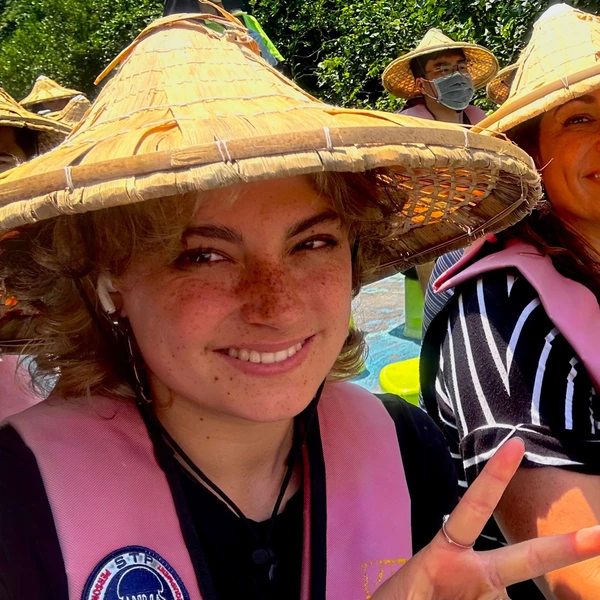
user profile avatar

Alex Drobny

1x

Finalist

General information

Hobbies & Interests

  • Piano
  • Karate
  • Martial Arts
  • Volunteering
  • Anatomy
  • Biology
  • Biomedical Sciences
  • Biochemistry
  • Bodybuilding
  • Community Service And Volunteering
  • Ecology
  • Environmental Science and Sustainability
  • Exercise And Fitness
  • Exercise Science
  • Fitness
  • Health Sciences
  • Hospitality
  • Mental Health
  • Marine Biology
  • Music
  • Music Theory
  • Nutrition and Health
  • Nursing
  • Public Health
  • Running
  • Weightlifting
  • Photography and Photo Editing

Reading

  • Academic
  • Classics
  • Environment
  • Epic
  • Health
  • History
  • Leadership
  • Self-Help
  • Music
  • Science‎
  • Social Issues
  • True Story

I read books daily.

Bio

Hi, I'm Alex! I am a half-Puerto Rican homeschooler with a deep passion for biology, anatomy, and medicine, working toward my ultimate goal of earning a PhD in Behavioral Sciences and Health Education. Driven by a love for learning and helping others, I maintain a 4.0 GPA as a Dual Enrollment student while balancing full-time work at my family's business. Beyond my studies, I am deeply committed to giving back. I serve as a music ambassador and piano teacher at a local mental health organization, and I also instruct Karate at my dojo. In my free time, you can almost always find me at the piano or exercising (either weightlifting or running). Ultimately, I believe my greatest strength is my passion for teaching and sharing knowledge with the community around me!

Education

Georgia Gwinnett College

Associate's degree program

2025 – 2027

Majors:
  • Registered Nursing, Nursing Administration, Nursing Research and Clinical Nursing
GPA4.0 GPA

Homeschooled

High School

2014 – 2027

GPA4.0 GPA

Miscellaneous

Desired degree level:
Doctoral degree program (PhD, MD, JD, etc.)
Graduate schools of interest:
University of Georgia, Emory University
Majors of interest:
Biological and Physical Sciences, Human Biology, Biological and Biomedical Sciences, Other, Biology, General, Microbiological Sciences and Immunology, Ecology, Evolution, Systematics, and Population Biology, Medicine, Medical Clinical Sciences/Graduate Medical Studies, Marine Sciences, Nutrition Sciences, Foods, Nutrition, and Related Services
Desired degree modality:
Full-Time, In-Person
Medical school interest:
Yes
English as first language:
Yes
Homeschooled:
Yes

Career

  • Music Ambassador / Private Piano Teacher

    Music Therapy · Semillas Seeds Wellness Foundation

    Dec 2025 – Present

  • Sales Associate

    Theatre & Drama · AMC Theaters

    Mar 2024 – Mar 2026

  • Group Karate Instructor

    Athletic Training · All Star Karate

    Feb 2026 – Present

  • Office Administrator / Receptionist

    Law Practice · ABC Estate & Legacy Planning

    Jan 2021 – Present

Miscellaneous

Dream career field:
Medicine, Biology, Marine Biology, Nutrition & Dietetics
Dream career goals:
As an aspiring Biomedical Research Scientist, my goal is to dedicate my career to advancing women’s medical health research. By studying the specific molecular and cellular mechanisms of female-prevalent conditions—for example PMDD and PME—I hope to develop more effective, personalized treatments for women worldwide.
Work experience:
4 years
Has nursing license:
No
Leadership experience:
Yes

Future Interests

  • Advocacy
  • Volunteering
Kayla Nicole Monk Memorial Scholarship
For many years, the medical community often left out women from clinical trials, treating our complicated hormonal changes as simple "confounding variables" that they considered too difficult to study. This lack of attention from the system has resulted in huge gaps in healthcare and is the reason why the average time it takes to get a diagnosis is twelve years. Conditions like Premenstrual Dysphoric Disorder (PMDD) and Premenstrual Exacerbation (PME) are not rare, yet they remain largely absent from standard clinical training. These disorders occupy the margins of medicine because the system has chosen to shy away from female pain. I refuse to accept this suffering as inevitable. I first faced this medical gap not in a textbook, but in my own life. I watched as my premenstrual phases turned my baseline clinical depression and ADHD into a debilitating tidal wave, one that managed to make a background noise transform into a crushing, hopeless weight sitting atop my shoulders. It was terrifying. Unfortunately, the isolation I experienced due to this was significantly worse than the physical and cognitive struggles. Spending years running into brick wall after brick wall as doctors dismissed cyclical agony as "normal PMS" symptoms. As the kind of stubborn teenager I am, I didn't want my experiences to end in passive frustration so I turned my suffering into action. I started to look at the way clinical blindness interacts with neurodevelopmental and mood disorders, and it was then that I realised that the fundamental issue is the lack of concrete data; patients have no objective measures by which to prove to their doctors the cyclic nature of their condition, and clinics have no standard screening tools for picking up these changes early. Aiming to continue my medical studies at the University of Georgia, I intend to deal directly with this clinical problem by carrying out an undergraduate thesis that examines the intersection of premenstrual hormonal changes and psychiatric disorders. In addition to the research, I am also developing a practical solution in the form of a specialized mobile application designed for use by health centres on the university campus. The app will enable college-aged women to record both their cycles and their baseline neurodivergent symptoms from an objective point of view, thus providing the hard data necessary to detect symptoms early on and giving young women the means to take charge of their own health before they waste years going through the medical system. Ultimately, my career in medicine and behavioural health research is driven by a refusal to let future generations of women doubt their sanity the way I did. I am choosing to design a healthcare model where a woman’s symptoms are never downplayed, discouraged, or ignored. Women’s health care must be elevated from an afterthought to a standard of excellence—and with the help of the Kayla Nicole Monk Memorial Scholarship, I intend to build the bridge to get us there. Thank you for your consideration.
Jennifer Webb-Cook Gameplan Scholarship
Growing up with my dad always out of the picture, participating in sports was always both a logistical and financial challenge. After begging my mother to let me do something physical, she promised to try and find an activity for me to do. At first, she enrolled me in ballet, but after we moved, I had to stop because the nearest studio was an hour away. Next came soccer, but with practices twice a week and games every Saturday, her hectic work schedule made it impossible to get me there. That was until she met Sarah—now one of her best friends. Sarah and her husband had just opened a brand-new martial arts dojo and generously offered us free karate lessons in exchange for advertising for them. The timing for this was just perfect, and because the dojo offered all-ages classes, my mom decided to sign up too, turning it into a family bonding experience for all of us. Going to karate on a daily basis became a core part of our lives. Learning martial arts shaped who I was; despite my small frame, it gave me a sense of confidence like nothing else could. More importantly, it gave me an opportunity to grow close with my mom. Because she worked full-time to support us entirely on her own, we usually wouldn’t have previously interacted much during the busy workweek. However, when the pandemic hit, it felt like I lost everything. Around this time, my father abruptly left our family, for good. So instead of the periodic check he’d send to give us some financial support, he completely vanished; forcing my mother to work even harder than she already was just to support me and my younger siblings. As things began to open back up, I returned to the dojo, but with one major change: my mother stayed off the mat. Out of a newly developed fear of getting injured—due to a traumatic knee injury she experienced on our last day on the mat—she chose to loudly support me from the sidelines instead. Yet even with this support, for a while, I still felt lost. If karate wasn't a shared excuse to hang out with my mom, and I was now just a quiet kid, what was the point? But as time went on, and I kept training, I slowly felt myself reclaiming the person I used to be. When I first returned, I couldn’t project my voice past the front row; today, I am confident enough to lead the entire class. All in all, sports—specifically karate—are the reason I am the resilient, confident person I am today, and that is entirely thanks to my mom's sacrifices. Even if she doesn't fully realize it, I earned my black belt for her, won competitions for her, and kept pushing forward because I wanted to succeed where she didn't have the chance to. As I transition to college, I plan to test for my second-degree black belt and step up from a part-time instructor to a full-time karate coach. Beyond that, I want to use my athletic background to give back by teaching free self-defense classes to women on my college campus. With the support of the Jennifer Webb-Cook Gameplan Scholarship, I can secure the launching pad needed to balance my academic goals, continue my athletic career, and keep making my mother proud. Thank you for your consideration.
Women in STEM Scholarship
For many years, the medical community often left out women from clinical trials, treating our complicated hormonal changes as simple "confounding variables" that they considered too difficult to study. This lack of attention from the system has resulted in huge gaps in healthcare and is the reason why the average time it takes to get a diagnosis is twelve years. Conditions like Premenstrual Dysphoric Disorder (PMDD) and Premenstrual Exacerbation (PME) are not rare, yet they remain largely absent from standard clinical training. These disorders occupy the margins of medicine because the system has chosen to shy away from female pain. I refuse to accept this suffering as inevitable. I first faced this medical gap not in a textbook, but in my own life. I watched as my premenstrual phases turned my baseline clinical depression and ADHD into a debilitating tidal wave, one that managed to make a background noise transform into a crushing, hopeless weight sitting atop my shoulders. It was terrifying. Unfortunately, the isolation I experienced due to this was significantly worse than the physical and cognitive struggles. Spending years running into brick wall after brick wall as doctors dismissed cyclical agony as "normal PMS" symptoms. As the kind of stubborn teenager I am, I didn't want my experiences to end in passive frustration so I turned my suffering into action. I started to look at the way clinical blindness interacts with neurodevelopmental and mood disorders, and it was then that I realised that the fundamental issue is the lack of concrete data; patients have no objective measures by which to prove to their doctors the cyclic nature of their condition, and clinics have no standard screening tools for picking up these changes early. Since I am starting my studies in biology at the University of Georgia, I intend to deal directly with this clinical problem by carrying out an undergraduate thesis that examines the intersection of premenstrual hormonal changes and psychiatric disorders. In addition to the research, I am also developing a practical solution in the form of a specialized mobile application designed for use by health centres on the university campus. The app will enable college-aged women to record both their cycles and their baseline neurodivergent symptoms from an objective point of view, thus providing the hard data necessary to detect symptoms early on and giving young women the means to take charge of their own health before they waste years going through the medical system. Ultimately, my career in medicine and behavioural health research is driven by a refusal to let future generations of women doubt their sanity the way I did. I am choosing to design a healthcare model where a woman’s symptoms are never downplayed, discouraged, or ignored. Women’s health care must be elevated from an afterthought to a standard of excellence—and I intend to build the bridge to get us there.
Michael Rudometkin Memorial Scholarship
“Why would you choose to volunteer at your karate dojo or teach piano right after work when you could just hang out with your friends or play video games?” A friend of mine posed this question to me when I mentioned I wasn’t able to hang out on certain days of the week. At first, I was taken aback by this comment, and when I tried to respond, the correct words wouldn’t form into an answer. Sure, the obvious reasons exist: both organizations are underfunded, and my help keeps them open to share their craft. But that rationale felt too transactional, too shallow to be the real reason. Therefore, I stayed silent until I could find the real reason. Who would’ve guessed it was right under my nose? Volunteering has always been a deep-rooted part of me—from stacking chairs at family gatherings to helping out at community events. For a long time, I thought this constant drive to stay busy was just a coping mechanism to distract myself from the crushing weight of my own mental health struggles. Having battled severe internal storms for years, I knew what it felt like to be trapped within my own skin. Conversely, I also knew what it meant to be pulled out of that shell by some kind individuals who gave me their time, patience, and dedication to bring me to the light. Eventually, I realized my urge to stay busy wasn't an escape; it was a calling to pass that lifeline forward. One specific moment solidified this realization. Every week, I volunteer at a local mental health awareness non-profit, teaching piano and singing to children and young adults from less-fortunate families. Despite not being fluent in Spanish—even as a half-Puerto Rican—I give it my all. One evening, after finishing a vocal session with our group of kids, a young mother pulled me aside. In her broken English, she told me how her child had been struggling with severe anxiety, isolating at home, and refusing to speak with his peers at school. But coming to these music lessons had completely changed him; he was finally smiling, singing around the house, and finding a voice he thought he had lost. Standing there, listening to her, I felt an overwhelming wave of emotion that brought a tear to my eye. For so long, I viewed my own past mental health struggles as a burden. Yet, at that moment, I realized they were my secret superpower. Since I understood what mental darkness felt like, I could help bring these kids into the light. Music became our bridge, and giving them that safe space filled me with an incomparable sense of purpose. For me, volunteering isn't something that takes away from my life; it is my life's experience. Without underfunded dojos teaching discipline or non-profits offering free music education, the world loses a bit of its magic. Volunteering isn't just a resume builder or a way to earn hours—it’s a way to create idyllic, life-changing moments for others. My home will always be helping those in need. I hope I never lose the spark to be the person who chooses to stay behind, set the stage, and help someone else find their song.
Nadia Ansari Design Award
For many years, the medical community often left out women from clinical trials, treating our complicated hormonal changes as simple "confounding variables" that they considered too difficult to study. This lack of attention from the system has resulted in huge gaps in healthcare and is the reason why the average time it takes to get a diagnosis is twelve years. Conditions like Premenstrual Dysphoric Disorder (PMDD) and Premenstrual Exacerbation (PME) are not rare, yet they remain largely absent from standard clinical training. These disorders occupy the margins of medicine because the system has chosen to shy away from female pain. I refuse to accept this suffering as inevitable. I first faced this medical gap not in a textbook, but in my own life. I watched my premenstrual phases turn my baseline clinical depression and ADHD into a debilitating tidal wave, one in which a manageable background noise transforms into a crushing, hopeless weight sitting atop my shoulders. It was terrifying. Unfortunately, the isolation I experienced due to this was significantly worse than the physical and cognitive struggles. Spending years running into brick wall after brick wall as doctors dismissed cyclical agony as "normal PMS" symptoms. As the kind of stubborn teenager I am, I didn't want my experiences to end in passive frustration so I turned my suffering into action. I started to look at the way clinical blindness interacts with neurodevelopmental and mood disorders, and it was then that I realised that the fundamental issue is the lack of concrete data; patients have no objective measures by which to prove to their doctors the cyclic nature of their condition, and clinics have no standard screening tools for picking up these changes early. Since I am starting my studies in biology at the University of Georgia, I intend to deal directly with this clinical problem by carrying out an undergraduate thesis that examines the intersection of premenstrual hormonal changes and psychiatric disorders. In addition to the research, I am also developing a practical solution in the form of a specialized mobile application designed for use by health centres on the university campus. The app will enable college-aged women to record both their cycles and their baseline neurodivergent symptoms from an objective point of view, thus providing the hard data necessary to detect symptoms early on and giving young women the means to take charge of their own health before they waste years going through the medical system. Ultimately, my career in medicine and behavioural health research is driven by a refusal to let future generations of women doubt their sanity the way I did. Just as Nadia Ansari looked at chronic neuropathic pain and chose to build a different future, I am choosing to design a healthcare model where a woman’s symptoms are never downplayed, discouraged, or ignored. Women’s health care must be elevated from an afterthought to a standard of excellence—and I intend to build the bridge to get us there.
Annie Pringle Memorial Scholarship
Growing up surrounded by the long medical terms I couldn’t even pronounce, being thrown around by my late grandfather, aunts, or uncles, I saw vicariously through their eyes how much medicine meant to both them and to others. They taught me that medicine is not just a career, but a true calling rooted within oneself, one rooted in both empathy and advocacy. Soon enough, I began to hear a similar echo of calling out my name, beckoning me to dip my toes in the realm of medicine. This, paired with some personal medical factors—such as struggling for nearly half a decade to get a PME diagnosis—has led me toward university studies in women’s health, a field where I hope to conquer women’s health—especially in breast health—education and break down the tall barriers that prevent the vulnerable in need from receiving the essential care they deserve. As a transgender man and a member of the LGBTQ+ community, my dedication to breast health is both professional and deeply personal. Within healthcare, specifically in the chest and breast health region, transgender and gender-diverse individuals face immense barriers to receiving said care. Things like misunderstanding, fear of discrimination, and a lack of inclusive education often cause LGBTQ+ individuals to avoid routine screenings or delay seeking help for critical symptoms, for fear of being harassed in one form or another. Talking to my fellow transgender peers, many of them are too scared to get Top Surgery—breast removal surgery—because of the horror stories they have heard about medical professionals disrespecting and mistreating them. This is why Breast health education is important to me, because no life-saving tool should be locked behind a cisgender wall. Breast health is something that must be accessible to all bodies, no matter how they choose to express themselves. For me, studying women's health is a deliberate choice to become the knowledgeable, empathetic professional my community needs. I want to ensure that every patient—whether they are cisgender women trying to navigate the charting complexities of breast care, or LGBTQ+ individuals who feel alienated by traditional clinical environments—receives the high-quality education and guidance they deserve on their journey. For true health equity means ensuring no one avoids care because they feel unseen or misunderstood by their provider. The legacy of Annie Pringle deeply inspires my journey. As a lactation consultant and breast cancer support group leader, Annie embodied the exact type of holistic, community-focused care I aspire to provide in the future. She truly understood that treating a patient requires uplifting them, teaching them, and walking alongside them through their most vulnerable moments. She is a truly wonderful role model for my fellow peers and me, choosing to follow in her footsteps. By pursuing a degree in medicine and going into a career in women's health, I intend to honor Annie’s memory by expanding access to breast health education and creating a clinical space where every individual feels safe, educated, and empowered. This scholarship will not only support my education but will invest in a future healthcare provider dedicated to making comprehensive breast health a reality for all. Thank you for your time, consideration, and commitment to fostering inclusive care.
Sharon Oshatz Memorial Scholarship
Hello, my name is Alex Drobny. As a high school senior preparing for my future, I have an inherent passion for both emergency medicine and a robust desire to serve my community. My fellow peers would know me as someone who consistently seeks out opportunities to lift others up. While not in school, I dedicate the majority of my free time to volunteering, whether that be mentoring students at my local Karate dojo or teaching piano to children at a mental health nonprofit. Giving back to my community is the foundation of who I am as a person, and the primary reason I am pursuing a career as a Paramedic. The other reason I have a resolute desire to enter the medical field is a deeply personal story from my childhood. When I was young, I experienced a severe infection, one which quickly escalated into a life-threatening emergency. As emergency medical professionals scrambled around the hospital bedside to try and stabilize me, my condition had only worsened. This was all due to my previously unknown, life-threatening allergy to penicillin. Growing up with this severe medical weakness taught me to view the world through a lens of fear. The threat of a sudden medical crisis felt constantly present; I felt trapped and isolated—much like a bird trapped within a cage, longing to experience the splendors the outside world offered, but terrified of the risks it contained. However, as the years passed, that fear transformed itself into a sense of purpose within me. I realized that while emergencies may be terrifying, it's the individuals who arrive on the scene that have the power to replace that terror with hope. Children or families shouldn’t have to feel the same paralyzing fear and isolation of a medical crisis my family and I went through. I want to be someone who can protect the small child within me, the child who was once so terrified of the world, now on the front lines of an emergency, stepping headfirst into an emergency to help make things safe again. This scholarship perfectly aligns with the professional legacy of Sharon Oshatz; reading about her dedication to the Englishtown-Manalapan First Aid Squad, her ability to bring compassion and warmth to her patients really stood out to me and deeply resonated within my soul. Like Sharon, I want to bring a reassuring presence to people on what might be the worst day of their lives. I want my patients to look at me and feel confident, capable, and safe the same way they looked at her. Receiving this scholarship will directly support my training and certification, allowing me to step out from behind the glass and onto the front lines of emergency service. Thank you for your time, consideration, and dedication to supporting the next generation of first responders.
Women’s Health Research & Innovation Scholarship
For decades, the medical community has frequently For decades, the medical community frequently excluded female participants from clinical trials, dismissing our complex hormonal fluctuations as mere "confounding variables" deemed too difficult to study. This institutional neglect has left massive gaps in healthcare, which directly contributes to the average—devastatingly long—12-year diagnosis delay for premenstrual disorders. Conditions like Premenstrual Dysphoric Disorder (PMDD) and Premenstrual Exacerbation (PME) are not rare, yet they remain largely absent from standard clinical training. These disorders occupy the margins of medicine because the system has chosen to shy away from female pain. Medical disorders like PME and PMDD fascinate me so because I am currently experiencing the lack of… The past five years of my life have been a constant struggle of me trying to acquire an official PME diagnosis. Living with what I know to be PME has profoundly altered my daily life. During my premenstrual phase, my clinical depression and ADHD flare up like a predictable, monthly tidal wave. The psychological impact I personally feel from what I believe to be this condition is crippling. For instance, my depression goes from a tolerable hum in the background into a hopeless, crushing weight that is impossible to lift. Simultaneously, an extreme brain fog will cloud my mind, making critical thought impossible and basic workplace decision-making excruciating. Unfortunately, this is also paired with a severe physical fatigue, which, when at its worst, is debilitating. Experiencing such a cyclical disturbance while being met with a lack of clinical answers is what drives me to this profession. To address this egregious gap, my immediate goal is to complete my undergraduate degree at the University of Georgia (UGA), followed by a PhD in Behavioral Sciences and Health Education at Emory University. I do not want future generations of women to spend years doubting their sanity the way I have. During my time at UGA, my main focus will be creating an undergraduate thesis that would map the junction of premenstrual hormonal shifts and neurodevelopmental psychiatric disorders, ADHD, and clinical depression. My contribution in moving PME into regular, routine care will be to develop a specialized, screening-style questionnaire application tailored for university campus health centers. Because college-aged women frequently downplay their incapacitating symptoms as "normal PMS," this digital screening tool will allow students to track their cycles and baseline changes from an objective standpoint. By integrating this tool into university clinics, we will be able to catch symptoms early, provide tangible data for providers, and empower young women to advocate for their health before they spend years lost in the medical system trying to educate doctors about their own body. Overall, my career vision is to lead behavioral health research to bridge the gap between patient experience and clinical practice. My vision is to create a world where a woman’s symptoms are never downplayed, discouraged, or ignored by the medical industry. Women’s health care must no longer be treated as a side product of a male-centered model; it must be elevated to an equally funded, highly developed standard of excellence. Receiving the Women’s Health Research & Innovation Scholarship will provide the vital foundation I need to achieve this, allowing me to directly invest in a future where no woman has to spend a decade educating their own doctor. Thank you for your consideration.
Learner Math Lover Scholarship
“Math is deliberate—like a game of chess, every move is calculated and exact.” Those are the words I echo every time someone asks me why I adore math the way I do. The beautiful, interconnected logic of mathematics is truly gorgeous when you take a step back to admire it all. It’s a universal map of absolute truths just waiting for us to discover and apply them to our everyday lives. In a world surrounded by unpredictable chaos, the definite answers found in math fill me with an inner peace like no other. I still remember sitting at my wobbly eighth-grade desk, staring at a monster polynomial expression with an existential fear like no other. But when my teacher noticed I was struggling, she came to me and explained it in a slightly different way, and suddenly, it all began to make sense. The numbers on the paper shifted like pieces of a Rubik’s Cube, and before I knew it, the pattern had exposed itself. The intense rush of adrenaline from solving that micro-mystery was the exact moment I fell head over heels in love with math. As an incoming freshman at the University of Georgia planning to major in biology on a pre-med track, my future career goals will rely on math every single day. Whether I am calculating certain statistics for a chemistry lab or balancing my personal budget, my career goals reach far and wide, yet math will remain the one constant in all. The goal of practicing medicine and understanding human biology requires precise mathematical applications. In my complex STEM classes and future medical training, I will need to model a whole variety of mathematical data. From evaluating the growth or decline rates of cellular diseases to analyzing complex statistical data sets to diagnose patients accurately. While navigating the stresses of college, math will be my north star, guiding me through my rigorous courses and allowing me to eventually provide excellent patient care. Whether I am adjusting measurements or decoding biological trends, math is my anchor in medicine, helping me bring our society toward a healthier, thriving future.
Alex Drobny Student Profile | Bold.org