Hobbies and interests
Anatomy
Biology
Biochemistry
Chemistry
Ecology
Environmental Science and Sustainability
Epidemiology
Fashion
Flute
Genetics
Makeup and Beauty
Music
National Honor Society (NHS)
Neuroscience
Orchestra
Science
STEM
Reading
Academic
Gothic
I read books multiple times per week
Aki Mercado
1x
Finalist
Aki Mercado
1x
FinalistBio
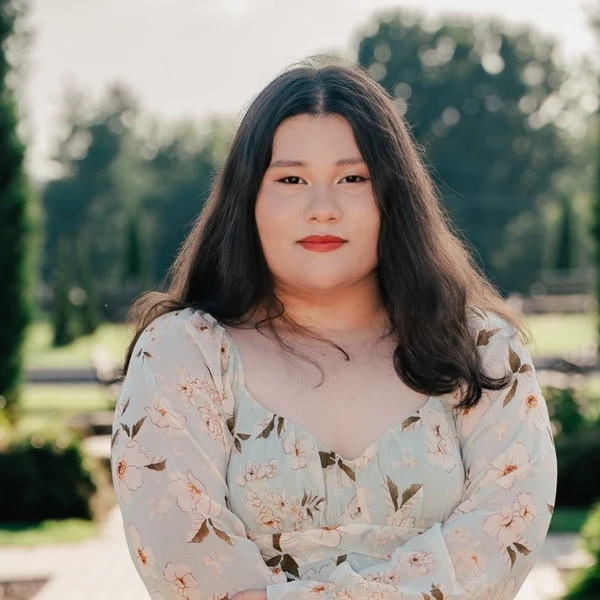
My name is Aki—meaning Autumn in Japanese. I want to go to Oklahoma State University to study microbiology. I find pathology and genetics to be quite fascinating, and wish to continue my path and interests in college. I am the first people in my family to attend a 4-year college, and so this opportunity means quite a lot to me.
Other than biology, I have also studied chemistry, anatomy, and environmental science. I am also a member of my school's science bowl.
I am a huge fan of music, especially metal, grunge, and industrial music. Alongside this, I have played the flute for seven years and am the leader of the flute section in my high school.
Education
Booker T. Washington Hs
High SchoolMiscellaneous
Desired degree level:
Bachelor's degree program
Majors of interest:
- Biological and Physical Sciences
- Microbiological Sciences and Immunology
Career
Dream career field:
Biotechnology
Dream career goals:
Microbiology related career—I am interested most in pathology, environmental science, and perhaps genetics.
Sports
Jogging
Club2023 – 20252 years
Research
Biological and Physical Sciences
International Baccalaureate (IB) — Managed the study independently.2025 – Present
Arts
International Baccalaureate
Acting2022 – PresentBooker T. Washington High School
Music2022 – Present
Public services
Volunteering
National Honor Society — Historian of 2025-2026 chapter, general member since 20232023 – Present
Future Interests
Advocacy
Volunteering
Philanthropy
Finance Your Education No-Essay Scholarship
Matthew E. Minor Memorial Scholarship
The community I live in isn't necessarily tight-knit, but I'm proud to be a part of it. Community service plays a large role in how I express appreciation for others in my area—I have been active in neighborhood clean-ups and giving to drives and charities. The sense of contentment one feels by helping another person, even without meeting them, is immensely fulfilling. I continued to serve for my community after I started high school, as I began seeking out more chances to give back to my community.
During my time in high school, I joined the leadership for my school's National Honor Society. This meant that I not only had to participate in community service projects, but coordinate them as well. I am involved in my town's homeless shelter, the food bank, blood drives, and charity drives. Ultimately, during my senior year I was also in charge of teaching the underclassmen how to do the job that I would leave behind after graduation, which allowed me to further spread interest in community service to a younger platform. I was especially fond of coordinating with my former elementary school to donate school supplies for the students. Learning begins early on in life, and it's crucial to teach them important life advice and lessons.
As the first person in my family to pursue higher education, I have essentially had to pave the path blindly. Having to juggle both a lack of resources and limited information over college has been quite difficult. Having nobody familiar to relate to has taken quite a mental toll on me. Since my freshman year, I have been ensuring that I took every chance possible to get more funding for college—ranging from scholarships to being eligible for merit-based grants in my state. Despite this, I still find that more financial aid is needed for me to be able to focus on my studies. As somebody who is deeply ingrained in community service and charity, scholarships and grants allow me to continue this focus and even use my education and position to do more significant acts as I approach adulthood and independence.
I used to be bullied for most of my childhood before I had a phone—once I left campus, the bullying usually stopped. But now? It can fester online after class. In order for me to address in-person bullying at my school, I have been in close contact with the administration. We developed clubs that meet weekly during our school's activity period that allow students to connect with peers or counselors for help and resources, including anti-bullying measures. In addition to this, we have also implemented initiatives into our school forums that prioritize awareness over the lifelong impact of bullying.
Being one of the first generations to grow up with lifelong access to the internet, I noticed how different my age group and those younger are with social media. More people have been developing their livelihoods online than ever, which allows for broader connections, but offers more concerns over safety and mental health.
To address this, I helped our counselors coordinate seminars over recognizing cyberbullying and how to deal with it. A concerning amount of cyberbullying online is done by total strangers, which is why advice over telling a trusted adult doesn't work as much as it used to. With the level of education most people have, even addressing a peer who bullies through burner accounts can be hard to stop. We decided to prioritize internet privacy and education over how to report instances of inappropriate behavior on social media as an objective for our school's anti-bullying campaigns.
Overcoming Adversity - Jack Terry Memorial Scholarship
The loss of all that is familiar while still young can change everything. Jack Terry's story speaks to me because of his ability to live through severe trauma: the loss of what was quite possibly all he knew. Even after arriving in the United States, the seering effect of trauma and loss still remained. Jack Terry still had to work harder than his peers in the United States to make up for the setbacks he experienced, and even more so to achieve all of what he accomplished. He had to catch up on years worth of lost time and cope with the immense loss of all of what was familiar he experienced. His perseverance and strength enabled him to accomplish many great things—his resilience and spirit inspired me infinitely, as I am inspired to take action against the adversities in my life.
Ever since I was young, I had to deal with the effects of generational trauma and living a lower income life. We managed to stay rather stable for a time, but emotionally we couldn't bond well. I was lonely at school—I didn't socialize well for most of my life, and got stuck with friends who bullied me and spread false rumors about me and my actions. Around my freshman year of high school, everything seemed to get worse. I never had to deal with the worry of loss too intensely until that point—my mother got diagnosed with breast cancer, and with the incidence of medical malpractice from surgeons and wound doctors, it took her almost a year to recover from a mastectomy and an infection in the surgery site. I was afraid and vulnerable at the time.
My former friends took advantage of my vulnerabilities, they spread rumors that I was violent and met me with racist remarks over my mother's Japanese heritage. The fear of losing so much at once took over my mental state. There was a looming fear that I had nobody to trust. l was going to school with people I couldn't trust. It nearly put my mentality into a state of helplessness that would have been hard to overcome.
Stories of individuals overcoming extreme adversity, like Jack Terry's, helped me understand that self-pity only made things harder—it wouldn't get me out of the situation. He experienced the loss of everything familiar in his livelihood, and didn't let the extreme setbacks and trauma hold him down—he didn't set any barriers for himself. His time served in the U.S. Army and the students he shared his story to shows how resilient he truly was.
I wish to pursue a degree in microbiology, as science is an incredibly important topic to me that's grossly underrepresented in many areas. I want to use my experiences in life to introduce more nuance to STEM, making it more accessible and realistic for those who wish to follow the same path as me but have adversities they must overcome. I wish to do the same with my career what Jack Terry accomplished: using personal experiences to support others. I care about those who are of difficult upbringing, and believe they deserve to go into STEM if they dream to—I would love to be able to teach and inspire those who want to make an impact.
Hardships don't define a person, but what they can accomplish and prevail with what life gives them is how legacy will remember them. Jack Terry showed that anybody can change the world, and that surviving trauma is the greatest mark one can use as a sign that they can achieve whatever they dream of.
Women in STEM Scholarship
I have lived in the same house for every year of my life. From birth, I always kept my head to the ground and stayed stagnant. I rarely experienced large changes in my life—the few times I did experience change still didn’t sway me to go into motion.
However, lingering in the same place physically and mentally caused me to be more observant of the ways things change around me. How people grow. How seasons change. What the things around me do. To feed my curiosity of change, I’d learn everything I could. It started with knowing all the bugs near my home. Eventually, I found myself learning a multitude of the Oklahoma species of everything from what flies in the skies to what dwells in the ground and the waters. In uncertain times, knowledge and recognition would always come to the rescue.
Being a shy child meant that my inner circle of friends was always smaller than my numerical age. Sometimes, the only thing I’d be doing was living. But I wouldn’t let that bore me—wondering is the best method of filling up space that inevitable boredom leaves. Since I’d spent so much of my time just living, I eventually started thinking about how I was living. I found the fact that there were bacteria living in my digestive tract fascinating—and I won’t even begin on how much wonder I had for the fact that my own cells had their own little organs called organelles. I never took anything at just face value. I always wanted to work behind-the-scenes, and found a distinct appreciation for what worked backstage, or sub-rosa, whatever it may be called. Physically, I was like a rock, stationary and changing subtly with the environment. Internally, I was and will always be for the span of my life a complex system.
So what does that all mean in the long run?
I was in my eighth grade science class when I realized something huge about my life—I wanted to be a scientist. I was steadfast on this idea that whatever I grew up to be, it must include biology. Yet, even as a young child this idea was always in my head. I just didn’t have a name for it yet. The very next year was freshman biology, then chemistry—in junior year, I took AP chemistry and AP biology at the same time. I thrived in all of those classes. Something as simple as the act of liquid water freezing to ice or how a plant absorbs water through its roots still had an immense amount of fascinating actions that couldn’t be seen at face value. This developed into an understanding of how certain actions happened and an even bigger desire to find solutions to problems or questions that could arise involving the miniscule components of life—the atom and the cell. If it had a nucleus, I immediately wanted to understand it.
As a woman who wants to go into STEM, I've found that we're underrepresented. Not just in the field, but in research in general. Woman's bodies aren't considered as often as men's, which brings up a new issue. Why exclude approximately half of the population? I wish to research things from a female point of view to help close the gap in research that's been created. Even if it's as simple as researching the side effects that one drug gives to a woman compared to a man, it's still steps towards equal representation. We have spent too long dealing woth informational inequalities and underrepresentation in the workplace.
Jules Ehlers-Danlos Syndrome Resilience Scholarship
They all think it's Ehlers-Danlos, we all think it's Ehlers-Danlos—but money's always tight, and medical bills are something that bite almost as bad as the medical issue that we still haven't "officially" put a name on. We just know I'm chronically ill.
I have hypermobile joints. Even worse, the ball-and-socket joints pop nearly every time—I can't sleep on my side without my shoulder feeling unstable. And the bruising and stomach issues? Even worse.
I used to think this pain was normal for a long time until I consistently saw how my peers never felt the same as me. Spending nearly eight whole hours sat down and writing or looking at a computer screen gave me excruciating neck and shoulder pain by the end of the day. Not just aches, but cold, tingling pain that presented early and eased late. I was always told that it was my posture, and that I needed to fix it. But it's hard to fix your posture when it feels like your neck isn't stable on your own body.
It got nothing but worse in high school. By my junior year, I was getting chronic migraines, severe stomach issues, fatigue, and runny noses that came nightly. These symptoms made it incredibly to study and do work. In school, we'd have days where classes were two hours, which meant more time sitting down. Sitting down seems like a relief to many, but for people like me with joints too flexible to stay in place for a long time without strain, it's torture. Focusing is impossible when you're in too much pain to think.
However, I managed these symptoms by talking with my teachers. I let them know about how I was feeling, and they allowed me accommodations that eased some of the pain from exhaustion and immobility. Next, I started to dabble in meditation and yoga in order to build up my strength. I started to manage my flareups better with these accommodations and gained strength. I've always loved science, so even the intricacies of genetic conditions fascinate me.
I've always prioritized my education greatly—it's been my main focus for my entire life. I wish to study microbiology in college. This scholarship would allow me to fund my education, which would not only put less stress on my body, but give me a chance to understand myself and help others who have similar issues as me.
David Foster Memorial Scholarship
Mr. Hoxie, a biology teacher. He's likely one of the best science teachers I've ever had. In academics, and in extracurriculars, he has deeply impacted the way I approach life.
I always loved biology, hence, I want to study microbiology. However, I would have never fully realized this had I not been taught by Mr. Hoxie. His teaching made a subject I was good at suddenly feel like a potential lifestyle—he made things feel actually feasible. He knew what he was talking about, he was the main reason I got a 5 on the AP Biology exam.
Besides being great at teaching, he told stories in his class pretty much weekly.
These weren't just stories related to class, they were life lessons. Words from a wise man that ranged from being careful while doing housework to how to deal with stress and concepts like grief. When students were stressed with schoolwork or personal circumstances, he'd always be understanding—he knew that with the turbulent times of late-teen transitions, things got overwhelming. He never blamed us for things we couldn't control, which was incredibly soothing to the community of students who were almost always under high stress.
Despite being understanding, he also made sure we were prepared. Prepared for college, and prepared for life. Mr. Hoxie's coursework isn't always the easiest, or quick, simple busy work that can be done in a class period. But that's the point—simple and easy work-oriented mindsets won't get us anywhere in competitive environments. He taught his students to think and problem-solve.
Outside of just teaching, he managed our school's National Honor Society and is active in teacher's unions. He trusted me to be the historian of NHS—the person responsible with tracking everyone's service hours. It was a hard role, the previous historian fell behind quickly with logging. But Mr. Hoxie believed in me. He encouraged me to take up the role, even if it was challenging. I was just glad to get a leadership role, not understanding how much it would change me for the better. He saw a sense of determination to get things done correctly that I didn't identify within myself.
Throughout the three years I've known him, he's always encouraged his students to take up challenges when the oppurtunity rose for them. This mindset carved of hardwork and deep reflection carried me into leadership positions and in roles I would have been too hesitant to take up beforehand. This approach to life had greatly impacted my confidence positively.
There were many aspects of myself that I hadn't quite identified before became apparent and easier to utilize. I find that I'm more willing to take leadership, to be responsible, and to take control of my own life. Not only this, but I've gained a solid foundation in a subject that I'm proud to call my dream path.
Enders Scholarship
The world feels different beneath everyone's feet—sometimes it's soothing, sometimes it's rough and unbalanced. I want to show you how the ground feels under my feet. I come from a line of generational trauma that spans more individuals in my family that I have ever been able to even meet.
In 2021, my cousin passed away of a fentanyl overdose—her father still deals with addiction, and my other uncle deals with heart issues facilitated by years of drug use. In 2025, the estranged son of one of my uncles passed away of a prescription drug overdose. In the past, my father and his brothers were abused by a stepfather, a disturbed man at best, though we never met. I have had to endlessly navigate through grief, shock, and dread these past few years piled upon the pain I was born with from continued familial pain that never healed. It has not been easy.
Being the youngest of my family, loss has hit me especially hard. One day, members of your family who are similar in age to you are suddenly gone without a goodbye—suddenly, those who used to take care of you lost to the throes of addiction. It takes a toll on one. I have been pulled on multiple directions when it comes to my sympathy—my uncle was involved in the very same thing that took my cousin, and it hasn't been easy at all to accept that the suffering put upon my family is more deeply ingrained than personal grievances. It was full-on systemic failure. I learned how easy it was to take things for granted, and how to appreciate life and connections.
I was introduced to meditation in my sophomore year of high school. Meditation was an easy way for me to unwind, to take time away from mental turmoil that loss presented to me. Most of my meditation revolves around focused breathing and yoga. I was able to create a healthy way to heal through meditation and reflection. Being able to turn my dread and shock into a source of personal improvement was crucial to my growth.
I realize that breaking familial records is a difficult task. Being the first person in my family to pursue college, the pressure is immense. I want to pursue a future in microbiology because of how much I love the subject. As the one who is paving such a path, matters such as funding prove to be difficult. I’ve managed to overcome what my family has not yet been able to. But that raises another question. If one keeps on rising, will they eventually hit the ceiling?
I want to answer that question—is there even a ceiling to be met, and can one break through it if there is? I hope to be able to make a change in the field, make a change in my family, and prove to myself that anyone can achieve what seems impossible based on their background. Not only will I benefit personally from this scholarship, but my community too.
The biggest influence in my life has to be my dad. Moments with my dad are meaningful learning experiences that I have had outside of the classroom. He knows adept information about vehicles and speakers, and teaches me about them. Through moments with my dad, I have been able to learn a lot about the mechanisms of his world, and thus how they follow patterns with solvable solutions. I learned that it is never impossible to solve an issue, and that with enough attention to detail and problem-solving, anything worth saving can be saved.
Edna McGrowder Memorial Scholarship
Being the first person in my family to go into STEM, or even pursue college on my dad's side of the family, I can say that the pressure is immense. I want to pursue a future in microbiology, but as the one in my lineage who is paving such a path, matters such as funding prove to be limiting stressors for me. From an academic standpoint, I’ve managed to surpass the past generations of my family already. But that raises another question. If one keeps on rising, will they eventually hit the ceiling?
Moments with my dad are meaningful learning experiences that I have had outside of the classroom. He knows a lot of information about vehicles and speakers, and teaches me a lot about them. Through moments with my dad, I have been able to learn a lot about the mechanics of cars and audio, and thus how they follow patterns that living organisms follow as well. This has taught me that the most efficient pathways in technological advancements often mimic the existing pathways that organisms take and thus the idea that there is a hypothetical path that all things can follow even if they seem as different as the pistons and lubrication system of an engine and the cardiac muscles and blood circulation of the heart. This has significantly contributed to my personal goals as I now know that there is a path that can get things done, I just need to find it. My learning experience modelled that finding the pathway can be done in seemingly entirely different ways, like how engineering a car and the evolutionary steps the creation of a living organism are. There is not one set way to get to a solution.
In moments where I feel bored, I turn to learning about the very components giving me the sentience to be bored. I find that life, both in a personal sense and for all living things, follows similar patterns because what keeps us alive on microscopic levels is inevitably similar if not exactly congruent. I was in my eighth grade science class when I realized something huge about my life—I wanted to be a scientist. I was steadfast on this idea that whatever I grew up to be, it must include biology. Yet, even as a young child this idea was always in my head. I just didn’t have a name for it yet.