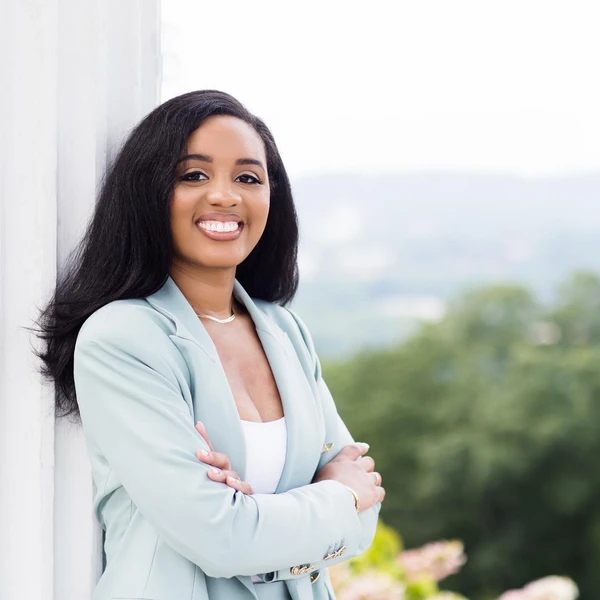
user profile avatar

Aisha McCollum

1x

Finalist

Bio

I am a dedicated educator and advocate for inclusive education, currently pursuing my Ed.D. in Special Education at the University of Alabama. With over eight years of experience in education, I have devoted my career to ensuring that all students, particularly those with disabilities, receive equitable access to quality education. Currently serving as a District 504 Support Teacher for Birmingham City Schools, I work systemically to support students with disabilities by facilitating 504 plans, providing professional development to school staff, and ensuring compliance with federal mandates. My previous role as an Exceptional Education Inclusion Teacher at Hueytown High School deepened my commitment to differentiated instruction and collaborative teaching practices that honor each student's unique learning style. My academic journey reflects my dedication to continuous growth in serving diverse learners. I hold an Education Specialist (EdS) in Collaborative Teacher: Reading from UAB, dual Master's degrees in Collaborative Education and Exercise Science from Auburn University, and recently completed my Class A Certification in Instructional Leadership. Through my doctoral studies, I am committed to advancing research and practice in special education to create more inclusive, equitable learning environments. My work is driven by a simple belief: every student deserves an education that recognizes their potential and provides the support necessary to achieve it.

Education

The University of Alabama

Doctoral degree program (PhD, MD, JD, etc.)
2025 - 2029
  • Majors:
    • Special Education and Teaching
  • GPA:
    4

University of Alabama at Birmingham

Master's degree program
2019 - 2021
  • Majors:
    • Special Education and Teaching
  • GPA:
    4

Auburn University

Master's degree program
2013 - 2014
  • Majors:
    • Physiology, Pathology and Related Sciences
  • GPA:
    3.7

Auburn University

Bachelor's degree program
2009 - 2013
  • Majors:
    • Biological and Biomedical Sciences, Other
  • GPA:
    3.2

Miscellaneous

  • Desired degree level:

    Doctoral degree program (PhD, MD, JD, etc.)

  • Graduate schools of interest:

  • Transfer schools of interest:

  • Majors of interest:

  • Not planning to go to medical school
  • Career

    • Dream career field:

      Education

    • Dream career goals:

    • Paraprofessional

      Jefferson County Board of Education
      2016 – 20193 years
    • Exceptional Education Inclusion Teacher

      Jefferson County Board of Education
      2019 – 20223 years
    • District 504 Support Teacher

      Birmingham City Schools
      2022 – Present4 years

    Sports

    Soccer

    Varsity
    1999 – 200910 years

    Research

    • Biological and Biomedical Sciences, Other

      Auburn University — Research Assistant
      2012 – 2013
    • Physiology, Pathology and Related Sciences

      Auburn University — Graduate Research Volunteer
      2014 – 2014

    Public services

    • Volunteering

      Birmingham Urban League’s Equal Opportunity Gala — Volunteer
      2025 – 2025
    • Volunteering

      Better Basics — Junior Board
      2022 – Present

    Future Interests

    Advocacy

    Volunteering

    Entrepreneurship

    Current Future Finance Scholarship
    Joe Gilroy "Plan Your Work, Work Your Plan" Scholarship
    My primary goal is to complete my Ed.D. in Special Education at the University of Alabama and use that degree to create lasting change for African American students with disabilities. This is not just about earning a credential. It is the next step in a journey that started in a self-contained autism classroom, continued through years teaching special education, and has grown into district-level work that shows me every day how much further systemic change still needs to go. My research examines how culturally responsive social-emotional learning interventions impact discipline rates for African American students with disabilities, a population that faces disproportionate exclusionary discipline while still being underserved by the systems meant to protect them. The plan includes completing candidacy, executing a multi-school dissertation study, publishing findings, and presenting at conferences such as CEC and AERA. The program requires 72 credit hours and runs approximately three to four years. At roughly $12,000 per year in in-state tuition, the total investment is estimated between $36,000 and $48,000, managed alongside full-time employment. Additional budget considerations include conference travel, research materials, and professional memberships, estimated at $1,500 to $2,000 annually. I am actively pursuing scholarships to offset these costs. Currently, I serve as District 504 Support Teacher for Birmingham City Schools, overseeing 504 plan implementation across 15 schools, serving as private school liaison, and working directly with the Juvenile Youth Detention Center. This role reinforces why the research matters and is building the credibility and relationships that will support everything else I am working toward. I am also in the process of launching an advocacy company to help families navigate their legal rights related to education, disability, and student support. Many families, especially in under-resourced communities, do not know what their children are entitled to under laws like IDEA and Section 504, and they often face those systems alone. My background positions me well to fill that gap. The plan is to formally structure the business within the next year, with startup costs estimated at $3,000 to $5,000, covering business registration, liability coverage, and a professional website. Services will initially focus on IEP and 504 advocacy, eligibility support, and family training, with the goal of expanding to school and district consulting. My existing tutoring business, McCollum Academic Solutions, has already proven I can build and sustain a client base. If private clients are slow to come initially, district consulting and professional development contracts are a realistic alternative to bridge that gap. Community partnerships through my church, Alpha Kappa Alpha Sorority, Incorporated, and Better Basics will be key to building trust and visibility. Post-degree, two career paths remain on the table. The first is transitioning into higher education as a professor in special education or educational leadership. The second is advancing into a district director role to shape policy at scale. Both require the same foundation already being built: a finished degree, published research, and a strong professional network. If the faculty path is not immediately available, district leadership is a clear and realistic alternative with a direct on-ramp from my current role. What ties all of it together is the belief I have carried since my first classroom: every student deserves someone who will show up for them. The degree, the research, and the advocacy firm are all expressions of that belief in action. To whom much is given, much is required. I have been given a lot, and I intend to use it well.
    Champions Of A New Path Scholarship
    I didn’t choose education. Education chose me. What started as a detour from my original plan to pursue medicine turned into a calling I couldn’t walk away from, specifically for students who are too often pushed to the margins. Over eight years, I’ve moved from paraprofessional in a self-contained autism classroom to District 504 Support Teacher for Birmingham City Schools, and now I’m pursuing my Ed.D. in Special Education at the University of Alabama. That path didn’t happen by accident. It happened because I kept showing up for students that others gave up on, and I kept asking why the systems meant to serve them kept failing them. If you live in Alabama, you understand that football isn’t just a sport. It’s a religion. The rivalry between Alabama and Auburn runs deeper than wins and losses. It divides families at Thanksgiving, defines communities, and shapes identity in a way that outsiders don’t fully understand. People here are born into a side. My story is a little different. I started at Auburn, where I got my undergraduate degree, War Eagle and all. Then life, purpose, and a calling bigger than any rivalry brought me back to school at the University of Alabama to pursue my doctorate. I’ve walked both campuses, sat in both classrooms, and been shaped by both institutions. Most people in this state pick a side and stay there. I built myself on both. That experience gave me something rare: a view from both sidelines, and the understanding that what unites these two schools is ultimately stronger than what divides them. Both exist to educate. Both exist to produce leaders. And Alabama needs more of those leaders working in classrooms that have been overlooked for too long. That perspective, holding two competing worlds and finding what connects them, is something I bring into my work every day. Because in special education, that’s exactly what the job requires. We meet students who come from different sides of every divide imaginable, different zip codes, different diagnoses, different levels of access, and we are charged with finding what they have in common and building from there. The Iron Bowl happens once a year. The work of closing equity gaps in Alabama’s schools happens every day. My research focuses on culturally responsive social-emotional learning interventions for African American students with disabilities, a population that is overrepresented in discipline data and underrepresented in support. I’m not studying this from the outside. I’m in the building, watching students fall through cracks that policy created and that practice can close. I’m also the product of Alabama’s educational pipeline, someone who started at Auburn with one dream, evolved, and found her way into a doctoral program at Alabama while working full time and tutoring on the side, because I refused to wait for the right moment. My advantage in this competition isn’t just experience. It’s perspective. I sit at the intersection of multiple identities that give me a unique lens: a Black woman, a doctoral student, a practitioner, and someone whose own mental health journey inside a faith community that didn’t always have language for those conversations shaped how I now advocate for students who navigate those same silences. I understand what it means to need support that doesn’t exist yet and to decide to become the person who creates it. Champions of a New Path is the right name for this scholarship because it captures exactly what I’m doing. I’m not walking a well-worn road. I started at Auburn, grew into Alabama, and now I’m building something neither campus handed me: a career dedicated to the students this state has historically left behind. Alabama needs more educators who look like its students, understand its history, and are willing to do the hard work beyond the final score. I’ve been shaped by both sides of this state’s greatest rivalry. Now I’m working to make sure every student in it has a fair shot. This scholarship would remove one more barrier between where I am and the leader I’m becoming. And when I get there, I’m bringing others with me.
    Love Island Fan Scholarship
    The Read Between the Lines Challenge The Islanders receive a text that reads: “Islanders, love is not always about what you say. Sometimes it is about how well you listen. Get ready because class is officially in session.” Everyone gathers outside where the villa has been transformed into a mini outdoor classroom complete with little desks, chalkboards, and oversized pencils as props. Round one is called Story Time Charades. Each Islander receives a children’s book title and has to act it out charades style while their partner tries to guess it. No words, no sounds, just pure body language. This round was chosen because communication is the foundation of any relationship, and if you cannot figure out what your partner is trying to say without words, that tells you something important. Round two is the Spelling Bee. One person spells a word while their partner acts out the definition using only their body. The words start simple and get progressively harder. This round was inspired by the idea that love requires patience. You have to be willing to figure each other out even when it is not easy or obvious. Round three is Recess. Couples compete in classic playground games including a three legged race, tug of war, and hula hoop. Every round they must switch which partner is leading. Recess was chosen because it brings out people’s true personality. The playground does not lie. You find out quickly who is competitive, who is supportive, and who falls apart under a little pressure. Round four is Volunteer Hours. A blindfolded relay race where couples stack a tower of books using only their partner’s voice to guide them. This round reflects the spirit of community and trust. Volunteering teaches you to show up for others, and this challenge tests whether these couples can show up for each other. The winning couple earns a date night where they leave the villa to teach an arts and crafts session at a local community center before a private dinner. The losing couples must each write a letter sharing one thing they appreciate about the other and one thing they wish the other understood, then read them aloud to the entire villa.
    Future Nonprofit Leaders Award
    I did not plan to work in the nonprofit sector. My first love was science. I wanted to be a pediatrician. I imagined myself in a white coat, helping sick children get better and go home to their families. But life has a way of redirecting you toward your real purpose. That redirection happened in a self-contained autism classroom. I was fresh out of college, working as a paraprofessional, and I watched students that the world had largely written off find their voice in ways that took my breath away. A child who had never communicated suddenly making a request. A student hitting a goal that everyone said was out of reach. I stopped thinking about medical school and started thinking about what it really means to serve people. That experience led me into special education, where I spent years learning how to meet students exactly where they were. I learned that the most important thing you can give a child is the belief that they belong. From there I moved into advocacy work, and I now serve as a District 504 Support Teacher for Birmingham City Schools. Every day I work to make sure students with disabilities receive the accommodations they are entitled to, and that their families understand they have a voice in that process. But I kept noticing that the gaps did not stop at the school door. Students were going home to communities that needed just as much support as the classrooms I was fighting for. That is what led me to start a mentoring group for Black boys in my community. I wanted them to have someone in their corner who looked like them and believed in them before they even believed in themselves. Nonprofit work is the thread that connects all of this. It is the space where you can address the root of a problem instead of just treating the symptoms. My graduate studies in Instructional Leadership are preparing me to do that work at a higher level, building programs, developing people, and creating systems that do not fall apart when one person steps away. I have seen what happens when a community has the right support behind it. People rise. I want to spend my career being part of that. Not as someone who swoops in with answers, but as someone who stays long enough to help others find their own. I hope to make a big difference.
    Charles B. Brazelton Memorial Scholarship
    The Observer Who Became When I was growing up, I was usually lost in the background at family gatherings, quietly watching the laughter and closeness unfold around me. My sister sparkled in the spotlight, her voice filling the room as she made everyone feel seen. I felt different—not shy, just comfortable on the sidelines, soaking in moments others barely noticed. Books became my refuge, comforting me when the world felt overwhelming and asking nothing but honesty from me. Story worlds felt like home, where I could belong without needing to explain the swirl of thoughts and feelings beneath the surface. Sometimes, I sensed the uncertainty in people's eyes as they tried to understand my quietness. It stung, especially when the world seemed to celebrate those who thrive in conversation and laughter. I questioned myself, wishing I could glide through the crowd like my sister, effortless and radiant. That longing for belonging was sharp, but the fear of losing myself in the process was sharper still. All I wanted was to feel accepted, yet I struggled with the worry that changing who I was would leave me feeling hollow. What I’ve learned over time is that growing as an introvert who wants to connect with others doesn’t happen all at once. There isn’t a big moment where everything suddenly makes sense. Instead, it’s a slow process that happens little by little, often without you even realizing it. I think of it as becoming—not a final goal, but an ongoing journey. It’s something that happens quietly, in the background, as you go about your daily life. For me, the journey began with just watching from the sidelines, feeling both invisible and safe. Slowly, I reached out to those I trusted, my heart pounding with every new interaction. Each connection felt like a small triumph, a step toward shedding the quiet shell I’d carried for so long. I learned that being introverted doesn't mean staying isolated. It's possible to crave solitude for comfort but shine in spaces where you feel truly understood. Now, among people who give me safety, I come alive. At work, I become the connector—pulling others in, noticing the ones who are lost in thought. I see them because I was them, and when someone creates that welcoming space, it feels like sunlight piercing through clouds. I still feel anxiety creeping in, especially in unfamiliar places, and that fear hasn't vanished. Yet, I’ve discovered that thriving isn’t about banishing your fears; it’s about daring to show up as yourself, even when you’re scared. In those moments—when I find the right people and places—I feel seen. I’m no longer just the quiet observer left outside the circle. I’m part of something real, finally able to be unapologetically myself. It took time for me to reach this point, but I know that the process of becoming never really ends.
    Finance Your Education No-Essay Scholarship
    Learner Online Learning Innovator Scholarship for Veterans
    Pursuing a doctoral degree in special education requires more than attending classes and completing assignments. It demands constant engagement with evolving research, practical frameworks, and a community of peers who share similar professional goals. Over the course of my program, I have come to rely on a carefully curated set of online platforms, tools, and resources that have deepened my understanding of special education law, culturally responsive practice, and disability advocacy. Among the most essential resources in my academic toolkit is Google Scholar, which I use regularly to locate peer-reviewed articles on topics central to my research, including 504 accommodations, culturally responsive interventions, and the educational experiences of African American students with disabilities. Unlike general internet searches, Google Scholar connects me directly to credible, scholarly sources that meet the rigorous standards expected at the doctoral level. Pairing this with my university library’s access to databases such as ERIC and JSTOR has allowed me to trace the historical and theoretical underpinnings of special education policy, knowledge that I now apply when advising schools on compliance and best practices. Citation management tools like Zotero have also transformed the way I engage with literature. Rather than passively reading articles, I now annotate and organize sources by theme and argument, which has sharpened my ability to synthesize information across texts. This skill directly supports my dissertation work and has made me a more effective writer and critical thinker. Equally valuable has been Grammarly, which I use to review my graduate-level writing for clarity and formal academic tone, a practice that has elevated the professionalism of every paper I submit. Beyond research tools, platforms like YouTube and professional webinars hosted by organizations such as the Council for Exceptional Children (CEC) have proven invaluable for applying knowledge in real-world contexts. Watching recorded conferences, expert panel discussions, and training modules has helped me connect theory to practice in ways that static text sometimes cannot. As a District 504 Support Teacher, I have taken concepts introduced in coursework, such as Universal Design for Learning and equity-based accommodation frameworks, and immediately applied them when training school-based liaisons and supporting families during 504 meetings. Together, these platforms and tools have not only expanded what I know but have shaped how I think, write, and lead. They have turned studying into an active, applied process that continually bridges my academic growth with the needs of the students and schools I serve.
    K-POP Fan No-Essay Scholarship
    Michele L. Durant Scholarship
    I am a District 504 Support Teacher for Birmingham City Schools with over eight years of experience in special education, and my journey began in a place I never expected: a self-contained autism classroom at Pleasant Grove Elementary. I walked in planning a medical career and walked out knowing I had found my calling. Watching students communicate, grow, and exceed expectations that others had set as ceilings changed everything for me. That moment taught me that education, when done right, is the most powerful force for change there is. My commitment to making a positive impact is both personal and professional. Growing up in an African American Christian community where mental health struggles were often met with "just pray about it," I understand firsthand what it feels like to need support that is not readily available. My own four-year journey to find the right therapist to address anxiety and perfectionism taught me that everyone deserves access to culturally responsive care and guidance. That lived experience fuels my passion for creating spaces where students, especially African American students with disabilities, feel seen, supported, and empowered to reach their full potential. Over the course of my career, I have grown from paraprofessional to district-level educator, and with each role I have become more aware of the systemic barriers that families face. I have sat in meetings where parents did not know their children's legal rights. I have watched students be denied accommodations they were fully entitled to. Those moments do not discourage me; they deepen my resolve. In my community, I plan to continue advocating for those families, helping them understand that they have a voice and that their children deserve better. Through my doctoral research at the University of Alabama, I am studying culturally responsive social-emotional learning interventions and their impact on reducing exclusionary discipline practices for African American students with disabilities. This research is deeply personal to me because it sits at the intersection of everything I care about: equity, education, and community. My long-term goal is to transition into higher education as a faculty member, where I can train the next generation of special educators to approach this work with both technical expertise and genuine cultural humility. I am guided by the principle that to whom much is given, much will be required. I have been given opportunity, experience, and purpose. This scholarship would bring me one step closer to the platform I need to create change that outlasts my individual efforts and reaches far beyond what I can see.
    Sharra Rainbolt Memorial Scholarship
    February 13, 2023, is a date etched permanently in my memory. That was the day my father was diagnosed with Mantle cell lymphoma, a rare and aggressive form of cancer that we had never heard of before. What began as a swollen lump in his groin area, which he dismissed as a pulled muscle, became a nearly three-year journey that would test our faith, expand our knowledge, and transform how I approach my work and life. When the oncologist first said "Mantle cell lymphoma," we sat in stunned silence. It was a rare type, typically found in older age groups, and considered moderately to highly aggressive because it had shown up in my father's abdomen. The average overall survival rate was 8 to 12 years. I watched my father's face as he absorbed this information, and I saw something remarkable: not fear, but resolve. What I learned first was the power of advocacy and early detection. I remember encouraging my dad to get that lump checked out when he kept insisting he had just pulled a muscle. "Dad, just go to the doctor," I pleaded. That simple conversation may have saved his life. Early detection gave us options, time, and hope. But early detection alone isn't enough. Fighting cancer requires education. When we first heard the diagnosis, we were overwhelmed by medical terminology and treatment protocols we didn't understand. We immediately began researching medical journals, patient testimonials, and clinical trial results. This education empowered us to make critical decisions. We were referred to a specialist at UAB who outlined three treatment options, discussing advancements in medicine that meant my father might avoid invasive procedures like a stem cell transplant. My father chose a treatment plan that combined chemotherapy with a targeted lymphoma drug. Phase one involved treatments every four weeks for three months. Unlike the horror stories we had heard, my father experienced minimal side effects. He didn't lose his hair. He remained active and continued working. This was the result of medical advancements driven by research and education. Throughout this journey, my father never wavered in his faith. He prayed before every treatment and thanked God after every clear scan. Watching him maintain this perspective taught me that fighting cancer requires the integration of science and faith, of action and surrender, of fighting fiercely while also accepting what cannot be controlled. In December 2025, nearly three years after his diagnosis, my father was declared to be in remission. The PET scan showed no active cancer. His bloodwork was clear. We celebrated with tears of gratitude and relief, knowing that remission isn't a guarantee of a cure but also knowing that we had won this particular battle. This experience has profoundly shaped how I approach my work as a District 504 Support Teacher for Birmingham City Schools. I work daily with students who have health conditions that impact their education and with families navigating the complex intersection of medical needs and academic requirements. I now understand what these families are experiencing. I know the exhaustion of medical appointments that interrupt school schedules, the cognitive load of managing treatment protocols while trying to maintain normalcy, and the fear that accompanies every scan and doctor's visit. My father's journey has taught me that cancer tests spirits, challenges faith, and reveals character. It has shown me that with the right combination of medical expertise, patient education, family support, and unwavering hope, even the most frightening diagnoses can be faced with courage and dignity. I carry these lessons into my work every day, committed to ensuring that no family faces health crises alone.
    Miley Cyrus Fan No-Essay Scholarship
    Post Malone Fan No-Essay Scholarship
    Elijah's Helping Hand Scholarship Award
    Therapy “Just pray about it.” In my Christian African American family, these four words were the solution to everything. Anxiety? Pray. Conflict? Pray. The crushing weight of perfectionism keeping me awake at night? Pray about it. Therapy wasn’t just unnecessary. It was almost blasphemous, a sign that your faith wasn’t strong enough. For years, I believed them. As a gifted child, I excelled academically and wore that label like armor. But armor can become a cage. As I grew older, the perfectionism that once drove me to succeed began to suffocate me. My mind became a prison of overthinking, ruminating on every decision, replaying scenarios until they lost all meaning. Intrusive thoughts wouldn’t quiet. Anxious thinking turned molehills into mountains. It wasn’t quite OCD, but it was close. I tried to pray it away. But the anxiety only grew louder. A relationship became the catalyst that forced me to confront what I’d been avoiding. The overthinking intensified into cycles of rumination that affected every aspect of my life. I couldn’t turn off my brain. I couldn’t find peace. I realized that prayer, while important to me, wasn’t the only tool I needed. I needed professional help. Making that decision meant confronting generations of stigma. In the African American community, particularly in Christian families, mental health struggles are often misunderstood as spiritual weakness. Seeking therapy can feel like admitting defeat, like publicly declaring that God isn’t enough. I wrestled with these beliefs, knowing therapy might disappoint my family or confirm their fears that I wasn’t spiritually strong enough. But I did it anyway. Finding the right therapist took time. It’s about finding someone who understands your background, your context. Someone who doesn’t dismiss your faith but helps you integrate it with evidence-based mental health practices. I learned about meditation, cognitive behavioral techniques, and strategies to quiet the anxious thinking that had controlled me. Four years. That’s how long I’ve been committed to this work. Four years of learning that needing help doesn’t make me weak. It makes me human. Four years of unlearning the perfectionism that told me I should handle everything alone. Four years of discovering that being “gifted” didn’t mean navigating life without support. Therapy has fundamentally changed how I understand myself and the world. Mental health and faith aren’t at odds. They can coexist and strengthen each other. The overthinking that once paralyzed me can be managed with the right tools. My relationships have deepened because I’m no longer trying to be perfect; I’m trying to be present and authentic. This experience has given me a mission. I’ve seen how stigma prevents people in my community from getting desperately needed help. I understand the barriers African American individuals face: cultural mistrust of the medical system, fear of being misunderstood, pressure to appear unshakeable. I know what it’s like to feel caught between honoring your family’s beliefs and honoring your own needs. My goal is to work in mental health advocacy and support, specifically reducing stigma in communities of color and creating more culturally competent, accessible mental health resources. I want others to know what took me years to learn: seeking help is not a failure of faith. It’s an act of courage. It’s choosing to use every resource available to become the healthiest version of yourself. If my story can help even one person in a family like mine feel less alone, less ashamed, and more empowered to seek help, then every difficult moment of this journey will have been worth it.
    Josh Gibson MD Grant
    Learner Mental Health Empowerment for Health Students Scholarship
    “Just pray about it.” In my Christian African American family, these four words were the solution to everything. Anxiety? Pray. Conflict? Pray. The crushing weight of perfectionism keeping me awake at night? Pray about it. Therapy wasn’t just unnecessary. It was almost blasphemous, a sign that your faith wasn’t strong enough. For years, I believed them. As a gifted child, I excelled academically and wore that label like armor. But armor can become a cage. As I grew older, the perfectionism that once drove me to succeed began to suffocate me. My mind became a prison of overthinking, ruminating on every decision, replaying scenarios until they lost all meaning. Intrusive thoughts wouldn’t quiet. Anxious thinking turned molehills into mountains. It wasn’t quite OCD, but it was close. I tried to pray it away. But the anxiety only grew louder. A relationship became the catalyst that forced me to confront what I’d been avoiding. The overthinking intensified into cycles of rumination that affected every aspect of my life. I couldn’t turn off my brain. I couldn’t find peace. I realized that prayer, while important to me, wasn’t the only tool I needed. I needed professional help. Making that decision meant confronting generations of stigma. In the African American community, particularly in Christian families, mental health struggles are often misunderstood as spiritual weakness. Seeking therapy can feel like admitting defeat, like publicly declaring that God isn’t enough. I wrestled with these beliefs, knowing therapy might disappoint my family or confirm their fears that I wasn’t spiritually strong enough. But I did it anyway. Finding the right therapist took time. It’s about finding someone who understands your background, your context. Someone who doesn’t dismiss your faith but helps you integrate it with evidence-based mental health practices. I learned about meditation, cognitive behavioral techniques, and strategies to quiet the anxious thinking that had controlled me. Four years. That’s how long I’ve been committed to this work. Four years of learning that needing help doesn’t make me weak. It makes me human. Four years of unlearning the perfectionism that told me I should handle everything alone. Four years of discovering that being “gifted” didn’t mean navigating life without support. Therapy has fundamentally changed how I understand myself and the world. Mental health and faith aren’t at odds. They can coexist and strengthen each other. The overthinking that once paralyzed me can be managed with the right tools. My relationships have deepened because I’m no longer trying to be perfect; I’m trying to be present and authentic. This experience has given me a mission. I’ve seen how stigma prevents people in my community from getting desperately needed help. I understand the barriers African American individuals face: cultural mistrust of the medical system, fear of being misunderstood, pressure to appear unshakeable. I know what it’s like to feel caught between honoring your family’s beliefs and honoring your own needs. My goal is to work in mental health advocacy and support, specifically reducing stigma in communities of color and creating more culturally competent, accessible mental health resources. I want others to know what took me years to learn: seeking help is not a failure of faith. It’s an act of courage. It’s choosing to use every resource available to become the healthiest version of yourself. If my story can help even one person in a family like mine feel less alone, less ashamed, and more empowered to seek help, then every difficult moment of this journey will have been worth it.
    Christian Fitness Association General Scholarship
    Consider me for this scholarship because I am more than a student. I am a full-time professional and doctoral candidate. I have never let financial barriers dictate my ambitions. My journey began as a paraprofessional in a self-contained autism classroom. There, I saw students surpass expectations that others never set for them. That experience changed my path entirely and confirmed that my purpose was in special education, advocating for students who too often go unseen. My academic journey is extensive and intentional. I earned my Bachelor of Science in Biomedical Sciences and my Master of Education in Exercise Science from Auburn University. After discovering my true purpose in special education, I pursued a Master of Arts in Collaborative Education and an Education Specialist degree in Collaborative Teacher Reading from the University of Alabama at Birmingham. I also completed a Class A Certification in Instructional Leadership from the University of West Alabama. I am currently completing my Doctorate of Education in Special Education at the University of Alabama. Along the way, I joined the Golden Key International Honour Society and the Honor Society of Phi Kappa Phi, reserved for top students. These honors were not given. I earned them while working full-time, managing responsibilities, and meeting every requirement with full commitment. I also served as a member of my school's Collaborative Instructional Leadership Team and as an Exceptional Education Liaison, roles that required leadership and a genuine investment in student success beyond what the job descriptions required. Outside of my professional role, I have served as a Summer Brain Gain Coordinator, a STEAMER Certified Teacher, and an afterschool teacher with Better Basics, a nonprofit committed to closing achievement gaps in under-resourced communities. Service has never been something I do on the side. It is woven into who I am. Currently, I serve as the District 504 Support Teacher for Birmingham City Schools, where I work systemically to ensure that students with disabilities receive the accommodations and protections they are legally entitled to. I provide professional development, facilitate 504 evaluations and meetings, and collaborate with families unfamiliar with their rights. This work is personal. I know what it means to navigate systems not designed for you, and I show up daily to be the bridge students and families need. Advancing my credentials came with a cost I did not anticipate. After years of investing in my education, I reached the federal maximum for financial aid eligibility. The degrees I earned in pursuit of becoming a better educator became the very thing limiting my access to funding. There was no more aid to draw from, and the cost of a doctoral program does not pause because your eligibility runs out. At the same time, I worked full-time and managed a demanding district-level role. I applied for every scholarship I could find and financed my program piece by piece. There were moments when the weight of it felt unreasonable. Tuition, books, fees, and the cost of staying enrolled added up quickly. This required constant creativity and sacrifice. I persisted because the students I serve cannot stop. I want to model perseverance for them. I continued because my research matters. Walking away was never an option. My dissertation examines how culturally responsive Social-Emotional Learning interventions affect exclusionary disciplinary outcomes for African American students with disabilities in Birmingham City Schools. This population sits at the intersection of race, disability, and systemic inequity. There is a significant gap in the literature addressing their experiences and needs. My research uses retrospective archival data to fill that gap. I aim to produce evidence that can inform more equitable disciplinary policies and practices. This is not just a dissertation. It is the work I was meant to do. This scholarship would not just help me finish my degree. It would allow me to focus more on research, writing, and advocacy. Completing this doctorate makes these efforts possible. Every dollar of financial support goes directly toward a mission beyond me. It goes to students who benefit from the findings, schools that use the recommendations, and families who deserve educators and systems that truly see their children. I am not asking for a handout. I am asking for a partnership that helps me bring my mission of equitable education and systemic change to fruition. With my proven drive, academic record, professional experience, and focus, this scholarship would help me complete my studies and amplify my impact. Consider me because, when challenged, I keep going. I intend to keep going for my students and my community.
    Taylor Swift Fan Scholarship
    Of all Taylor Swift’s performances throughout her career, the one I find most moving is her acoustic rendition of “All Too Well (10 Minute Version)” during the Eras Tour. This performance encapsulates everything that makes Taylor not just a performer, but a storyteller who transforms personal pain into art that resonates with millions. What makes this performance so powerful is the raw vulnerability Taylor brings to it. This isn’t just a woman singing a song. It’s someone revisiting a painful chapter of her life with the wisdom and distance of time, yet still feeling every emotion as if it just happened. The way she delivers certain lines, the way her voice cracks at specific moments, the way she holds the audience in complete silence during the bridge, it’s masterful. She’s not performing pain. She’s reliving it, and inviting us to witness that process. This performance moves me because it represents something I deeply understand: the courage it takes to confront your past, to name what hurt you, and to do it publicly without apology. As someone who has spent years battling perfectionism and learning to step into authenticity, I see myself in Taylor’s willingness to be messy, heartbroken, and honest on that stage. She could have sanitized the song, made it more palatable, softened the edges. Instead, she leans into every uncomfortable truth, every moment of anger and grief, and trusts that her audience will meet her there. What resonates most is how this performance demonstrates growth without erasing pain. Taylor isn’t singing this song to prove she’s “over it” or to demonstrate that she’s healed and moved on. She’s singing it because the story matters, because the feelings were real, and because owning your narrative, even the painful parts, is an act of power. That message lands differently when you’ve done your own work around healing and authenticity. The performance also showcases Taylor’s evolution as an artist. The original five-minute version was devastating. The ten-minute version, delivered with years of perspective and hard-won wisdom, is something else entirely. It’s a reminder that our stories don’t have to stay the same size forever. We’re allowed to expand them, to add context, to claim more space for our experiences. That resonates deeply with my own journey of learning to take up space, to advocate loudly for what I believe in, and to refuse to shrink myself to make others comfortable. Beyond the emotional depth, the performance is technically flawless. Taylor’s control, her ability to hold a stadium of thousands in rapt attention with just her voice and a guitar, is a testament to her skill as a performer. She doesn’t need elaborate staging or pyrotechnics for this moment. The story, the emotion, and the honesty are enough. This performance moves me because it’s a reminder that our most painful moments can become our most powerful ones when we have the courage to tell the truth about them.​​​​​​​​​​​​​​​​
    Sabrina Carpenter Superfan Scholarship
    I’m a fan of Sabrina Carpenter because she represents something rare in today’s music industry: unapologetic authenticity paired with undeniable talent. In a world where so many artists follow trends or mold themselves to fit what’s expected, Sabrina has carved out her own lane by being consistently and boldly herself. That kind of confidence, especially as a woman in the entertainment industry, is something I deeply respect and aspire to embody in my own life. What initially drew me to Sabrina was her voice. It’s distinctive, powerful, and versatile. Whether she’s delivering a playful pop anthem or a vulnerable ballad, there’s an authenticity in her delivery that makes you believe every word she’s singing. But what has kept me a fan is watching her evolution as an artist and a person. She’s not afraid to take risks, experiment with different sounds, or speak her truth even when it makes people uncomfortable. That takes courage. Sabrina’s career has impacted me in ways that go beyond just enjoying her music. Watching her navigate public scrutiny, industry pressures, and constant comparisons to other artists has been a masterclass in resilience. She’s been underestimated, dismissed, and put in boxes she didn’t fit into, yet she’s continued to show up, put out incredible work, and prove people wrong without needing to engage in the noise. That’s the kind of energy I try to bring to my own life, especially as someone pursuing a terminal degree while working full-time in a field where I’m constantly advocating for students who are also underestimated. One of the things I admire most about Sabrina is how she owns her narrative. She doesn’t shy away from being labeled or judged. Instead, she flips the script and uses it as fuel to create art that’s even more powerful. Songs like “Nonsense” and “Feather” show her playful, unbothered side, while tracks like “because i liked a boy” reveal her vulnerability and willingness to address criticism head-on. She’s not performing for approval. She’s creating because it’s authentic to who she is, and that resonates with me deeply. As someone who has spent years battling perfectionism and learning to step into authenticity, Sabrina’s journey reminds me that you don’t have to shrink yourself to make others comfortable. You don’t have to apologize for being confident, talented, or unapologetically yourself. Watching her embrace her full range, from sultry and playful to heartfelt and introspective, has encouraged me to do the same in my own work and personal life. Sabrina’s impact on me also extends to how I approach my career in education and advocacy. Just like she’s fighting to be seen and heard in an industry that often tries to diminish young women, I’m fighting for students with disabilities, particularly African American students, who are too often overlooked or punished instead of supported. Her refusal to dim her light or play small has inspired me to take up space in rooms where people like me aren’t always welcome, to speak up when it matters, and to do the work even when it’s hard. I’m a fan of Sabrina Carpenter because she represents what it looks like to evolve, stay true to yourself, and create art that’s honest and unapologetic. Her career has shown me that authenticity is powerful, resilience is beautiful, and owning your story is the ultimate form of empowerment.​​​​​​​​​​​​​​​​
    Eden Alaine Memorial Scholarship
    I lost my uncle on September 17th, 2025. He was my dad’s brother, a musician, an organist to be exact, a singer, a minister, a Christian gangster. You wouldn’t see him coming, but he was always coming. Losing him didn’t just break my heart. It changed how I understood grief, faith, and what it means to show up for the people you love even when you’re falling apart inside. When he passed, I didn’t have time to grieve. I went right into showing up for my dad and my family. I connected the dots of what happened, helped plan the service, made sure everyone had a job to do. I met with friends, funeral directors, and family members. I drove back and forth an hour each way, doing what I knew he would have wanted me to do, but also what I needed to do to relieve any stress from my family. I did what I always do. I held it together for everyone else. But even in the doing and the going, a part of me separated from God. I knew my uncle was absent from the body but present with the Lord. I believed that. But it didn’t seem fair. He was a man of God who spent his life in service, and he was gone too soon. And I retreated. Yes, I read my devotionals morning and night, but I couldn’t step foot back into church. When I tried on September 28th, I broke down during praise and worship because I realized he would never sing another song, pray another prayer, or preach another sermon. I couldn’t handle it, so I left. At times, I wouldn’t even watch church on livestream. What made it worse was that after my uncle’s passing, my family continued to experience loss after loss. It felt relentless. And I retreated farther and farther from the spaces that used to bring me peace. Yet God never retreated from me. He’s been Jehovah Jireh, my provider. Jehovah Nissi, my banner of victory. Jehovah Shalom, my peace. Jehovah Rapha, my healer. Even when I pulled away, He stayed near. Even when I couldn’t find the words to pray, He heard my heart. This experience has shaped my life in profound ways. It taught me that grief doesn’t follow a timeline and that sometimes the strongest thing you can do is admit you’re not okay. It taught me that faith and doubt can coexist, that you can believe in God’s plan and still feel devastated by the loss. It taught me the importance of community, of showing up for people even when it’s hard, and of letting people show up for you too. Losing my uncle also deepened my commitment to the work I do. In my role as a District 504 Support Teacher, I support students who are dealing with loss, trauma, and mental health struggles. I understand now, more than ever, how grief can show up in a classroom, how it can affect a student’s ability to focus, to engage, to even stay present. I approach my work with more empathy because I’ve lived the weight of trying to function while your world is falling apart. I’m learning to carry my grief with God instead of alone. I’m stepping back into spaces I retreated from, not because the pain is gone, but because I know healing doesn’t happen in isolation. My uncle’s life taught me about faith, service, and showing up. His death is teaching me about grace, resilience, and trusting God’s plan even when it doesn’t make sense.​​​​​​​​​​​​​​​​
    Second Chance Scholarship
    I want to make a change in my life because I’ve reached a point where I know I can do more. I’ve spent years working in special education, from being a paraprofessional in a self-contained autism classroom to teaching high school students with disabilities, and now serving as a District 504 Support Teacher for Birmingham City Schools. I’ve seen the system from every angle, and I’ve seen where it fails students, especially African American students with disabilities who face disproportionate discipline and barriers to success. Pursuing my Ed.D. in Special Education isn’t just about advancing my career. It’s about gaining the knowledge, credibility, and platform to create systemic change for students who deserve better. The steps I’ve taken so far have been intentional. I started at the ground level as a paraprofessional, learning what it really means to support students with significant needs. I became a certified teacher, then moved into district-level work where I could impact more students across multiple schools. I enrolled in my Ed.D. program because I knew that to influence policy, train future educators, and conduct research that changes practices, I needed a terminal degree. My research focuses on culturally responsive Social-Emotional Learning interventions and their impact on reducing exclusionary discipline for African American students with disabilities. This isn’t abstract scholarship for me. It’s about addressing the “double jeopardy” these students face and proving that there are better ways to support them than suspending them out of school. This scholarship will help me in practical, tangible ways. Balancing full-time work, doctoral coursework, and financial responsibilities is exhausting. I’m living at home with my parents to save on housing costs and manage my student loan debt through the Public Service Loan Forgiveness program, but tuition, books, research expenses, and the cost of attending conferences add up quickly. This scholarship would relieve some of that financial pressure and allow me to focus more fully on my research and coursework without constantly worrying about how I’m going to afford the next semester. It would also give me the freedom to attend national conferences where I can present my work, network with other scholars, and learn from experts in the field. But more than that, this scholarship represents validation. It says that someone believes in the work I’m doing and the change I want to create. That matters when you’re navigating a doctoral program as a full-time professional, especially when you’re researching issues that don’t always get the attention they deserve. As for paying it forward, I’m already doing that in my current role and I plan to continue. Every day, I work with students who need someone in their corner, someone who sees their potential and fights for the accommodations and support they deserve. I collaborate with teachers, counselors, and families to create systems that actually work for students instead of pushing them out. When I complete my Ed.D., I plan to move into higher education as a professor or into advanced district leadership where I can train future educators, influence policy, and mentor others who want to do this work. I want to teach the next generation of special education leaders to see students as whole people, not just data points or discipline problems. I want to publish research that changes how schools approach SEL and discipline. And I want to advocate loudly for students who are too often silenced or ignored. That’s how I’ll pay this forward, by using everything I’ve learned and everything this scholarship helps me achieve to create opportunities for others.​​​​​​​​​​​​​​​​
    Dr. G. Yvette Pegues Disability Scholarship
    I don’t have a formal diagnosis, but I’ve lived the neurodiverse experience in my own way. The overthinking, the rumination that borders on OCD, the anxious thinking that turns my brain into a loop I can’t escape. The perfectionism that once made me a “gifted child” but became a cage as I got older. Growing up in a Christian African American family where “just pray about it” was the answer to everything, I didn’t have language for what I was experiencing. Mental health struggles were seen as spiritual weakness, something you didn’t talk about, and definitely something you didn’t seek professional help for. It took four years to find the right therapist. Four years of navigating stigma, pushback from my community, and my own internalized shame about needing help beyond prayer. But therapy, along with meditation and journaling, gave me tools to manage my mind in ways prayer alone couldn’t. That personal journey opened my eyes to how many students are navigating similar struggles without adequate support, especially students with disabilities who are already fighting to be seen and understood. Now, as a District 504 Support Teacher in the Social Emotional department of Student Support Services for Birmingham City Schools, I use my education and lived experience to create systems that actually support students. I work daily with students who have anxiety, ADHD, depression, trauma, and other conditions that impact their ability to function in school. Through 504 plans, I help ensure they receive reasonable accommodations like access to a safe space during moments of crisis, extended time on assignments when anxiety is high, modified attendance policies for students managing depression, and scheduled check-ins with trusted adults. But accommodations are only part of the solution. Real support requires collaboration. I work closely with school counselors, prevention specialists, school psychologists, and mental health therapists to build comprehensive support systems around students. When a counselor identifies a student in crisis, I facilitate the 504 process. When a therapist provides recommendations, I work with teachers to implement them. This collaborative approach ensures students aren’t just getting a document but actual, meaningful support that addresses their whole experience. My Ed.D. research focuses on culturally responsive Social-Emotional Learning interventions and reducing exclusionary discipline for African American students with disabilities. I’ve seen how Black students, especially those with disabilities, are disproportionately punished for behaviors tied to unmet needs. My goal is to use my education to train educators, influence policy, and create systems that recognize neurodiversity as something to support rather than punish. Underserved communities, particularly communities of color, face barriers to mental health support that go beyond access. There’s cultural mistrust, fear of being misunderstood, and pressure to appear strong. I want to reduce that stigma by showing that seeking help is strength, not weakness. Whether I’m working at the district level, teaching future educators, or advocating for policy change, my mission is to ensure that students who think differently, feel deeply, or struggle silently have adults in their corner who see them, believe them, and fight for the support they deserve.​​​​​​​​​​​​​​​​
    Enders Scholarship
    Loss has been one of my most profound teachers. I’ve watched family members grieve the passing of loved ones, received heartbreaking calls in the middle of the night about suicide, and held space for people navigating unimaginable pain. Each experience has shaped how I understand grief, resilience, and what it means to keep going when life feels impossibly heavy. The emotions that come with loss are complicated. There’s the initial shock that makes everything feel surreal, like you’re moving through water. Then comes the waves of sadness that hit at unexpected times, triggered by a song, a memory, or just the weight of absence. I’ve learned that grief isn’t linear. Some days you’re okay, and some days you’re not, and both are completely valid. What I’ve had to navigate is the pressure to have it all together, to be strong for everyone else, especially in a culture where showing vulnerability can be seen as weakness. But I’ve learned that acknowledging pain doesn’t make you weak. It makes you human. Through these experiences, I’ve learned that I’m more resilient than I thought. I’ve learned to sit with discomfort instead of running from it, to let people in even when it’s hard, and to trust that healing doesn’t have a timeline. Loss has taught me the value of being present, of checking in on people, and of saying what needs to be said while you still can. It’s also taught me that faith and grief can coexist. You can believe in God’s plan and still feel devastated. You can trust in reunion and still miss someone desperately. I do practice meditation and journaling, and both have been lifesaving. Meditation helps me quiet my mind when anxiety tries to take over, when the overthinking starts spiraling. Journaling gives me a place to process emotions I don’t always know how to say out loud. After losing loved ones or watching others navigate loss, I journal to make sense of it all, to honor what I’m feeling instead of pushing it down. These practices help me stay grounded and remind me that healing is possible even when it feels impossible. As for why I want to continue my education, it’s deeply tied to everything I’ve experienced. My Ed.D. isn’t just about advancing my career. It’s about using my pain, my growth, and my experiences to create change for others. I’ve seen how mental health stigma in the African American community prevents people from getting help. I’ve seen how students with disabilities are misunderstood and underserved. I want to be part of the solution. My education gives me the tools, the platform, and the credibility to advocate for students who need someone in their corner, to reduce stigma around mental health, and to create systems that actually support the people who need it most. The biggest influences in my life are my family, my faith community, and my therapist. My family has shown me what unconditional love looks like, even when we don’t always agree. My faith community reminds me to trust the process and lean into something bigger than myself. And my therapist has taught me that seeking help is strength, that vulnerability is courage, and that I don’t have to carry everything alone. These people have shaped who I am and who I’m becoming.​​​​​​​​​​​​​​​​
    Ruthie Brown Scholarship
    Managing student loan debt has been a major part of my financial planning, especially while balancing full-time work and pursuing my Ed.D. I’m currently working as a District 504 Support Teacher in a Title I school district, which has positioned me to take advantage of the Public Service Loan Forgiveness program. PSLF has been a game changer for me because after making 120 qualifying monthly payments while working full-time in public service, the remaining balance on my federal student loans can be forgiven. Since I’ve already been working in public education for several years and plan to continue long-term, whether that’s moving into district leadership or transitioning into higher education as a professor, PSLF aligns perfectly with my career goals. Beyond loan forgiveness, I’ve been strategic about staying on an income-driven repayment plan. This keeps my monthly payments manageable and tied to what I’m actually earning rather than some fixed amount that could strain my budget. I track my qualifying payments carefully and make sure my employment is certified annually so I stay on track for forgiveness. It requires organization and attention to detail, but knowing I’m working toward having my loans forgiven makes the effort worthwhile. Another major way I’m addressing my debt is by living at home with my parents. This decision has been incredibly practical and has allowed me to save significantly on housing costs, which frees up money to put toward my loans and other financial goals. Living at home while working full-time and completing my doctorate isn’t always easy, especially at 34, but it’s a sacrifice that makes sense for where I am right now. It gives me the flexibility to manage my debt more intentionally while also building savings and maintaining financial stability. I’m grateful for the support system my family provides, and this arrangement has been key to reducing financial stress during such a demanding season of life. I’m also mindful about continuing my education in a financially responsible way. Pursuing my Ed.D. is an investment in my future and my ability to create systemic change for students with disabilities, particularly African American students who are disproportionately affected by exclusionary discipline practices. However, I’m careful about minimizing additional debt wherever possible. I actively search for scholarships, explore employer tuition assistance programs, and consider opportunities that could offset costs. Every decision I make around my education is weighed against the financial impact because I want to emerge from this experience positioned to lead and serve without being buried under unmanageable debt. Working in Title I schools means I’m serving students and families who face significant economic barriers every day. That reality keeps me grounded and reminds me why financial wellness matters. I want to be able to focus fully on advocating for my students and creating equitable learning environments without being distracted by my own financial pressures. Being financially sound isn’t just a personal goal but something that allows me to show up fully in my work. Ultimately, my approach to student loan debt is about being strategic, patient, and disciplined. Between PSLF, living at home, income-driven repayment, and thoughtful decision-making around education costs, I’m building a pathway to financial freedom that supports rather than hinders my long-term goals.​​​​​​​​​​​​​​​​
    Tawkify Meaningful Connections Scholarship
    Relationships have always been at the center of who I am and what I hope to achieve, both personally and professionally. I’ve come to understand that the connections I build with people aren’t separate from my goals but are actually the foundation that makes everything else possible. Whether I’m thinking about my career trajectory toward earning an Ed.D. and moving into educational leadership or considering what I want in my personal life, relationships are the common thread that keeps me grounded, motivated, and accountable. Professionally, relationships define the work I do every day as a District 504 Support Teacher. The students I support, the families I collaborate with, and the educators I partner with all shape how I show up in my role. When I think about my long-term goal of completing my doctorate and potentially transitioning into higher education as a professor or moving into district-level leadership, I know that those relationships will be even more critical. Educational equity, which is at the heart of my research interests around culturally responsive Social-Emotional Learning interventions and reducing exclusionary discipline for African American students with disabilities, isn’t something one person can achieve alone. It requires building coalitions, earning trust, and working alongside people who share the vision of creating inclusive environments where all students can thrive. Throughout my career, from being a paraprofessional to a classroom teacher and now working at the district level, I’ve seen how relationships create opportunities for systemic change. Serving on the Continuous Improvement Leadership Team and working as an Exceptional Education Liaison taught me that advocacy is most effective when it’s collaborative. The colleagues who challenge my thinking, the mentors who guide me, and the students who remind me why this work matters all contribute to my professional growth. As I move toward my goal of influencing policy and training future educators, the relationships I’m building now will determine how effectively I can lead and serve in those spaces. On a personal level, relationships have taught me important lessons about balance, boundaries, and authenticity. My faith community has been foundational in helping me stay spiritually grounded, especially as I navigate the demands of doctoral work and a full-time career. The relationships I have with family and close friends remind me to live in the moment, trust the process, and prioritize rest without guilt. Growing up in a Christian family where the advice was often to “pray about it,” I eventually realized that seeking therapy was necessary for my mental health. That decision, which was initially difficult because of the stigma around mental health in the African American community, changed my life. Therapy helped me address perfectionism, anxious thinking, and the pressure I put on myself as someone who was labeled gifted as a child but struggled as life became more complex. Those lessons about mental health and self-care have shaped what I look for in romantic relationships. I’ve learned to be intentional about what I want in a partner: someone who is God-fearing, a good communicator, and financially sound. I’ve also learned not to rush or compromise on those things just because of attraction. Choosing genuine connection over surface-level compatibility means being patient and trusting God’s timing, which ties back to my faith and the principle that what God has for me is better than anything I could rush into on my own. Relationships also keep me accountable to my goals around living fully. One of my focuses this year is saying yes to new experiences, staying present, and embracing joy. The people in my life who encourage me to step outside my comfort zone, whether trying a new restaurant, traveling, or simply spending quality time together, help me remember that life is more than work and achievement. They remind me that balance isn’t a luxury but a necessity for sustaining the kind of impact I want to have long-term. Ultimately, relationships remind me that my goals are not just about personal accomplishment but about service and connection. As I work toward my Ed.D., consider my next career steps, and continue growing personally, the people I surround myself with will shape the kind of leader, educator, and person I become. They challenge me to show up with integrity, stay humble, and remember that the work I do is about creating opportunities and support for others. Whether advocating for students with disabilities, mentoring future educators, or building a life rooted in faith and authenticity, relationships give that work meaning and sustainability.​​​​​​​​​​​​​​​​
    Special Needs Advocacy Inc. Kathleen Lehman Memorial Scholarship
    I never planned to become a special education advocate. Fresh out of college with degrees in Biomedical Sciences and Exercise Science, I was headed toward a career in medicine. Then I took a job as a paraprofessional in a self-contained autism unit at Pleasant Grove Elementary School, and everything changed. Walking into that classroom for the first time, I was assigned to work with students with intellectual disabilities, many of them nonverbal. What I discovered was a profound lesson in patience, creativity, and the incredible capacity of every student to learn and grow when given the right support. I watched students who had never made eye contact begin to seek connection. I celebrated when they independently completed tasks that seemed impossible at the beginning of the year. I learned to read subtle gestures, facial expressions, and body language that spoke volumes without words. These students were communicating constantly. They just needed someone willing to listen in a different way. That experience fundamentally redirected my entire career path. I realized that limitations often exist in our expectations, not in the students themselves. Those students didn't need fixing. They needed someone who would see their strengths, advocate for their needs, and refuse to accept the boundaries others placed on them. Since then, my commitment has only deepened. From working as a high school special education teacher to my current role as District 504 Support Teacher for Birmingham City Schools, I have dedicated my career to ensuring students with disabilities receive the accommodations they deserve. I train school-based 504 liaisons across my district, facilitate compliance with federal mandates, and work directly with families who often don't know their rights or how to navigate complex educational systems. Now, as I pursue my Ed.D. in Special Education at the University of Alabama, I am preparing to make an even greater impact. My research focuses on culturally responsive interventions for African American students with disabilities, addressing the critical gap between evidence-based practices and the cultural contexts in which they are implemented. Growing up in an African American Christian family where mental health struggles were met with "pray about it," I understand what it means to need support in communities where stigma runs deep. My plan for positive social impact operates on three interconnected levels. First, I will train future educators in inclusive practices and cultural responsiveness, preparing them to serve all students effectively. Second, I will work to change policies and systems that currently limit opportunities for students with disabilities through research and advocacy. Third, I will continue direct service work through educational consulting, ensuring that families who don't know their rights have someone who will advocate alongside them. What drives me is the belief that education is about the whole child, not just academics. Students with special needs deserve educators who see their humanity first and their disability second, who celebrate their progress rather than focusing only on deficits, and who understand that success looks different for every child. My positive impact will be measured in the educators I train, the families I empower, and the students whose lives are transformed because someone believed in them when others did not.
    RonranGlee Special Needs Teacher Literary Scholarship
    My passion for special education was born in a self-contained autism classroom where I worked as a paraprofessional fresh out of college. I walked into that classroom with a degree in biomedical sciences, plans for medical school, and no real understanding of what I was about to discover. Working with nonverbal students taught me lessons no textbook could provide. I learned that communication transcends words, that intelligence comes in forms our standardized tests can't measure, and that every child has capacity for growth when given the right support. I watched students who others had written off meet IEP goals that seemed impossible at the start of the year. I celebrated when a student who had never made eye contact began seeking connection. That classroom experience redirected my entire career path because I discovered something I couldn't find anywhere else: the power to unlock potential that others did not see. Professor Bloom's statement about bringing students to a sense of their own presence speaks to something I've witnessed in every special education classroom I've worked in. To bring a student to a sense of their own presence means helping them recognize their inherent worth, discover their voice, understand their strengths, and realize they are active participants in their own lives, not passive recipients of circumstance. It's about awakening them to their own existence and agency. For my students with disabilities, this awakening is particularly crucial because many of them have been told, directly or indirectly, what they cannot do, what limitations they have, what boxes they fit into. Society's low expectations can become internalized beliefs that disconnect them from their own sense of possibility. My mission is to remove those barriers. I believe that any student can become anything they desire to be, whether it's a doctor, pastor, teacher, pilot, business owner, or whatever they dream of achieving. But before they can reach for those dreams, they must first believe in their own presence and power. Students just need someone in their corner who can encourage them to keep pushing, in spite of the struggles that some of them experience like parents divorcing or separated, having two mothers or two fathers, being raised by grandma or auntie, or maybe living in a foster home. No matter the circumstances or situation, my classroom becomes a space where they can simply be children. I remind them that their only responsibility is to remain in a child's place, come to school, and take full advantage of the learning experience to help shape their future. Through my work with reading interventions and social-emotional learning, particularly with students on the autism spectrum, I've learned that students discover their presence when we address both their minds and hearts simultaneously. My love for reading naturally evolved into a focus on reading interventions at the high school level, where I saw a significant need for targeted support. A student who learns to read also learns "I can overcome challenges." A student who develops self-regulation skills also learns "I have control over my response to the world." I've observed how students on the spectrum often need specialized approaches that address both their academic needs and their social-emotional development simultaneously. This integration is where the real transformation happens. As a positive adult in their corner, I set healthy boundaries while constantly reminding them that their current situation is not their final destination. With a mindset like that, along with a positive role model who believes in them, students will be pushed into greatness. My current position working with 504 accommodations and social-emotional learning has opened my eyes to the systemic aspects of educational support. From my time as a high school special education teacher to my current role as District 504 Support Teacher, I've learned that helping students experience their own presence requires advocacy at every level. I fight for accommodations, evidence-based interventions, and inclusive practices because students cannot fully inhabit their presence in systems that marginalize them. Guided by the principle "to whom much is given, much will be required," I refuse to reduce students to their IEPs, diagnoses, or test scores. I ask different questions: Does this child feel safe? Do they have friends? Are they developing the social and emotional skills they need to navigate life? When students feel truly seen as complete human beings, they begin to see themselves that way too. My background in biomedical sciences and physiology gave me a strong foundation in research methodology and scientific inquiry, and this scientific mindset has proven invaluable in understanding and evaluating evidence-based interventions in special education. Each of my experiences has built upon the others, creating a unique perspective that combines scientific rigor, classroom experience, and leadership insight. When my special needs students leave my classroom, I want them to carry with them an unshakeable sense of their own presence, a deep knowing that they matter, they have agency, they have gifts to offer the world, and no circumstance or disability can diminish their fundamental worth. This is the awakening that transforms lives. Fairy Tale: The Teacher Who Learned to See Once upon a time, in a kingdom where some children were labeled "different" and placed in rooms far from the rest, there lived a young woman who dreamed of becoming a healer. She entered the Kingdom of Learning as a helper, expecting to spend only a short time before pursuing her true calling. But on her first day in the Classroom of the Unseen, where children with autism lived, something magical happened. She met a prince who had no words, yet spoke volumes with his eyes. She met a princess who saw the world in patterns no one else could understand. She met warriors battling invisible demons of anxiety and sensory overload. The kingdom had long ago decided these children were less than whole, their presence diminished, their futures predetermined. But our hero saw something different. She saw potential blazing like hidden stars. "I must learn the magic that unlocks what others cannot see," she declared, abandoning her old path. Years passed as she studied the Ancient Arts of Special Education, mastered the Spells of Reading Intervention, and learned the Sacred Dance of Social-Emotional Support. She became a Guardian of the 504 Scrolls, ensuring no child would be denied the accommodations needed to reveal their true selves. But the greatest magic she discovered was this: she could not give students their presence because they already possessed it. Her true power was in removing the veils that prevented them from seeing it themselves. Like polishing a mirror long covered in dust, she helped each child glimpse their own reflection clearly for the first time. "You are here," she would tell them. "You matter. Your voice counts. Your current circumstances are not your destiny." And one by one, the children of the Classroom of the Unseen began to see themselves. The nonverbal prince found his voice through technology. The pattern-seeing princess became a problem-solver. The anxious warriors learned to wield their emotions rather than be overwhelmed by them. The other teachers of the kingdom began to notice. "What spell have you cast?" they asked. "No spell," replied our hero. "I simply believed in their presence until they could believe in it themselves. I held up a mirror until they could see what I saw all along, that they were always whole, always worthy, always here." And she continues her quest to this day, traveling throughout the kingdom, training other teachers in the Art of Seeing, researching the Ancient Texts to discover new ways to help children experience their own presence, and reminding every child she meets: You are not your diagnosis. You are not your struggles. You are powerful beyond measure, and your story is still being written.
    Wicked Fan Scholarship
    Defying Gravity When I watched Wicked, I didn’t expect to see my own story reflected back at me. But there she was. Elphaba, green skin and all, living out a journey I knew intimately. Not the fantasy or the magic, but the core of it: the struggle to be yourself when everyone else has already decided who you should be. Growing up in a Christian African American family, I was the “gifted” child. Smart, capable, expected to excel. Like Elphaba arriving at Shiz University with her exceptional powers, I carried a label that seemed like a gift but often felt like a burden. We were both supposed to be extraordinary, but in very specific, acceptable ways. Step outside those boundaries, and suddenly the gift becomes a problem. Elphaba’s journey toward empowerment mirrors my own mental health journey in ways that still move me. For years, I tried to be what everyone expected. I prayed about my anxiety, my perfectionism, my overthinking that bordered on OCD. I kept my struggles hidden because in my community, mental health issues were seen as spiritual weakness. Just like Elphaba trying to fit in at Shiz, trying to make Madame Morrible proud, trying to win the Wizard’s approval, I was constantly performing, constantly trying to prove I was good enough. But the performance was killing me. The rumination, the anxious thinking, the inability to turn off my brain. It all intensified. A relationship became my breaking point, forcing me to confront what I’d been avoiding. I needed help. Professional help. Therapy. And pursuing it meant disappointing people, going against everything my family believed about faith and healing. That’s where “Defying Gravity” hits me every single time. When Elphaba decides to stop seeking approval, stop trying to be what others want, and choose herself instead, that’s exactly what I did when I started therapy. It wasn’t a smooth, triumphant moment. It was terrifying. It meant accepting that people might think less of me, might question my faith, might see me as weak or broken. But like Elphaba singing “I’m through accepting limits because someone says they’re so,” I had to reject the limits my community placed on how I could heal. Prayer is important to me, but it couldn’t be my only tool. I needed meditation, cognitive behavioral therapy, professional support. I needed to integrate my faith with evidence-based mental health practices. Four years into my therapy journey, I understand why Wicked’s empowerment theme resonates so deeply. It’s not just about dramatic declarations or magical flights. It’s about the daily choice to honor your truth even when it’s uncomfortable. It’s about rewriting the narrative others have written about you. It’s about understanding that what looks like wickedness to some (rebellion, defiance, refusing to conform) might actually be the bravest form of self-love. Elphaba becomes “wicked” in others’ eyes precisely when she chooses herself. I’ve experienced a smaller version of that. Choosing therapy over prayer alone made some people question my faith. But that choice saved me. It taught me that empowerment isn’t about being perfect or pleasing everyone. It’s about being honest, seeking what you need, and refusing to shrink yourself to fit others’ comfort. When I watch Wicked, I see a story about the courage it takes to be misunderstood. To be labeled and to reject that label. To fly even when others expect you to fall. That’s not just Elphaba’s story. It’s mine too. And maybe that’s why the movie feels less like entertainment and more like a mirror. One that reflects back not who I was supposed to be, but who I’m becoming.
    Elizabeth Schalk Memorial Scholarship
    “Just pray about it.” In my Christian African American family, these four words were the solution to everything. Anxiety? Pray. Conflict? Pray. The crushing weight of perfectionism keeping me awake at night? Pray about it. Therapy wasn’t just unnecessary. It was almost blasphemous, a sign that your faith wasn’t strong enough. For years, I believed them. As a gifted child, I excelled academically and wore that label like armor. But armor can become a cage. As I grew older, the perfectionism that once drove me to succeed began to suffocate me. My mind became a prison of overthinking, ruminating on every decision, replaying scenarios until they lost all meaning. Intrusive thoughts wouldn’t quiet. Anxious thinking turned molehills into mountains. It wasn’t quite OCD, but it was close. I tried to pray it away. But the anxiety only grew louder. A relationship became the catalyst that forced me to confront what I’d been avoiding. The overthinking intensified into cycles of rumination that affected every aspect of my life. I couldn’t turn off my brain. I couldn’t find peace. I realized that prayer, while important to me, wasn’t the only tool I needed. I needed professional help. Making that decision meant confronting generations of stigma. In the African American community, particularly in Christian families, mental health struggles are often misunderstood as spiritual weakness. Seeking therapy can feel like admitting defeat, like publicly declaring that God isn’t enough. I wrestled with these beliefs, knowing therapy might disappoint my family or confirm their fears that I wasn’t spiritually strong enough. But I did it anyway. Finding the right therapist took time. It’s about finding someone who understands your background, your context. Someone who doesn’t dismiss your faith but helps you integrate it with evidence-based mental health practices. I learned about meditation, cognitive behavioral techniques, and strategies to quiet the anxious thinking that had controlled me. Four years. That’s how long I’ve been committed to this work. Four years of learning that needing help doesn’t make me weak. It makes me human. Four years of unlearning the perfectionism that told me I should handle everything alone. Four years of discovering that being “gifted” didn’t mean navigating life without support. Therapy has fundamentally changed how I understand myself and the world. Mental health and faith aren’t at odds. They can coexist and strengthen each other. The overthinking that once paralyzed me can be managed with the right tools. My relationships have deepened because I’m no longer trying to be perfect; I’m trying to be present and authentic. This experience has given me a mission. I’ve seen how stigma prevents people in my community from getting desperately needed help. I understand the barriers African American individuals face: cultural mistrust of the medical system, fear of being misunderstood, pressure to appear unshakeable. I know what it’s like to feel caught between honoring your family’s beliefs and honoring your own needs. My goal is to work in mental health advocacy and support, specifically reducing stigma in communities of color and creating more culturally competent, accessible mental health resources. I want others to know what took me years to learn: seeking help is not a failure of faith. It’s an act of courage. It’s choosing to use every resource available to become the healthiest version of yourself. If my story can help even one person in a family like mine feel less alone, less ashamed, and more empowered to seek help, then every difficult moment of this journey will have been worth it.
    Ethel Hayes Destigmatization of Mental Health Scholarship
    “Just pray about it.” These four words were the answer to everything in my household growing up. Anxiety about a test? Pray about it. Conflict with a friend? Pray about it. The crushing weight of perfectionism that kept me awake at night, replaying every conversation, every mistake? Pray about it. In my Christian African American family, therapy wasn’t just unnecessary. It was almost blasphemous, a sign that your faith wasn’t strong enough to carry you through. For years, I believed them. As a gifted child, I was supposed to have it all figured out. I excelled academically, met expectations, and wore the label of “gifted” like armor. But armor can become a cage. The older I became, the heavier that label felt. The perfectionism that once drove me to succeed began to suffocate me. My mind became a prison of overthinking, ruminating on every decision, every word, replaying scenarios until they lost all meaning. It wasn’t quite OCD, but it was close. Intrusive thoughts that wouldn’t quiet, anxious thinking that turned molehills into mountains. I tried to pray it away. I genuinely did. But the anxiety only grew louder. Everything changed because of a relationship. Not in the way you might expect, but because it forced me to confront what I’d been avoiding. The overthinking that had always been there intensified. I found myself trapped in cycles of rumination that affected not just the relationship, but every aspect of my life. I couldn’t turn off my brain. I couldn’t find peace. And I realized that prayer, while important to me, wasn’t the only tool I needed. I needed professional help. Making that decision meant confronting generations of stigma. In the African American community, particularly in Christian families like mine, mental health struggles are often misunderstood as spiritual weakness. Seeking therapy can feel like admitting defeat, like publicly declaring that God isn’t enough. I had to wrestle with these beliefs, knowing that pursuing therapy might disappoint my family or confirm their fears that I wasn’t spiritually strong enough. But I did it anyway. Finding the right therapist took time. It’s not just about credentials, but about finding someone who understands your background, your struggles, your context. Someone who doesn’t dismiss your faith but helps you integrate it with evidence-based mental health practices. I learned about meditation, cognitive behavioral techniques, and strategies to quiet the anxious thinking that had controlled me for so long. Four years. That’s how long I’ve been committed to this work. Four years of showing up, of being honest about my struggles, of learning that needing help doesn’t make me weak. It makes me human. Four years of unlearning the perfectionism that told me I should be able to handle everything alone. Four years of discovering that the “gifted” label didn’t mean I was supposed to navigate life without support. Therapy has fundamentally changed how I understand myself and the world. I’ve learned that mental health and faith aren’t at odds. They can coexist and strengthen each other. I’ve discovered that the overthinking and rumination that once paralyzed me can be managed with the right tools and support. My relationships have deepened because I’m no longer trying to be perfect; I’m trying to be present and authentic. Most importantly, this experience has given me a mission. I’ve seen firsthand how stigma prevents people in my community from getting help they desperately need. I understand the specific barriers that African American individuals face when seeking mental health support. The cultural mistrust of the medical system, the fear of being misunderstood, the pressure to appear strong and unshakeable. I know what it’s like to feel caught between honoring your family’s beliefs and honoring your own needs. This scholarship represents more than financial support for my education. It represents an investment in someone who understands mental health from the inside out, someone committed to breaking down the barriers that keep people suffering in silence. My goal is to work in mental health advocacy and support, specifically focusing on reducing stigma in communities of color and creating more culturally competent, accessible mental health resources. I want others to know what took me years to learn: seeking help is not a failure of faith. It’s an act of courage. It’s choosing to use every resource available (prayer, therapy, meditation, community) to become the healthiest version of yourself. The journey I’ve taken has taught me that mental health isn’t about being perfect or having it all together. It’s about being honest, seeking support, and doing the hard work of healing. If my story can help even one person in a family like mine feel less alone, less ashamed, and more empowered to seek the help they need, then every difficult moment of this journey will have been worth it.
    Redefining Victory Scholarship
    ADHDAdvisor Scholarship for Health Students
    As a District 504 Support Teacher in the Social Emotional Learning Department of Student Support Services for Birmingham City Schools, I've learned that supporting students' mental health is just as critical as addressing their academic needs. Every day, I work at the intersection of disability services and emotional wellness, ensuring students receive comprehensive support that addresses both. Through my role, I help students access mental health services via 504 plans that serve as vital support tools for conditions like anxiety, depression, ADHD, trauma, and other challenges affecting their emotional well-being and academic success. I've developed 504 plans that include accommodations like access to a safe space during moments of crisis, extended time on assignments during periods of heightened anxiety, modified attendance policies for students managing depression, and scheduled check-ins with trusted adults. These aren't just boxes to check for compliance; they're lifelines for students struggling to navigate school while managing their mental health. Collaboration is central to my work. I regularly partner with school counselors, prevention specialists, school psychologists, and mental health therapists to create comprehensive support systems around students. When a school counselor identifies a student in crisis, I help facilitate the 504 evaluation process to ensure appropriate accommodations are in place. When a mental health therapist provides recommendations for classroom supports, I work with teachers to implement them effectively. When prevention specialists address substance abuse or self-harm concerns, I ensure that those students have 504 plans that provide access to necessary services and interventions. I've advocated for students whose mental health crises were being dismissed as behavioral issues. I've trained teachers to recognize signs of trauma and respond with compassion rather than punishment. Sharing these experiences underscores my deep empathy and commitment to compassionate support, which I believe is essential for meaningful change in mental health practices in schools. Looking ahead, my doctoral studies in Special Education will deepen my expertise in supporting students' social-emotional needs. Through my future educational consulting company, I plan to provide specialized training for school personnel on the intersection of mental health and disability services. I'll equip 504 coordinators and school counselors with practical strategies for identifying mental health needs, developing effective accommodation plans, and connecting students with appropriate services. I aim to inspire a collective effort to improve mental health support within school systems and advocate for families navigating these complex processes.
    Andrea Worden Scholarship for Tenacity and Timeless Grace
    I took the long way to finding my purpose. After earning degrees in Biomedical Sciences and Exercise Science, I was supposed to enter the medical field. That was the plan, the traditional path for someone with my educational background. Instead, I took a job as a paraprofessional making $11 an hour in a self-contained autism classroom at Pleasant Grove Elementary School. My family thought I was wasting my degrees. I thought I was finally finding myself. What makes me non-traditional isn't just that I changed career paths. It's that I've spent years building my expertise from the ground up, starting at the very bottom of the educational hierarchy. I worked as a paraprofessional for three years before becoming a substitute teacher, then spent two more years substituting across various schools before landing my first teaching position. While my peers with education degrees moved directly into teaching roles, I was learning the system from the inside out, understanding the challenges faced by support staff, the realities of under-resourced schools, and the gaps that exist between policy and practice. I'm also non-traditional in my educational timeline. I didn't go straight through to my doctorate. I worked full-time while earning my Master's in Collaborative Education, then my Education Specialist degree in Reading, and then my Instructional Leadership certification. Now, at this stage of my career, I'm pursuing my Ed.D. in Special Education while working full-time as a District 504 Support Teacher. I've never had the luxury of being just a student. I've always been a working professional who goes to school at night, completes assignments on weekends, and balances it all. The moment that shaped who I am today happened in that self-contained classroom during my second year as a paraprofessional. There was a student named Jordan who was nonverbal and had severe autism. Most people assumed he didn't understand what was happening around him. But I noticed that when we read certain books, his body language changed. He leaned in. His eyes focused differently. One day, I spent my lunch break creating a communication board with pictures from his favorite story. When I presented it to him that afternoon, he immediately pointed to the images in sequence, retelling the entire story without saying a word. I cried in my car that day. Not because Jordan had communicated, though that was beautiful. I cried because I realized how many students like him are underestimated every single day. How many are assumed to be incapable simply because they communicate differently? That moment ignited something in me that has never gone out. It made me realize that my purpose wasn't to be a doctor treating physical ailments. It was to be an advocate ensuring that every student, regardless of their disability, has someone who sees their potential and fights for their right to appropriate education. Since then, I've demonstrated Andrea's qualities of kindness, perseverance, and deep investment in others in every role I've held. As an inclusion teacher at Hueytown High School, I fiercely advocated for my students with disabilities, often pushing back against general education teachers who sought to lower expectations rather than provide appropriate accommodations. I spent countless hours after school tutoring students, attending their extracurricular events, and building relationships with their families. I believed in them when they didn't believe in themselves. My perseverance is evident in how I balanced full-time work in challenging Birmingham schools with my education. Nights spent writing papers and weekends studying, despite worries about students' basic needs, reflect my unwavering commitment and resilience. My compassion drives my current work as a District 504 Support Teacher. I understand that school personnel aren't the enemy; they're overwhelmed and undertrained. I approach every professional development session with empathy, sharing my own struggles and mistakes to help them feel supported rather than judged. I sit with parents who are frustrated and scared, listening to their concerns without becoming defensive. I see the humanity in everyone involved in the special education process, and I work to build bridges rather than create adversaries. My deep investment in others is evident in my future plans. I'm pursuing my doctorate not for personal prestige but to launch an educational consulting company that will serve families, students, and school personnel across Alabama. I'm investing in my education so I can invest more effectively in my community. Every late night studying, every sacrifice I make, is because I'm building something bigger than myself—something that will continue lifting others up long after I'm gone. Andrea Worden's legacy of seeing people's hearts and potential resonates deeply with me. That's what I saw in Jordan when others saw limitations. That's what I see in every overwhelmed 504 coordinator, every frustrated parent, and every student who has been told they can't. My non-traditional path has given me a perspective that traditional routes never could. I've seen education from every angle, and I understand that real change requires both perseverance and compassion. Andrea understood that success isn't about following the prescribed path—it's about the impact you make along the way. That's the standard I hold myself to every single day.
    Bulkthreads.com's "Let's Aim Higher" Scholarship
    I want to build an educational consulting company that bridges the gap between families navigating special education and the school systems meant to serve them. This isn't just a business idea; it's the culmination of every lesson I've learned from working as a paraprofessional in a self-contained classroom, supporting students as an inclusion teacher, and now serving as a District 504 Support Teacher for Birmingham City Schools. The company I'm building will serve three critical groups who desperately need support: students with disabilities who aren't receiving appropriate services, families who feel lost and intimidated by the IEP and 504 processes, and school personnel who are overwhelmed and undertrained. I recognize potential barriers, such as resistance to change and resource limitations, and am developing strategies to overcome them through stakeholder engagement and sustainable funding models. For families, I'm building a resource that empowers rather than intimidates. I'll provide parent advocacy training that breaks down complex legal jargon into practical knowledge, attend meetings alongside families who need support, and offer workshops in community centers throughout Birmingham and beyond. Too many parents, especially in underserved communities, don't know their children's rights or how to advocate effectively. I'm building a solution to that problem. For school personnel, I'm building professional development that actually helps. As someone who has lived the reality of overwhelming caseloads and limited training, I understand what 504 coordinators and special education liaisons truly need: practical strategies, ready-to-use resources, and ongoing support from someone who has been in their shoes. I'm building training programs that will make their jobs more manageable and their services more effective. For students, I'm building a future where appropriate services aren't dependent on whether their parents can afford expensive advocates or whether their school has adequate resources. I aim to ensure that 90% of students receive the services they're entitled to within the first year of implementation, demonstrating measurable systemic change that guarantees every student gets what they're entitled to under the law. This company will create a lasting community impact by training educators serving hundreds of students, empowering families to share knowledge, and improving district systems that benefit entire neighborhoods. I want the audience to feel inspired by the ripple effect of this work. My doctoral studies in Special Education at the University of Alabama have equipped me with the credibility, expertise, and research skills necessary to build this company responsibly. I want the audience to feel confident in my capacity to realize this vision of educational equity.
    Champions for Intellectual Disability Scholarship
    My personal journey from aspiring medical professional to special education advocate aims to inspire understanding and motivate support for improved awareness and resources for students with disabilities. Walking into that classroom for the first time, I wasn't sure what to expect. I was assigned to work with students with intellectual disabilities, many of them nonverbal, and I quickly realized that traditional communication wasn't going to be our primary tool. What I discovered instead was a profound lesson in patience, creativity, and the incredible capacity of every student to learn and grow when given the proper support. I watched a student who had never made eye contact begin to seek connection. I celebrated when another student, after months of work, independently completed a task that seemed impossible at the beginning of the year. I learned to read subtle gestures, facial expressions, and body language that spoke volumes without words. These students were communicating constantly; they just needed someone willing to listen differently. Watching them meet IEP goals that others had doubted they could achieve showed me that limitations are often in our expectations, not in the students themselves. That experience fundamentally shifted my career path. Medicine would have allowed me to help people. Still, education, specifically special education, would allow me to transform lives by ensuring students with intellectual disabilities receive the support, dignity, and opportunities they deserve. I pursued my Master's in Collaborative Education to gain the skills necessary to serve these students effectively. My journey from that self-contained classroom has deepened my commitment to the intellectual disability community. Working with general education teachers to create truly inclusive environments has shown me how collaboration can foster a sense of shared purpose and community among educators and students alike. Now, as a District 504 Support Teacher for Birmingham City Schools, I serve a broader student population with disabilities. Still, my passion for the intellectual disability community remains central to my work. I facilitate evaluations, develop accommodation plans, and provide professional development that helps school personnel understand that every student, regardless of disability, deserves an education that recognizes their potential. Looking ahead, I plan to establish an educational consulting company focused on advocacy, providing training, supporting families, and working with districts to improve outcomes for students with intellectual disabilities. Most importantly, I'll focus on changing perceptions by showing educators, families, and communities what's possible when they actively support and believe in every student's capacity to learn and grow. This will help them feel empowered to make a difference. The students in that self-contained autism unit taught me more than I ever taught them. They showed me that intelligence comes in many forms, that communication transcends words, and that progress should be celebrated in all its forms. They inspired me to dedicate my career to ensuring that every student with an intellectual disability has access to quality education and advocates who believe in their potential.
    Priscilla Shireen Luke Scholarship
    Giving back has always been central to who I am as an educator and advocate. Currently, as a District 504 Support Teacher for Birmingham City Schools, I give back by ensuring students with disabilities receive the accommodations and services they're legally entitled to. I support school-based 504 liaisons, provide professional development for administrators, and facilitate evaluation meetings that can change a student's educational trajectory. Every 504 plan I help develop represents a commitment to making education accessible and equitable. My work extends beyond my district role. Through Better Basics, I've given back in multiple capacities. As an afterschool teacher for the HOPE 21st Century Community Learning Center, I provided academic support in reading and math to students who needed extra help. During the summer of 2022, I served as a certified teacher for the STEAMER program, implementing engaging science lessons. As the Summer Brain Gain Coordinator in 2021, I provided guidance and support to teachers while ensuring program quality and maintaining funding for these critical community programs. These experiences taught me that giving back isn't just about direct service to students. It's about building others' capacity, supporting fellow educators, and strengthening the systems that serve our most vulnerable students. Whether working as a paraprofessional at Pleasant Grove Elementary School or as an Exceptional Education Inclusion Teacher at Hueytown High School, I've consistently sought opportunities to make a difference while supporting the educators around me. Looking to the future, I plan to exponentially increase my positive impact by launching my own educational consulting company focused on special education advocacy and support. This company will serve students with disabilities who need appropriate services, families who need help navigating the system, and school personnel who need practical training and ongoing support. Drawing on my years of hands-on experience, I'll provide professional development for 504 coordinators and special education liaisons, parent advocacy training for families, and individual consultations for those who need personalized guidance. My goal is to train at least [number] educators annually and reach [number] families within the first [timeframe], ensuring measurable improvements in advocacy and service quality. My future impact will be systemic and sustainable. Instead of serving a single classroom or district, my company will reach multiple districts across Alabama and eventually beyond. I'll be training the trainers, empowering the advocates, and equipping families with knowledge that gets passed down through generations. To ensure sustainability, I plan to secure funding through grants, partnerships, and fee-based services, allowing continuous support and resource development. I'll conduct compliance reviews that improve services for entire student populations and create resources that school systems can use for years to come, ensuring long-term viability and systemic change. Most importantly, I plan to focus on underserved communities like the ones I've worked in throughout Birmingham and Jefferson County. These communities often lack access to quality advocacy services, and their families frequently don't know their rights. Your partnership can help change this by supporting affordable services, community workshops, and free resources that level the playing field for families who have historically been marginalized by education systems. The work I'm doing now through my doctoral studies in Special Education at the University of Alabama is preparing me to create this larger impact. Giving back isn't something I do occasionally. It's woven into every aspect of my career and will continue to guide my efforts. My positive impact on the world will be measured in the educators I train, the families I empower, and the systems I help transform into more equitable and effective ones.
    Dr. Jade Education Scholarship
    The fluorescent lights hummed softly as I watched Marcus, a student labeled "unteachable" by others, finally decode the word "triumph" after weeks of targeted intervention. His face lit up with pride, and I felt inspired to build a future where every student with a disability receives the support they deserve. Families feel hopeful knowing someone truly understands the system. Living the life of my dreams means running my own educational consulting company dedicated to helping students with disabilities, their families, and the school personnel who serve them within the next [3-5 years]. As a future special education leader with my Ed.D., I am an independent advocate and consultant who bridges the gap between what families need and what school systems provide. After years of working within the system as a paraprofessional, inclusion teacher, and district 504 coordinator, I know exactly where the breakdowns happen and how to fix them, setting a clear path for my professional development and business growth. In this dream life, I provide professional development and ongoing support to 504 coordinators and special education liaisons across multiple school districts. I've lived their reality: overwhelming caseloads, constant pressure to maintain compliance, and a lack of practical training. Through my company, I aim to empower them with practical strategies, ready-to-use resources, and understanding, so they can serve students more effectively and feel supported in their roles. Advocacy is at the heart of everything I do. I see myself working directly with families who feel lost in the special education system, especially those in underserved communities like Birmingham who don't know their rights or how to fight for their children. My own experiences navigating these challenges inform my approach, and I'm providing parent advocacy training that breaks down the intimidating IEP and 504 processes so families can understand and navigate them confidently. I'm the person who sits with parents in meetings, helping them find their voice and ensuring their children receive the services they're entitled to. I'm offering workshops in community centers and churches, reaching families who might never know their rights otherwise. My company serves everyone touched by special education. I'm conducting compliance reviews for districts, identifying where services fall short, and providing real solutions. I'm offering individual consultations for parents who are trying to make sense of evaluation results or are fighting for appropriate accommodations. I'm connecting schools with better processes and families with better outcomes. Every service addresses a real problem I've witnessed firsthand throughout my career. Most importantly, I'm creating change that lasts. Through my work, students receive the accommodations they need to succeed. Parents feel empowered instead of intimidated. School personnel receive practical support that helps them better serve students. My company becomes the resource people turn to when they need help navigating special education in Alabama and eventually beyond. In my dream life, I wake up each day knowing I'm making a real difference. The families I've supported, the liaisons I've trained, and the students who benefit from better services reflect the meaningful impact I aspire to create; one that endures and continues to serve the community for years to come. This dream is already taking shape. My doctoral studies give me the expertise and credibility to build this company the right way. This scholarship is an investment in making it happen.