
Hobbies and interests
Photography and Photo Editing
Reading
Biography
I read books daily
Aisha Gray
2x
Finalist1x
Winner
Aisha Gray
2x
Finalist1x
WinnerBio
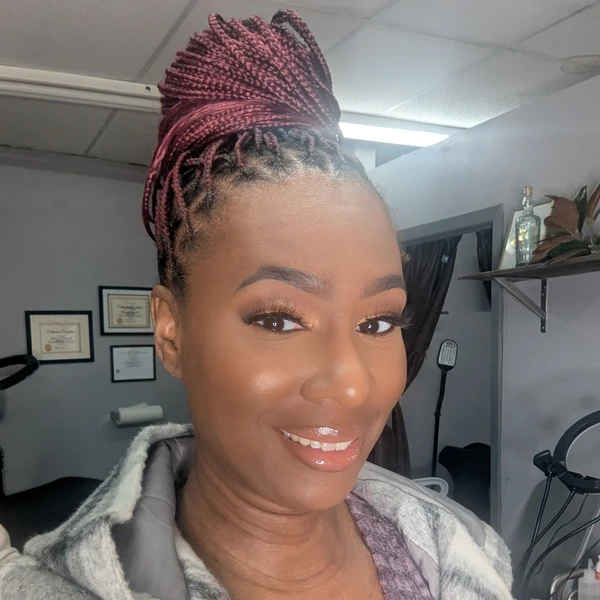
I am an adult learner returning to school to pursue my degree in Human Services. As a first-generation college student in my family, I want to prove to myself that I can achieve the higher education I have always dreamed of.
My journey is also about showing my children,now college students themselves,that education has no timeline. With dedication and perseverance, goals can be reached at any stage of life.
By completing my degree, I hope to inspire others while preparing to make a meaningful impact in my community through a career in Human Services.
Education
Western Governors University
Bachelor's degree programMajors:
- Behavioral Sciences
- Social Work
City Colleges of Chicago-Olive-Harvey College
Associate's degree programMajors:
- Liberal Arts and Sciences, General Studies and Humanities
Miscellaneous
Desired degree level:
Master's degree program
Graduate schools of interest:
Transfer schools of interest:
Majors of interest:
Career
Dream career field:
Mental Health Care
Dream career goals:
Cash Applications Specialist
Exact Sciences2016 – 20237 years
Sports
Dancing
Club1990 – 19944 years
Arts
Madison Civic Center & Young Shakespeare
Acting1992 – 1998
Public services
Volunteering
Salvation Army — Bell ringer1985 – 1997
Future Interests
Advocacy
Volunteering
Philanthropy
Entrepreneurship
Dr. Christine Lawther First in the Family Scholarship
Growing up, college was never something my family had the opportunity to experience. Higher education felt distant—something admired from afar but never fully understood or accessible. I never had a roadmap for navigating college, financial aid, or balancing education with life’s responsibilities. As the eldest daughter in my family, I learned early that responsibility often came before personal dreams. I became someone my family depended on emotionally, financially, and practically, especially as my parents began aging and needing more support. Even while raising my own children and helping guide my college-age children through their educational journeys, I knew I could not allow my own dreams to remain unfinished.
Being a first-generation college student means far more to me than earning a degree. It means breaking cycles of limitation and creating a new legacy for my family. It means showing my children that perseverance matters and that it is never too late to pursue growth and purpose. Every late night studying after work, every sacrifice, and every challenge I have overcome represent a step toward changing the future for generations after me.
My path to higher education has been anything but traditional. I am currently pursuing my degree in Health and Human Services at Western Governors University while balancing the responsibilities of motherhood, work, caregiving, and community service. There have been moments when financial strain, exhaustion, and self-doubt made continuing feel impossible. However, those moments strengthened my determination instead of weakening it. As a first-generation student, I have had to learn how to navigate college independently while carrying responsibilities many students do not face. That experience has taught me resilience, discipline, adaptability, and leadership.
In addition to my education, I am also a certified full-spectrum doula, which has deepened my passion for serving women and families during some of the most vulnerable moments of their lives. Through this work, I have witnessed firsthand the disparities many women—particularly women of color—face within healthcare systems. Too often, families lack access to compassionate support, education, and advocacy. My degree will allow me to expand my impact beyond individual care and work toward creating equitable systems that better support maternal health and family wellness.
My long-term goal is to combine my education and doula experience to develop programs that provide maternal support, mental health resources, and family advocacy services in underserved communities. I also hope to mentor other first-generation students and women who feel overwhelmed by the idea of pursuing higher education while balancing family obligations. I want others to see that success is possible even when the path is difficult.
Earning my degree is not just a personal achievement—it represents generational change. It represents every sacrifice my family made, every obstacle I refused to let define me, and every future door that will now be open for my children and community. By investing in my education, this scholarship would support not only my academic journey but also the countless families and individuals I hope to serve throughout my career.
Ernest Lee McLean Jr. : World Life Memorial Scholarship
I have sat beside women and families in some of the most vulnerable moments of their lives—during pregnancy, birth, fertility challenges, loss, fear, and uncertainty. In those moments, I have learned that mental health support is not limited to therapy offices or crisis centers. Sometimes, it begins with being heard, comforted, advocated for, and reminded that you do not have to carry fear alone.
One experience as a full-spectrum doula deeply confirmed my calling. I supported a mother who was from another country and did not speak English. Her partner was her only support in America, and he also had limited English. Through translation tools, communication apps, patience, and compassion, I was still able to connect with them and provide support during labor. When complications arose, she needed an emergency C-section to save the life of her baby. She was terrified, and as her doula, I stayed present to help guide her emotionally through the process. We were originally told I would be allowed in the room, but when circumstances changed and she had to undergo anesthesia, her partner and I were left waiting.
In that waiting area, surrounded by advanced medical technology and uncertainty, I saw how frightening birth can become when language barriers, fear, and lack of support collide. I stayed with her partner, helped him remain calm, and continued using every tool available so he could understand what was happening. When a nurse finally came out and placed his daughter in his arms, we both cried. In that moment, I realized that my role was not only about birth support. It was also about providing emotional safety, mental serenity, and human connection during a crisis.
That experience showed me how closely mental health is connected to reproductive health, medical advocacy, trauma, and access to culturally aware care. For Black women, immigrant families, and other underserved populations, these needs are even more urgent. Many face medical racism, language barriers, financial hardship, higher maternal health risks, and the pain of not always being heard or believed. My doula work has allowed me to witness the emotional weight people carry during some of the most life-changing moments they will ever experience.
I am currently pursuing my Bachelor’s Degree in Health and Human Services at Western Governors University, with the long-term goal of earning my Master’s in Social Work and becoming a licensed clinical social worker. My passion is rooted in advocacy, healing, and the belief that mental health care should not be a privilege. I want to serve underserved communities, especially individuals and families impacted by trauma, poverty, reproductive challenges, housing insecurity, and limited access to mental health services.
As a Black woman returning to school, I understand the courage it takes to pursue purpose while balancing real-life responsibilities. My journey has been intentional because I know the work I am called to do matters. I want to help change the way mental health is discussed in communities where seeking help has often been misunderstood, stigmatized, or delayed until crisis.
I am not pursuing this degree simply to earn a credential. I am pursuing it because I believe culturally aware mental health care can interrupt cycles of silence, trauma, and isolation. This scholarship would support my education and help me continue building the skills needed to stand in the gap for Black women, families, immigrants, and underserved communities. My goal is to honor the legacy of Ernest Lee McLean Jr. by turning my passion, lived experience, and professional training into lasting impact.
Michele L. Durant Scholarship
As a working mother helping put my college-age children through school while pursuing my own degree, I have learned that leadership is not simply about personal success; it is about creating opportunities for others even as you overcome your own challenges. Every day, I make sacrifices to invest not only in my future but also in my family's and my community's futures. Returning to school at this stage in my life has required determination, resilience, and unwavering faith. Still, it has also strengthened my belief that purpose does not have an expiration date.
I am currently pursuing my degree in Health and Human Services at Western Governors University while working as a certified full-spectrum doula. My work allows me to support women and families during some of the most vulnerable and life-changing moments they will ever experience. Through labor support, postpartum care, advocacy, and emotional education, I have witnessed firsthand the healthcare disparities that disproportionately affect Black women and underserved communities. I have sat beside mothers who felt unheard, unsupported, and fearful during childbirth. Those experiences have fueled my passion to become not only a healthcare advocate but also a leader committed to creating systemic change.
My education is more than a personal milestone—it is a pathway toward community transformation. I plan to use my degree to expand access to culturally competent maternal healthcare, family support services, and community education programs for women of color. My long-term goal is to develop programs that provide mothers with advocacy resources, postpartum support, mental health education, and equitable care opportunities, empowering families to thrive. I want women to feel seen, informed, respected, and supported throughout every stage of motherhood.
As a Black woman and mother, I understand the importance of representation and perseverance. My children have watched me work tirelessly to balance family responsibilities, professional commitments, and higher education, while also supporting their own academic journeys. I hope my example teaches them that obstacles should never define a person's future. I also hope to inspire other women—especially mothers returning to school later in life—to believe that their dreams and goals still matter.
In my community, I plan to continue using my voice to advocate for women who are often overlooked in healthcare settings. Through mentorship, doula care, education, and community outreach, I want to help create safer and more supportive experiences for women and families. I believe real change begins when women are empowered with knowledge, resources, and compassionate support.
Receiving this scholarship would not only relieve some of the financial strain of balancing education and family responsibilities, but it would also allow me to continue pursuing work that directly impacts the lives of women and families in my community. I am committed to using my education, leadership, and lived experiences to create lasting change, advocate for equity, and help build stronger, healthier communities for future generations.
Debra S. Jackson New Horizons Scholarship
I remember sitting beside a frightened mother in a hospital room, helping her understand medical information and encouraging her to ask questions about her care. In that moment, I realized how many families struggle not because they lack strength, but because they lack support, advocacy, and access to compassionate care. That experience, along with many others throughout my life, inspired me to pursue higher education at this stage in my journey with renewed purpose and determination.
My path has not been traditional. As a working mother, I have balanced employment, family responsibilities, and community service while also supporting my college-age children as they pursue their own educational goals. Pursuing higher education while helping my children pursue theirs has required sacrifice, discipline, and careful financial planning. There have been times when I have had to reallocate household resources, work longer hours, and put personal needs aside to make education possible for all of us. These experiences strengthened my resilience and reinforced my belief that education creates opportunities not only for individuals but for entire families and future generations.
My experiences have deeply shaped my personal values of compassion, service, advocacy, and perseverance. Through my work as a certified full-spectrum doula, I have supported women and families during pregnancy, labor, postpartum recovery, and times of loss. This work has allowed me to witness firsthand the healthcare disparities that affect underserved communities, particularly within the African diaspora. Many families face barriers related to communication, access to resources, mental health support, and culturally informed care. These experiences fueled my desire to expand my knowledge and become a stronger advocate for the communities I serve.
Pursuing my degree in Health and Human Services at Western Governors University aligns directly with both my professional aspirations and personal mission. My goal is to combine my education with my experience as a doula to provide holistic, culturally responsive support for women, children, and families. I hope to use my degree to strengthen community health programs, advocate for equitable healthcare access, and help bridge gaps between healthcare providers and underserved populations. I also aspire to create or contribute to programs that educate and empower families through advocacy, maternal health support, and community-based resources.
Higher education represents more than career advancement for me—it represents legacy, growth, and service. I want my children and others in my community to see that it is never too late to pursue their goals and invest in their future. By continuing my education, I hope to inspire others, especially nontraditional students and working parents, to believe that perseverance and purpose can overcome obstacles.
Receiving this scholarship would greatly assist me in achieving these goals by reducing the financial strain associated with balancing tuition, family responsibilities, and supporting my children through college. This support would allow me to dedicate more time and energy toward my studies, professional growth, and continued service within my community.
My life experiences have taught me that meaningful change begins with education, compassion, and advocacy. I am committed to using my degree in Health and Human Services alongside my work as a certified full-spectrum doula to create lasting, positive change for underserved families and communities. This scholarship would not only invest in my education but also in the countless individuals and families I will continue to serve throughout my career.
Sgt. Albert Dono Ware Memorial Scholarship
Service, sacrifice, and bravery are not just words to me; they are values I have witnessed and practiced throughout my life and work. As a doula and advocate for women and families, especially within underserved communities, I have seen firsthand what it means to show up for others during some of the most vulnerable moments of their lives. Sgt. Albert Dono Ware’s legacy reminds me that true leadership is rooted in courage, compassion, and the willingness to serve even when the work is difficult. His example inspires me to continue creating meaningful change within the African diaspora community in the United States.
Growing up, I learned early that many African American families face systemic barriers that affect nearly every aspect of life, including healthcare, education, housing, and economic opportunity. These challenges are often generations deep, and they continue to impact the health and stability of our communities today. Rather than allowing these realities to discourage me, they motivated me to pursue work centered around advocacy, education, and support. My journey into birth work and maternal advocacy came from a desire to help close the gaps I witnessed around me, particularly for Black mothers who are disproportionately affected by maternal health disparities.
In my work, I support women during pregnancy, labor, postpartum recovery, and family transitions. I have accompanied clients to prenatal appointments, helped bridge language barriers for immigrant families, advocated for respectful treatment in hospital settings, and provided emotional support during high-risk situations. These experiences have strengthened my belief that service requires consistency and empathy. Sometimes service looks heroic in public, but often it happens quietly through small acts of care, patience, and advocacy that improve someone’s life in meaningful ways.
Sacrifice is another value that deeply resonates with me. Supporting families often means working long hours, remaining available during emergencies, and putting the needs of others before personal comfort. Yet I continue this work because I understand the importance of being a trusted source of support for families who may otherwise feel overlooked or unheard. Sgt. Ware’s legacy reminds me that sacrifice is not about recognition; it is about commitment to something greater than oneself.
Bravery, in my experience, means challenging inequitable systems and speaking up even when it is uncomfortable. Many members of the African diaspora continue to face racial disparities in healthcare, education, employment, and criminal justice. One of the most urgent issues today is the Black maternal health crisis in America. Black women are significantly more likely to experience pregnancy-related complications and mortality compared to white women, regardless of income or education level. Addressing this issue requires systemic reform, not temporary solutions.
The policy reforms I believe are most critical include expanding access to culturally competent healthcare providers, increasing Medicaid coverage for postpartum care, investing in community-based birth workers such as doulas and lactation consultants, and improving healthcare accountability systems. Mental health resources must also become more accessible within African diaspora communities, where stigma and lack of access often prevent individuals from receiving care.
In addition to healthcare reform, investments in education and the economy are essential. Communities thrive when families have access to quality schools, affordable housing, job opportunities, and mentorship programs. Supporting Black-owned businesses and increasing pathways to higher education and entrepreneurship can create long-term generational change.
Meaningful reform requires collaboration among many stakeholders. Policymakers must prioritize equitable legislation and funding. Healthcare systems and medical professionals must commit to addressing racial bias and improving patient outcomes. Community organizations, faith leaders, educators, and advocates all play important roles in building trust and creating culturally responsive support systems. Most importantly, the voices of those directly affected must remain at the center of these conversations and decisions.
Sgt. Albert Dono Ware’s legacy inspires me to continue serving with courage and purpose. His values remind me that real change begins when individuals are willing to stand up for others, even in difficult circumstances. Through advocacy, community engagement, and compassionate care, I hope to contribute to a future where African diaspora communities are not only surviving but thriving with dignity, equity, and opportunity.
Patty Timmons Women's Healthcare Scholarship
The first time I realized how deeply healthcare decisions affect a family wasn’t in a classroom; it was across a desk, sitting with a patient who was trying to decide between pursuing fertility treatment or protecting their financial stability. I watched fear, hope, and exhaustion coexist in a single moment. That experience confirmed what I had already begun to understand: healthcare is not just clinical care; it is emotional, financial, and deeply human.
I am an undergraduate student in Wisconsin pursuing a degree in Health and Human Services, and I returned to school as an adult with purpose and clarity. My professional background in healthcare finance has placed me at the intersection of patient care and systemic barriers. I work directly with individuals and families navigating complex treatment options, helping them understand their choices during some of the most vulnerable periods of their lives. These experiences have shaped not only my career goals, but my sense of responsibility to serve with compassion and integrity.
Returning to school later in life has required sacrifice, discipline, and resilience. Unlike traditional students, I approach my education with a deep awareness of its impact. I am not learning in theory—I am learning for the people I serve every day. Balancing coursework with full-time work has strengthened my time management, focus, and perseverance. Each challenge reinforces my belief that education is not a privilege to be wasted, but a tool to be used intentionally for the good of others.
My long-term goal is to earn a Master’s in Social Work and become a licensed clinical social worker serving underserved and marginalized communities. I am particularly drawn to working with individuals facing housing insecurity, reproductive health challenges, and mental health barriers; populations that are too often overlooked within the healthcare system. I want to be a provider who listens, advocates, and helps people navigate systems that can feel overwhelming and inaccessible.
Patty Timmons’ story resonates deeply with me. Her belief in second chances and the ripple effect of education reflects my own journey. I have witnessed how access to knowledge, support, and opportunity can transform not just one life, but entire families. I am committed to using my education to extend that impact outward—helping individuals feel seen, supported, and empowered to move forward.
Receiving the Patty Timmons Women’s Healthcare Scholarship would relieve financial strain and allow me to remain fully focused on my academic and professional goals. More than financial support, this scholarship represents belief—belief in women who return to school with intention, in careers built on service, and in the power of education to create lasting change.
Through my future career in healthcare and social services, I intend to honor that belief. I will continue showing up for patients not just with knowledge, but with empathy, advocacy, and respect. My goal is simple but profound: to make healthcare feel more humane, accessible, and hopeful for the individuals and families who need it most.
Brian J Boley Memorial Scholarship
Mental illness and addiction do not arrive as isolated events; they quietly weave themselves into families, altering relationships, futures, and identities. My motivation to pursue a career in mental health is rooted in this truth and in the lived experience of watching someone I love struggle without adequate support. In the ethnic community I come from, mental health is often treated as something to endure in silence. Seeking help is frequently viewed as a weakness or a source of shame, rather than an act of survival. That silence can be devastating.
My sister’s life changed dramatically after developing an addiction to Adderall and other prescription drugs. What began as substance use evolved into severe mental illness, fundamentally altering who she was and how she could show up as a parent, a sister, and a member of our family. Her children were affected. Our entire family was affected. I have spent years trying to help her access mental health services, only to encounter barriers that felt insurmountable—programs that would not treat her mental illness until her addiction was resolved, and addiction services that were unequipped to address her underlying mental health needs. The system treated her conditions as separate problems, even though they were painfully intertwined.
Brian’s story resonates deeply with me because it reflects the same systemic failure I have witnessed firsthand. The reality that nearly 50% of individuals with severe mental illness also struggle with substance abuse is not just a statistic; it is my sister, her children, and countless families like mine. Mental health care that is fragmented, impersonal, or inaccessible leaves people behind, especially those who are financially vulnerable or culturally discouraged from seeking help. This scholarship’s mission to honor Brian by supporting future mental health professionals speaks directly to why I am pursuing this path.
I aspire to become a Licensed Clinical Social Worker because I believe social work sits at the intersection of empathy, advocacy, and action. As an LCSW, I want to provide counseling that recognizes the full humanity of each person—mental illness, addiction, trauma, culture, and circumstance included. My goal is not to “fix” people, but to walk alongside them, helping them navigate systems that are often confusing, overwhelming, and dehumanizing. While my personal experience fuels my passion, my purpose extends far beyond my own family. I want to help individuals who feel lost, ashamed, or unsure of where to turn; people who want help but do not know how to ask for it or where to find it.
Mental wellness is foundational. When people are mentally well, they are better able to care for their physical health, maintain relationships, parent their children, and envision a future for themselves. By pursuing a career in mental health, I hope to be part of the change that Brian deserved; a system that listens sooner, responds with compassion, and treats mental illness and addiction as the interconnected realities they are. This scholarship would allow me to continue my education and honor Brian’s memory by working toward a more humane, accessible, and effective mental health system for all.
Charles Cheesman's Student Debt Reduction Scholarship
WinnerWhen my son said, “No one in our family has ever finished college,” it stopped me in my tracks. In that moment, I realized that I couldn’t keep encouraging him to pursue his dreams while leaving mine behind. After more than two decades away from the classroom, I made the humbling but powerful decision to return to college and finish what I started. I researched colleges that would allow me to pursue a degree human services online and enrolled.
I’m now pursuing my Bachelor’s Degree in Human Services at Western Governors University, determined to become the first in my immediate family to earn a degree. Over the years, life’s demands—raising two children, maintaining a home, and working full time—often came before my education. But with my children now grown—one a graduate and the other currently in college—I finally saw that it was time to lead by example.
Returning to school as an adult student has been both challenging and deeply rewarding. I’ve been inducted into the National Society of Leadership and Success and invited to join the National Honor Society, achievements that remind me daily that perseverance pays off. Balancing school and work is still demanding, especially for a middle-class family that falls just outside many financial aid qualifications. Yet every course I complete moves me closer to breaking generational barriers and building a new legacy for my family.
My passion for social work comes from lived experience. I grew up in a home where mental health support could have made a world of difference. That realization fuels my desire to become a licensed clinical social worker, focusing on mental health advocacy in the Black community. Before returning to school, I worked as a Housing Coordinator, helping young adults aged 18–23 secure housing and learn life skills. I also served as a Financial Specialist at a fertility clinic, guiding patients through emotional and financial challenges. Those roles deepened my belief in the power of empathy and education to change lives.
Receiving this scholarship would relieve a significant financial burden, allowing me to focus fully on my studies and continue serving my community. It would also help my son and me—both full-time students—manage tuition without the constant worry of debt.
Completing my degree isn’t just a personal goal; it’s a promise to my family and to myself. It’s proof that it’s never too late to grow, to lead, and to become the change you once needed.