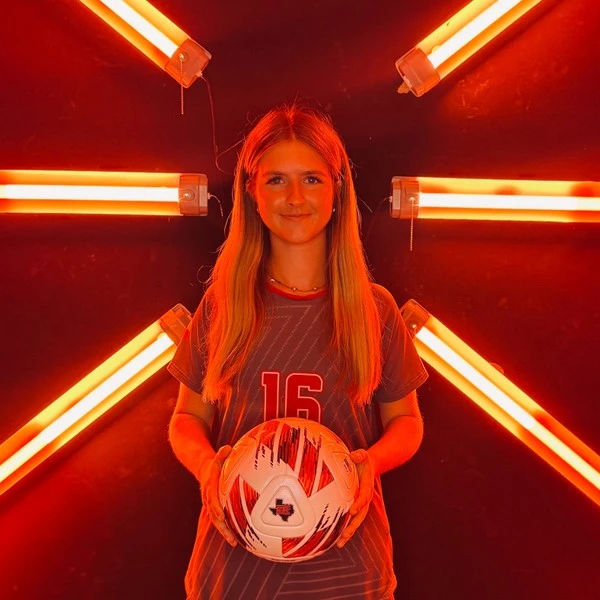
Aidan Proud
1x
FinalistAidan Proud
1x
FinalistBio
My name is Aidan Proud, and I am a hard working and resilient student with a deep passion for science, wellness, and helping others. I have played soccer my entire life, and the discipline, teamwork, and perseverance I've gained through the sport has shaped me into who I am today. I will be furthering my academic and athletic career at Sul Ross State University playing Division 2 soccer. A commitment that reflects my drive, competitiveness, and dedication both on and off the field. My long term career goal is to become a physical therapist, where i hope to help others regain strength, confidence, and independence.
My journey hasn't always been easy. I lost my mom, and her passing has been one of the most defining and difficult experiences in my life. Navigating grief while staying focused on school, soccer, and my future has taught me strength, resilience, maturity, and compassion. Growing up with family struggles has pushed me to work harder, stay grounded, and appreciate every opportunity I have. Her memory motivates me everyday to keep moving forward and become someone to be proud of.
Despite challenges at home, I strive to stay positive, support the people around me, and make the most of every opportunity. These experiences have given me a strong sense of empathy and a desire to help others, qualities that drive my interest in the field of physical therapy.
I am committed to building a future rooted in service, leadership, and resilience. There scholarships would help me perusing my education, my athletic career, and my dream of becoming a physical therapist.
Education
Flour Bluff H S
High SchoolMiscellaneous
Desired degree level:
Doctoral degree program (PhD, MD, JD, etc.)
Majors of interest:
- Sports, Kinesiology, and Physical Education/Fitness
Career
Dream career field:
Medical Practice
Dream career goals:
Physical therapist
Sports
Soccer
Varsity2010 – Present16 years
Public services
Volunteering
Gulf Coast Humane Society — volunteer2023 – Present
Future Interests
Advocacy
Entrepreneurship
Eden Alaine Memorial Scholarship
Losing a parent changes anyone. But losing a parent to suicide, that you witnessed right in front of you, leaves a different kind of silence behind. It is not just grief. It is confusion, shock, anger, love, and questions that never seem to settle. My mom was supposed to be my safe place, the person who loved me first and most consistently. When she died, that foundation disappeared, and I was left trying to understand something that felt impossible to understand.
A lot of people lose parents. That pain is universal. But not everyone is left wondering why the person who was supposed to protect them made a choice that feels like abandonment. That question, "why" became the loudest thought in my mind. I replayed moments, conversations, memories, searching for something I missed. I questioned myself. I questioned whether I was enough. Grief turned into self-blame, and self-blame turned into silence.
The trauma did not stop at loss. My body carried what my mind could not process. I struggled with severe PTSD. Flashbacks came without warning. My heart would race, my body would tense, and I would feel like I was back in that moment again, listening to the gun shot ring around me. The stress became so overwhelming that I began experiencing seizures. It felt like my body was collapsing under the weight of emotions I did not know how to hold. I was exhausted — mentally, physically, and spiritually.
There was a point where I felt completely worn down. Grief can make you feel like you are drowning quietly while everyone else keeps breathing. I became tired of being strong. Tired of pretending I was okay. Tired of carrying memories that felt heavier than I was. In my lowest moment, I didn’t want to keep fighting the pain anymore. I felt empty, and that emptiness scared me.
But surviving that moment changed me.
I realized that pain can either close you off or open your heart wider. Slowly, with support and time, I began choosing to stay. I began choosing to heal. Healing did not mean forgetting. It meant learning how to live alongside the grief without letting it define every part of me.
Losing my mom forced me to grow up faster than I should have. It made me more aware of how fragile people are, even the ones who seem strongest. I notice when someone’s smile doesn’t reach their eyes. I check in when others might stay quiet. I understand now that mental health struggles are often invisible battles. That awareness has shaped how I love people, intentionally, consistently, and openly.
This experience has also shaped my resilience. I know what it feels like to hit emotional rock bottom and still find a way to stand up again. I know what it means to carry trauma and still choose hope. My story is not just one of loss; it is one of survival. It is proof that even when life breaks you in unimaginable ways, you can rebuild piece by piece.
I will always wish my mom were here. I will always carry questions that may never have answers. But I refuse to let her death be the end of my story. Instead, it has become the reason I value life more deeply, speak more honestly about mental health, and strive to be someone who stays when things get hard.
Grief shaped me. Trauma challenged me. But resilience defines me.
Elijah's Helping Hand Scholarship Award
Being a lesbian who presents very feminine has deeply shaped my mental health and how I experience the world. Because I don't fit the stereotype people often expect when they think of a gay woman, my identity is often questioned, misunderstood, or treated like a surprise. On the outside, people assume I'm straight, and that assumption follows me into conversations, friendships, interactions. At first, it seems harmless, but the moment I button my girlfriend, everything changes.
What hurts the most is the backlash that comes simply from talking about my girlfriend the same way other girls talk about their boyfriends. I don't make it Stanton or political, I just want to share stories and talk about someone that has such deep meaning and impact in my life. Yet when I do it, I'm often met with awkward silence, uncomfortable looks, or comments that make it clear I've crossed some invisible line. Suddenly, something that felt normal becomes "too much", even though heterosexual relationships are discussed freely and constantly.
Because I present as very feminine, people are often visibly surprised when they find out I'm lesbian. That surprise carries weight. It feels like they had already decided who I was before I ever got the chance to tell them. Some react by asking invasive questions, others laugh it off like it’s unexpected or unreal, and some treat it as a phase or something that doesn’t quite make sense. That reaction makes me feel unseen, as if my identity doesn’t fully register as real to them.
This constant misunderstanding has left me feeling isolated. I often feel like I exist in a space where I don’t fully belong anywhere. Straight girls sometimes pull back or act differently once they know, even if nothing about me has changed. At the same time, being feminine means I’m sometimes not immediately recognized or accepted in LGBTQ+ spaces either. That in-between feeling can be incredibly lonely. It’s exhausting to always feel like I have to explain myself or prove that my identity is valid.
The emotional impact of this isolation has been heavy. It has made me second-guess myself in conversations, hesitate before mentioning my girlfriend, and wonder whether it’s worth being open at all. I’ve caught myself editing my words, changing pronouns, or staying quiet just to avoid judgment or discomfort. Over time, that silence starts to hurt. Wanting to talk about someone you love shouldn’t feel like a risk, but for me, it often does.
What people don’t realize is that the desire is simple: I want the same freedom other girls have. I want to laugh about my girlfriend, share how beautiful she is, and talk about love without it being treated as shocking or inappropriate. I want my identity to be accepted without explanation or disbelief. Being lesbian doesn’t cancel out my femininity, and being feminine doesn’t make my sexuality any less real.
This experience has shaped me into someone more aware of how deeply assumptions can hurt. It has also taught me the importance of visibility and self-acceptance. Even when I feel judged or misunderstood, choosing to live honestly matters. I am learning that I don’t owe anyone a performance or an explanation. My love is real, my identity is valid, and I deserve to take up space, just like anyone else.
Sabrina Carpenter Superfan Scholarship
Sabrina Carpenter’s music entered my life at a time when I didn’t yet know how to articulate what I was feeling. I was learning who I was, who I wanted to be, and how to sit with emotions that felt too big to hold on my own. Her songs became a steady presence, something familiar I could return to when everything else felt uncertain. They didn’t give me answers, but they gave me language, and sometimes that was enough to keep me grounded.
What made her music so impactful was how honest it felt. Sabrina doesn’t hide from vulnerability, but she never lets it define her as weak. Her songs talk about self-worth, heartbreak, growth, and reclaiming control of your own story. Listening to them helped me realize that confidence isn’t about having everything figured out, it’s about trusting yourself even when you don’t. In moments when I doubted my voice or felt small, her music reminded me that growth is allowed to be imperfect and that strength can exist alongside sensitivity.
Her songs also helped me feel seen. There were times when it felt like my emotions were too complicated or hard to explain, but hearing them reflected in music made them feel valid. I wasn’t “too much” for feeling deeply, I was human. That realization shifted how I treated myself. Instead of pushing my feelings away, I began to listen to them. Her music helped me understand that self-expression isn’t something to apologize for; it’s something to honor.
Seeing Sabrina on tour was one of the most meaningful experiences of my life because it brought all of that emotion into one unforgettable moment. Standing in the crowd, surrounded by people who felt the same connection to her music, I felt a sense of belonging I didn’t expect. It wasn’t just about watching an artist perform, it was about witnessing someone fully step into their power and share it without hesitation.
Watching her live made everything she represents feel real. She performed with confidence, joy, and authenticity, and it was impossible not to feel inspired by that energy. Seeing the songs that once helped me through difficult moments performed on stage felt like a full-circle moment. It was emotional in a way I didn’t anticipate, almost like honoring a past version of myself who needed that music to survive, while celebrating the growth that followed.
That night stayed with me long after the concert ended. I walked away feeling lighter and more assured of who I am becoming. It reminded me that art has the power to mark chapters of our lives, to help us heal, and to remind us how far we’ve come. Sabrina’s music no longer just represented struggle for me, it represented resilience, confidence, and progress.
The impact Sabrina Carpenter has had on my life goes far beyond being a fan. Her music helped shape how I view myself, my emotions, and my voice. Seeing her on tour showed me what it looks like to own your journey unapologetically and to turn growth into something powerful and shared.
Her career and her art remind me that becoming yourself is a process, and that process is something worth celebrating.
Harvest Scholarship for Women Dreamers
My “pie in the sky” dream is not a laid out cut and dry dream, it is deep rooted and can be taken down so many avenues. It is to build a life that reaches far beyond me, a life where my voice, my resilience, and my story help shape a more compassionate world. I dream of becoming someone whose words create change, whose leadership opens doors, and whose presence makes others feel seen in ways I once desperately needed.
This dream was born in moments of quiet survival, not loud success. It grew in the spaces where I had to sit with myself and learn how to keep going. When life felt heavy, uncertain, or unfair, words became my anchor. Writing helped me process what I couldn’t say out loud. Reading showed me that pain could be transformed into meaning. Over time, I realized that the same voice I used to survive could be the voice I use to lead.
What makes this dream feel “pie in the sky” is how big it truly is. I don’t just want stability or comfort, I want impact. I want to advocate for people who feel unheard. I want to stand in rooms where decisions are made and bring empathy with me. I want to prove that someone shaped by adversity can still rise, still lead, still inspire. That kind of future feels just out of reach because it requires courage I am still growing into and confidence I am still learning to claim.
There are days when doubt whispers that my dreams are unrealistic, that my past disqualifies me, or that my voice is too small to matter. But I’ve learned something important: the very things that tried to break me are what give my dream its power. I didn’t come to this vision untouched, I came to it forged. And that makes all the difference.
To reach this future, I know the journey will demand commitment. Education will be my foundation. I plan to sharpen my ability to think critically, communicate clearly, and challenge systems that need change. I will continue to seek leadership opportunities that push me outside my comfort zone, because growth has never happened for me in easy spaces. I will surround myself with mentors and communities that believe in accountability, integrity, and service.
But more than any resume line or achievement, the most important step is choosing courage, again and again. Courage to speak when it’s easier to stay quiet. Courage to dream bigger than my circumstances. Courage to believe that my life can mean something not just to me, but to others.
My “pie in the sky” isn’t just a dream of success, it’s a promise to myself. A promise that I will turn hardship into hope, struggle into strength, and ambition into action. The sky may feel far away, but I’ve learned that distance doesn’t stop those who keep reaching.
And I’m reaching, higher than ever before.
Dream BIG, Rise HIGHER Scholarship
Education has been the anchor that gave my life direction during times when everything else felt unstable. For me, learning has never been limited to textbooks or classrooms, it has been the process through which I learned how to survive hardship, understand myself, and shape a future rooted in purpose. Through education, I found structure during chaos, meaning during grief, and clarity about how I want to use my experiences to help others.
One of the most significant challenges I have overcome was losing my mom to suicide, and witnessing her death. That loss altered my life instantly and permanently. Grief followed me into every part of my daily routine, including school. Concentration became difficult, motivation wavered, and the future felt uncertain. There were days when simply attending class felt like a victory. Education did not erase that pain, but it gave me something essential at a time when I needed it most: consistency. School provided routine when my personal world felt unpredictable, and that structure helped me keep moving forward even when emotionally I felt stuck.
As time passed, education became more than a routine, it became a tool for healing and self-discovery. Writing assignments allowed me to reflect on emotions I couldn’t always explain out loud. Reading and discussion-based classes helped me understand that struggle is not a personal weakness, but a shared human experience. Learning how to think critically also taught me how to examine my own thoughts rather than be controlled by them. Education gave me language for feelings that once felt overwhelming and showed me that growth often comes from discomfort.
Throughout this journey, supportive teachers, counselors, and mentors played a crucial role. Their patience and understanding showed me that education works best when students are seen as whole people, not just academic performers. Learning how to ask for help—and realizing that doing so is a strength rather than a failure—was one of the most important lessons I gained. That realization has stayed with me and continues to shape how I want to show up for others in the future.
Athletics played an equally important role alongside my education in giving me direction. As a student-athlete, I learned discipline, accountability, and how to work toward goals even when motivation is low. Soccer, in particular, gave me a sense of belonging and purpose when I needed it most. Being part of a team reminded me that progress does not happen alone and that trust and support are essential for success. Athletics helped me rebuild confidence and resilience, reinforcing lessons I was learning in the classroom.
However, my experiences also revealed a significant gap within sports culture. While physical performance is heavily emphasized, mental and emotional well-being are often overlooked. I saw how pressure, stress, and unaddressed mental health struggles can impact athletes both on and off the field. Education helped me put words to these observations and understand the deeper connection between mental health, performance, and long-term success. It gave me a framework to analyze systems rather than blame individuals.
As I continued learning, my goals became clearer. I realized that I want to use my education to help create athletic environments that support the whole person, not just the athlete. My long-term vision is to help build an integrated athletic facility or program where professionals from multiple disciplines—coaches, athletic trainers, mental health professionals, nutritionists, and mentors—work together toward one shared goal: the well-being and development of the athlete. I believe that when athletes are supported mentally, emotionally, and physically, they are not only healthier but also more successful.
Education is the foundation that will allow me to pursue this vision responsibly and effectively. Whether through studying sports science, psychology, health, leadership, or a related field, I want to gain the knowledge necessary to create evidence-based programs that prioritize care, communication, and collaboration. I want to be someone who understands both the science behind performance and the human side of struggle. My education will equip me with the tools to advocate for change and implement systems that genuinely support people.
The challenges I have faced have also shaped my values. Losing my mom taught me empathy, patience, and awareness of how many people struggle silently. Navigating grief while continuing my education showed me that resilience is not about pushing pain aside, but about learning how to move forward with it. These experiences have made me more attentive to others and more motivated to create spaces where people feel safe asking for help before reaching a breaking point.
Education has given me perspective. It taught me that hardship does not disqualify someone from success—it can sharpen their sense of purpose. It showed me that growth is rarely linear and that setbacks do not define the outcome. Most importantly, it helped me realize that my experiences, while painful, can be transformed into something meaningful and constructive.
Looking ahead, I hope to use my education to create a better future not only for myself but for others as well. I want to contribute to systems that value mental health, encourage honest conversations, and support people as whole individuals. By combining education, athletics, and advocacy, I aim to help change the culture around performance and well-being. Education gave me direction when I felt lost, and it continues to guide me toward a future built on resilience, compassion, and purposeful impact.
Valerie Rabb Academic Scholarship
My name is Aidan Proud, and the person I am today has been shaped by loss, resilience, and a deep understanding of how closely mental health and performance are connected. One of the most difficult experiences of my life was losing my mom to suicide. Witnessing her take her life at such a young age fundamentally changed how I see the world, myself, and the importance of support systems. It forced me to confront trauma, grief, and mental health challenges earlier than most people my age, and surviving that experience required strength I didn’t know I had.
In the aftermath of my mom’s death, I struggled with instability, emotional pain, and the feeling that everything I once relied on had been taken from me. What helped me move forward was learning that healing is not something you do alone. Through therapy, journaling, and the unwavering support of my adoptive parents, I began to understand my emotions rather than run from them. I learned how to sit with pain, how to ask for help, and how to keep going even when life felt overwhelming. These experiences taught me that resilience is not about ignoring hardship, it’s about facing it and choosing growth anyway.
Athletics became one of the most important anchors in my life. Soccer gave me structure, discipline, and a sense of belonging when I needed it most. Being part of a team showed me how powerful it is when people work toward a shared goal and genuinely support one another. At the same time, my experiences made me aware of how often athletes are expected to perform while silently struggling. Too many athletes have access to physical training but lack mental, emotional, and personal support.
Because of this, my long-term career goal is to create an athletic facility where professionals from multiple disciplines come together with one common goal: supporting the athlete as a whole person. I envision a space where coaches, athletic trainers, mental health professionals, nutritionists, and academic or life-skills mentors collaborate rather than operate separately. In this environment, athletes wouldn’t have to choose between performance and well-being, they would be developed in both at the same time.
I want this facility to be a place where asking for help is normalized, where mental health is treated with the same seriousness as physical injury, and where athletes feel seen beyond their statistics or results. My personal experiences have shown me what happens when people don’t have access to comprehensive support, and I am driven to help create something better.
What I overcame did not break me, it gave me clarity. Losing my mom was the hardest experience of my life, but it also gave me purpose. I want to turn pain into progress and create systems that protect, empower, and uplift others. By bringing professionals together under one mission, I hope to change the culture of athletics and make a lasting, positive impact on the lives of athletes who deserve to be supported in every aspect of who they are.
RonranGlee Literary Scholarship
Plato, Republic, Book VII (trans. Benjamin Jowett, adapted):
“And now, I said, let me show in a figure how far our nature is enlightened or unenlightened:—Behold! human beings living in an underground den… they have been there from their childhood, and have their legs and necks chained so that they cannot move, and can only see before them… and behind them a fire is blazing at a distance, and between the fire and the prisoners there is a raised way… and you will see, if you look, a low wall built along the way… like the screen which marionette players have in front of them… and they see only their own shadows, or the shadows of one another, which the fire throws on the opposite wall of the cave.”
In the Allegory of the Cave, Plato argues that ignorance is not merely a lack of information but a condition of psychological captivity sustained by habit, social reinforcement, and fear of transformation; true knowledge, therefore, is not additive learning but a painful reorientation of the soul that destabilizes identity, power, and belonging.
Plato’s cave is not a metaphor for stupidity, nor is it a simple contrast between “false” and “true” beliefs. Rather, it is an analysis of why human beings cling to distorted realities even when liberation is possible. The prisoners are not deceived by accident; they are shaped by an environment that rewards conformity and punishes deviation. Plato’s deeper concern is not epistemological in the narrow sense, what we know, but existential, why we resist knowing at all.
The chains binding the prisoners are not described as externally imposed violence. There is no jailer actively restraining them. This omission is deliberate. Plato suggests that the most powerful constraints on human understanding are internalized. Habit, repetition, and social consensus become invisible restraints. The prisoners do not struggle because they have never conceived of an alternative orientation toward reality. Their immobility is not experienced as oppression; it is experienced as normalcy.
The shadows, likewise, are not presented as obvious illusions. They are coherent, consistent, and shared. This is crucial. Plato implies that falsehood becomes most convincing when it is collectively affirmed. Truth, in contrast, often appears disruptive precisely because it fractures consensus. The shadows “make up the whole of their knowledge,” not because the prisoners are incapable of reason, but because reason operates only on the material it is given. If perception is distorted at the source, rationality itself becomes an instrument of error rather than correction.
Plato’s critique, then, is not of ignorance alone but of confidence within ignorance. The prisoners would argue about the shadows, assign names to them, and compete over interpretations. This detail reveals Plato’s most unsettling claim: intellectual sophistication does not guarantee proximity to truth. One can build entire systems of meaning atop illusion and defend them passionately. The danger lies not in not knowing, but in mistaking familiarity for reality.
When one prisoner is freed and compelled to turn toward the fire, Plato emphasizes discomfort rather than enlightenment. The light blinds; the new perspective confuses. This is a rejection of the idea that truth is immediately gratifying. Knowledge wounds before it heals. It strips away identity, status, and certainty. The freed prisoner is not celebrated, he is disoriented. Plato suggests that human beings often reject truth not because it is false, but because it threatens the narrative coherence of their lives.
This moment reveals that education, for Plato, is not the transmission of facts but the reorientation of desire. The soul must be trained to endure uncertainty. Without this preparation, exposure to truth feels like violence. The freed prisoner’s pain underscores Plato’s belief that ignorance is emotionally protected. Illusion cushions the psyche; reality destabilizes it.
The ascent out of the cave intensifies this idea. The sun, representing the Form of the Good, cannot be perceived immediately. Vision must adjust gradually. Plato’s point is not merely that truth is complex, but that the human soul is initially unfit for it. This challenges the assumption that all minds are naturally oriented toward truth. Instead, Plato posits that the soul must be disciplined, not affirmed.
Importantly, once the prisoner understands reality, his impulse is not withdrawal but return. This choice reveals Plato’s ethical core. Knowledge entails responsibility. To see clearly while others remain chained is not a private victory but a moral burden. Yet this return is met not with gratitude but hostility. The prisoners mock the freed one, interpreting his disorientation as proof that leaving the cave is harmful.
Here Plato exposes a grim political insight: societies often treat truth-tellers as threats. The freed prisoner destabilizes the hierarchy of the cave. Those who excelled at interpreting shadows lose their authority. Truth is dangerous not because it is wrong, but because it redistributes power. Plato anticipates the fate of Socrates himself, condemned not for ignorance but for unsettling comfortable falsehoods.
The prisoners’ hostility reveals that belief systems are not neutral frameworks for understanding reality; they are social structures that distribute meaning and status. To challenge the shadows is to challenge identity. Thus, resistance to truth is not primarily intellectual, it is existential. Plato’s cave shows that humans defend illusion not out of malice, but out of self-preservation.
Plato’s most radical claim emerges here: enlightenment is incompatible with mass approval. The freed prisoner cannot easily reintegrate. His vision no longer aligns with the cave’s values. This suggests that truth alienates before it unites. Plato does not offer a comforting vision of gradual societal awakening. Instead, he implies that philosophical insight isolates those who attain it.
Yet Plato does not conclude in despair. The cave is not inescapable by nature; it is escapable through discipline. The allegory ultimately argues that human beings are educable, but not effortlessly so. Liberation requires force, not coercion by others, but force against one’s own resistance. This is why the prisoner is “compelled” to turn. Plato insists that growth is not always chosen freely; sometimes it must be imposed by reason against desire.
This view challenges modern assumptions about autonomy. Plato suggests that left to their preferences, individuals may choose illusion indefinitely. Freedom, paradoxically, may require constraint, training the soul to tolerate truth before it can love it. This is not authoritarianism but moral realism: the recognition that desire does not naturally aim at the good.
The sun, as the final symbol, represents more than knowledge. It represents intelligibility itself, the condition that makes truth possible. To see the sun is to understand not just what is true, but why truth matters. It grounds ethics, politics, and meaning. Without it, life is reactive rather than principled.
Thus, Plato’s cave is not an ancient thought experiment about perception. It is a diagnosis of the human condition. We are born into narratives we did not choose, rewarded for repeating them, and punished for questioning them. Liberation demands loss, of certainty, of belonging, of simplicity. But Plato insists that this loss is the price of becoming fully human.
Ultimately, the allegory argues that truth is not comforting, democracy is not synonymous with wisdom, and education is not neutral. To know is to be changed. To see clearly is to bear responsibility. And to leave the cave is not to escape suffering, but to choose a suffering that leads somewhere real.
Love Island Fan Scholarship
Challenge Name: “Flame & Fling”
Objective: Turn up the heat, test chemistry, flirtation, and attraction while giving islanders a chance to spark new connections or strengthen existing ones.
Setup:
• The villa terrace is transformed into a sultry, candle-lit lounge with soft lighting, rose petals, and a central “heat stage” surrounded by small private nooks.
• Each islander receives a sexy, fun accessory, like a blindfold, feather, or silk scarf, that will play a role in the challenge.
• Sensual music sets the mood, and the temperature is warm, making it feel like a sultry summer night.
Rules:
1. Islanders pair up or choose a partner for the challenge. Single islanders can flirt with anyone, adding romantic tension.
2. The goal is to earn points by seducing, connecting, or impressing their partner through a series of mini-games.
3. Each station tests chemistry, confidence, and flirtation, points are awarded for reactions, laughter, smiles, and playful banter.
Challenge Stations:
• Blindfold Tease: One partner is blindfolded while the other leads them along a sensual path with textures like silk, sand, or petals. The blindfolded partner must guess where they are being guided and how well they trust their partner.
• Whisper & Confess: Couples take turns whispering a “secret compliment” or flirty confession. Points are earned if the partner reacts with a smile, blush, or laugh.
• Dance of Desire: Couples perform a slow, close dance with fun prompts (spins, dips, or a cheeky pose). Judges, other islanders, award points for chemistry, confidence, and connection.
• Rose Petal Toss: One partner tosses rose petals toward the other, aiming to “score points” by landing petals on a target on their partner’s body. The other partner has to react flirtatiously while catching or dodging them.
Winning the Challenge:
• Couples or pairs with the most points reach the “Flame Lounge”, a private, candle-lit date area with drinks, music, and time to flirt freely.
• The winning single islander gets to choose a partner for a special one-on-one romantic twist, which can spark jealousy or new connections in the villa.
Twist for Drama:
• Halfway through, the host announces a “Hot Swap”, where partners can choose to stay with their current pair or switch to someone new, forcing islanders to make bold moves, flirt openly, and test loyalties.
• A mystery reward is hidden in the Flame Lounge: a rose that allows the winner to call a secret evening chat with another islander, creating tension and sparks for later.
Outcome:
• “Flame & Fling” emphasizes flirtation, chemistry, and physical closeness without explicit content.
• It’s playful, sexy, and designed to create jealousy, laughter, and romance, all while testing the strength of connections in the villa.
JK and Mary Ann Newville Memorial Engineering and Nursing Scholarship
My experience with mental health has profoundly shaped my beliefs, my relationships, and the path I hope to pursue in my future career. Navigating trauma, anxiety, and recovery at a young age forced me to confront realities that many people do not face until much later in life. While these experiences were painful, they reshaped how I see strength, connection, and responsibility, to myself and to others.
First, my beliefs about strength and success changed. I once believed strength meant pushing forward without pause and handling everything on my own. Mental health challenges taught me that real strength is knowing when to ask for help, setting boundaries, and choosing healing even when it feels uncomfortable. I learned that progress is not linear and that setbacks do not define failure. These lessons have made me more compassionate toward others and less judgmental of struggles I cannot see.
My relationships were also deeply influenced by my mental health journey. During my hardest moments, I learned who was willing to show up consistently, listen without trying to “fix” me, and offer patience rather than pressure. That experience changed how I show up for others. I now value honesty, emotional presence, and trust over surface‑level connections. I am more intentional in how I communicate, more aware of the impact of my words, and more willing to support others quietly and consistently, just as I was supported. Mental health taught me that relationships are built through empathy, not perfection.
Perhaps the most lasting influence has been on my career aspirations. Experiencing mental health struggles firsthand exposed gaps in how young people are supported in schools, athletics, and communities. Too often, individuals are expected to perform without being taught how to cope with stress, grief, or pressure. As a result, I am drawn toward a career path that allows me to advocate for better systems, whether through education, policy, youth development, or athletics. I want to help create environments that recognize people as whole individuals, not just as grades, statistics, or outcomes.
Mental health also gave me a strong sense of purpose. I understand the importance of early intervention, access to resources, and supportive leadership because I have lived the consequences of their absence and their presence. My goal is to use my education to turn lived experience into informed action, to help shape programs, policies, or organizations that prioritize long‑term well‑being alongside achievement.
Ultimately, my mental health journey did not weaken my ambitions; it clarified them. It taught me resilience, empathy, and accountability. It shaped the way I believe in people, invest in relationships, and envision my future. I carry these lessons forward not as a burden, but as a foundation, one that motivates me to contribute to a world where support is normalized, healing is accessible, and no one is expected to struggle alone.
Summer Chester Memorial Scholarship
Throughout my life, I have experienced the power of support and compassion in ways that have shaped who I am today. After losing my mother, I faced a period of unimaginable grief that left me nonverbal and struggling with severe anxiety and PTSD. During that time, the people around me, my adoptive parents, teachers, counselors, and even teammates, gave me the gift of presence. They offered stability when my world felt chaotic, encouragement when I couldn’t speak, and patience when progress seemed impossible. Their support didn’t erase my pain, but it made survival possible and eventually gave me the tools to rebuild my life.
Even small acts of care made a huge difference. A teacher who checked in quietly each morning, a coach who noticed when I was struggling and adjusted expectations, or a friend who simply listened without judgment, these were the gestures that reminded me I was not alone. The consistent thread through all of these acts was that they came from people who saw me as more than my trauma. They treated me as someone capable of growth, resilience, and contribution, even when I couldn’t see it myself.
The impact of this support inspired me to pay it forward. I plan to do so by creating spaces where others feel seen, supported, and encouraged to grow, especially those facing challenges they cannot yet overcome alone. Whether through mentoring younger students, volunteering in mental health initiatives, or advocating for systemic change in schools and athletics, I want to ensure that no one feels as isolated as I once did. I aim to approach each opportunity with the same patience, empathy, and consistency that was shown to me.
Additionally, I hope to amplify support by designing practical solutions that make help more accessible. For example, I have thought about creating programs that teach students how to manage stress, recognize trauma, and find trusted mentors or resources. Just as someone once guided me toward healing, I want to guide others toward tools and strategies that allow them to navigate challenges without feeling alone or overwhelmed.
Ultimately, paying it forward is not just about helping someone in a moment of need; it is about fostering resilience, connection, and opportunity. The generosity that was given to me, through time, care, and guidance, taught me that even small actions can have a lasting impact. I plan to honor that generosity by being present for others, advocating for those who cannot yet advocate for themselves, and creating systems that turn compassion into real, lasting support. By doing so, I hope to extend the same lifeline I was given, and to ensure that others have the chance to grow, heal, and thrive.
Sammy Ochoa Memorial Scholarship
I am a person shaped by loss, resilience, and the determination to transform pain into purpose. At a young age, my life changed in a way that cannot be undone: I lost my mother to suicide. I was present when it happened, and the trauma of that moment altered how I experienced the world. In the months that followed, grief overwhelmed me to the point where I became nonverbal for nearly a year. I did not have the language to explain my pain, only the weight of it.
That loss fractured my sense of safety and stability. I struggled with post‑traumatic stress that affected both my mind and body, including severe anxiety episodes that disrupted my daily functioning. For a long time, survival itself felt like work. There were moments when the pain convinced me that continuing forward was impossible. I experienced a mental health crisis that forced me to confront how deeply I was hurting.
What changed my life was not the absence of struggle, but the presence of help. Through professional care, support systems, and relentless effort, I began to heal. Recovery was not quick or simple. It required learning how to speak again, first emotionally, then confidently. It required facing fear instead of avoiding it, and choosing growth when giving up felt easier. Over time, I rebuilt my sense of self and reclaimed my future.
My adoptive parents played a critical role in that healing. They provided stability when my world felt unsafe and consistency when everything else felt uncertain. Their commitment showed me what unconditional support looks like and taught me that family is not only defined by biology, but by love, sacrifice, and presence.
These experiences drive how I plan to make a positive impact on the world. I want to use my education to advocate for young people who experience trauma but are expected to function as if nothing happened. Too many students suffer in silence because systems prioritize performance over well‑being. Through education, I want to gain the tools to help build environments, whether in schools, athletics, or community programs, that recognize the whole person.
I do not see my past as something that disqualifies me from success. I see it as the reason I am capable of empathy, leadership, and resilience. I am here because I fought to be, because others fought for me, and because I believe my story can become a source of strength for others.
My goal is not just to succeed, but to make survival easier for someone else. Through education, I intend to turn endurance into impact and loss into lasting change.
Be A Vanessa Scholarship
I plan to use my education as a tool for advocacy, leadership, and systemic change, especially for young people who grow up navigating hardship while being expected to succeed without support. Education, to me, is not only about personal achievement; it is about gaining the knowledge and credibility needed to improve systems that too often fail vulnerable individuals.
My motivation is deeply rooted in adversity my family and I have faced. Losing my mother at a young age permanently changed my understanding of stability, grief, and resilience. That loss forced me to grow up quickly and confront emotional challenges that many of my peers did not yet understand. It was a defining experience that shaped how I view struggle, not as weakness, but as something that demands compassion, patience, and action.
Following that loss, my adoptive parents became the foundation that carried me forward. They stepped into roles that required immense emotional strength, consistency, and sacrifice. Through their support, I learned what perseverance looks like in practice. They showed me that adversity does not disappear through avoidance, but through commitment, accountability, and unconditional care. Watching them rebuild stability for our family taught me the importance of community, responsibility, and showing up even when circumstances are overwhelming.
These experiences have shaped how I plan to use my education. I want to pursue a path that allows me to improve systems that impact young people, particularly in education, athletics, and mental health support. I have seen firsthand how students and athletes are often expected to perform without being taught how to cope with pressure, grief, or setbacks. Through higher education, I aim to gain the skills necessary to advocate for smarter policies, better support structures, and preventative programs that address problems before they become crises.
I am especially interested in working at the intersection of youth development and institutional leadership. Whether through education, policy, or program design, I want to help create environments where students are supported as whole people, not just measured by grades or performance. My background has given me a perspective that values empathy alongside discipline, and resilience alongside ambition.
Adversity has taught me that progress is rarely linear. It requires reflection, adaptability, and persistence. Education will give me the tools to transform lived experience into meaningful impact, to speak with authority, design effective solutions, and lead with understanding rather than assumption.
I do not view my past as something to overcome and leave behind, but as a foundation for the work I want to do. By using my education to amplify support for others facing hardship, I hope to contribute to a world that measures success not only by achievement, but by how well we care for one another.
Matthew Hoover Memorial Scholarship
I play competitive soccer, a sport that has shaped not only my athletic identity but also how I approach responsibility, discipline, and time management in my academic life. Soccer is not something I do casually, it is a year round commitment that includes practices, games, travel, strength training, and recovery. Balancing that level of dedication with schoolwork has been challenging, but it has also been one of the most valuable learning experiences of my life.
A typical week during the season requires careful planning. Practices often run late, games take up entire evenings, and weekends are frequently spent traveling. On top of that, there are expectations to preform consistently, improve technically, and contribute as a teammate. Academically, deadlines do not adjust around game schedules. Tests, essays, and long term projects still demand the same level of preparation regardless of how tired I am after training. Early on, I learned talent alone, on the field or in the classroom, was not enough. I needed structure.
Soccer forced me to become intentional with my time. I learned to plan assignments in advance, use small pockets of time efficiently, and hold myself accountable even when motivation was low. Long bus rides became study sessions. Free periods became opportunities to get ahead rather than catch up. Instead of procrastinating, I began breaking larger assignments into manageable steps so that nothing became overwhelming during peak competition weeks. These habits did not come naturally at first, but they became essential to staying balanced.
There were moments where balance felt overwhelming. Playing at a competitive level means physical fatigue is unavoidable, and there were days where focusing in class after intense training felt nearly impossible. However, soccer taught me perseverance and adaptability. I learned how to adjust my routines, communicate with teachers when necessary, and recognize when I needed to prioritize rest so I could preform effectively in both areas. Rather than seeing school and soccer as competing forces, I began to view them as systems that require cooperation and discipline.
One of the most meaningful lessons soccer has taught me is accountability. On a team, individual effort directly affects collective success. That mindset transferred into my academics. I stopped viewing schoolwork as something I simply had to “get through” and instead treated it with the same seriousness as a match or practice. Preparation mattered. Consistency mattered. Showing up fully, even when tired, mattered.
Balancing soccer and schoolwork has also helped me develop leadership. Younger teammates often asked how I managed both, and I found myself encouraging them to stay organized, plan ahead, and believe that it was possible to succeed in both areas without sacrificing one for the other. That role reinforced my understanding that balance is not about doing everything perfectly, but about making intentional choices.
Soccer has given me more than athletic achievement; it has taught me how to manage pressure, commit to long-term goals, and maintain focus across multiple demands. The skills I developed balancing my sport with my education, time management, resilience, and accountability, will stay with me long after my playing career ends. I am proud of the balance I have built, and I am confident it has prepared me for the challenges of college and beyond.
Adam Montes Pride Scholarship
What makes me unique is that much of my life has been shaped by what people do not see. I am a femme gay woman, which means my identity often goes unnoticed, questioned, or erased before I ever speak. People assume they know me, my future, my relationships, my values, based on how I look. Coming out has rarely been dramatic or loud; instead, it has been a series of quiet moments where I correct assumptions and brace myself for surprise. “I never would’ve guessed,” they say, as if queerness has a look. Existing in that space, seen but misunderstood, has taught me how isolating invisibility can be.
That isolation was compounded by grief. Losing my mom altered my life in ways I am still learning to name. Grief does not arrive all at once; it settles into everyday moments. School drop-offs without her voice. Achievements I wanted to tell her about. Hard days when I needed reassurance that everything would be okay. Her absence forced me to mature quickly, to carry emotions I wasn’t prepared for, and to learn how to function while hurting. At the same time, her love shaped the person I am becoming. She taught me compassion, gentleness, and the importance of loving fully, lessons I hold close as both a daughter and a queer person navigating a complicated world.
Being LGBTQ+ while grieving meant learning how to survive without shrinking myself. I didn’t want my identity to become another thing I buried. Choosing to live openly, especially as someone whose queerness surprises people, required courage. I had to learn how to speak even when my voice shook, how to take up space even when it felt undeserved. I discovered that honesty, though difficult, was the only way I could live with integrity.
These experiences have shaped how I interact with my family, my school, and my community. I am deeply empathetic because I know what it feels like to carry pain quietly. I notice the students who sit alone, the ones who feel out of place, the ones who don’t fit the expected narrative. I try to be a presence that says, “You don’t have to explain yourself to belong.” Sometimes that means listening. Sometimes it means being visible so others feel less alone.
I am seeking higher education because I want more than survival, I want purpose. College represents the opportunity to build a future rooted in authenticity and impact. I want to advocate for inclusive spaces, support mental and emotional well-being, and create environments where LGBTQ+ people, especially those who don’t fit stereotypes, are seen and valued. Education gives me the tools to turn pain into action and grief into meaning.
What distinguishes me from other applicants is the way I carry complexity. I am femme and gay in a world that often overlooks both. I am a daughter learning how to live without her mother. I am resilient not because life was easy, but because I kept going when it wasn’t. This scholarship would not erase my losses, but it would honor the strength it took to grow through them. I carry my story with honesty, and I am committed to using every opportunity I’m given to make the world gentler, more inclusive, and more humane.
Ava Wood Stupendous Love Scholarship
1.)"Kindness in Action"
Kindness became real to me the year I met someone who had quietly stopped believing they mattered. A younger student at my school entered the foster care system after being removed from their home. They arrived midyear with nothing but a backpack, transferred credits, and a reputation for being “difficult.” Teachers saw missing assignments. Students saw silence. I saw someone trying not to fall apart in public.
They rarely spoke in class and often skipped lunch altogether. When I finally sat beside them, they admitted they didn’t expect to be at our school long enough for friendships to matter. Their life had taught them that attachment only made leaving harder. I decided to stay anyway.
I helped them catch up on schoolwork, but more importantly, I gave them consistency. I checked in every morning. I walked them to class. I listened when they talked about court dates, caseworkers, and the fear of being moved again. When they didn’t have a ride, I stayed late so they wouldn’t wait alone. When they failed a test, I reminded them that grades didn’t define their worth.
Near the end of the year, they told me something I will never forget, I was the first person who treated them like they weren’t temporary. That belief changed how they saw themselves. They finished the year passing every class and asked to join an extracurricular for the first time, because they finally felt like they belonged somewhere.
This experience reshaped my understanding of kindness. It isn’t about grand gestures, it’s about choosing someone even when their life is messy. Showing up consistently can give someone the courage to keep going. I carry that lesson with me now, because sometimes, being kind means helping someone believe their future is worth fighting for.
2.) "Boldly, Unapologetically Me"
I grew up deeply rooted in the church, surrounded by faith, scripture, and a strong belief in Christ’s love. But as I got older, I realized I was gay, a truth that felt incompatible with everything I had been taught about who I was supposed to be. The pressure to conform was overwhelming. I felt like I had to choose between my faith and my identity.
For a long time, I tried to be quieter about who I was. I prayed for clarity, for change, for a version of myself that would be easier for others to accept. But denying my truth only created shame and distance from myself and from God. Eventually, I realized that authenticity was not rebellion, it was honesty.
Choosing to live openly as a gay person while continuing to follow Christ required courage. I faced judgment from people I trusted and internal conflict that forced me to question where I truly belonged. Loving my girlfriend openly felt like a risk, but also like relief. For the first time, my life aligned with my values: love, commitment, and integrity.
I did not walk away from my faith. I chose to deepen it. I learned that Christ’s message is rooted in love, not exclusion, and that living truthfully honors the life I was given. Being unapologetically myself has made me more compassionate, more resilient, and more willing to stand for others who feel torn between who they are and where they come from.
Resisting conformity wasn’t easy, but it was necessary. Today, I stand confidently as both gay and faithful, knowing that choosing truth over fear has shaped me into a stronger, more grounded leader ready to create space for others to do the same.
Richard Neumann Scholarship
One genuine problem I have witnessed is how poorly educated young athletes are about injury prevention and recovery, especially in contact sports. In competitive environments, athletes are taught to push through pain, prioritize performance, and avoid appearing weak. As a result injury's are ignored, worsened, or misunderstood. I have seen teammates play through concussions, muscle tears, and chronic pain simply because they lacked proper guidance or feared losing playing time. This culture does long term damage not only to athletic careers, but to overall health.
To address this problem on a personal level, I began education myself about sports science, recovery techniques, and injury warning signs. I applied what I learned to my own training by adjusting workloads, prioritizing recovery, and being more honest about pain rather than hiding it. I also shared this knowledge with my teammates, encouraging proper warmups, recovery routines, and smarter training habits. These small changes reduce preventable injuries and helped shift conversations from "toughing it out" to training intelligently.
If I had the financial resources and institutional support, I would create a comprehensive injury prevention and recovery program specifically designed for high school athletes. The goal would be to bridge the gap between elevate level sports science and the reality of young athletics, where access to trainers and medical professionals is often limited.
The program would have three main components. First, I would develop a digital platform that provides sports specific education on injury prevention, recovery timelines, and warning signs that shouldn't be ignored. The content would be created in collaboration with athletic trainers, physical therapists, and sports physicians to ensure accuracy while remaining understandable for teenagers.
Secondly, I would implement wearable based workload monitoring. Many injuries stem from overuse and improper recovery, yet most high school athletes have no data guiding their training. With proper funding I would provide affordable wearables that track exertion, rest, and movement patterns, helping athletes and coaches identify dangerous trends before injury occur.
Third, I would establish mandatory education sessions for athletes and coaches. These sessions would focus on changing sports culture, teaching that longevity, health, and performance are interconnected. Coaches would be trained to recognize injury risks, and athletes would learn how to advocate for their bodies without fear of judgment.
Accessibility would be essential. The program would partner with schools and athletic departments to ensure it's available regardless of socioeconomic status. By prioritizing education over punishment and prevention over reaction, this system would protect athletes while improving performance outcomes.
This solution addresses a real and persistent problem I have experienced directly. By combining education, technology, and cultural changes, this program would empower young athletes to train smarter, stay healthier, and build sustainable relationships with their sport. With the right resources, it could redefine how young athletes approaches health, accountability, and long term success.
Enders Scholarship
The loss of my mom is most defining experience of my life, and it reshaped how I understand love, grief, and myself. Losing her created a pain that felt impossible to name at first. It wasn't just sadness, it was confusion, anger, longing, and a deep sense of absence that followed me into everyday moments. Her passing left a space in my life that can never truly be filled, but it also led me to grow in ways I never expected. I learned early on that grief does not come with a timeline, and that missing someone can exist alongside gratitude for having loved them at all.
After my mom died, I struggled to process emotions that felt far too heavy for someone my age. I often felt overwhelmed by everything I was carrying internally, and there were moments when I didn't know how to ask for help or even understanding what I was feeling. Eventually, I reached a point where I needed professional support, and I spent time in a mental health hospital. While that period was one of the hardest chapters in my life, it also became a turning point.
Durning that time, journaling became an essential part of my healing. Writing gave me a place to put emotions that felt unsafe or impossible to speak aloud. Some days I wrote about my mom and how much I missed her, others I wrote about fear, guilt, or simply just trying to survive the day. Journaling helped slow my thoughts down and separate who I am from what I was feeling. It taught me that emotions are powerful, but they are not permanent. Through writing, I began to recognize my own resilience and my ability to reflect, grow, and heal.
My desire to continue my education comes directly from these experiences. College represents growth, stability, and the chance to build a future rooted in purpose. Education gives me the opportunity to challenge myself academically while continuing to grow emotionally. I want to turn what I have been through into motivation, to prove to myself that my past does not limit my future. Continuing my education is also a way of honing my mom by choosing to keep going, even when life has been difficult.
The biggest influences in my life are my adoptive parents. They stepped into my life with patience, consistency, and unconditional support when I needed it most. They showed me what stability looks like and taught me the importance of perseverance, accountability, and compassion. Through their actions, I learned that family is not only defined by biology, but by love, commitment, and showing up everyday. Their guidance and belief in me have played a major role in shaping the person I am becoming.
Losing my mom changed me forever, but it also taught me strength, self awareness, and the importance of asking for help. Through grief, reflection, and healing, I have learned that growth is possible even after profound loss. These experiences continue to guide my goals, my values, and determination to move forward with purpose.
Bick First Generation Scholarship
Being a first generation college student means navigating uncharted territory while carrying the hopes and dreams of my family with me. It means learning how to advocate for myself, seek guidance where none was readily available, and figure out the path to higher education largely on my own. It is both a privilege and a responsibility, a chance to honor my family’s sacrifices and to create opportunities for myself and for those who will follow.
My journey has not been easy. I have faced challenges that tested my resilience, including personal loss, mental health struggles, and the pressures of balancing academics and athletics. Losing my mom at a young age left me feeling unmoored, and for a long time, I struggled to process grief while still maintaining focus on school and soccer, both of which I loved deeply. During my sophomore year, mental health battles even threatened my connection to soccer, a sport that had been my refuge and source of joy. I doubted my ability to succeed, wondered if I belonged, and at times considered giving up. Yet through these experiences, I learned the power of perseverance, self-advocacy, and leaning on faith and supportive mentors.
Overcoming these challenges has shaped my character and my ambitions. I found the strength to rebuild my confidence, reclaim my love for soccer, and ultimately commit to playing Division II college soccer. I also discovered a passion for healthcare and helping others, inspired by both my athletic experiences and my understanding of how emotional and physical challenges are interconnected. These lessons in resilience, self belief, and purpose have reinforced my commitment to education as a tool for growth, service, and opportunity.
This scholarship would bring me closer to achieving those goals by providing support to continue my education without the added burden of financial stress. It would allow me to focus on my studies, my athletic development, and my preparation for a career in physical therapy, where I hope to guide athletes and individuals through recovery and teach them to care for their bodies holistically. By investing in my education, this scholarship would also allow me to continue giving back to my community, mentoring younger athletes, and helping them develop confidence, skill, and healthy habits.
What drives me is the desire to turn adversity into purpose and to lead by example, showing younger students, particularly first generation students, that it is possible to succeed despite obstacles. My dream is to use the education I earn to impact others, combining my love of athletics with my passion for healthcare to support both the physical and emotional well being of those I serve. Being a first-generation student has taught me resilience, determination, and the importance of paving a path for those who come after me. With this scholarship, I can continue that journey, transforming challenges into opportunities, dreams into reality, and heart into action.
Siv Anderson Memorial Scholarship for Education in Healthcare
My commitment to the healthcare profession I have chosen is rooted in both personal experience and a genuine desire to help others heal, grow, and regain confidence in their bodies. I plan to pursue a career in physical therapy, with a focus on working with athletes and active individuals, because I understand firsthand how deeply physical health, mental well-being, and identity are connected.
As a lifelong athlete, I have spent countless hours in training rooms, gyms, and rehabilitation settings. Through injuries, recovery periods, and performance challenges, I have seen how impactful knowledgeable and compassionate healthcare professionals can be. Physical therapists are not only responsible for treating injuries; they guide patients through some of their most vulnerable moments. Watching athletes work to rebuild strength, mobility, and confidence inspired me to pursue a role where I can make that same difference.
My commitment to healthcare was strengthened by adversity. Facing mental health struggles and personal loss taught me that healing is never just physical. Recovery requires patience, empathy, and trust. These experiences shaped my belief that effective healthcare must treat the whole person, mind, body, and spirit. This perspective drives my passion for physical therapy and motivates me to create supportive, encouraging environments for those in recovery.
I actively demonstrate my commitment through education, leadership, and service. I plan to study kinesiology to build a strong foundation in human movement, injury prevention, and rehabilitation science. Outside of academics, I volunteer through youth sports programs, helping young athletes learn proper movement fundamentals and safe training habits. Teaching children how to move correctly not only builds skills but also helps prevent long-term injuries, reinforcing my desire to impact healthcare through education and prevention.
In the future, I aim to work closely with athletes at the high school and collegiate levels, advocating for injury prevention, mental health awareness, and individualized care. I want to be a physical therapist who listens, supports, and empowers patients throughout their recovery journey. My goal is to help individuals not only return to activity, but return with confidence, resilience, and a deeper understanding of their bodies.
Choosing healthcare is not simply a career decision for me, it is a calling shaped by experience, service, and purpose. I am committed to lifelong learning, ethical care, and compassionate service. Through dedication to my education and future practice, I plan to contribute meaningfully to the healthcare field and positively impact the lives of those I serve.
Kristinspiration Scholarship
Education is important to me because it represents opportunity, stability, and the ability to create a future that looks different from the past. As a first-generation college student, pursuing higher education is not just a personal goal, it is a milestone that carries meaning for my family and for the generations that will come after me. Education is my way of breaking cycles, honoring resilience, and proving that circumstances do not define potential.
Growing up, I learned early that life does not always follow a predictable path. My family faced significant adversity, including the loss of my mother at a young age, which forced me to mature quickly and navigate challenges without a clear roadmap. Without parents who had experienced college themselves, I had to learn how to advocate for my education, seek guidance, and believe in myself even when the process felt overwhelming. These experiences taught me independence, perseverance, and the value of determination, qualities that continue to shape how I approach my goals.
Education gives me the tools to turn hardship into purpose. It allows me to understand the world more deeply, think critically, and serve others in meaningful ways. As a student-athlete with a passion for healthcare, I see education as the foundation that will allow me to make a tangible difference in people’s lives. Through my studies in kinesiology and my goal of becoming a physical therapist, I want to help individuals heal, grow stronger, and regain confidence in their bodies. Education empowers me to combine compassion with knowledge so I can support others holistically, physically, mentally, and emotionally.
Being a first generation college student also fuels my sense of responsibility. I am not only pursuing education for myself, but for my family and community. I want to show younger students, especially girls, that college is possible, even if no one in your family has walked that path before. I understand how intimidating higher education can feel when you are figuring it out on your own, and that understanding motivates me to lead by example and offer guidance to others whenever I can.
The legacy I hope to leave is one rooted in resilience, service, and impact. I want to be remembered as someone who turned adversity into motivation and used education to uplift others. Whether through healthcare, youth sports, or mentorship, I hope to leave behind a legacy of compassion and empowerment. I want people to feel supported, encouraged, and capable because of my presence in their lives.
Ultimately, education is important to me because it represents hope, the hope to build a meaningful career, to serve others, and to create lasting change. As a first generation college student, I am proud to pursue a path that once felt out of reach. The legacy I hope to leave is not just one of success, but of purpose: showing that perseverance, education, and heart can change not only one life, but many.
God Hearted Girls Scholarship
My relationship with Jesus is something I found recently, but it has already changed my life in ways I never expected. For a long time, I tried to handle every thing on my own, my struggles, doubts, fears, and pain. I believed strength meant self reliance, pushing through, and carrying everything silently. Finding God showed me that true strength comes from surrender, trust, faith, and that I was never meant to walk through life alone.
Before building my relationship with Jesus, I often felt overwhelmed by pressure and uncertainty. I carried the weight of past loss, mental health battles, and constant expectations, especially as a student-athlete. Even when things looked successful on the outside, I felt restless and disconnected on the inside. Discovering God gave me a sense of peace and purpose I had been searching for without realizing it. Through prayer and faith, I began to understand that my worth is not defined by performance, achievements, or approval from others, but by who I am in Christ.
Finding Jesus helped me see my struggles differently. Instead of viewing hardship as punishment or failure, I began to see it as part of my growth. My faith taught me that God can bring purpose from pain and strength from weakness. Learning to trust His plan, even when it isn’t clear, has helped me let go of control and fear. I no longer feel like I have to have everything figured out, because I know God is guiding my steps.
My relationship with Jesus has also changed the way I interact with others. I am more patient, compassionate, and intentional in how I treat people. Faith has taught me the importance of kindness, humility, and forgiveness. I now strive to live in a way that reflects Christ’s love, whether that is through encouraging a teammate, supporting a friend, or serving those who need it most. My faith has given me a greater awareness that everyone is fighting battles we may not see, and that love and understanding can make a lasting difference.
As I continue my educational journey, I plan to implement my faith through integrity, discipline, and service. I will approach my academics with honesty and gratitude, recognizing that education is an opportunity God has given me to grow and serve others. When challenges arise, whether academic pressure, stress, or self-doubt, I will rely on prayer and faith to remain grounded and focused. I also plan to seek out faith based communities on campus to continue strengthening my relationship with God and surrounding myself with positive influences.
In my future career in healthcare, my faith will guide how I serve others. I want to treat every person with compassion, respect, and empathy, understanding that healing involves more than just the physical body. My relationship with Jesus has taught me the importance of caring for the whole person, mind, body, and spirit.
Although my faith is new, its impact on my life is undeniable. Finding God gave me clarity, peace, and purpose. As I move forward in my education and beyond, I am committed to living out my faith through my actions, my work ethic, and the way I care for others, trusting that God is leading me exactly where I am meant to be.
Nasser Seconi Scholarship Fund
Soccer has always been more than a game to me. It has been my outlet my identity, and the place where I felt most like myself. But the journey that led me to college soccer was not a straight line, and the contrast between the lowest and highest moments of my career changed me not only as a player, but as a person.
The worst time in my soccer career came during my sophomore year of high school, when I was battling mental health struggles that I didn't know how to explain. The sport I loved suddenly felt heavy. Practices became overwhelming, games felt suffocating, and the joy that once came so naturally began to disappear. I was scared, not just because I was struggling, but because I was losing something I thought I could never lose. Soccer had always been my safe place, and feeling disconnected from it made me feel lost.
During that time I doubted myself constantly. I questioned my ability, my value as a player, and whether I belonged on the field anymore. College was creeping closer and people started to talk, the pressure and pain felt greater than my love. What made it harder was feeling overlooked and misunderstood by people who were supposed to support my growth. I learned how isolating mental battles can be, especially in competitive environments where strength is often mistaken for silence. There were moments where walking away felt easier than continuing, but stepping away from soccer felt like stepping away from who I was.
Slowly, I began to fight my way back, not just physically, but mentally. I learned that healing takes time and asking for help is not weakness. I started to understand confidence isn't something you wait for; it is something you build through perseverance. That season of struggle taught me resilience, self awareness, and the importance of believing in myself when others didn't.
The best moment of my soccer career came when I finally rediscovered my love for the game. I stopped paying out of fear and expectation and began playing with freedom and confidence. I trusted my instincts, embraced my growth, and became the player I always knew I could be. Soccer felt joyful again, not because everything was perfect, but because I learned how to overcome adversity.
That growth led to one of the proudest moments of my life: committing to play Division II college soccer. Coming from Corpus Christi, where the highest competition level is ECNL Regional League, it is easy to get overlooked. Exposure is limited, and doubt can come even from those who are meant to guide you. Still, I persevered. I trusted my work ethic, my resilience, and my belief in myself. That commitment wasn't just a milestone, it was proof that I am stronger than my circumstances.
These experiences shaped me into a more confident, compassionate, and mentally strong person. Soccer taught me that setbacks do not define you; how you respond to them does. I now play with purpose, gratitude, and belief in myself, both on and off the field.
This scholarship would help me continue this journey by easing the financial burden of college and allowing me to focus on growing as a student athlete. It would support my goal of pursing a career in physical therapy, where I hope to help athletes navigate both physical and mental challenges. Just as soccer taught me to persever through adversity, this scholarship would help me take the next step toward a future built on resilience, growth, and purpose.
Jimmie “DC” Sullivan Memorial Scholarship
I am a student-athlete who believes that sports are more than competition, they are powerful tools for growth, confidence, and community. Athletics have been a constant in my life, shaping my character, discipline, and leadership skills. Through my experiences as an athlete and volunteers I have come to understand the impact that positive coaching and mentorship can have on young people, both on and off the field.
One of the most meaningful ways I give back to my community is through my involvement in FCTA (Future Coaches of Texas Association). Through this organization, I volunteer across multiple campuses to help younger students learn the fundamentals of athletics. Whether it's teaching proper technique, encouraging teamwork, or simply showing kids that someone believes in them, I strive to create a positive and supportive environment where they can grow. I have seen firsthand how even small moments, like mastering a new skill or receiving encouragement, can boost a child's confidence and love for sports.
Working with young athletes had shown me that sports are often s child's first exposure to leadership, structure, and accountability. I make it a priority to lead by example, emphasizing effort, respect, and perseverance rather than just winning. Many of the kids I work with come from different backgrounds and skill levels, and I've learned how important it is to meet them where they are. Teaching fundamentals isn't just about physical skill, it's about patience, communication, and helping young athletes believe in their potential.
My involvement in youth sports is deeply connected to my long-term goals. I plan to pressure a career in kinesiology and physical therapy, where i can continue working with athletes and supporting their development. I want to help prevent injuries, promote proper movement, and educate young athletes on how to take care of their bodies from an early age. By doing so, I hope to create safer, healthier sports environments and help athletes build habits that will benefit them for life.
Beyond physical development, I want to make a positive impact by fostering confidence and resilience in young athletes. I understand how influential coaches can be, especially during formative years. I strive to be someone who encourages effort, listens, and creates a space where kids feel supported and valued. My goal is to inspire young athletes to not only improve their skills, but also develop self-belief, discipline, and a love for movement.
Through volunteering, leadership, and education, I plan to continue giving back to give back to my community through youth sports. I want to be part of shaping environments where kids feel empowered, motivated, and excited to grow. By investing in young athletes today, I believe we can create stronger individuals, stronger teams, and a stronger community for the future,
Brent Gordon Foundation Scholarship
My mom was my sense of comfort, safety, and unconditional love. When I was 10 years old, my world changed in a way I never could have imagined. My mom took her own life right in front of me. An irreversible, selfish act that altered her only child's life in unimaginable ways. Losing her so suddenly shattered my childhood and forced me to face grief and trauma long before I was ready. In a moment, the person I relied on the most was gone, and I was left trying to understand something far bigger than myself. The loss wasn't just emotional, it rewired the way I saw life, relationships, and even myself.
At that age, I didn't have the words to explain the deep emotions I was feeling. I just knew that everything felt quieter, heavier, and unfamiliar. I watched my life spilt into a "before" and "after", while the world around me kept moving as if nothing had changed. Going to school, playing sports, and interacting with my friends felt surreal. I was carrying a pain that couldn't be seen, and learning to function while grieving became apart of my everyday reality. Childhood innocence was replaced by confusion, sadness and questions that never seemed to have answers.
As I grew older, the impact of my mom's loss followed me, There were moments where grief resurfaced unexpectedly, shaping my mental health and self confidence. I struggled with emotions that felt overwhelming and self isolating, and there were times where I felt different than those around me, like I had experienced something no one else truly understood. Watching others lean on their parents in difficult moments reminded me of what I had lost, and that absence left a lasting imprint on my heart.
Despite the pain, my mom's loss also shaped my strength. It forced me to mature quickly and develop resilience in the face of hardship. I learned how to keep going even when life felt unfair, and how to find stability when everything seemed uncertain. Over time, I discovered that survival itself was an act of courage. Healing wasn't linear, each step forward taught me how strong I truly was, even when I didn't feel it.
Her passing changed the way I view people and relationships. I became deeply aware that everyone carries invisible struggles, and that kindness can be life changing. I learned to listen more closely, to show up more intentionally, and to value emotional honesty. My experiences taught me the importance of checking in on others and being a source of support, because I understand how much it matters to feel seen and understood during dark moments.
My mom continues to influence my journey in ways that go beyond loss. I carry her memory with me in my drive, my determination, and my desire to create a purpose from pain, Her absence motivates me to work harder and to live a life that reflects strength and compassion, I strive to honor her by choosing growth, resilience, and hope, even when it's difficult.
Losing my mom at such a young age shaped almost every part of who I am today. It taught me perseverance, empathy, and the value of emotional awareness. While her loss is one of the harder at experiences in my life, it has also become the foundation of my resilience. I move forward carrying her love with me, committed to building a future defined not by tragedy, but by strength, purpose, and the ability to help others feel less alone.
Mikey Taylor Memorial Scholarship
My experience with metal health has played a defining role in shaping my beliefs, my relationships, and my career aspirations. Facing mental health challenges at a young age forced me to confront parts of myself that I did not yet have the tools to fully understand. It taught me that strength is not just about pretending everything is fine or pushing through pain at all cost, but about acknowledging when something isn't right and being willing to seek help. Through this process, I learned that true health is holistic, mental, emotional, and physical, and that ignoring that one aspect inevitably impacts the others.
These experiences have reshaped my beliefs about resilience and success. For a long time, I believed success meant constant productivity and mental toughness without vulnerability. Mental health struggles challenged that mindset. I began to understand that growth came from discomfort, reflection, and healing rather than relentless pressure. I now believe that taking care of your mental health is not a weakness, but a responsibility to yourself and those around you. This belief has guided how I approach challenges, setbacks, and goals, both in athletics and everyday life.
My mental health journey has also profoundly influenced my relationships. It made me more aware of how deeply people can be affected by things that are invisible to the outside world. As a result I have become more empathetic, patient, and intentional with how I connect with others. I value open communication and emotional honesty, and I strive to be someone who listens without judgement. Experiencing vulnerability firsthand has taught me the importance of support systems, and it has pushed me to become a source of support for others who may be struggling silently. These experiences strengthened my ability to build meaningful, trusting relationships rooted in understanding and compassion.
Most significantly, my experience with mental health has shaped my career aspirations. As a lifelong athlete, I have seen how closely mental health and physical health are intertwined. Injuries are not just physical setbacks, they affect confidence, identity, motivation, and emotional well being. My own experiences helped me recognize my recovery is incomplete if my mental health is ignored. This relization sparked my passion for kinesiology and my goal of becoming a physical therapist. I want to work with athletes in a way that acknowledges the whole person not just the injury.
In my future career, I hope to create an environment where athletes feel heard, supported, and empowered throughout their recovery process. I want to help them not only rebuild their physical strength, but also their confidence and trust in their bodies. My mental heath journey had given me a deeper understanding of what it means to truly heal, and it motivates me to advocate for a more comprehensive and compassionate approach to health. Through my education and career, I hope to make a lasting impact by helping others navigate both physical and mental challenges with resilience and confidence.