user profile avatar

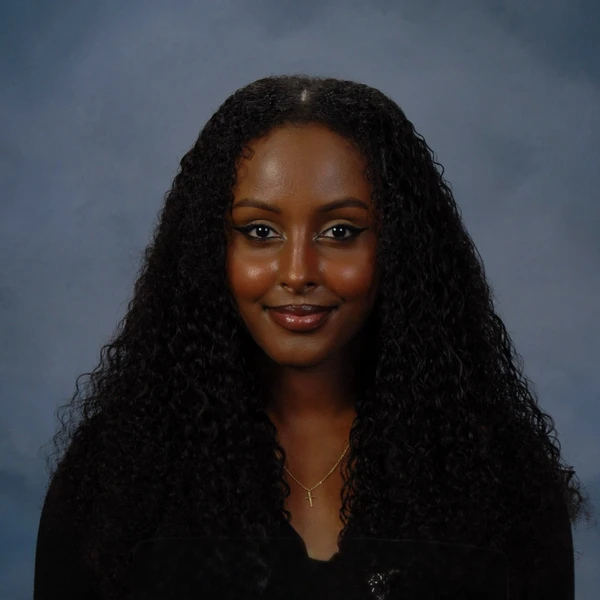
Aerlande Negerie

1x

Finalist

General information

Hobbies & Interests

  • Dance
  • Guitar
  • Reading

Reading

  • Adult Fiction
  • Drama
  • Classics

I read books multiple times a month.

Bio

Hi there! My name is Aerlande (Er-laan-day), and I am an incoming medical student at Michigan State University committed to advancing equitable healthcare access for underserved communities. Growing up between South Africa and Ethiopian communities, I witnessed firsthand how systemic barriers limit access to quality care, shaping my commitment to pursue medicine as both a clinical and advocacy-driven path. Through my experiences in hospital settings, community service, and outreach with vulnerable populations, I have developed a strong foundation in compassionate, culturally responsive care. These experiences have reinforced my dedication to addressing the social and structural factors that influence health outcomes, particularly in under-resourced communities. As I begin my medical training, I am committed to serving populations with limited access to care and to integrating public health approaches into my future practice. I aim to contribute to a more just healthcare system - one where access, quality, and dignity in care are not privileges, but guarantees quality access to healthcare.

Education

Michigan State University

Doctoral degree program (PhD, MD, JD, etc.)

2026 – 2030

Majors:
  • Medicine

Michigan State University

Bachelor's degree program

2022 – 2026

Majors:
  • Psychology, General
  • Human Biology

Miscellaneous

Desired degree level:
Doctoral degree program (PhD, MD, JD, etc.)
Graduate schools of interest:
Michigan State University
Medical school interest:
Yes

Career

  • Behavior Technician

    Hospital & Health Care · Mercy Plus Health Care Autism Services

    Jan 2025 – Jan 2026

  • Resident Assistant

    Higher Education · MSU REHS (Residence Education and Housing Services)

    Jan 2023 – Present

  • Patient Safety Sitter

    Hospital & Health Care · Sparrow Hospital

    Jan 2024 – Jan 2024

Miscellaneous

Dream career field:
Medicine
Has nursing license:
No

Future Interests

  • Advocacy
  • Volunteering
  • Philanthropy
Byte into STEM Scholarship
The emergency department does not move at a constant pace - it shifts depending on what comes through the doors. Spending months volunteering in the emergency department at Leratong Public Hospital brought me into close contact with that reality. I assisted with triage, took vitals, and observed procedures such as suturing and IV insertion, but what left the deepest impression was not the technical side of care, but instead the constant negotiation of scarcity that shaped every decision in the room. I remember a middle-aged man with a gunshot wound who arrived in critical condition, yet was moved from a P1 to a P2 priority area simply because there was no space available in the highest acuity ward. There was urgency in his condition, but limitation in the system - care was being rationed in real time. In another instance, I assisted during the resuscitation of a young man in his twenties following a mob assault, performing chest compressions under supervision as the medical team worked with focus and urgency for nearly two hours. The room never slowed down, even as it became clear that the outcome would not change. When he passed away, the shift in energy was not dramatic - it was quiet, almost contained, as everyone moved forward because the next patient was already waiting. Those moments were emotionally overwhelming, but they also grounded me in a reality I could not unsee: that in resource-limited settings, outcomes are shaped not only by clinical skill, but by systems, timing, and the constraints that determine who can be reached in time. What stayed with me most was not only what I saw inside the hospital, but how familiar it felt in a broader sense. Growing up between Ethiopia and South Africa, I had already seen how access to care often depends less on need and more on geography, circumstance, and the availability of resources at the exact moment they are required. Leratong made that pattern visible in real time, in a way that was no longer abstract or distant. That understanding is what led me toward medicine and public health together. I want to work not only in moments of individual clinical care, but also within the systems that shape who receives care, when, and under what conditions. Pediatrics, in particular, reflects that intersection clearly - where timing, early intervention, and access can redirect entire life trajectories before they fully unfold. This program will help me build both the clinical foundation and the broader systems-level understanding needed to serve effectively in underserved communities. More importantly, it will prepare me to translate lived experience into practice - working in both the U.S. and in countries like South Africa and Ethiopia, where disparities in access are not theoretical, but visible in everyday life. What I carry forward from every space I have been part of is a consistent awareness that healthcare rarely fails in obvious ways. It fails in delay, in limitation, and in the quiet spaces between need and response. My goal is to become a physician who recognizes those gaps early and works to close them in ways that extend beyond the walls of a single hospital.
Project “Investing in the Black”: Future Community Leaders Scholarship
I’ve learned that healthcare inequity rarely announces itself in obvious ways. It shows up in timing. In distance. In what gets delayed long enough to become urgent. I think about my volunteering experiences at a public hospital emergency department in South Africa, where I watched how a middle-aged man with a gunshot wound came through the doors quickly, but didn’t stay long. There was urgency in how he was handled, but also a certain limit in the system itself - like care was something that could be overwhelmed in real time. He left because there was nowhere for him to go next, no space or capacity to continue what had already started. What stayed with me was not disruption, but how ordinary it felt to the system itself. As if urgency and constraint were already accustomed to each other. Since then, I’ve started noticing how often illness is shaped before it ever reaches a hospital. In Ethiopia and South Africa, where I have roots, care is frequently delayed in ways that are almost imperceptible at first. A child’s fever is observed overnight instead of acted on. A caregiver waits for clarity that does not arrive early enough to be useful. Travel to a clinic is weighed against work, cost, distance. By the time care is finally sought, the clinical picture has already shifted. My commitment to medicine is rooted in reducing these inequities both globally and within underserved communities in the US - through sustainable, community-centered care models. As a future pediatrician working in primary care, I intend to address this gap through community-embedded and mobile healthcare delivery systems that bring preventive and acute care directly to populations with limited access. This includes participation in and expansion of NGO-based medical outreach programs such as Doctors Without Borders, as well as continued engagement with organizations like Global Brigades, where I have already contributed through public health initiatives focused on water sanitation in rural Panama. Building on these experiences, I hope to collaborate with multidisciplinary teams to develop small-scale mobile clinics that rotate through rural and underserved regions. These clinics would provide basic pediatric care, preventive screenings, vision and developmental assessments, and health education for caregivers. Rather than functioning as isolated interventions, they would be designed to integrate with existing local health systems, ensuring continuity of care and referral pathways when higher-level treatment is needed. To me, “Investing in the Black” reflects a commitment to redirecting resources toward solutions that are not only responsive, but sustainable systems that reduce long-term burden by addressing inequity at its source. I hope to contribute to this vision by building care models that extend beyond hospital walls, ensuring that access to healthcare is not defined by geography or circumstance, but by consistent and equitable reach.
Issa Foundation HealthCare Scholarship
In medicine, I am learning that the hardest part is not always knowing what to do, but what needs to be done is actually possible for the patient sitting in front of you. In Ethiopia, my grandmother lived with diabetes, a condition that should have been manageable with consistent insulin and routine care. Instead, her stability depended on uncertainty. I remember my mother, a physician herself, sitting with her phone pressed to her ear late into the evening, calling hospital after hospital and pharmacy after pharmacy across the city, trying to locate a single vial of insulin. Each call carried the same pattern: no stock, no refrigeration, no guarantee for tomorrow. The medication existed, but access to it was nearly impossible. What stayed with me most was that my grandmother was not the most vulnerable patient in that system. She had a daughter who understood the healthcare system well enough to navigate it. Many patients do not have that. They sit in overcrowded hospital corridors holding prescriptions they cannot fill, waiting for care that may never come. That realization changed how I began to see healthcare - not as a single interaction between doctor and patient, but as something that either supports or fails them long before they reach the exam room. I saw a different version of that same tension during my time volunteering at a government hospital in South Africa. One afternoon, I assisted with patient intake and mobility support in a crowded ward. An older man had been admitted after a fall with suspected fracture and possible pelvic injury. He lay still, gripping the bed rail, repeating softly, “I’m in pain.” I remember believing that relief would come quickly because it had been prescribed. But as time passed, I began to understand that “prescribed” and “received” are not the same thing in a strained system. The delay was a chain of constraints that patients experience as waiting, uncertainty, and endurance. These experiences challenged something in me. I had entered medicine thinking of care as something that follows a decision. I left that moment understanding that care is also what survives after the decision is made - what reaches the patient, and what does not. Since then, I have been more attentive to what happens in the space between need and delivery. In my role as a patient safety sitter at Sparrow Hospital, I have seen how quickly vulnerability appears when patients are disoriented, waiting, or unsure of what comes next. Even in a well-resourced system, dignity is fragile when communication and continuity break down. These experiences have shaped the kind of physician I am becoming. I am learning that medicine is not only about diagnosing and treating disease, but about recognizing the gap between what is possible in medicine and what is real in practice. As a future physician, I want to carry this awareness into both clinical care and broader health system work. I hope to practice in environments where I can serve patients directly while also working with organizations and community-based health efforts that strengthen reliability in care delivery - so that access is not dependent on who a patient knows, how long they can wait, or what happens to be available that day. I often think back to my grandmother, not only as someone I cared for, but as someone whose stability was shaped by whether a system could respond in time. I want to become a physician who helps make that uncertainty smaller - until it is no longer something patients have to carry at all.
TRAM Panacea Scholarship
One of the most painful realities in many parts of the world is that surviving an illness often depends less on disease severity and more on accessibility and money. Growing up between South Africa and Ethiopia, this disparity became nearly impossible for me to ignore - especially when it intersected with my own family. My grandmother had diabetes, a condition that should be manageable with consistent access to insulin and routine medical care. Yet in Ethiopia, even obtaining something as basic and lifesaving as insulin can become an exhausting battle. I watched my mother, a physician herself, spend hours calling across hospitals and pharmacies trying to locate medication for her mother that should have been readily available. What disturbs me most is that my grandmother was among the fortunate ones. She had a daughter who understood the healthcare system and knew who to call. Many patients do not have that advantage. They wait in overcrowded hospital hallways for hours, sometimes days, only to discover that antibiotics, insulin, oxygen, or even basic supplies like gloves are unavailable. Since then, my interest has focused on a broader global health issue: healthcare inequity driven by fragile and under-resourced health systems in low-and middle-income countries across regions such as Sub-Saharan Africa, South Asia, and other underserved populations worldwide, where access to even basic, essential care cannot be taken for granted. This inequity is not defined by geography alone, but by systemic gaps in supply chains, infrastructure, and continuity of care that transform treatable conditions into preventable suffering. What makes this issue so personal to me is how clearly it manifests in the lives of the people I care about. It is not only the absence of advanced treatment, but the unreliability of the most basic necessities that makes illness unpredictable - not because the medicine does not exist, but because it cannot consistently reach the people who need it. I witnessed this reality during my time volunteering at Leratong Public Hospital in South Africa, where I assisted with patient intake, vital signs, IV setup under supervision, and mobility support. Even in a functioning public hospital, the strain was visible. Overcrowded wards, limited resources, and high patient volume meant that care was often shaped by what was available at that moment rather than what was ideally needed. It became clear to me that inequity is not always about absence of care, but about inconsistency in care delivery. Over time, these experiences have shaped my understanding of healthcare as something more than a service. I have come to see it as a fundamental human right - one that should not depend on income, geography, or personal connections. Yet in many parts of the world, including places I call home, access to that right remains fragile. As a future physician, I hope to work with underserved communities through clinical care and partnerships with NGOs, with the long-term goal of contributing to more reliable healthcare systems in underserved settings globally. Through founding a Public Health Brigades chapter at MSU and leading a 7-day brigade to Panama focused on water sanitation infrastructure and hygiene education, I have already seen how meaningful change happens when systems are designed with communities, not just for them. These experiences have reinforced my commitment to addressing barriers to care not only at the bedside, but at the systems level. Ultimately, I hope to foster a more inclusive healthcare system, both in the US and beyond borders, that empowers underserved communities and provides them with the same high standard of care.
Aerlande Negerie Student Profile | Bold.org