
Hobbies and interests
Sewing
Embroidery And Cross Stitching
Singing
Piano
Baking
Research
Crafting
Advocacy And Activism
Artificial Intelligence
Board Games And Puzzles
Trivia
Ceramics And Pottery
Child Development
Cognitive Science
Community Service And Volunteering
Education
Drawing And Illustration
Reading
Teaching
Reading
Adult Fiction
Adventure
Childrens
Classics
Education
Family
Fantasy
Folk Tales
Folklore
Food and Drink
Historical
History
How-To
Humor
Health
Horror
Leadership
Literary Fiction
Literature
Drama
Mystery
Parenting
Music
Novels
Philosophy
Plays
Psychology
Realistic Fiction
Magical Realism
Romance
Science Fiction
Self-Help
Science
Short Stories
Social Issues
Social Science
Sociology
Speculative Fiction
Suspense
Thriller
Travel
True Story
Young Adult
Women's Fiction
I read books multiple times per week
Adrienne Wilson
1x
Finalist
Adrienne Wilson
1x
FinalistBio
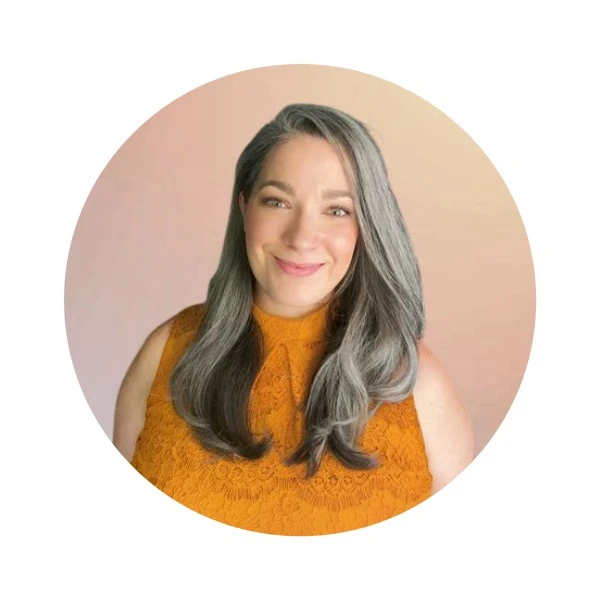
I am a 38-year-old special education teacher with eleven years of experience serving students in both private and public school settings. After nearly failing out of high school with a 1.9 GPA due to ADHD and executive functioning challenges, I internalized the belief that I was not capable of academic success. Years later, with renewed purpose, I returned to college and graduated in 2014 from the University of Lynchburg with one of the highest GPAs in the School of Education. I am now pursuing a Master’s in Educational Leadership with an endorsement in gifted education.
My experiences drive my commitment to equity and inclusion. I work with students with learning disabilities, autism, emotional disabilities, and other health impairments, building classrooms rooted in dignity and belonging. Beyond teaching, I advise our National Junior Honor Society chapter, organize inclusive initiatives such as our annual “Little Feet Meet” with Special Olympics, and have secured three grants to fund flexible seating and emotional regulation supports.
I have served on over fifteen hiring panels, participated in a state inclusion audit, and helped revise district special education policy. My long-term goal is to reform exclusionary discipline practices by developing restorative, instruction-centered alternative learning programs that better serve marginalized students and students with unrecognized or unrealized potential.
Education
University of Lynchburg
Master's degree programMajors:
- Educational Administration and Supervision
Minors:
- Education, Other
University of Lynchburg
Bachelor's degree programMajors:
- Teacher Education and Professional Development, Specific Levels and Methods
Miscellaneous
Desired degree level:
Master's degree program
Graduate schools of interest:
Transfer schools of interest:
Majors of interest:
Career
Dream career field:
Education
Dream career goals:
My career goal is to reshape school discipline in public education by partnering with districts to replace punitive practices with restorative, community-driven systems that reduce student removal and rebuild pride and belonging.
Special Education Teacher
Campbell County Schools2017 – 20203 yearsFront of House Manager - Head Server
Independent Lynchburg Restaurant Groups2010 – 20177 yearsSpecial Education Teacher
Colonial Heights Public Schools2021 – Present5 years
Sports
Swimming
Varsity1998 – 20046 years
Research
Special Education and Teaching
University of Lynchburg — Researcher2013 – 2014
Arts
Self-Employed
IllustrationPortraits, Sketches, Drawings, Illustrations2005 – Present
Public services
Volunteering
National Junior Honor Society — Student Advisor2022 – Present
Future Interests
Advocacy
Volunteering
Philanthropy
Entrepreneurship
Michael Rudometkin Memorial Scholarship
I grew up with ADHD and an executive function disorder. I didn't know it at the time, but I also grew up gifted. I would constantly have teachers tell me they "didn't understand why simple things were so hard". I was labeled, dismissed, and by the time I hit high school, I had a 1.9 GPA and no real sense that college was something I was capable of. I failed out of more than one college before I found the focus to try again. When I did, I graduated from the University of Lynchburg with the highest GPA in the School of Education. That experience shaped everything about why I teach and who I teach.
I became a special education teacher because I want to advocate and impact students like me. The students who have the potential but keep it buried or fail to access it because they believe they can't. Eleven years later, I work with students who have learning disabilities, autism, emotional disabilities, and other health impairments, and I approach every one of them the same way I wish someone had approached me: with patience, genuine curiosity, and with the belief that they are worth believing in.
I advise our school's National Junior Honor Society chapter, where we coordinate events like a yearly partnership with Special Olympics and a community kindness campaign whose signs have reached families across the Richmond area. I have been invited to sit on over fifteen interview panels for administrators, teachers, and central office directors, and I was one of three teachers selected by our district to revise and publish policy and procedure for special education. I was also the sole special education teacher chosen to participate in a Virginia Department of Education inclusion audit. I do this work because I truly believe that by having been failed by the school system in the past, I am at a distinct advantage to enact the greatest change.
My goal now is to move beyond the classroom into educational leadership, where I can address one of the most damaging practices still common in schools: suspension. Research shows that students placed in in-school or out-of-school suspension are at significantly higher risk of future incarceration, yet most schools continue using removal from instruction as a default consequence, with little or no restorative follow-through. I want to work with districts from the inside, partnering with administrators and HR teams to build alternative learning centers that keep students in instruction, provide restorative conversations about behavior and community impact, and give students ways to invest in their school rather than be removed from it.
This is the same thing I have always tried to do for my students, one at a time. I want to do it at scale. Michael Rudometkin's scholarship speaks directly to the kind of work I believe in, including showing up, building community, and refusing to leave people behind. That is what I try to do every day, and it is what I intend to keep doing with the help from this scholarship.
Future Nonprofit Leaders Award
I have been a special education teacher for eleven years. I came to it the long way. I grew up being labeled more than understood, failed out of college because I had started to believe what people said about me, and eventually went back with a specific purpose: I wanted to teach special education and be the person that students who weren't being seen could form a real relationship with, especially students with disabilities like mine. I graduated with the highest GPA in my School of Education.
My original goal has not changed, it has just gotten larger than one classroom.
In eleven years I have worked in private schools for students with disabilities and in public elementary, middle, and high schools. I have managed everything from learning disabilities and other health impairments to autism and emotional disability. I have written and received three separate education grants, participated in a Virginia Department of Education inclusion audit, and helped revise and publish policy and procedure for special education at the district level. I have been invited onto hiring panels for administrators, directors, and teachers. I say this not to list accomplishments but to explain that I have spent over a decade learning how these systems work from the inside, and what I have learned is that for certain students, the system is not working.
What I keep watching happen is this: a student gets removed from class, sits in a room or goes home, loses instruction, and returns having missed both the content and any real conversation about what led them there. Research connects disciplinary placements directly to increased likelihood of incarceration. The consequence teaches students that the response to struggle is absence, and in many cases it teaches the school the same thing.
I want to work with districts to build something different. Specifically, I want to develop alternative learning centers where students who are removed from their classrooms continue receiving instruction, including special education services they are legally entitled to, and participate in restorative practices that ask them to reflect on what happened, consider the impact on the people around them, and reinvest in their school community in concrete ways. Helping care for the building. Working alongside staff. Turning removal into reconnection rather than disappearance.
This is not a new idea in theory, but in practice it is almost nonexistent and the students who suffer most from that gap are the ones who were already the furthest from the center of how schools are designed.
To me, this goal is personal. I know what it is like to be a student with real capability who is told, in ways both direct and indirect, that the things that make you different are the things that will hold you back. I also know what it means to eventually find people and purposes that reframe that story. That reframing is not something every student gets, and the ones who don't are not less deserving of it.
The work I want to do is not separate from the work I have already been doing. It is the next version of it, operating at a scale where it can reach students before a single teacher, however committed, is able to get to them.
Tawkify Meaningful Connections Scholarship
My mother worked full time as a nurse practitioner while raising four children, including a set of twins. She came home after long shifts to a house that needed her in every direction at once. And still, she found the time to read books and magazine articles about ADHD, about how it changes the brain, about strategies that might help a daughter who was struggling in ways that most adults in that daughter's life had stopped trying to understand.
I remember sitting at the dinner table with her after she had just gotten off work. I was crying, fighting the math homework that would not cooperate with my brain no matter how hard I tried. She sat with me and walked through it step by step, patient and calm, as though she had nowhere else to be. She was not performing patience. She was teaching it to me by giving it to me first.
There were harder moments. Every year she hand-sewed four Halloween costumes, hours of careful work spread across weeks. One afternoon I walked into the laundry room with a pair of scissors and cut into all of them. That is the part that is difficult to explain about emotional dysregulation to someone who has not lived it. It is not defiance. It is a brain that moves faster than consequence, faster than love. There were times she held me in a full bear hug while I kicked and screamed, completely overtaken by whatever storm had taken hold, and she just held on until it passed. Then she sat with me and restored things. Not with a lecture. Not with punishment. She repaired the relationship first, every time, and trusted that the lesson would follow.
Outside our house, the world was less forgiving. Teachers said out loud they didn't understand why I couldn't do things. My mother never believed that. She kept going to conferences, kept trying to tell my teachers about the parts of me they couldn't see in 45 minutes a day. That I was empathetic and artistic and driven. That I had a moral compass that pointed somewhere real. Most of them were not interested. She never stopped insisting that the whole picture mattered anyway. I graduated high school with a 1.9 GPA and failed out of college... twice. For a long time I believed every message that told me I was not built for anything more.
Eventually I found my footing. I went back to school with a clear purpose and graduated from the University of Lynchburg with the highest GPA in the School of Education. I became a special education teacher and have spent eleven years in that work, in private and public schools, with students whose disabilities range from learning disabilities and ADHD to autism and emotional disability. I have written and received three education grants, participated in state level inclusion audits, and helped rewrite district special education policy from the ground up. Now I am returning to graduate school for my Masters of Educational Leadership with an endorsement in gifted education, because I have seen enough of this system to know where it is broken and I believe I know how to help fix it. I want to work with districts from within to replace punitive removal with restorative alternative learning centers, spaces that keep students in instruction, connect them to services, and build accountability that repairs rather than discards.
I did not get here alone. The way I sit with a student who is melting down and cannot explain why, the way I fight for the whole picture of a child rather than just the part that is causing problems, the way I believe that restoration matters more than punishment, I learned all of that from a woman who had every reason to be too tired and chose not to be.
She taught me that belief is not a feeling you have about someone. It is something you do, repeatedly, in the small moments, in the laundry room, at the dinner table, in the middle of a storm that makes no sense. I try to be that for my students every day, especially the ones the system has already started to give up on, because I know what it meant to have one person who refused to.
She was that person for me. Her grace, compassion, and hard work is embedded in everything that I am and everything I will become. Everything I am building traces back to her.
Learner Mental Health Empowerment for Health Students Scholarship
Growing up with ADHD and an executive function disorder, I watched firsthand how a lack of understanding from educators can quietly dismantle a child’s belief in themselves. I was not lazy. I was not incapable. But when the adults in my educational life repeatedly said they “didn’t understand” why I couldn’t do things, I began to absorb their confusion as my own failure. By the time I reached high school, I was carrying a 1.9 GPA and a quiet conviction that higher education simply wasn’t meant for someone like me.
It took years of working in high-pressure, fast-paced restaurants before I found a goal that finally gave my strengths somewhere to go. I wanted to teach special education. More than that, I wanted to be the person in a student’s life who actually saw them, especially the ones nobody seemed to be looking for. That focus changed everything. I went back to school and graduated from the University of Lynchburg with a 3.95 GPA, one of the highest in the university, and the highest in the School of Education. The same person teachers had written off was now being recognized for academic excellence. That does not happen without someone eventually believing it is possible, and for a long time, I had to be that person for myself.
That experience settled something in me that I now consider foundational to how I teach: a student’s emotional wellbeing and their academic success are deeply connected; you cannot separate them.
Eleven years into teaching special education, I try to put that belief into practice every day. I have written and received three separate grants to bring resources into our building, including emotional regulation instruction, because students cannot learn when they are dysregulated. As an NJHS advisor, I have helped organize events like the Special Olympics “Little Feet Meet,” which builds the kind of inclusion and belonging that actually protects mental health in young people.
Some of the most meaningful work happens in ways that are harder to put in a grant application. Noticing the student who seems off. Staying after the bell. Telling a kid, without a lot of fanfare, that I see them and I am not going anywhere. I was that student once. I remember what it felt like when most adults couldn’t be bothered to understand me, and I remember what it felt like the first time one did.
As I work toward my Master’s degree and a role in educational leadership, I want to carry that same commitment into systems-level change, helping build school environments where students’ emotional and behavioral needs are met with restoration rather than removal. Mental health matters to me because I have lived inside what happens when it is ignored. I spent years recovering from it, and I have spent eleven more watching it happen to kids who deserve better. That is what keeps me in this work, and it is what I intend to spend the next chapter trying to change.
Special Needs Advocacy Inc. Kathleen Lehman Memorial Scholarship
I am a special education teacher with eleven years of experience in private and public schools, working with students with learning disabilities, autism, emotional disabilities, and other health impairments. I became a teacher because I know what it feels like to be misunderstood. Growing up with ADHD and executive functioning challenges, I was often labeled lazy. Teachers told me they did not understand why I could not complete assignments like everyone else. By the time I nearly graduated high school with a 1.9 GPA, I had started to believe that education might not be for me. Despite my intelligence and curiosity, I had little confidence in my ability to succeed academically.
After spending several years in the workforce, I returned to school with a clear goal. I wanted to teach special education and be the kind of teacher I had needed myself, someone who could recognize potential and help students believe in themselves. I earned my undergraduate degree from the University of Lynchburg and graduated with one of the highest GPAs in the School of Education. That achievement was not about proving anyone wrong. It was about proving to myself that with guidance and determination, I could succeed. That experience shapes how I teach and how I approach students every day.
In my classroom, I focus on building skills, confidence, and independence. I teach executive functioning and emotional regulation skills directly. I help students reflect on mistakes without shame. I provide structure and guidance while holding high expectations so students can see that their choices and effort matter. I also create opportunities for inclusion beyond the classroom. As an advisor for our National Junior Honor Society chapter, I lead projects like our annual Little Feet Meet with Special Olympics and organize initiatives such as creating “Be Kind” signs to spread positive messages throughout our community. I have written and received multiple grants to provide flexible seating and emotional regulation supports. At the district level, I have served on hiring panels and helped revise special education policies to ensure that students with disabilities are supported by the system and not just individual teachers.
Looking forward, my goal is to use my master’s degree in special education with an educational leadership endorsement to make a larger impact. I want to work with districts to create alternative learning environments for students who are often removed from instruction. These spaces would provide academic instruction, restorative practices, and skill-building opportunities so students can reflect on their choices, repair harm, and remain engaged in their education. I believe these changes can help students recognize their strengths, advocate for themselves, and feel connected to their school and community. My vision is that students with special needs experience school not as a place where they are managed or excluded, but as a place where they are seen, valued, and capable of contributing in meaningful ways.